Eduardo Chillida
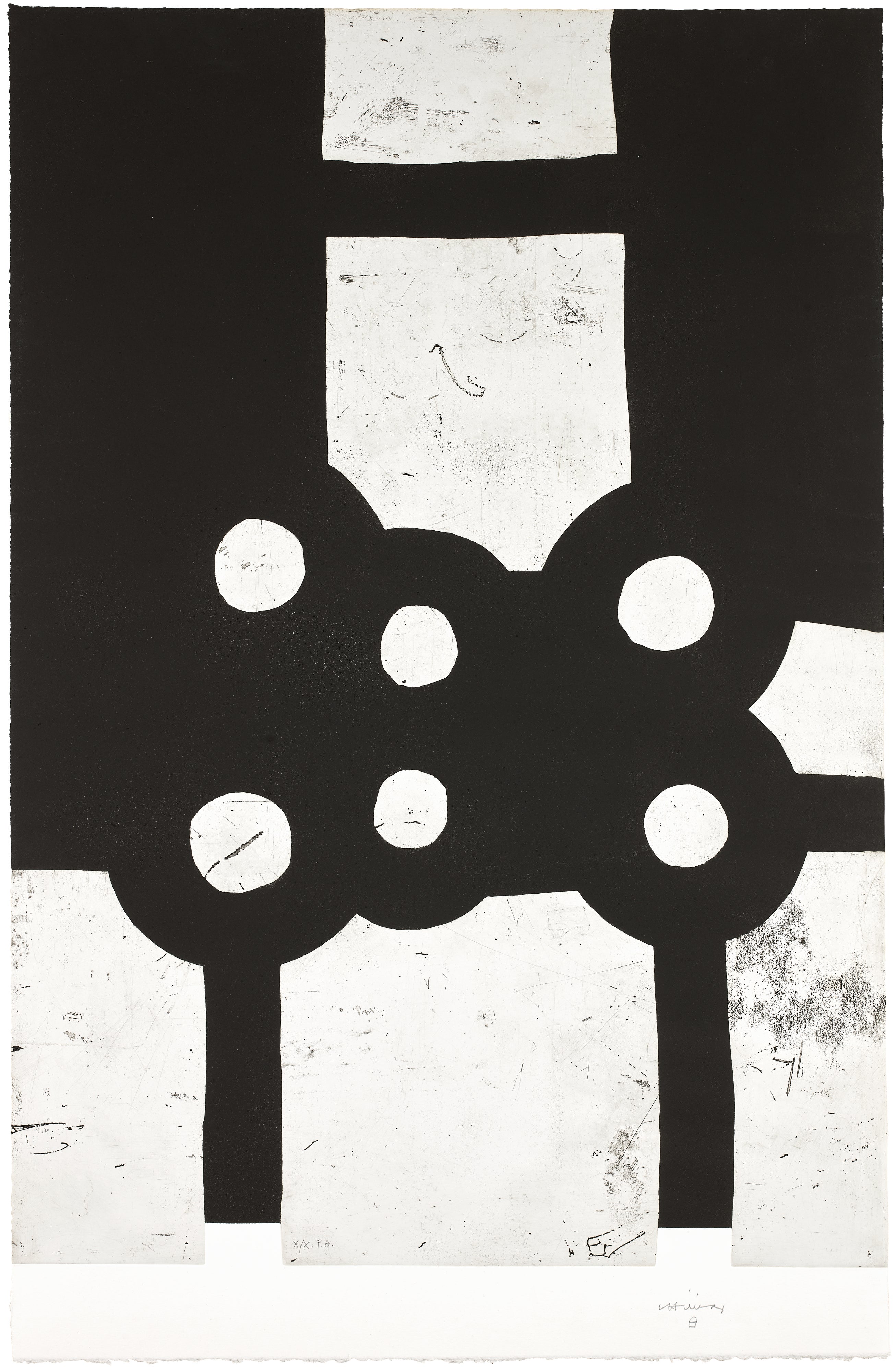
Eduardo Chillida: The Sculptor Who Held Space
Artist Spotlight · The Collection Editorial
“I have never been afraid of silence. Silence is the beginning of everything I do.”
Eduardo Chillida
In the permanent collection of the Museo Reina Sofía in Madrid, visitors still stop and fall quiet before Eduardo Chillida's massive iron forms, as though the sculptures themselves are breathing. That silence is intentional, earned through decades of rigorous thinking about what emptiness can mean, what a material can say, and how human hands might shape something that feels as old as the earth itself. More than two decades after his death in 2002, Chillida's reputation has not softened into nostalgia. It has deepened, expanding into a global conversation about abstraction, place, and the poetics of physical presence that feels urgently relevant to our moment.
Eduardo Chillida
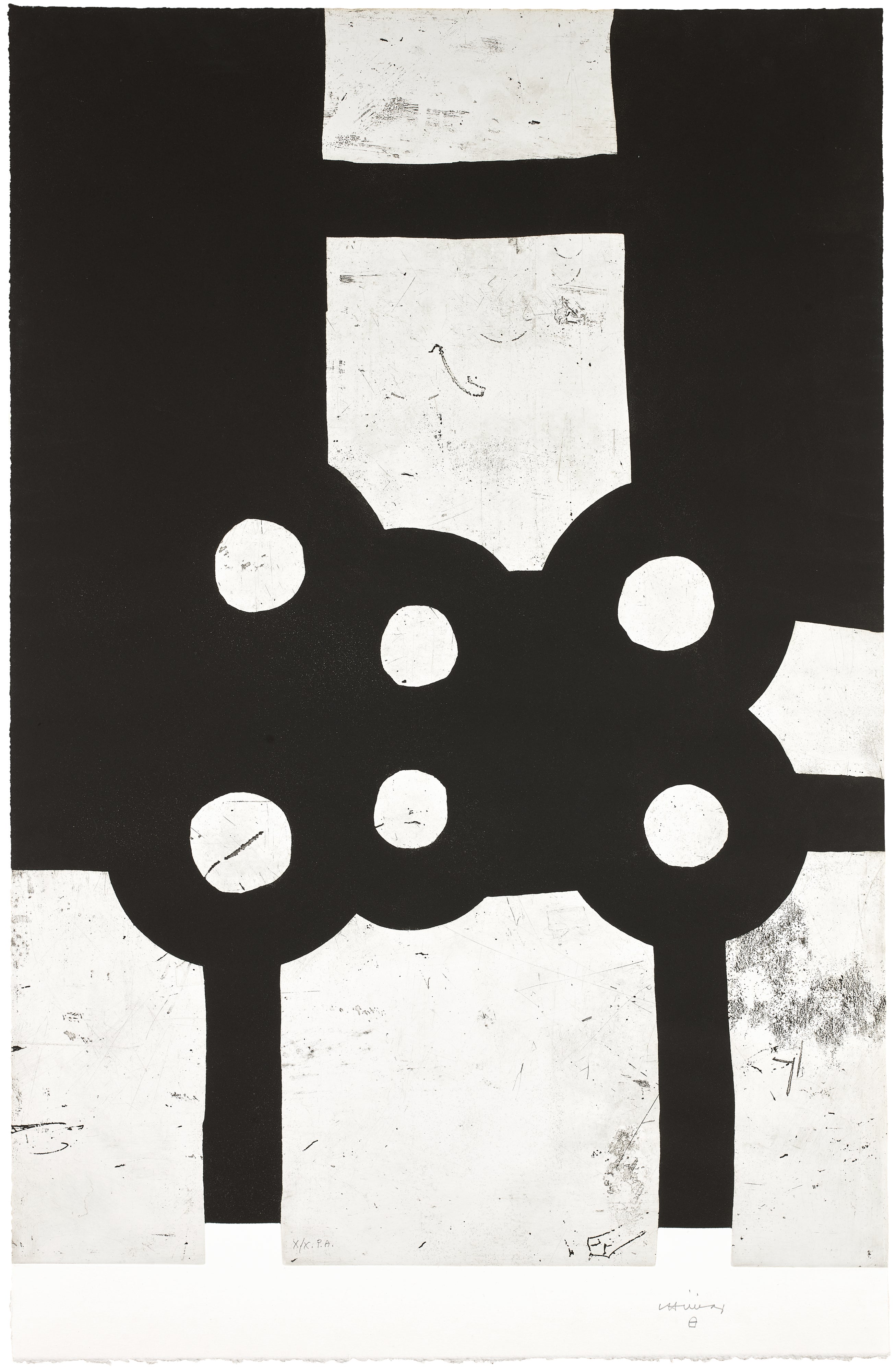
Leizaran
Eduardo Chillida Juantegui was born in San Sebastián, in the Basque Country of northern Spain, on January 10, 1924. The landscape of that region, with its ancient mountains, the restless Bay of Biscay coastline, and the particular quality of Basque light, never left him. He grew up speaking the Basque language, Euskara, one of the oldest and most linguistically isolated languages in Europe, and he would later name many of his works in Basque, honoring a culture that had survived centuries of pressure to disappear. As a young man he was a serious goalkeeper for Real Sociedad, the local football club, and there is something in that early physical training, the understanding of space, of body, of resistance and tension, that seems to have stayed in his hands.
Chillida initially studied architecture at the Universidad de Madrid before abandoning his studies in 1947 and moving to Paris, where he turned fully toward sculpture. Paris in the late 1940s was electric with possibility and debate. He encountered the work of Constantin Brancusi, whose reduction of form to essential gesture left a permanent impression. He worked in the studio, struggling with plaster and clay, and by the early 1950s he had returned to the Basque Country and made a decisive turn toward iron, collaborating with a local blacksmith in Hernani.
Eduardo Chillida
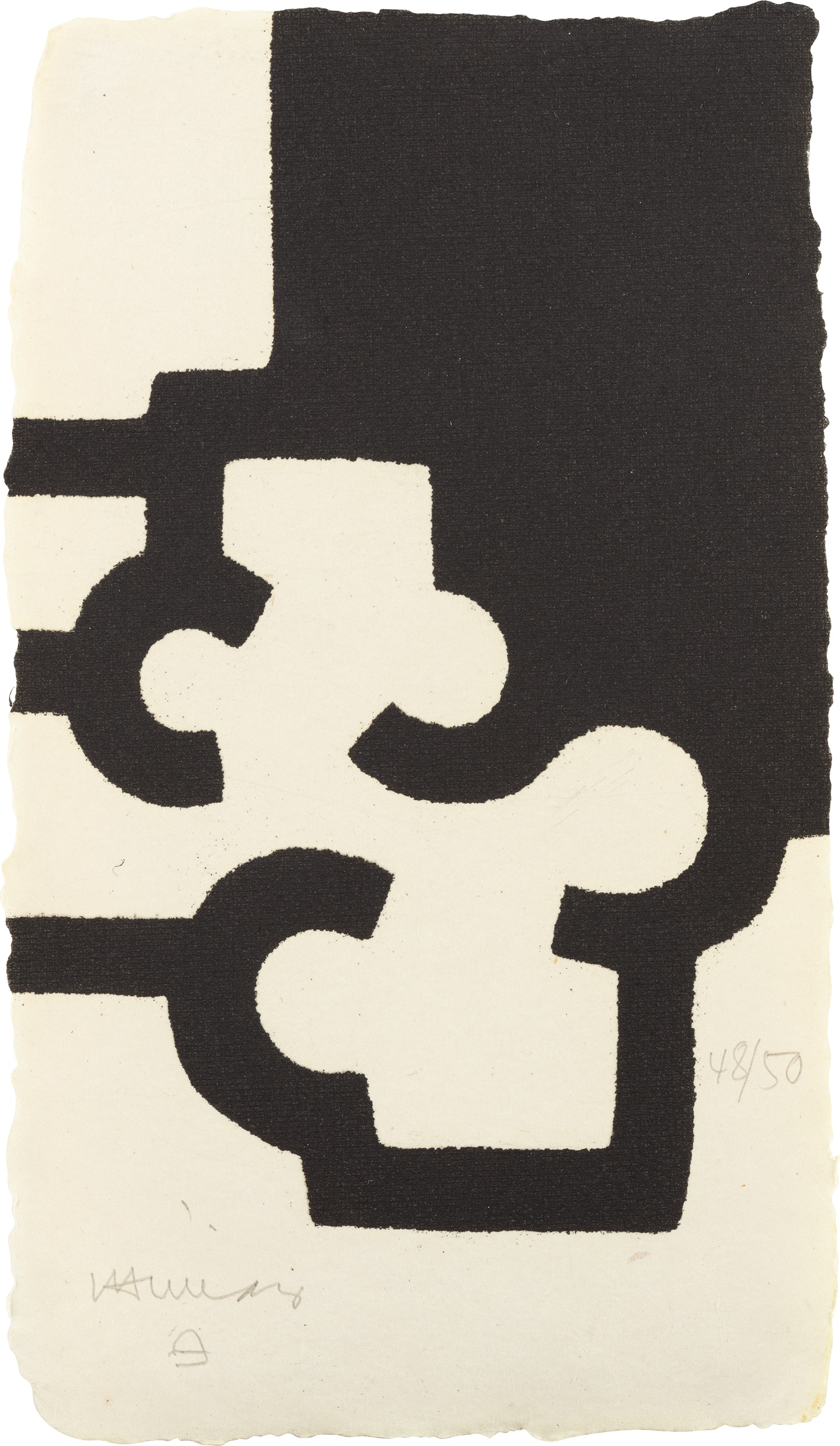
Omar Khayyam Txiki (Little Omar Khayyam) (K. 82007)
That encounter with the forge, with fire and metal and the physical labor of shaping resistant material, was the beginning of everything. The 1950s marked Chillida's first great breakthrough. His iron sculptures from this period, raw and tensile, seemed to reach outward into space rather than occupy it in the traditional sculptural sense. He won the Grand Prize for Sculpture at the Venice Biennale in 1958, a recognition that announced him to the international art world as something genuinely new.
“Space is the great mystery. My work is an attempt to understand it, to touch it.”
Eduardo Chillida
He was working at a moment when American Abstract Expressionism was reshaping the global conversation, but Chillida's concerns were rooted in a different soil, more telluric, more specifically European and Basque, more engaged with the philosophical traditions of Martin Heidegger, with whom he would later develop a sustained dialogue. Heidegger wrote about Chillida's work with admiration, finding in it a material embodiment of his own thinking about dwelling, place, and the nature of things. Over the following decades Chillida expanded his vocabulary across materials and scales. He worked in alabaster, finding translucent, almost lunar qualities in the stone.
Eduardo Chillida
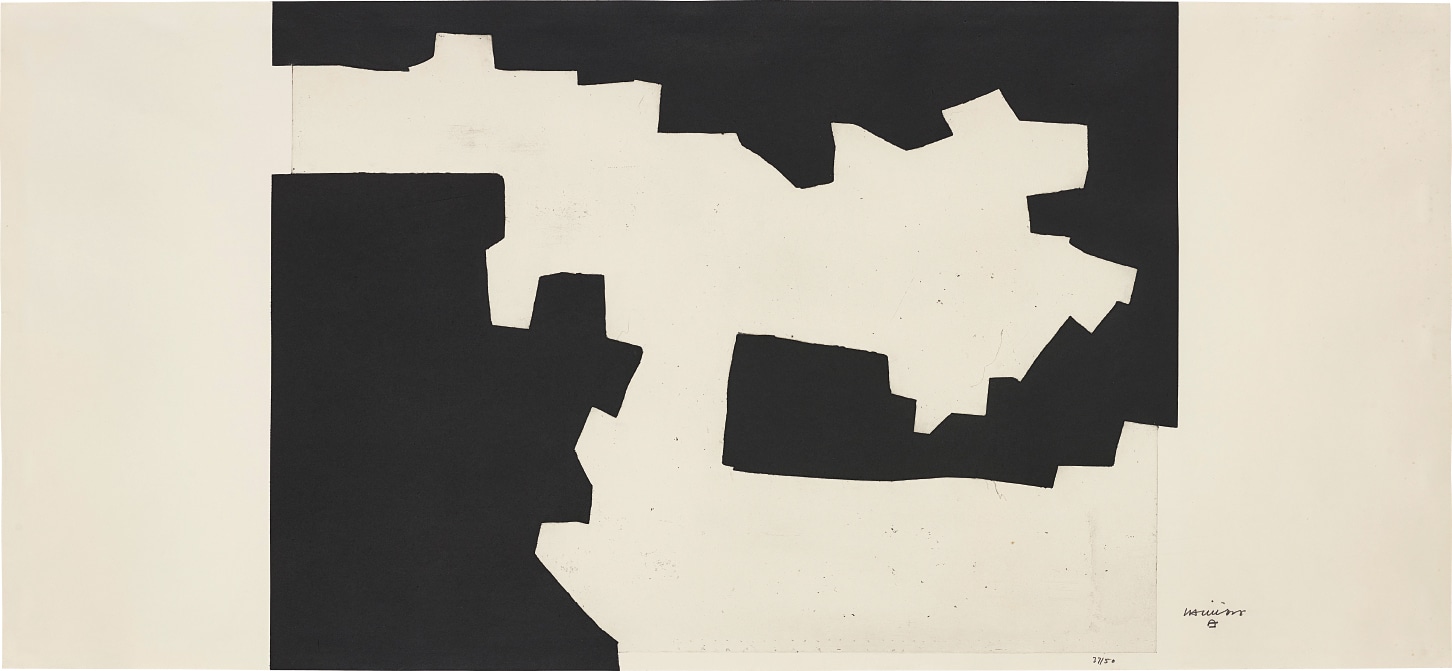
Hutsune II (Empty II)
He worked with concrete on monumental scales, most famously in his recurring series of large outdoor commissions that placed his forms in dialogue with coastlines, plazas, and mountain landscapes. His prints, particularly his etchings and aquatints, deserve special attention from collectors. Works such as Leizaran, Zubi Aundi, and the series exploring emptiness in Hutsune II demonstrate that Chillida's graphic work was never a secondary activity. On paper, his forms retain all the tension and spatial intelligence of his sculpture, with a concentrated intimacy that larger works cannot always achieve.
The series dedicated to figures like Copernicus and Omar Khayyam reveal a mind that moved comfortably between the visual and the literary, between science and poetry, between the local and the universal. For collectors, Chillida's works on paper represent one of the most compelling entry points into a body of work that also encompasses sculptures commanding prices well into the millions at auction. His prints have appeared regularly at Sotheby's, Christie's, and Phillips, where they attract serious bidders from Europe, the Americas, and Asia. Works on Arches, Rives BFK, and Japanese paper, often produced in close collaboration with master printers, show the same commitment to material integrity that defined his sculpture.
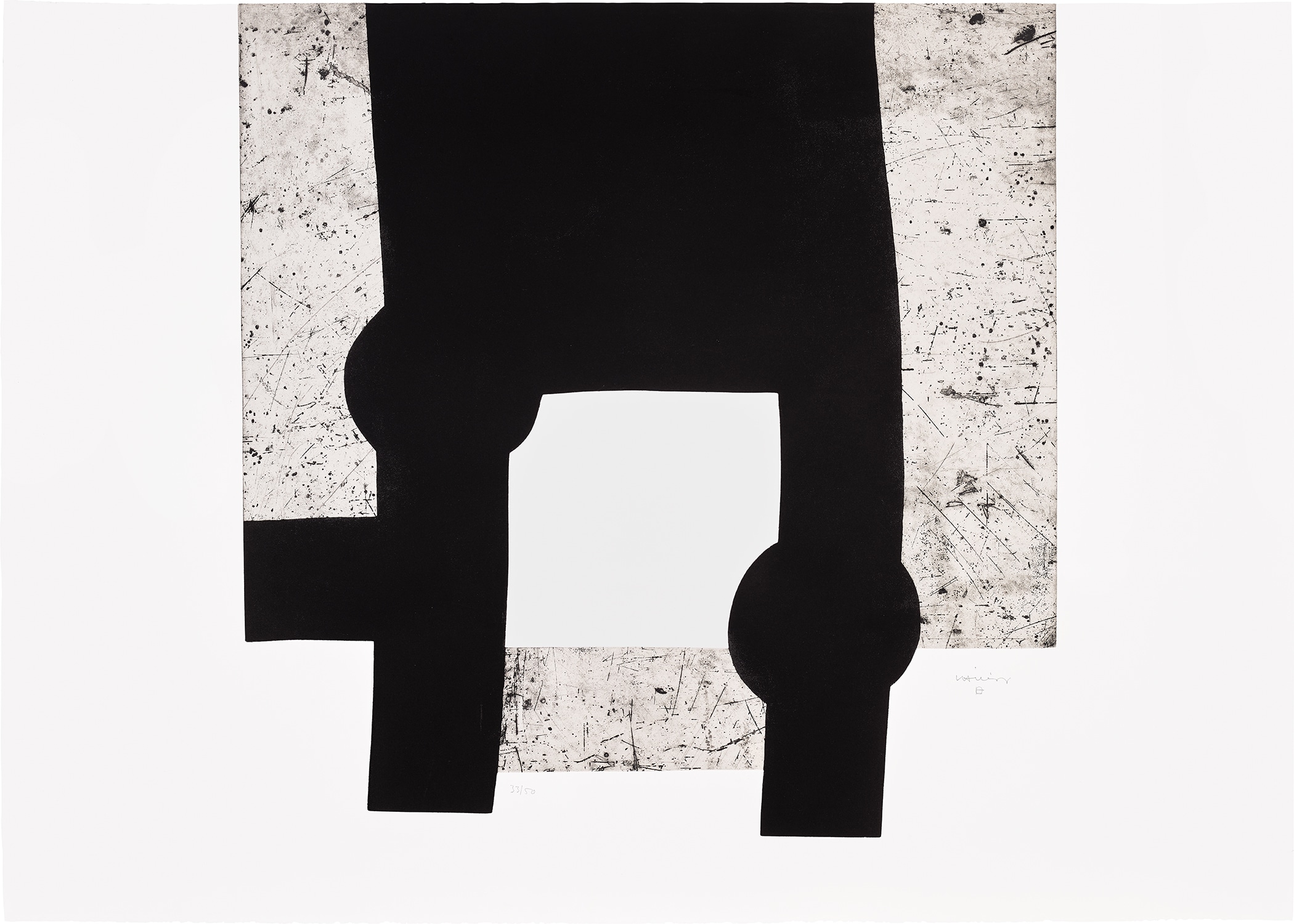
Eduardo Chillida
Médecins du Monde (Doctors of the World) (K. 92004)
Collectors should note the quality of impression, the paper specification, and whether the work belongs to a numbered edition with documented provenance. Chillida's prints are not mass produced multiples. They are the thinking of a major artist translated into a medium he took entirely seriously, and their relative accessibility compared to his monumental works has made them sought after by discerning collectors who understand that the graphic work is not peripheral but central to the full picture of his achievement. Chillida's place in the history of postwar European sculpture is secure and distinguished.
He stands naturally alongside figures such as Jorge Oteiza, his great Basque contemporary and sometime rival, as well as Anthony Caro, Franz Kline (whose gestural concerns Chillida shared from a sculptor's perspective), and the broader tradition of constructive abstraction that runs through European modernism. His relationship to the land and to cultural identity also connects him to artists like Giuseppe Penone and Richard Serra, both of whom share his interest in how form, material, and place create meaning together. Yet Chillida remains irreducibly himself, shaped by a language and a landscape that gave his work a specific gravity that no other artist has quite replicated. The Chillida Leku museum, a dedicated museum in the farmhouse and meadows of Zabalaga near Hernani that he developed over many years and which opened to the public in 2000, stands as one of the great artist created environments in the world.
It temporarily closed after his death but reopened in 2019 under new management, reintroducing his work to new generations of visitors who encounter his sculptures outdoors, among trees and grass, in conditions the artist himself designed. That reopening felt like a natural moment of renewed recognition. Eduardo Chillida made work that asks us to feel the weight of what we cannot see, to understand that the space between and around forms is as real and as meaningful as the forms themselves. That is a lesson worth returning to, again and again.
Explore books about Eduardo Chillida
Eduardo Chillida
David Smith
Chillida
Ronald Christ
Eduardo Chillida: Catalogue Raisonné of Sculpture
Armin Zweite

Eduardo Chillida: The Iron Works
Paul Moorhouse
Chillida: Photographs 1950-1998
Rainer Woehler

Eduardo Chillida: The Quest for Space
Christopher Beyer
Chillida: Abesti Gogoa
Juan Huarte de San Juan
Eduardo Chillida: Drawings and Prints
Katsutoshi Yuasa