Eduardo Arroyo
Eduardo Arroyo, Painting With Magnificent Irreverent Joy
Artist Spotlight · The Collection Editorial
There are artists who document their era, and there are artists who argue with it. Eduardo Arroyo, the Madrid born painter, polemicist, and relentless provocateur who lived from 1937 to 2018, belonged emphatically to the second category. In the years since his death, European institutions have returned to his work with renewed seriousness, recognizing in his paintings a political and aesthetic intelligence that feels urgently contemporary. His canvases, at once playful and barbed, combine the visual grammar of popular culture with the rigor of a thinker who had absorbed Goya, Velázquez, and the full weight of Spanish history without being crushed by any of it.
Eduardo Arroyo
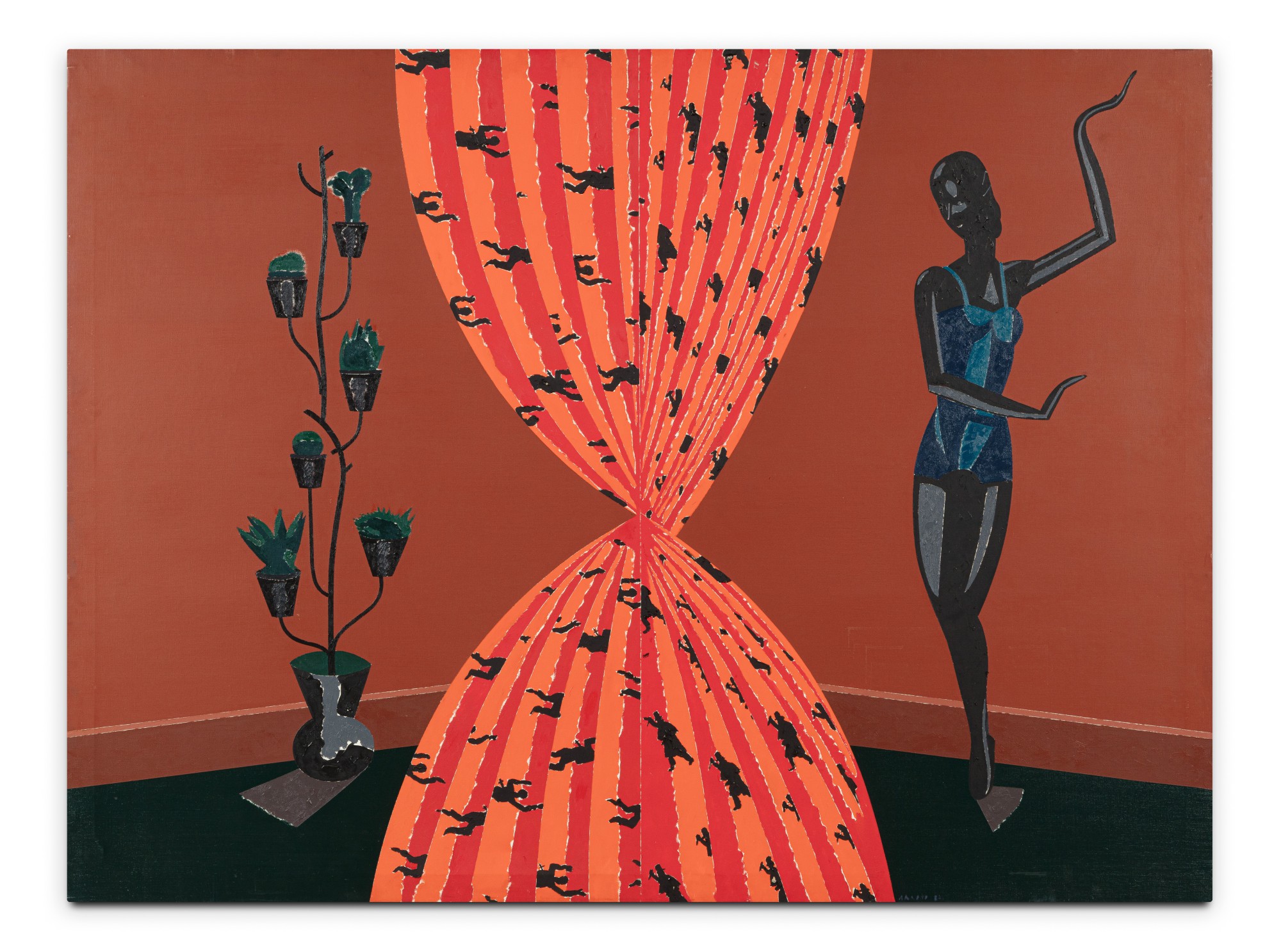
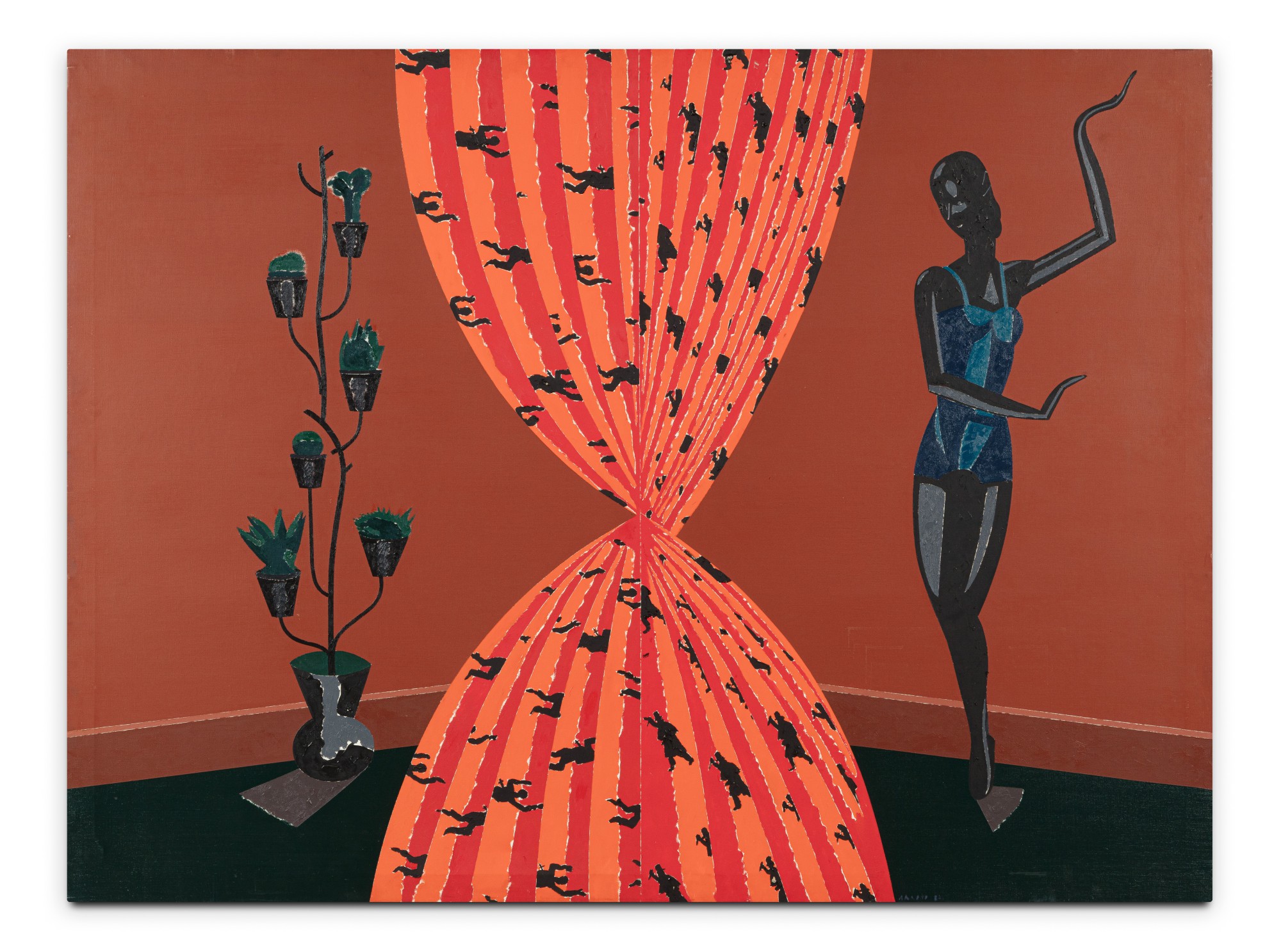
La Rue des Martins, 1987
To encounter Arroyo is to meet an artist who never once confused comfort with quality. Arroyo was born in Madrid in 1937, the very year the Spanish Civil War reached its most ferocious intensity. That timing was not incidental to his formation. He grew up under the Franco dictatorship, absorbing its censorship, its theatrical nationalism, and its deep suspicion of intellectual life.
His father worked as a journalist, and the household was one where words and their consequences were taken seriously. In 1958, at the age of twenty one, Arroyo made the decision that would define the first and perhaps most creative chapter of his career: he left Spain for Paris, a city that in those years functioned as the unofficial capital of Iberian exile. He would not return to live in Spain for nearly two decades, and the distance sharpened rather than softened his vision of the country he had left behind. Paris in the late 1950s and 1960s was a city saturated with artistic possibility and political argument.
Eduardo Arroyo
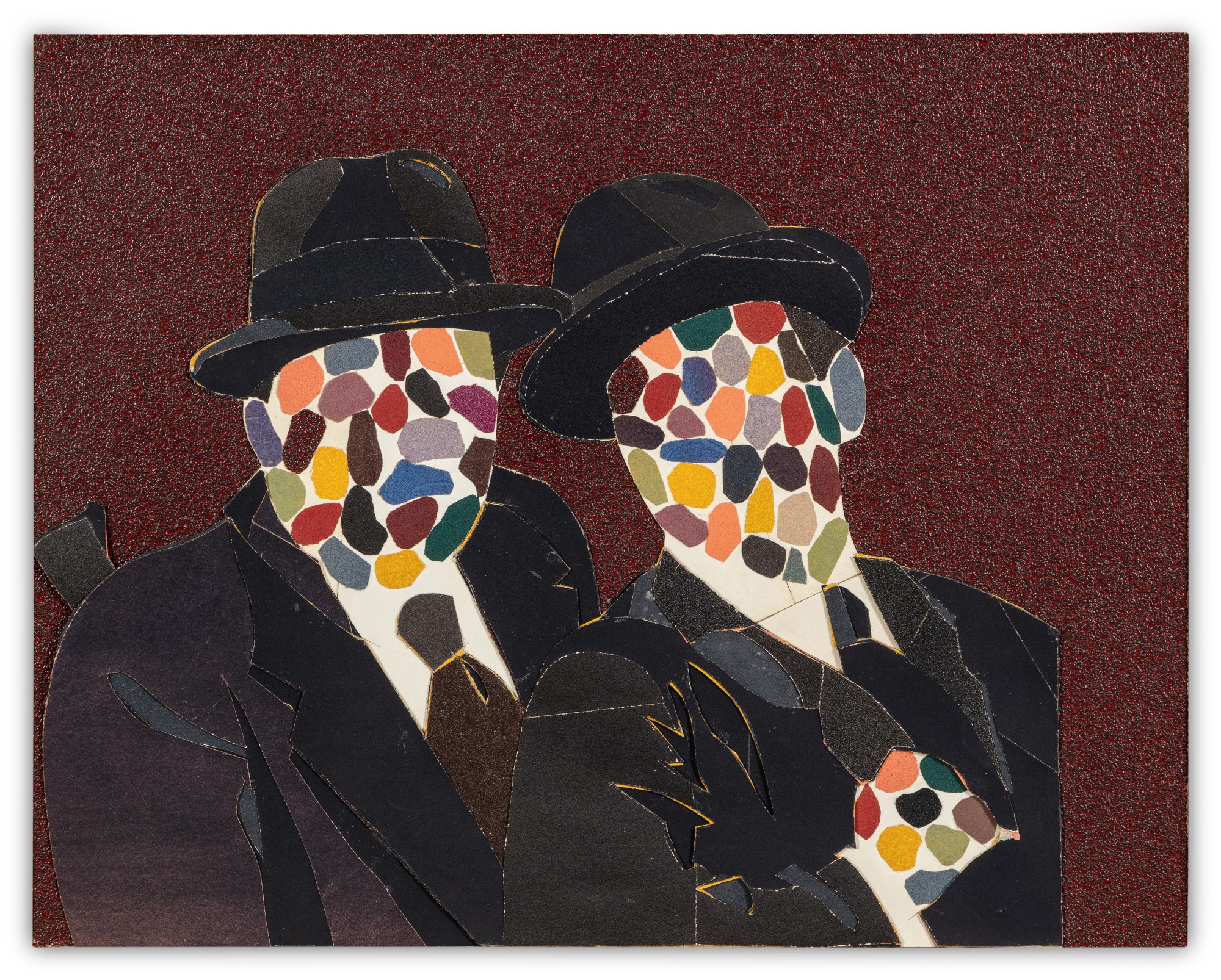
Parmi les peintres, 1976
Arroyo arrived with a painterly ambition that had not yet found its full voice, but he found it quickly among the ferment of the French capital. He encountered the work of the Nouveau Réalistes, absorbed the lessons of Pop Art arriving from Britain and America, and developed his own combative version of figurative painting that borrowed from comic strips, advertising imagery, political posters, and the history of Western painting with complete and cheerful impartiality. He was associated with what critics came to call Narrative Figuration, a movement that emerged in France in the mid 1960s alongside artists such as Gilles Aillaud and Antonio Recalcati. These painters shared a conviction that figurative art could carry critical and political content without sacrificing visual intelligence, a position that placed them in productive tension with the dominant abstractions of their moment.
The work that brought Arroyo his first significant notoriety was the collaborative painting cycle created with Aillaud and Recalcati in 1965, depicting Marcel Duchamp in a series of scenes both homage and demolition. It was a gesture of extraordinary audacity, attacking the most celebrated iconoclast of the twentieth century on his own conceptual ground. The work caused genuine scandal and established Arroyo's reputation as someone unwilling to observe the pieties of the art world he was simultaneously inhabiting. Throughout the late 1960s and 1970s, he continued to develop a practice that mixed high and low cultural references with a ferocity that was always, beneath the irony, deeply moral in its motivations.
Eduardo Arroyo
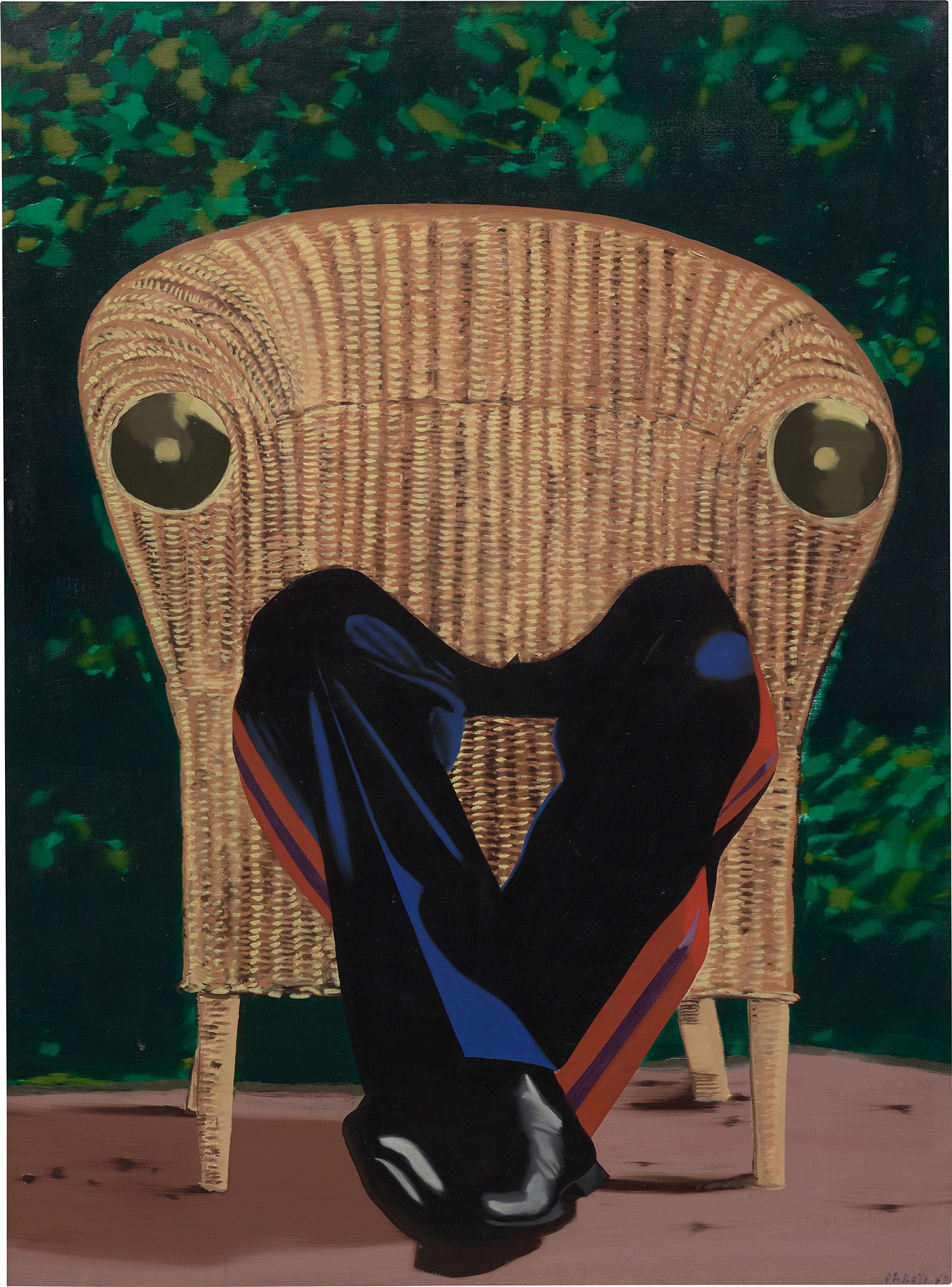
La chaise de Yalta, 1969
His targets were fascism, conformity, and the comfortable amnesias of bourgeois life, and he pursued them with the dedicated energy of someone who had seen those forces operate at close range. The works held on The Collection offer a beautifully representative cross section of Arroyo's range and ambition. "La chaise de Yalta," an oil on canvas from 1969, belongs to one of his most politically charged periods, when the great diplomatic arrangements of the mid twentieth century were subjects of both fascination and fury for the European left. The painting carries that characteristic Arroyo quality of treating historical subject matter with a directness that is almost theatrical, refusing the distance of abstraction in favor of something that demands engagement.
"Parmi les peintres," a 1976 work in collage and sandpaper on panel, demonstrates the material inventiveness that distinguished Arroyo from painters who were satisfied with a single medium: the sandpaper introduces texture and a kind of abrasive literalism that feels entirely intentional, as though the surface itself is arguing a point. "La Rue des Martins" from 1987 shows a later Arroyo, more expansive in his visual storytelling, drawing on urban imagery and the particular poetry of named places with the confidence of an artist who has fully inhabited his own language. From a collecting perspective, Arroyo represents a figure whose market has historically been stronger in France and Spain than in the Anglo American world, which means that significant works still appear at prices that serious collectors find genuinely compelling relative to his art historical standing. His paintings appear regularly at auction houses in Paris and Madrid, and major works from his politically engaged periods of the late 1960s and 1970s command the most sustained attention.
Collectors who have been drawn to artists such as Equipo Crónica, the Spanish collective whose practice overlapped with Arroyo's in its use of popular imagery and political critique, often find in Arroyo a more individual and formally complex counterpart. His works on paper and his collages represent a particularly interesting area for collectors who want to engage with the full breadth of his thinking, as these pieces often reveal the working intelligence behind the larger canvases. Arroyo's place in art history is most properly understood in relation to the broader conversation about figurative painting and political art that runs through the 1960s and 1970s. He shares territory with artists such as Peter Saul in America and Öyvind Fahlström in Europe, painters who refused the supposed neutrality of abstraction and used the figure as a vehicle for cultural argument.
His Spanish context connects him to a tradition of painterly dissent that runs from Goya through Picasso, though Arroyo's tone is distinctly his own: sardonic where Goya is tragic, knowing where Picasso is mythological. He was also a significant presence in the theater world, designing sets and costumes for productions across Europe, and this theatrical sensibility permeates his canvases, which often feel like stages on which historical and cultural dramas are being played out with great energy and deliberate artifice. What makes Arroyo matter today is precisely the quality that made him difficult in his own time: his insistence that painting is a form of thinking about the world, not merely a form of looking at it. In an era when figurative painting has returned to enormous critical and commercial prominence, his work stands as a reminder that figuration can carry genuine critical weight, that a painted image can be simultaneously beautiful and argumentative, pleasurable and demanding.
The great Arroyo canvases ask their viewers to know things, to bring history and politics and art history to the encounter, and they reward that knowledge with a visual richness that continues to open up across repeated viewings. He was one of the essential European painters of the second half of the twentieth century, and the ongoing reassessment of his achievement is one of the more rewarding conversations currently taking place in the world of serious collecting.