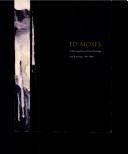
Ed Moses
Ed Moses, Forever Reinventing the Painted Surface
Artist Spotlight · The Collection Editorial
“I am always beginning. Every painting is a new problem and I do not want to know the answer before I start.”
Ed Moses
There is a particular kind of painter who refuses to be pinned down, who treats each decade not as a consolidation of reputation but as an invitation to begin again. Ed Moses was exactly that painter. When the Los Angeles County Museum of Art staged a survey of his work, visitors encountered not one coherent style but a succession of bold departures, each one arrived at through genuine curiosity rather than calculated repositioning. That restless spirit, sustained across more than sixty years of studio practice, is precisely what makes Moses one of the most vital and enduring figures to emerge from the California art world.
Ed Moses
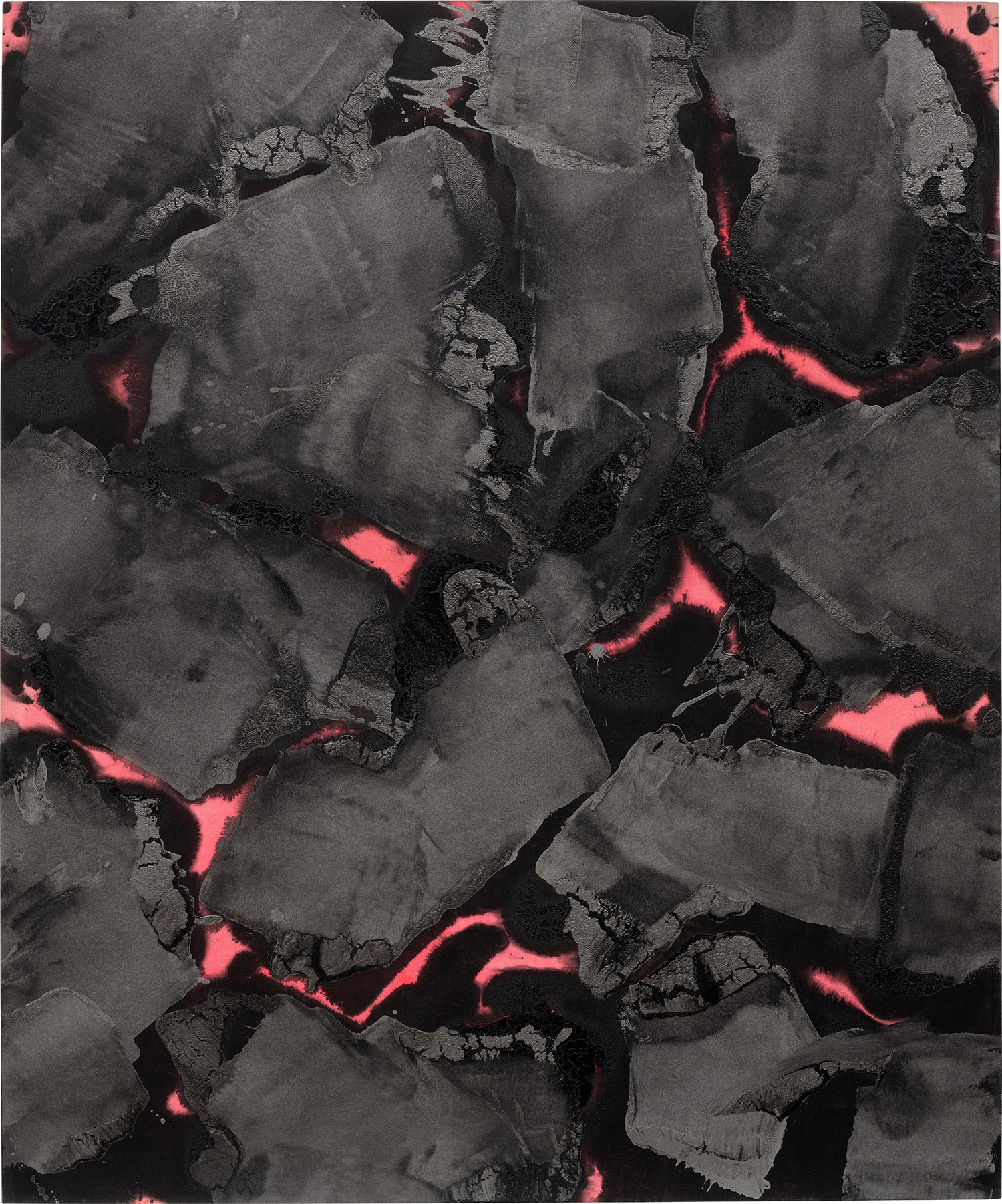
Cuatro Porto, 2002
Edwin Sallis Moses was born in Long Beach, California, in 1926. He served in the United States Navy during World War II before enrolling at the University of California, Los Angeles, where he earned both his bachelor's and master's degrees. His formation in Los Angeles during the 1950s placed him at the center of a scene that was just beginning to assert its independence from the established cultural authority of New York. The Ferus Gallery, which opened in 1957 on La Cienega Boulevard, became the crucible for that assertion.
Moses was among the founding figures associated with the gallery alongside artists including Robert Irwin, Billy Al Bengston, and Craig Kauffman, a loose constellation of talents that critics would come to call the Cool School or the Los Angeles Look. What distinguished the Ferus circle was an appetite for materials and surfaces that felt distinctly Californian: light saturated, sensuous, and attuned to the physical world of the Pacific coast. Moses absorbed this sensibility without ever becoming its prisoner. Through the late 1950s and into the 1960s he worked with drawings and collages that registered a deep engagement with gesture and mark, works that showed a painter thinking carefully about what a line could carry and what it could leave open.
Ed Moses
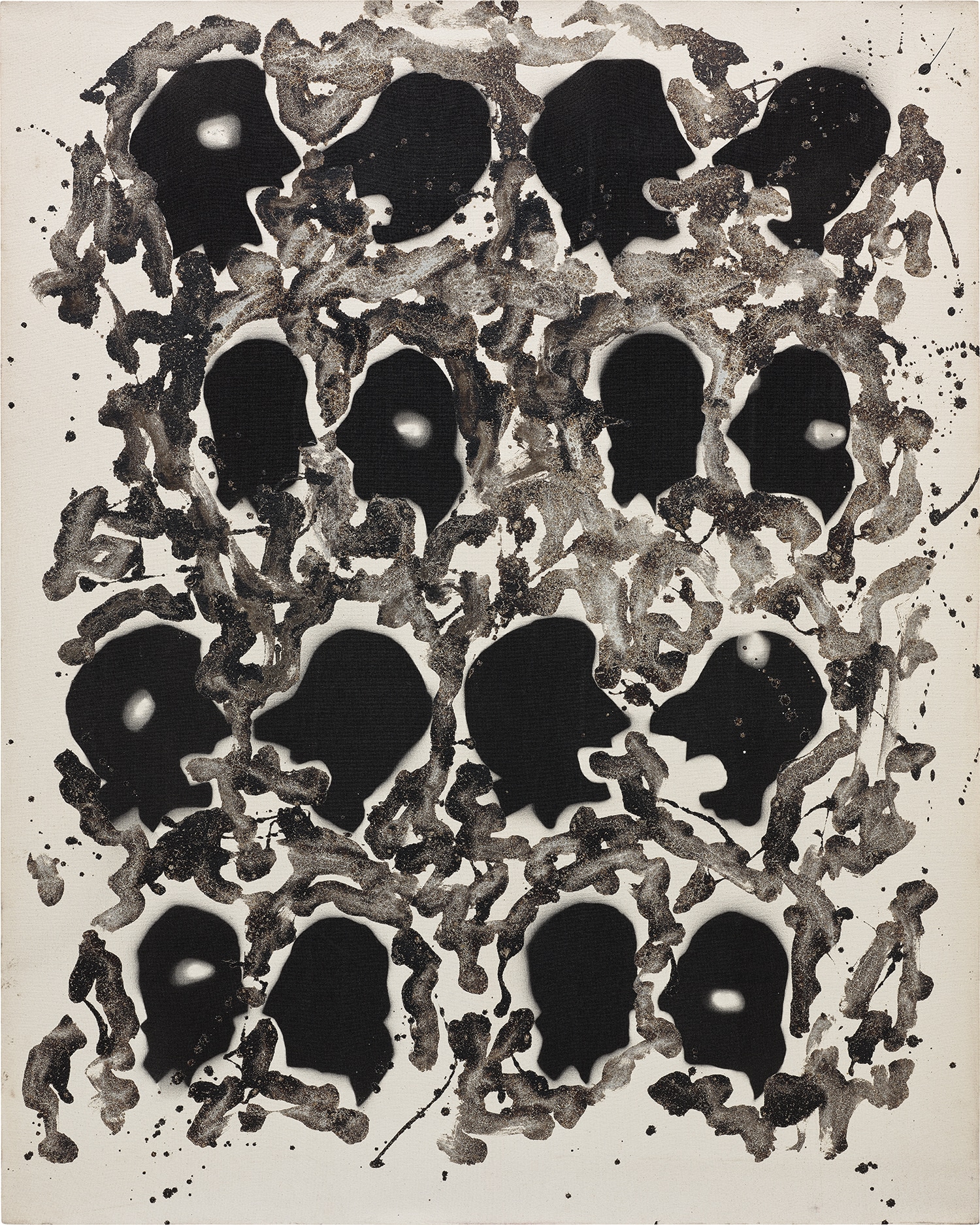
Jab and Poet #3, 2010
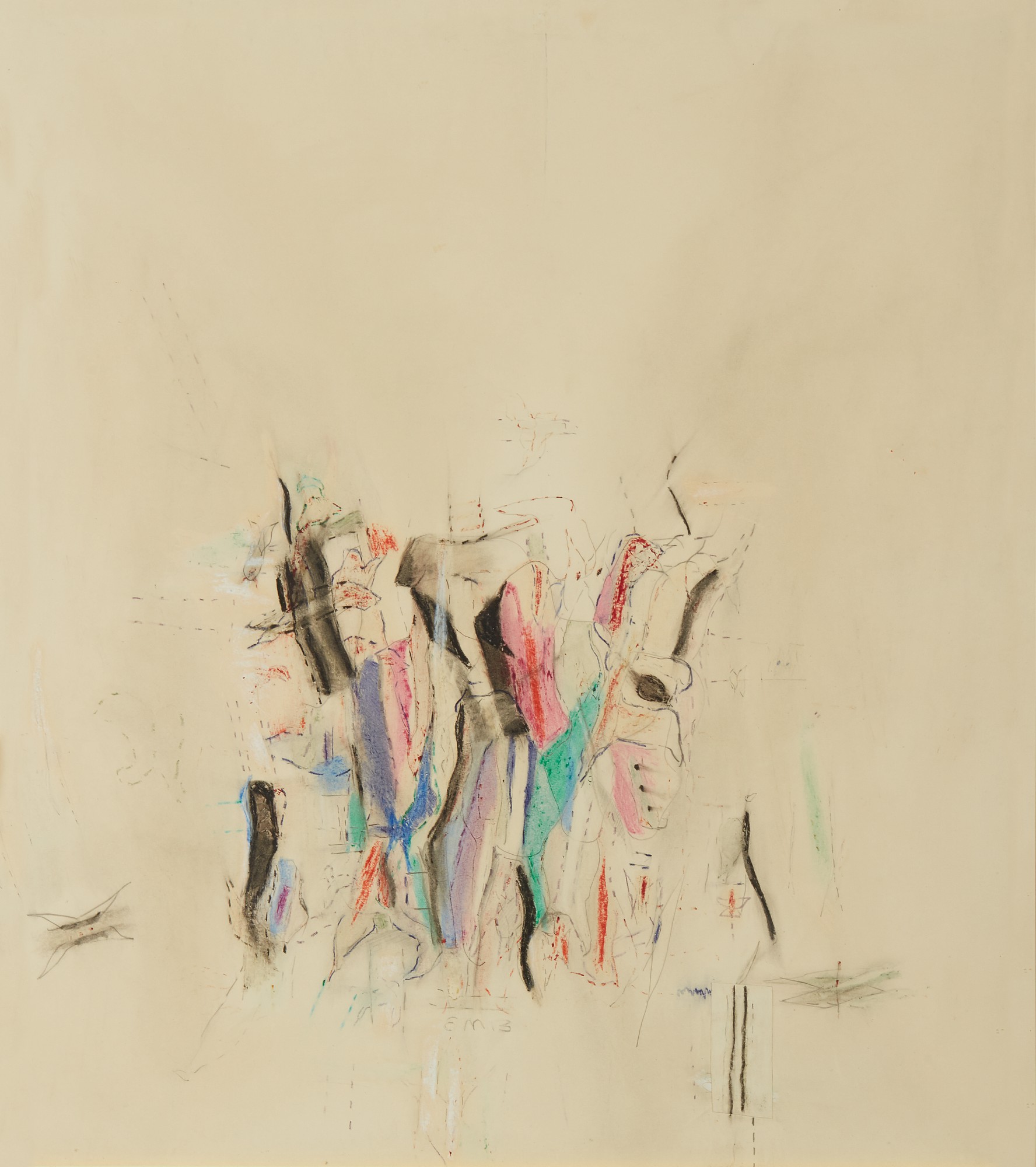
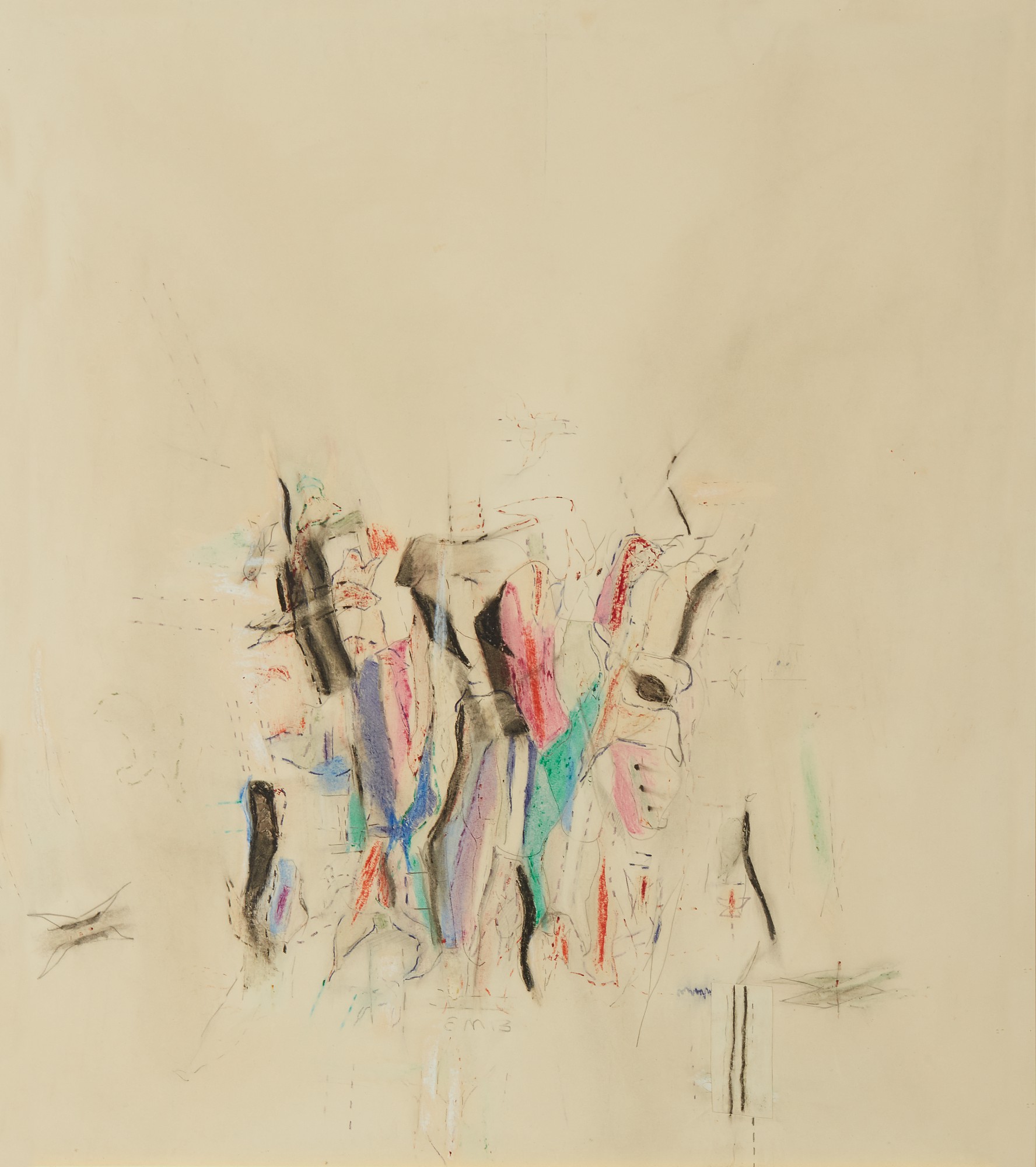
His untitled works on paper from this period, including pieces combining crayon, graphite, and paper collage, reveal an artist already comfortable with unconventional process, treating the support as an active participant rather than a passive ground. By the late 1960s Moses had moved decisively into territory that would define one of his most celebrated periods. He began working with resin, pouring the material directly onto canvas laid flat on the floor and allowing gravity, chemistry, and controlled accident to determine the outcome. These resin paintings were unlike anything being made in New York and they announced Moses as a genuine original.
The grid returned repeatedly as an organizing principle in his work through the 1970s, but always with a quality of breathing and dissolution that kept the geometry from hardening into dogma. His Wedge Series works, published in editions by Cirrus Editions Ltd. in Los Angeles, brought this geometric sensibility to a wider audience and remain among the most sought after examples of his printmaking practice. The decades that followed saw Moses continue to confound expectations.
Ed Moses
Untitled, 1960
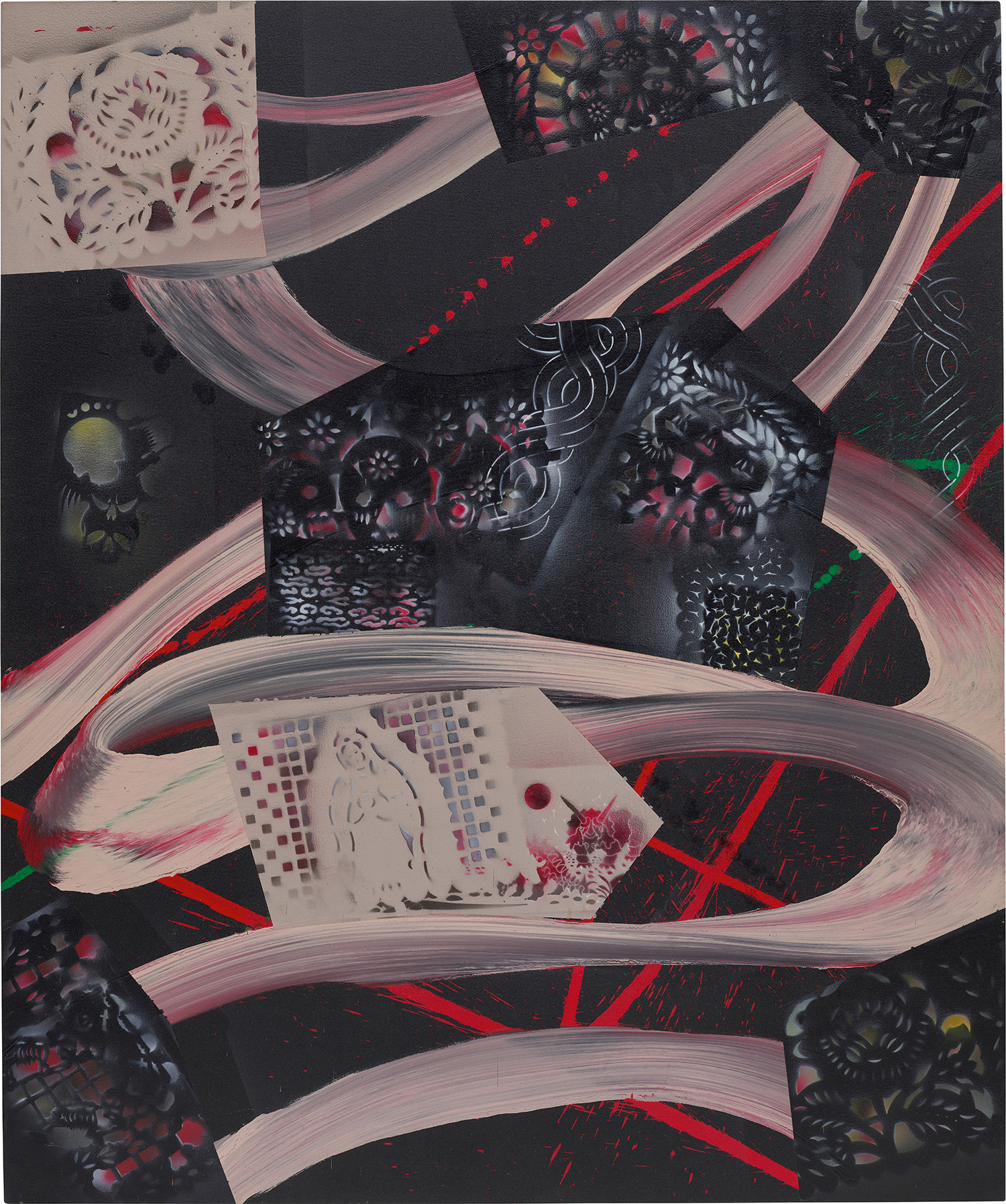
He moved into intensely gestural work in the 1980s and 1990s, embracing a loose, almost athletic physicality that stood in sharp contrast to the cool precision of his earlier resin canvases. Works from the 2000s and 2010s, including paintings like Cuatro Porto from 2002 and Zooker from 2005, show an artist who had internalized a lifetime of experimentation and was deploying that knowledge with tremendous freedom. His later canvases often combined acrylic and unconventional binders such as glue, as in Blakerman Number 1 and Red Square, both from 2011, producing surfaces that feel simultaneously built up and dissolved, architectural and atmospheric. The Jab and Poet series, represented by works like Jab and Poet Number 3 from 2010, carries a vitality that makes it nearly impossible to believe these paintings were made by a man in his eighties.
For collectors, Moses presents an unusually rich proposition. His career spans enough distinct phases that a collection of his work alone can constitute a meaningful survey of postwar American abstraction. Works on paper from the early 1960s offer an entry point that connects directly to the heroic moment of Ferus Gallery and the birth of a California art identity. The resin paintings of the late 1960s and 1970s are among the most technically distinctive objects produced in Los Angeles during that era and are held in permanent collections at the Museum of Modern Art in New York, the Whitney Museum of American Art, and LACMA, institutional endorsements that speak to the work's historical standing.
Ed Moses
Zooker, 2005
Later gestural canvases and the acrylic and glue works of his final decade offer collectors access to an artist at full creative maturity, unencumbered by the pressure to repeat himself. In the broader context of art history, Moses occupies a position that is both specific to Los Angeles and resonant with wider currents of postwar abstraction. His engagement with process and materials places him in conversation with Arte Povera in Italy and with the process art movements developing on the East Coast, yet his work always retains a warmth and chromatic pleasure that reads as distinctly West Coast. Compared to peers like Robert Irwin, whose practice moved toward pure phenomenological experience, or John Altoon, whose figuration pulled in a different direction, Moses held to painting as his primary commitment while expanding what painting could mean.
His affinity with artists such as Sam Francis, another Californian with a lyrical relationship to color and gesture, is worth noting as a point of orientation for collectors building a sense of the period. Ed Moses passed away in Los Angeles in 2018 at the age of ninety one, but his work continues to feel urgently present. There is something almost instructive in the example he offers: a long life in the studio understood not as accumulation but as perpetual renewal. The paintings do not look like the work of someone managing a legacy.
They look like the work of someone genuinely absorbed in the problem of what a surface can hold and release. For collectors who prize both historical significance and aesthetic adventure, Moses remains one of the essential American painters of his generation, and the opportunity to live with his work is one that rewards sustained attention.
Explore books about Ed Moses