Ed Mell
Ed Mell: The Southwest Rendered Magnificent
Artist Spotlight · The Collection Editorial
There is a particular quality of light in the Arizona high desert, the kind that arrives in the late afternoon and turns a sandstone mesa into something that looks almost too beautiful to be real. Ed Mell has spent decades chasing that light, and in doing so he has created one of the most recognizable and beloved bodies of work in contemporary American art. His paintings have found permanent homes in major institutional collections, and his reputation as the foremost interpreter of the Southwestern landscape has only deepened with time. In recent years, a renewed cultural appetite for American regionalism and landscape painting has brought fresh attention to his work, with collectors across the country reconsidering just how significant his contribution truly is.
Ed Mell
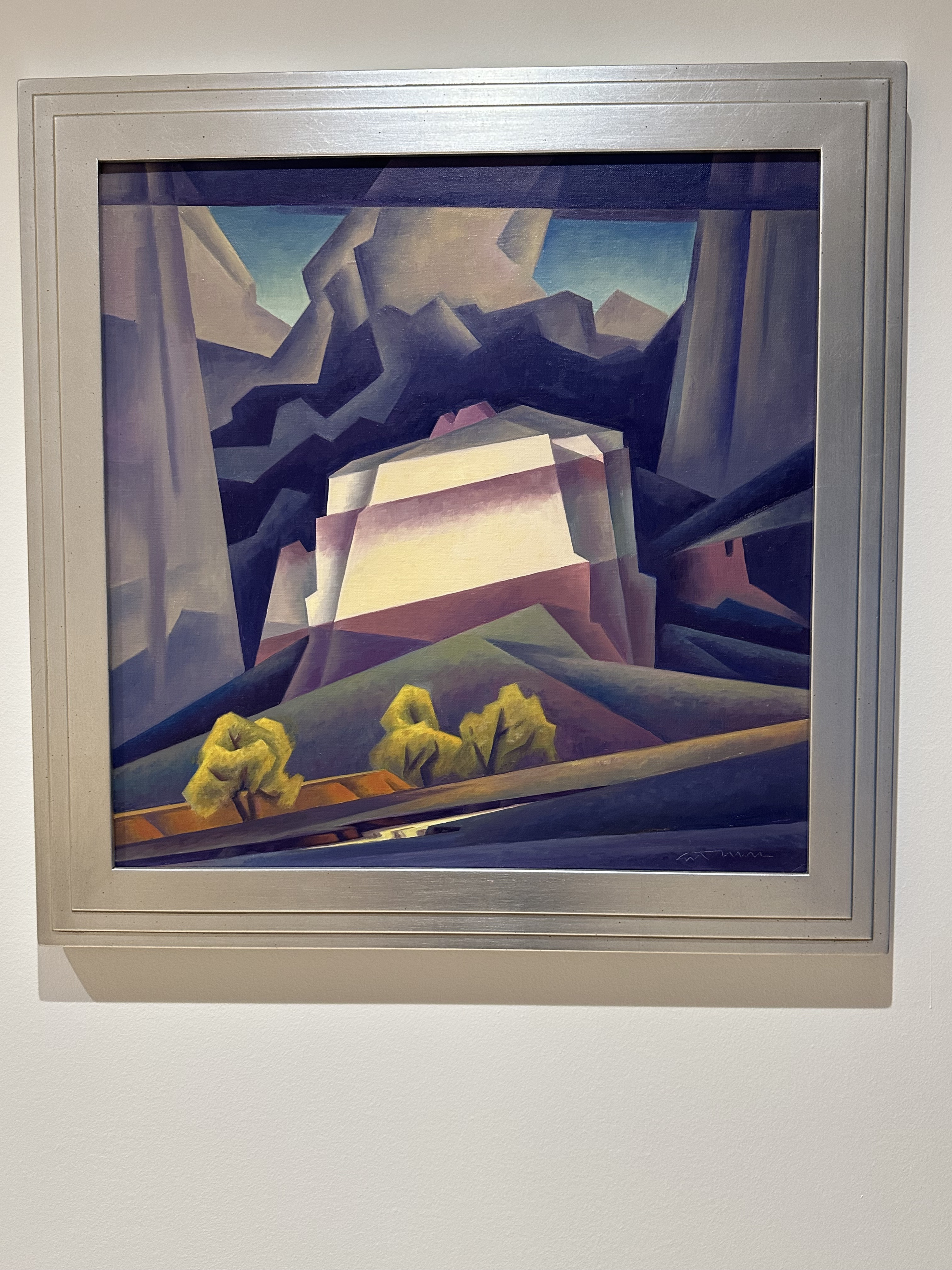
Untitled
Mell was born in Phoenix, Arizona in 1942, at a moment when the American Southwest was still something of a frontier in the cultural imagination. Growing up surrounded by the stark drama of the Sonoran Desert, the saguaro cactus, the thunderheads that pile up over the mountains in monsoon season, Mell absorbed a visual vocabulary that would prove inexhaustible. He went on to study at the Art Center College of Design in Pasadena, California, where he trained as an illustrator and graphic designer. That commercial training, rather than limiting him, gave him a precision and a confidence with form that would become the very foundation of his mature artistic identity.
After graduating, Mell worked for a period in New York City as an advertising illustrator and art director, immersing himself in the graphic arts culture of the 1960s and 1970s. The influence of that world, its love of clean line, bold silhouette, and confident reduction, never left him. When he returned to Arizona and committed fully to painting, he brought all of that graphic rigor back with him and applied it to the landscape he had always carried inside. The result was something genuinely new: a way of seeing the Southwest that honored its epic scale while simultaneously distilling it into something almost totemic.
Ed Mell
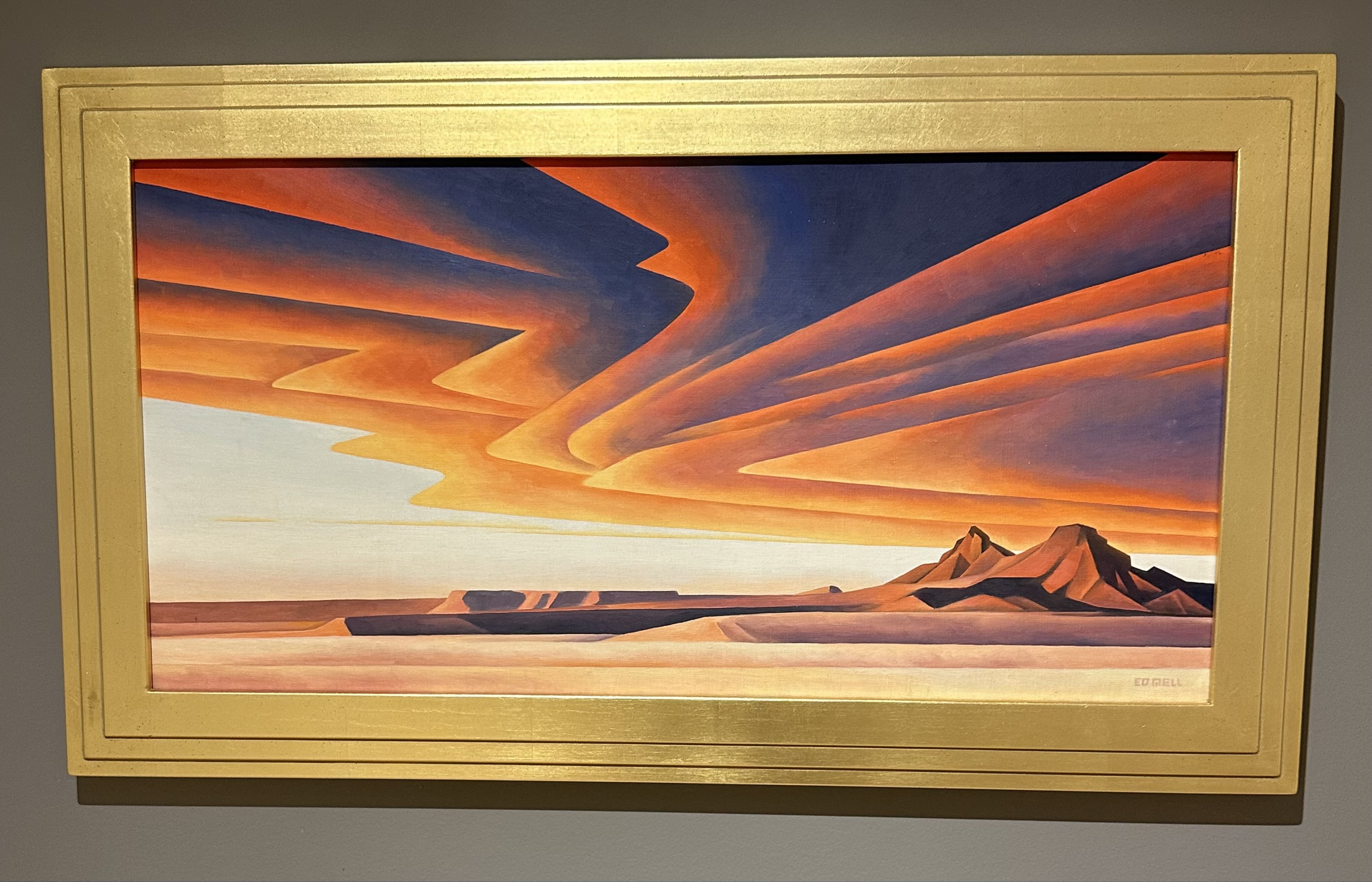
Untitled
Mell's artistic development reached a breakthrough in the late 1970s and through the 1980s, when he began exhibiting widely and his signature style crystallized into the form that collectors recognize today. His landscapes operate through a kind of loving abstraction. Mesas are rendered as monumental interlocking planes of warm color. Storm clouds become architectural, their edges sharp and declarative against cobalt skies.
The desert floor rolls in faceted passages of ochre and rust. There is a clear kinship with the Art Deco movement in this approach, particularly in the way Mell treats natural forms as if they possess the ordered grandeur of a WPA mural or a Streamline Moderne facade. Yet his work never feels nostalgic or derivative. It feels present, urgent, and deeply personal.
Ed Mell
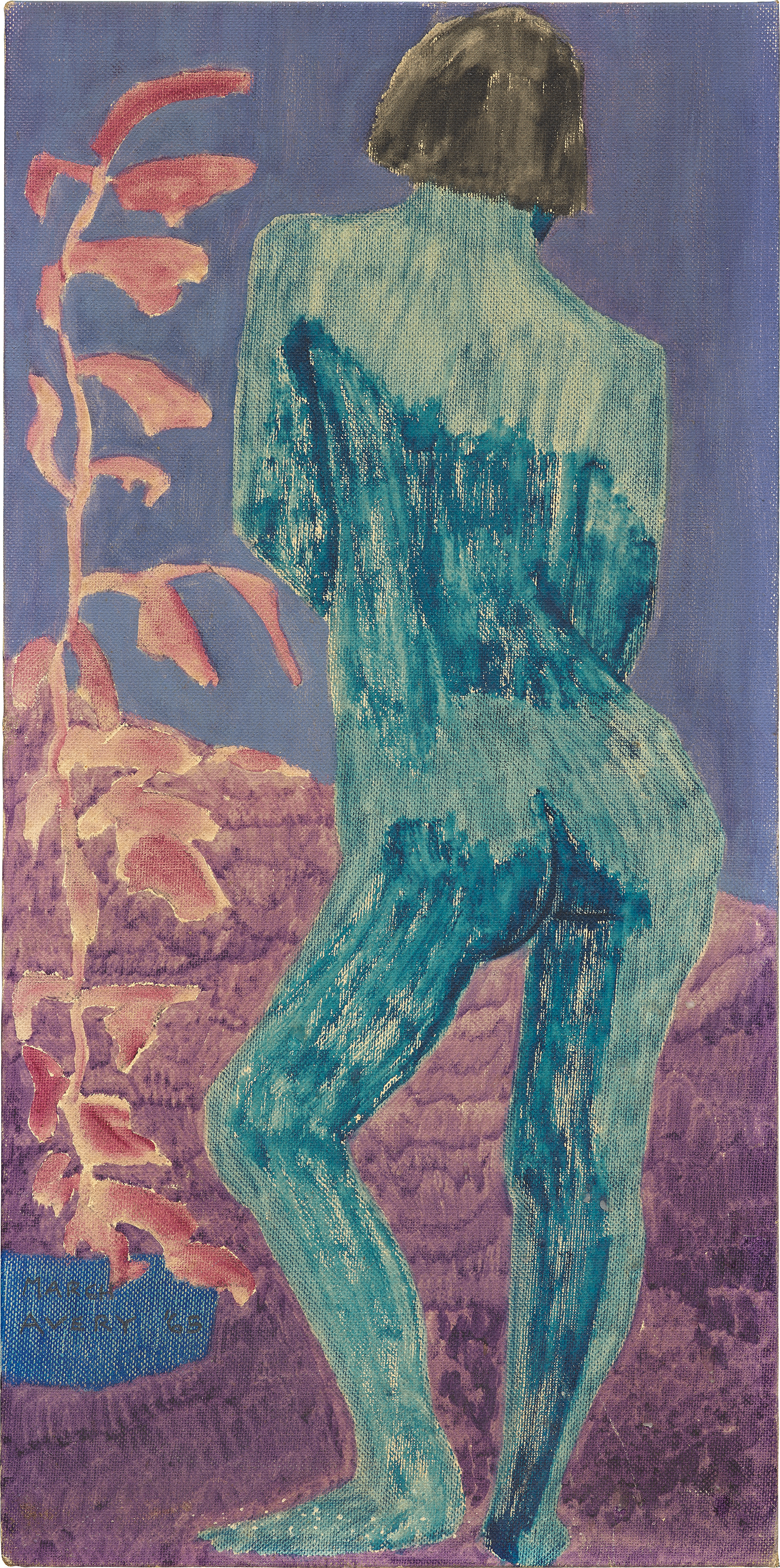
Two Petunias, 1990
Among his most celebrated works are his large scale oil paintings depicting the mesas and canyon lands of Arizona and the broader Colorado Plateau. These paintings achieve something rare: they are simultaneously decorative in the best sense of the word, commanding and beautiful in any room, and intellectually serious in their formal ambition. His 1990 oil on canvas "Two Petunias" offers a quieter but equally assured side of his practice, demonstrating that Mell's gift for stylization extends beyond the monumental landscape into the intimate and domestic. That painting reveals his capacity to find graphic drama in the humble subject, to see a pair of flowers with the same structural intensity he brings to a canyon wall.
His oil paintings on canvas remain the primary vehicle through which collectors engage with his vision, though his work as a sculptor, exploring similar forms in three dimensions, has earned its own devoted following. From a collecting perspective, Mell occupies a position that serious advisors describe as genuinely blue chip within the realm of American regional art. His market has been consistent and appreciating, supported by a collector base that ranges from devoted Southwestern art specialists to broader American art enthusiasts who respond to the formal confidence and sheer visual pleasure of his work. Galleries in Scottsdale and Santa Fe, particularly Trailside Galleries and others with deep roots in Western and Southwestern art, have long championed his work and helped build the institutional context around it.
Collectors who have held his paintings for decades have watched values climb steadily. For those entering the market now, his oil paintings on canvas represent the most direct and rewarding point of engagement, with works on paper and smaller studies offering accessible entry points into a practice of genuine art historical weight. To understand where Mell sits in the broader landscape of American art, it helps to think about the tradition he both inherits and transforms. His lineage connects backward through the great American regionalists of the mid twentieth century and further back to the painters of the American West like Maynard Dixon, whose own bold, simplified landscapes share Mell's taste for strong form and emotional resonance with place.
At the same time, Mell's debt to graphic modernism and Art Deco aligns him with artists like Thomas Hart Benton in his love of rhythmic, muscular form, even as his palette and mood are entirely his own. Contemporary painters working in adjacent territory, those exploring the intersection of landscape, abstraction, and American place, owe a quiet debt to the pictorial language Mell helped define. What makes Ed Mell's work matter today, in a cultural moment when the relationship between Americans and their land feels charged with new meaning, is precisely its capacity to inspire reverence. These are paintings that ask you to stop and look at the land, to feel its age and its scale and its strange, fierce beauty.
They do not sentimentalize the desert or make it picturesque in any easy way. They make it magnificent. For collectors who live with his work, it serves as a daily reminder of something essential: that the American landscape, in the hands of a great artist, is as worthy of serious, sustained attention as any subject in the history of painting. Mell has given that landscape a form equal to its grandeur, and that is a gift that will endure.
Explore books about Ed Mell