Duncan McCormick
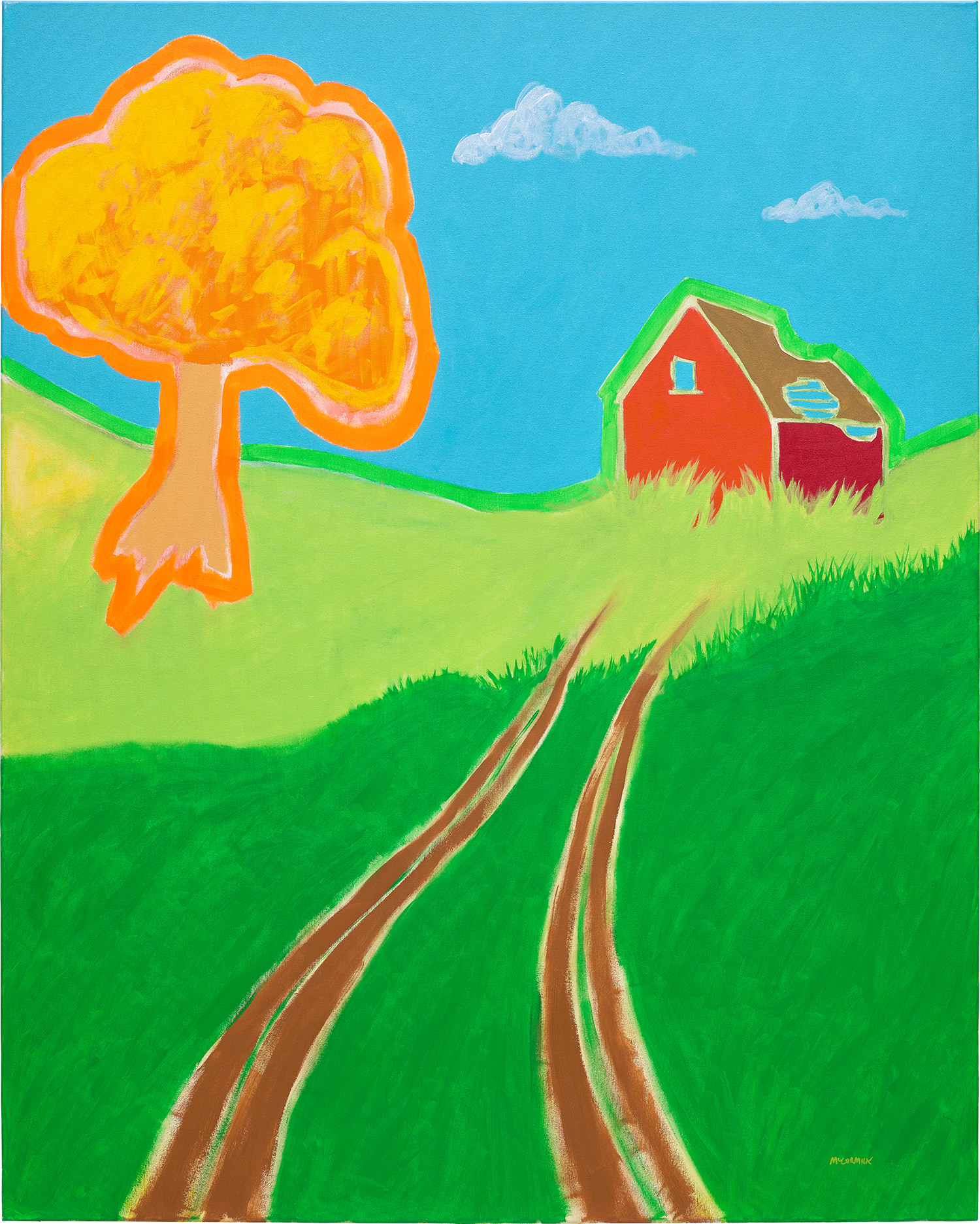
Duncan McCormick Paints the World Luminous
Artist Spotlight · The Collection Editorial
There is a particular quality of light in the Scottish Highlands that painters have chased for centuries, a shifting, atmospheric glow that sits somewhere between mist and memory. Duncan McCormick has spent his career not merely chasing that light but making it his own, bending it through an expressive, contemporary lens that feels urgently alive. With a growing body of work now available to collectors through platforms such as The Collection, and a sustained presence at regional and national auction houses across the United Kingdom, McCormick has quietly built one of the most compelling practices in contemporary Scottish painting. McCormick is Scottish by birth and sensibility, and the landscape of his homeland runs through his work like a river through moorland, constant, shaping, and impossible to ignore.
Duncan McCormick
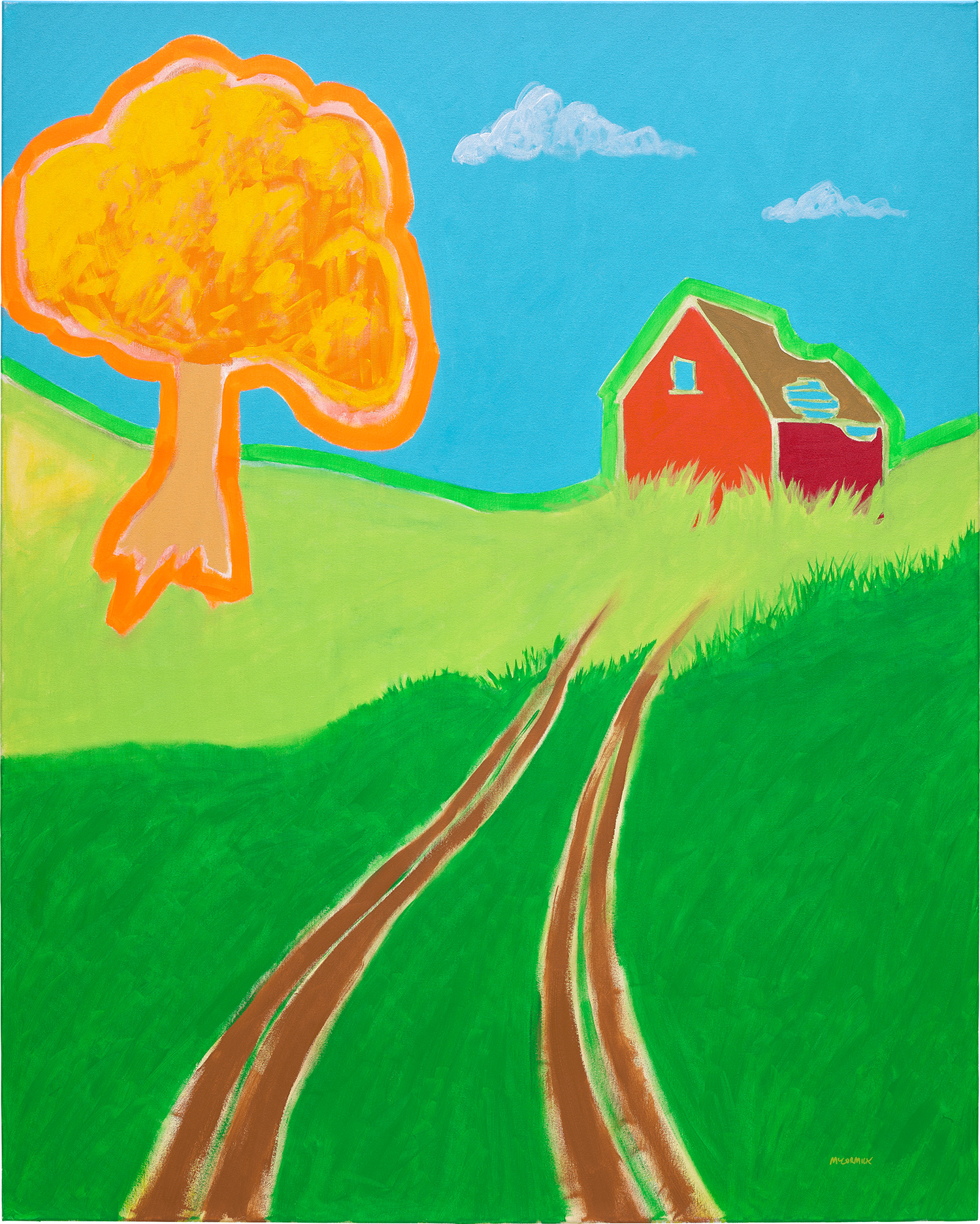
Beyond Muddy Lane, 2022
The rugged coastal regions and windswept highlands of Scotland have long provided painters with some of the most dramatic raw material in European art, a tradition stretching from the grand romanticism of Horatio McCulloch in the nineteenth century through the bold colorism of the Scottish Colourists, particularly Samuel John Peploe and Francis Cadell, and onward through the twentieth century figurative painters of the Glasgow School. McCormick inherits this lineage with evident awareness, but he wears it lightly, using it as a foundation rather than a constraint. His formal development reflects an artist who has absorbed influences broadly and digested them on his own terms. The expressive brushwork that defines his canvases speaks to an engagement with the looser, more gestural traditions of postwar British painting, while his atmospheric use of color recalls the luminous surfaces of Scottish Colourist practice.
What distinguishes McCormick is the way these influences are synthesized into something genuinely personal. His paintings do not feel like exercises in tradition. They feel like observations made in real time, urgent and particular, as though the artist caught something fleeting and pinned it to the canvas before it could escape. The works from his most productive recent period, roughly 2020 to 2022, reveal an artist operating with considerable confidence and range.
Duncan McCormick
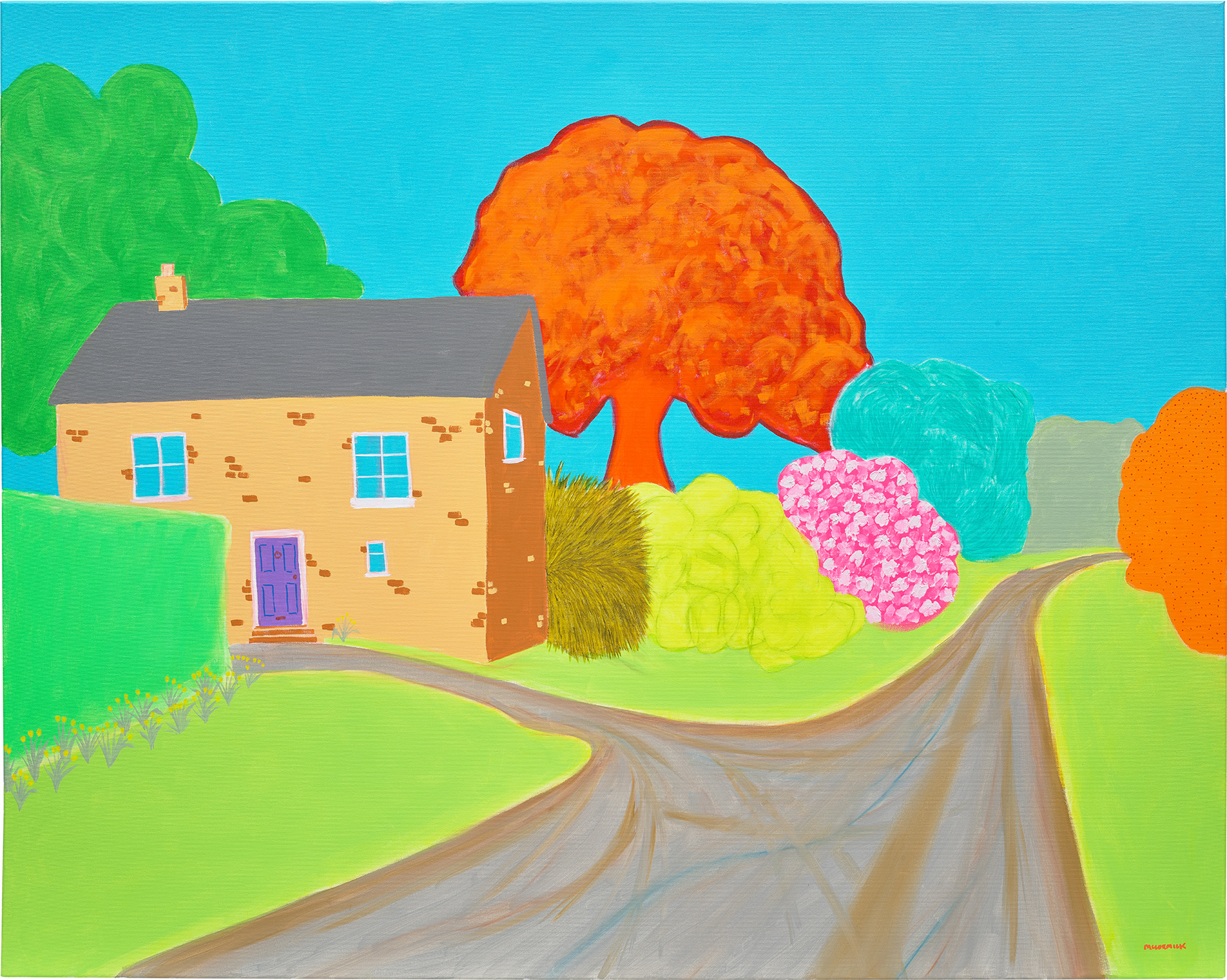
Red Tree House, 2020
"Red Tree House" from 2020, executed in acrylic on canvas, demonstrates his ability to anchor a composition around a single bold focal point while keeping the surrounding landscape in a state of atmospheric looseness. The red of the house does not shout; it glows, as though the structure has absorbed the warmth of the day and is slowly releasing it back into the air. "No Swimming" from the same year, worked in acrylic and watercolour on canvas, shows a different register altogether, lighter in touch and almost playful in its handling of surface and color, suggesting a painter who does not confine himself to a single emotional key. By 2021 and 2022, the work deepens in ambition and complexity.
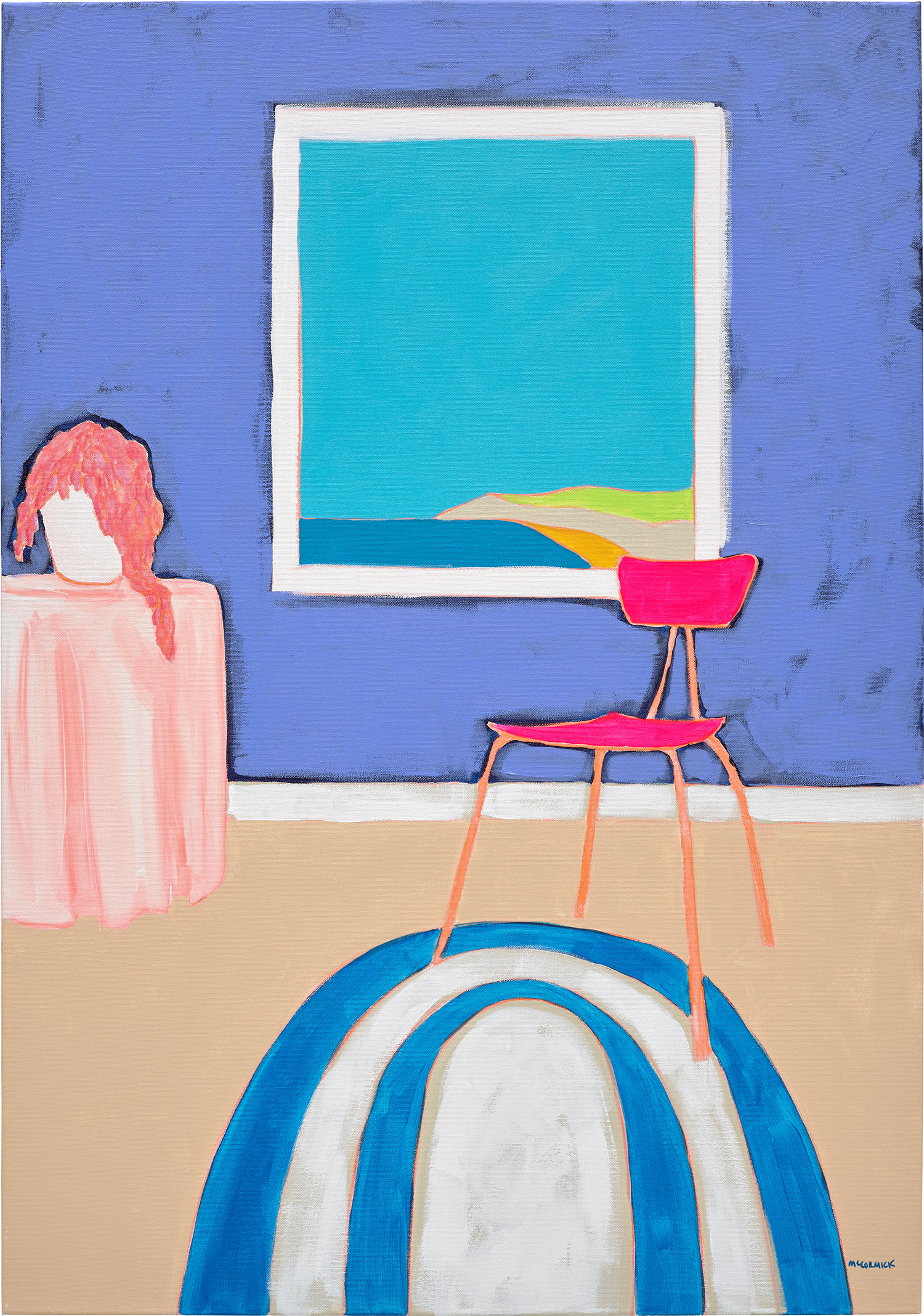
"Haze Field Stream" from 2021 layers acrylic and watercolour with a confidence that makes the mixed media feel entirely natural rather than effortful, the two materials working together to evoke the hazy indeterminacy of a summer afternoon. "Jane's Beach" from the same year, in pure acrylic, is a reminder that McCormick can work with directness and economy when the subject demands it. The 2022 works, including the related pair "Past Muddy Lane" and "Beyond Muddy Lane," are among the most fully realized in his output, exploring the same terrain from different vantage points with a painter's curiosity about how place shifts and transforms depending on where you choose to stand. "In a Blue Room with No Curtains" from 2022 marks an interesting move into interior space, the blue suffusing the composition with a quiet intimacy that feels like a natural extension of his landscape sensibility rather than a departure from it.
Duncan McCormick
In a Blue Room with no Curtains, 2022
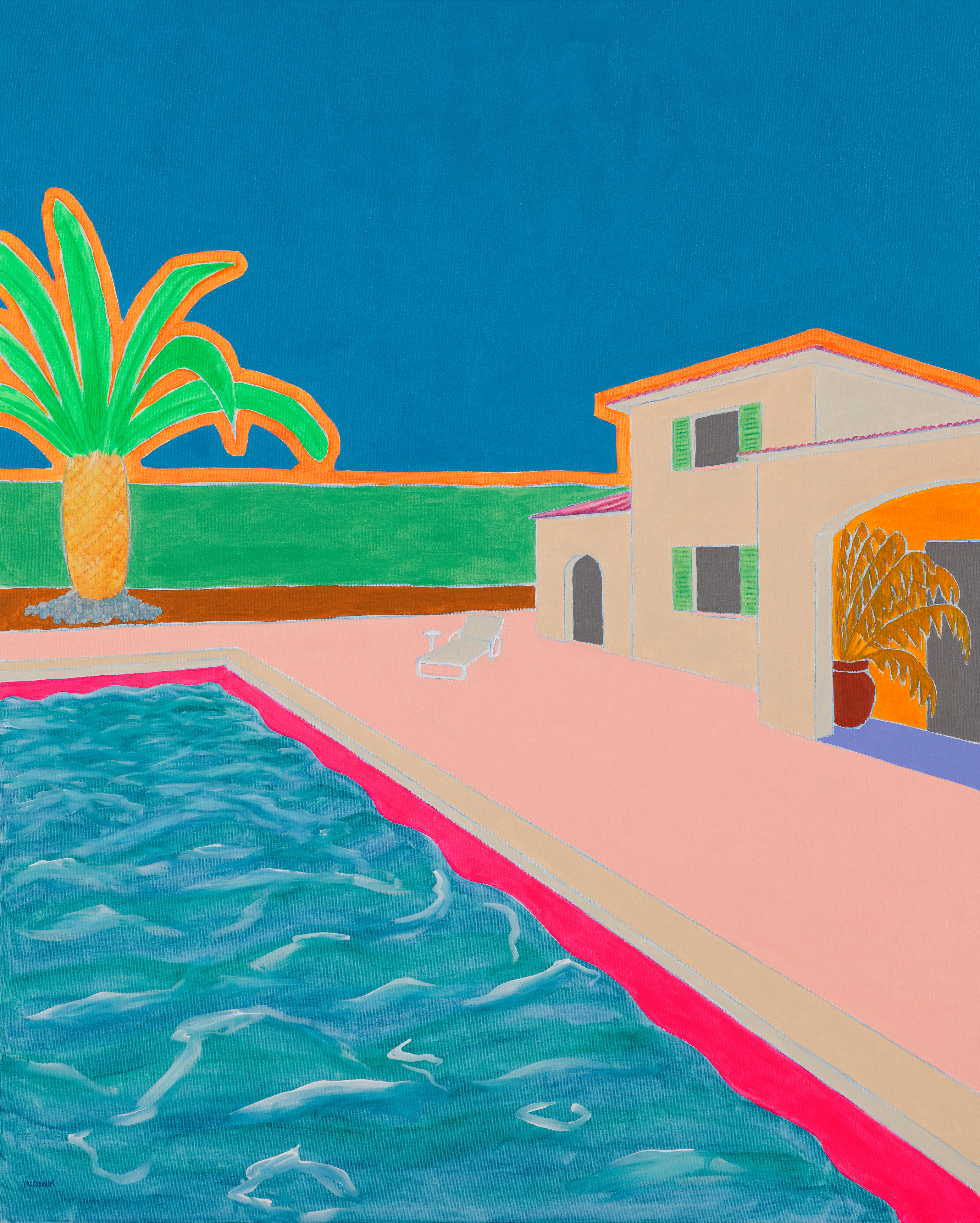
The work titled "Villa Mallorca" and the delicately rendered "Rose Bay Lovers" point to another dimension of McCormick's practice, one that extends beyond the Scottish terrain into broader Mediterranean and figurative territory. These works carry a warmth that is not simply a matter of palette. There is an emotional generosity in how McCormick places figures and architecture within their environments, a sense that the world he paints is one worth inhabiting. "Trevor's Dream" from 2022 pushes further into figurative and oneiric territory, its title alone suggesting a painter interested in the inner life of his subjects as much as their outward appearance.
For collectors, McCormick represents a genuinely exciting proposition. His work sits at a price point that reflects an artist whose market recognition is still catching up with the quality of his practice, which means that informed collectors have an opportunity that will not remain open indefinitely. His appearances at auction houses across the United Kingdom have attracted consistent interest, and the breadth of his subject matter means that there is a work suited to a wide range of collecting contexts, from expansive landscape canvases to more intimate figurative and interior pieces. The mixed media works combining acrylic and watercolour are particularly worth noting, as they demonstrate a technical versatility that gives each canvas a distinct surface character, no two works feeling quite alike even within the same thematic series.
Duncan McCormick
Villa Mallorca
Within the broader context of contemporary Scottish and British painting, McCormick belongs in conversation with artists such as Steven Campbell, whose figurative narratives also blur the line between landscape and interior psyche, and with the looser painterly traditions associated with artists like Ken Currie and Adrian Wiszniewski, who emerged from Glasgow in the 1980s with a commitment to expressive figuration that rewired British painting's relationship to its own history. McCormick's work is quieter in register than some of his Scottish contemporaries, more interested in atmosphere than in narrative drama, but no less serious for that. What McCormick ultimately offers is a vision of painting as an act of sustained attention. His canvases ask you to slow down and look, to notice the way light sits differently on water than on land, the way a red building can hold an entire composition together, the way a room without curtains can feel simultaneously vulnerable and luminous.
In an art world that often prizes concept over craft and novelty over depth, there is something genuinely valuable about a painter who has mastered the fundamentals and uses them in service of feeling. Scottish painting has always produced artists of this kind, painters who understand that the visible world is inexhaustible if you know how to look at it. Duncan McCormick is very much of that tradition, and he is making it new.