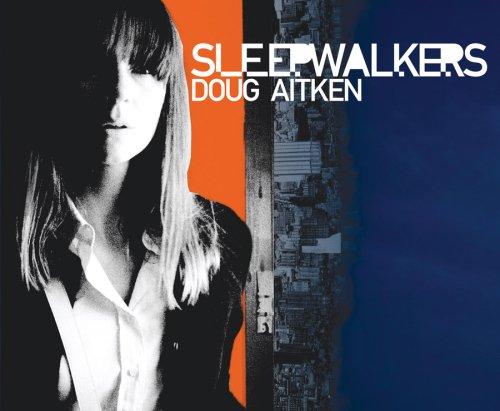
Doug Aitken
Doug Aitken Remakes the World Around Us
Artist Spotlight · The Collection Editorial
“I have a restlessness with the way a photograph captures time. The static quality of the frozen image is not enough.”
Doug Aitken
There are artists who make work for galleries, and then there are artists who remake the very fabric of experience. Doug Aitken belongs unmistakably to the second category. In the years since his landmark win at the 1999 Venice Biennale, where his installation Electric Earth claimed the International Prize and announced him as one of the most vital voices in contemporary art, Aitken has continued to expand what art can be, where it can live, and how deeply it can alter the way we perceive the world moving around us. His practice has grown into something that resists easy categorization, encompassing large scale video installations, architectural interventions, nomadic cross country happenings, and a body of photographic and lightbox work that stops collectors cold the moment they encounter it.
Doug Aitken
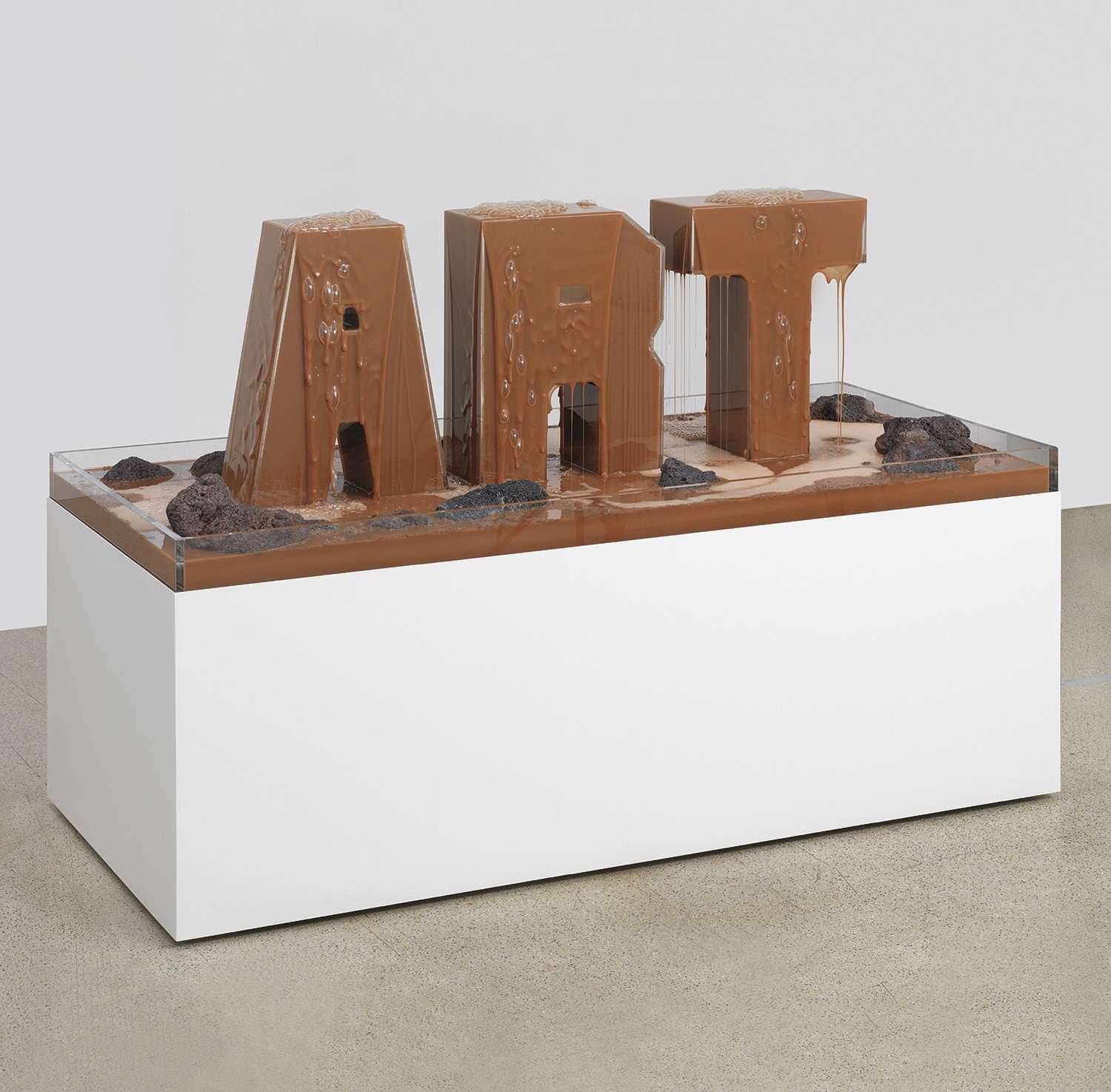
Fountain (earth fountain), 2012
Aitken was born in 1968 in Redondo Beach, California, a year that would later become the subject of one of his most charged and resonant works. Growing up on the Pacific coast, surrounded by the vast horizontal light of Southern California and the restless energy of a landscape that never quite sits still, he developed an early sensitivity to time, movement, and the strange compression of memory. He studied at the Art Center College of Design in Pasadena, an institution with a rigorous tradition of connecting fine art to visual culture, design, and media. That formation left a permanent mark, giving Aitken not only technical fluency across mediums but a genuine appetite for the point where disciplines dissolve into one another.
His artistic development through the 1990s was rapid and self assured. Working in Los Angeles and New York, Aitken began building multi screen video environments that placed viewers inside landscapes of fractured time, looping imagery, and overlapping sound. The work was never purely technological. It was always grounded in something deeply human: the sensation of being caught between stillness and motion, between a memory and the present tense.
Doug Aitken
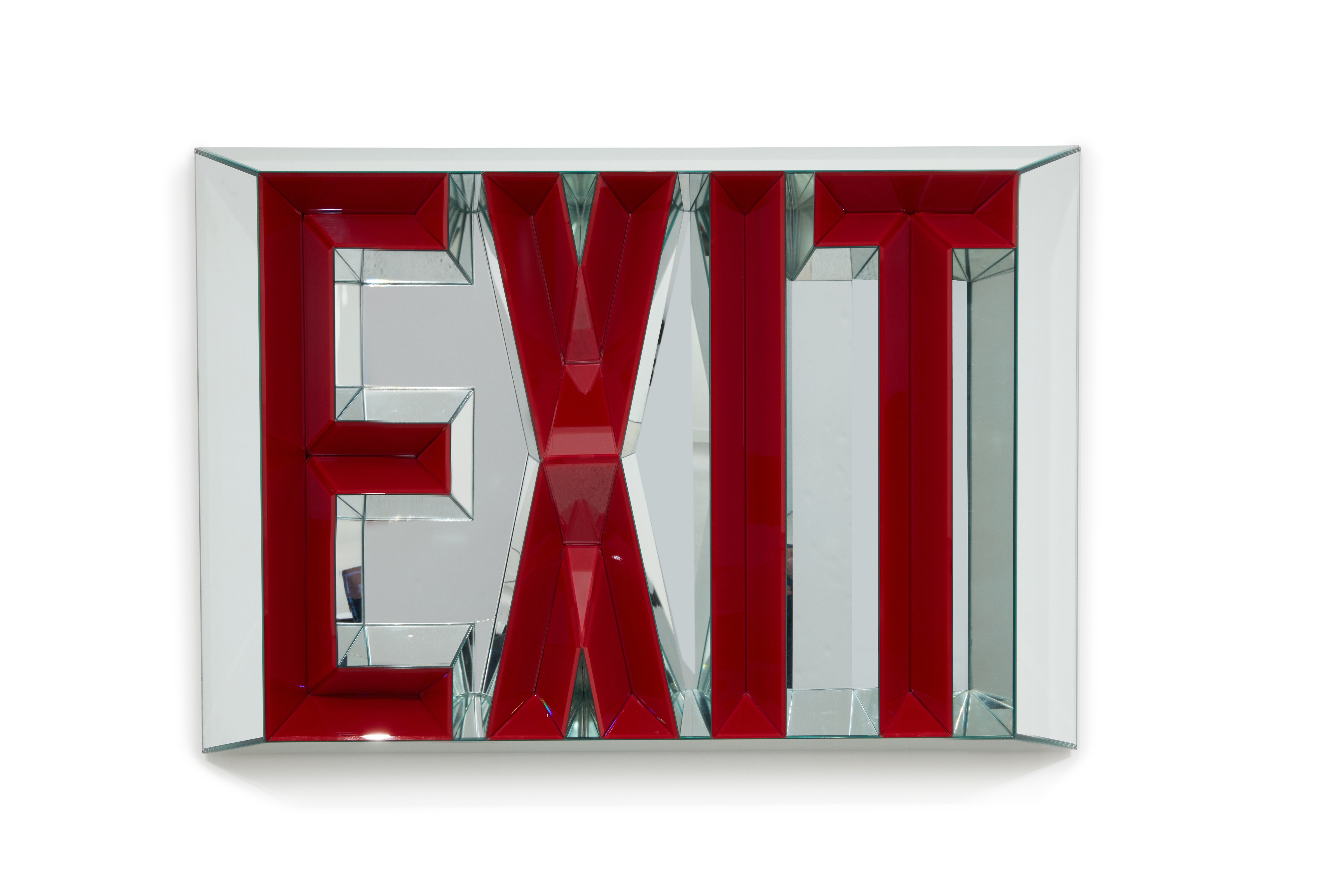
Exit, 2013
Electric Earth, the work that won Venice, placed a solitary figure moving through an urban nightscape in a state of total immersion, the body becoming almost electrical, tuned to the rhythms of the modern city. It was a revelation, and the art world understood immediately that it was in the presence of something new. Over the following decade and a half, Aitken pursued an increasingly ambitious and nomadic vision. Station to Station, launched in 2013, sent a customized train across the continental United States, stopping in cities and remote locations alike for performances, artist collaborations, and site specific events.
It was part artwork, part social sculpture, part living archive of American creative energy. The project drew artists, musicians, and filmmakers into its orbit and generated documentation that itself became part of Aitken's expanding universe. Then came Mirage, the architecturally extraordinary house clad entirely in mirrors installed in the California desert, which reflected and dissolved its surrounding landscape so completely that the structure seemed to both exist and vanish at once. These projects cemented Aitken's reputation not merely as a maker of beautiful objects but as a genuinely visionary architect of experience.
Doug Aitken
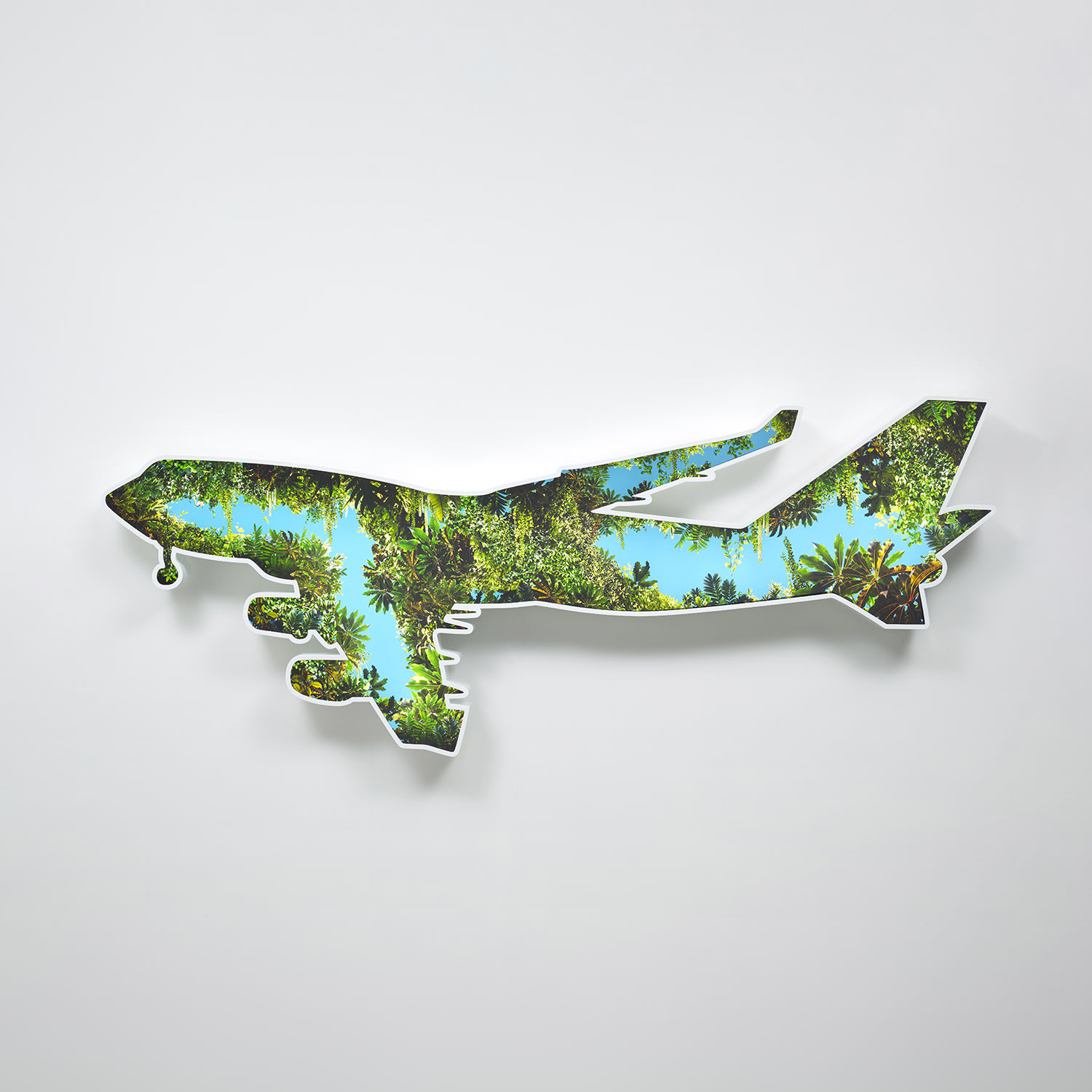
Jungle Plane, 2017
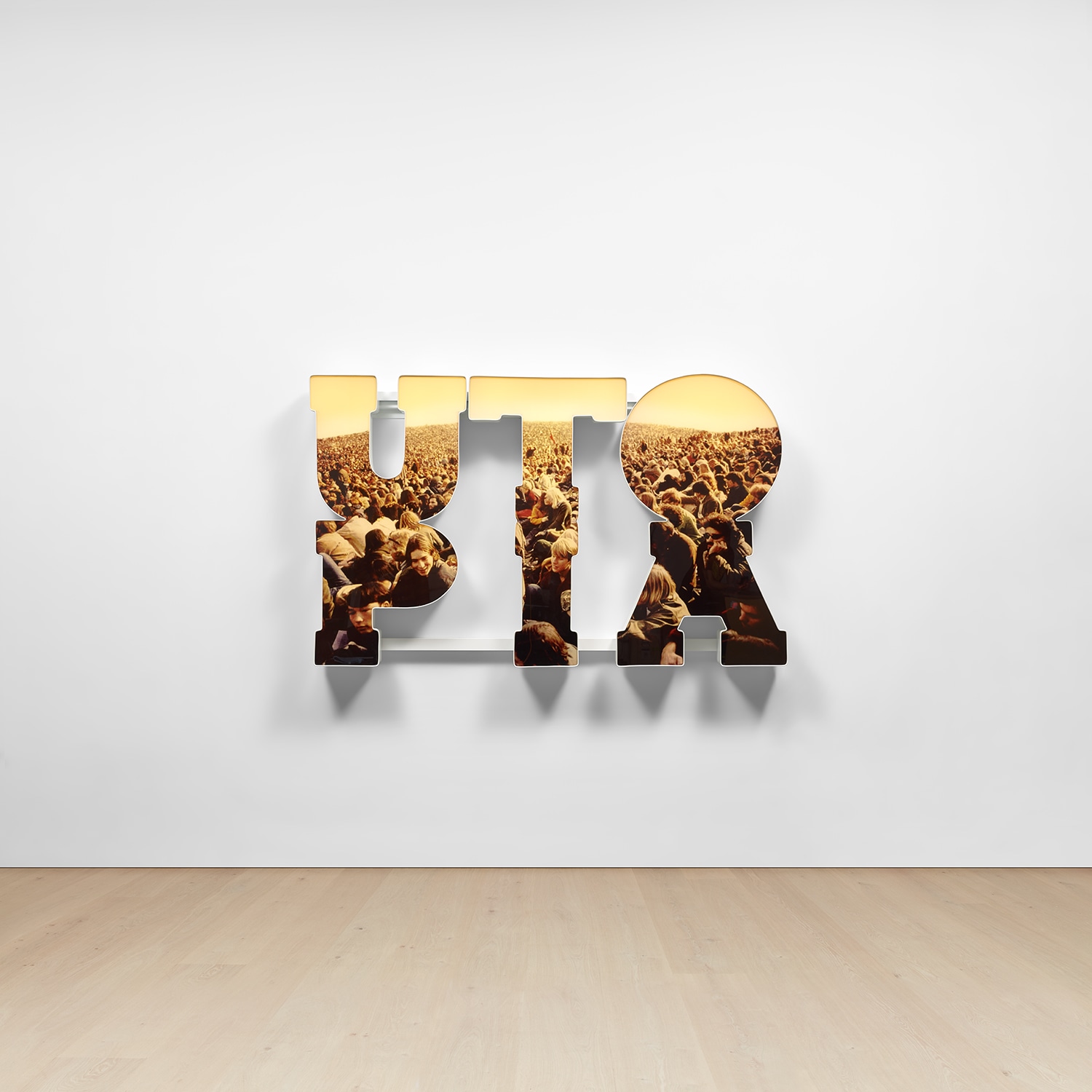
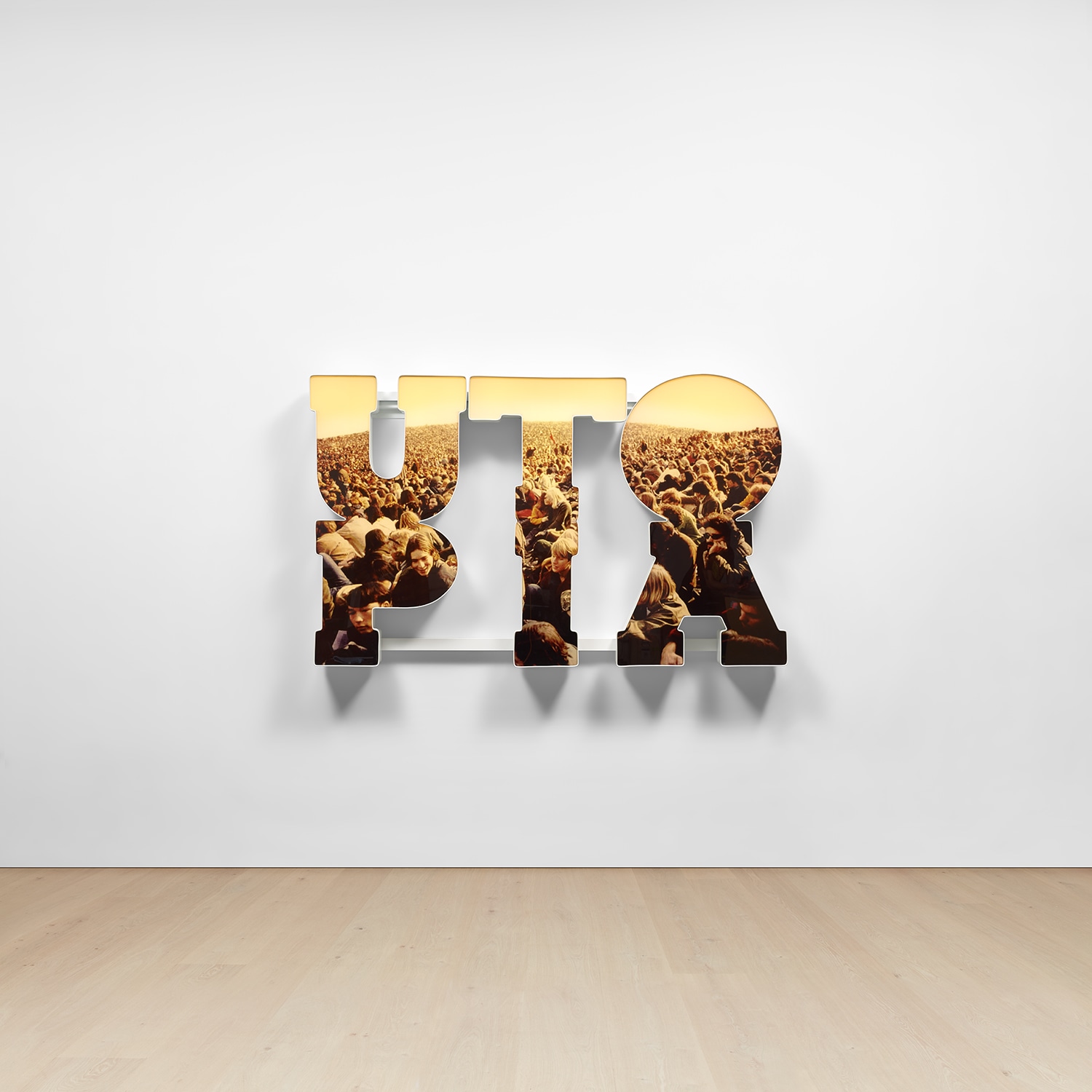
The works available through The Collection offer an exceptional entry point into Aitken's practice across multiple registers. Jungle Plane from 2017, realized as a chromogenic transparency and acrylic mounted on aluminum with an LED lightbox, demonstrates his mastery of light as material. The image glows from within, animating photography into something closer to cinema. UTOPIA (Altamont Motor Speedway) from 2011, also an aluminum lightbox with LED illumination and chromogenic transparency, carries the weight of American mythology in its title alone.
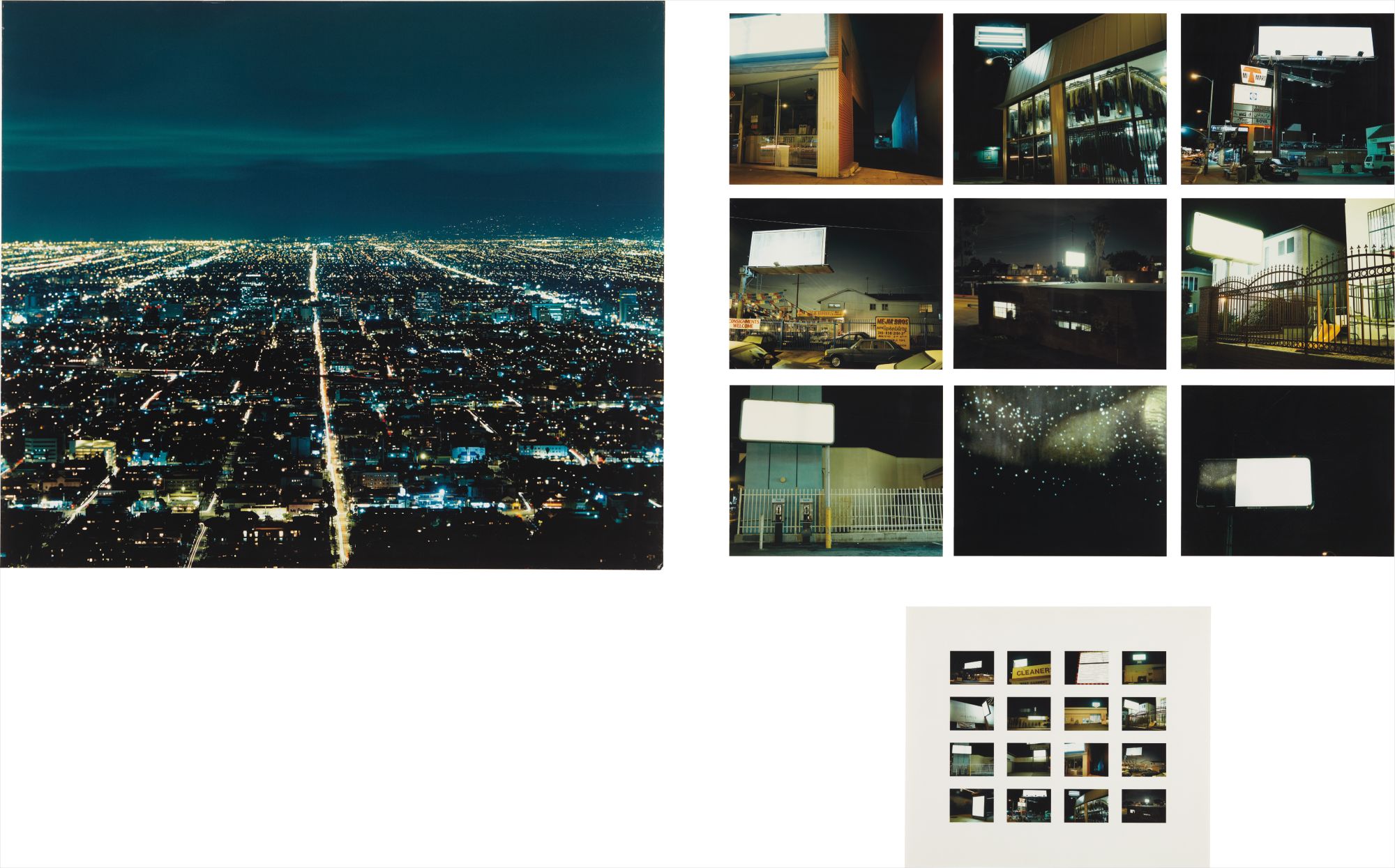
Altamont is a word loaded with the collapse of the 1960s dream, and Aitken approaches that history with the same layered awareness he brings to all of his investigations into American time and American landscape. His 1968 works occupy a particularly personal and politically resonant space. Named for the year of his birth, which Time magazine has called the year that shaped a generation, these pieces hover between autobiography and cultural elegy, marking the Civil Rights movement, the Vietnam War, and a collective American loss of innocence with an economy and emotional precision that is genuinely moving. The Mirror series, meanwhile, demonstrates Aitken's ongoing meditation on reflection and perception, his sense that looking at an image is always also a kind of self examination.
Doug Aitken
The Mirror #1-11
For collectors, Aitken's work occupies a position that is both established and still full of momentum. His larger institutional works command serious attention and appear regularly in major international surveys and museum collections. His lightbox works and photographic editions offer a more accessible but no less significant point of engagement, and they carry the full intellectual weight of his practice into formats suited to private spaces. Collectors drawn to artists at the intersection of conceptual rigour and sensory immediacy, those who admire figures like James Turrell, Olafur Eliasson, or Ed Ruscha, will find in Aitken a natural companion.
Like Turrell, he treats light as a primary material. Like Ruscha, he is steeped in the visual language of the American West and deeply attentive to the mythology encoded in its landscapes. And like Eliasson, he is committed to the idea that art can alter perception at a physiological level, not just an intellectual one. What places Aitken apart, and what makes his legacy feel increasingly essential, is his refusal to separate the moving and the still, the cinematic and the sculptural, the personal and the historical.
His observation that he has a restlessness with the way a photograph captures time, that he wants to smash a photograph open and see what is inside, is not merely a provocative statement. It is a precise description of what his entire practice achieves. Every lightbox, every installation, every nomadic happening is an act of opening something up, of refusing the frozen moment and insisting on the full complexity of duration and change. In an art world that often rewards spectacle over substance, Aitken delivers both with equal generosity, and that combination is rare and genuinely worth pursuing.
Featured Works
Explore books about Doug Aitken