Dorothy Norman
Dorothy Norman, Witness to a Brilliant World
Artist Spotlight · The Collection Editorial
“I photograph what I love, what moves me, what I feel must be preserved.”
Dorothy Norman
There is a particular kind of cultural figure whose significance exceeds any single discipline, someone who exists at the center of a creative universe and whose presence shapes everything around them. Dorothy Norman was precisely that figure. Though she worked as a photographer, writer, editor, and arts patron across six extraordinary decades, she remains something of a hidden gem in the story of twentieth century American modernism, a woman whose lens and sensibility helped preserve an entire era of intellectual and artistic life in New York. A renewed appreciation for her work, driven by growing scholarly interest in the photographers who orbited the Stieglitz circle, has brought her quietly luminous images back into focus for a new generation of collectors and curators alike.
Dorothy Norman
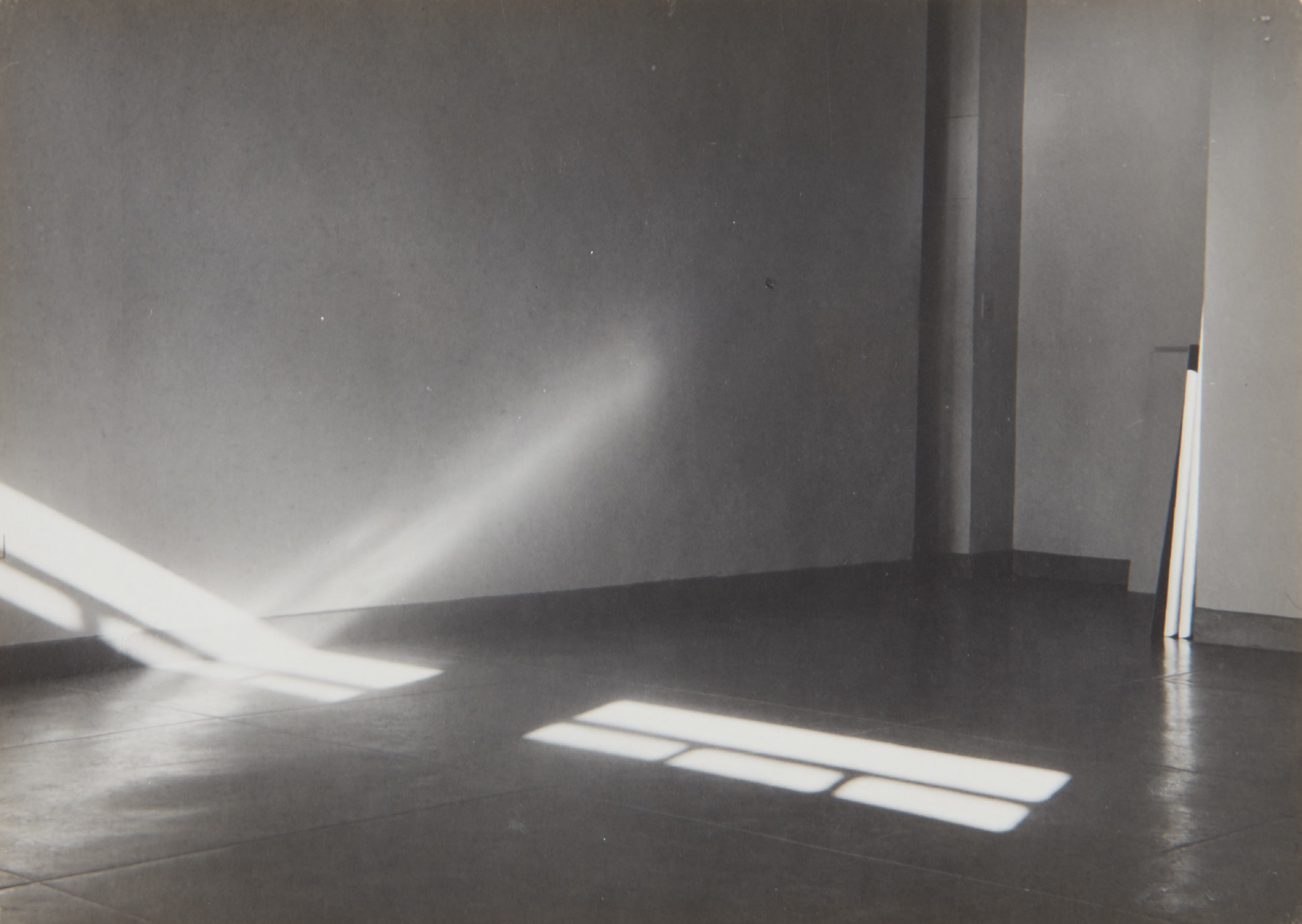
Walls - An American Place
Born in Philadelphia in 1905, Dorothy Norman came of age in a household that valued education and civic engagement. She studied briefly at Smith College and the University of Pennsylvania before moving to New York, where she married Edward Norman in 1925. That move proved transformative. New York in the late 1920s was a city crackling with modernist ambition, and Norman threw herself into its cultural life with characteristic enthusiasm.
The decisive encounter of her early years came when she walked into Alfred Stieglitz's gallery, An American Place, on Madison Avenue. That meeting would alter the course of her life entirely. Stieglitz recognized in Norman not merely an admirer but a genuine intellectual and creative partner. Under his influence and instruction, she took up photography with serious intent, and the two developed a relationship that was at once personal, professional, and profoundly artistic.
Dorothy Norman
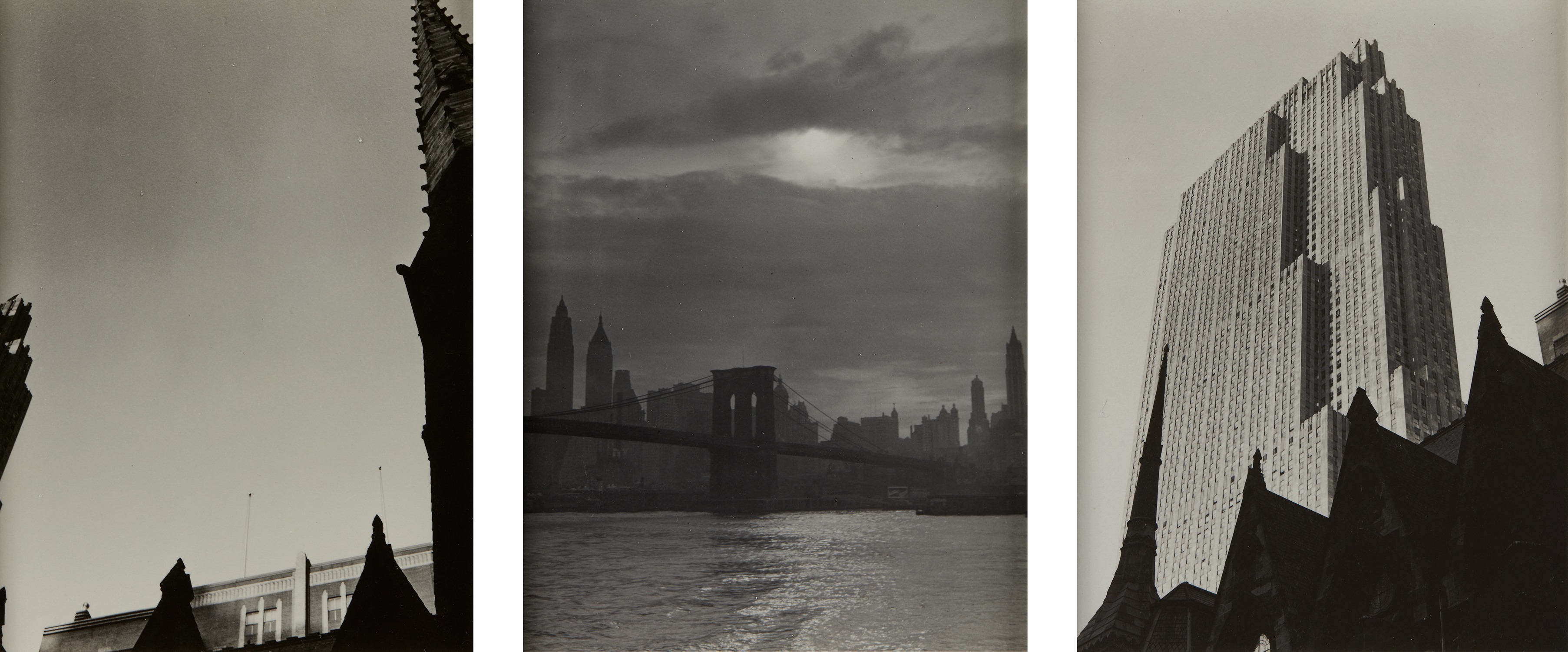
Selected Images of New York City
Stieglitz taught her to see with a modernist's eye, to value the ephemeral, the candid, the emotionally honest over the formally composed. Norman absorbed these lessons and made them her own. Her photography never slavishly imitated Stieglitz's approach but drew from it a commitment to authenticity and to the revealing detail that transforms a portrait into a document of inner life. Her artistic development unfolded alongside an extraordinary social world.
Norman became one of the most connected figures in mid century New York culture, a trusted friend and correspondent to an astonishing range of artists, writers, thinkers, and public figures. She photographed Jawaharlal Nehru, with whom she maintained a long and celebrated friendship, as well as numerous artists and intellectuals including figures associated with the Abstract Expressionist generation. Her portraits are distinguished by their intimacy and psychological depth. She was not a photojournalist capturing events from a distance.
She was an insider, and her subjects knew it. The result is a body of portraiture that carries a rare warmth and access. Among the works that best represent her vision are those tied directly to the world Stieglitz built and that Norman helped sustain. The gelatin silver print known as Walls, An American Place is a quietly powerful image, capturing the spare, almost sacred atmosphere of Stieglitz's legendary gallery space.
The work functions simultaneously as documentation and elegy, a record of a room charged with artistic meaning. Her Selected Images of New York City, a suite of three flush mounted gelatin silver prints, demonstrates the range of her eye across the urban landscape she loved. These works show a photographer responsive to light, geometry, and mood in equal measure, someone who understood that a city is always also a state of mind. From a collecting perspective, Dorothy Norman occupies a genuinely compelling position in the market for twentieth century American photography.
Her work sits at the intersection of several categories that collectors prize: the Stieglitz circle, modernist photography, New York School adjacency, and significant portraiture. Gelatin silver prints from her hand are relatively rare in circulation, and the flush mounted presentation of her major works gives them a physical elegance that reads beautifully on a wall. Collectors drawn to figures such as Paul Strand, Berenice Abbott, or Imogen Cunningham will find in Norman a natural and deeply rewarding companion. Her work rewards sustained looking, unfolding meaning slowly the way the best photographs do.
To understand Norman's place in art history, it helps to see her within a broader constellation of women who worked at the edges of canonical modernism and whose contributions were often recognized only belatedly. Like her contemporaries Berenice Abbott and Lisette Model, Norman brought a distinct social intelligence to the photographic practice of her era. Like Abbott, she was deeply invested in the life of New York as a subject. Like Model, she gravitated toward faces and the psychology behind them.
But Norman's particular archive, shaped by her unique access to the highest levels of American intellectual and political life, gives her work a documentary dimension that few photographers of any era can match. Her legacy extends well beyond her photographic output. She founded and edited the literary journal Twice a Year between 1938 and 1948, publishing work by figures including Sherwood Anderson, William Carlos Williams, and Henry Miller, among others. She was a committed civil liberties advocate and a passionate admirer of Indian culture and politics, channeling her friendship with Nehru into serious writing and cultural exchange.
After Stieglitz's death in 1946, she became one of the most devoted custodians of his legacy, eventually writing a major biography of him published in 1973. She remained active as a thinker and cultural presence until late in her life, and when she died in 1997 she left behind an archive of staggering richness. For collectors who believe that photography at its finest is an act of both witness and love, Dorothy Norman is an artist whose time has genuinely come. Her prints offer an unmediated connection to one of the most fertile periods in American cultural history, and they do so with grace, intelligence, and a human warmth that feels increasingly precious.
To acquire a work by Dorothy Norman is to bring into one's home not just an image but a window onto a world of rare brilliance, seen through eyes that were always, above all, paying attention.
Explore books about Dorothy Norman
Alfred Stieglitz: American Seer
Dorothy Norman
Encounters: A Memoir
Dorothy Norman
The Heroic Encounter
Dorothy Norman
Dorothy Norman: Her Photographs
Dorothy Norman
Iving Penn: His Life and Work
Dorothy Norman