Doron Langberg
Doron Langberg Paints Love Into Permanence
Artist Spotlight · The Collection Editorial
In recent years, few painters working in figurative art have generated the kind of sustained critical and collector enthusiasm that surrounds Doron Langberg. His solo exhibition at Victoria Miro in London and his ongoing representation by Yares Art have cemented his place as one of the most compelling voices in contemporary painting. Museums and private collections across the United States and Europe have been acquiring his work with a sense of urgency that speaks to something deeper than trend, a recognition that Langberg is painting the kinds of pictures that endure. Langberg was born in Israel in 1985 and came of age between two cultures, a duality that would later animate much of his artistic vision.
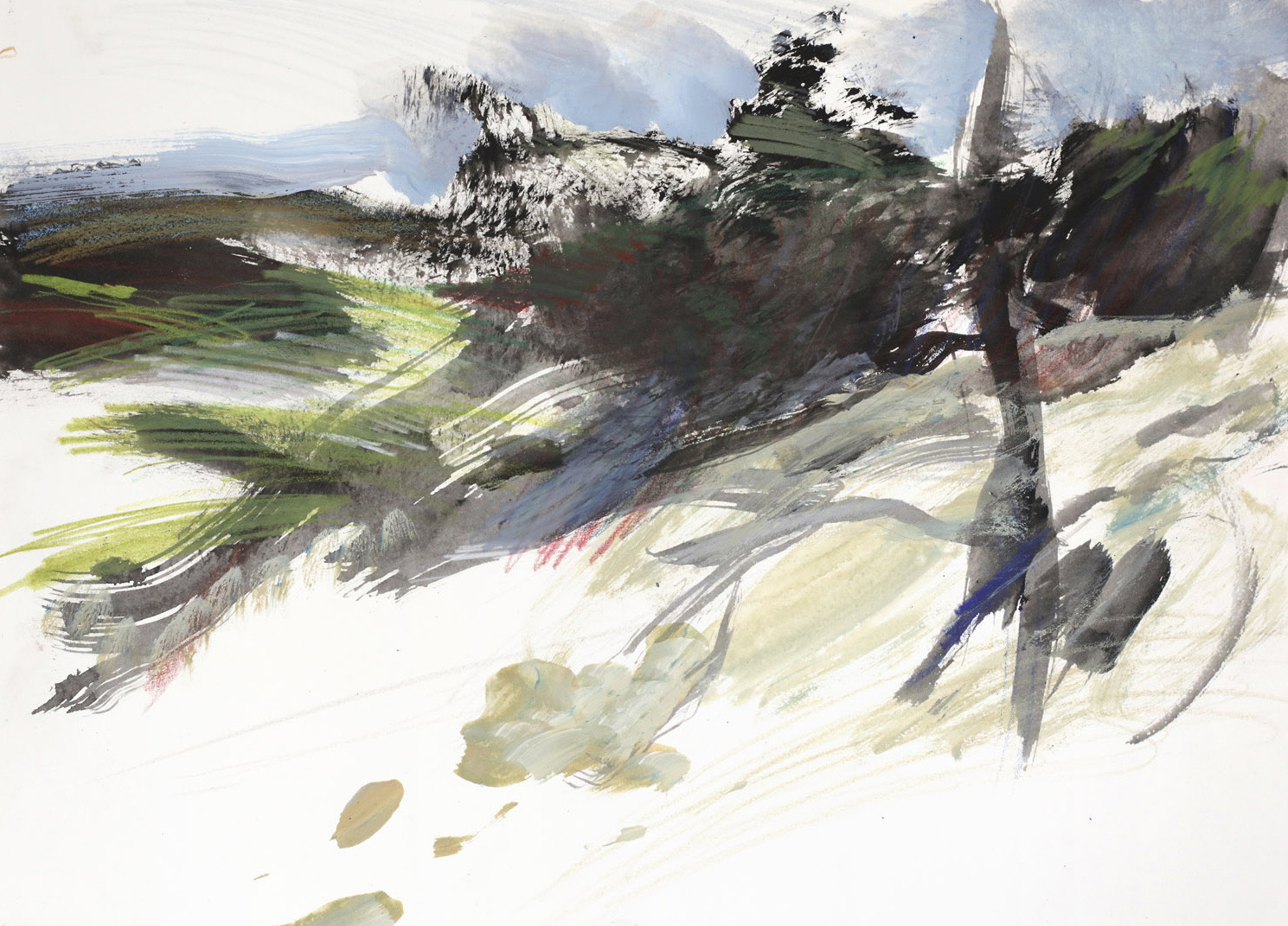
Doron Langberg
Untitled
He moved to the United States to pursue a formal art education, earning his BFA from the Pennsylvania Academy of the Fine Arts, one of the oldest and most storied art schools in America. He went on to complete his MFA at the Yale School of Art in 2011, placing himself within one of the most rigorous and intellectually demanding graduate programs in the world. That combination of classical training and conceptual ambition gave Langberg a technical foundation that he would spend the following decade joyfully, deliberately loosening. The years following Yale were formative in the most organic sense.
Langberg developed his practice slowly and honestly, painting the people closest to him: friends, lovers, family members, the textures of shared domestic life. Works from his early career, including pieces on paper and mixed media explorations dating to around 2010 and 2011, show an artist already comfortable with risk, willing to let the paint speak before the image fully resolves. His 2011 acrylic on canvas work demonstrates this restless early energy, a willingness to push material boundaries that would become a hallmark of everything that followed. By the mid to late 2010s, Langberg had arrived at the distinctive visual language that defines his reputation today.
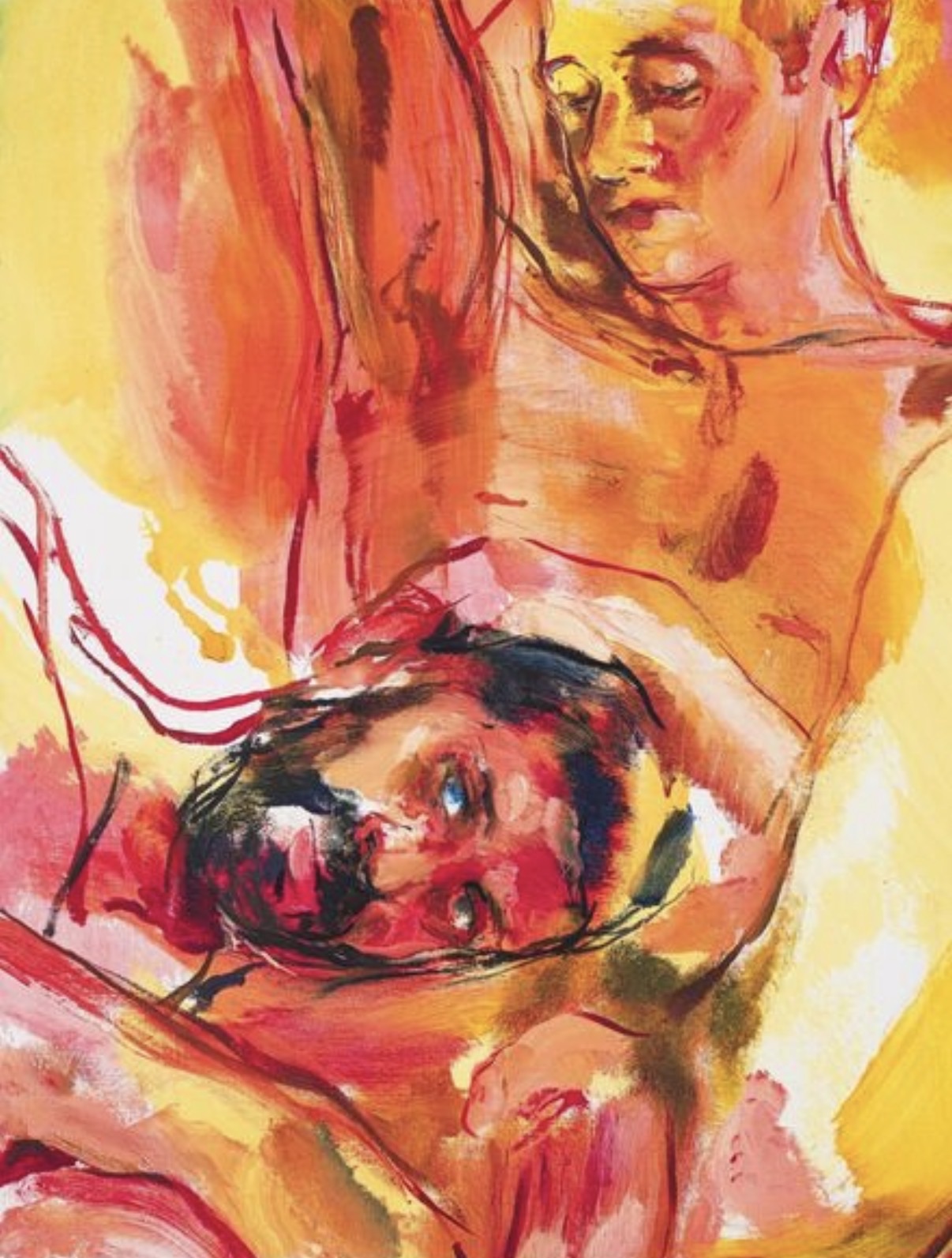
Doron Langberg
Untitled
Paintings like "Mark and Aubrey" from 2015, "Mom Weaving" and "Virginia" from 2016 and 2017, and "Amy in Her Studio" from 2017 reveal an artist at the height of his compositional confidence. Working primarily in oil on linen, a surface that rewards both speed and deliberation, Langberg developed a brushwork style that is simultaneously loose and precise. Color arrives in bold, unexpected relationships. Flesh tones vibrate against greens and blues that have no business being so beautiful together, and yet they are.
These are not paintings that flatter their subjects in a conventional sense. They do something rarer: they honor them. The work engages deeply and without apology with queer identity and intimacy. In choosing to paint gay men, chosen family, and tender private moments with the same monumental seriousness that Western painting has historically reserved for mythological or religious subjects, Langberg makes a quiet and radical argument.
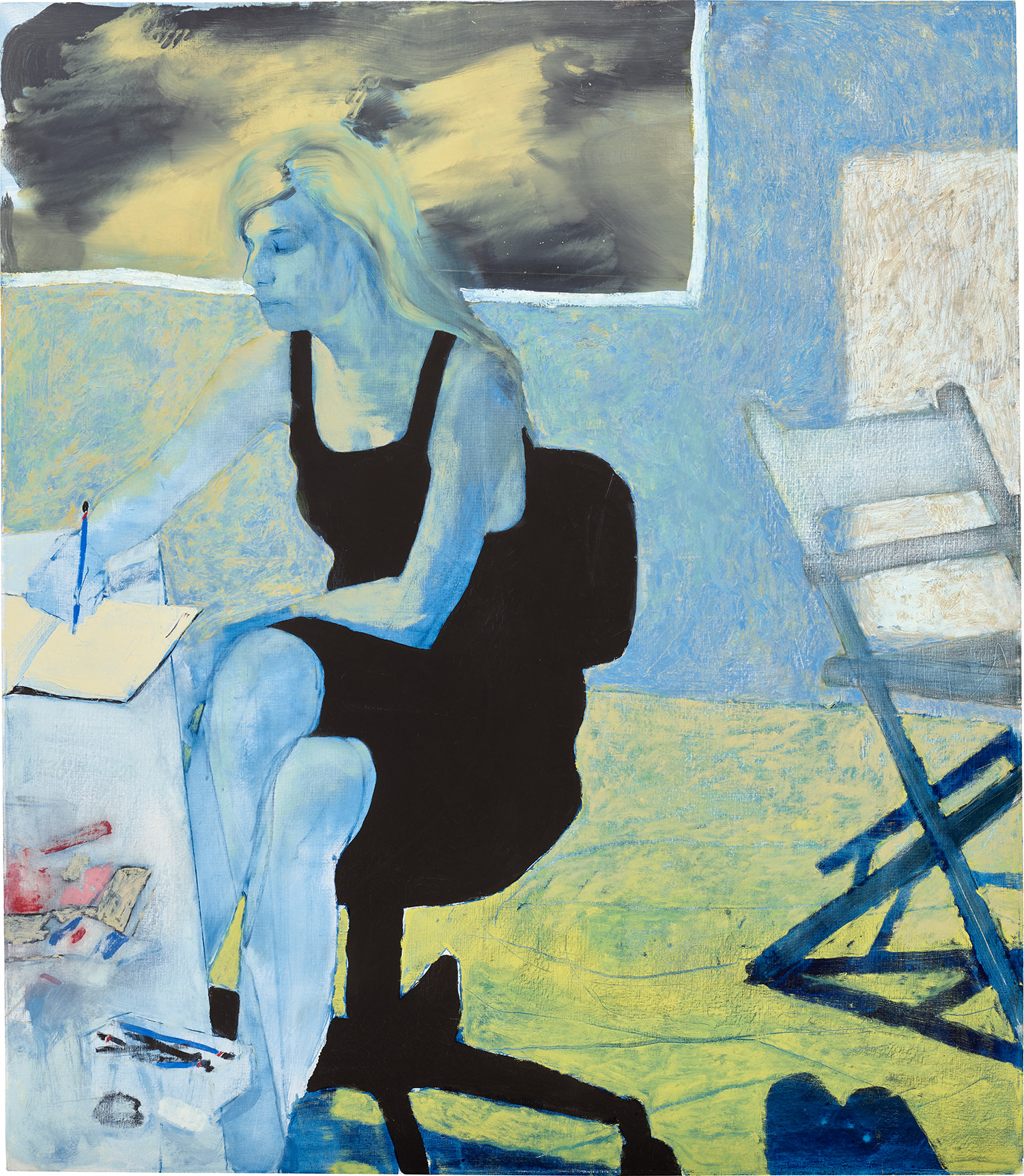
Doron Langberg
Virginia, 2017
His 2019 painting "James" is a masterclass in this approach, a portrait that feels less like a record of a person and more like an act of sustained attention and love. The figures in his paintings are not performing for the viewer. They exist in the fullness of their own interior lives, and we are granted the rare privilege of witnessing that. Langberg has also demonstrated a meaningful range across media.
His watercolors and monotype works, including "Resting 1" from 2021, show how his sensibility translates across surfaces, retaining that quality of felt immediacy whether in a delicate paper work or a large scale linen painting. The monotype in particular suits his interests perfectly: it is a medium that demands commitment, where the mark cannot be endlessly revised, and where the hand is nakedly present in the final image. Collectors who have come to his oil paintings through the linen works often find the works on paper offer a different but equally rewarding intimacy. For collectors, Langberg represents a genuinely exciting proposition at a moment when his market trajectory is clear and his critical standing is strong.
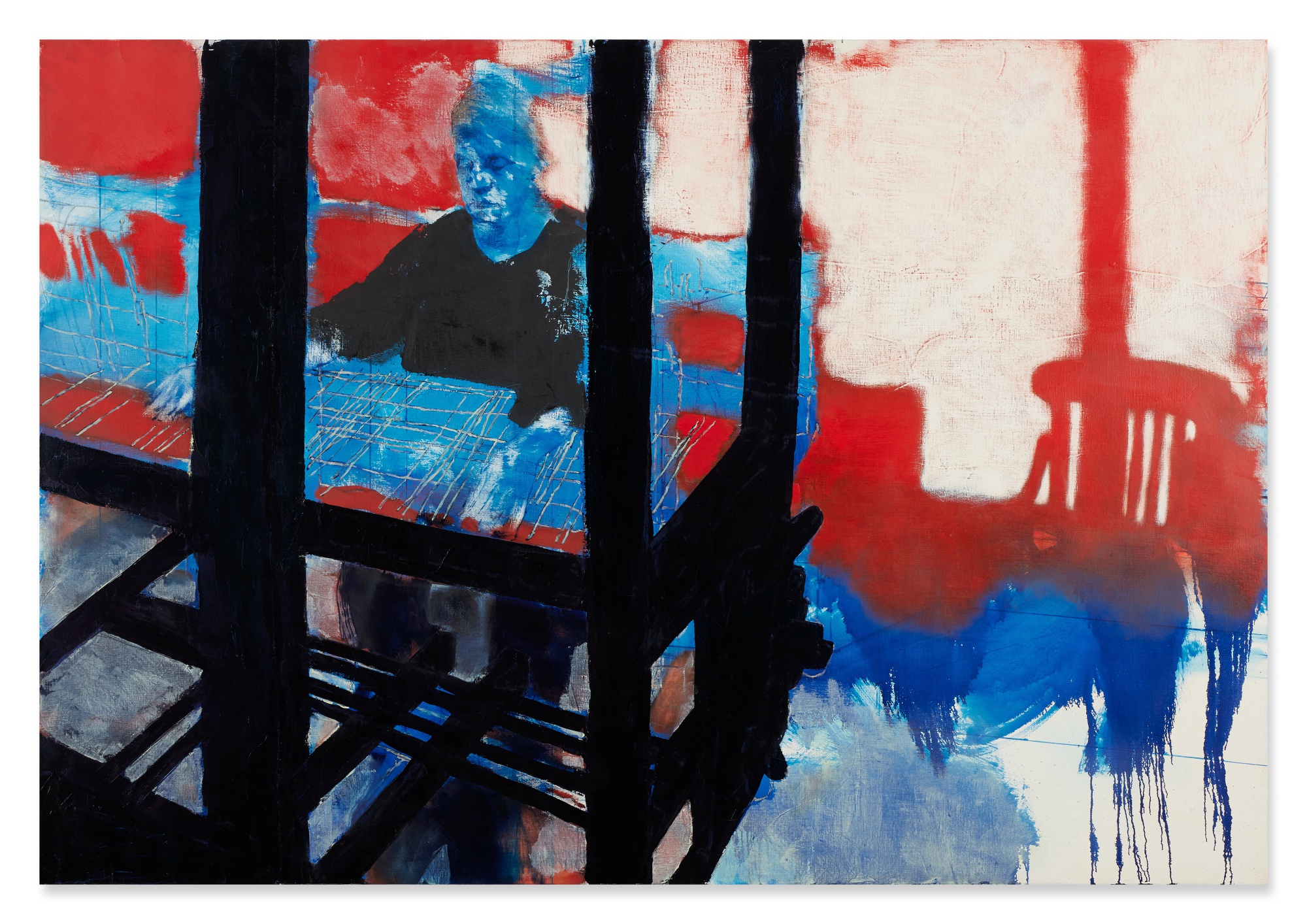
Doron Langberg
Mom Weaving, 2016
His work sits in conversation with painters like Cecily Brown, Peter Doig, and Lynette Yiadom Boakye, artists who have demonstrated that emotionally committed figurative painting has not only survived the conceptual turns of recent decades but has emerged from them with renewed purpose and audience. Langberg also draws natural comparison to artists like Henry Taylor and Jordan Casteel, painters who approach the portrait as an act of advocacy and love rather than mere likeness. Within the longer history of expressionist figuration, his work honors painters like Chaim Soutine and Francis Bacon while arriving somewhere entirely his own. The collecting community around Langberg is discerning and loyal, which is often the best indicator of an artist whose work rewards long term engagement.
Works on linen from the 2015 to 2021 period represent the heart of his practice and are the works most likely to hold and grow in significance. Works on paper, including the watercolors and monotypes, offer access points for collectors building toward a deeper relationship with the work. What unifies all of it is a seriousness of emotional intent that collectors respond to instinctively, the sense that Langberg is not making paintings about experience but from within it. Doron Langberg matters today because the questions he asks about visibility, tenderness, and the radical act of looking closely at the people we love are not going anywhere.
In an art world that sometimes privileges irony and distance, his commitment to warmth and directness feels not naive but courageous. He is an artist working at the intersection of personal and political, making paintings that will outlast the moment and speak to many moments yet to come. To own a Langberg is to hold a piece of that ongoing conversation, and to be reminded of what painting, at its best, has always been able to do.