Dora Maar
Dora Maar: A Vision Entirely Her Own
Artist Spotlight · The Collection Editorial
“All his life he photographed events. I photographed to live.”
Dora Maar, cited in various biographical accounts
In 2019, the Centre Pompidou in Paris mounted a landmark retrospective of Dora Maar's work, gathering over two hundred photographs, paintings, and documents that finally restored her to her rightful place in the canon of twentieth century modernism. The exhibition was a revelation for many visitors who had encountered her name only as a footnote to another artist's biography. What they discovered instead was a woman of formidable intellect and devastating visual instincts, whose contributions to Surrealism, documentary photography, and portraiture deserve to be understood entirely on their own terms. The show traveled and generated significant critical attention, and it remains one of the most important reassessments of a modern artist in recent memory.
Dora Maar
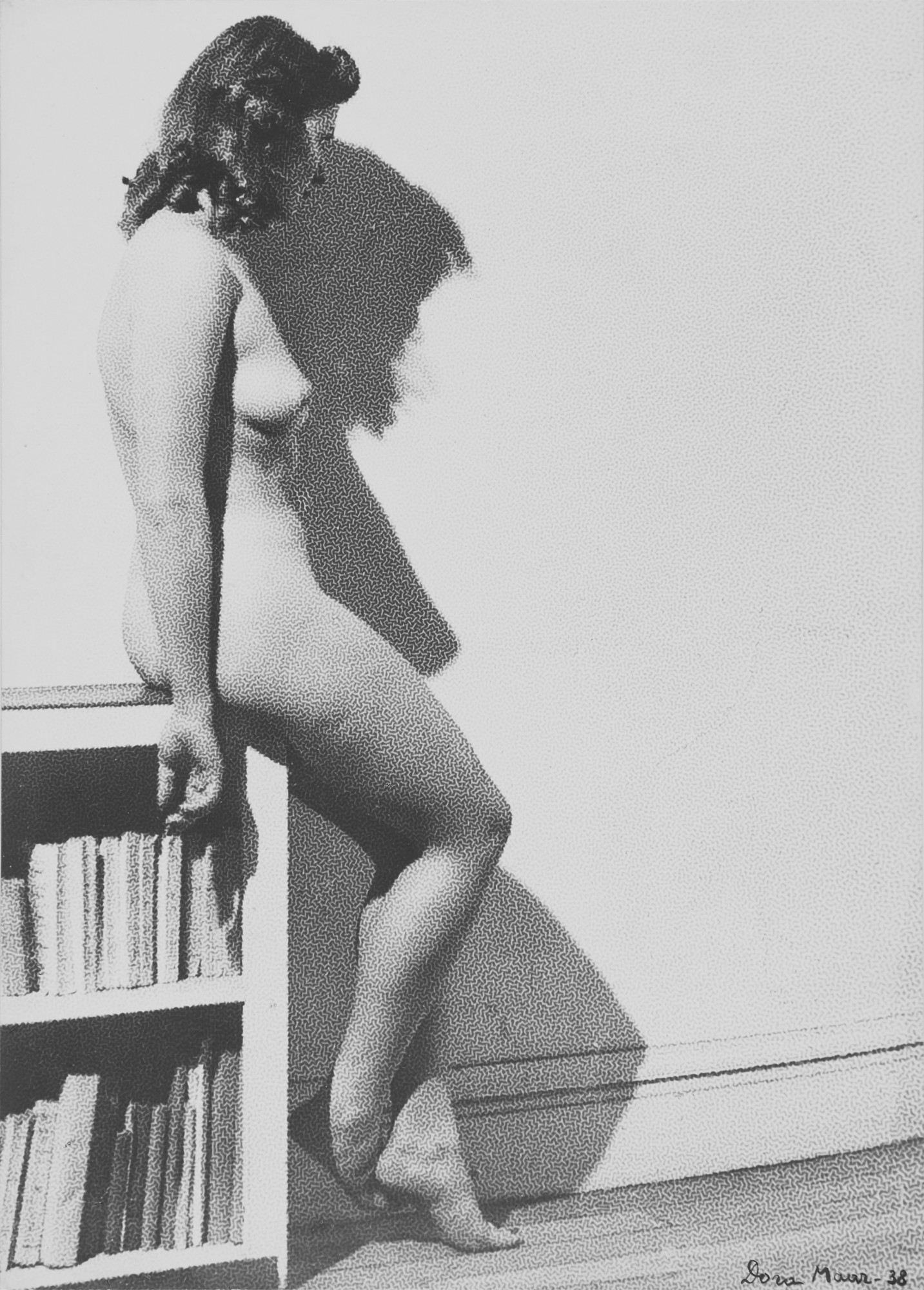
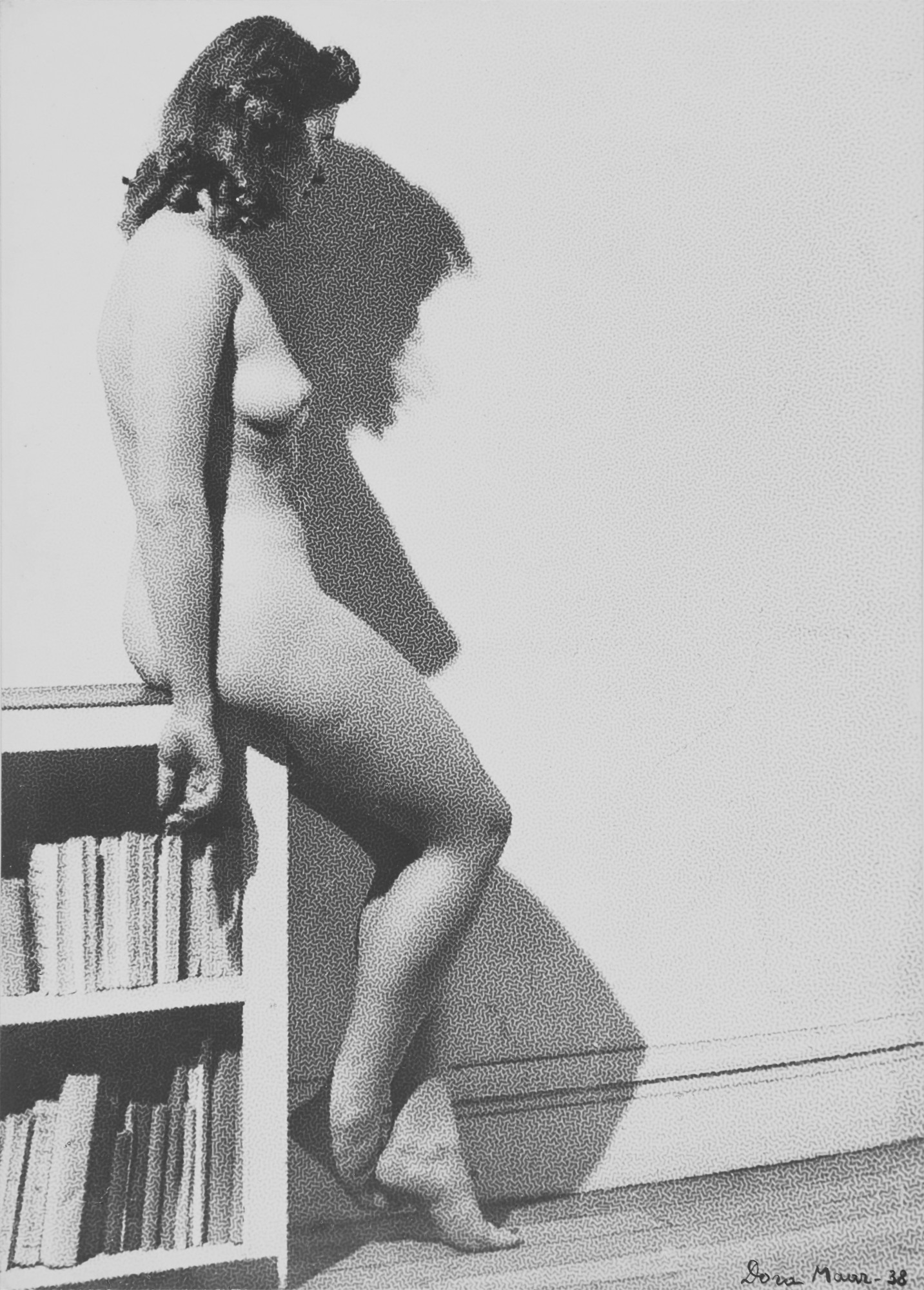
Nude (Assia- Profile)
Henriette Théodora Markovitch was born in Paris in 1907, the only child of a Croatian architect father and a French mother. Her early years were largely spent in Buenos Aires, where her father had taken on a significant architectural commission, and this childhood between cultures gave her an outsider's sharpness of perception that would define her art for decades to come. She returned to France as a young woman and immersed herself in the artistic and intellectual ferment of interwar Paris, studying painting at the École des Beaux Arts and then photography and film at the École de Photographie. She trained under the Polish photographer Harry Ossip Meerson and absorbed the technical rigor that would underpin even her most experimental work.
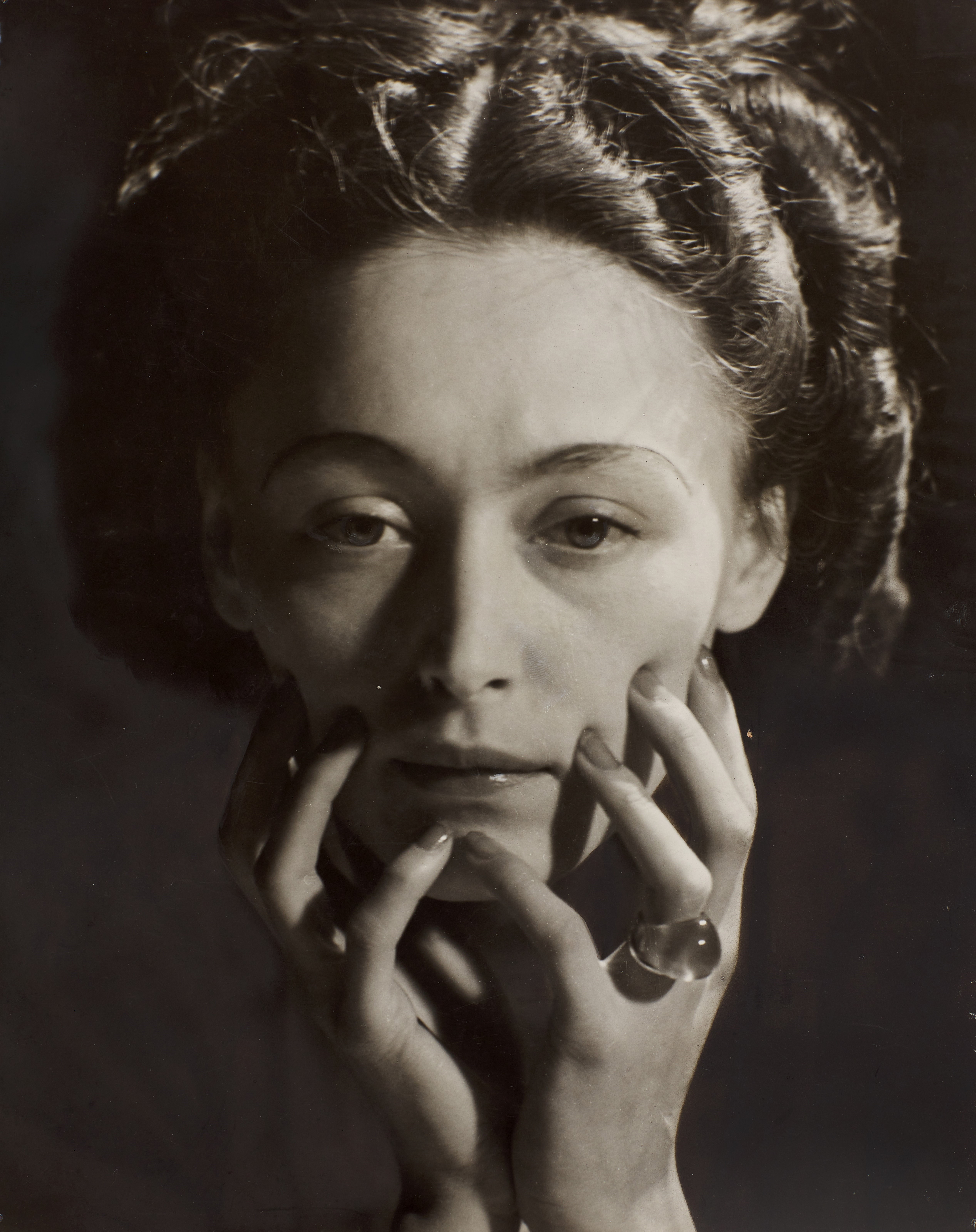
In the early 1930s, under the professional name Dora Maar, she established herself as a commercial and artistic photographer of considerable range. She produced advertising work and fashion photography while simultaneously pursuing a deeply personal documentary practice, photographing the streets of Paris, London, and Barcelona with a sociological intensity that placed her among the most engaged visual journalists of her era. Her image "Père Ubu," taken around 1936 and depicting a fetal armadillo in startlingly uncanny close up, became one of the defining Surrealist photographs of the century. It was during this period that she became close to the Surrealist circle, forming meaningful relationships with figures including Paul Éluard and his wife Nusch, whose portrait she captured in a gelatin silver print of 1935 that now stands as one of the most quietly powerful images of Surrealist community.
Dora Maar
Nusch Éluard, 1935
The portrait of Nusch Éluard available on The Collection exemplifies Maar's gift for photographing friends and peers with both affection and psychological acuity. Maar's portrait practice is one of the great underappreciated bodies of work in modernist photography. Her images of Pablo Picasso, several of which are represented on The Collection in fine gelatin silver prints, show a photographer utterly unintimidated by a monumental subject. Rather than mythologizing him, she observed him with the same cool, precise attention she brought to a Parisian street scene.
Works such as "Portrait of Picasso in Profile" and "Picasso au crâne de boeuf" reveal her compositional sophistication and her understanding of how the architecture of a face can hold entire worlds of meaning. These are not the photographs of an admirer deferring to greatness. They are the work of an equal, someone who understood visual language as fluently as the man she was photographing. Her nude studies, including the evocative "Nude (Assia, Profile)," demonstrate her mastery of light and form in a tradition that reaches back through modernism to classical sculpture, handled with a contemporary directness that still feels fresh.
Dora Maar
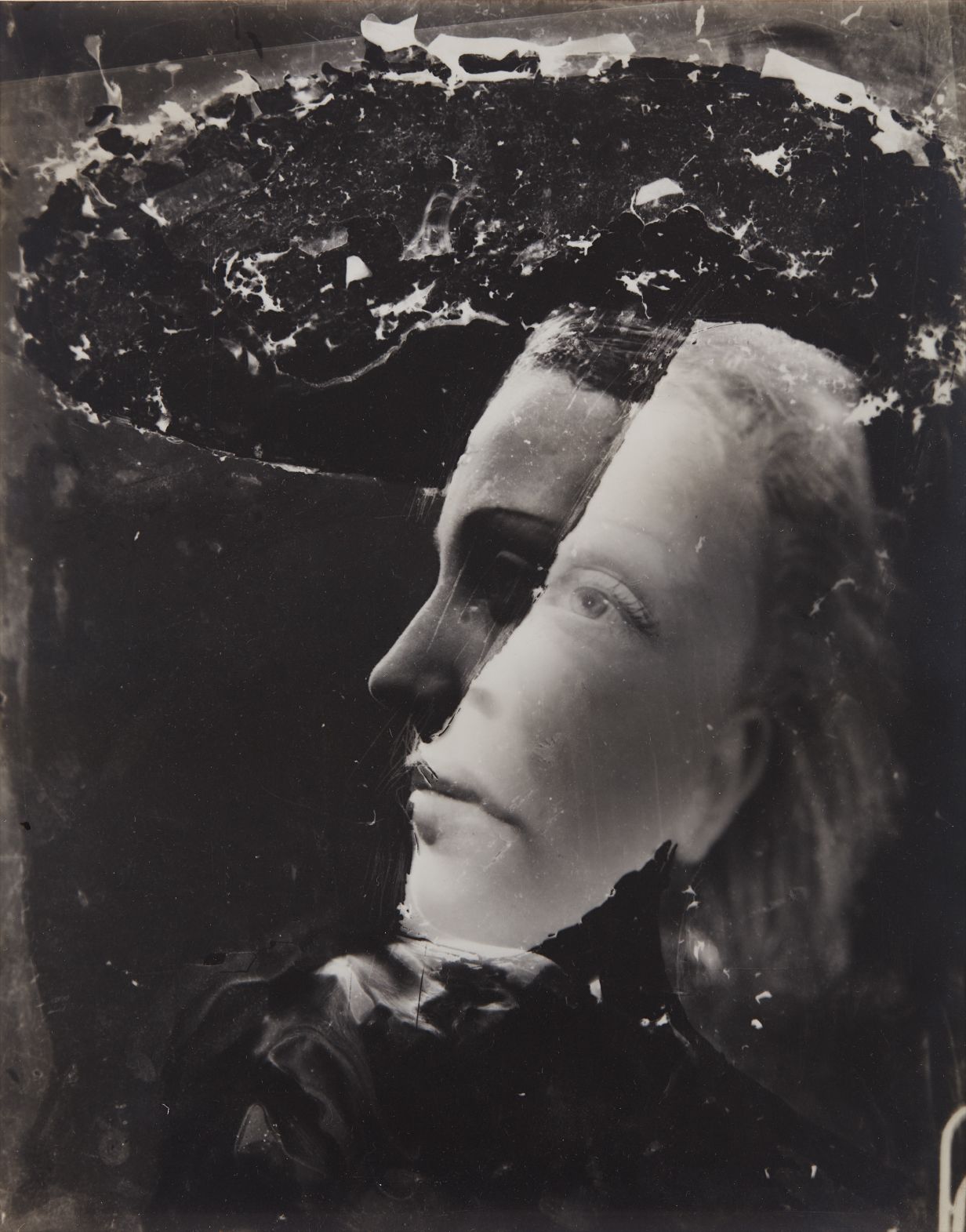
circa 1936
Perhaps the most historically significant act of Maar's photographic career was her documentation of the creation of Picasso's "Guernica" in 1937. She photographed the painting through multiple stages of its development in his studio on the Rue des Grands Augustins, producing a sequential record that is invaluable both as art historical document and as a series of extraordinary photographs in their own right. This work was undertaken with characteristic professionalism and intellectual seriousness, and it demonstrates how Maar understood photography as a medium capable of capturing not just a finished object but an artistic process unfolding in time. After the late 1930s, Maar increasingly turned to painting, encouraged in part by Picasso but driven by her own restless need to explore new modes of expression.
Her paintings, abstract and emotionally intense, have attracted growing scholarly and market attention in recent years. For collectors, Maar's gelatin silver prints represent a compelling proposition at several levels. Her commercial and artistic photographs from the 1930s are held in major institutional collections including the Musée National d'Art Moderne in Paris and the Getty Museum in Los Angeles, which speaks to the seriousness with which the museum world has embraced her legacy. Works that come to market tend to attract strong interest from collectors who prize the intersection of Surrealism, documentary practice, and portraiture.
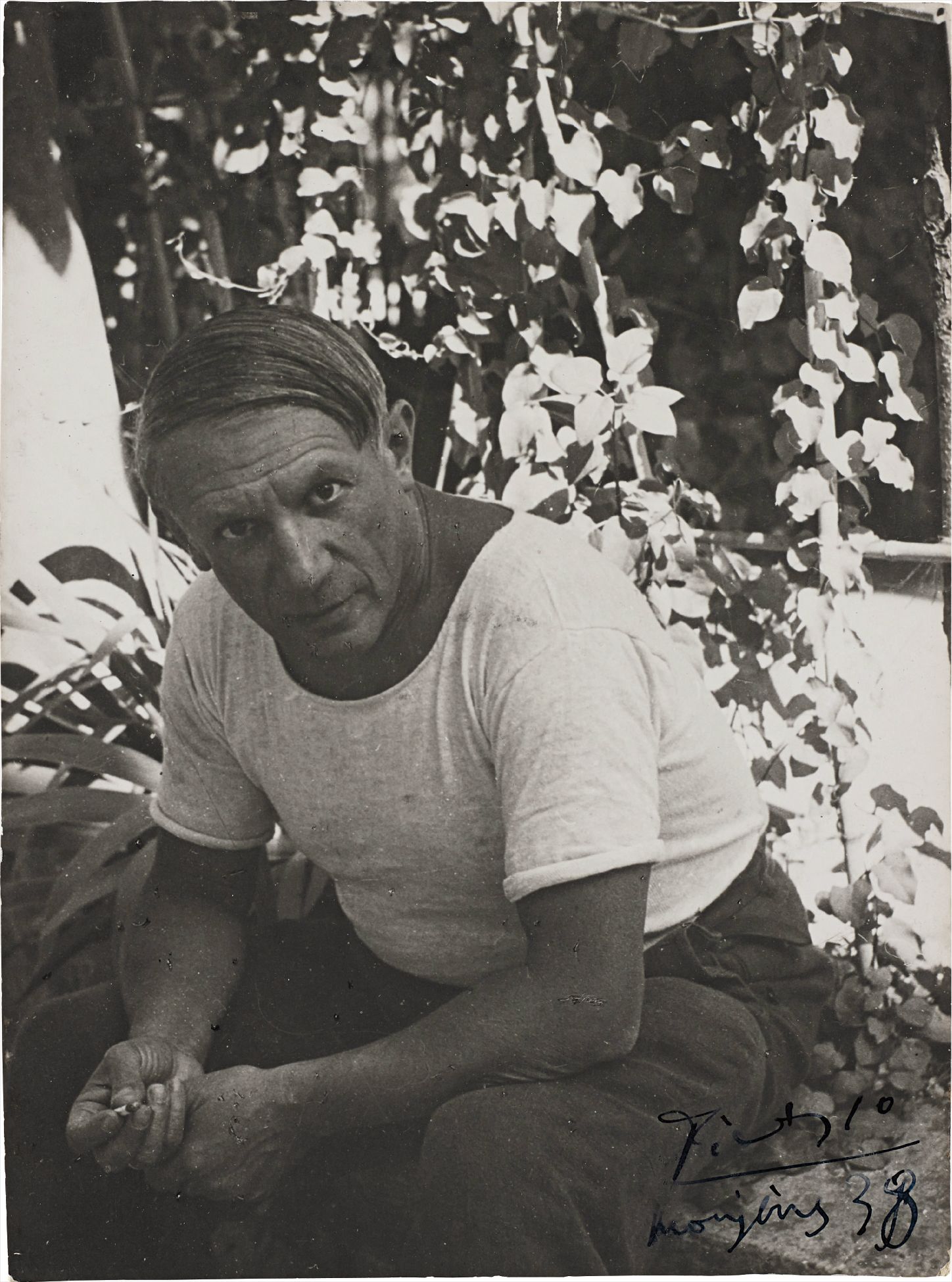
Dora Maar
Pablo Picasso
Her photographs reward close looking: the formal intelligence in a Maar print is inexhaustible, and the historical weight they carry, as documents of one of the richest artistic milieux of the twentieth century, adds a layer of resonance that purely abstract work cannot offer. Collectors drawn to Man Ray, Lee Miller, Brassaï, or Berenice Abbott will find in Maar a kindred spirit whose work sits comfortably alongside those canonical names while offering a distinctly singular vision. The question of Maar's place in art history is one that scholars and curators have been actively renegotiating for a generation. For too long her story was filtered through the lens of her relationship with Picasso, which ended painfully in the mid 1940s and was followed by a period of profound personal difficulty.
But the depth and quality of her output across six decades, she continued to paint and draw almost until her death in Paris in 1997 at the age of eighty nine, makes clear that she was never merely anyone's muse. She was a maker, a thinker, a visual intelligence of the first order. The renewed critical and market attention her work has attracted since the Centre Pompidou retrospective is not a reassessment so much as a long overdue recognition of what was always there. To collect Dora Maar today is to participate in one of the most satisfying acts of historical restoration that the contemporary art world has to offer.
Explore books about Dora Maar
Dora Maar: The Man in the Mirror
Brigitte Léal
Dora Maar: An Aesthetic of Defiance
Emmanuelle de l'Écotais
Dora Maar: Photographer and Painter
Anne Baldassari
Dora Maar: The Unfamiliar Acquaintance
Monika Faber
Dora Maar: Photographs
Centre Pompidou
Dora Maar: Art and War
William Stevenson
Dora Maar: 1907-1997
Galerie de Paris