Dirk Skreber
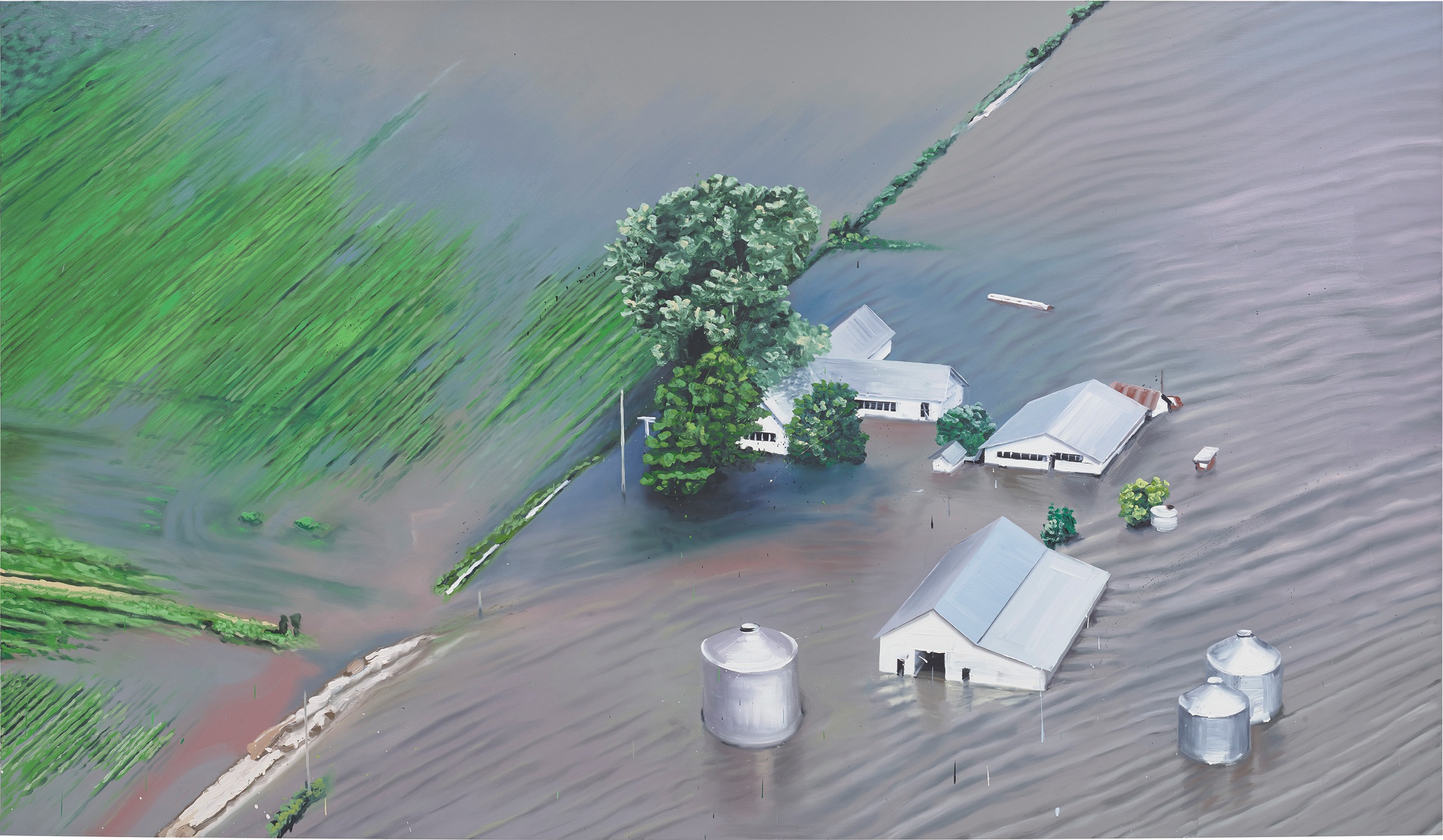
Dirk Skreber: Beauty Born From Spectacular Force
Artist Spotlight · The Collection Editorial
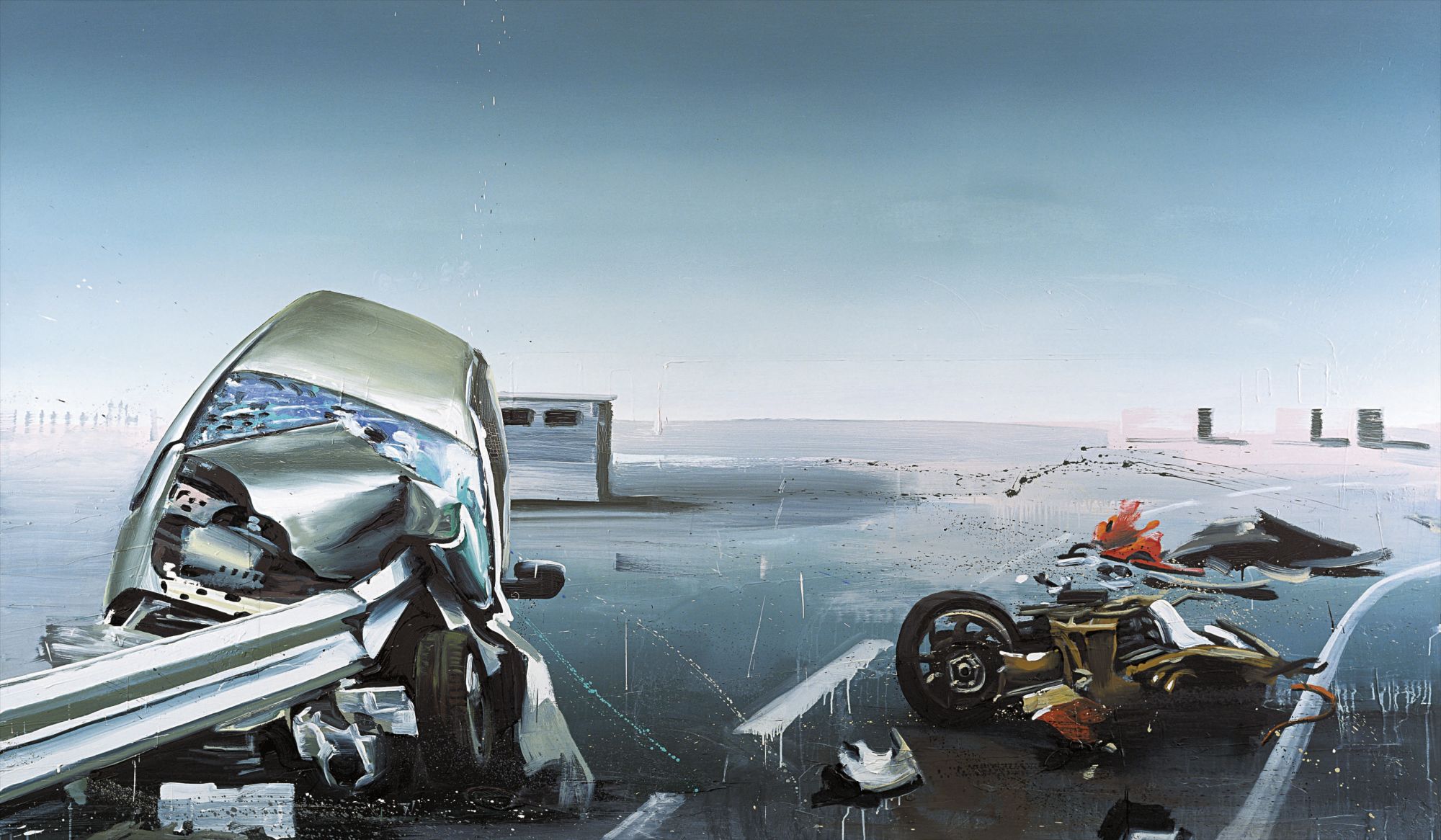
When the Kunsthalle Düsseldorf presented a significant survey of Dirk Skreber's work, visitors found themselves standing before paintings that refused to let them look away. The canvases depicted moments of shattering impact, crumpled metal, surging water, and mechanical catastrophe, yet rendered with a luminous painterly precision that transformed disaster into something approaching the transcendent. That productive tension, between revulsion and rapture, between documentary clarity and almost operatic beauty, is the defining signature of one of contemporary German painting's most compelling and distinctive voices. Skreber was born in 1961 in Lübeck, Germany, a city with deep cultural and intellectual roots, and came of age during a period of extraordinary ferment in German visual art.
Dirk Skreber
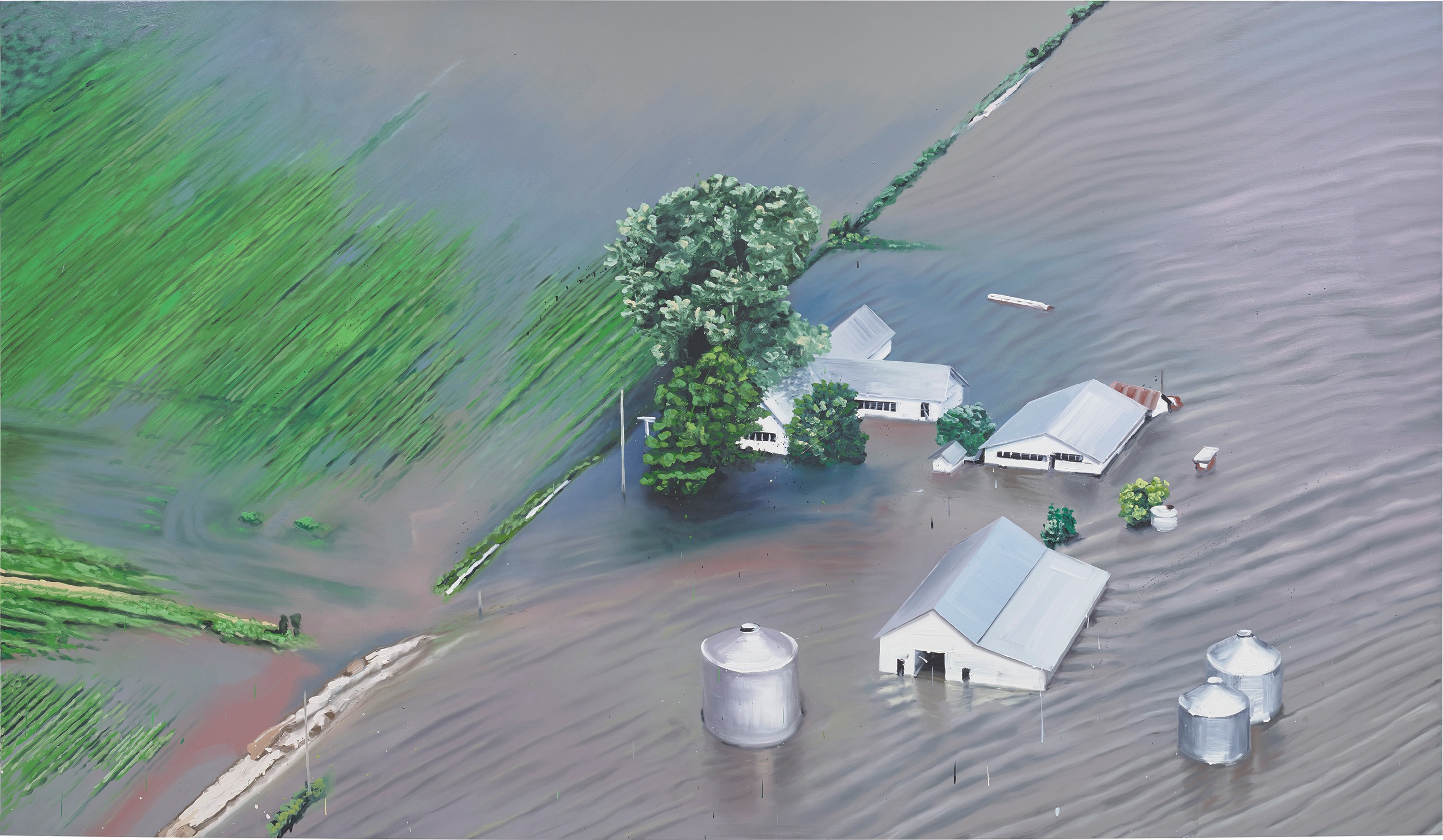
Ohne Titel, 2003
The generation that preceded him, figures such as Gerhard Richter and Sigmar Polke, had already begun interrogating the relationship between painting and photography, between history and image, and between German identity and the weight of the twentieth century. Skreber absorbed these conversations and took them somewhere entirely his own. He studied at the Kunstakademie Düsseldorf, an institution that remains one of the great crucibles of postwar art, where the legacy of Joseph Beuys and the rigorous conceptual traditions of the Rhineland shaped his understanding of what painting could and should do. His artistic development in the 1990s and into the 2000s saw Skreber arriving at the subject matter that would define his international reputation: scenes of collision, catastrophe, and overwhelming natural and mechanical force.
These were not simply shock tactics. Skreber was deeply engaged with the philosophical tradition of the sublime, the aesthetic theory that locates a particular kind of awe and terror in experiences that exceed comfortable comprehension. Where Caspar David Friedrich found the sublime in mountain peaks and storm clouds, Skreber located it in the wreckage of highway accidents and the churning violence of floodwaters. The move felt entirely contemporary, a recognition that modernity produces its own overwhelming spectacles and that painting remains a uniquely powerful instrument for making sense of them.
Dirk Skreber
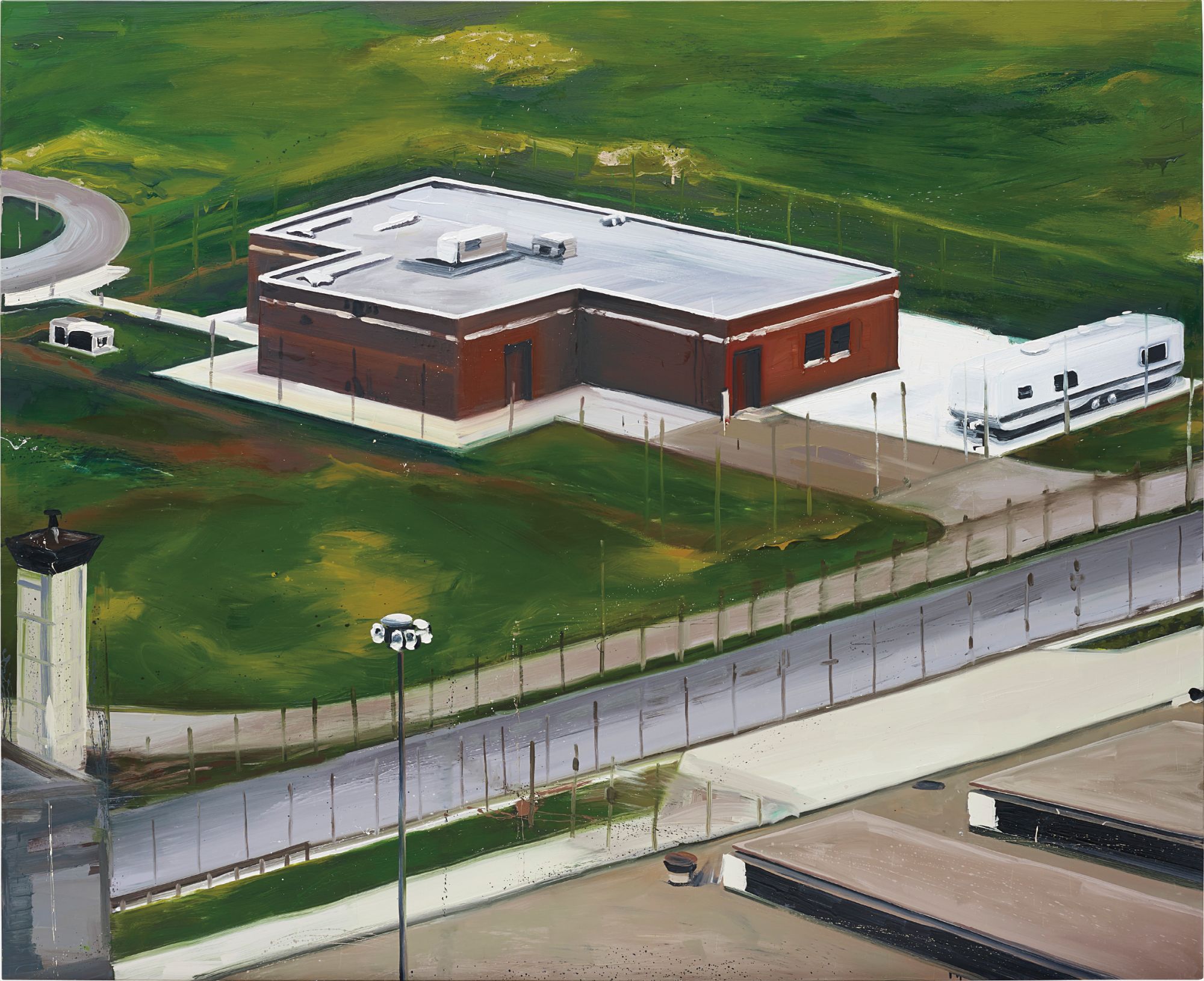
McVeigh
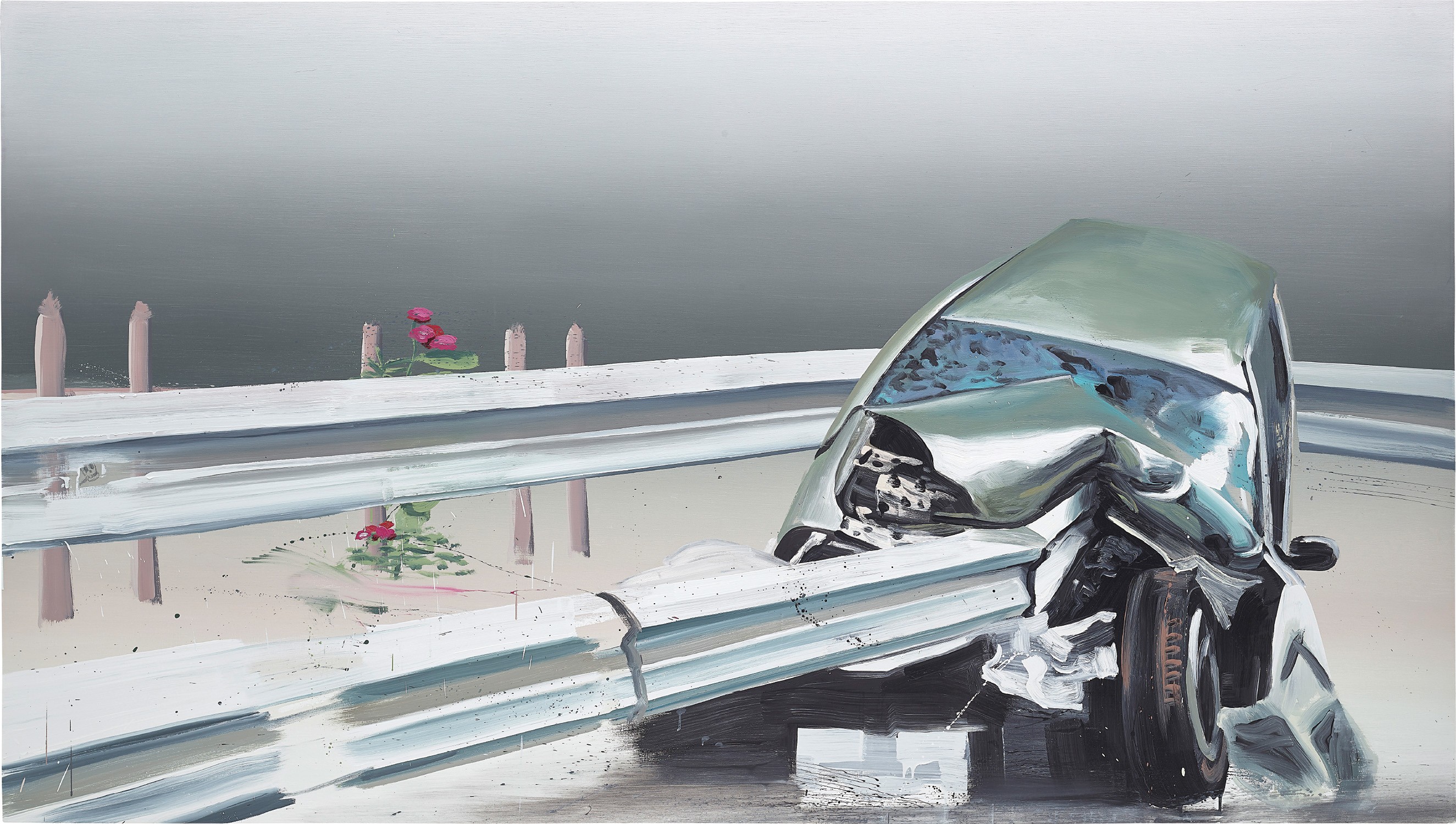
The series titled "It Rocks Us So Hard, Ho Ho Ho," which includes works from 2002 such as the canvases numbered 7.0 and 8.0, stands as one of the most arresting bodies of work in his practice. These paintings depict structures and vehicles caught in states of violent transformation, surfaces rendered with a photorealist intensity that makes the eye read them first as documentary records before the painterly intelligence behind them becomes apparent.
The title itself introduces a strange, almost carnivalesque note, a reminder that Skreber is not simply a chronicler of catastrophe but a thinker about how culture processes and even enjoys images of destruction. The paintings hold that discomfort open rather than resolving it, which is precisely what makes them endure. Similarly, the untitled oil on canvas from 2003 demonstrates his capacity to work within a more compressed register while maintaining the same charged atmosphere, the surface alive with a tension between control and chaos. The work known as "McVeigh" occupies a particularly charged place in his output.
Dirk Skreber
It rocks us so hard - Ho, Ho, Ho 7.0, 2002
By invoking the name of the Oklahoma City bomber, Skreber was engaging directly with the American cultural landscape and with the way that acts of violence become absorbed into a visual and media vocabulary. The painting does not illustrate or glorify; instead it uses the language of photorealist oil painting to force a kind of sustained attention that the rapid cycling of news images forecloses. This is a consistent ethical thread running through his practice: the insistence that slow looking, the looking that painting demands, is a morally and intellectually different act than the passive consumption of spectacle. Collectors and institutions who have acquired his work have responded to exactly this quality, the sense that these are paintings that continue to work on the viewer across time.
From a collecting perspective, Skreber occupies a genuinely interesting position in the market for serious contemporary German painting. His work has been handled by major galleries and has attracted the attention of collectors who understand the broader conversation his paintings participate in. Works on canvas in oil, particularly those from the early 2000s when his signature vocabulary was at its most concentrated and self assured, represent the strongest material for collectors seeking both aesthetic impact and art historical significance. The large scale canvases carry an obvious physical authority, but works at more intimate scale reveal the same qualities of painterly intelligence and conceptual rigor.
Dirk Skreber
It Rocks Us So Hard Ho Ho Ho 3
Collectors building collections around the tradition of postwar and contemporary German painting will find that Skreber functions as a crucial connective tissue between the generation of Richter and the younger painters who followed. The artists whose work resonates most strongly alongside Skreber's include Richter himself, whose photo paintings opened up the territory Skreber explored so distinctively, as well as Neo Rauch, whose equally singular approach to German painting found very different but comparably committed answers to the questions the tradition poses. In the broader international context, Skreber shares territory with painters such as John Currin and Eric Fischl, artists who use a highly accomplished realist technique in the service of subject matter that unsettles easy aesthetic pleasure. He also invites comparison with photographers and filmmakers working with disaster imagery, though what distinguishes his paintings is precisely the slow, accumulative intelligence that the oil on canvas medium demands and enables.
What makes Skreber matter today is something that his work has always known: that the images which structure our understanding of the world, images of violence, accident, technological failure, and natural force, deserve more than passive consumption. They deserve the kind of sustained, questioning, aesthetically alive attention that great painting provides. As platforms devoted to thoughtful collecting bring his work to new audiences, and as the cultural conversation around images of catastrophe becomes ever more urgent, Skreber's paintings feel not dated but necessary. They are works made by an artist who understood early and clearly that painting still has something essential to say about the world we actually inhabit, and who has spent decades saying it with uncommon skill and conviction.
Explore books about Dirk Skreber