Dieter Roth
Dieter Roth: A Feast for the Senses
Artist Spotlight · The Collection Editorial
“I started using perishable materials because I wanted the work to change, to have a life of its own.”
Dieter Roth
In the winter of 2023, the Hauser and Wirth gallery mounted a landmark exhibition drawing renewed attention to one of the twentieth century's most irreverent and genuinely original minds. The show reminded a new generation of collectors and scholars just how far ahead of his time Dieter Roth truly was, a Swiss German polymath who turned rotting cheese, melting chocolate, and crumbling sugar into some of the most philosophically charged objects in postwar art. That such materials could carry the weight of mortality, beauty, and humor simultaneously is the paradox at the heart of Roth's enduring appeal. His work does not simply age.
Dieter Roth
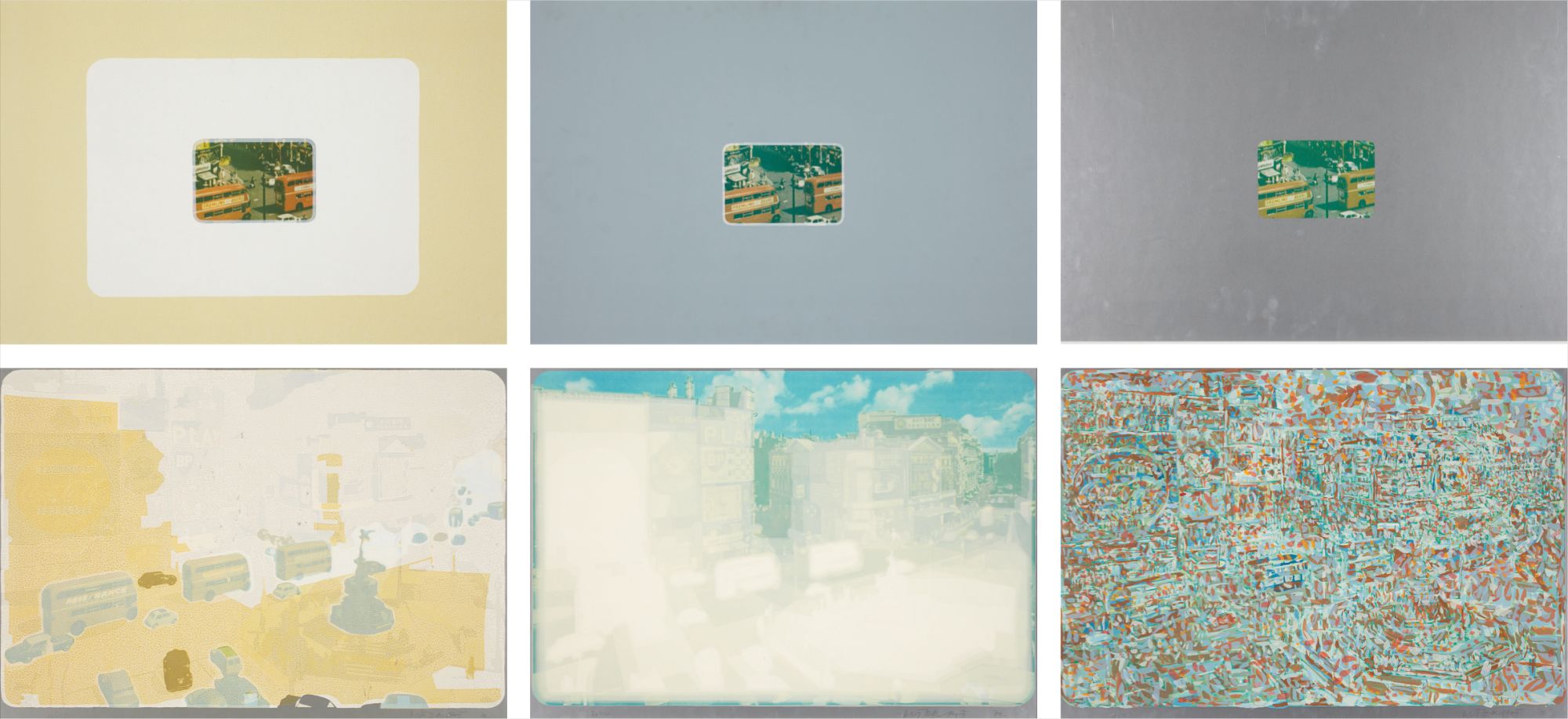
Plates #1-#3, from 6 Piccadillies portfolio
It performs aging, and that distinction is everything. Roth was born Karl Dietrich Roth in Hanover, Germany, in 1930, and his early years were defined by displacement and restlessness. His family moved to Switzerland during the Second World War, and he would spend much of his life moving between Iceland, Germany, Austria, and the United Kingdom, never quite settling, never quite belonging to any single artistic tradition. This rootlessness became a creative engine.
He trained as a graphic designer and typographer in Bern during the late 1940s, and that grounding in the printed page, in the architecture of language and image, would underpin everything he made for the next five decades. He approached art the way a printer approaches a press: with discipline, curiosity, and a willingness to let the process speak. By the late 1950s and into the 1960s, Roth was already developing a practice that resisted easy categorization. He became associated with the Fluxus movement, that loose international network of artists who sought to dissolve the boundaries between art and everyday life, between the sacred object and the throwaway gesture.
Dieter Roth
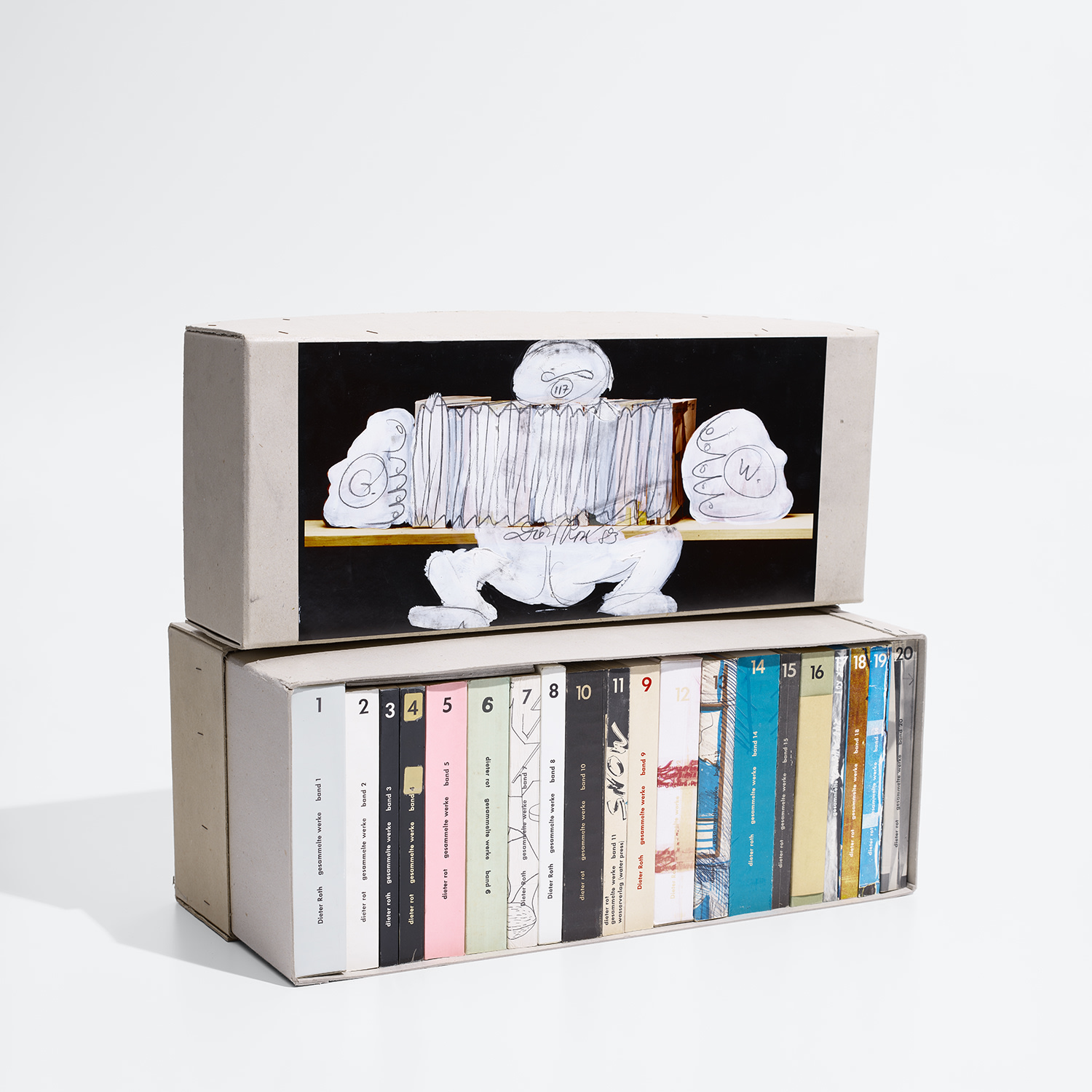
Collected Works, Volumes 1-20 (D. pp. 147-232)
His friendship and collaborations with figures including Richard Hamilton brought him into contact with the British art world, particularly in London, and deepened his interest in multiples, editions, and the democratic potential of the artist's book. Where many of his contemporaries were chasing the monumental, Roth was drawn to the intimate, the portable, and the perishable. His work asked quietly: what if the art object were allowed to change, to decay, to become something other than what the artist intended? The artist's books are among the clearest expressions of this philosophy, and they remain some of the most sought after objects in his estate.
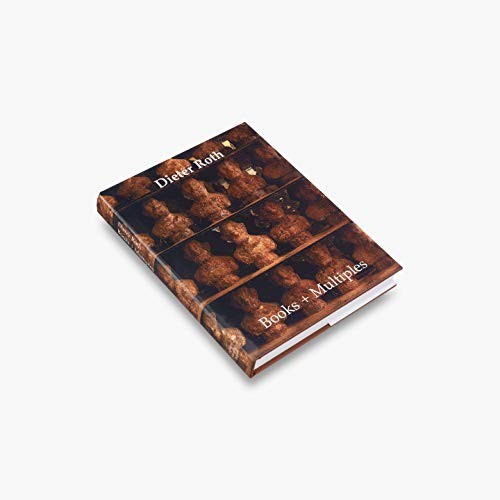
His Collected Works, published in collaboration with Edition Hansjörg Mayer in Stuttgart and London, represent a sustained meditation on accumulation, sequence, and the book as sculptural form. Volumes incorporating die cutting, spiral binding, offset lithography, and letterpress sit together in their original cardboard boxes, some with hand painted additions, each one a record of a particular moment in Roth's thinking. These are not books in the conventional sense. They are propositions about what a book might be allowed to do.
Dieter Roth
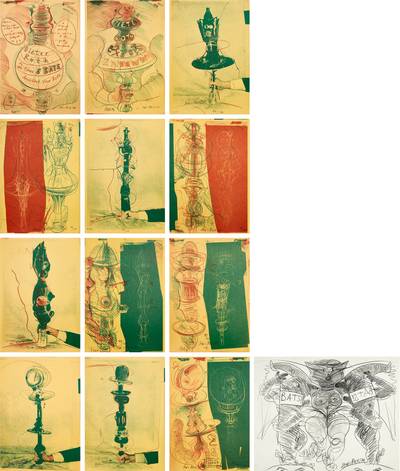
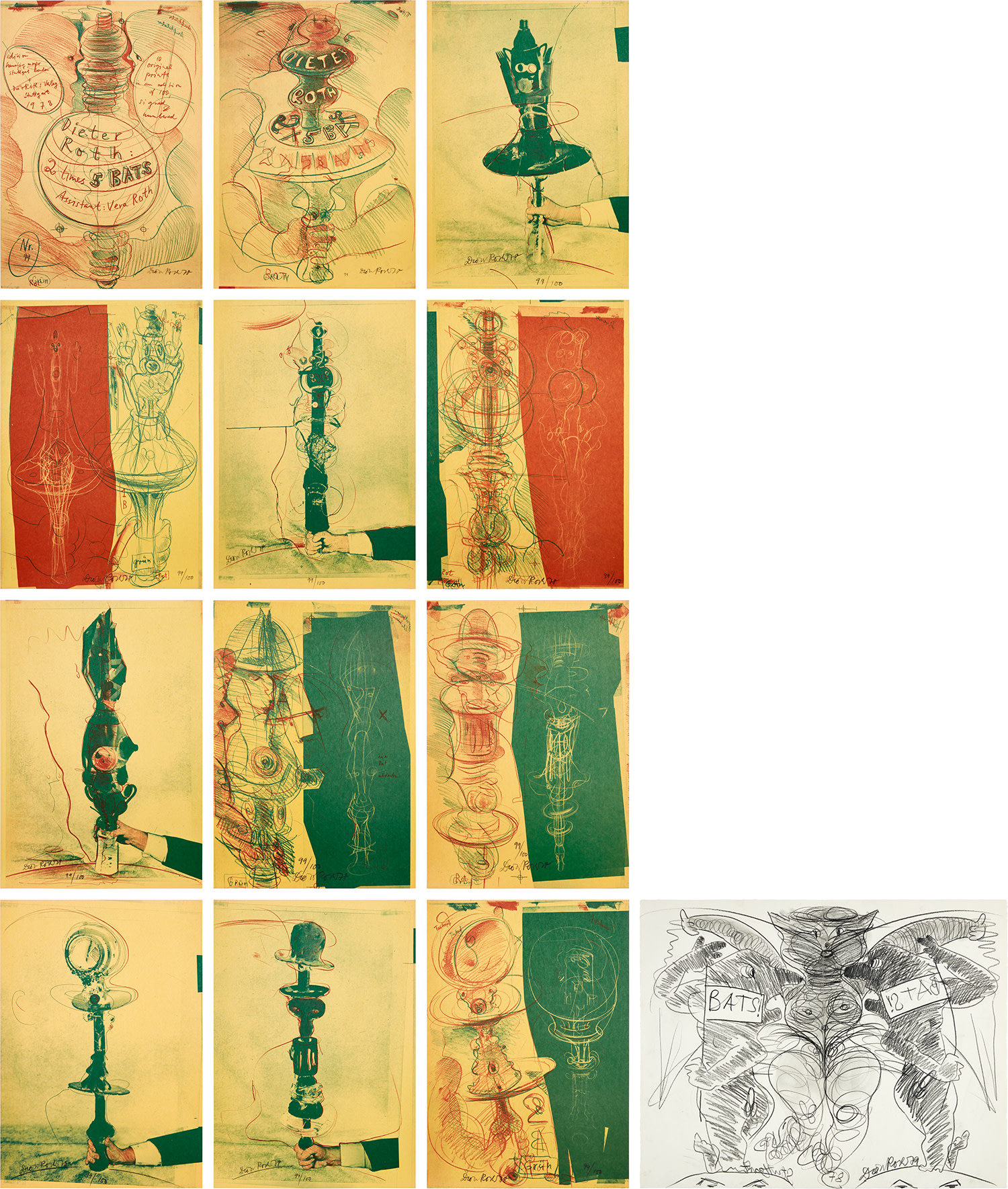
2 times 5 BATS (D. 360)
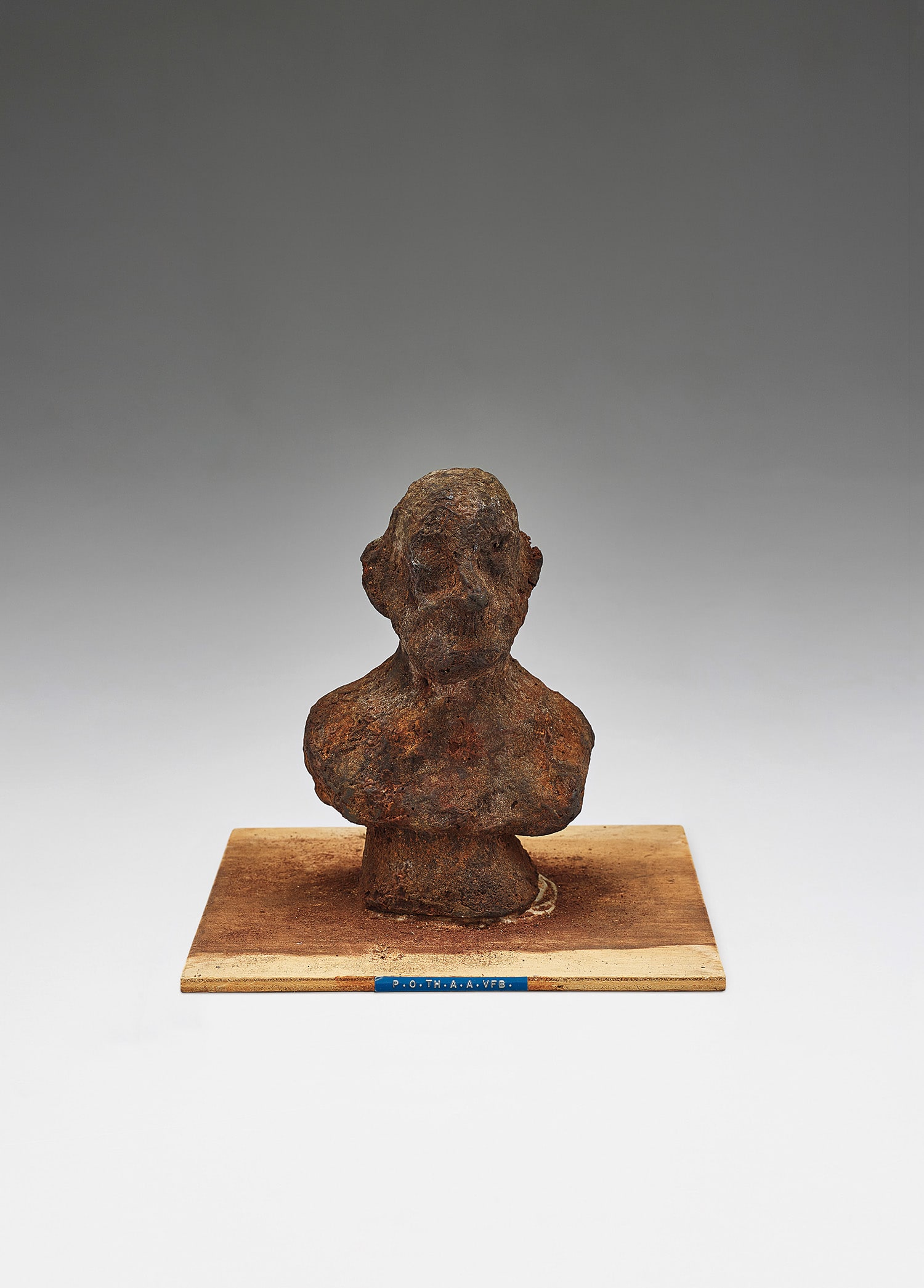
Similarly, his portfolio works such as the Plates from the 6 Piccadillies series demonstrate his mastery of screenprint and planographic printing, layering found imagery against carefully constructed color in ways that feel both accidental and precise. Then there are the material works, the ones that made him legendary and sometimes controversial. Portrait of the Artist as Vogelfutterbüste, created in 1969, is perhaps the most emblematic: a self portrait bust cast in chocolate and birdseed mounted on a plywood base, intended from the outset to be eaten by birds, to dissolve, to disappear. The work is not about vanity or permanence.
It is about the comedy and tenderness of impermanence, about the way a life, like a portrait, is always in the process of being consumed. His use of sugar, as in Im Meer and Am Meer, carries similar resonance: cast into the form of toy airplanes or attached to wooden sticks like beach flags, these sweet, fragile objects hover between souvenir and elegy. His postcard works, such as Landscape from 1968, in which acrylic paint and chocolate are applied directly to a Düsseldorf postcard, collapse the distance between the touristic and the painterly with a wit that is entirely his own. For collectors, Roth presents a distinctive and genuinely exciting proposition.
Dieter Roth
P.o.TH.A.A.VFB (Portrait of the artist as Vogelfutterbüste), 1969
His output was vast and varied, encompassing prints, multiples, unique works, and collaborative projects, which means that meaningful entry points exist across a wide range of budgets and collecting philosophies. Edition works such as the signed and numbered prints from series like 2 times 5 BATS offer the opportunity to live closely with his thinking at a more accessible scale, while the artist's books reward sustained attention and careful handling in ways that few other objects in the postwar canon can match. The material works require a certain commitment from their owners, a willingness to accept change as part of the relationship. That quality, the sense that the work is alive and in dialogue with time, is precisely what draws serious collectors to Roth again and again.
His works appear regularly at auction houses including Sotheby's, Christie's, and Phillips, where sustained demand from European and American institutions confirms his canonical status. Roth's position in art history is best understood in relation to the broader field of Process Art and Conceptualism, movements that privileged the act of making and the life of materials over the fixed, finished object. He shares intellectual territory with Joseph Beuys, whose expanded notion of sculpture also embraced fat, felt, and the passing of time as aesthetic forces. His interest in the multiple and the edition connects him to Marcel Duchamp and to the Fluxus generation more broadly.
His graphic sensibility echoes the work of Richard Hamilton, with whom he collaborated directly. But Roth is not reducible to any of these adjacencies. His humor is too strange, his hunger for experimentation too relentless, his emotional range too wide. What makes Roth matter today, more than two decades after his death in Basel in 1998, is the quality of his attention.
He looked at the world and found it funny and sad and beautiful all at once, and he made objects that hold all three of those registers simultaneously. His works are held by MoMA, the Tate, and major institutions across Europe, and his influence can be felt in the work of younger artists who treat the studio as a laboratory and the exhibition as a living system. To own a Roth is to enter into a conversation that has no fixed ending, a dialogue between materials, time, and the human desire to make something that lasts. The fact that his works sometimes refuse to last entirely is, of course, the most Roth thing about them.
Explore books about Dieter Roth