Édgar Negret
Édgar Negret: Colombia's Master of Luminous Form
Artist Spotlight · The Collection Editorial
In the grand atrium of the Museo de Arte Moderno de Bogotá, a work by Édgar Negret catches the light in a way that stops visitors mid step. The painted aluminum planes fold and rise like something between a living organism and a sacred architectural fragment, simultaneously ancient and absolutely of its moment. This quality, at once ceremonial and technically brilliant, is why Negret endures as one of Latin America's most consequential sculptors, and why collectors and institutions continue to seek out his work with genuine urgency. Negret was born in 1920 in Popayán, a colonial city in the Colombian southwest known for its whitewashed architecture, deep Catholic tradition, and proximity to pre Columbian cultures that left an indelible mark on the landscape and the imagination.
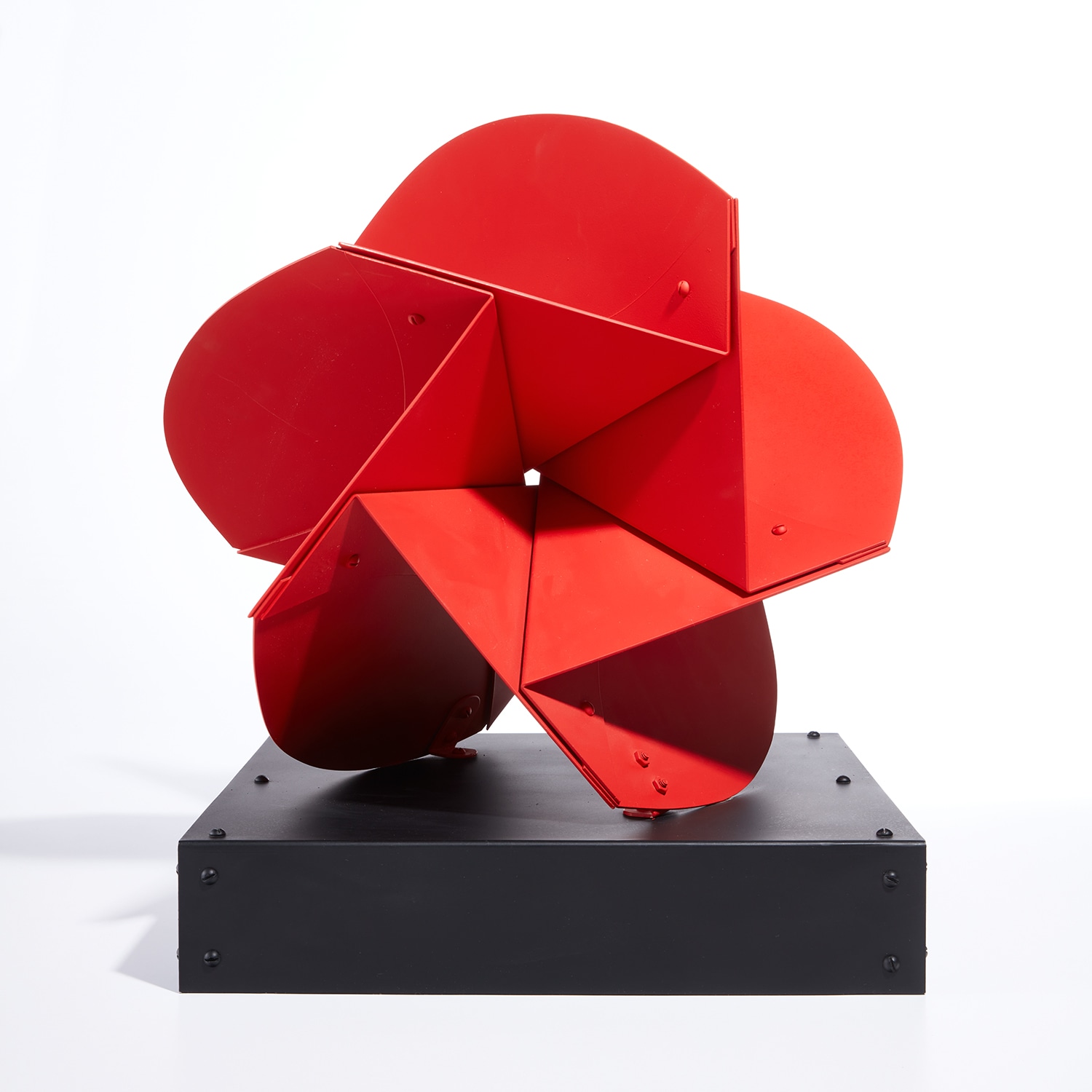
Édgar Negret
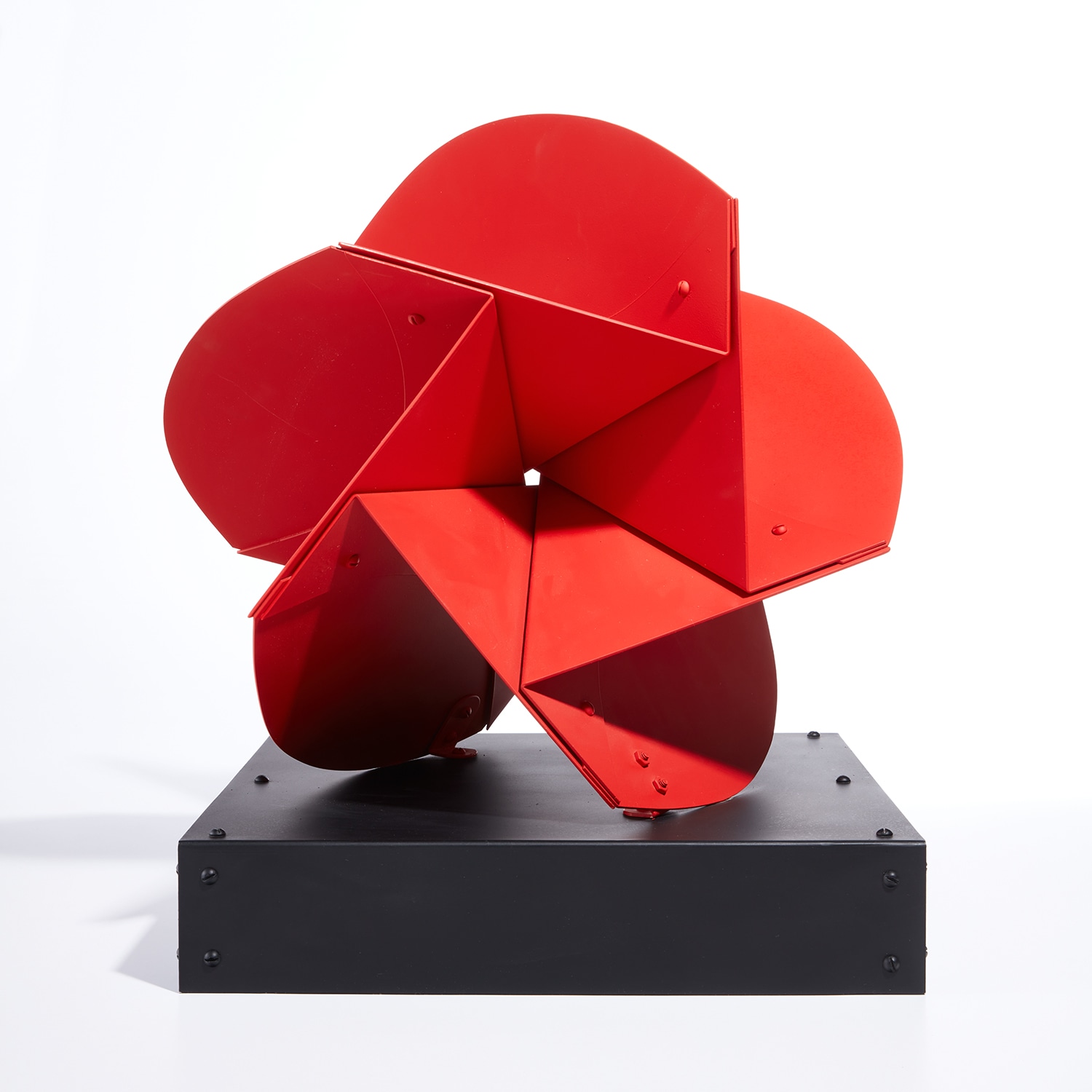
Flor Sanky
He studied at the Escuela de Bellas Artes in Cali, where he received a classical formation before his restless curiosity drew him outward. What would shape him most profoundly was not the academy but the world beyond Colombia, and he pursued it with remarkable energy across several decades of international travel and artistic dialogue. In the late 1940s and early 1950s, Negret spent crucial periods in New York and in Europe, immersing himself in the most vital currents of modernism then circulating through both continents. He encountered the work of Constantin Brancusi, whose commitment to essential form and the spiritual resonance of sculpture left a lasting impression.
He also moved through the circles of abstract expressionism in New York and developed close friendships with artists working at the intersection of geometry, myth, and material experimentation. These years transformed him from a talented regional artist into an internationally minded sculptor with a singular vision. When he returned to Latin America, he brought with him a synthesis that belonged entirely to himself. The great breakthrough of Negret's practice came through his decisive turn to aluminum in the 1950s, a material then strongly associated with industry, technology, and modernity.
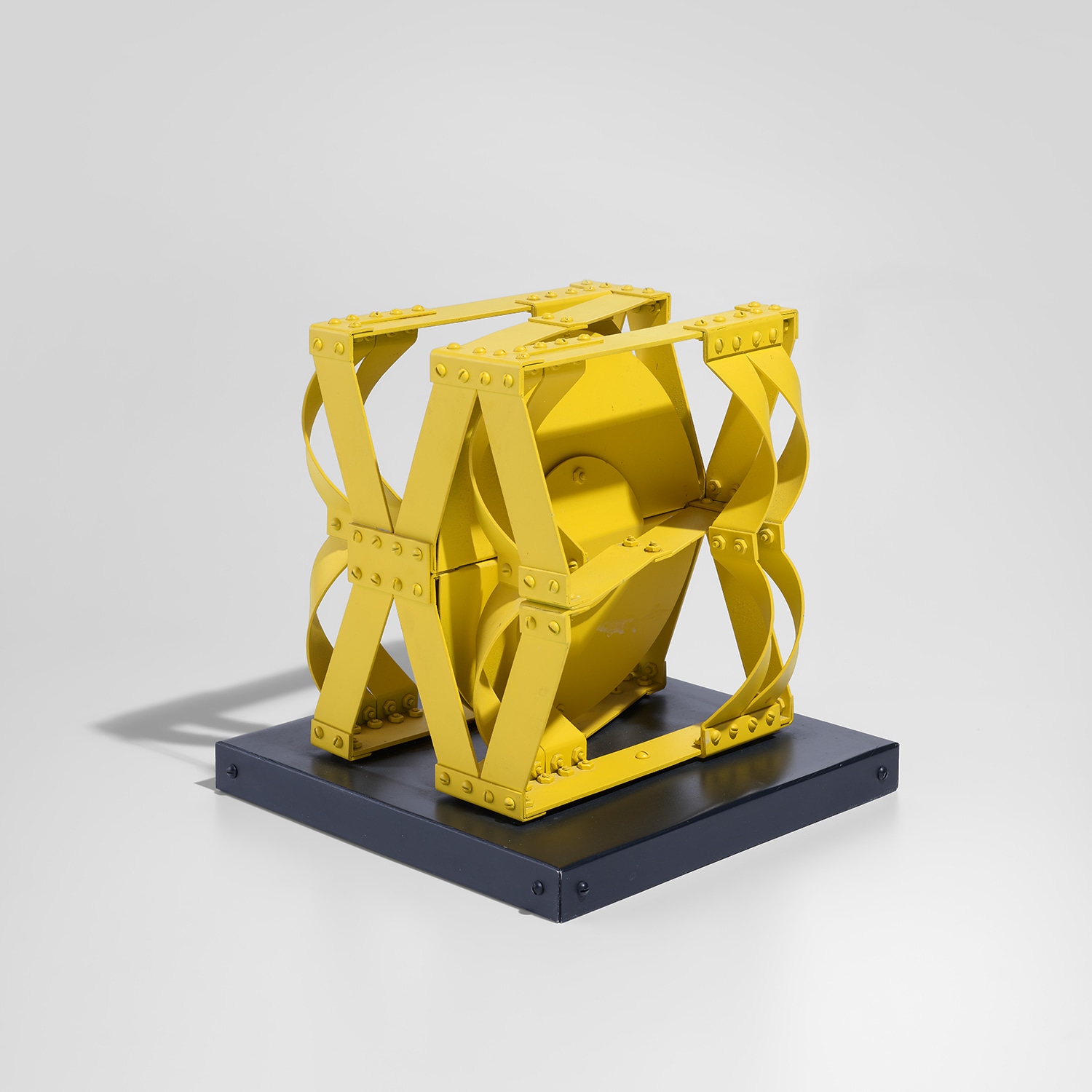
Édgar Negret
Templo Solar (Solar Temple)
His masterstroke was to embrace aluminum not as a cold or impersonal medium but as something capable of warmth, gesture, and cultural memory. By painting the metal in rich, saturated tones, often deep reds, blacks, and warm earth colors alongside bold primaries, he transformed industrial sheets into objects that felt ritualistic and alive. His 1954 work "Aparato mágico," combining painted aluminum with wood, captures this transitional moment perfectly: the industrial and the handmade, the modern and the ancestral, held in beautiful tension. The title itself, which translates as "Magic Apparatus," announces his lifelong ambition to make objects that function on both a material and a spiritual plane.
Over the following decades, Negret developed a body of work organized around recurring themes drawn from natural forms, cosmological imagery, and pre Columbian visual culture. Works such as "Templo Solar" (Solar Temple) and "Estrella" speak directly to astronomical and ceremonial experience, as though the sculptor were translating indigenous Colombian thought into the formal language of international abstraction. "Libélula" (1983), with its dragonfly reference, demonstrates his capacity to find lightness and organic movement in a medium that resists both. "Árbol" (1984) achieves something similar, evoking the vertical thrust and branching complexity of a tree through interlocking aluminum components that feel simultaneously engineered and spontaneous.
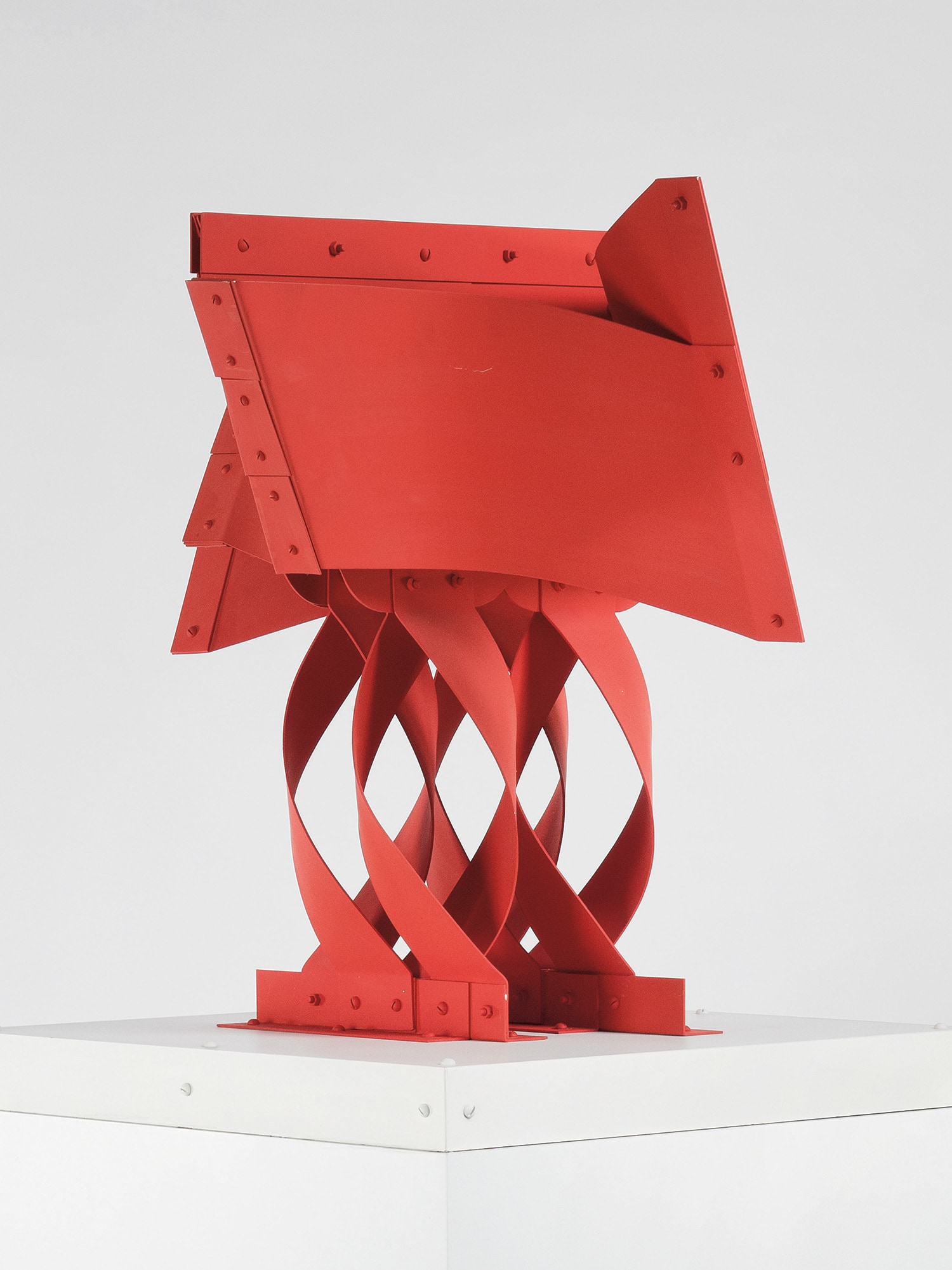
Édgar Negret
Libélula, 1983
His series of "Vigilantes," including the 1977 painted aluminum work, introduces a more guarded, sentinel like presence, suggesting watchers or protectors drawn from mythological imagination. Across all these works, the vocabulary remains consistent: bolted joints that remain visible rather than hidden, forms that interlock and depend on one another structurally, and color applied with deliberate intention rather than decoration. Negret received recognition at the highest levels of the international art world. He represented Colombia at the Venice Biennale, a distinction that placed him in direct conversation with the most significant sculptors of the twentieth century.
He was awarded the Premio Nacional de Escultura in Colombia and his work entered the permanent collections of major museums including the Museum of Modern Art in New York, the Guggenheim, and leading institutions across Latin America and Europe. His place in Colombian cultural life was so central that the city of Bogotá dedicated a museum in his name, the Museo Negret, in Popayán, cementing his legacy in the very region that shaped his earliest imagination. From a collecting perspective, Negret presents a genuinely compelling case. His work occupies a rare position: internationally exhibited and institutionally validated at the highest levels, yet still accessible to serious collectors in ways that some of his peers are not.
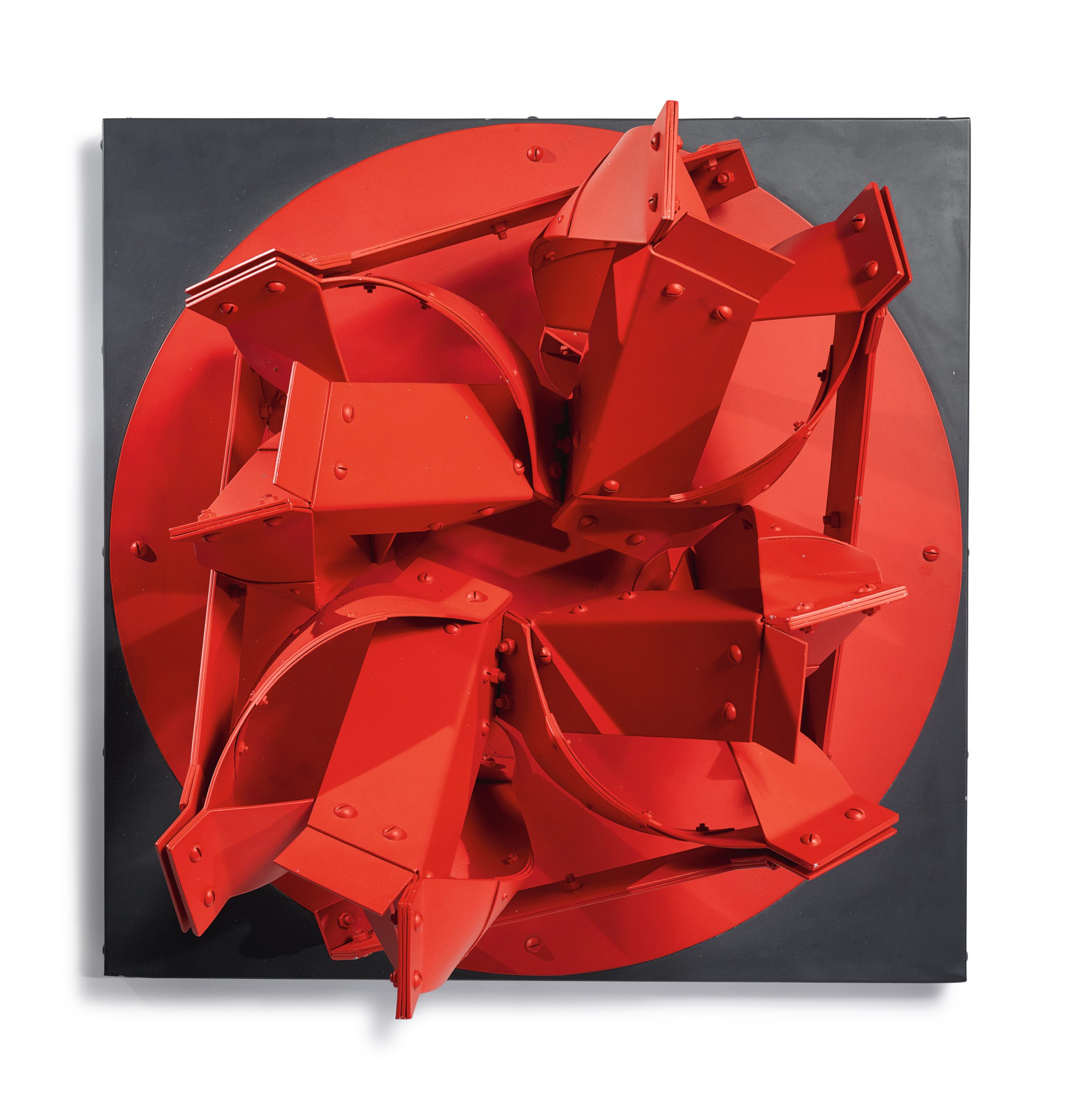
Édgar Negret
Máscara
The painted aluminum multiples, including works such as "Flor Sanky," "Estrella," and "Templo Solar," offer entry points for collectors who want to engage with his visual language without the significant investment required for unique works. The unique sculptures from the 1960s through the 1980s represent the core of his practice and command attention at Latin American art sales at Christie's and Sotheby's. Collectors drawn to geometric abstraction, to the intersection of modernism and pre Columbian visual culture, and to artists who achieved genuine international stature while remaining profoundly rooted in their own cultural identity will find in Negret a figure of rare coherence and depth. In the broader context of art history, Negret belongs to a generation of Latin American sculptors who transformed the conversation about abstraction by insisting that geometry was not culturally neutral.
Alongside figures such as Jesús Rafael Soto and Carlos Cruz Diez from Venezuela, and in dialogue with the Concrete Art movements active across Brazil and Argentina, Negret brought a Colombian specificity to the project of international modernism. Where others pursued optical illusion or kinetic energy, Negret pursued ceremony and myth. His closest spiritual kinship may be with the great Uruguayan sculptor Gonzalo Fonseca, who similarly drew on archaeological and cosmological sources to make abstract work that felt like it carried ancient weight. Negret died in Bogotá in 2012, leaving behind a legacy that grows more significant with each passing year.
As scholarship on Latin American modernism deepens and as collectors and institutions increasingly recognize the richness and complexity of art produced outside the traditional Euro American axis, his work takes on added importance. He demonstrated with sustained brilliance over six decades that the language of abstraction could be expanded, inflected, and made to carry cultural memory without becoming illustration or nostalgia. His sculptures do not explain the cultures that inspired them. They invite you into a space where ancient and modern, industrial and sacred, Colombian and universal exist together with extraordinary elegance.
Explore books about Édgar Negret