Dennis Stock
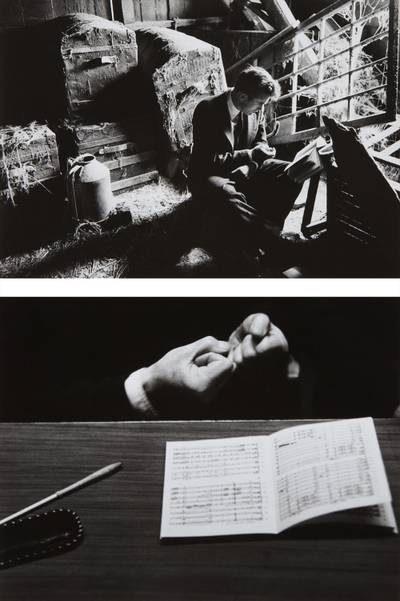
Dennis Stock: Intimacy Frozen in Silver
Artist Spotlight · The Collection Editorial
“My entire life has been about trying to get close enough to photograph what I truly feel.”
Dennis Stock
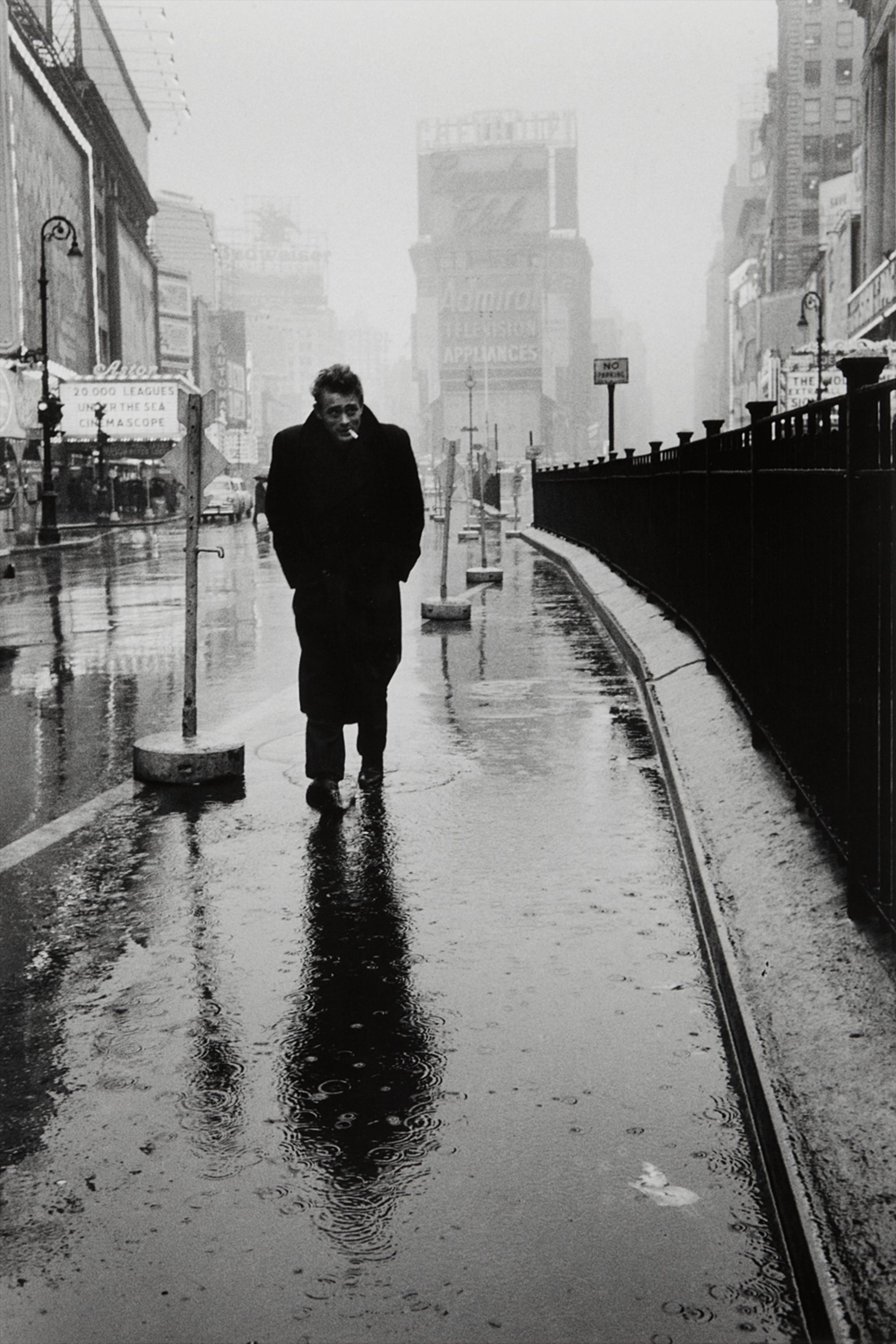
There is a photograph that nearly everyone has seen, even if they cannot name its maker. A young man in a overcoat walks through a rain slicked Times Square, cigarette dangling from his lip, the neon and the crowds blurring into a kind of beautiful indifference around him. The young man is James Dean. The photographer is Dennis Stock.
Dennis Stock
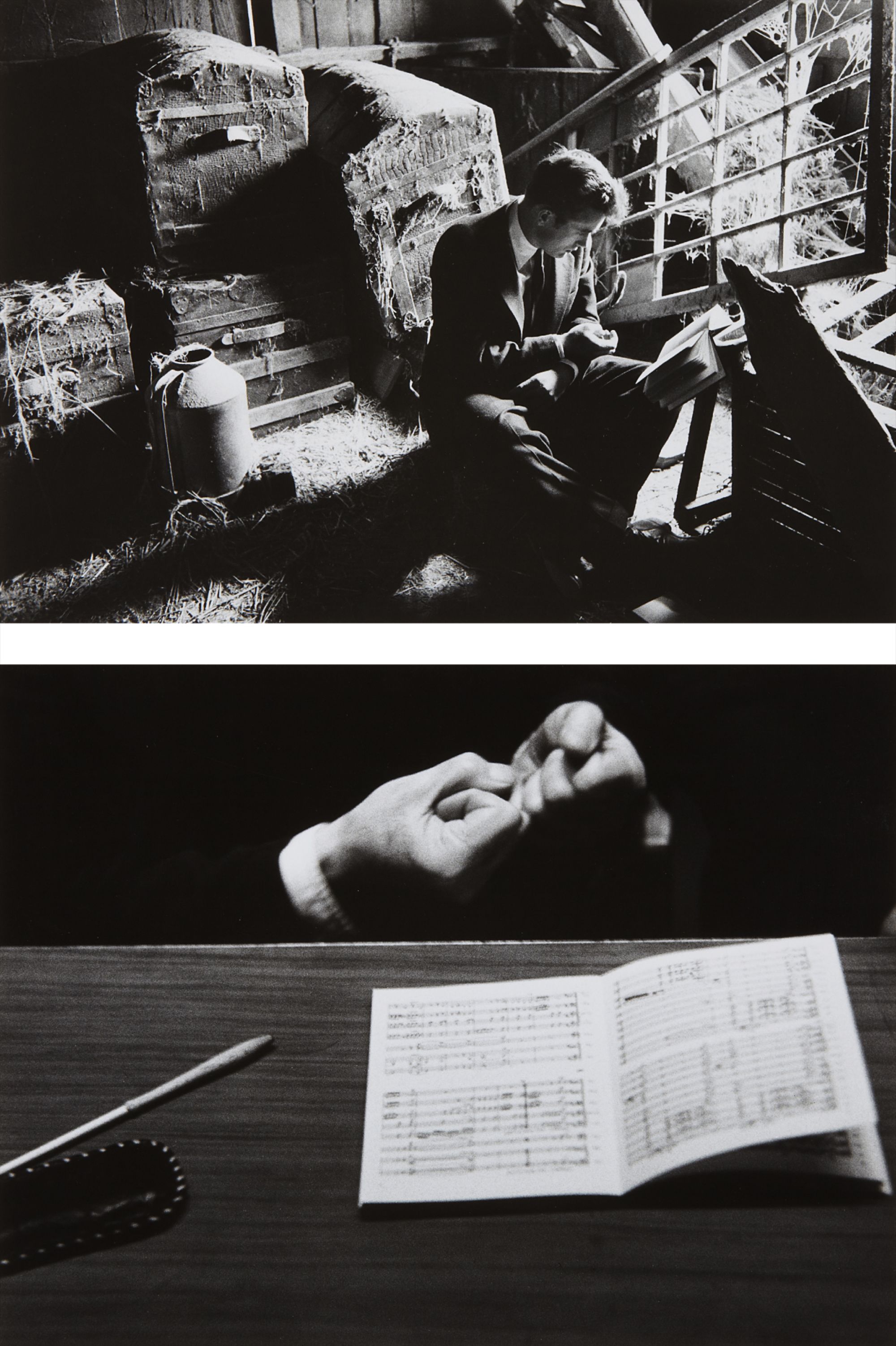
Selected Images
Shot in February 1955, just months before Dean's death and the release of East of Eden, the image has become one of the most reproduced and emotionally resonant photographs of the twentieth century. It is not simply a celebrity portrait. It is a meditation on loneliness, ambition, and the particular voltage of being young and alive in postwar America. Dennis Stock was born in New York City in 1928 and came of age in a city that was itself a kind of photographic education.
He served in the United States Navy and afterward found his way into photography through an apprenticeship with the celebrated Life magazine photographer Gjon Mili, whose rigorous eye and commitment to craft left a lasting impression on the young Stock. By the early 1950s, Stock had already demonstrated a precocious ability to find the emotional truth inside a frame. In 1951, aged just twenty two, he won first prize in Life magazine's Young Photographers Contest, a recognition that announced him as a serious talent and opened doors across the American media landscape. His entry into Magnum Photos in 1951 was the defining professional turn of his life.
Dennis Stock
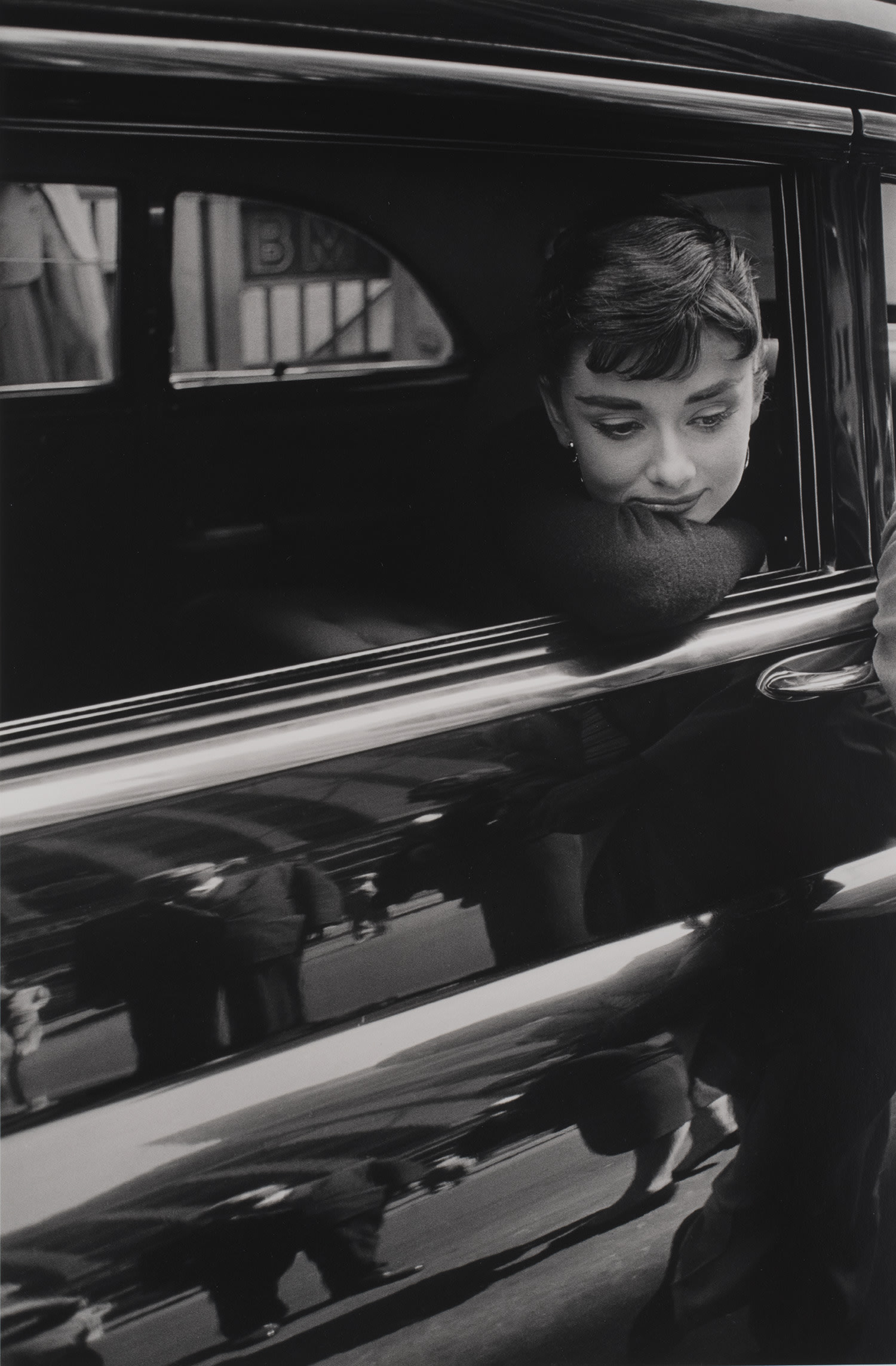
Audrey Hepburn during the filming of 'Sabrina' by Billy Wilder
Magnum was then barely five years old, founded by Henri Cartier Bresson, Robert Capa, George Rodger, and David Seymour as a cooperative that would give photographers ownership of their own work and the freedom to pursue stories on their own terms. To join Magnum in its earliest years was to be part of something genuinely revolutionary. Stock worked alongside photographers who were reshaping what documentary and humanist photography could mean, absorbing their commitment to the decisive moment while developing his own quieter, more introspective approach. Where some of his peers sought the drama of world events, Stock was drawn to the interior life of his subjects.
It was this instinct for interiority that made his relationship with James Dean so extraordinary. The two men were close in age and sensibility, and Stock spent weeks with Dean in early 1955, accompanying him to Fairmount, Indiana, where Dean had grown up, and through the electric chaos of New York City. The resulting photographs are unlike almost anything else in the canon of celebrity portraiture. Dean leaning against a barn in the snow, contemplative and almost pastoral.
Dennis Stock
James Dean in Times Square, New York City
Dean at the wheel of a car, gazing somewhere beyond the frame. And that immortal Times Square image, which captures not a star performing for the camera but a person genuinely lost in thought. Stock understood that the most powerful photographs are made in the gaps between poses, and the Dean series remains the purest expression of that philosophy. Stock's range extended far beyond his work with Dean, though that series justifiably anchors his reputation.
His photographs of Audrey Hepburn on the set of Billy Wilder's Sabrina in 1953 carry the same quality of privileged access and emotional warmth. Hepburn, then on the verge of her own extraordinary fame, appears in Stock's images as a person rather than a persona, luminous and unguarded. Stock spent significant time in Hollywood throughout the 1950s and 1960s, photographing figures including Marlon Brando, Louis Armstrong, and Marlene Dietrich with the same unhurried attention he brought to Dean. His gelatin silver prints from this period have a tonal richness and a compositional elegance that reward close, patient looking.
Beyond celebrity, Stock pursued extended documentary projects that revealed the full breadth of his curiosity and social conscience. His Jazz Street series from the late 1950s captured the culture and community of American jazz musicians with deep affection and remarkable access. He photographed the counterculture movements of the 1960s in California, producing images that documented a generational shift in American life with empathy rather than judgment. Later in his career he turned toward landscape and nature photography, finding in the natural world the same quality of quiet revelation he had always sought in human subjects.
This evolution across decades speaks to a photographer who never stopped asking questions of his medium. For collectors, Stock's work occupies a genuinely compelling position in the market for twentieth century photography. Gelatin silver prints from his celebrity series, particularly those related to James Dean and the Hollywood assignments of the 1950s, are the works that command the most sustained attention and the strongest prices at auction. Later printed gelatin silver prints offer collectors an accessible point of entry into a body of work that holds enormous cultural significance.
The photographs are versatile in the sense that they function both as art historical documents and as visually powerful objects, at home in serious photographic collections alongside contemporaries such as Ernst Haas, Eve Arnold, and Elliott Erwitt, fellow Magnum photographers who shared Stock's humanist orientation and his gift for intimacy. Stock's legacy is inseparable from the larger legacy of Magnum Photos and the postwar humanist photography movement, but it also stands apart from it in one important respect. Many of his peers are celebrated primarily as witnesses to history, documentarians of war, poverty, and social transformation. Stock was equally gifted as a psychologist of the famous, someone who could sit with a movie star at the height of their cultural power and produce an image that feels private and true.
That is a rare and underappreciated skill. Dennis Stock died in 2010, leaving behind a body of work that continues to grow in scholarly and collecting significance. His photographs remind us that the camera, in the right hands, is not a machine for recording surfaces but an instrument for revealing souls.