Deborah Kass
Deborah Kass: Art That Rewrites the Story
Artist Spotlight · The Collection Editorial
“I wanted to be in the conversation. I wanted to insert myself into art history.”
Deborah Kass, interview with The Jewish Museum
When the Brooklyn Museum mounted a major survey of feminist art in recent years, the name Deborah Kass appeared not as a footnote but as a central force. Her canvases, bold and unapologetic, reminded viewers that the act of looking has always been political. To stand before a Kass painting is to feel the full weight of who gets to be seen, who gets to be celebrated, and who has been historically left out of the frame. Kass was born in 1952 and grew up in the cultural atmosphere of postwar America, shaped by the twin gravitational pulls of popular culture and Jewish identity.

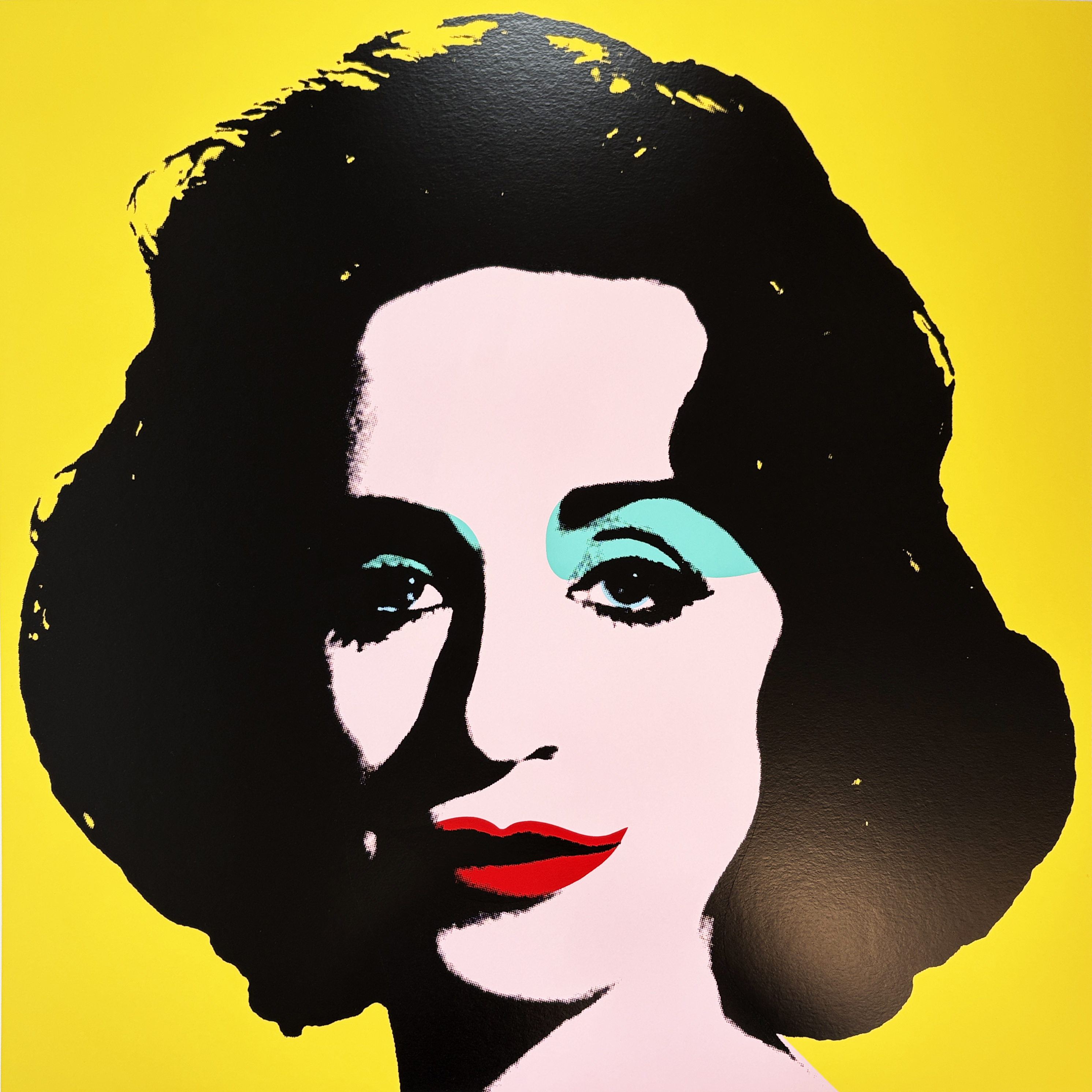
Deborah Kass
Forget Your Troubles, from Brand X XL Portfolio
She studied painting at the Whitney Museum Independent Study Program and Carnegie Mellon University, absorbing the language of Abstract Expressionism before ultimately deciding that language needed to be challenged rather than simply continued. The New York art world she entered in the 1970s and 1980s was dominated by male voices, and Kass made the quiet, fierce decision that this would not go unremarked in her work. Her artistic breakthrough came through the practice of appropriation, that distinctly postmodern strategy of borrowing, reframing, and redirecting the imagery of others. Where artists like Andy Warhol had used silkscreen and repetition to elevate commercial icons, Kass turned the same tools toward a pointed question: whose face deserves that kind of reverence?
The result was a series of works that operated simultaneously as homage, critique, and reclamation. She did not reject the formal brilliance of Warhol or the Pop sensibility she had absorbed. Instead, she redirected it with forensic precision. The Warhol Project, which occupied much of the 1990s, is the body of work for which Kass first gained widespread critical attention.
Deborah Kass
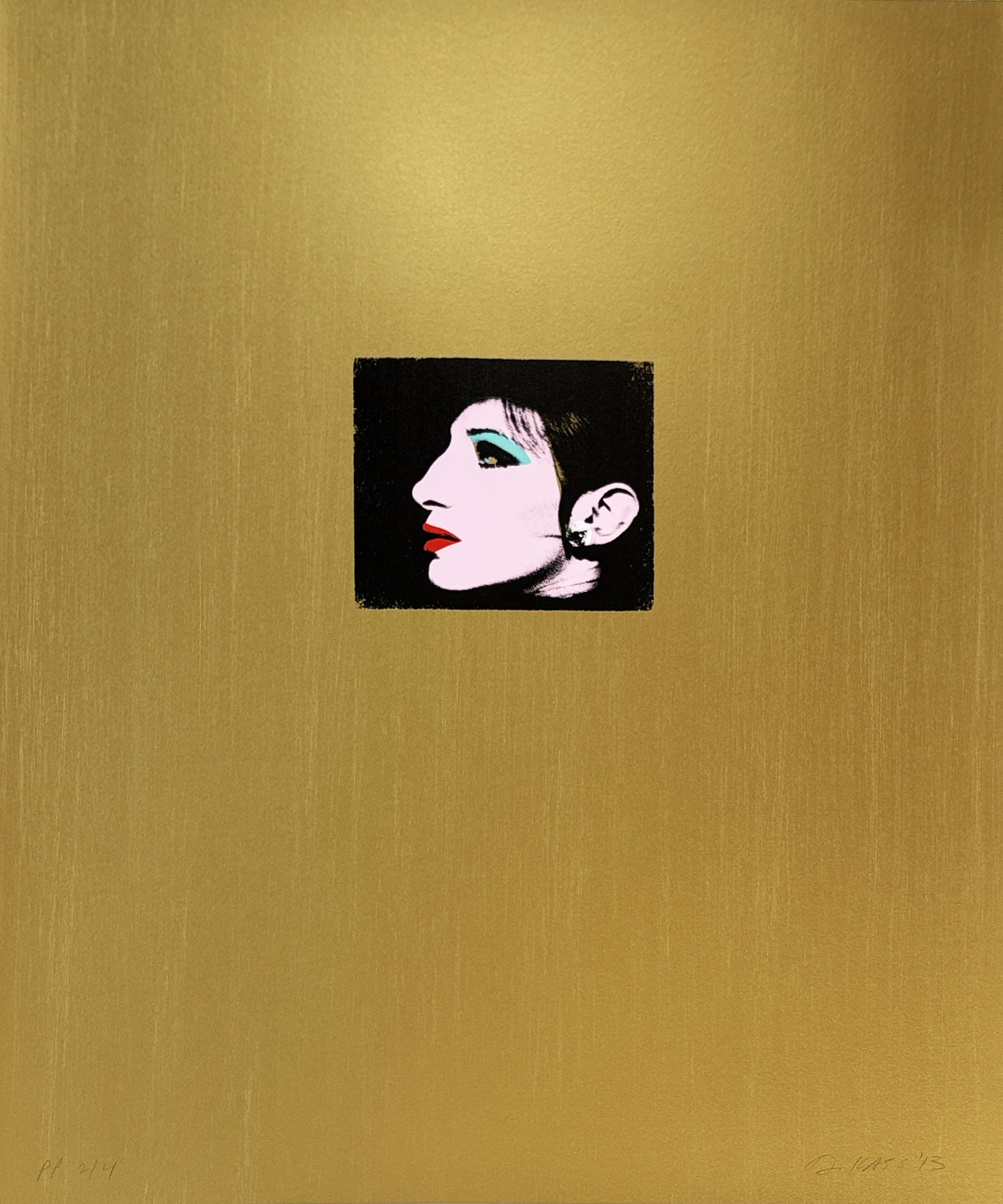
Gold Barbra, 2013
In this series, she replaced Warhol's canonical subjects, figures like Marilyn Monroe and Elvis Presley, with Jewish cultural icons, most famously Barbra Streisand. The Jewish Jackie Series, begun in 1992 and 1993, features Streisand's face repeated across large canvases in the same silkscreen grids Warhol had used for Jackie Kennedy. Works such as Six Red Barbras and 16 Barbras, both created in synthetic polymer and silkscreen ink on canvas, are now understood as landmarks of feminist and identity based art. They ask, with gorgeous directness, why the Jewish girl from Brooklyn was not already worthy of this kind of mythologizing.
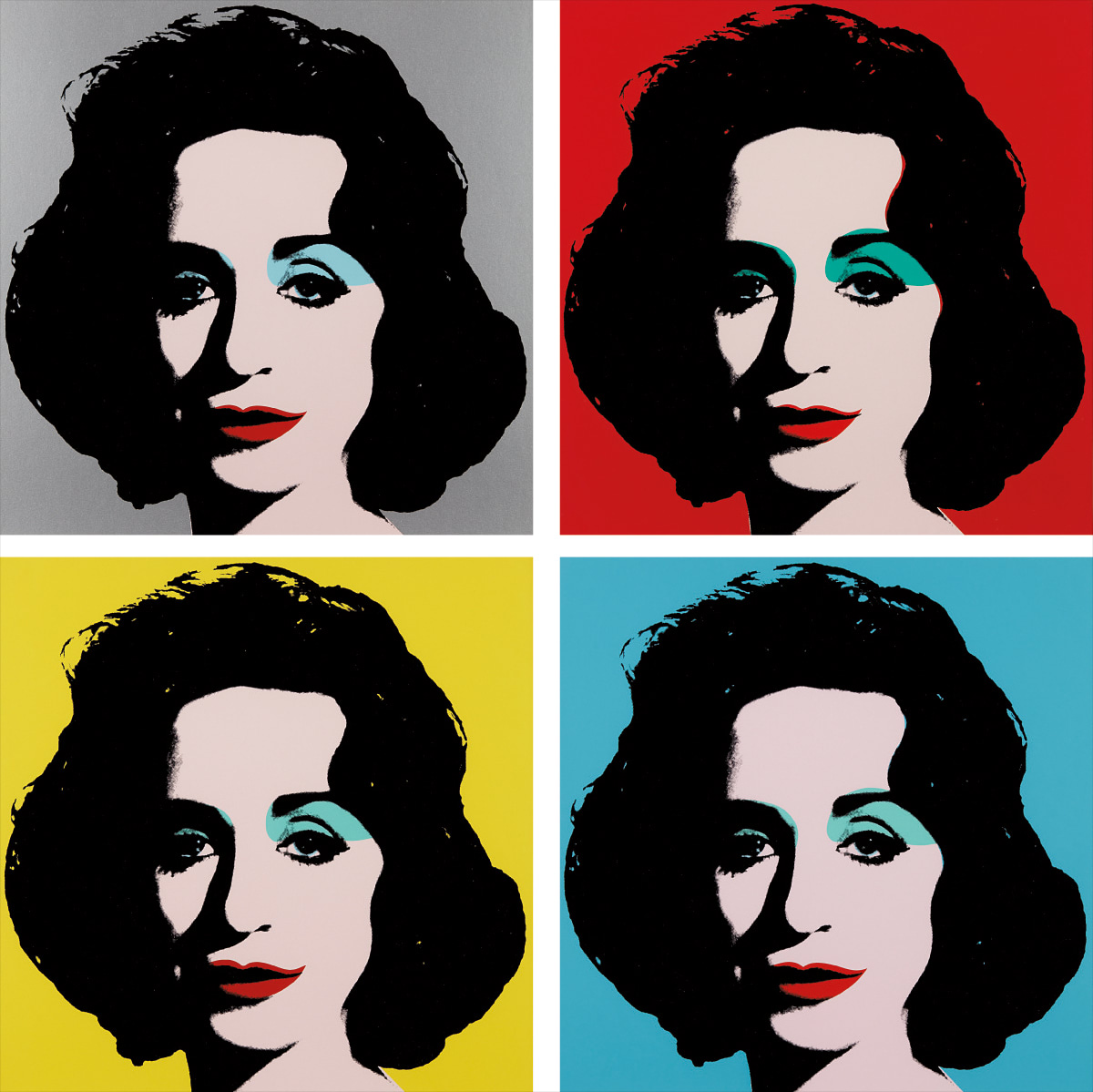
Kass has also worked extensively in printmaking, and her editions are among the most sought after entry points into her practice. The Deb Suite, published by Lococo Fine Art in St. Louis, exemplifies her ability to translate the energy of her paintings into the intimate scale of works on paper. Blue Deb from The Deb Suite, a 7 color silkscreen on 2 ply museum board from 2012, and Diamond Deb from 2013, a 2 color silkscreen with enamel inks and diamond dust, demonstrate the range and ambition she brings even to editions.
Deborah Kass
The Deb Suite
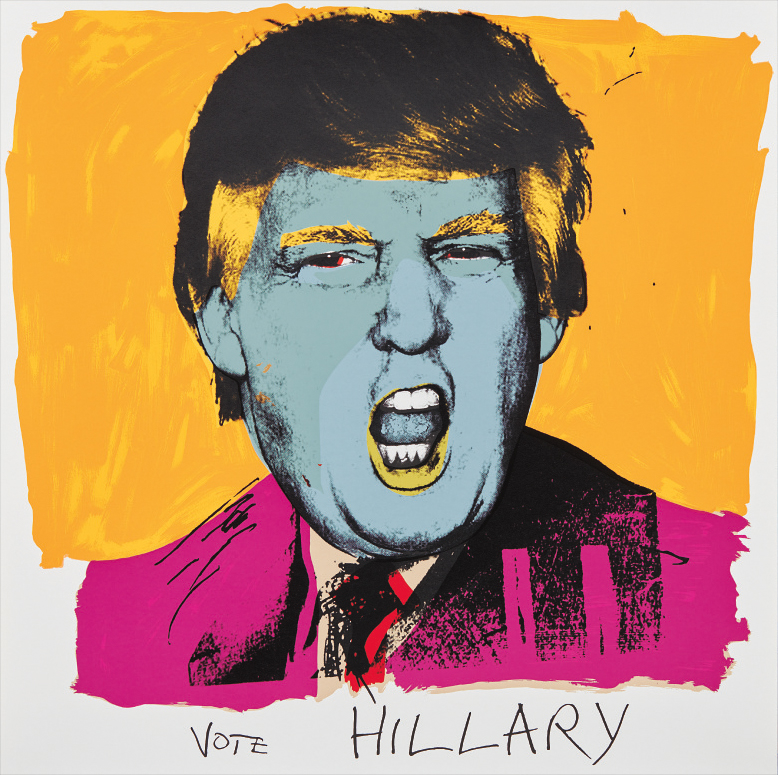
Gold Barbra, also from 2013 and executed as a silkscreen in nine colors, is a particularly luminous example of how she uses the richness of printmaking techniques to amplify the iconographic power of her subjects. Politics has always been inseparable from Kass's practice, and this became unmistakably visible with Vote Hillary, a screenprint in colors on Stonehenge paper that spoke directly into the cultural moment of the 2016 presidential election. The work carries the graphic authority of a campaign poster and the formal elegance of a Kass print, the two registers reinforcing each other rather than competing. Nobody Puts Baby in the Corner, a screenprint on Museum Board, draws on the vernacular of popular film, turning a piece of beloved American dialogue into a statement of feminist defiance.
These works remind collectors and critics alike that Kass has never treated seriousness and pleasure as opposites. For collectors, the Kass market offers remarkable depth and coherence. Her prints and editions are accessible starting points, and the care she takes with each series means that even works at the lower end of the price range carry genuine artistic weight. The larger canvases from The Warhol Project and the Jewish Jackie Series represent a more significant investment, but their institutional exhibition history and art historical importance give them enduring appeal.
Deborah Kass
Deborah Kass
Collectors drawn to postmodern painting, feminist art, or the intersection of Jewish American identity and visual culture will find Kass's work uniquely satisfying on all counts. Her prints have appeared consistently at major auction houses, and demand has grown steadily as the cultural conversation around representation and canon formation has moved to the center of the art world's attention. To understand Kass fully, it helps to place her within a constellation of artists who were rethinking the authority of images in the 1980s and 1990s. Artists like Barbara Kruger, Cindy Sherman, and Glenn Ligon were similarly engaged in the politics of representation, using appropriation and visual disruption to challenge who the art world considered worthy of attention.
Kass shares their conceptual rigor but brings to her work a particular warmth and wit, a sense that the fight for visibility can be waged with joy as well as anger. Her relationship to Warhol is not one of simple subversion but of genuine dialogue, and this complexity is part of what makes her practice so rewarding to study closely. Kass has exhibited at major institutions including the Andy Warhol Museum in Pittsburgh and the Jewish Museum in New York, and her work is held in significant public and private collections. She is also known as a public intellectual, engaging with questions of art, identity, and politics through writing and conversation with clarity and wit.
As the art world continues to expand its understanding of whose stories matter and who gets to tell them, Kass stands as a figure who was asking those questions decades before they became consensus. Her canvases are not relics of a past argument. They are living invitations to look again, more honestly, at the world we have built and the one we might still make.
Explore books about Deborah Kass