Dean Levin
Dean Levin Makes the Canvas an Object
Artist Spotlight · The Collection Editorial
There is a particular kind of attention that Dean Levin's work demands. It is not the attention of a viewer standing at a respectful distance, reading a painting the way one reads a page. It is something more physical, more reciprocal: you move toward a Levin, and it moves toward you. That quality has been earning him devoted admirers across gallery spaces in New York and beyond, and his continued presence in thoughtful private collections signals that his reputation is not merely building but solidifying into something lasting and essential.
Dean Levin
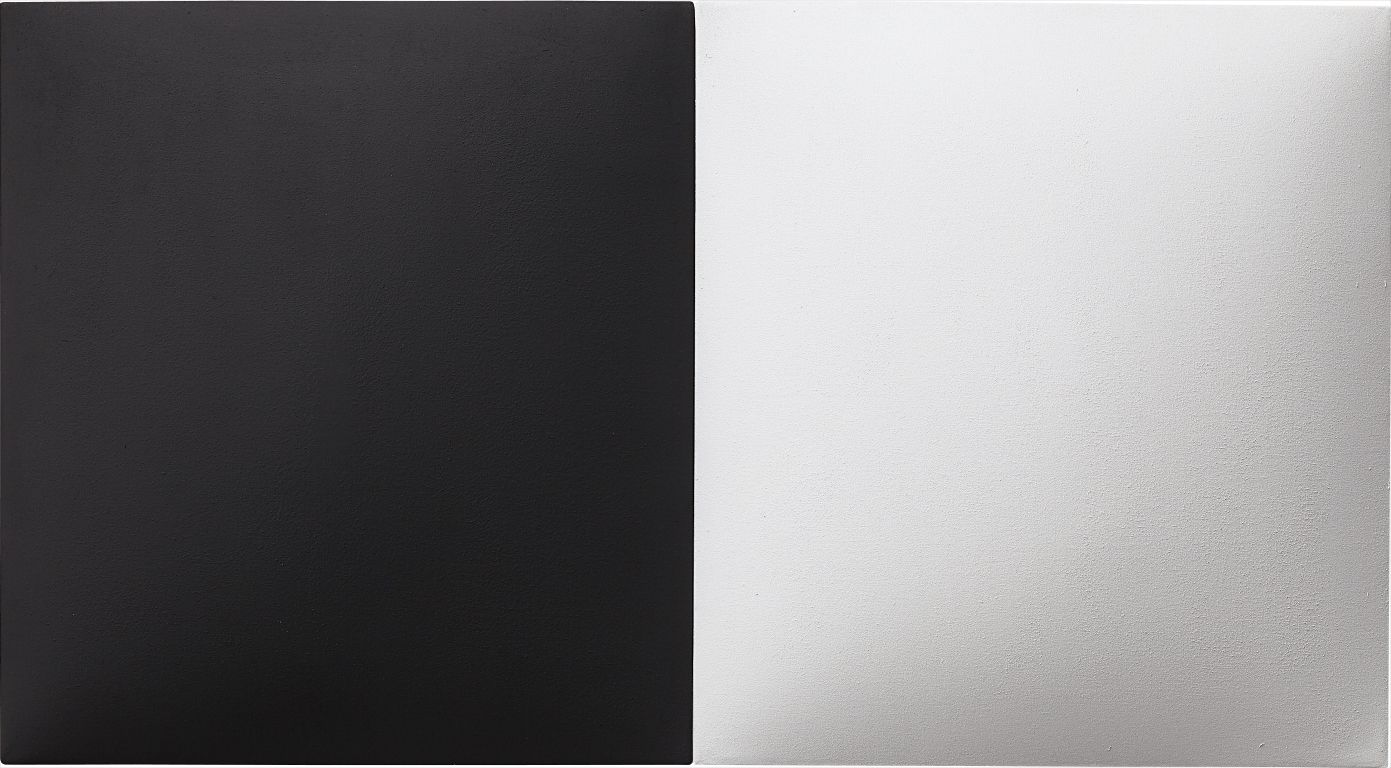
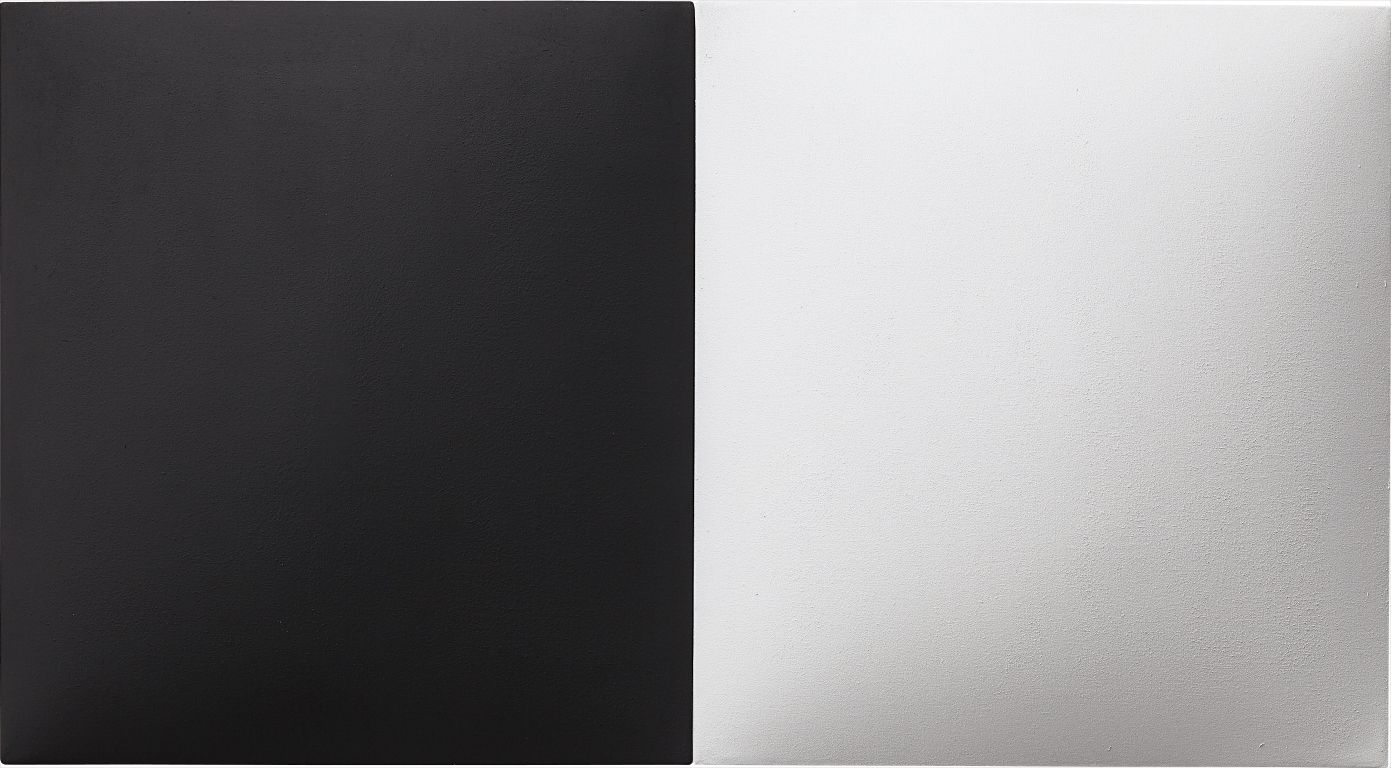
A Conversation Piece (Black & White)
Levin was born in 1986, and his formation as an artist took shape against the rich, contested backdrop of American painting in the early 2000s, a moment when the question of what painting could still do felt genuinely open. He came of age in a culture saturated with images and objects, and that dual inheritance, the image and the thing, would become the animating tension of his practice. Where many artists of his generation chose one side or the other, Levin decided to inhabit the threshold itself, making works that refuse to settle cleanly into either category. His artistic development draws deeply from two lineages that might at first seem incompatible: the spare, rigorous logic of Minimalism and the chromatic sensibility of post painterly abstraction.
Artists like Ellsworth Kelly, Robert Mangold, and Frank Stella cast long shadows over the territory Levin works in, yet his practice never feels merely reverential. He absorbs those traditions the way a confident writer absorbs literary history, not to repeat it but to argue with it productively, to find the questions those predecessors did not quite finish asking. Central to understanding Levin is his sustained engagement with the shaped canvas and with unconventional supports. He has worked extensively with materials that carry their own inherent presence: polished steel, fiberglass reinforced plaster, hydrocal, mirror surfaces.
Dean Levin
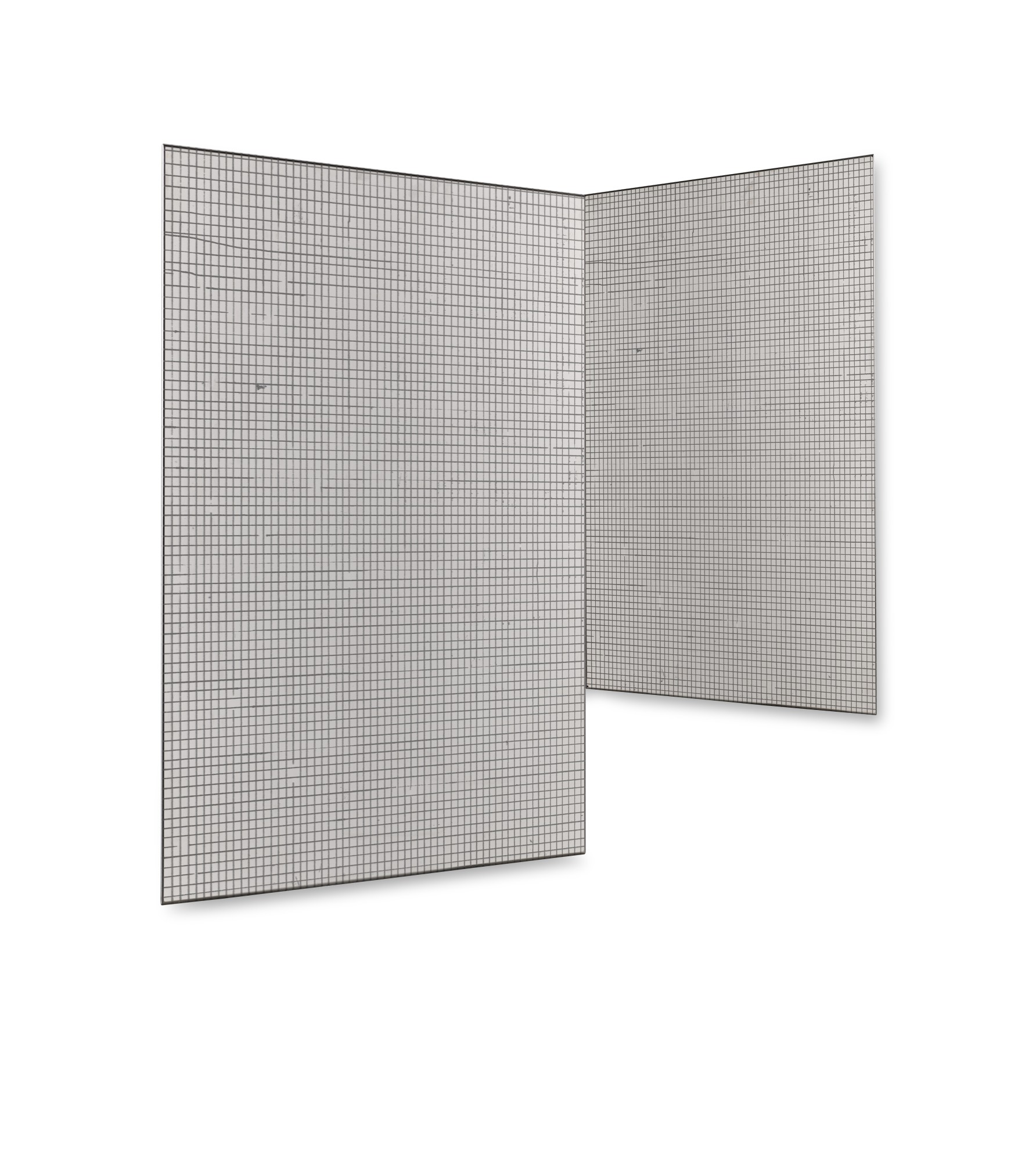
Off The Grid (Corner)
These are not neutral carriers for paint. They are assertive, reflective, structurally complex materials that collaborate with whatever is applied to them. A work like "Off The Grid (Corner)", rendered in UV ink on polished steel in two parts, demonstrates how completely Levin has thought through the relationship between surface and image. The steel reflects its environment, pulling the viewer's own presence into the composition, while the geometric forms printed upon it assert a graphic certainty that anchors the experience.
The result is neither a painting in the conventional sense nor a sculpture, but something genuinely in between, an object that thinks. The diptych and two part format recurs across Levin's output in ways that feel deliberate and philosophically loaded. Works like "A Conversation Piece (Black and White)", executed in fiberglass reinforced plaster with oil on cotton, and "Untitled (White and Indigo)", in hydrocal and oil on cotton in two parts, enact a kind of dialogue: between panels, between materials, between the handmade and the structural. The title of the first of those works is not incidental.
Dean Levin
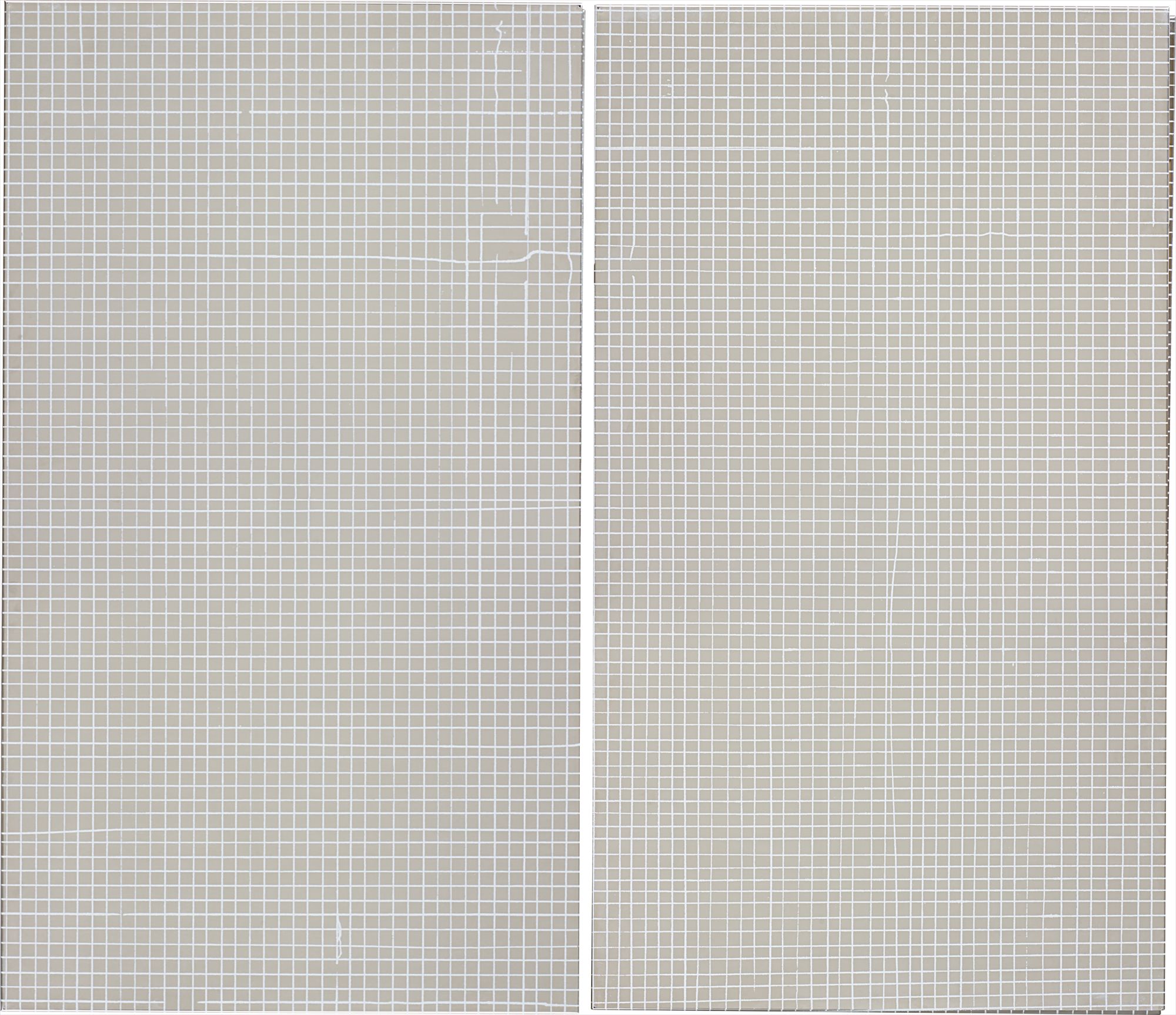
White Lines (Diptych)
A conversation requires at least two participants, and Levin's paired works set up conditions for exchange rather than declaration. There is a generosity in that impulse, an openness to interpretation and response that makes his work particularly rewarding to live with over time. "White Lines (Diptych)", with its UV curable ink on mirror polished steel, further extends this investigation, using the reflective surface to make the gallery wall and the viewer themselves co authors of the final image. For collectors, Levin offers something that is increasingly rare and therefore increasingly valued: conceptual seriousness married to genuine material pleasure.
His works are intellectually satisfying in the way that good architecture is satisfying, you sense the thinking that went into them, and that sense deepens rather than diminishes with familiarity. But they are also beautiful in a direct, unguarded way. The pristine geometry of "Surface Stain 20", with its layering of oil and pigment on canvas, rewards sustained looking with subtle variations in surface that reveal themselves slowly. Collectors who live with Levin's work frequently report that it changes in their perception across days and seasons, across different qualities of light, across different moods.
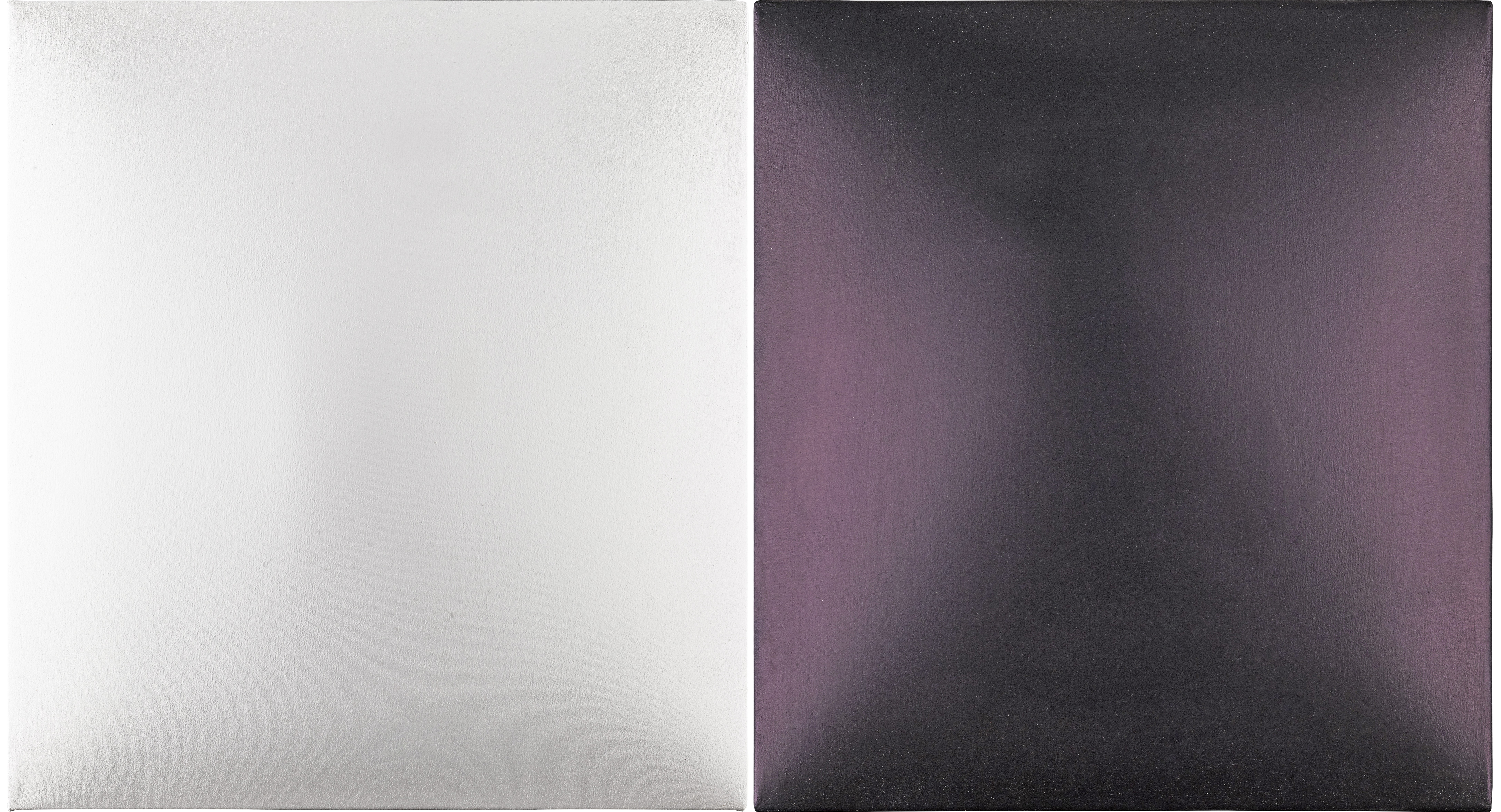
Dean Levin
Untitled (White and Indigo)
That is not a common attribute, and it is one of the qualities that makes his practice genuinely collectible rather than merely desirable. Within the broader art historical conversation, Levin occupies a position alongside artists who have similarly interrogated the conditions of painting without abandoning its pleasures. His peers in this project include figures like Tauba Auerbach, whose interest in surface, fold, and optical phenomena shares a certain structural kinship with Levin's concerns, and Analia Saban, whose excavations of the canvas as a literal object rhyme with his own material investigations. Further back, the lineage runs through Brice Marden's early panel works and Robert Ryman's tireless interrogation of the painted surface.
Levin belongs to this company not by imitation but by genuine intellectual inheritance, carrying those conversations forward with his own distinct voice. What makes Dean Levin matter now, in a cultural moment crowded with images and stripped of patience for sustained looking, is precisely the discipline and the quiet confidence of his vision. He does not chase spectacle. He does not make work that announces itself from across the room with aggressive scale or provocative imagery.
Instead he constructs situations in which attention is rewarded, in which the viewer who pauses and looks carefully receives something that the hurried glance cannot access. In an art world that can feel relentlessly oriented toward the immediate and the viral, that commitment to depth and to earned meaning is not a retreat. It is a form of argument. Dean Levin is making that argument beautifully, and the collectors and institutions who have recognized it are well ahead of a broader reckoning that, for this artist, feels very close at hand.