David Reed
David Reed Paints the Dreaming Eye
Artist Spotlight · The Collection Editorial
“I want my paintings to be experienced as if they were memories, not illustrations of memories.”
David Reed, artist statement
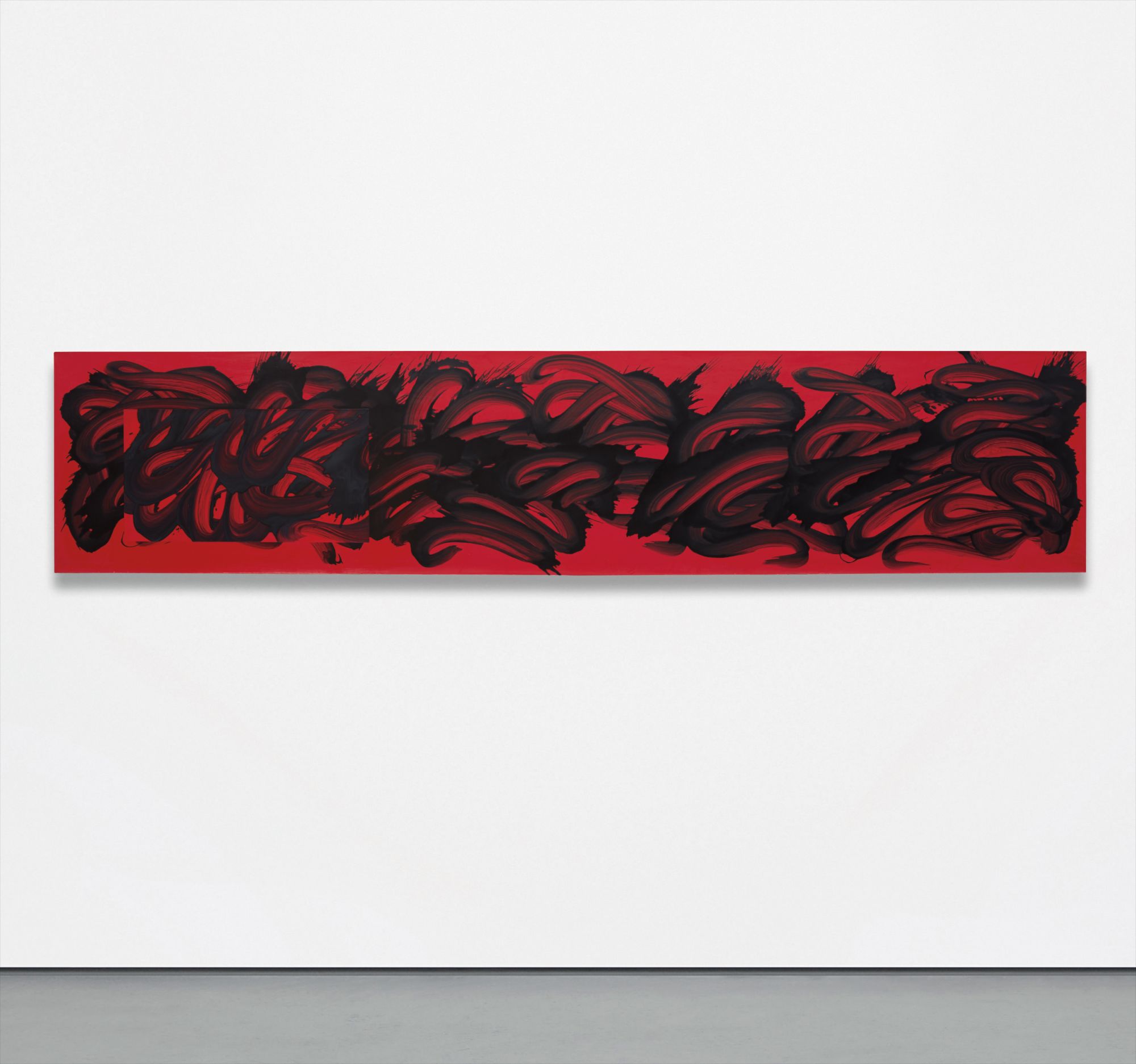
There is a moment in Alfred Hitchcock's Vertigo when the bedroom of Madeleine Elster, bathed in cool northern California light, feels suspended between memory and desire, between what is real and what is longed for. David Reed understood that suspension intimately. Beginning in the early 1990s, the New York painter digitally inserted his own large, horizontally oriented canvases into film stills from Vertigo, hanging them on the walls of Madeleine's bedroom as if they had always belonged there. The gesture was not merely conceptual cleverness.
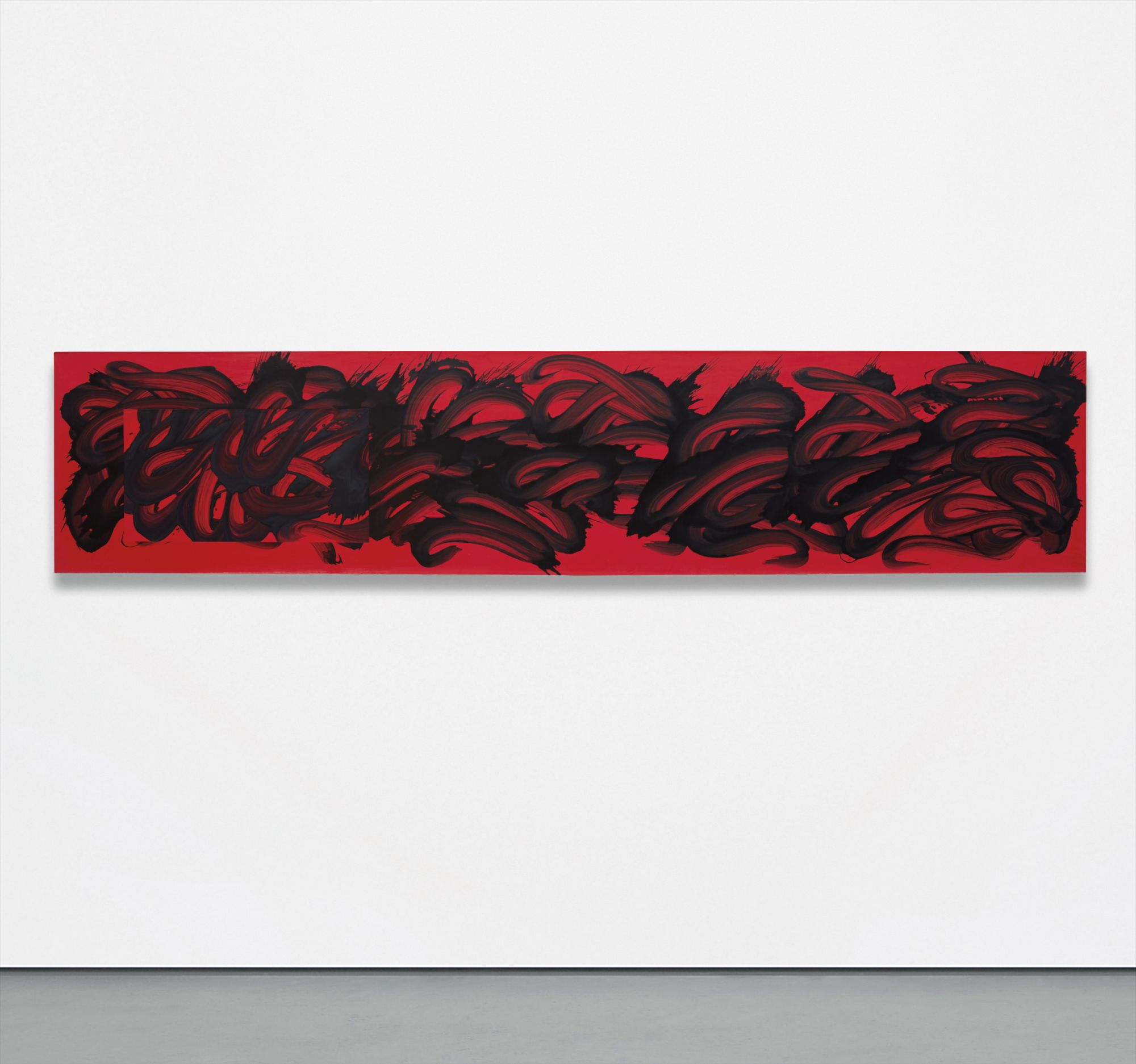
David Reed
288
It was a declaration of purpose: Reed's paintings, with their swooping airbrushed passages and visceral gestural marks, exist in exactly that charged space between the optical and the psychological, between the seductive surface and the depths beneath it. Reed was born in 1946 in San Diego, California, a city whose particular quality of light and whose proximity to Hollywood cinema would quietly shape everything he would later make. He studied at Reed College in Portland, Oregon, before moving to New York in the late 1960s, arriving in a city electric with debate about the nature and future of painting. Abstract Expressionism had already crested and receded, Minimalism was asserting its cool authority, and a younger generation of painters was wrestling with what it might mean to continue working in a medium that critics had repeatedly declared exhausted.
Reed absorbed all of this with unusual patience and intellectual seriousness, and rather than rejecting the history of painting, he chose to inhabit it fully, to work through it rather than around it. His early paintings from the 1970s show a painter already committed to the horizontal format and to a syntax of gesture that owes something to the loaded brushwork of de Kooning and Franz Kline, while reaching further back toward Baroque painters like Rubens and Caravaggio, whose dramatic, fleshy mark making Reed has cited as a genuine and persistent influence. By the 1980s, he had introduced the airbrush into his practice, creating passages of smooth, gradated color that exist in remarkable tension with the more physical, impastoed strokes surrounding them. This combination produces a disorienting and deeply pleasurable viewing experience: the eye cannot quite settle, cannot quite decide whether it is looking at something made by a human hand or generated by some optical or mechanical process.
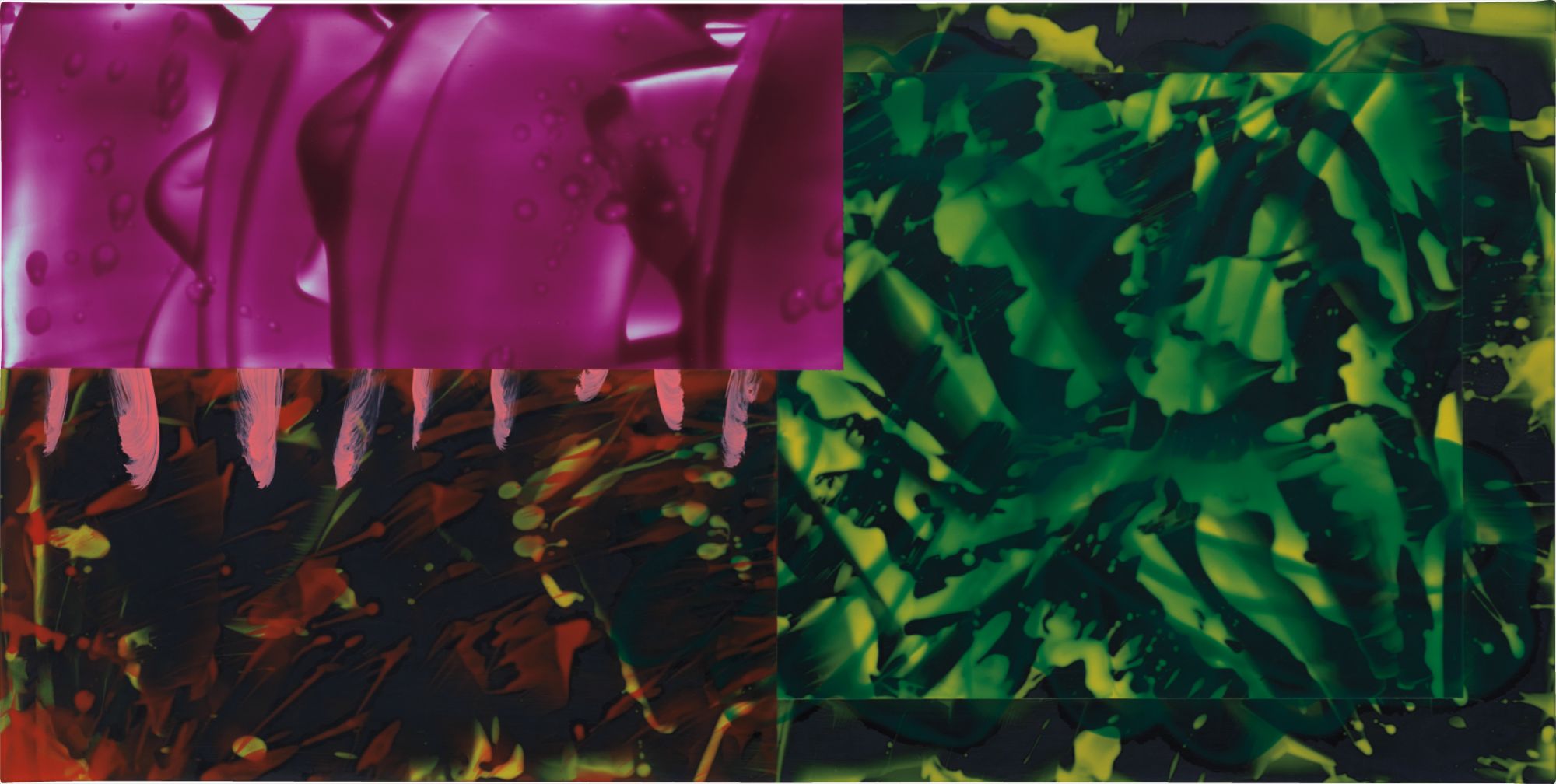
David Reed
#530
That productive uncertainty is entirely deliberate. The works that established Reed's critical reputation carry simple numerical titles, a practice he adopted to avoid over determining meaning while still allowing each canvas to be precisely identified and tracked over time. Works such as 288, executed in oil and alkyd on linen, and the earlier 180 2, demonstrate his command of the long horizontal canvas, a format Reed has connected explicitly to the cinematic widescreen image, to the experience of lying in bed and looking up, and to the kind of peripheral, ambient vision that distinguishes painting from other image forms. The alkyd medium, which Reed adopted alongside oil, dries to a luminous, slightly plastic surface that catches light differently than traditional oil alone, giving his paintings a presence that photographs struggle to capture and that rewards sustained looking in person.
Works like 333 and the 1998 canvas 439 show a painter in full command of his vocabulary, orchestrating sweeping arcs of color against densely worked grounds with something close to musical confidence. From a collecting perspective, Reed occupies a position of genuine distinction and relative scarcity. His output is deliberate and not large, and his paintings have been held seriously by collectors and institutions who understand the depth of his project. His work entered major museum collections including that of the Museum of Contemporary Art San Diego and the Museum of Modern Art in New York, and he has been represented for many years by Galerie Max Hetzler in Berlin and Cologne, one of Europe's most respected galleries for serious painting.
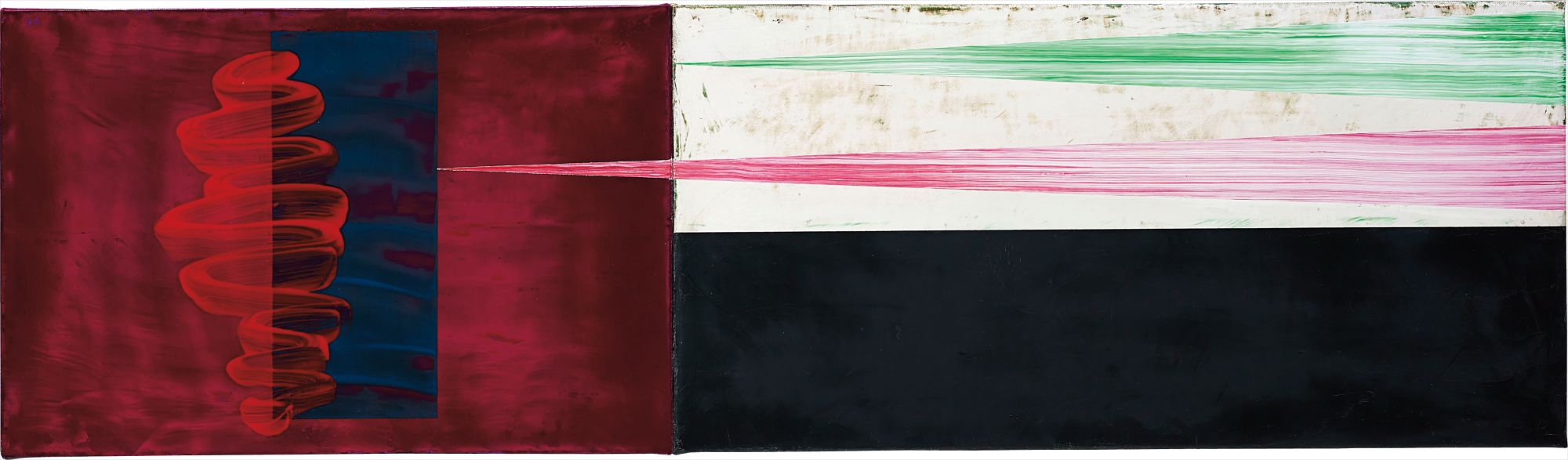
David Reed
180-2
Collectors drawn to Reed tend to be those who are genuinely engaged with the history of abstraction and who are looking for a painter whose work repays long acquaintance. These are not paintings that announce themselves quickly or exhaust their meanings in a single viewing. They deepen with time, and their technical complexity, the interplay of the airbrushed and the gestural, the luminous alkyd surfaces, the carefully considered scale, means they hold their own powerfully in domestic and institutional contexts alike. Works on linen and on panel represent different registers of his practice and both are worth serious attention.
Reed belongs to a generation and a conversation that includes painters like Gary Stephan, Pat Steir, and Terry Winters, artists who returned to painting in the late 1970s and 1980s with a new kind of self consciousness about what the medium could and could not do, and who drew freely on both art history and contemporary visual culture without apology. His engagement with cinema also places him in productive dialogue with artists like Cindy Sherman and Douglas Gordon, who have interrogated film's relationship to identity, desire, and the gaze, though Reed's approach remains rooted in the specific, irreducible materiality of paint on a support. He has taught for many years at the New York Studio School, where his influence on younger painters has been substantial and often acknowledged. What makes David Reed matter now, in a cultural moment saturated with images and suspicious of slow looking, is precisely his insistence on the irreducible complexity of the painted surface.
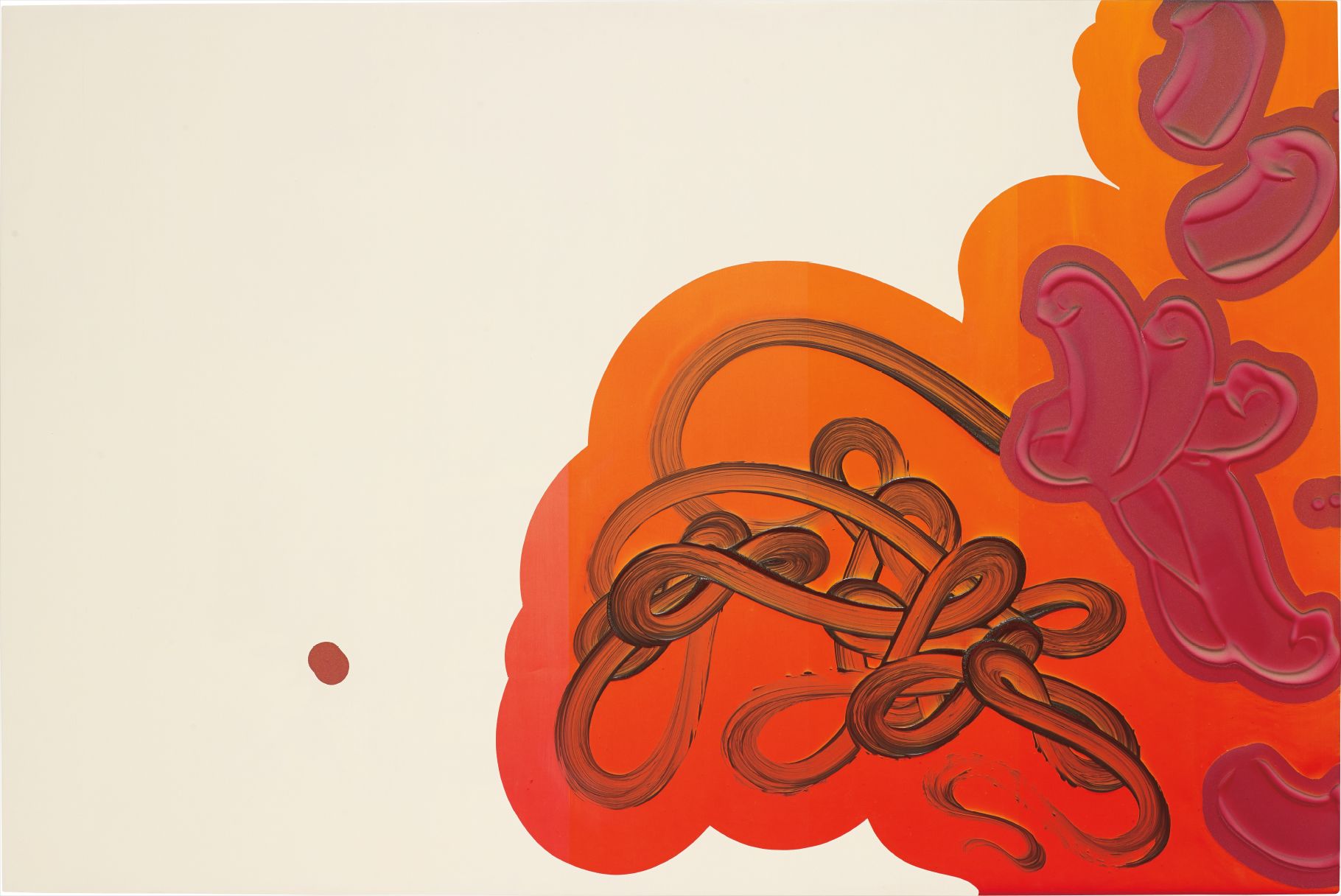
David Reed
#371
His canvases ask for something from a viewer: they ask for time, for physical presence, for a willingness to let the eye move and to follow where it goes. In an era when painting is once again being declared both dead and urgently alive, Reed's work stands as evidence that the conversation is far older and far richer than any single moment of fashion can encompass. To live with a Reed painting is to live with a work that continues to unfold, that catches different light in the morning than in the evening, that rewards the fifth look as generously as the first. That is a rare quality, and it is what distinguishes painting that endures.
Explore books about David Reed