David Ratcliff
David Ratcliff Turns the Feed Into Art
Artist Spotlight · The Collection Editorial
There is a particular kind of cultural fluency at work in the paintings of David Ratcliff, one that feels more urgent now than perhaps at any prior moment in his career. As conversations about image saturation, the archaeology of internet culture, and the visual grammar of subcultures have moved from the margins of critical discourse into the center of contemporary art practice, Ratcliff's work reads as quietly prophetic. His canvases, dense and restless and full of borrowed imagery, seem to have been waiting for the culture to catch up with them. Ratcliff was born in 1970 and came of age in the United States during a period when youth subcultures were operating as genuine alternative economies of meaning.
David Ratcliff
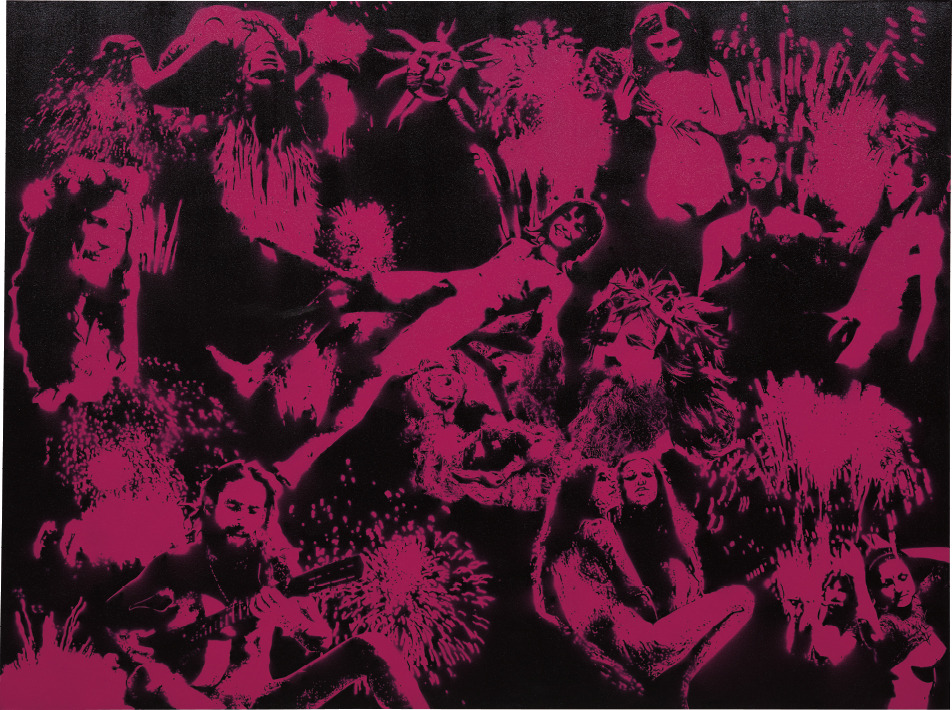
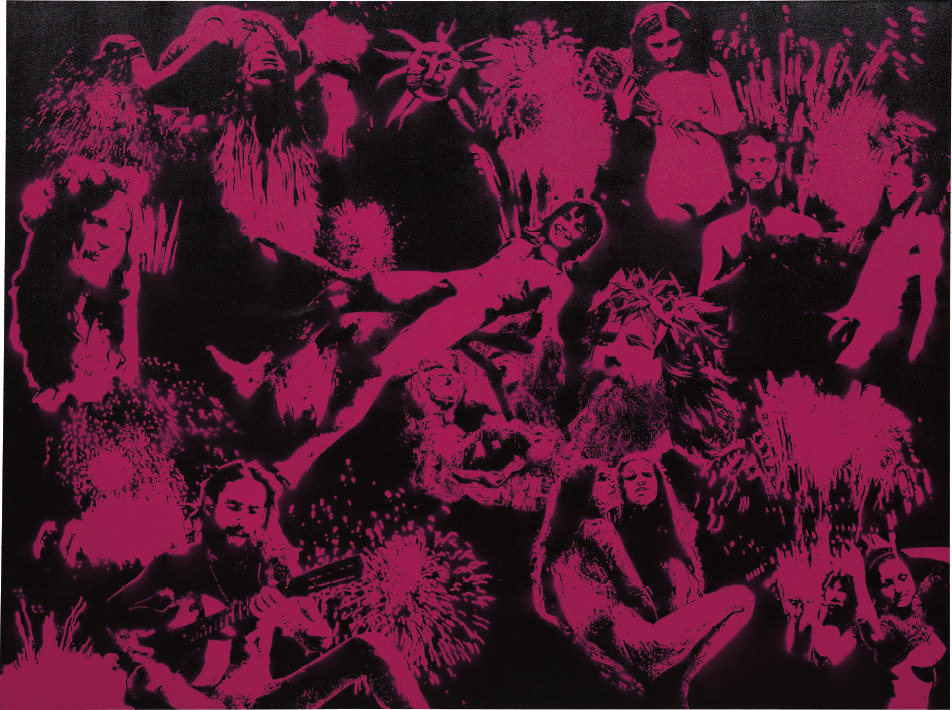
Cosmic Incapacity, 2005
Skateboarding, heavy metal, hardcore punk, and the DIY graphic traditions that surrounded them were producing visual languages that the mainstream art world largely ignored. For a young person paying attention, these were not peripheral phenomena but living systems of image making, identity formation, and communal signaling. Ratcliff absorbed all of it, and that absorption would become the foundational material of his artistic practice. Based in Los Angeles, Ratcliff belongs to a generation of American artists who came to prominence in the late 1990s and 2000s and who were grappling seriously with what it meant to make paintings in a world drowning in reproduced imagery.
This was the moment when artists such as Wade Guyton, Kelley Walker, and Seth Price were reconsidering the relationship between painting and the proliferating visual archive of contemporary life. Ratcliff's response was his own: rather than distance himself from the image flood, he dove in, treating the internet and its swirling subcultural tributaries as a studio in themselves. His appropriation is not detached or ironic in the cool manner of earlier postmodern practice. It carries heat, affection, and genuine curiosity about how images travel and what they do to us.
David Ratcliff
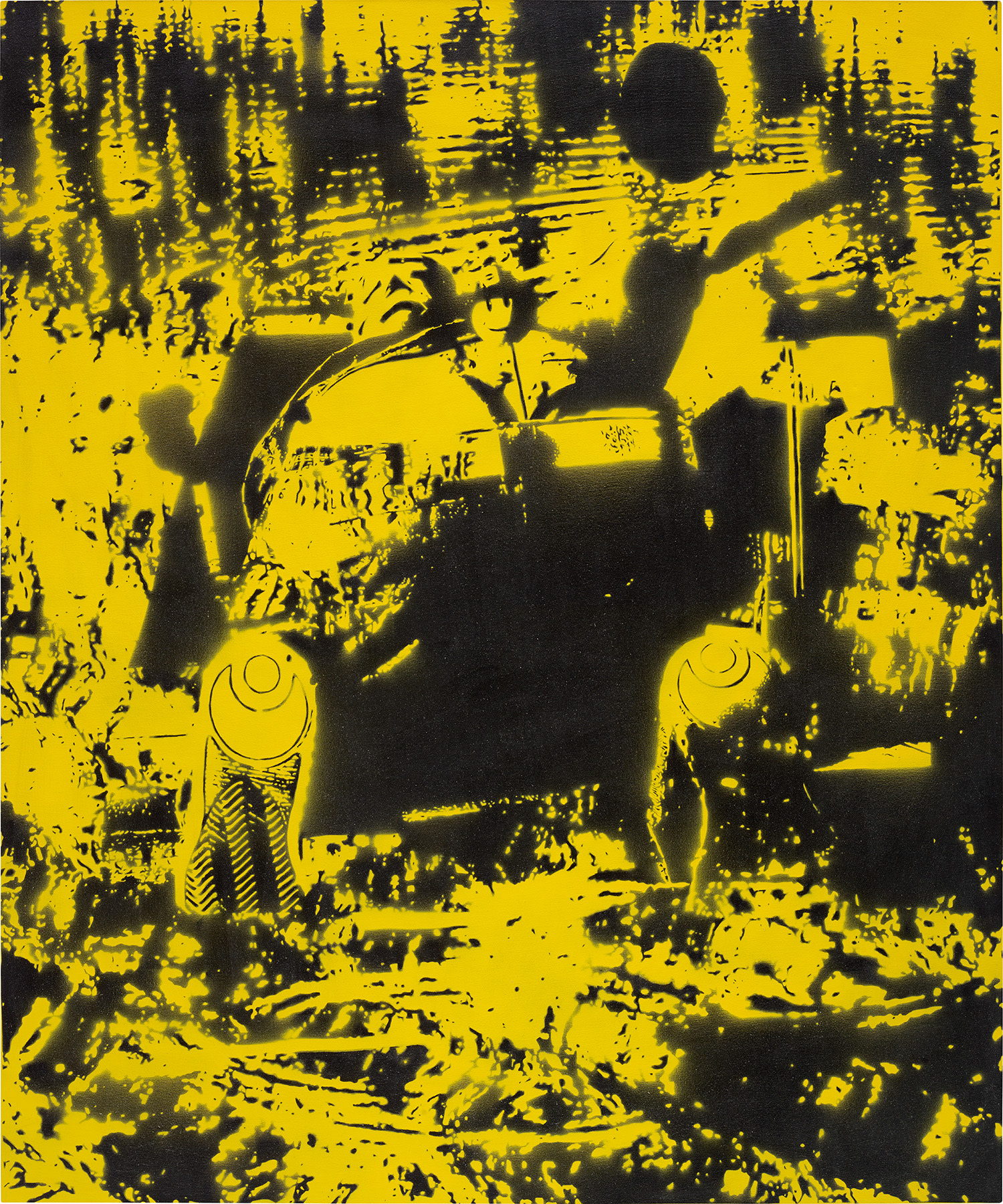
Antenna Effect, 2007
The development of Ratcliff's practice across the 2000s produced some of his most compelling and lasting work. "Cosmic Incapacity," an acrylic on canvas from 2005, stands as an early crystallization of his method. The painting layers found imagery and visual fragments in a way that refuses easy resolution, asking the viewer to navigate competing registers of meaning without the comfort of a single organizing hierarchy. There is something almost musical about the composition, the way elements interrupt and respond to one another across the picture plane.
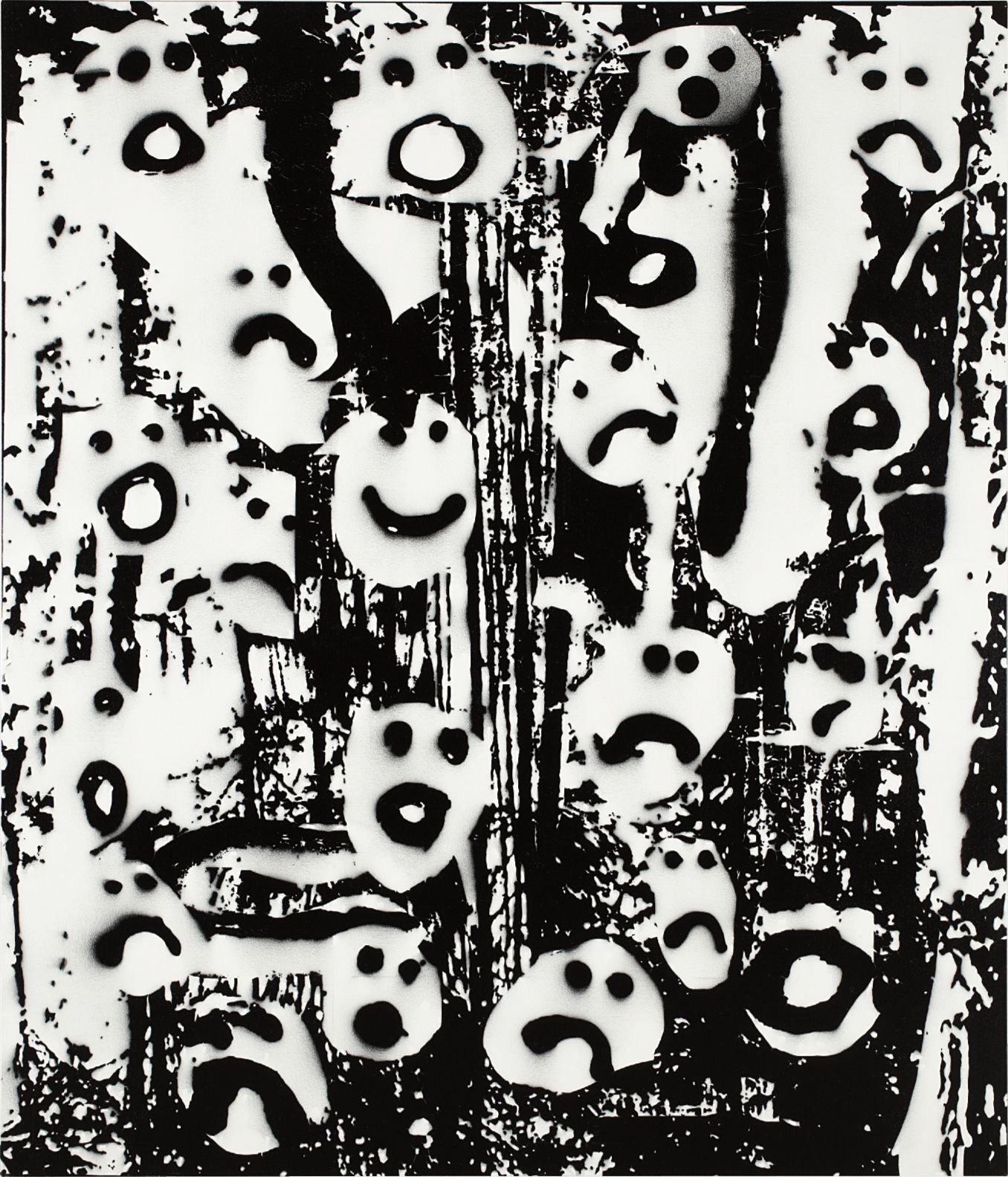
By 2007, with "Antenna Effect," executed in acrylic and enamel on canvas, Ratcliff had pushed the formal qualities of his surfaces further, incorporating the reflective and industrial qualities of enamel to complicate the relationship between the painted image and the materials that carry it. The enamel introduces a commercial, almost signage quality that sits in productive tension with the hand of the painter, creating a conversation between the artisanal and the mass produced that is central to his entire project. His work "Faces" represents another dimension of this practice, turning the lens more directly toward the human image and the ways in which identity is constructed and circulated through visual culture. Faces, in the context of internet culture and subcultural iconography, are rarely neutral.
David Ratcliff
Faces
They carry affiliation, aspiration, and allegiance. Ratcliff treats them with the same layering instinct he brings to pattern and text, producing images that feel simultaneously intimate and distanced, personal and systemic. The result is a body of work that rewards sustained looking. The more time a viewer spends with these paintings, the more the density of reference reveals itself, not as a puzzle to be solved but as a condition to be experienced.
From a collecting perspective, Ratcliff occupies a distinctive position. He is an artist whose critical reputation has been built steadily and thoughtfully, associated with serious gallery programs and international exhibition histories, yet whose work remains genuinely accessible to collectors who are building with both quality and considered value in mind. His paintings reward the kind of collector who is interested in art historical positioning, in understanding how a practice relates to broader movements in contemporary painting and conceptual art. Works on canvas from the 2000s, particularly those that demonstrate his layering method at its most developed, represent the core of the practice and offer collectors a direct point of entry into what makes Ratcliff significant.
In situating Ratcliff within art history, it is useful to think about several overlapping contexts. He shares with artists such as Richard Prince and Mike Kelley a deep engagement with American subcultural imagery and the question of what happens when those images are relocated into the space of fine art. He connects to the Pictures Generation in his concern with appropriation and the politics of the image, though his relationship to that lineage is more visceral and less conceptually schematic than some of his predecessors. And he participates in the ongoing conversation among painters of his generation about what painting can still do in a world where images are essentially infinite and free.
Within all of these contexts, Ratcliff holds his own distinctive place, one shaped by his particular affection for the visual cultures that form him and his refusal to treat appropriation as a purely critical gesture. What David Ratcliff ultimately offers, both to the viewer standing in front of one of his canvases and to the collector who brings one home, is an experience of the present moment rendered strange and beautiful. His paintings are maps of a cultural landscape that we all inhabit but rarely pause to examine. They are generous in their engagement with the imagery of everyday life, rigorous in their formal intelligence, and alive to the ways in which the images that surround us are not passive background but active forces shaping who we think we are.
That combination of accessibility and depth, of warmth and critical awareness, is rare, and it is what makes David Ratcliff a painter worth knowing deeply.