David Nash
David Nash: Nature's Most Devoted Collaborator
Artist Spotlight · The Collection Editorial
“I want to be a witness to the material. I want to find what wood is, not what I can impose on it.”
David Nash, interview with the Yorkshire Sculpture Park
In the rolling landscape of Snowdonia, something remarkable is happening. Forty seven years after David Nash planted twenty two young ash trees in a remote Welsh hillside and began coaxing them into a living dome, that work, known as Ash Dome, continues to grow, breathe, and evolve. It remains one of the most quietly radical gestures in postwar British sculpture, a work with no fixed completion date, no final form, no auction estimate. It is simply alive.
David Nash
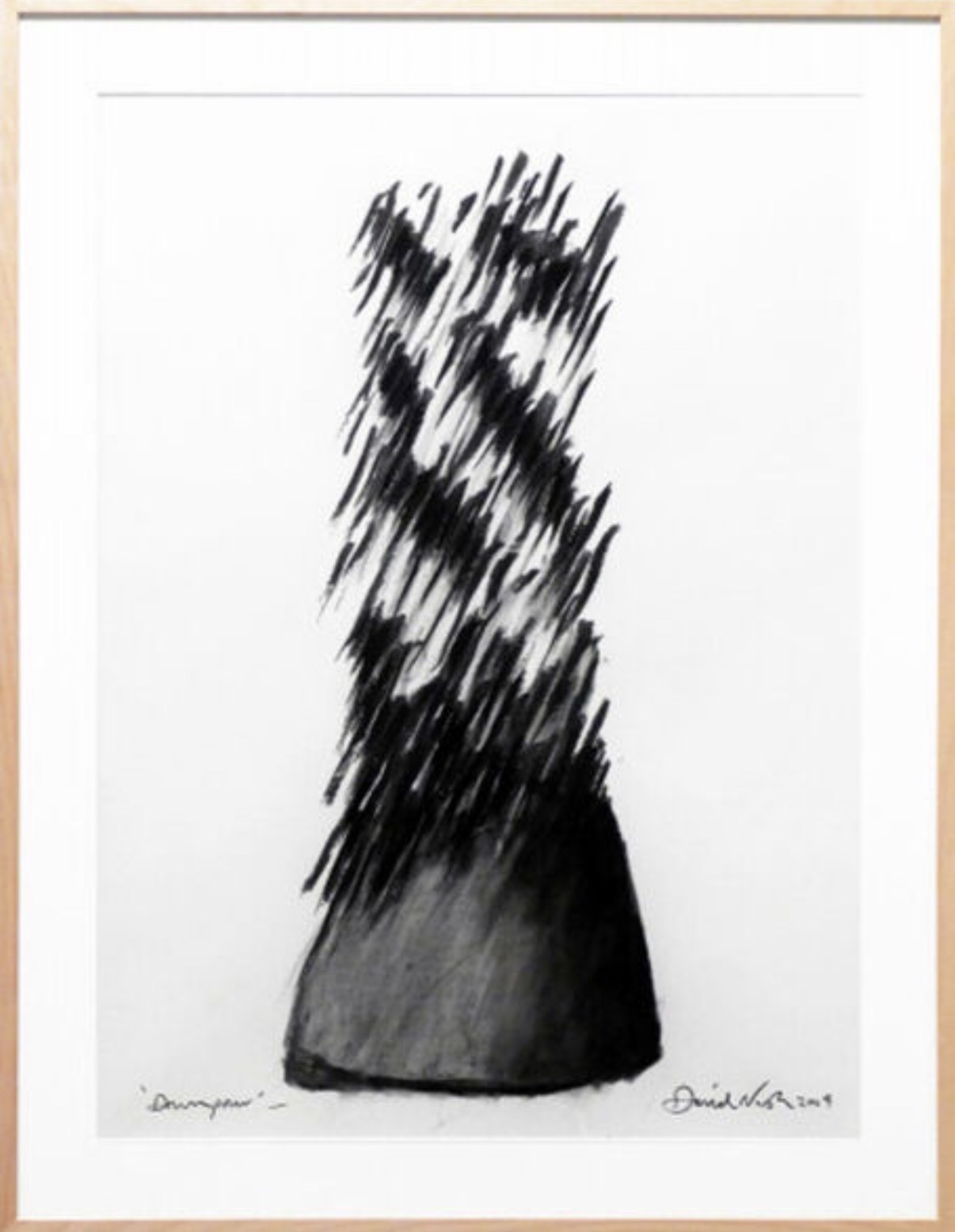
Downpour, 2004
And in an art world increasingly drawn to questions of ecology, deep time, and our relationship with the natural world, Nash has never felt more essential. Nash was born in Esher, Surrey, in 1945, and trained at Kingston College of Art and then the Chelsea School of Art during the late 1960s. But it was his decision in 1967 to move to Blaenau Ffestiniog in north Wales that truly determined everything. The town, once the slate quarrying capital of the world and by then economically diminished, offered Nash something London could not: space, solitude, and a landscape of extraordinary force.
He settled into a former chapel called Capel Rhiw, which became both his home and his studio for decades. Wales did not merely provide a backdrop for his work. It became the very material of it. In the early years Nash worked with timber salvaged from the surrounding land, felled trees and branches left behind by farmers and foresters.
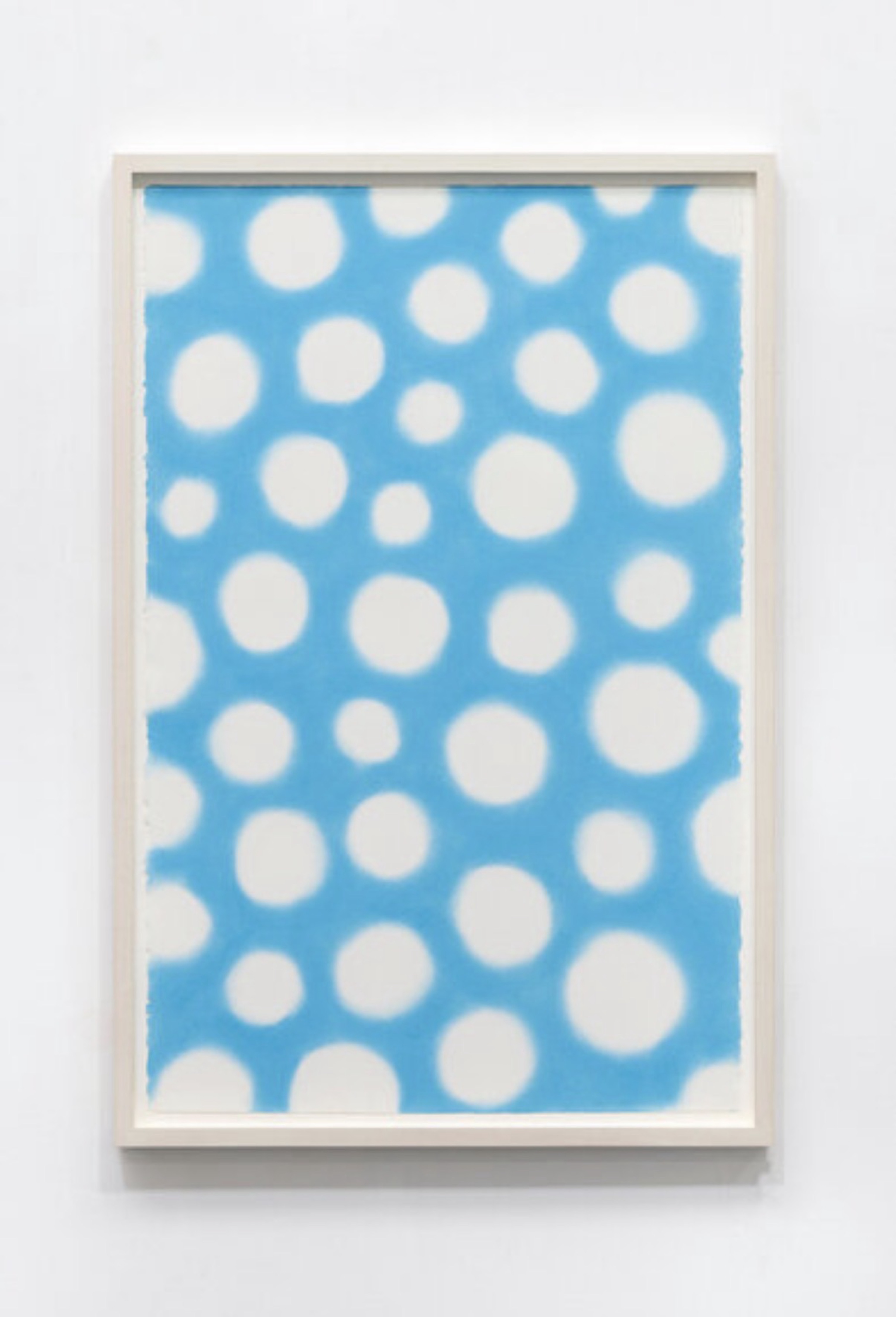
David Nash
Blue Around White, 2022
He was drawn not to the refinement of wood but to its rawness, its grain and knot and split, its memory of growth. Through the 1970s he developed the vocabulary that would define his practice: rough hewn geometric forms, simple volumes carved with chainsaws and axes that retained the energy of their making. Works like Wooden Boulder, a massive oak sphere Nash sent rolling into a Welsh stream in 1978 and then tracked across the landscape for decades as water carried it toward the sea, showed that Nash was not simply a sculptor working in wood. He was entering into a conversation with natural processes that would unfold across lifetimes.
His practice divides broadly into three modes, each distinct but deeply interconnected. There are the planted works, of which Ash Dome is the supreme example, living sculptures that grow and change with each passing season. There are the carved works, those powerful, elemental forms hewn from timber that carry the weight and silence of ancient things. And there are the charred works, pieces in which Nash burns the surface of the wood to a deep, lustrous black, sealing it and transforming it into something that feels simultaneously primordial and contemporary.
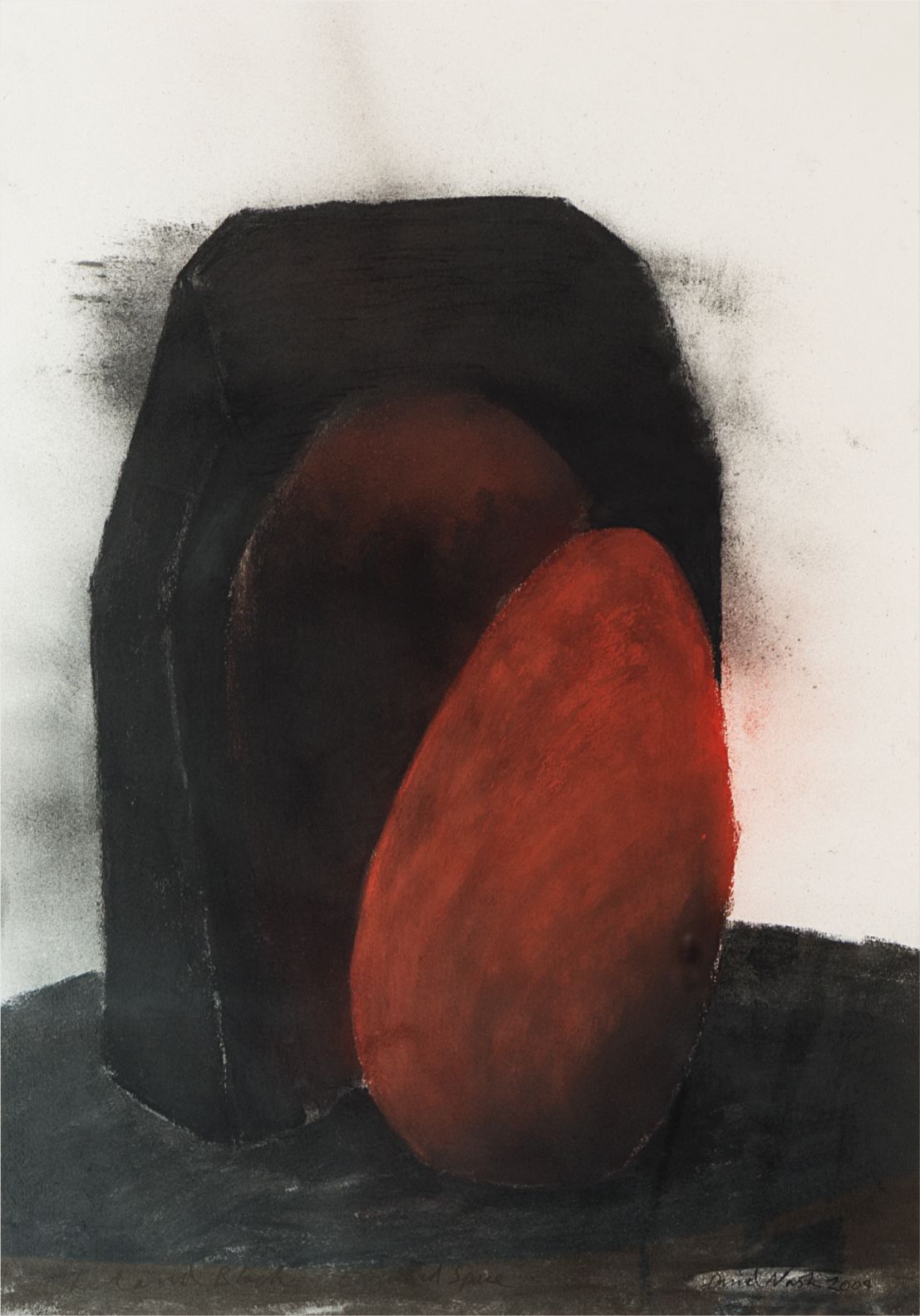
David Nash
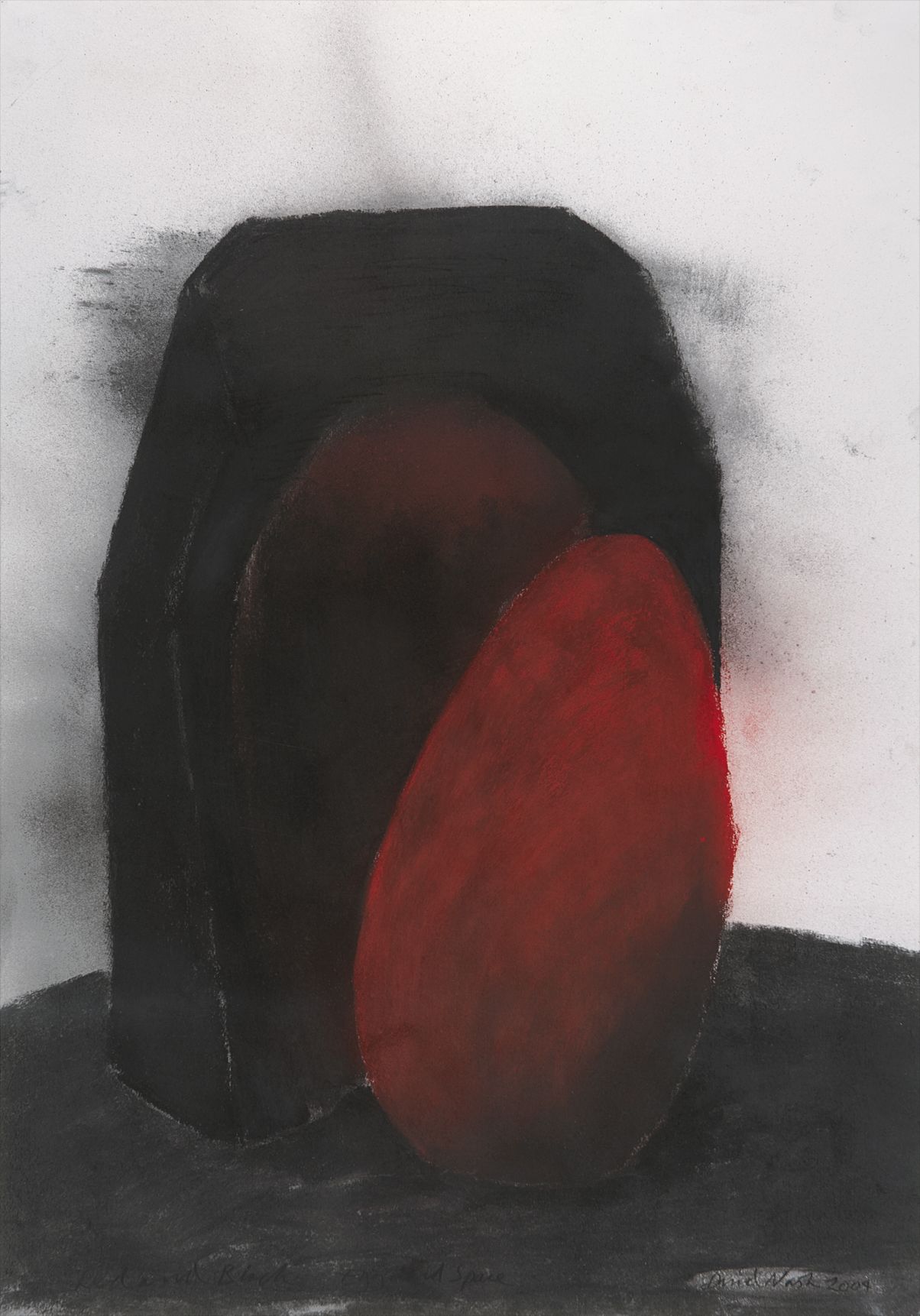
Red & Black: Egg and Space
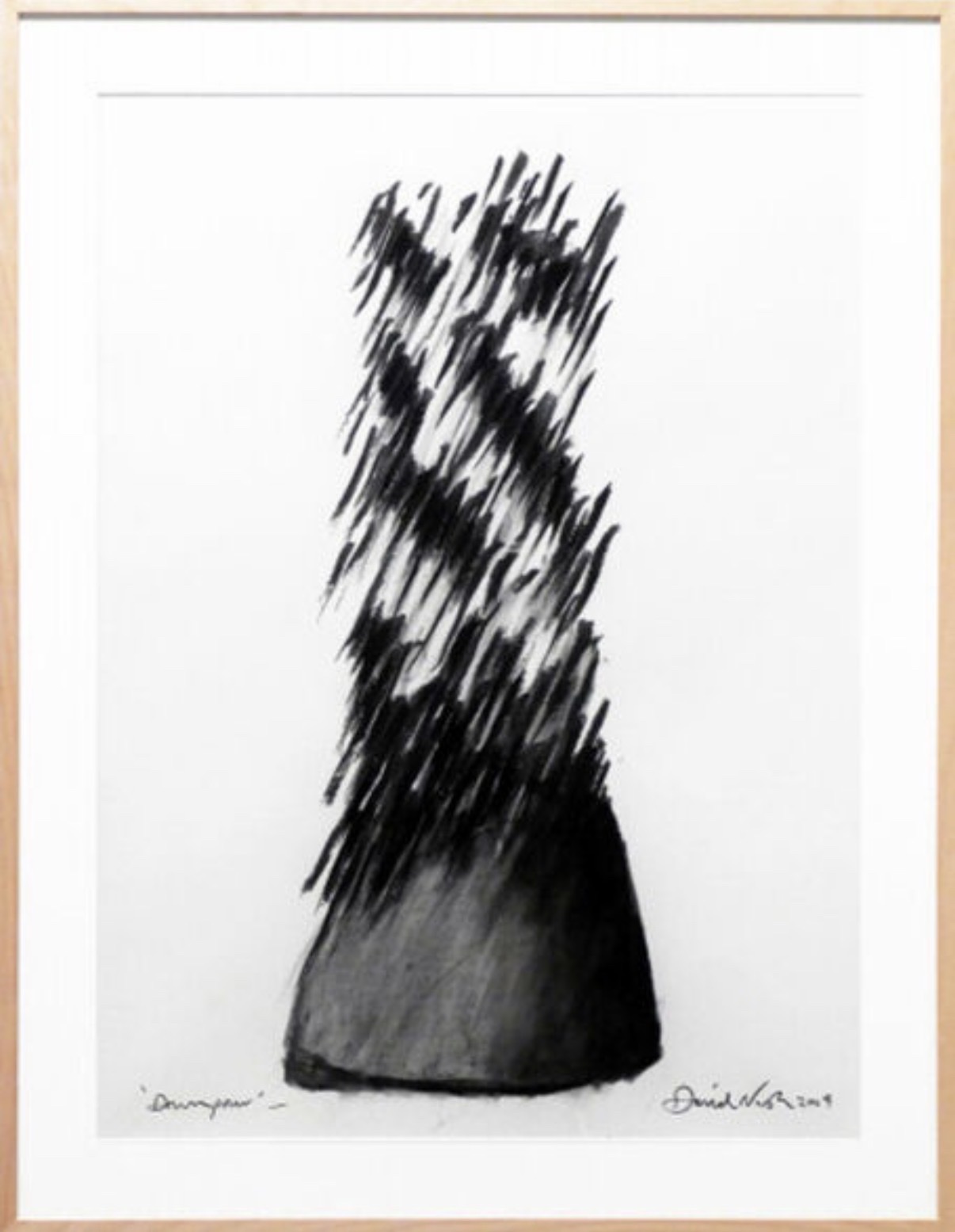
The char series, developed through the 1980s and refined over subsequent decades, gave Nash an unexpected chromatic intensity. The blackened surfaces absorb light rather than reflecting it, giving sculptures a meditative stillness that collectors and museum curators have found endlessly compelling. The works available through The Collection offer a particularly illuminating cross section of Nash's range. Downpour from 2004 is a charcoal on paper that demonstrates how his drawing practice extends and deepens his sculptural thinking, the marks on the page carrying the same raw directness as a chainsaw cut through timber.
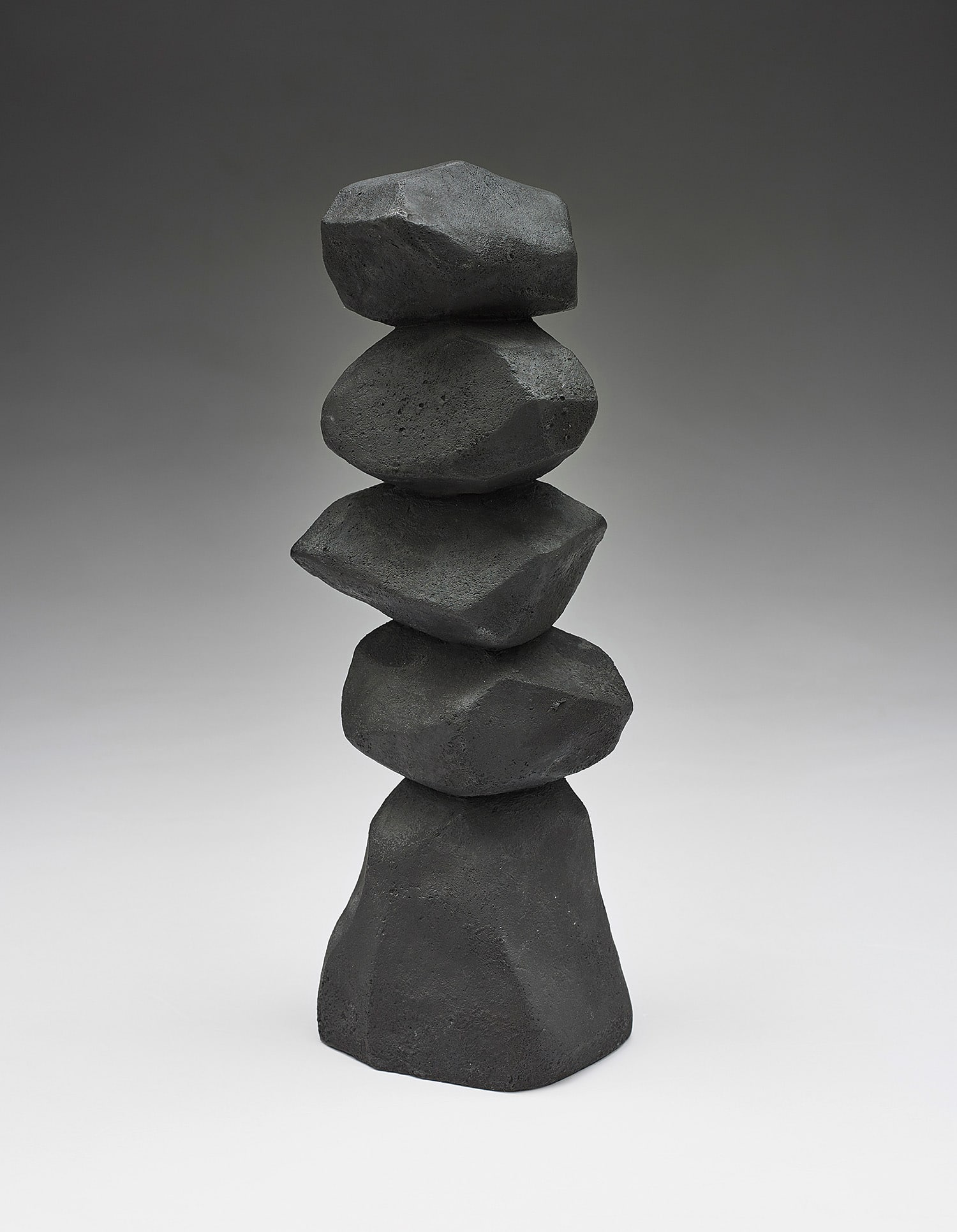
Red and Black: Egg and Space, rendered in pastel and charcoal, shows Nash in more lyrical territory, where form dissolves into energy and colour becomes a kind of weather. Waving Warps from 2012 speaks to his sustained interest in movement and organic rhythm, while Small Black Column from 2018 in bronze reveals a later expansion of his material range, the char aesthetic translated into cast metal with striking authority. Together these works read as a sustained meditation on growth, gravity, and the elemental forces that shape all living things. For collectors, Nash represents a rare convergence of critical prestige and emotional immediacy.
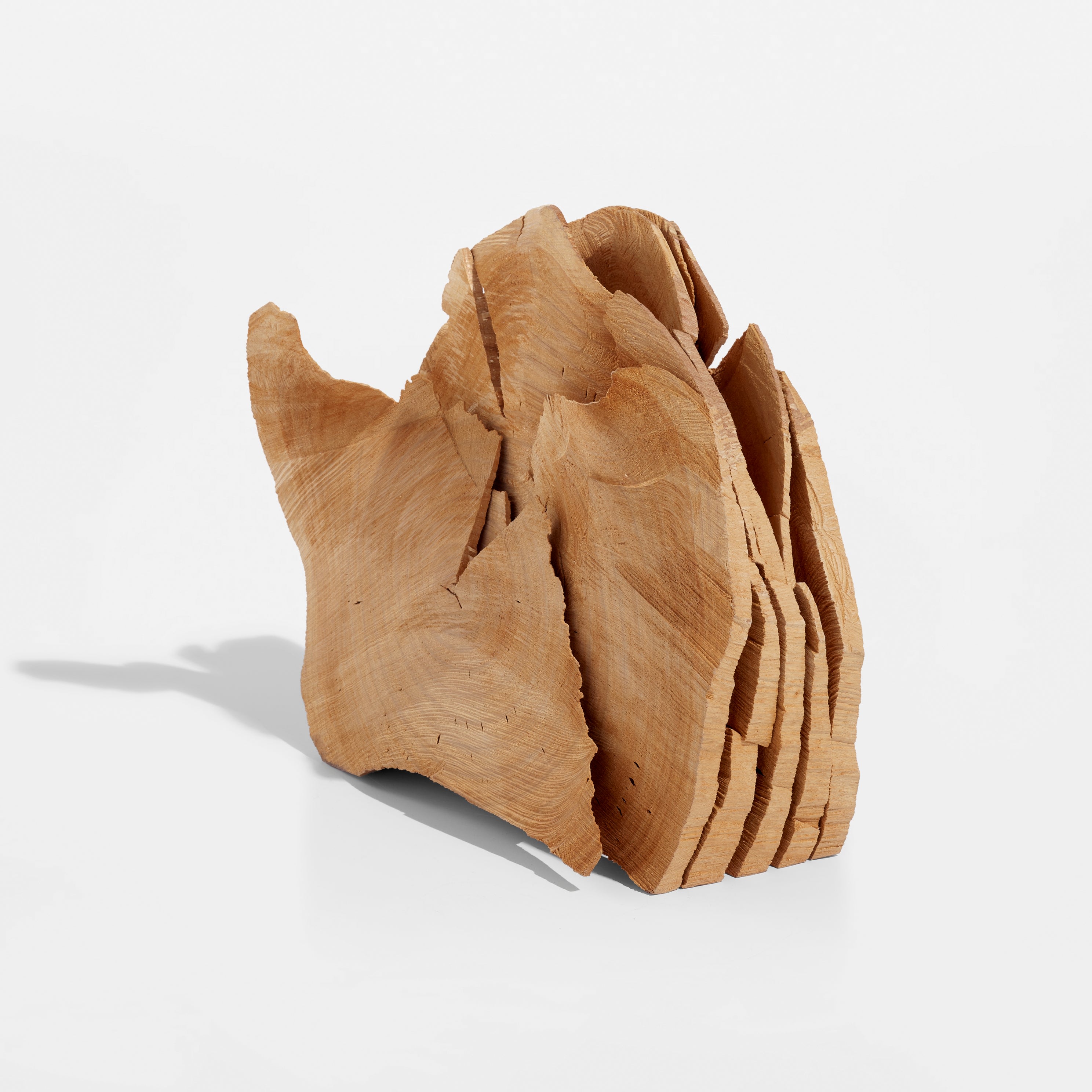
David Nash
Waving Warps, 2012
His works are held by Tate, the Yorkshire Sculpture Park, the National Museum of Wales, and major institutions across Europe, the United States, and Japan, where he has exhibited extensively and developed a devoted following. His gallery relationships have included long associations with Annely Juda Fine Art in London, one of the most respected platforms for serious sculptural work in Britain. On the secondary market his carved and charred sculptures have performed with consistent strength, reflecting a collector base that values depth of practice and long term commitment over fashion. Works on paper, including the charcoal and pastel pieces, offer an accessible and often deeply personal entry point into his world, works in which you can feel the artist thinking in real time.
To understand Nash properly it helps to place him within a constellation of artists who emerged in the late 1960s and early 1970s grappling with land, nature, and the limits of the gallery system. Richard Long, Andy Goldsworthy, and Chris Drury are natural points of reference, British artists for whom the landscape is not merely a subject but a collaborator. Further afield there are resonances with the Arte Povera movement in Italy, particularly the work of Giuseppe Penone, whose own explorations of trees and growth share Nash's philosophical patience. But Nash is not reducible to any movement.
His combination of physical labour, long term ecological thinking, and formal rigour gives his work a character that is entirely its own. What makes Nash so important today, beyond the beauty and craft of individual works, is the quality of his attention. At a moment when the relationship between human beings and the natural world demands urgent rethinking, Nash has spent more than half a century demonstrating what it looks like to enter into genuine dialogue with living systems rather than simply exploiting them. Ash Dome will keep growing long after any of us are gone.
The charred sculptures will keep absorbing their quiet light. And the drawings and works on paper, those intimate records of a singular mind in conversation with the world, will keep offering new collectors the chance to bring something of that extraordinary, patient vision into their own lives.
Featured Works
Explore books about David Nash