David Kim Whittaker
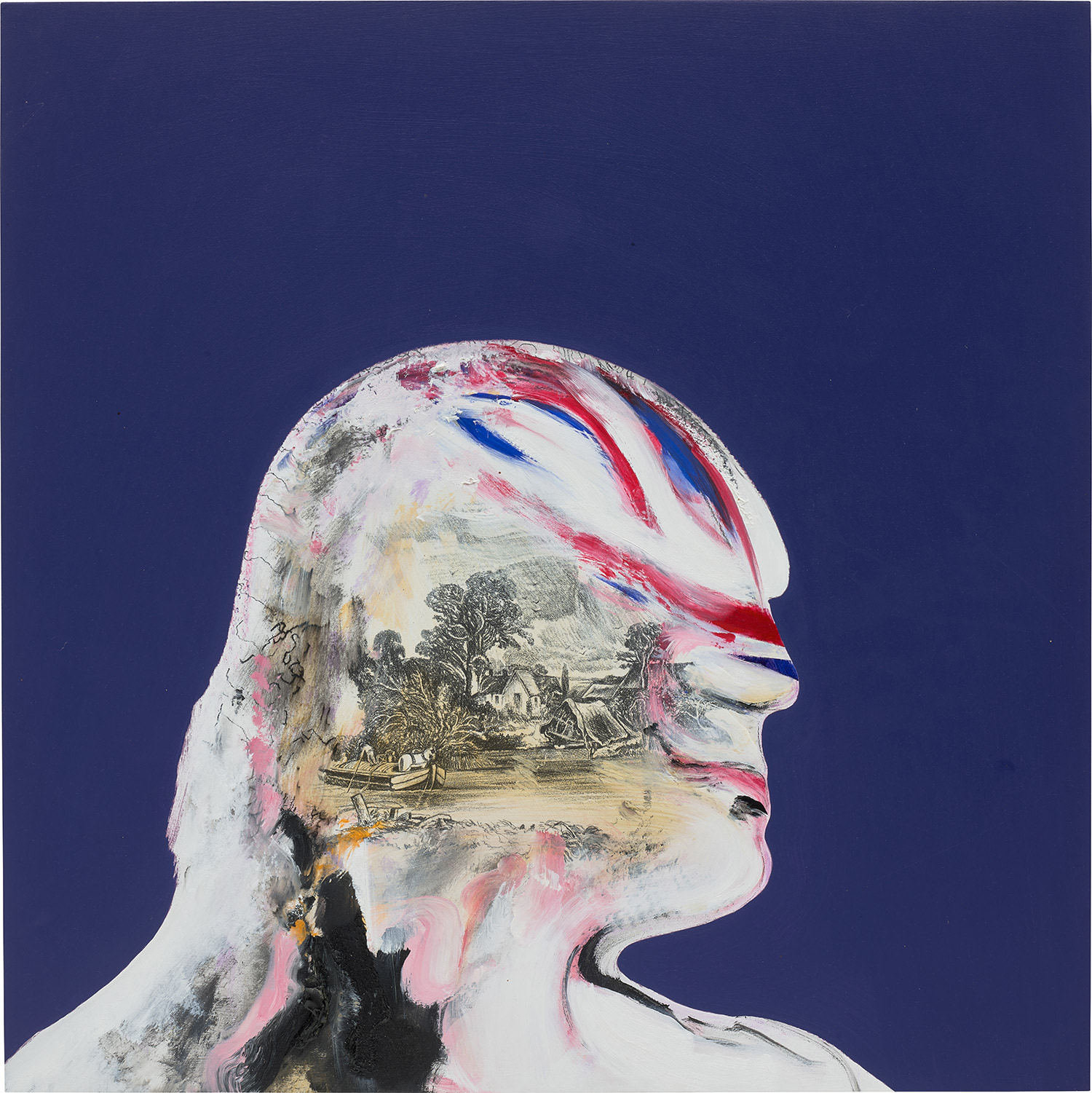
David Kim Whittaker: A Vision Richly Earned
Artist Spotlight · The Collection Editorial
There is a particular kind of painter who resists easy categorisation, whose work accumulates meaning across decades rather than announcing itself in a single career defining gesture. David Kim Whittaker is precisely such an artist. Working across oil, acrylic, graphite, charcoal, collage and china marker, often on panel or board and frequently presented in frames of his own construction, Whittaker has built a body of work of remarkable emotional and intellectual density. His paintings reward sustained looking, the kind of attention that private collectors, drawn to work that reveals itself slowly and without compromise, tend to prize above all else.
David Kim Whittaker
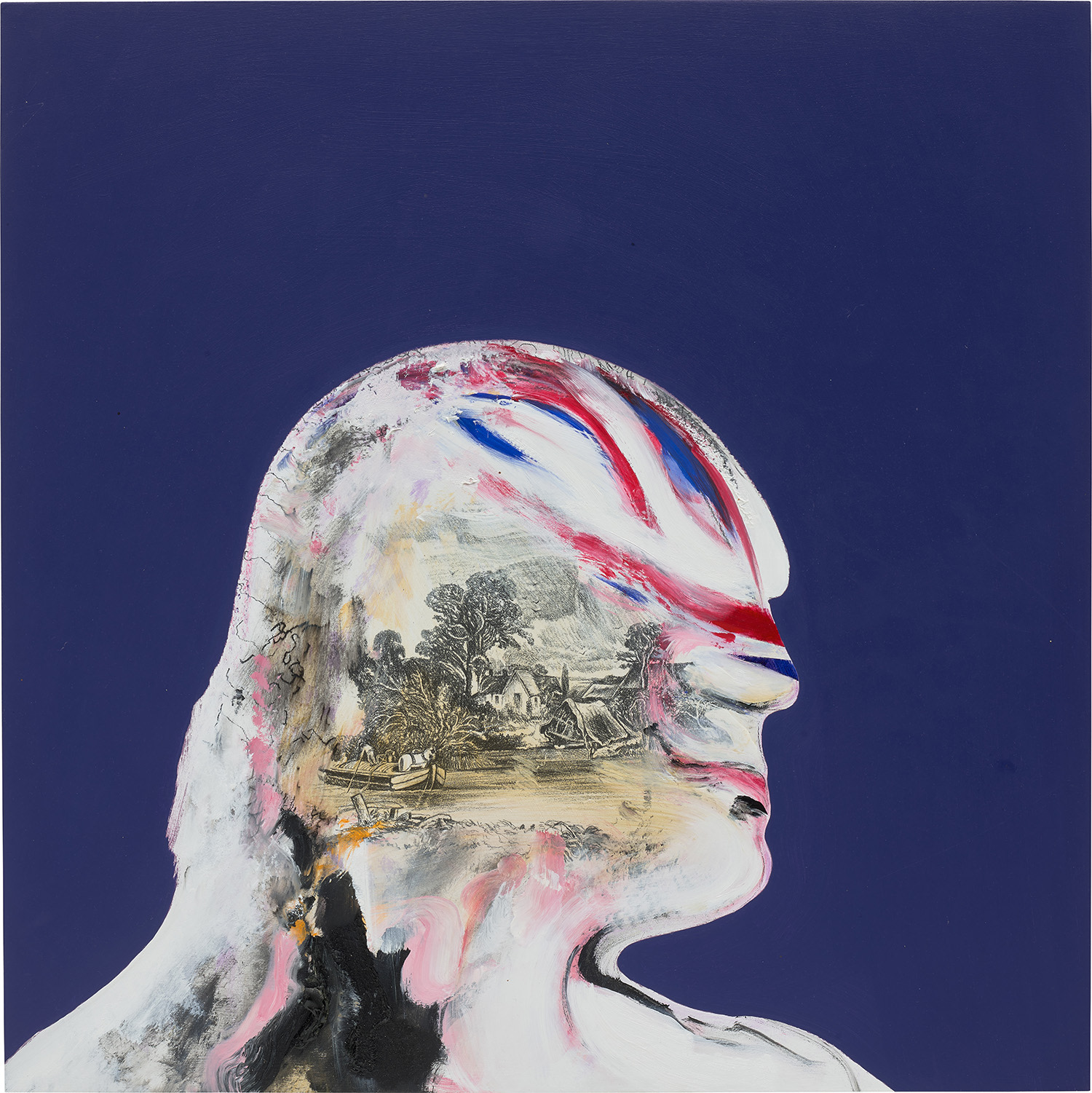
Southern Changes, 2004
Whittaker's formation as a painter belongs to a British tradition that takes figuration and landscape seriously as vehicles for psychological and philosophical inquiry. His early practice shows clear engagement with the expressive possibilities of mixed media on board and canvas, a commitment that has never wavered. From the beginning, he demonstrated an appetite for combining materials in ways that generate tension on the picture surface: charcoal and graphite pushing against the opacity of oil, paper collage lifting the physical texture of a composition, acrylic providing passages of cool flatness against which warmer, more worked areas can breathe. This is painting that understands itself as a material act, not merely an illusionistic one.
The work datable to the early 2000s, including Southern Changes from 2004, signals a painter already in confident command of his means. That work, executed in oil, acrylic, charcoal and graphite on board, carries in its title a suggestion of transformation and geographical resonance, themes that would persist throughout the decades to follow. Whittaker's paintings are never purely abstract and never straightforwardly representational. They occupy a charged middle ground where figures, landscapes, and symbolic structures emerge from and dissolve back into the painted surface, as if caught at the moment of becoming.
David Kim Whittaker
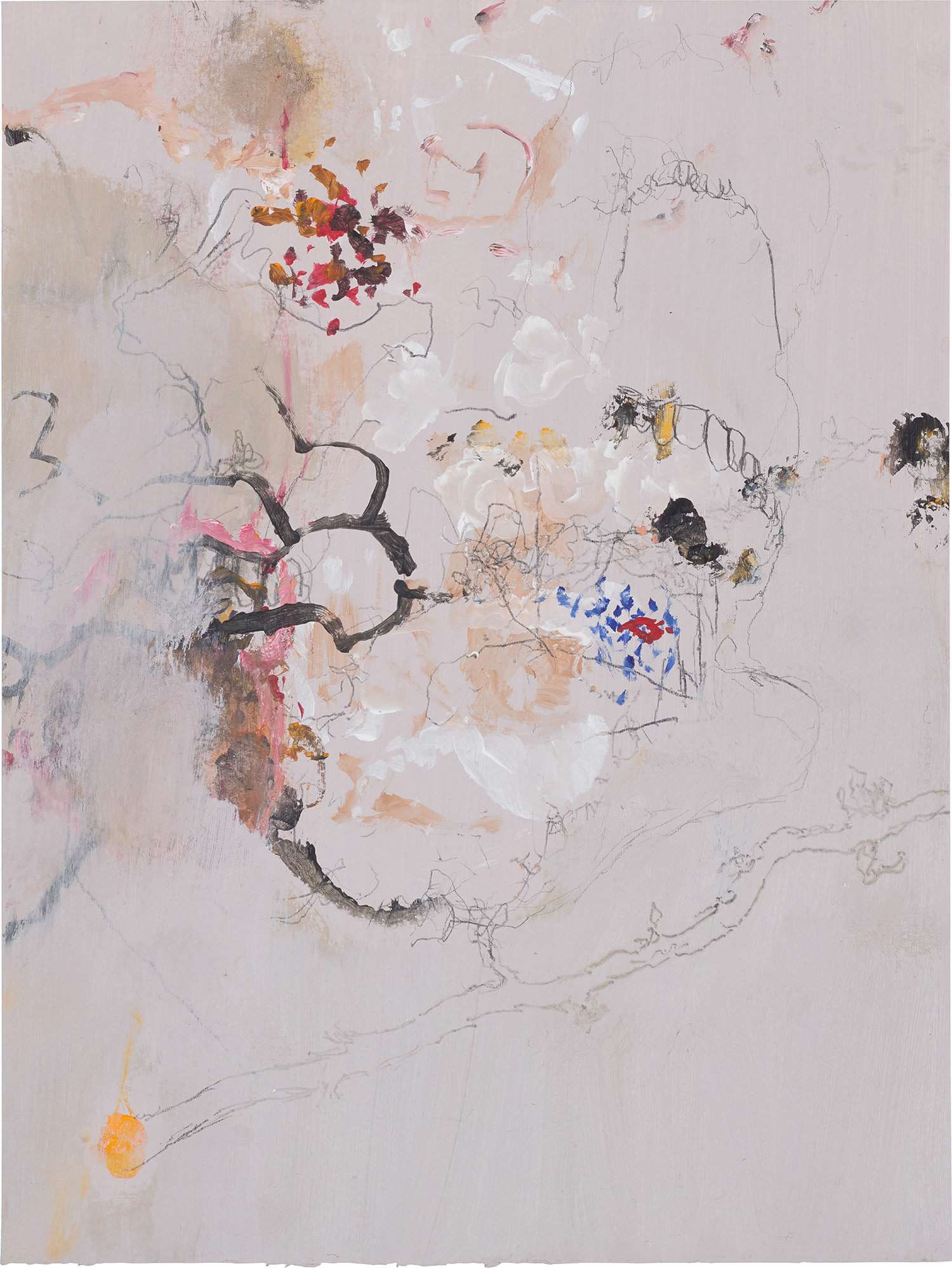
Three works: (i), 2007
The years around 2007 produced works such as the Three Works series and Moving Front, the latter combining oil, acrylic and paper collage on canvas in a way that feels simultaneously archival and urgent. These paintings speak to an artist who is reading widely, thinking historically, and bringing that accumulation of reference to bear on the specific physical problem of making marks on a surface. Moving Front in particular suggests meteorological and military connotations at once, a characteristic Whittaker manoeuvre in which a single image or phrase opens onto multiple registers of meaning without resolving into any one of them. By 2011, works such as Divine States (Place Fell) and Memory for the Yeoman (Willy Lot) demonstrate a deepening engagement with the British landscape tradition and its literary and painterly echoes.
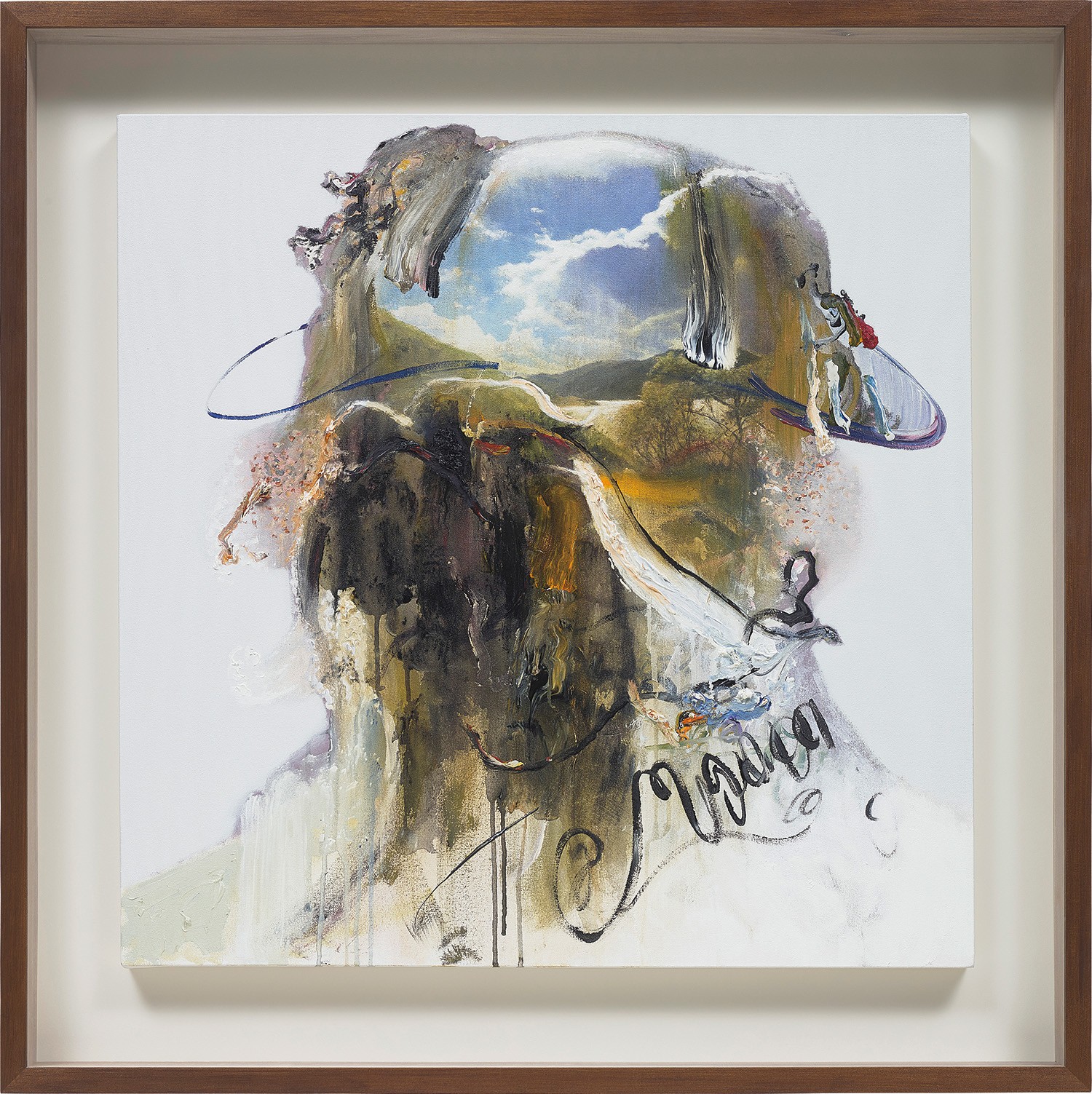
The reference to Willy Lot, the Suffolk farmer whose cottage appears in Constable's The Hay Wain, is typical of Whittaker's layered allusiveness. He is not illustrating Constable; he is thinking alongside him, asking what pastoral memory means in a contemporary moment and what kinds of loss or longing it carries. Divine States (Place Fell), with its evocation of the Lake District fell, situates this inquiry in a specifically Northern English topography, one with its own weight of Romantic association. Both works are presented in frames made by the artist, a practice that speaks to Whittaker's understanding of the painting as a complete object, framed not merely for protection but as an extension of meaning.
David Kim Whittaker
Divine States (Place Fell), 2011
The mid decade works broaden the scope of Whittaker's ambition further. The Whitstable Head from 2013 brings the coastal, tidal energies of the Kent coast into the frame, while Pavilion Figure from 2014 suggests architectural and human presences held in delicate equilibrium. The longer titled work from 2014, Deluge of emotions as twisting Christs compromise for our carnivorous existence in a cinema of onlookers, announces itself with a provocation characteristic of a painter who is never afraid of difficulty. The title alone performs a kind of overload, a controlled flood of reference spanning religious iconography, spectatorship, appetite, and moral ambiguity.
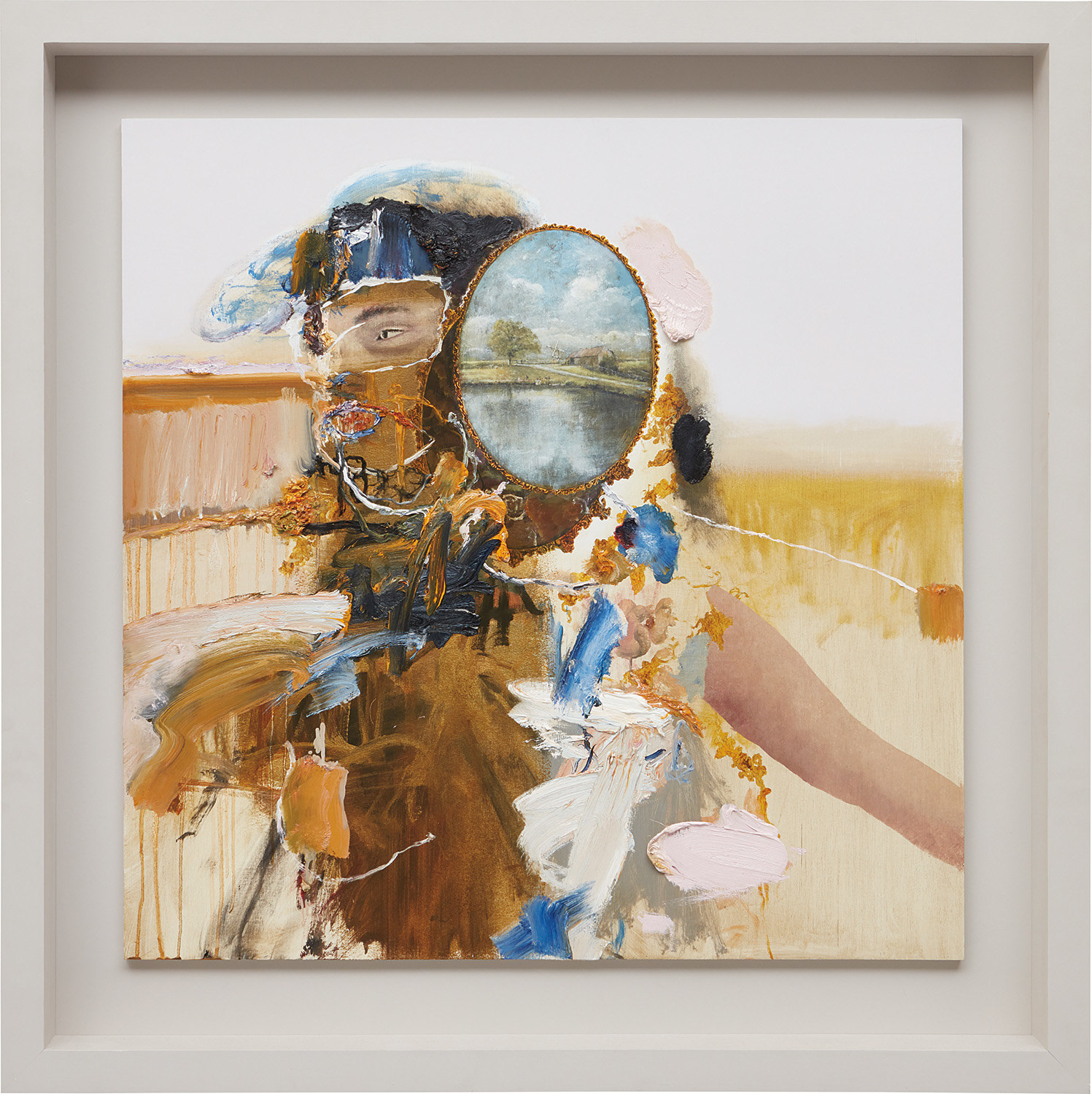
It is a painting that asks the viewer to sit with discomfort rather than seeking resolution. Welcome to the Bank of Collateral Hearts from 2015 and Gender Reversals from 2017 extend these preoccupations into territory that feels urgently contemporary. The economic language of the first title collides with emotional and anatomical metaphor, suggesting a world in which affect itself has been financialised. Gender Reversals, rendered in oil, acrylic and graphite on panel and presented in the artist's own frame, signals Whittaker's engagement with questions of identity and embodiment that place his practice in dialogue with a broader conversation in contemporary art about who is represented, on whose terms, and at what cost.
David Kim Whittaker
Gender Reversals, 2017
For collectors, Whittaker's work offers something increasingly rare: a consistent and evolving intelligence applied to painting across more than two decades, with no concession to trend or fashion. The mixed media works on panel and board are particularly compelling as physical objects, their surfaces carrying a record of process that reveals itself differently depending on the quality and angle of light. The artist's frames, appearing across multiple significant works, add a dimension of rarity and completeness that any serious collector will recognise. Works that arrive as the artist envisioned them, frame and all, are works that have not been mediated by later institutional decisions.
They carry a particular kind of authenticity. In terms of art historical context, Whittaker's practice resonates with that of painters such as Peter Doig and Luc Tuymans in its willingness to hold figuration and abstraction in productive suspension, while his investment in the physical and material possibilities of the painted surface recalls the ambitions of the School of London generation, from Frank Auerbach to Leon Kossoff. His use of collage and mixed media on board connects him to a longer lineage of British painters for whom the picture support is never merely neutral. At the same time, the literary and philosophical weight of his titles and subjects situates him closer to painters such as Christopher Le Brun or Cecily Brown, artists who regard painting as a form of thinking rather than simply a form of making.
Whittaker matters today because his work refuses the consolations of legibility and the seductions of spectacle in equal measure. In a market moment defined by oversized gestures and instant recognisability, his paintings insist on a slower, more demanding form of encounter. For collectors who value depth over noise and meaning over novelty, his practice represents one of the more compelling opportunities in contemporary British painting. These are works built to last, in every sense of the phrase.