David Hammons
David Hammons, America's Most Radical Visionary
Artist Spotlight · The Collection Editorial
“When I lie down on the paper which is first placed on the floor, I have to carefully decide how to get up after I have made the impression that I want.”
David Hammons, 1974
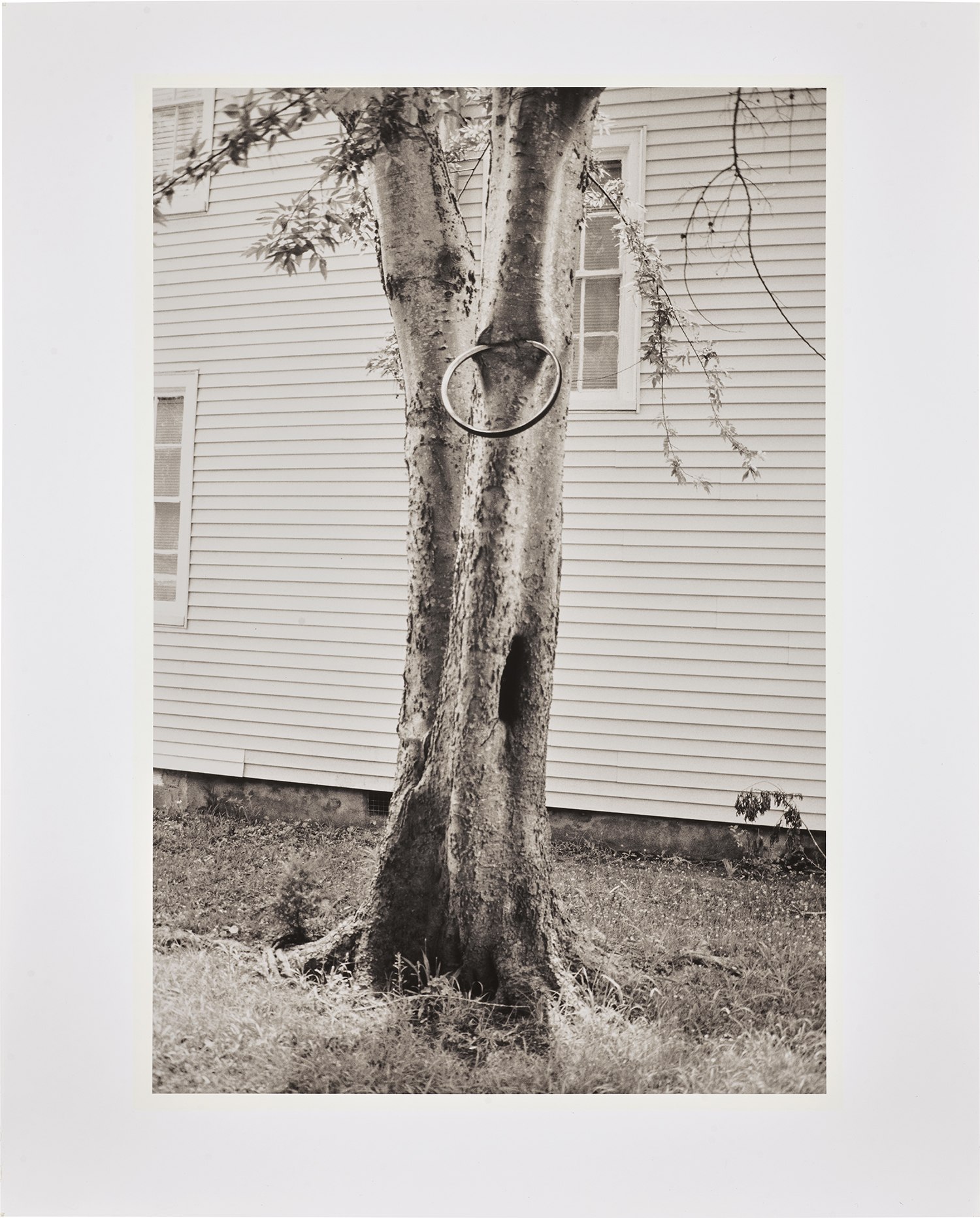
In the spring of 2024, the art world once again found itself circling around a familiar and thrilling mystery: where, exactly, is David Hammons, and what is he making right now? Few living artists command this kind of reverent speculation. Hammons has spent decades cultivating a practice so resolutely on his own terms that even major institutions speak of him with a mixture of admiration and gentle bewilderment. His 2021 installation at Hauser and Wirth in New York drew enormous crowds and critical praise, reaffirming what collectors and curators have known for years: Hammons is not simply an important American artist, he is one of the defining creative minds of the last half century.
David Hammons
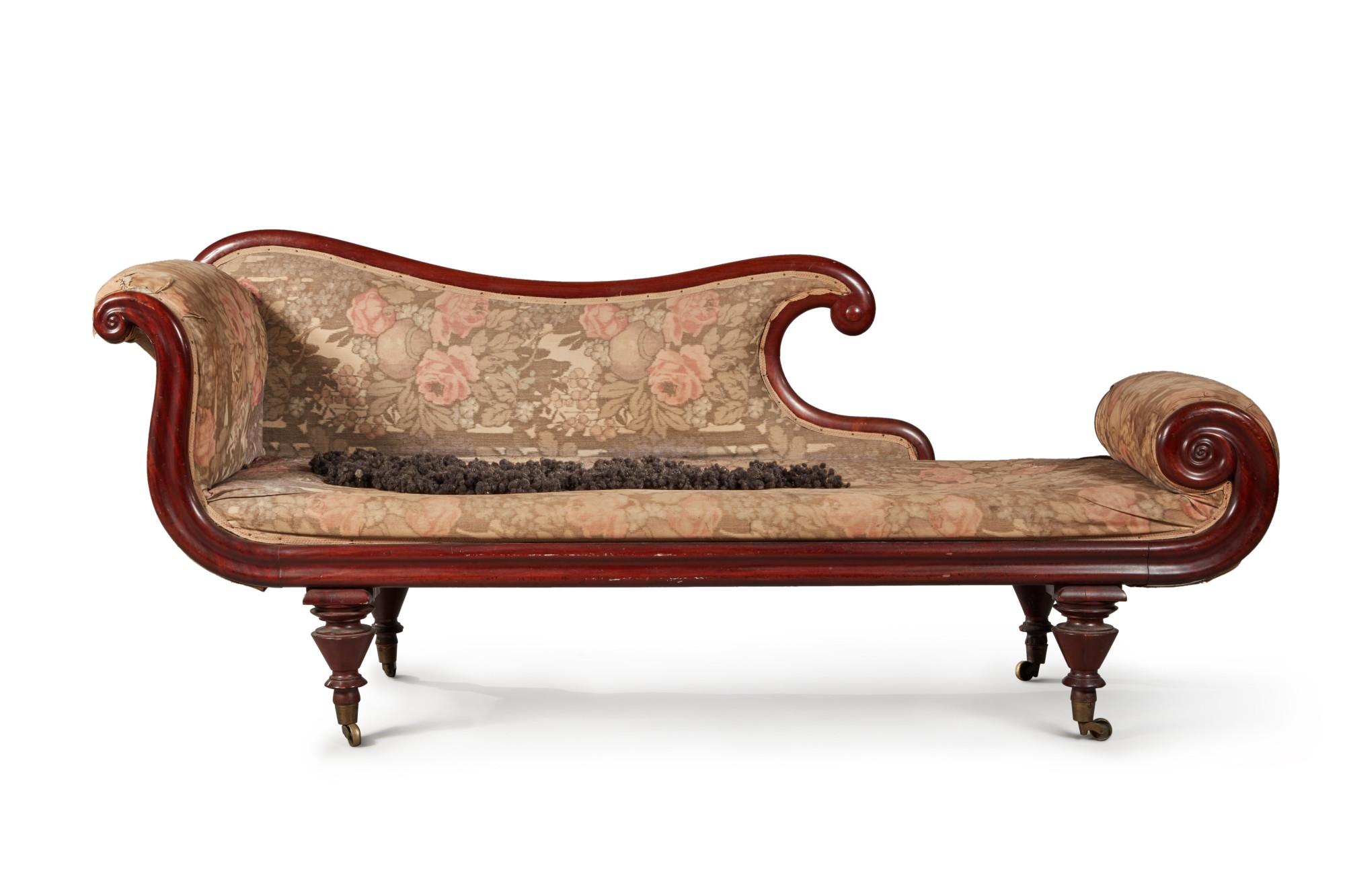
Hair Relaxer, 2007
Born in Springfield, Illinois in 1943, Hammons moved to Los Angeles as a young man, enrolling at the Chouinard Art Institute and later the Otis Art Institute during the mid 1960s. These were years of profound political and social transformation in America, and Los Angeles was no quiet backwater. The civil rights movement, the Watts uprising of 1965, and a burgeoning Black Arts Movement were reshaping what art could be, who it was for, and what it was allowed to say. Hammons absorbed all of this.
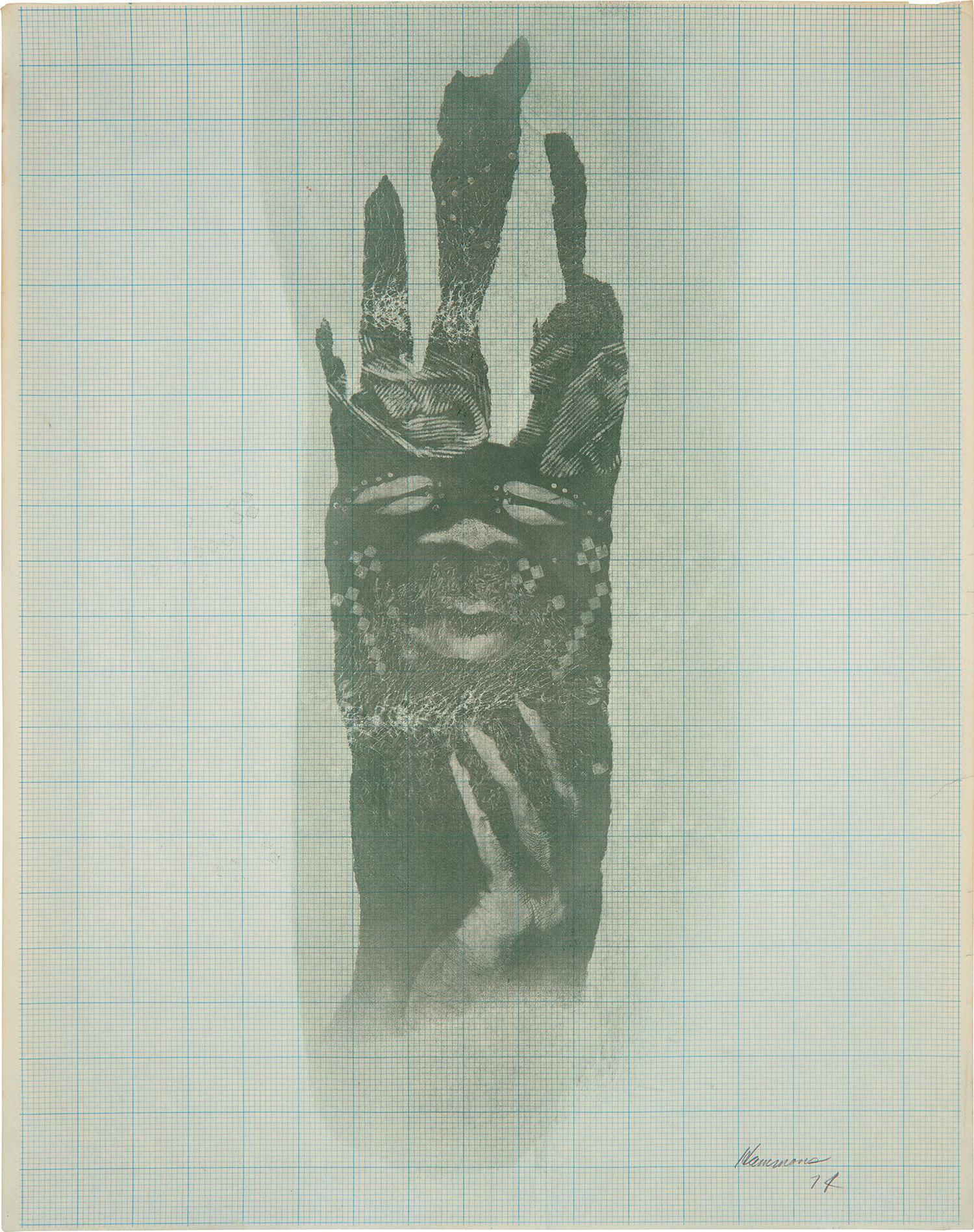
He studied under the painter Charles White, a towering figure in African American art whose commitment to social realism and humanist portraiture left a lasting impression on the younger artist, even as Hammons would eventually move into territory far beyond figuration. It was in Los Angeles during the late 1960s and early 1970s that Hammons developed the body print technique that would first bring him serious attention. The process was as physically intimate as it was conceptually sharp: Hammons would coat his body and clothing with margarine or grease, then press himself against paper laid on the floor, dusting the resulting impression with dry pigment. The works that emerged from this method were ghostly, tender, and politically charged all at once.
David Hammons
“When I lie down on the paper which is first placed on the floor, I have to carefully decide how to get up after I have made the impression that I want. Sometimes I lie there for perhaps three minutes or even longer just figuring out how I can get off the paper without smudging the image that I’m trying to print.” - David Hammons, 1974
A 1974 work on graph paper, in which pigment captures the trace of a body pressed carefully and deliberately against the surface, speaks to both the vulnerability of Black bodies in America and the radical act of insisting on one's own physical presence. Hammons himself described the careful choreography required to lift himself away from the paper without disturbing the image, a moment of suspension that feels almost ceremonial. These body prints are among the most quietly powerful works of their era. Through the 1970s and 1980s, Hammons expanded his vocabulary of materials in ways that astonished and sometimes confounded the mainstream art world.
“I only go to places that are out of the mainstream. I only feel comfortable in those places.”
David Hammons
He began incorporating chicken bones, bottle caps, hair collected from Harlem barbershop floors, elephant dung, wine bottles, and Kool Aid powder into his works, creating objects and installations that operated simultaneously as sculpture, social commentary, and ritual. The use of these so called low grade materials drew inevitable comparisons to Arte Povera, the Italian movement of the late 1960s that elevated humble, everyday substances into high art. But where Arte Povera was largely a European response to consumer capitalism, Hammons was doing something more specifically rooted in African American experience, reclaiming discarded and overlooked materials as a way of insisting on the dignity and cultural richness of communities that mainstream America preferred to ignore. A work involving Kool Aid powdered drink on paper, presented within an artist's frame and softened by a silk curtain, transforms a grocery store staple of working class Black households into something luminous and unexpected.
David Hammons
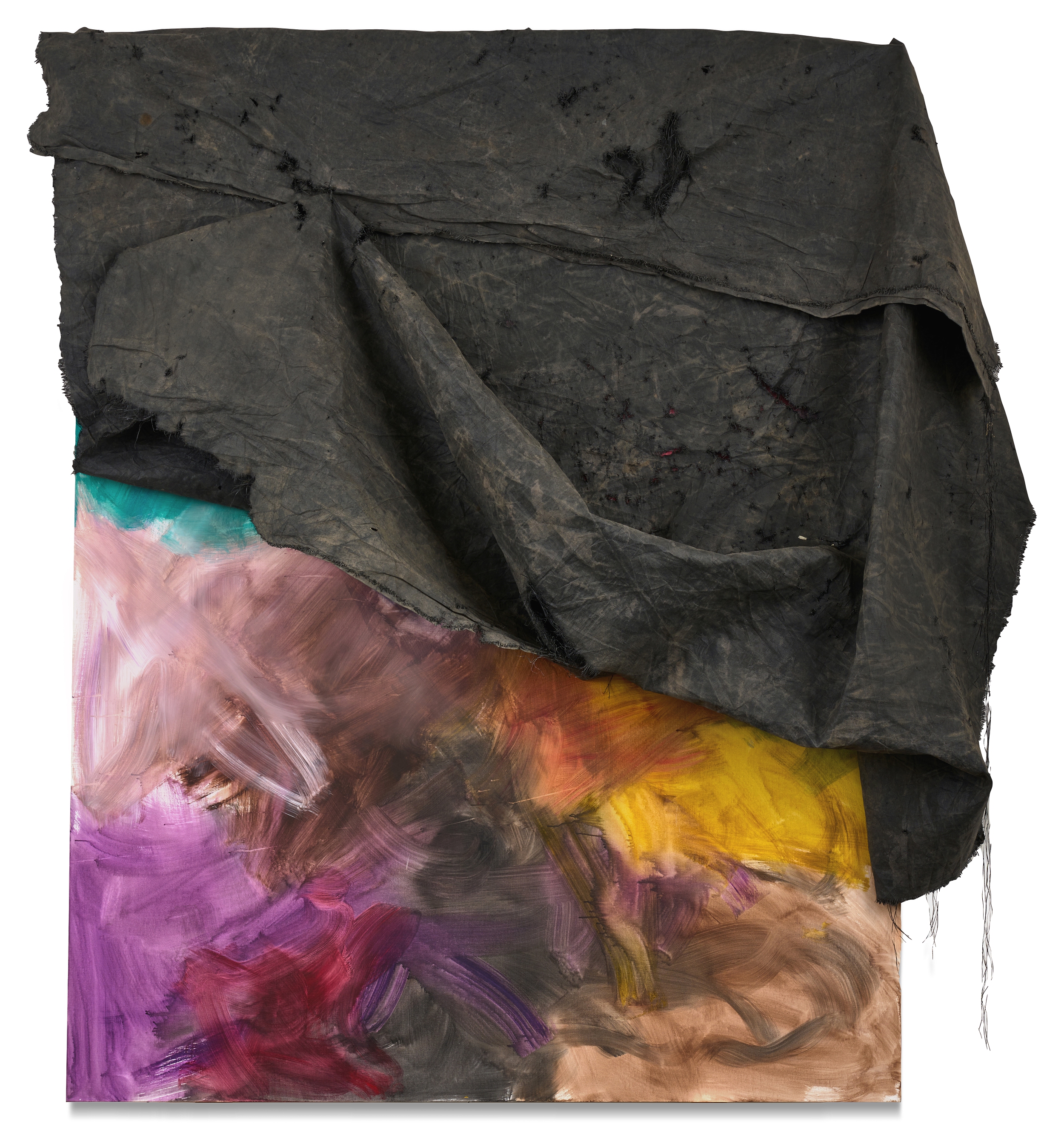
Untitled, 2009
Hammons relocated to New York in the 1970s, eventually settling in Harlem, and it was here that his practice took on its most public and mythological dimensions. He sold snowballs on the street in SoHo. He staged performances and interventions that were often witnessed by only a handful of people, then discussed for years afterward. His 1983 public sculpture Bliz aard Ball Sale remains one of the great conceptual gestures in American art history.
This resistance to documentation, to the commodification of the art object, to the very mechanisms by which the art market assigns value, became central to his identity. And yet Hammons has never entirely abandoned the object. Works like Money Tree, a signed and numbered print published by Parkett in the 1990s, show him engaging with the art publishing world on his own terms, while works such as Hair Relaxer from 2007 continue to probe the politics of Black identity with both wit and gravity. For collectors, works by Hammons represent something genuinely rare: objects made by an artist who has consistently treated the market with skepticism, which paradoxically makes his work all the more sought after.
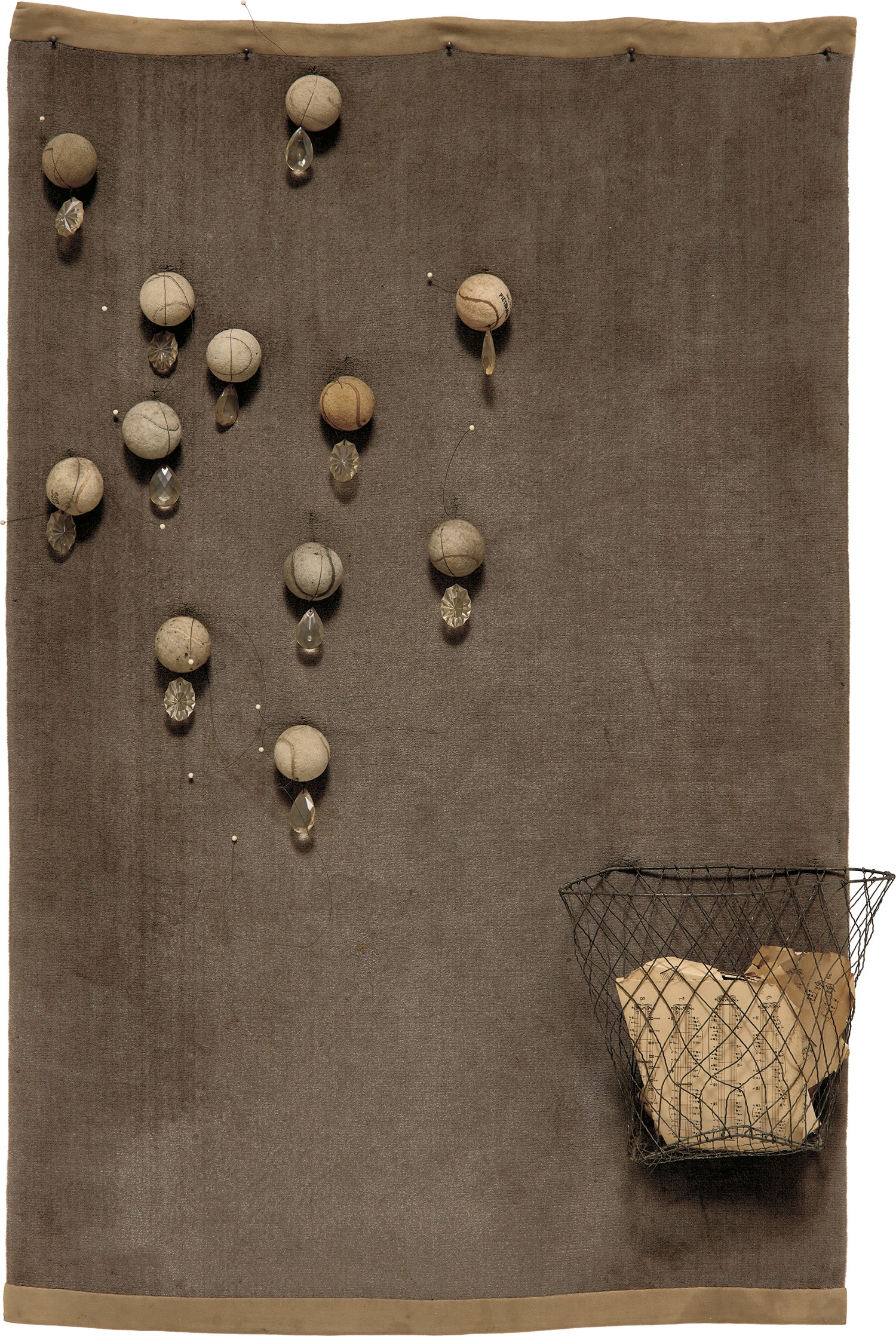
David Hammons
It’s Not Necessary, 1990
When pieces by Hammons appear at auction, whether at Christie's, Sotheby's, or Phillips, they tend to generate fierce competition. His mixed media works on canvas from the 2000s and his earlier body prints are considered among the most significant holdings any serious collection can contain. What draws collectors is not just the art historical importance or the financial trajectory, though both are real. It is the sense that each Hammons work carries an entire philosophy within it, a commitment to making art that is accountable to something larger than the gallery system.
The 2000 crystal, brass, and frosted glass light fixture work is a good example: it is formally beautiful, mysterious in its assembly, and utterly resistant to easy categorisation. To understand Hammons fully, it helps to place him in a broader constellation of artists who have pushed at the boundaries of material, identity, and institutional critique. His contemporaries and aesthetic kin include Betye Saar, whose assemblages of found objects speak to African American history with equal precision; Adrian Piper, whose conceptual performances interrogated race and perception; and Jean Michel Basquiat, who like Hammons drew energy from street culture and used the art world's hunger for authenticity as a subject in itself. Internationally, his affinities with Arte Povera artists such as Jannis Kounellis and Michelangelo Pistoletto are genuine, even as his concerns remain distinctly American and distinctly Black.
What Hammons offers the culture in 2024 is what he has always offered: a reminder that art does not have to seek permission. His practice has been built on refusal as much as creation, on the strategic withholding of access as a form of generosity, on the understanding that scarcity of image and presence can be a political act. He is an artist who has earned every superlative, precisely because he has never chased them. To own a work by David Hammons is to hold something that exists slightly outside the normal logic of the art world, and that is exactly where the most important art tends to live.
Explore books about David Hammons
David Hammons: Rousing the Rubble
Kellie Jones
David Hammons: In Search of the Miraculous
Kellie Jones

David Hammons: Body Prints
Various
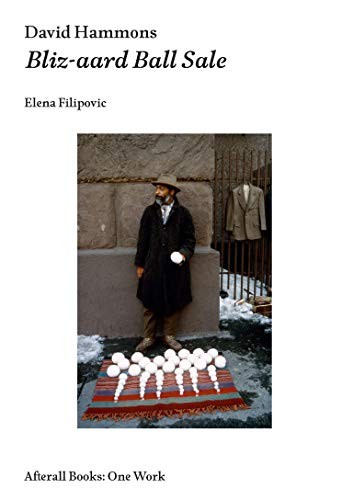
David Hammons: Bliz-aard Ball Sale
Museum of Modern Art
David Hammons: Doors, Minds, and Other Slippery Things
Various