David Batchelor

David Batchelor Lights Up the World
Artist Spotlight · The Collection Editorial
“Colour is the part of painting that has been most misunderstood, most feared, and most dismissed.”
Chromophobia, Reaktion Books, 2000
In the galleries of Ingleby in Edinburgh and Wilkinson Gallery in London, something quietly electric has been happening for years. David Batchelor, one of the most consistently thrilling artists working in Britain today, has built a practice that transforms the overlooked brightness of city life into sculptural poetry. His luminous assemblages of found light boxes, steel shelving, and industrial materials glow with an intensity that feels both entirely contemporary and deeply human. To stand in front of a Batchelor installation is to be reminded that colour is not decoration but a fundamental force, one that pulses through urban experience whether we notice it or not.
David Batchelor
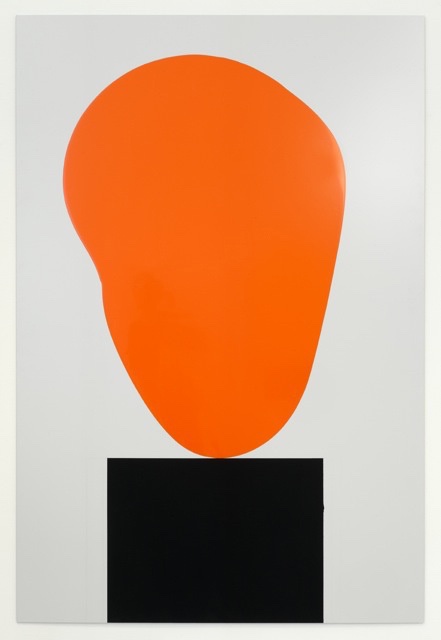
Colour Chart 02 06.01.11, 2011
Batchelor was born in Dundee, Scotland, in 1955, and the textures of British industrial life were present from the beginning. He went on to study at Trent Polytechnic before completing his education at the Royal College of Art in London, an institution that in the 1970s and 1980s was a crucible of some of the most rigorous thinking about art and its relationship to culture, politics, and materiality. That formation left its mark. Batchelor became not only a practitioner but a genuine intellectual, someone whose making is inseparable from sustained critical thought.
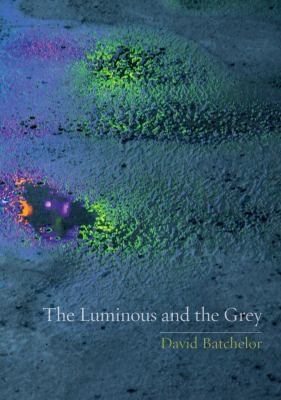
He remained in London, and the city's particular quality of light, reflected off wet pavements and through fluorescent shop fronts, would become one of his great subjects. The arc of Batchelor's development as an artist is one of deepening commitment to a single, magnificent obsession: colour, and the way Western culture has both worshipped and feared it. His landmark book Chromophobia, published by Reaktion Books in 2000, articulated a thesis that had been building through years of looking and making. In it, he argued that a persistent anxiety about colour runs through the history of Western thought, from Plato to Le Corbusier, and that this anxiety reveals deep cultural discomforts around the body, femininity, and the foreign.
David Batchelor
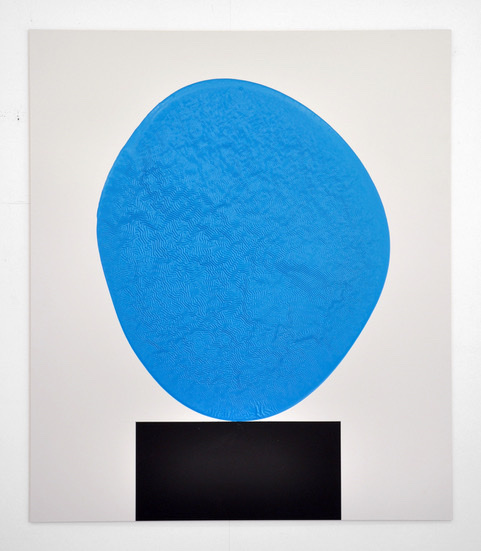
Colour Chart 06 (blue) 18.02.11, 2011
The book was not a polemic but an act of liberation, and it transformed the way critics, curators, and artists talked about colour as a subject. It also announced Batchelor's own position with beautiful clarity: he was on the side of colour, entirely and joyfully. Out of that intellectual foundation grew a sculptural practice of remarkable visual power. Batchelor began collecting discarded and overlooked objects from the streets of London, light boxes stripped of their advertising, translucent plastic containers, steel shelving units of the kind found in warehouses and stockrooms.
“I am interested in colour as something found rather than something chosen or mixed or theorised.”
David Batchelor, Wilkinson Gallery interview
These he assembled into totemic vertical structures that he called Stacks, or strung into delicate horizontal chains called Forty Part Motet inspired configurations of colour. The found quality of his materials is essential. These objects carry the residue of urban life, of commerce and consumption and the passage of people through bright lit spaces. Batchelor redeems them without sentimentalising them, charging them with a luminosity that feels earned rather than imposed.
Among his most important bodies of work are the Colour Charts, a series of paintings on Dibond that translate his thinking about colour into a more intimate, two dimensional register. Works such as Colour Chart 02 06.01.11 and Colour Chart 06 (blue) 18.
02.11, both from 2011, use gloss and matt paint applied in grids and sequences to interrogate the systems and taxonomies through which we have tried to order and contain colour. The combination of gloss and matt surfaces within a single work creates a dynamic tension, the eye moves across the surface differently depending on the angle of light, so that the painting seems to breathe and shift. These are works that reward sustained attention and repay return visits with new revelations.
They are also works that live extraordinarily well in a domestic or private collecting context, bringing something of the energy of Batchelor's larger installations into an intimate scale. For collectors approaching Batchelor's work, the Colour Charts represent a particularly compelling entry point. They are rigorously made, conceptually coherent, and visually alive in a way that is rare. The Dibond support gives them a crispness and durability that suits both the aesthetic logic of the work and the practical concerns of a serious collection.
Batchelor sits within a lineage that includes Ellsworth Kelly, whose investigations into pure colour and form remain a touchstone, and Donald Judd, whose insistence on the intelligence of material and surface resonates deeply with Batchelor's own approach. There are also affinities with the work of Felix Gonzalez Torres in the use of light as a tender, almost vulnerable medium, and with Cerith Wyn Evans in the deployment of found illumination as sculptural language. Within British art, Batchelor occupies a distinctive position, equally at home with the cool rigour of post Minimalism and the more exuberant energies of artists who have found inspiration in popular and commercial culture. What distinguishes Batchelor from many of his contemporaries is the coherence of vision that connects his writing, his sculpture, and his works on paper and panel.
There is no gap between the thinker and the maker. His practice has the quality of a sustained argument conducted not in words alone but in light and colour and found industrial form. That coherence has attracted serious institutional attention over the years. His work has been shown at Tate Britain, Camden Arts Centre, and in significant international venues, and his reputation among curators and collectors who care about rigorous, idea driven practice is firmly established.
Batchelor matters today for reasons that go beyond the art historical. In a cultural moment saturated with images and stimulation, he asks us to slow down and look again at the colour that surrounds us, the colour we have learned to discount because it belongs to the commercial and the everyday rather than to the rarefied space of the museum. His great argument is that this dismissal is a kind of poverty, a refusal of pleasure and of the body's own intelligence. The Colour Charts, the Stacks, the glowing street found assemblages: all of them are invitations to see differently, to reclaim brightness as a form of thought.
For collectors who want work that is beautiful, intellectually serious, and genuinely alive, David Batchelor is an artist whose time, it can be said with real confidence, is very much now.
Explore books about David Batchelor