Dash Snow
Dash Snow: A Life Lived Brilliantly Raw
Artist Spotlight · The Collection Editorial
“I just want to make something that feels like life.”
Dash Snow
There are artists whose work demands to be understood on its own terms, and Dash Snow was emphatically one of them. When the New Museum mounted its landmark survey of downtown New York art culture in 2008 with the exhibition "Unmonumental," Snow's presence in the broader conversation around that era felt inevitable and necessary. His work had already become synonymous with a particular moment in the life of a city, a sensibility so specific to a time and place that it could only have come from someone who had lived it from the inside out. More than fifteen years after his passing in 2009, his collages, Polaroids, and installations continue to command serious attention from collectors and institutions who recognize in them something irreducible and genuine.
Dash Snow
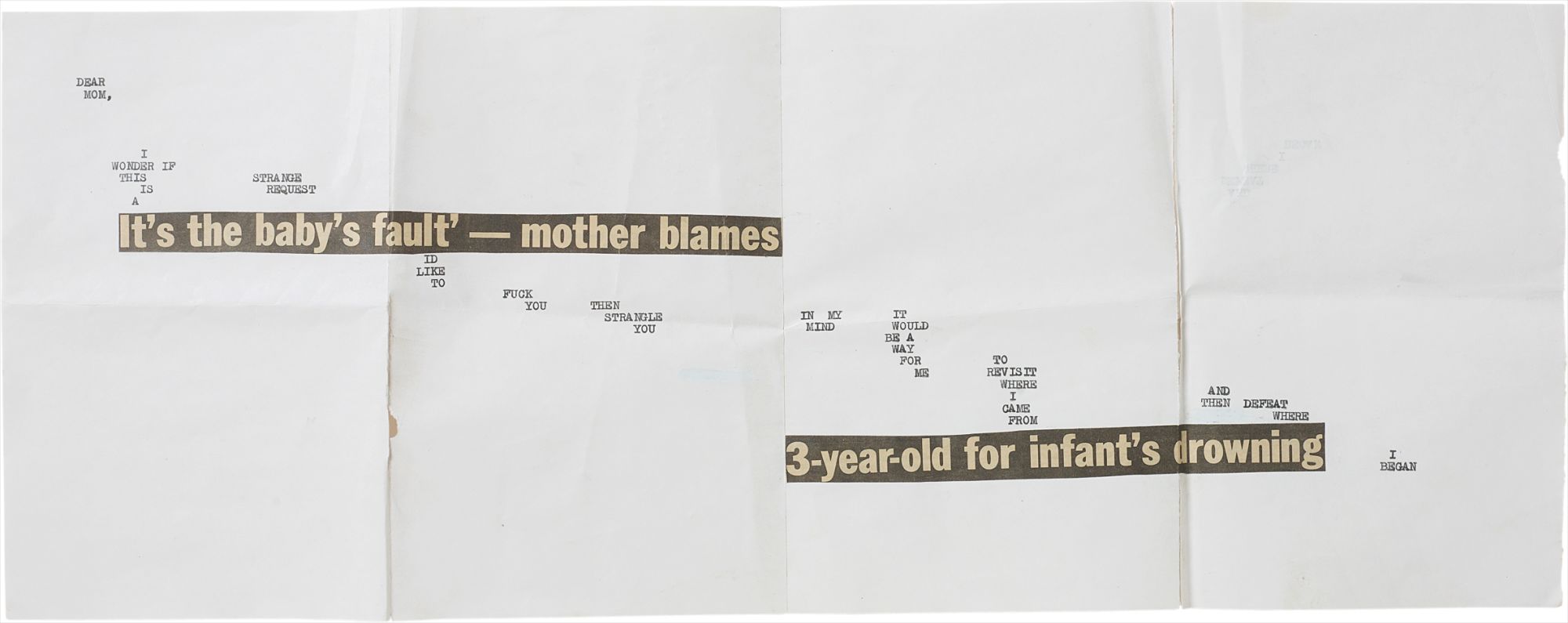
newspaper cutting, Tipp-ex, tape, type written text on vintage book paper
Snow was born in New York City in 1981 into a family with deep roots in the American art world. His grandmother was Christophe de Menil, an heiress to the Schlumberger fortune and a significant patron of the arts, which placed Snow at an unusual intersection of privilege and cultural prestige. He rejected that world decisively and completely in his adolescence, running away from home at around thirteen years old and immersing himself in the graffiti subculture of lower Manhattan. He became known in graffiti circles under the tag SACE, and the streets became both his education and his first creative arena.
That early rupture shaped everything that followed, giving his work its characteristic tension between inherited cultural sophistication and a fierce, self made rawness. By his early twenties, Snow had begun translating the visual energy of street culture into a studio practice that drew on collage, Polaroid photography, and found materials. He was close friends with the artists Dan Colen and Ryan McGinley, and the three formed a creative constellation that defined a certain strain of downtown New York art in the mid 2000s. Snow's work was included in the 2006 Whitney Biennial, a signal moment that brought his practice to the attention of a wider institutional audience without softening any of its edges.
Dash Snow
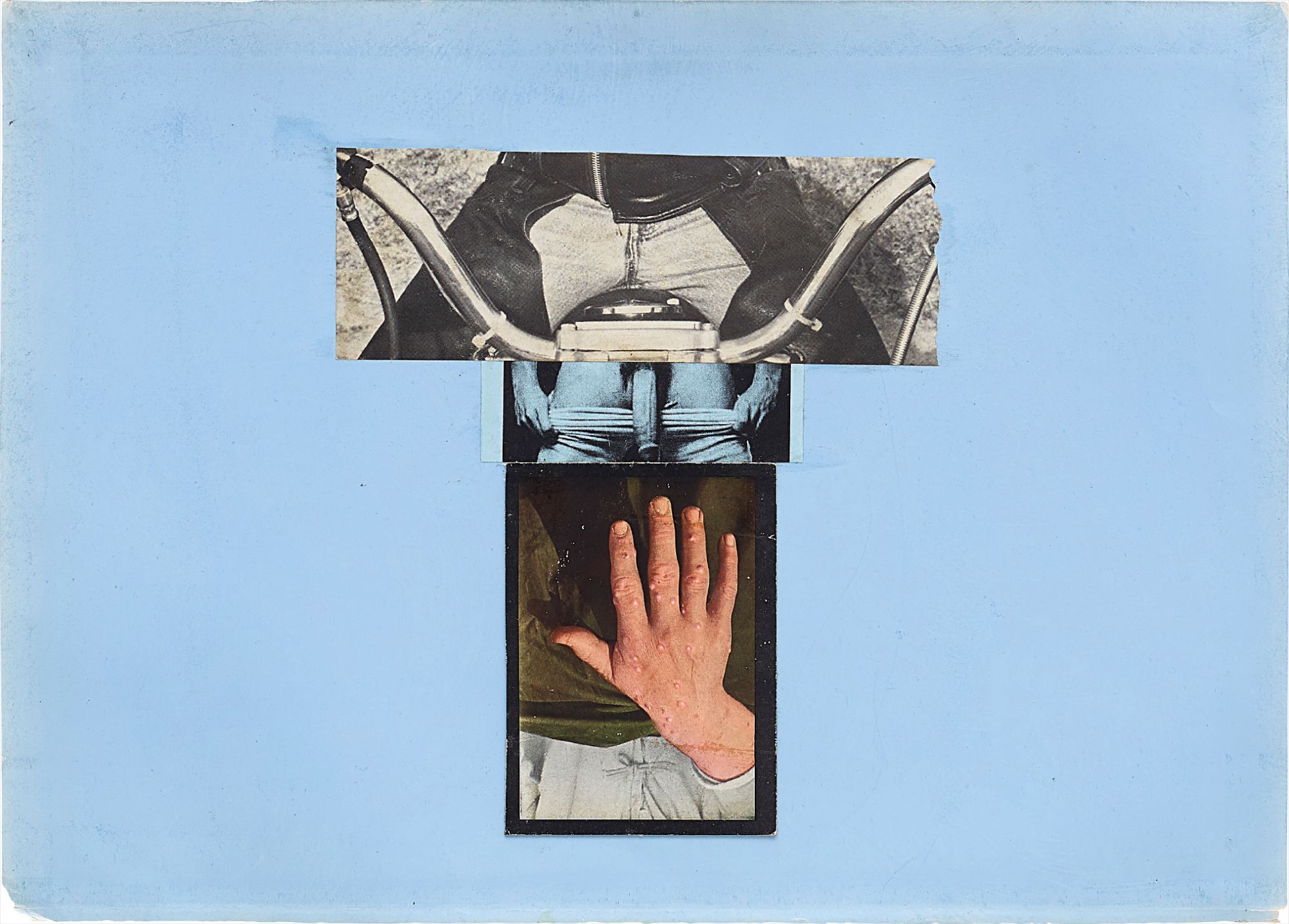
4 Keneth Anger, 2006
His Polaroids documented a social world of nightlife, intimacy, and transgression with an unflinching directness that recalled the documentary impulse of artists like Larry Clark and Nan Goldin, while remaining wholly his own. The work that cemented his reputation for spectacle and for genuine artistic ambition was a 2007 installation sometimes referred to as the "Hamster's Nest," in which Snow and Colen transformed a hotel room into an explosion of shredded telephone directory pages. The piece was simultaneously absurdist, exuberant, and deeply considered as a statement about urban anonymity and the accumulation of discarded information. It demonstrated that Snow's practice was never simply about documenting excess but about transforming raw material, whether that material was newsprint, personal photographs, or the detritus of city life, into something formally and conceptually resonant.
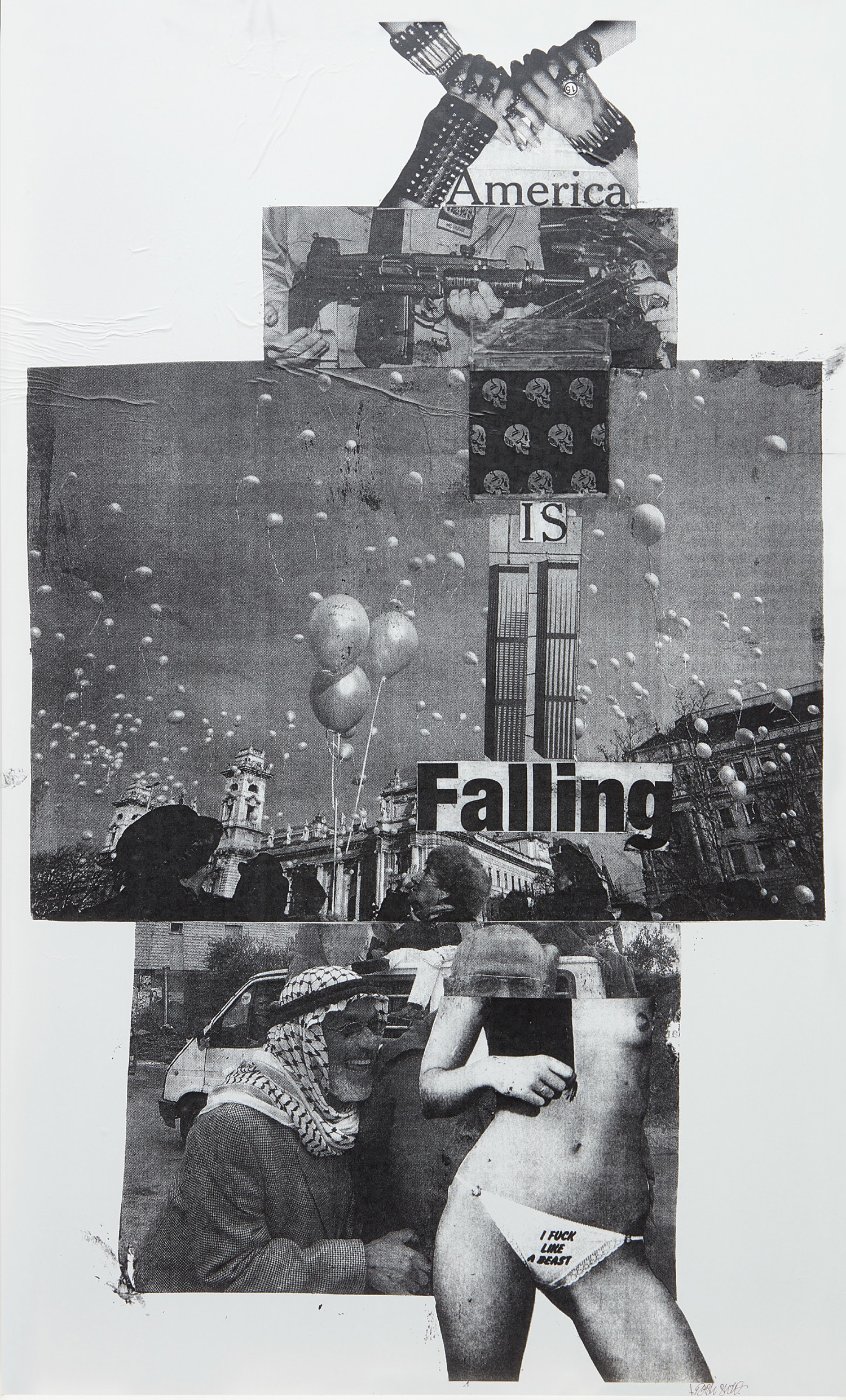
His collages from this period, layering found imagery with Tipp Ex, handwritten text, and physical marks, show an artist with a sophisticated understanding of how materials carry meaning. Looking at the works available through The Collection, one is struck by the consistency and the range of Snow's approach to the collage form. Pieces like "America Is Falling" from 2005 and "4 Keneth Anger" from 2006 reveal an artist in full command of his visual language, drawing on the traditions of Dada and punk zine culture while producing something that belongs entirely to his own moment. The use of semen, glitter, newspaper, and tape as materials is never gratuitous; it is a considered choice to work with what is at hand, to make the body and the city equally present in the work.
Dash Snow
America Is Falling, 2005
"Delinquent Bitch" and the various untitled collage works show how Snow could modulate tone and scale, moving from the confrontational to the elegiac within the same formal vocabulary. His digital chromogenic prints and photo collages extend this sensibility into photographic space, grounding the work in a documentary reality while remaining open to poetic transformation. For collectors, Snow's work occupies a compelling position in the market for early 21st century American art. His pieces have appeared consistently at auction houses including Phillips and Christie's, where strong results have reflected sustained demand from collectors who understand his historical significance.
Works on paper, which form the core of his output, offer points of entry across a range of price levels, while larger and more complex pieces carry the premium appropriate to their ambition and rarity. The key markers of quality in Snow's collages are the density and intentionality of the layering, the coherence of the overall composition despite apparent chaos, and the presence of the biographical materials, photographs and handwriting, that anchor the work in his specific experience. Provenance tracing back to early exhibitions or direct sales from the artist's circle adds significant value and confidence. Snow's place in art history sits most naturally alongside a generation of artists who came of age in the 1990s and early 2000s and who treated their own lives as primary artistic material.
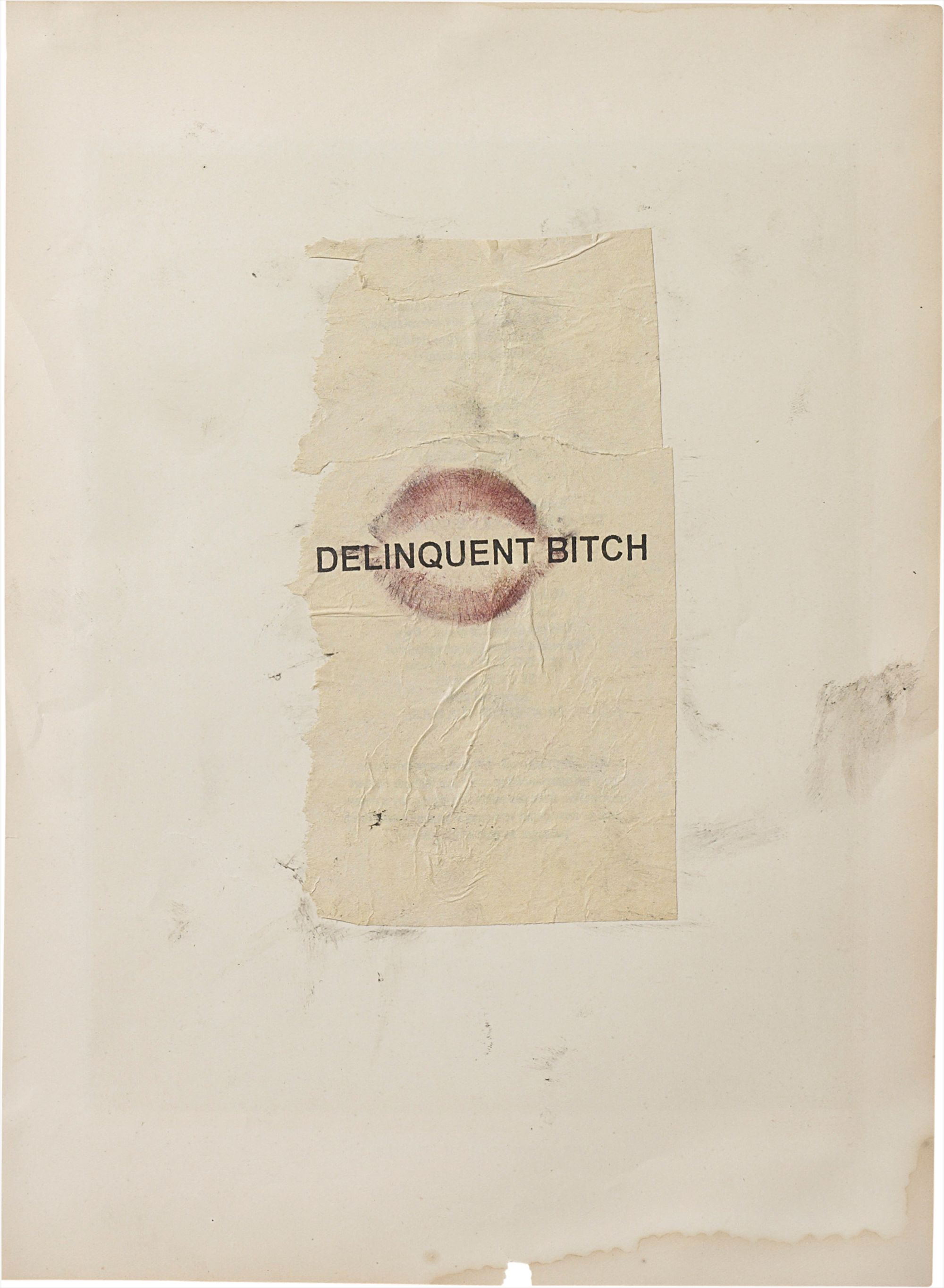
Dash Snow
Delinquent Bitch
Ryan McGinley's radiant photographs of youth and freedom share Snow's interest in subcultural experience, while Dan Colen's paintings and installations echo the shared material vocabulary of their downtown circle. Further back, the influence of Jean Michel Basquiat is felt in Snow's relationship to text, to the street, and to the tension between outsider identity and institutional recognition. Like Basquiat, Snow navigated that tension without ever fully resolving it, and like Basquiat, the brevity of his career has only intensified the focus on what he made. Dash Snow died in July 2009 at the age of twenty seven, leaving behind a body of work that continues to grow in critical and commercial stature.
What collectors and viewers return to in his work is not simply its documentary charge, its evidence of a life lived at full intensity, but its formal intelligence and its genuine emotional range. Snow was an artist who understood that beauty and disorder are not opposites and that the most honest record of a life will always include both. His work is a gift to anyone willing to meet it on its own terms, and The Collection is proud to present a significant group of pieces that allow that encounter.
Explore books about Dash Snow