Darren Almond
Darren Almond: Light, Time, and Wonder
Artist Spotlight · The Collection Editorial
“Time is the material I work with. It is both my subject and my medium.”
Darren Almond
There is a particular kind of attention that Darren Almond demands of those who stand before his work. It is not the attention of spectacle, though his images are undeniably spectacular. It is something slower, more interior, closer to the feeling one gets standing outside on a clear night and suddenly becoming aware of just how vast and indifferent the sky truly is. That quality has made Almond one of the most consistently compelling British artists of his generation, and recent years have seen renewed institutional enthusiasm for his practice, with major presentations at White Cube confirming his standing as a genuinely singular voice in contemporary art.
Darren Almond
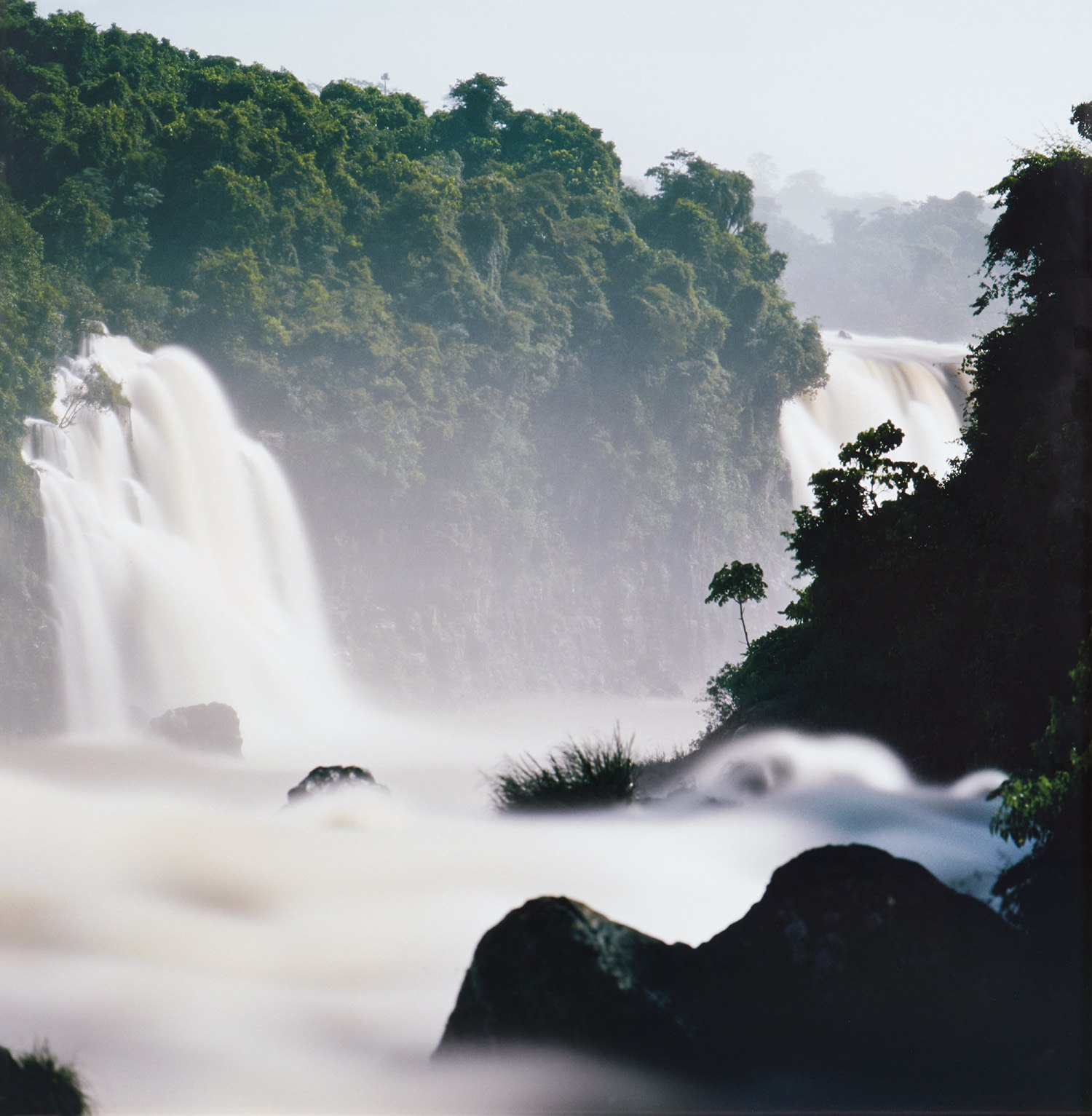
Fullmoon@Iguazu River
His work sits at the intersection of landscape, philosophy, and emotional experience in ways that few living artists have managed with such sustained elegance. Almond was born in Wigan, Lancashire, in 1971, a town in the northwest of England whose industrial character and proximity to the moorlands of the north gave him an early education in the tension between human endeavour and natural endurance. That tension never left him. He studied at Bretton Hall College in West Yorkshire before completing his MFA at Goldsmiths College in London, where he arrived in the mid 1990s and found himself surrounded by the energy and ambition of what would become known as the Young British Artists movement.
While figures like Damien Hirst and Tracey Emin were drawing headlines with provocation and confession, Almond was already developing a more contemplative sensibility, one that looked outward toward the world rather than inward toward the self. His early breakthrough came in 1997 with an installation titled Bus Stop, in which he transported an actual bus shelter from Wigan to the White Cube gallery in London. The work was quietly extraordinary, transforming an object of ordinary working life into something freighted with memory, displacement, and the passage of time. It established the conceptual territory he would continue to inhabit: the relationship between place and time, between the familiar and the estranged, between what we remember and what we can never quite hold onto.
Darren Almond
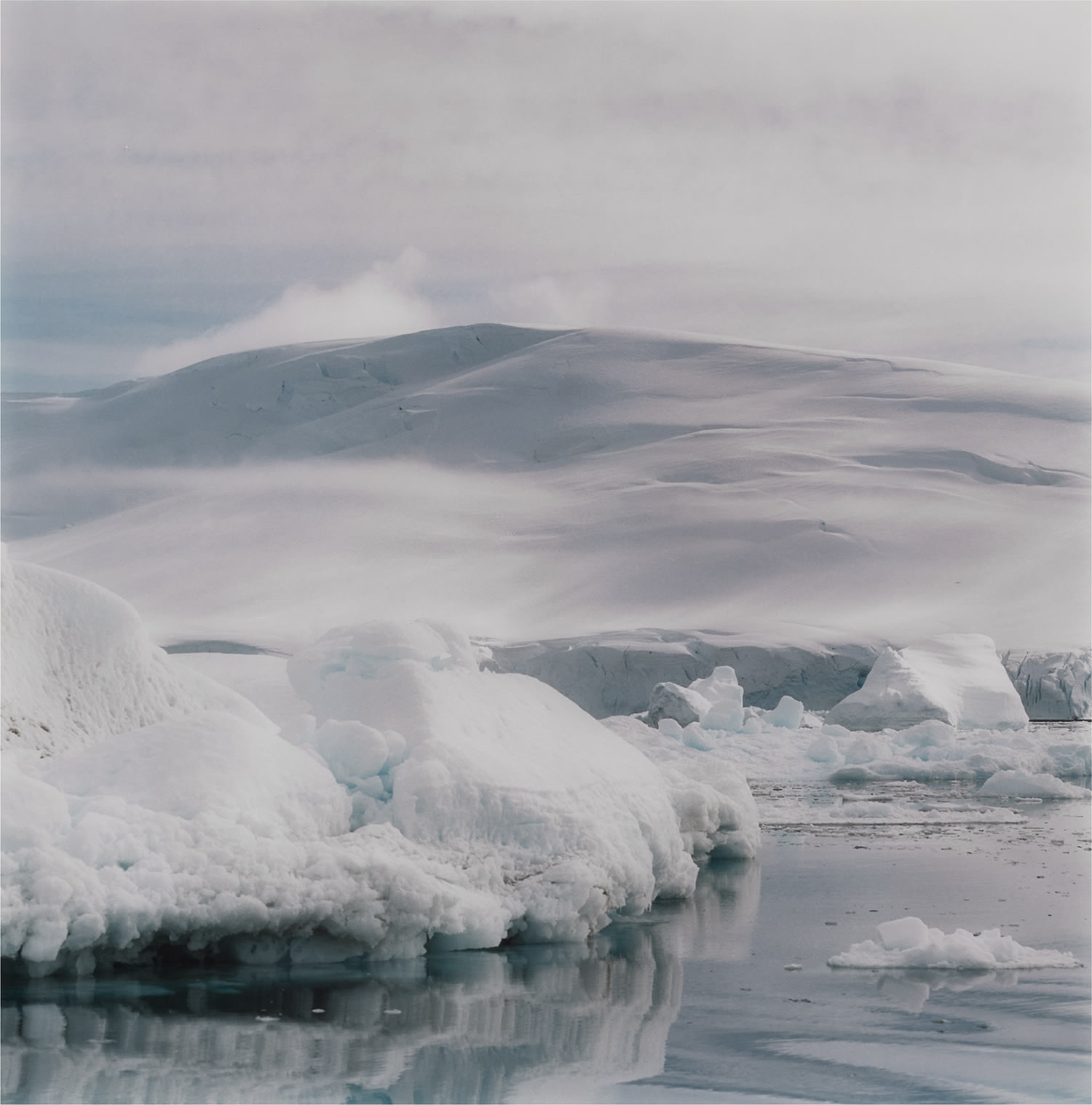
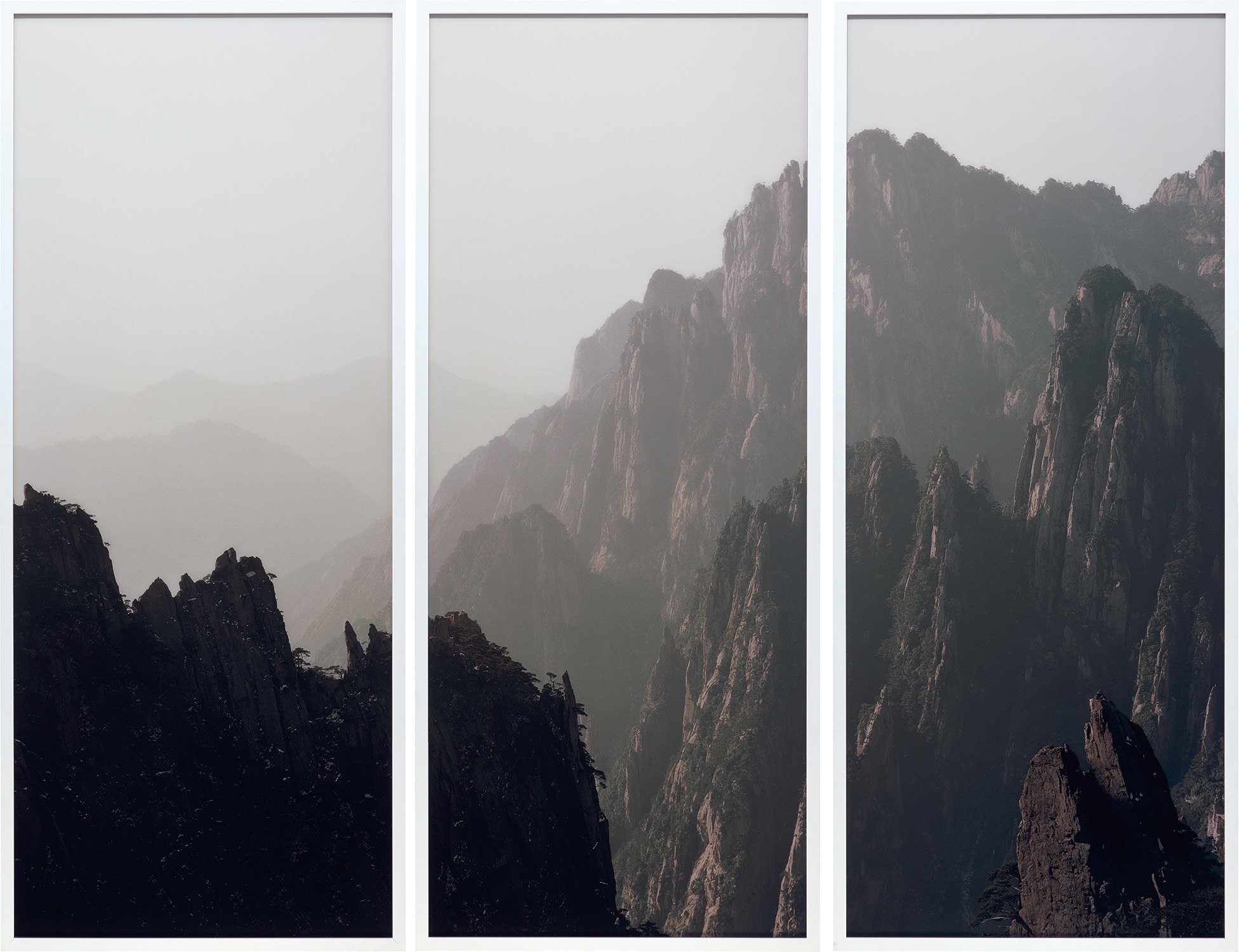
West Sea Canyon
Around the same period he created Traction, a film documenting a journey across the Atacama Desert, and began working with real time transmission and video in ways that collapsed the distance between here and elsewhere. These works earned him a Turner Prize nomination in 2005, a recognition that placed him firmly among the leading figures of his generation. But it is the Fullmoon series, begun in the early 2000s and continuing to the present day, that has become the defining achievement of his career. The premise is deceptively simple.
Almond travels to landscapes of particular power and strangeness, from the gorges of Zhangjiajie in China to the falls of Iguazu on the border of Argentina and Brazil, from the Scottish islands of Orkney to the shores of Loch Ewe, and photographs them during full moons using exposure times that can last for several minutes. The results are among the most haunting images in contemporary photography. Moonlight, accumulated over long exposures, behaves quite differently from sunlight. It renders colour with an eerie fidelity while simultaneously making everything feel removed from ordinary time, suspended in a register that is neither day nor night but something that belongs to neither.

Darren Almond
Primo
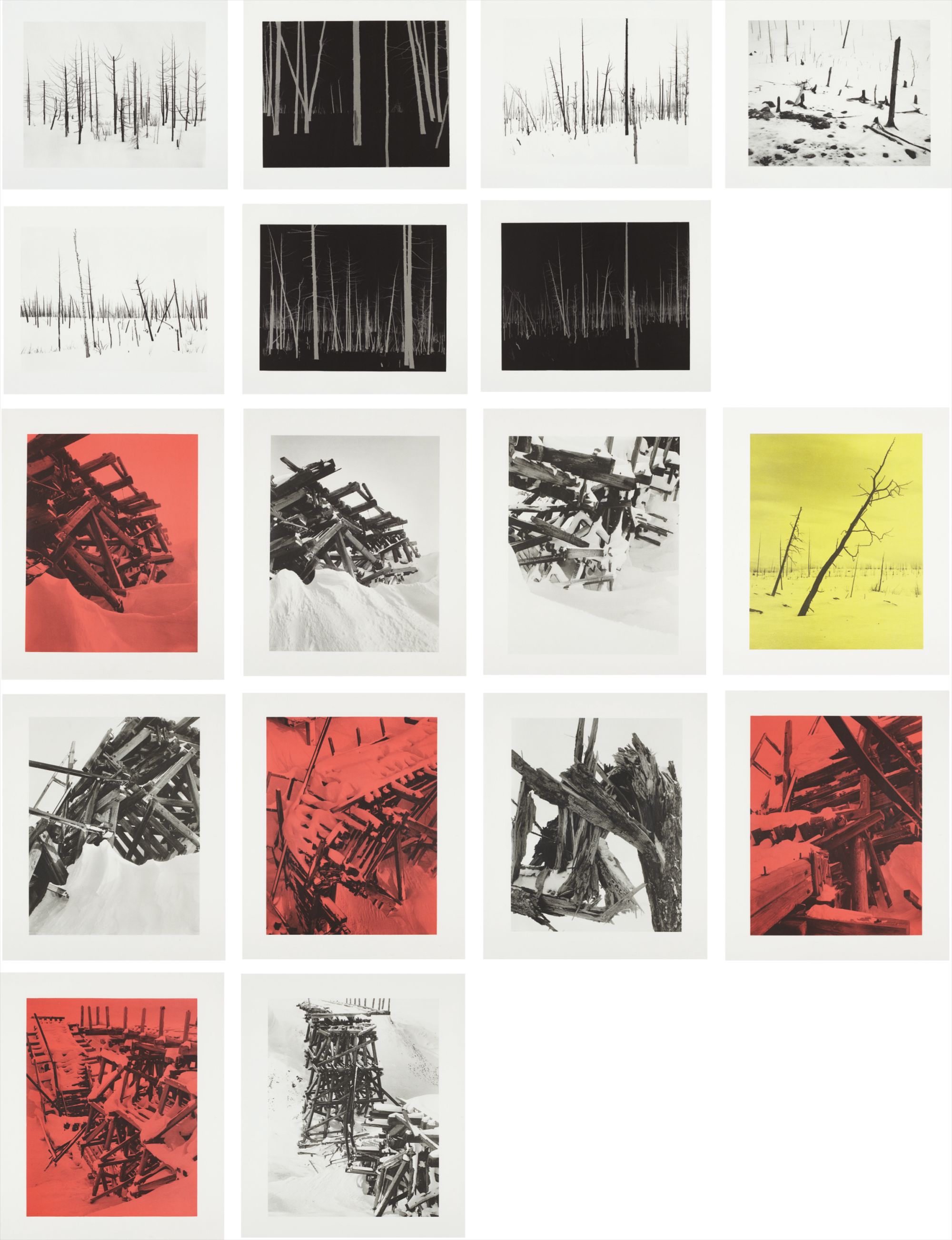
In works such as Fullmoon@Iguazu River and Fullmoon@Orkney, the landscape appears to breathe, luminous and weightless, as if caught in a moment between geological ages rather than between seconds. Beyond the Fullmoon series, Almond has produced significant bodies of work that expand and deepen his preoccupations. His Norilsk photographs, made in the remote and brutally cold Russian city of Norilsk, one of the most polluted places on earth and a city closed to most outsiders, are documents of a landscape shaped entirely by industrial will. Shot in extreme conditions, they carry a moral weight that complements the transcendence of the moonlit landscapes without contradicting it.
His sculptural works, including the cast aluminium piece Primo, show an equal capacity for formal economy and emotional resonance. The work titled Until MMXLI.IX, a chromogenic print face mounted to glass, exemplifies his ability to transform time itself into a material, making the viewer acutely aware of duration as something both measurable and deeply personal. His ongoing series Infinite Betweens continues to push at the boundaries between photography, philosophy, and lived experience.
Darren Almond
Norilsk
From a collecting perspective, Almond represents a compelling proposition on several levels. His works are held in major institutional collections including the Arts Council Collection in England, and his auction record reflects sustained demand from serious collectors across Europe, North America, and Asia. The Fullmoon photographs in particular have achieved consistent results at the major auction houses, with large format chromogenic prints regularly attracting strong attention. Collectors are drawn not only to the visual authority of the images but to their durability as objects of contemplation.
These are works that deepen over years of living with them, revealing new resonances as seasons change and as the collector's own relationship with time evolves. The triptych format used in works such as West Sea Canyon adds a meditative, almost devotional quality that makes them particularly suited to significant spaces. For collectors building a serious collection of contemporary British art or photography, Almond's work sits in a meaningful dialogue with artists such as Wolfgang Tillmans, Andreas Gursky, and Hiroshi Sugimoto, whose long exposure seascapes share something of Almond's commitment to duration and light as primary materials. What distinguishes Almond from photographers who might superficially resemble him is the weight of conceptual intention behind every image.
He is not simply a landscape photographer with refined technical skills, though his technical command is formidable. He is an artist for whom landscape is a medium through which to think about mortality, memory, and the relationship between human consciousness and geological time. In an era saturated with images produced and discarded in seconds, his insistence on duration, on the long exposure, on the time it takes to reach a remote place and wait for the moon to rise, feels not merely anachronistic but genuinely radical. The world he shows us is one that existed before we arrived and will persist long after we have gone, and the gift of his art is that it makes us feel the beauty of that fact rather than the terror of it.
That is no small achievement, and it is why Darren Almond's work continues to matter, deeply and without qualification, to everyone who encounters it.
Explore books about Darren Almond