Darío Escobar
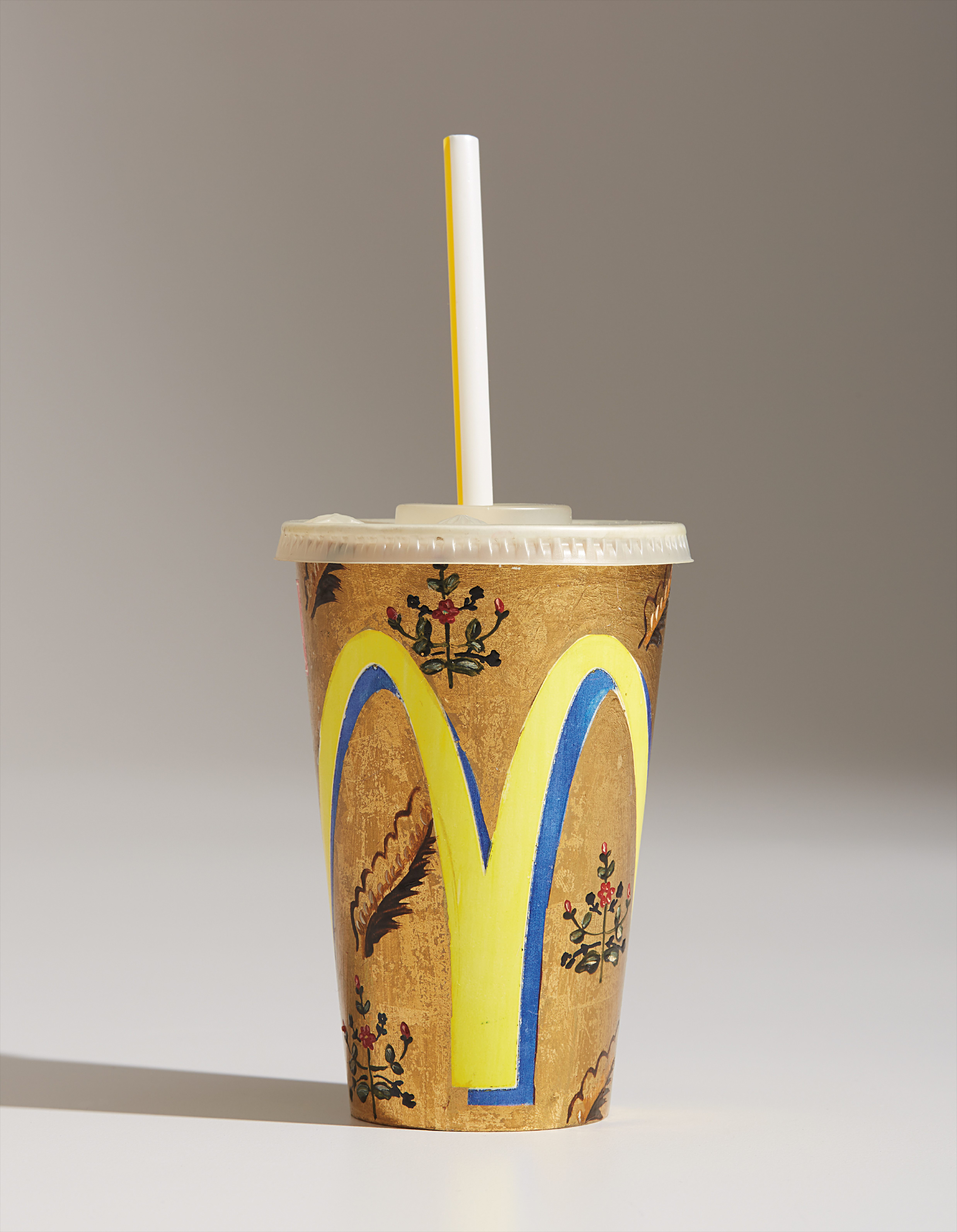
Darío Escobar, Where the Sacred Meets Everything
Artist Spotlight · The Collection Editorial
There is a particular kind of attention that gathers around an artist when the world finally catches up to what their work has been saying all along. For Darío Escobar, the Guatemalan sculptor and installation artist whose practice has spent decades probing the uneasy coexistence of faith and consumer culture in Latin America, that attention feels increasingly urgent. As conversations about globalization, spiritual identity, and the aesthetics of late capitalism grow louder in museum programming and collecting circles alike, Escobar's altar like assemblages and gleaming, gold leafed sculptures read less like commentary and more like prophecy. His work has been shown across institutions in Europe, the Americas, and beyond, and his presence in serious Latin American art collections continues to deepen with each passing year.
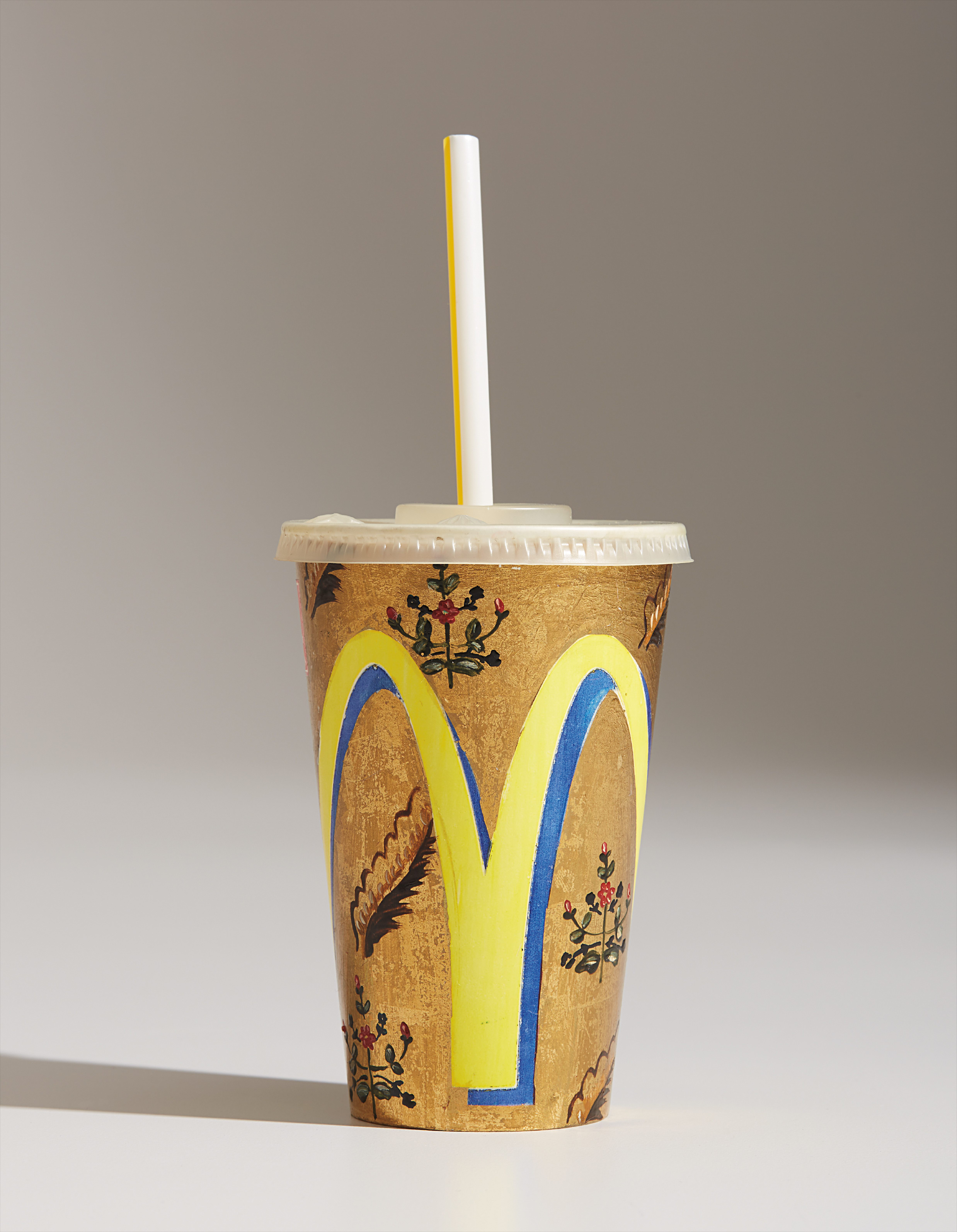
Darío Escobar
cardboard, plastic, goldleaf and gold pigments, 1998
Escobar was born in Guatemala City in 1971, and the city's particular texture shaped him profoundly. Guatemala City is a place where colonial baroque churches stand a few blocks from shopping malls, where devotional candles burn alongside billboards for multinational brands, and where the legacy of indigenous spiritual traditions sits in complicated conversation with the imported imagery of global consumer culture. Growing up in this environment gave Escobar an instinctive sensitivity to the way objects carry meaning far beyond their function. He came of age as Guatemala was emerging from decades of civil conflict, a period that made questions of identity, belief, and power feel immediate rather than abstract.
His early formation as an artist was shaped by this social and visual landscape, and its influence never left his practice. By the late 1990s, Escobar had begun developing the conceptual framework that would define his mature work. His early pieces from this period demonstrate a remarkable confidence in material thinking. A work from 1998 combining cardboard, plastic, gold leaf, and gold pigments encapsulates the essential tension his practice would continue to explore: humble, throwaway materials elevated by the gold of religious tradition, consumer detritus transformed into something approaching the devotional.

Darío Escobar
Ecce Homo, 2003
This gilding impulse connects Escobar to a long lineage of sacred art production in Latin America, where artisans layered gold onto carved saints and altarpieces as acts of reverence. But Escobar redirects this reverence toward the objects that global capitalism has installed as its own kind of saints, asking whether the distinction between spiritual icon and commercial object is as clean as we might hope. The 2003 work Ecce Homo stands as one of the most quietly devastating pieces in his body of work. Presenting an acrylic painting on a polyester shirt sealed inside a Plexiglass case, Escobar invokes one of the most charged phrases in Christian tradition, the words Pontius Pilate spoke presenting Christ to the crowd, and applies it to a garment that is itself a product of global manufacturing chains.
The polyester shirt, a textile of industrial origin often associated with mass production and low cost labor, becomes the ground for an image that Western art history has treated with the utmost solemnity. The Plexiglass case does what cases do: it museumifies, it elevates, it protects. Escobar makes you feel the absurdity and the sincerity of that gesture simultaneously. It is a work that rewards long looking and repays every conversation a collector has in front of it.
Darío Escobar
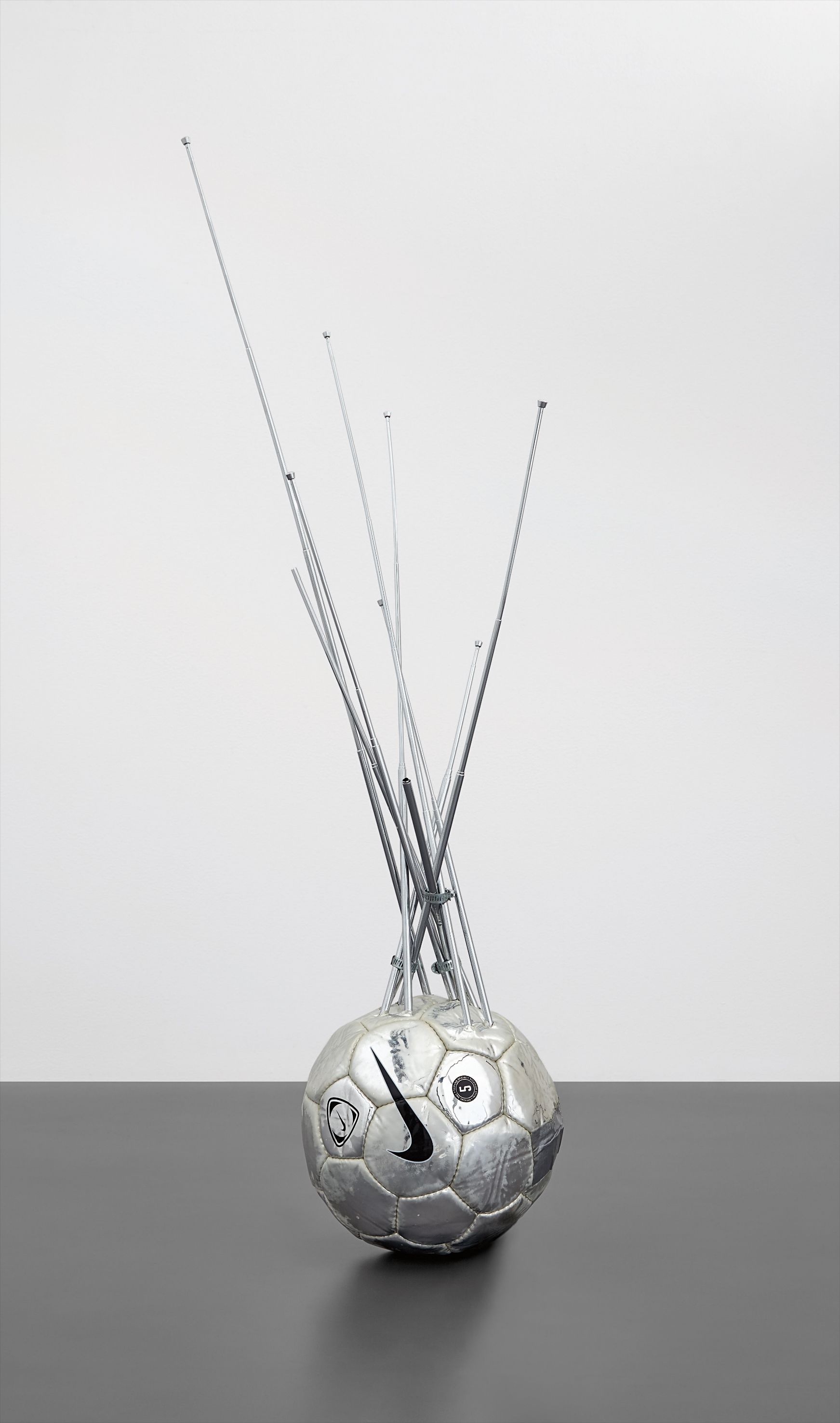
Pelota de fútbol con antenas
Perhaps no single object type captures Escobar's sensibility more vividly than the sports ball, particularly the football, or soccer ball as it is known in North America. Pelota de fútbol con antenas, one of his most recognized sculptures, transforms the familiar geometry of a football into something stranger and more celestial, extending it with antenna like forms that give it the quality of a sacred relic or a space age artifact. Football in Latin America is not merely a sport; it functions as religion, as politics, as collective identity, as the medium through which an entire region's dreams and frustrations are projected. By taking this object and altering it, Escobar does not mock these associations.
He honors them while making their intensity visible. The sculpture sits in the tradition of artists who have taken the readymade seriously as a vehicle for cultural analysis, while bringing a warmth and specificity that is distinctly his own. For collectors, Escobar's work offers something genuinely rare: an aesthetic intelligence that is sophisticated enough to satisfy the most rigorous art historical scrutiny, combined with an emotional directness that makes the work alive in any room it inhabits. His sculptures and installations are not simply conversation pieces, though they generate extraordinary conversations.
They are objects with genuine spiritual weight, which may be the most accurate way to describe what serious collecting has always sought. Collectors drawn to artists such as Gabriel Orozco, Damián Ortega, or Kiki Smith, artists for whom everyday objects become vehicles for profound inquiry, will find in Escobar a natural companion and an essential voice. His work also speaks clearly to those with interests in the broader field of Arte Contemporáneo Latinoamericano, where his practice occupies a distinctive position between the conceptual rigidity of institutional critique and the sensory richness of devotional tradition. The art historical context for Escobar's work is rich and worth tracing carefully.
He inherits from the Latin American conceptualist tradition, from artists like Luis Camnitzer and the broader legacy of Arte Útil, a commitment to using objects as philosophical instruments. He is in dialogue with the Neo Baroque impulse that runs through so much important Latin American art, the willingness to pile on meaning, to gild and ornament and layer until the work becomes nearly excessive, and then to ask what that excess reveals. At the same time his practice is deeply aware of Pop Art's engagement with consumer goods, treating it not as an American export to be imitated but as a visual language to be answered from a specifically Guatemalan and Central American position. The result is work that sits at the crossroads of multiple traditions without being reducible to any one of them.
What makes Escobar matter today, and matter with increasing urgency, is the precision with which his practice identifies a condition that is only becoming more pronounced. The blurring of sacred and commercial, the way global brands and sports franchises function as belief systems complete with rituals, icons, and congregations, is a phenomenon that social theorists have been discussing for decades but that few visual artists have addressed with Escobar's combination of rigor and grace. His work does not lecture. It does not moralize in a way that forecloses feeling.
Instead it creates spaces where the viewer can encounter their own entanglement in these systems with something approaching tenderness. That is an achievement that belongs to the finest art of any era, and it ensures that Darío Escobar's practice will continue to grow in significance as the world it illuminates continues to evolve.
Explore books about Darío Escobar
Darío Escobar: The Complete Works
María García López
Contemporary Latin American Art: Darío Escobar and His Contemporaries
Roberto Fernández
Escobar's Vision: Color and Form in Contemporary Painting
Ana Martínez Ruiz
The Muralist Tradition: Darío Escobar's Public Art Legacy
Carlos Delgado
Modern Masters of Central America: Escobar and His Generation
Patricia Solis