Danny Lyon
Danny Lyon: Witness, Wanderer, American Original
Artist Spotlight · The Collection Editorial
“I don't take pictures of things. I get involved with people and then I photograph them.”
Danny Lyon, interview
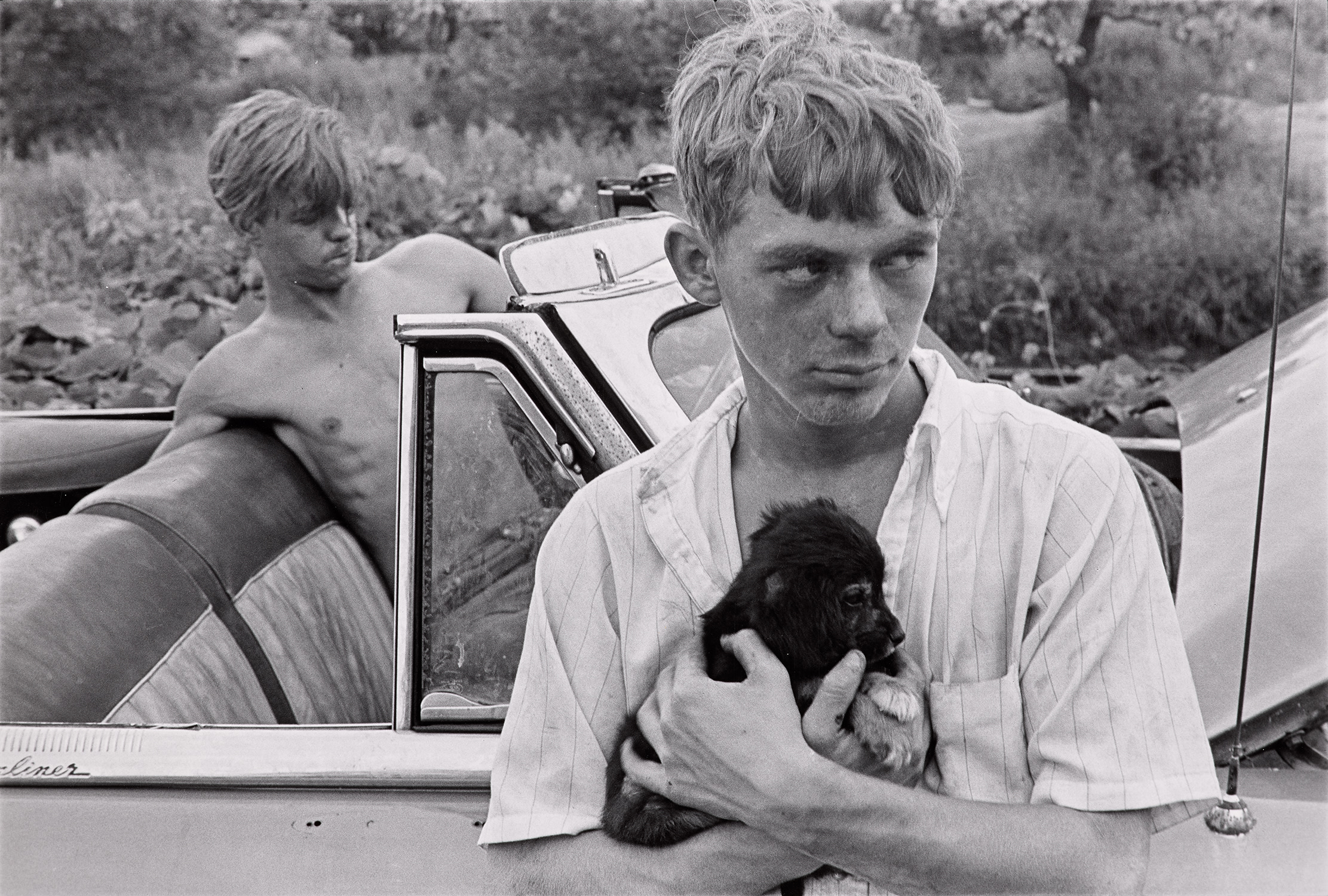
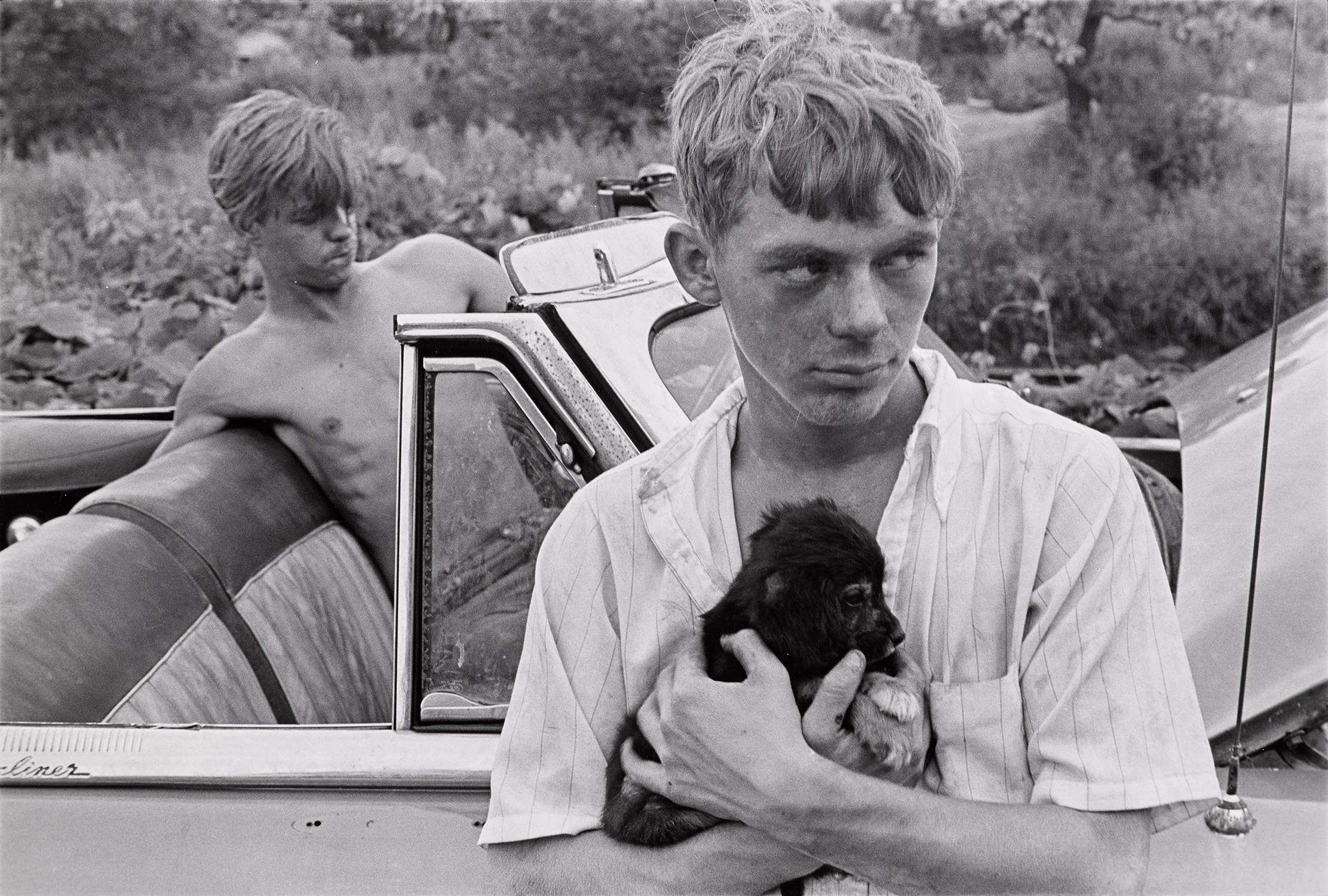
There is a photograph of a boy cradling a puppy on a street in Knoxville, Tennessee. The image is unhurried, intimate, and quietly monumental. It is the kind of picture that reminds you why documentary photography, at its highest register, transcends journalism and enters the realm of art. Danny Lyon made that photograph, and it stands as a perfect emblem of his entire career: rooted in the particular, alive to tenderness, and radiating an unmistakable moral intelligence.
Danny Lyon
Knoxville (boy with puppy)
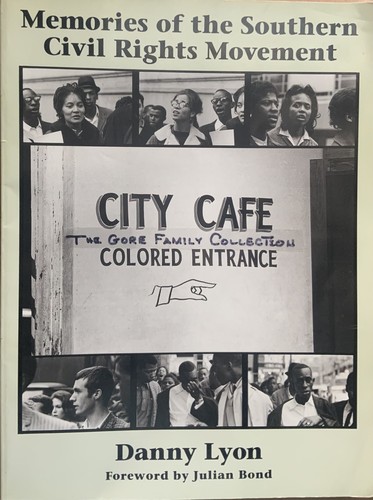
As institutions from the Art Institute of Chicago to the Whitney Museum of American Art have long recognized, Lyon is not merely a chronicler of American life but one of its most essential poets. Lyon was born in Brooklyn, New York, in 1942, and came of age in a country whose contradictions were impossible to ignore. He studied history at the University of Chicago, a formative choice that gave his later work its rigorous sense of context and consequence. It was there, in the early 1960s, that he became involved in the Civil Rights Movement, eventually becoming the first staff photographer for the Student Nonviolent Coordinating Committee, a role he held from 1962 to 1964.
He was not yet twenty when he began photographing some of the most consequential moments in twentieth century American history. That early immersion in struggle, solidarity, and the patient documentation of human dignity would define everything that followed. His images from the SNCC years remain among the most significant photographs of the Civil Rights era. Works such as the gelatin silver print depicting a staff sit in in Atlanta, Georgia, and his photograph of the March on Washington in August 1963 are not simply historical documents.
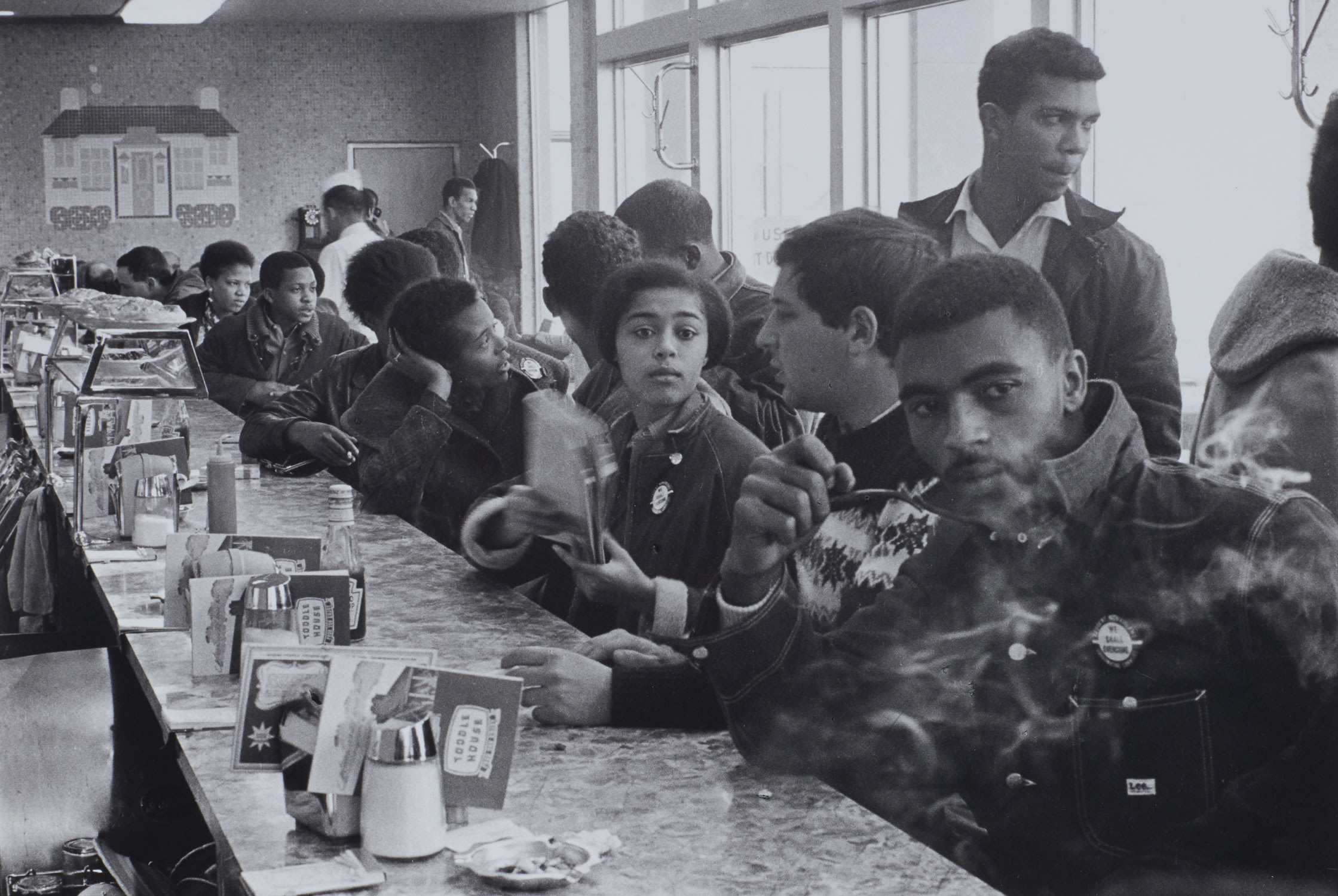
Danny Lyon
SNCC Staff Sit-in, Atlanta, Georgia
They are charged with the physical presence of people who knew exactly what they were risking. Lyon stood close, as he always would, using a wide angle lens that placed him inside the scene rather than at a remove from it. His photograph of the arrest of Taylor Washington at Leb's Restaurant in Atlanta captures the controlled courage of protesters with a directness that no telephoto distance could have achieved. These were pictures made in full commitment, not detachment.
“The camera is not a neutral instrument. It is a weapon, or it is a gift.”
Danny Lyon
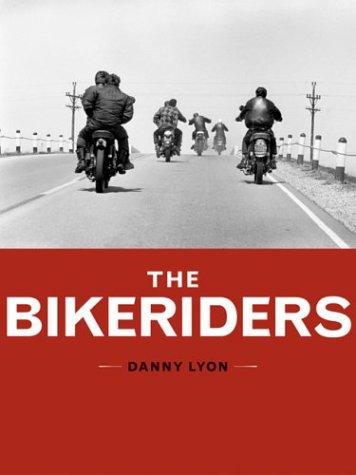
By the mid 1960s Lyon had broadened his vision without abandoning his principles. He embedded himself with the Outlaws motorcycle club, producing the landmark 1968 book The Bikeriders, published by Macmillan, a work that influenced generations of photographers and helped establish the idea of the extended, immersive photographic project as a serious literary and artistic form. His subsequent work in Texas prisons, which became the 1971 book Conversations with the Dead, published by Holt, Rinehart and Winston, went further still. Lyon spent nearly two years inside the Texas Department of Corrections, and the resulting photographs, accompanied by letters and drawings from inmates, constitute one of the most searching examinations of incarceration ever made.
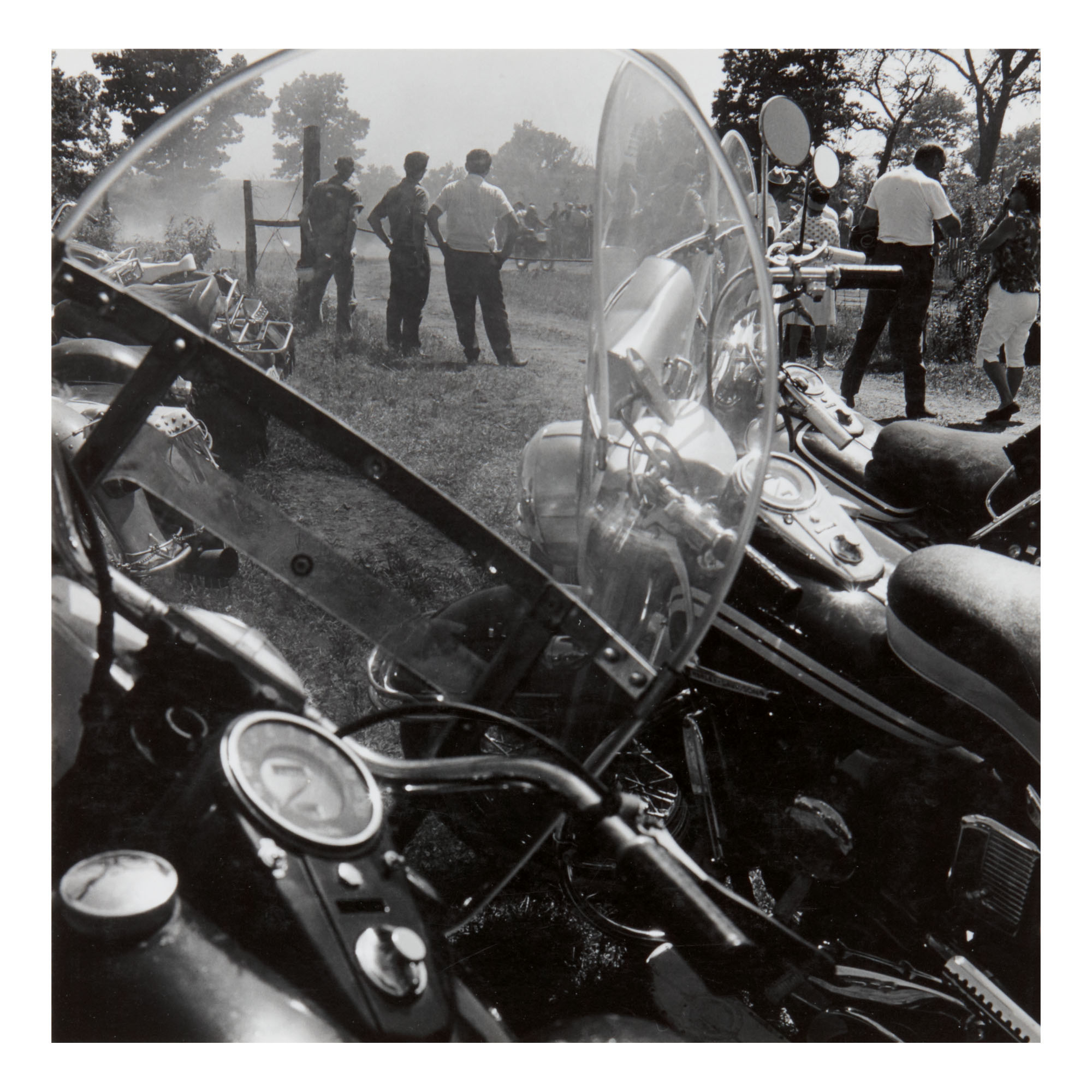
Danny Lyon
'scrambles Track, Joliet, Ill.'
The image simply titled Texas Prison, available on The Collection, distills that entire body of work into a single frame of profound moral weight. What distinguishes Lyon from his contemporaries is his refusal to aestheticize suffering for its own sake. His pictures of policemen in Clarksdale, Mississippi, and his documentation of motorcycle scrambles at Joliet, Illinois, share the same formal quality: an absolute respect for the subject, a willingness to slow down and look, and an understanding that the most important thing a photographer can do is bear witness without condescension. His gelatin silver prints of the Ohio River crossings near Louisville carry an almost painterly sense of the American landscape as both freedom and burden, invoking the great tradition of documentary photography from Walker Evans to Robert Frank while remaining entirely his own.
For collectors, Lyon represents a genuinely compelling proposition. His prints occupy a rare position in the market: they are historically significant, aesthetically coherent, and still accessible relative to peers whose work commands comparable cultural authority. His gelatin silver prints, many printed in limited editions in the 1990s and 2000s, offer exceptional quality and provenance. Works such as Leslie, Knoxville and Crossing the Ohio near Louisville demonstrate the full range of his sensibility, from intimate portraiture to expansive landscape.
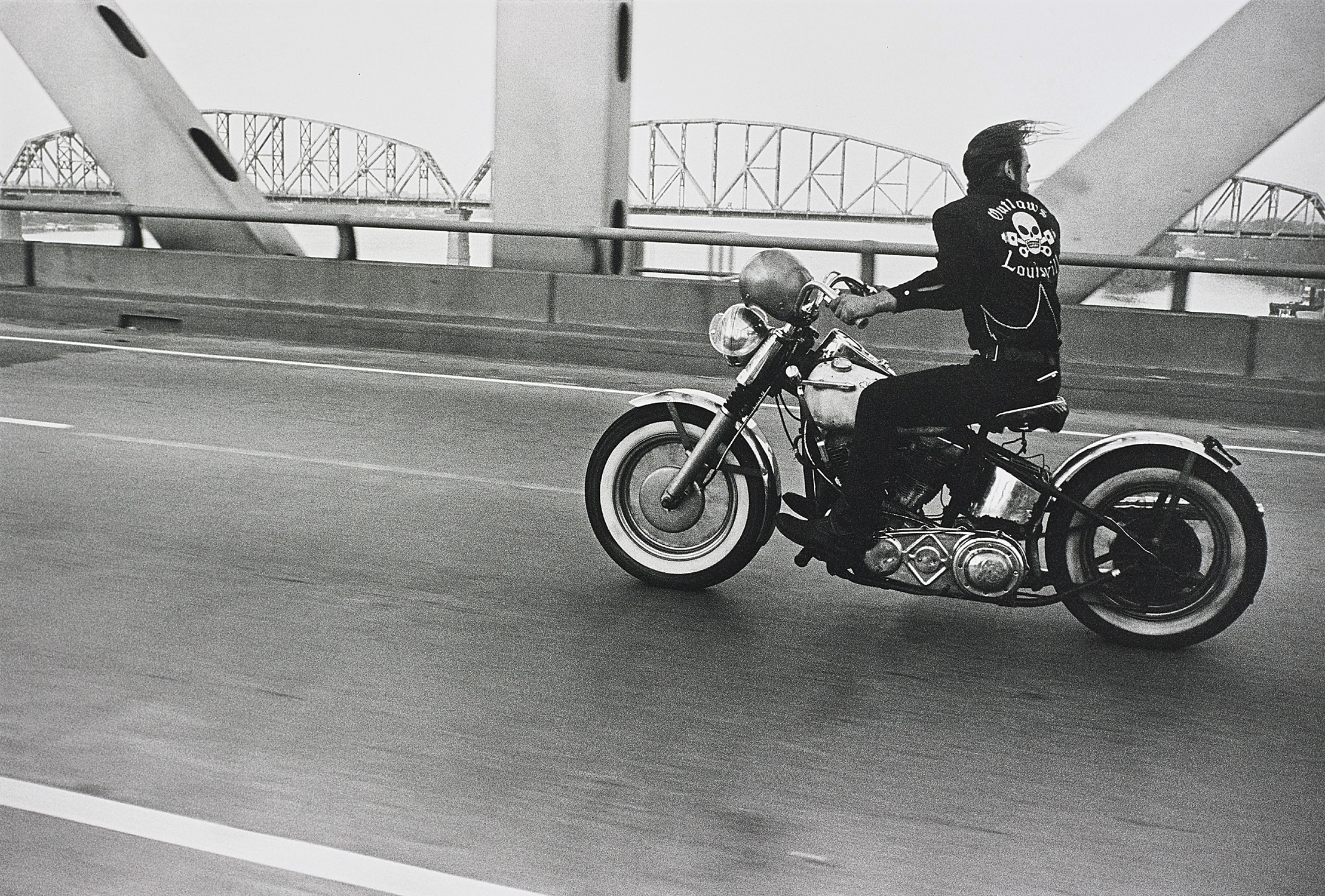
Danny Lyon
Crossing the Ohio near Louisville
Collectors drawn to photographers like Garry Winogrand, Lee Friedlander, or Robert Frank will find in Lyon a natural and deeply rewarding companion. His work also resonates strongly with those who collect alongside the social documentary tradition that runs from Dorothea Lange through Larry Clark and beyond. Lyon also worked extensively as a filmmaker, producing films including Soc. Sci.
127 in 1969 and Little Boy in 1977, further evidence of an artist who has never been content to work within a single discipline. His books, including The Destruction of Lower Manhattan from 1969, which documented the demolition of whole city blocks to make way for the World Trade Center, show a consistent preoccupation with what is lost when societies move too fast and look too little. That book, now recognized as an invaluable historical record, was ahead of its time in treating urban demolition as a subject worthy of sustained artistic attention. The legacy of Danny Lyon is, ultimately, the legacy of committed looking.
He showed that a photographer could be an activist, a writer, a filmmaker, and a fine artist without any contradiction among those roles. His career demonstrates that the camera, in the right hands, is not merely a recording device but an instrument of conscience. As the art world continues to grapple with questions of representation, access, and whose stories deserve to be told, Lyon's body of work stands as both a model and a challenge. To collect his photographs is to participate in that ongoing conversation, and to bring into your home images that have genuinely mattered in the world.
Explore books about Danny Lyon