Danielle Orchard
Danielle Orchard's Radiant Reimagining of Female Presence
Artist Spotlight · The Collection Editorial
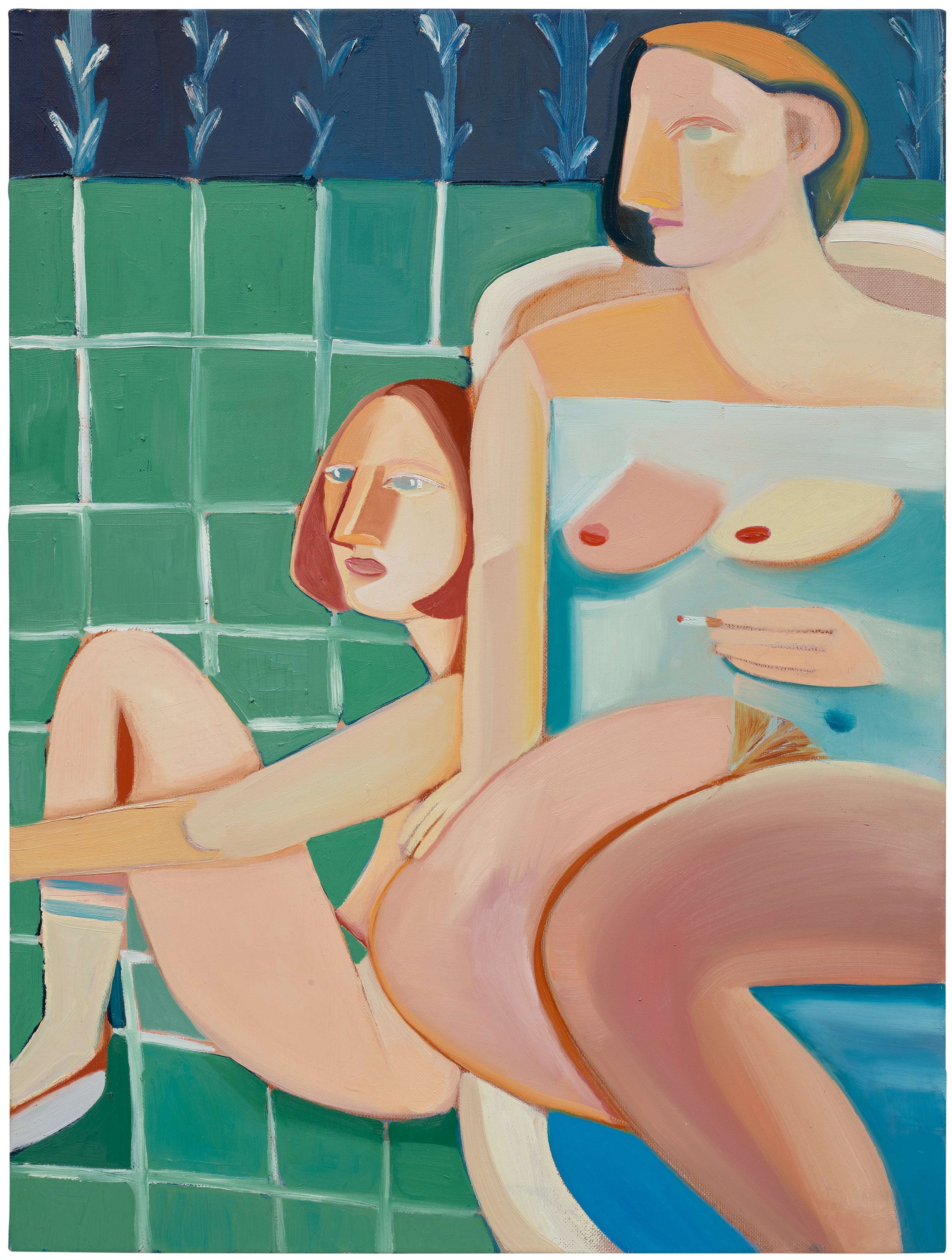
Something is shifting in how the art world receives Danielle Orchard. Her paintings, which have long circulated among an admiring circle of collectors and critics, are now arriving at a broader moment of cultural recognition, as institutions and auction houses alike turn their attention to figurative painters who engage seriously with the history of their medium. Orchard's work at Night Gallery, where she has cultivated an important relationship, has drawn sustained critical attention and positioned her as one of the more thoughtful voices in a generation of painters reexamining what it means to place the female figure at the center of a painted world. Orchard was born in 1985 in the United States, and her formation as a painter reflects both a deep immersion in art historical study and a genuine appetite for the pleasures of paint itself.
Danielle Orchard
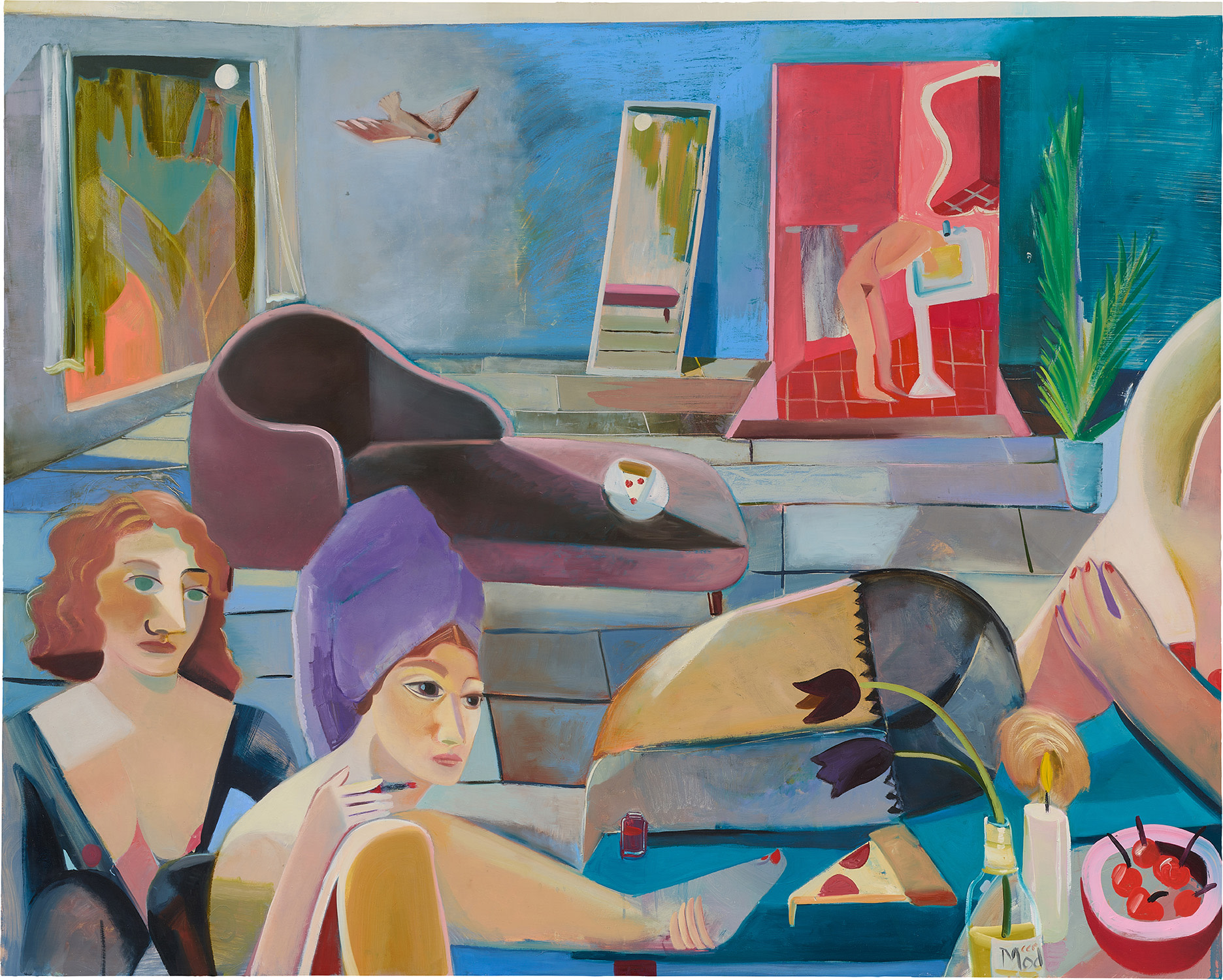
Night Out, 2020
She absorbed the lessons of canonical Western painting without treating them as gospel, approaching Matisse, Bonnard, and the longer tradition of the female nude with a kind of loving skepticism. Her education gave her access to the grammar of these traditions, and her sensibility gave her the distance to question them. The result is a practice that feels at once deeply informed and genuinely free. Her development as an artist has followed a path that rewards close attention.
Early works showed her testing the conventions of the studio and the domestic interior, those spaces that have historically framed how women are seen in painting, and finding within them a rich field for inquiry. As her practice matured, she became increasingly interested in what she has described as the interiority of her subjects, the way a figure can hold its own gaze, its own sense of self, even within a painted tradition that has so often rendered women as passive objects of looking. Her compositions grew more confident, her color more knowing, her sense of pictorial space more architecturally assured. Among the works that best represent Orchard's range and ambition, several stand out with particular force.
Danielle Orchard
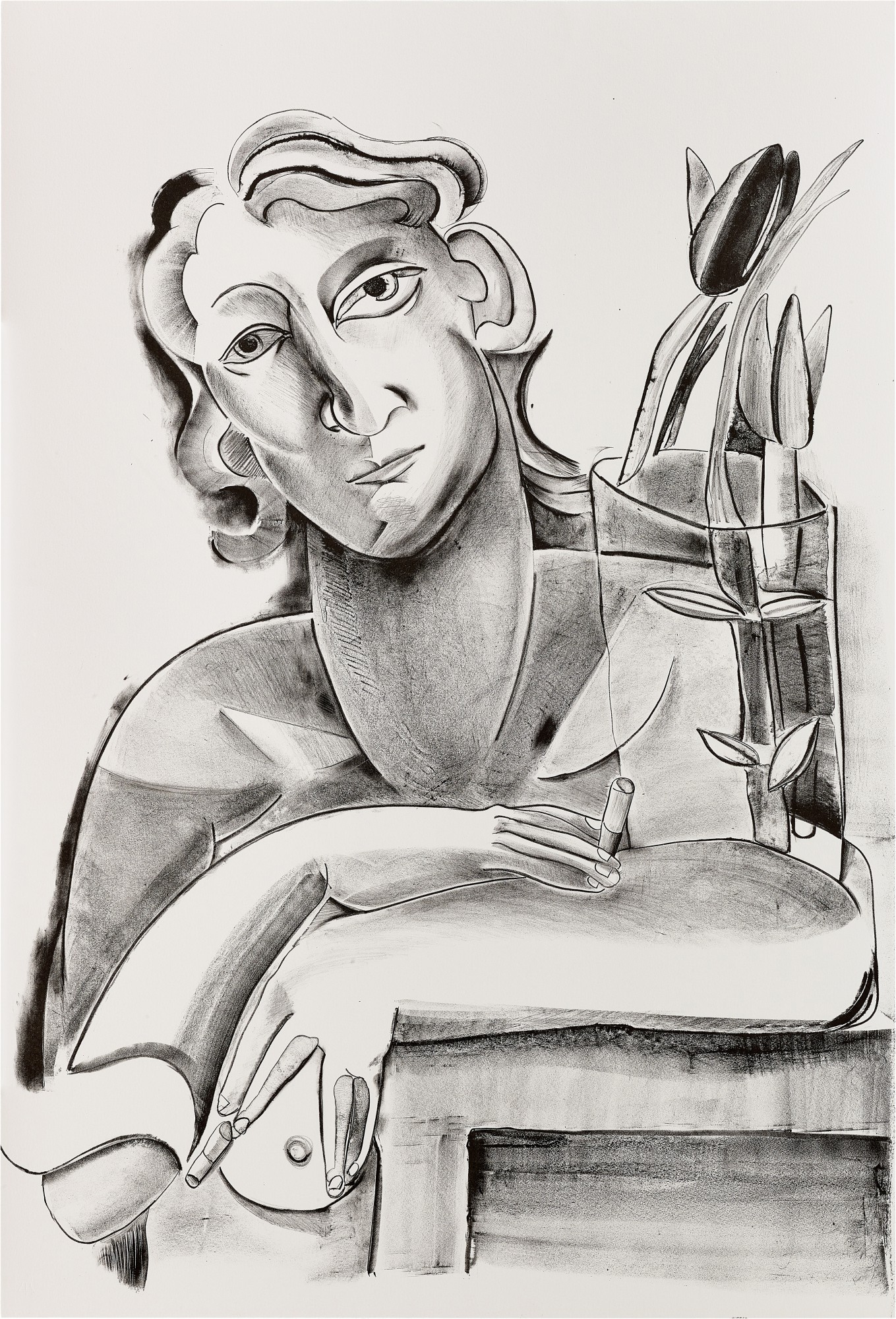
乳頭 Ii
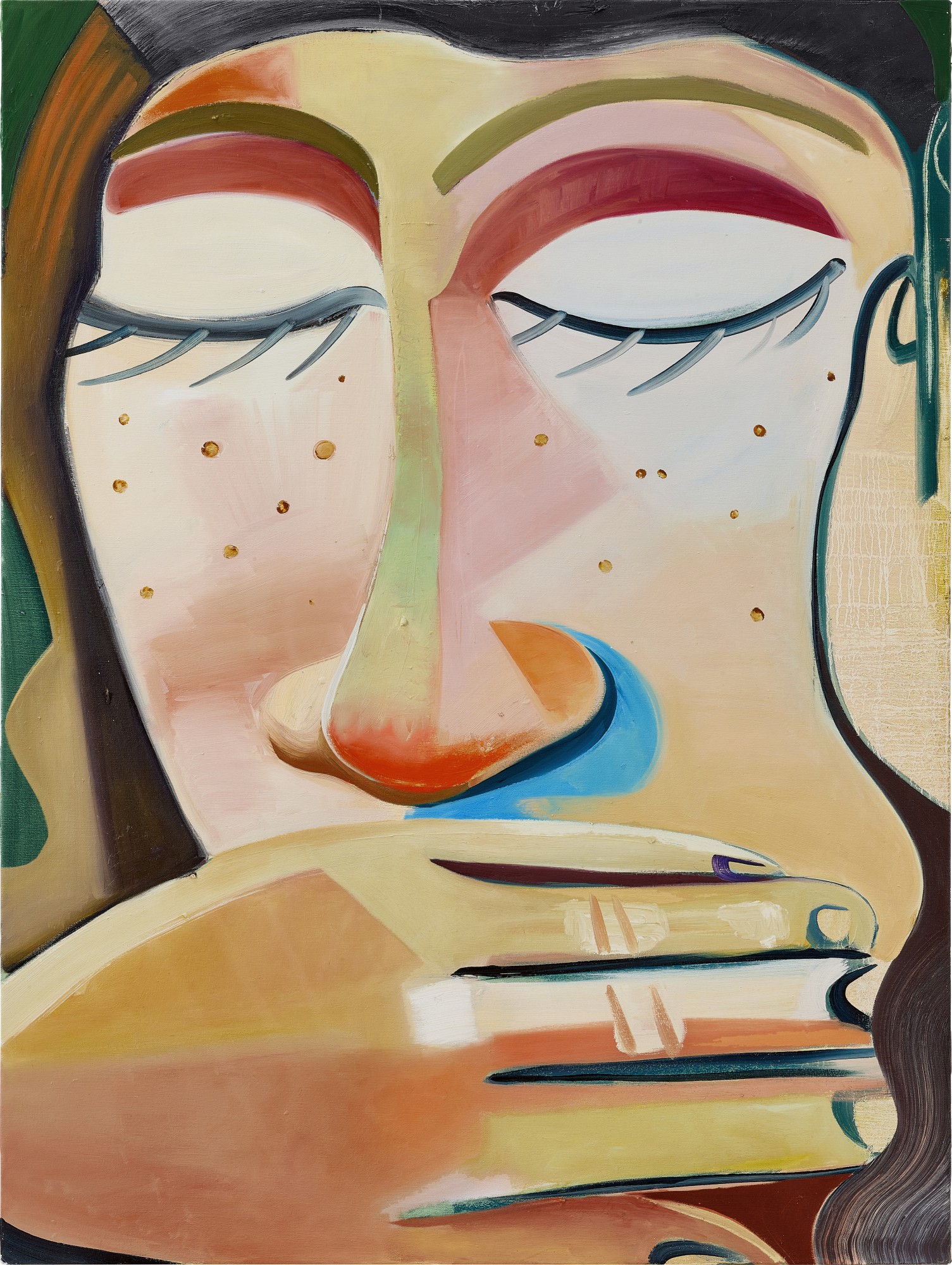
"Parade Float" from 2019 demonstrates her ability to load a seemingly casual scene with layered art historical reference while keeping the surface alive with pictorial energy. "Girl with Purple Sky" from 2018, rendered in oil on linen, shows her command of atmospheric color, the sky functioning almost as a psychological field rather than a mere backdrop. "Morning Storm" and "Night Out," both from 2020, reveal how productively she works in series and variation, returning to related configurations of figure and space to extract different emotional and formal registers. Her monoprint lithograph "Nipple II" and the bilingual titled oil "Covering a Woman's Mouth" suggest a willingness to engage directly with questions of exposure, censorship, and the politics of how women's bodies are controlled and represented.
These are not polemical works in any heavy handed sense, but they carry a clear and considered point of view. Collectors are drawn to Orchard for reasons that speak well of their instincts. Her works reward prolonged looking in the way that only paintings anchored in genuine formal intelligence tend to do. The surfaces hold subtle decisions about touch and texture, about the weight of a glance or the implied motion of a hand, that reveal themselves slowly.
Danielle Orchard
Covering a Woman's Mouth 摀住女人的嘴
Her works on paper, including pencil drawings such as "Beach Rain" and her archival pigment prints, offer an accessible point of entry into a practice whose primary medium is oil, and they demonstrate that her sensibility is equally at home across different material registers. For collectors building a collection that engages with the history of figurative painting through a contemporary and feminist lens, Orchard represents a compelling acquisition at a moment when her critical profile is clearly ascending. Within art history and among her peers, Orchard occupies a position that connects several overlapping conversations. She belongs to a generation of painters, many of them women, who have returned to the figure not as a nostalgic retreat but as a genuinely radical choice, insisting on the continued relevance of painting as a space for thinking through questions of identity, desire, and representation.
Her engagement with Matisse is not mere quotation but a productive argument, extracting the luxuriant color and spatial compression of his interiors while redistributing the agency within the picture. Artists such as Cecily Brown, Lisa Yuskavage, and the earlier example of Alice Neel all resonate in different ways with what Orchard is doing, though her voice remains distinctly her own, cooler in some registers, more intellectually playful in others. What Orchard offers, finally, is something that painting at its best has always offered: the experience of a sensibility made visible. Her canvases and works on paper do not simply depict women in rooms.
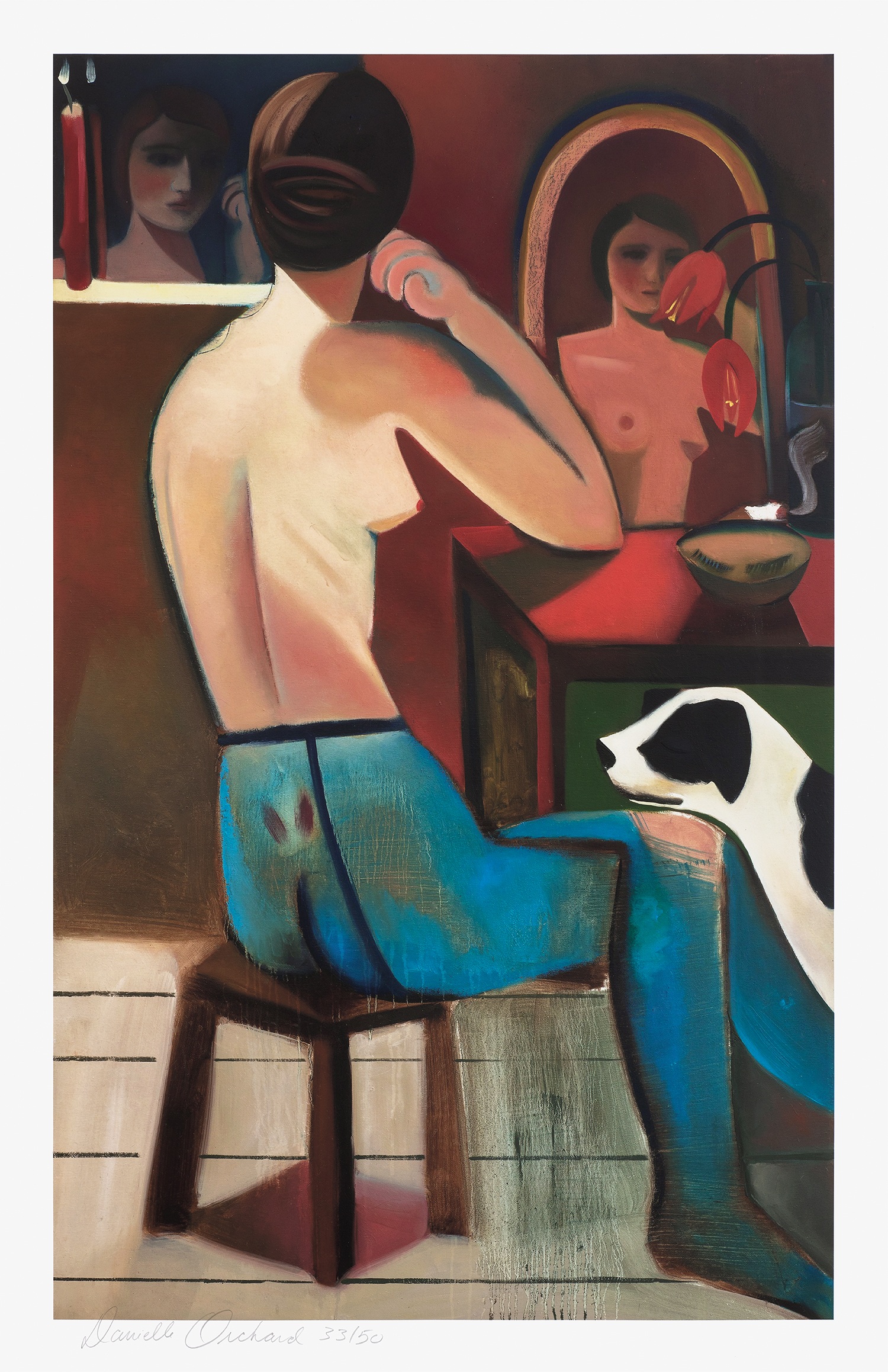
Danielle Orchard
Earthly Demands
They propose a different way of looking at those women, one that assumes their complexity, honors their interiority, and takes pleasure in the act of painting itself as a form of thought. At a moment when figurative painting is receiving renewed institutional and market attention, Orchard stands as an artist whose work merits that attention on the deepest possible grounds. She has built something genuinely her own, and collectors and institutions who recognize that now are participating in a story whose best chapters are still unfolding.