Dan Walsh
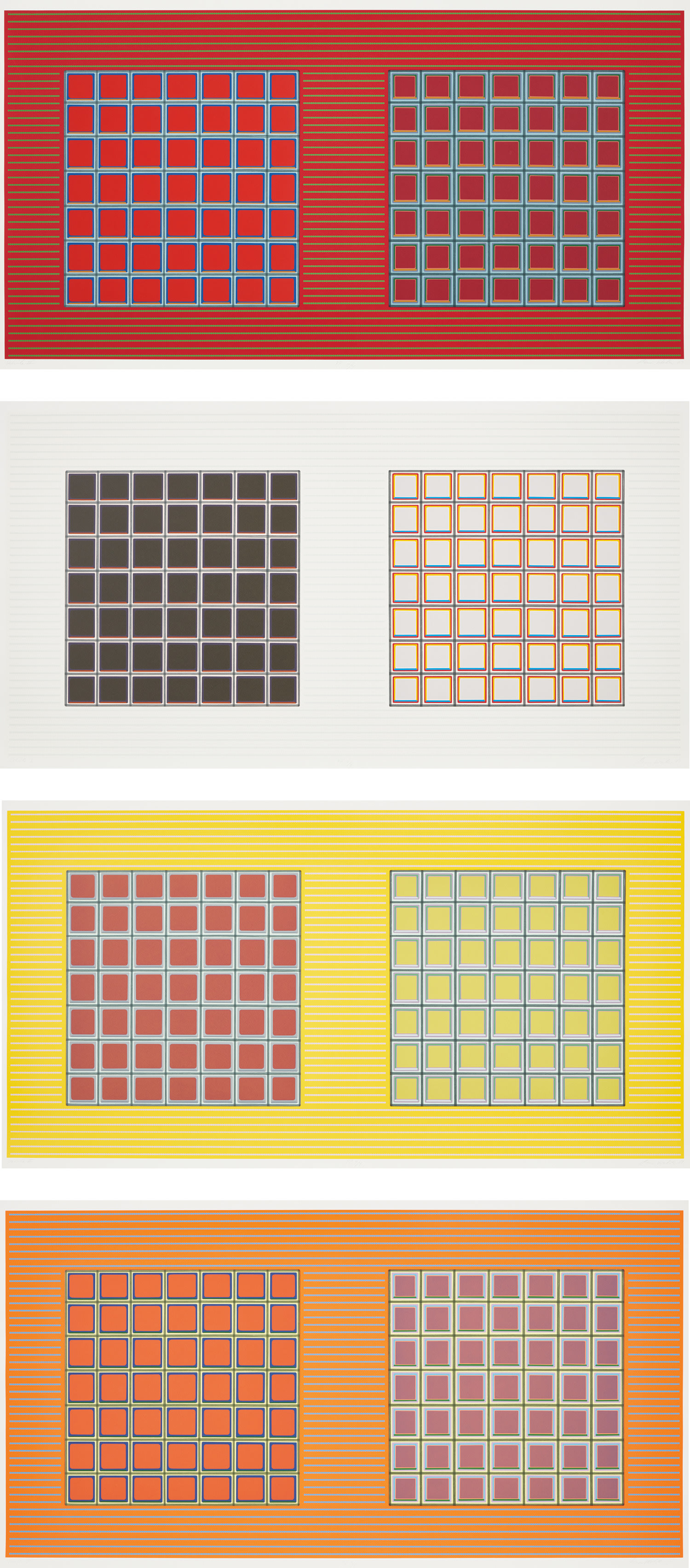
Dan Walsh, Where Rhythm Becomes Vision
Artist Spotlight · The Collection Editorial
There is a particular kind of attention that Dan Walsh's paintings demand. Not the immediate, overwhelming attention of a canvas that shouts, but the slower, more rewarding kind that accumulates as you stand before one of his works and begin to feel the surface breathe. In recent years, Walsh has continued to build a quietly formidable reputation through sustained presentation at Paula Cooper Gallery in New York, where his paintings have drawn collectors and critics alike into the meditative world he has spent decades constructing. His presence in significant public and private collections across the United States and Europe speaks to an artist whose influence runs deeper than any single headline moment, one whose work rewards the kind of patient looking that defines serious collecting.
Dan Walsh
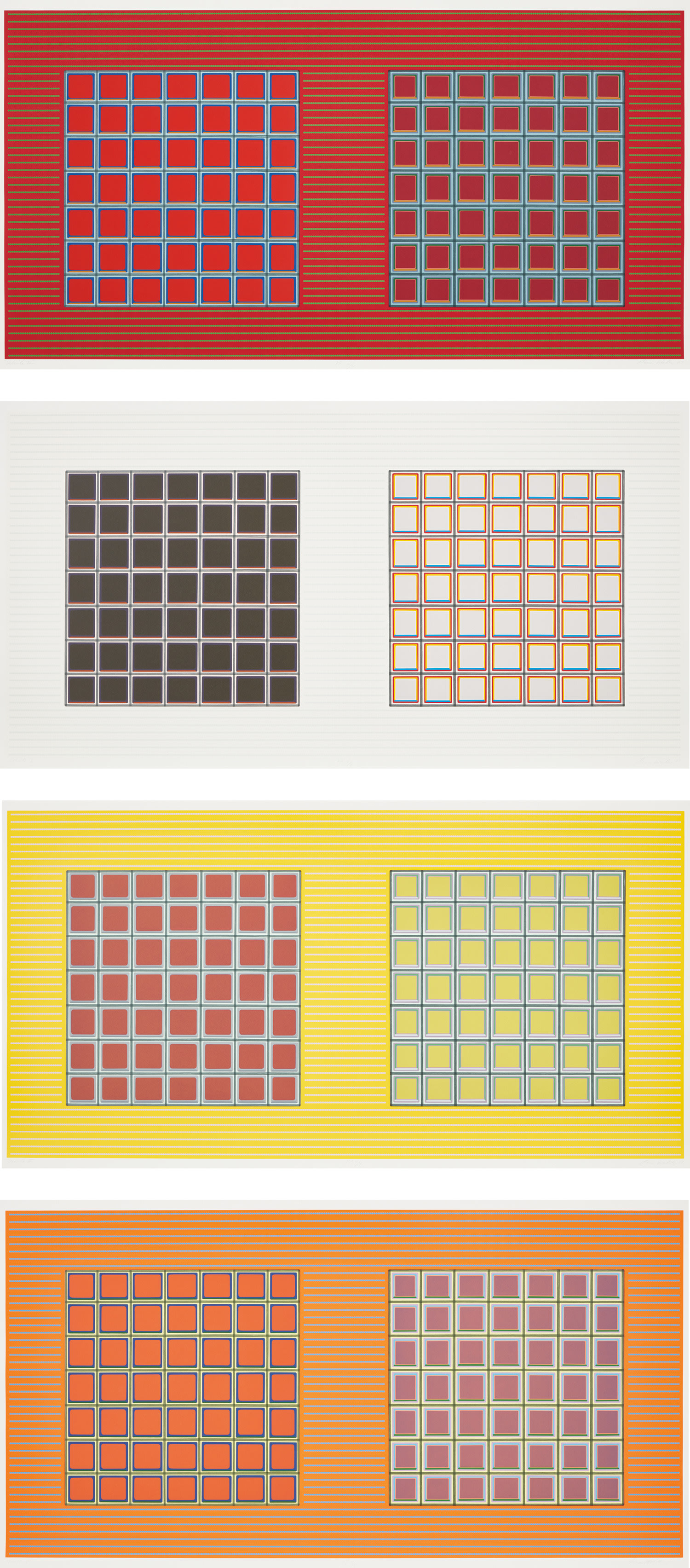
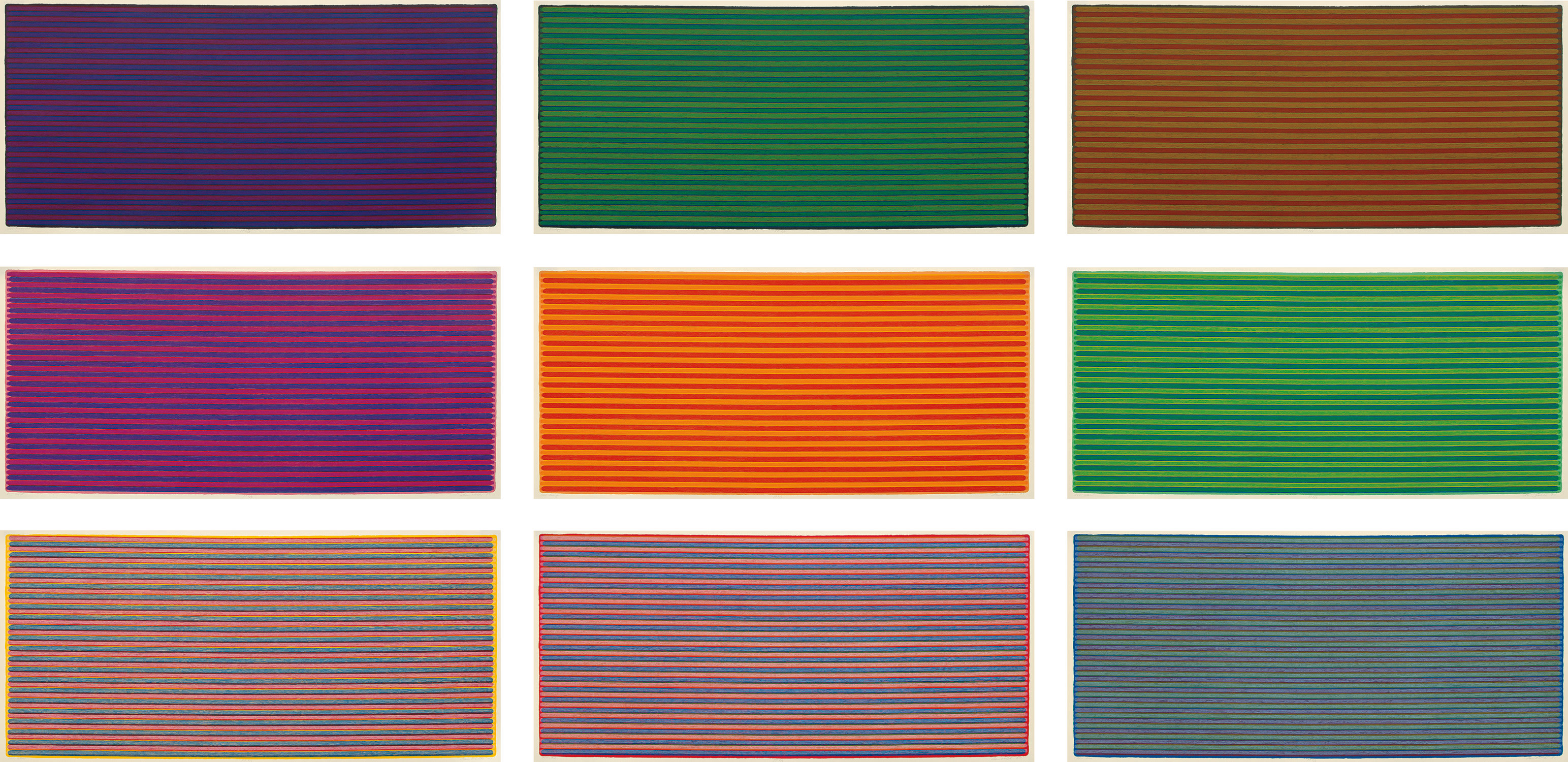
Vehicle I-IV
Born in 1960, Dan Walsh came of age during a period of extraordinary ferment in American art. The legacies of minimalism, hard edge painting, and Op Art were simultaneously being absorbed and questioned by a new generation of painters who were less interested in manifesto than in practice. Walsh emerged from this climate not as a polemicist but as a dedicated studio artist, one who understood that the real questions of abstract painting are answered slowly, over years and decades, through sustained commitment to a set of formal problems. His formation was shaped by close study of the rigorous traditions running from Josef Albers and Ellsworth Kelly through to the systematic investigations of painters like Robert Mangold and Brice Marden.
Walsh's development as an artist is a story of progressive refinement rather than dramatic rupture. He arrived at his signature vocabulary through sustained inquiry into what paint on canvas can actually do when stripped of narrative, figuration, and expressive gesture. The grid became his primary structure, not as a conceptual statement but as a living armature for exploring how the eye moves, how color vibrates, and how repetition can generate something that feels almost like music. Early works from the late 1980s and through the 1990s established the terms of his inquiry, and pieces such as Placebo from 1995 demonstrate how confidently he had already claimed this territory.
Dan Walsh
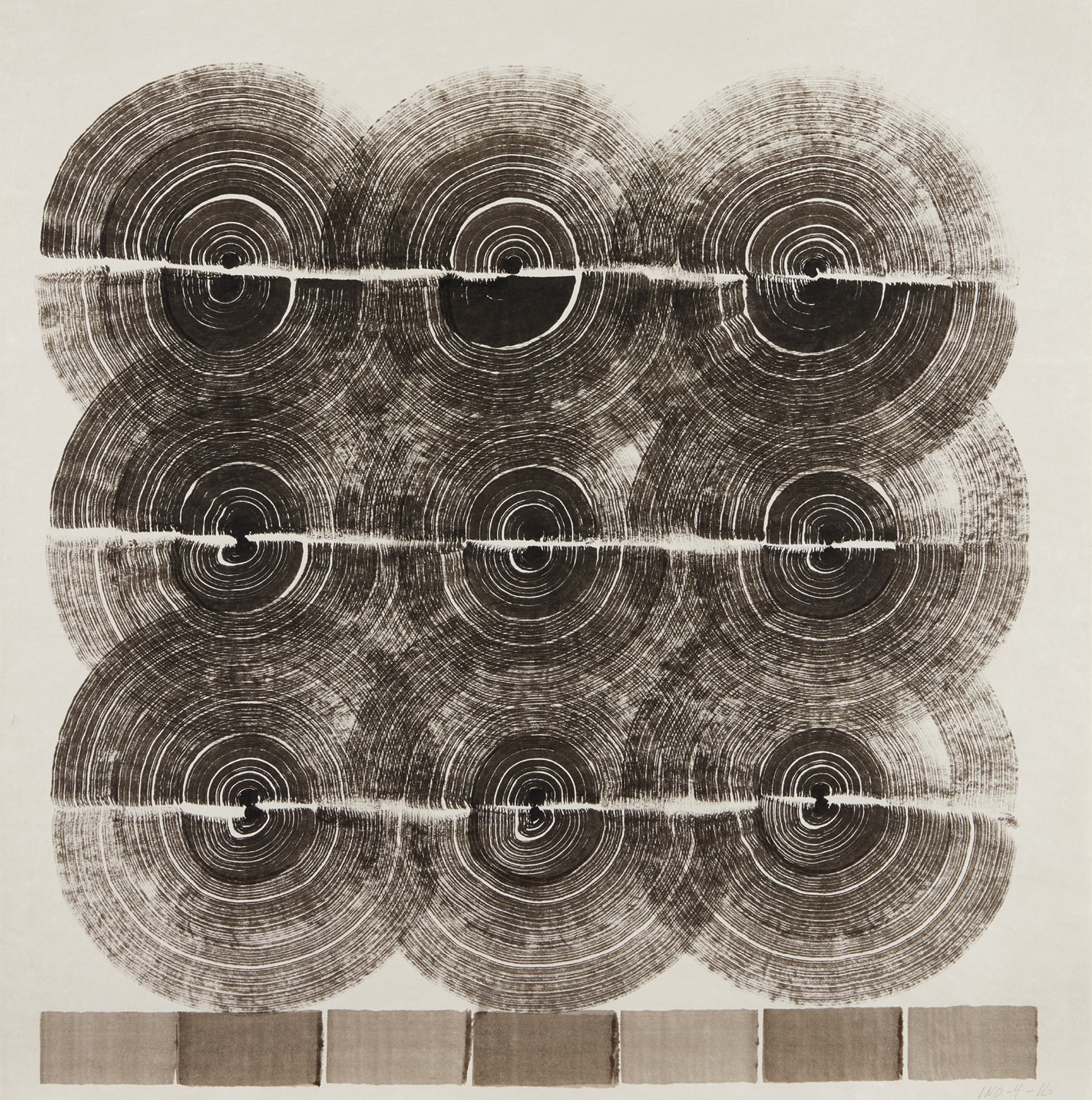
Ino 4
That acrylic on canvas, with its quiet insistence on pattern and interval, shows an artist fully in command of his means. The works that have come to define Walsh's reputation are those in which geometric restraint and optical complexity achieve a kind of equilibrium that feels effortless but is anything but. Red Diptych II, rendered in acrylic on canvas, exemplifies his understanding of how format and color interact, the diptych structure introducing a pause, a breath, within the field of pattern that transforms looking into an almost physical experience. His print projects, developed in collaboration with Pace Prints and Pace Editions in New York, have extended this vocabulary into new registers.
The Vehicle series, produced as a carefully editioned set of printer's proofs, demonstrates how Walsh's sensibility translates across media with complete integrity. His ink drawings on Inomachi paper, such as Ino 4, reveal the underlying discipline that supports even his most optically ambitious paintings, the line is always purposeful, always considered. For collectors, Walsh represents a particularly compelling proposition. His work sits at the intersection of two well established and historically validated traditions in postwar and contemporary art, minimalism's commitment to reduction and Op Art's fascination with perceptual experience, while belonging fully to neither.
Dan Walsh
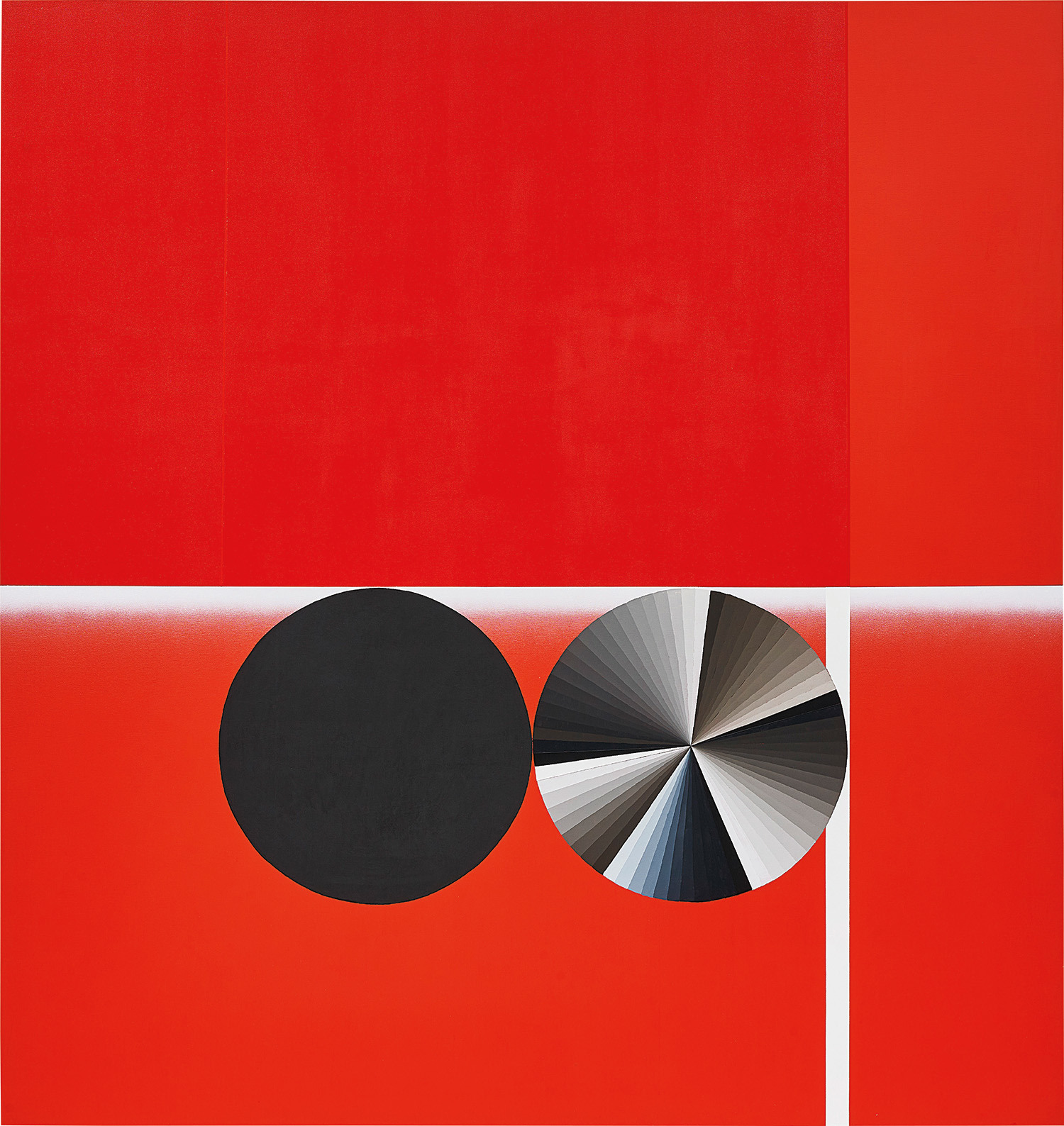
Accessory, 2006
This position gives his paintings a durability and an adaptability that reward long term holding. Works created across different decades show a remarkable consistency of vision alongside genuine evolution, which is exactly the kind of trajectory that builds lasting value. His association with Pace Editions for print projects also means that collectors at various levels of commitment can engage with his practice through works that carry the full weight of his vision. The acrylic on canvas Accessory from 2006 is representative of the mid career work that collectors have found particularly compelling, combining the formal assurance of his mature practice with a freshness that keeps the work alive across years of living with it.
Walsh's place in the broader conversation of contemporary abstract painting becomes clearer when considered alongside artists who have navigated similar territories. Painters such as Peter Halley, Olivier Mosset, and Mary Heilmann have each found distinct paths through the legacies of minimalism and pattern painting, and Walsh's work speaks to each of these conversations without being reducible to any of them. Further back, the influence of Albers is unmistakable in Walsh's sensitivity to color interaction, while the seriality of his approach connects him to the systematic practices of artists like Sol LeWitt. Yet Walsh's paintings always feel warm where some of these precedents can feel cool, there is a handmade quality in the surface, a residue of decision making, that keeps the work rooted in the physical act of painting.
Dan Walsh
Dan Walsh
What matters most about Dan Walsh in this moment is not any single achievement but the totality of a practice sustained with rare integrity over more than three decades. At a time when the art world moves with sometimes disorienting speed, his commitment to a set of questions about perception, repetition, and the fundamental pleasures of looking feels not conservative but genuinely radical. The collectors and institutions that have assembled his work over the years have understood something important: that paintings which reward slow looking are paintings that continue to give across a lifetime. Walsh has built a body of work that belongs in that company, work that earns its place on the wall every time you stand before it and let your eyes settle in.
Explore books about Dan Walsh
Dan Walsh: The Art of Influence
Sarah Mitchell
Walsh's Palette: Color Theory and Practice
James Richardson
The Walsh Methodology: Teaching Art Through Innovation
Dr. Patricia Chen
Dan Walsh: Masterworks and Sketches
Museum of Modern Art Editorial Team
Abstract Forms: The Dan Walsh Collection
Eleanor Hoffman