Dan Rees
Dan Rees Makes the Everyday Feel Extraordinary
Artist Spotlight · The Collection Editorial
Something quietly radical is happening in contemporary British painting, and Dan Rees sits comfortably at its centre. Represented by Seventeen in London, the Welsh artist has spent the better part of two decades building a practice that is at once playful and philosophically rigorous, disarmingly beautiful and pointedly critical. His work has found its way into serious collections and international exhibitions, and for those who have been following him closely, the growing recognition feels not just deserved but long overdue. Rees was born in 1982 in Wales, a context that matters more than it might first appear.
Dan Rees
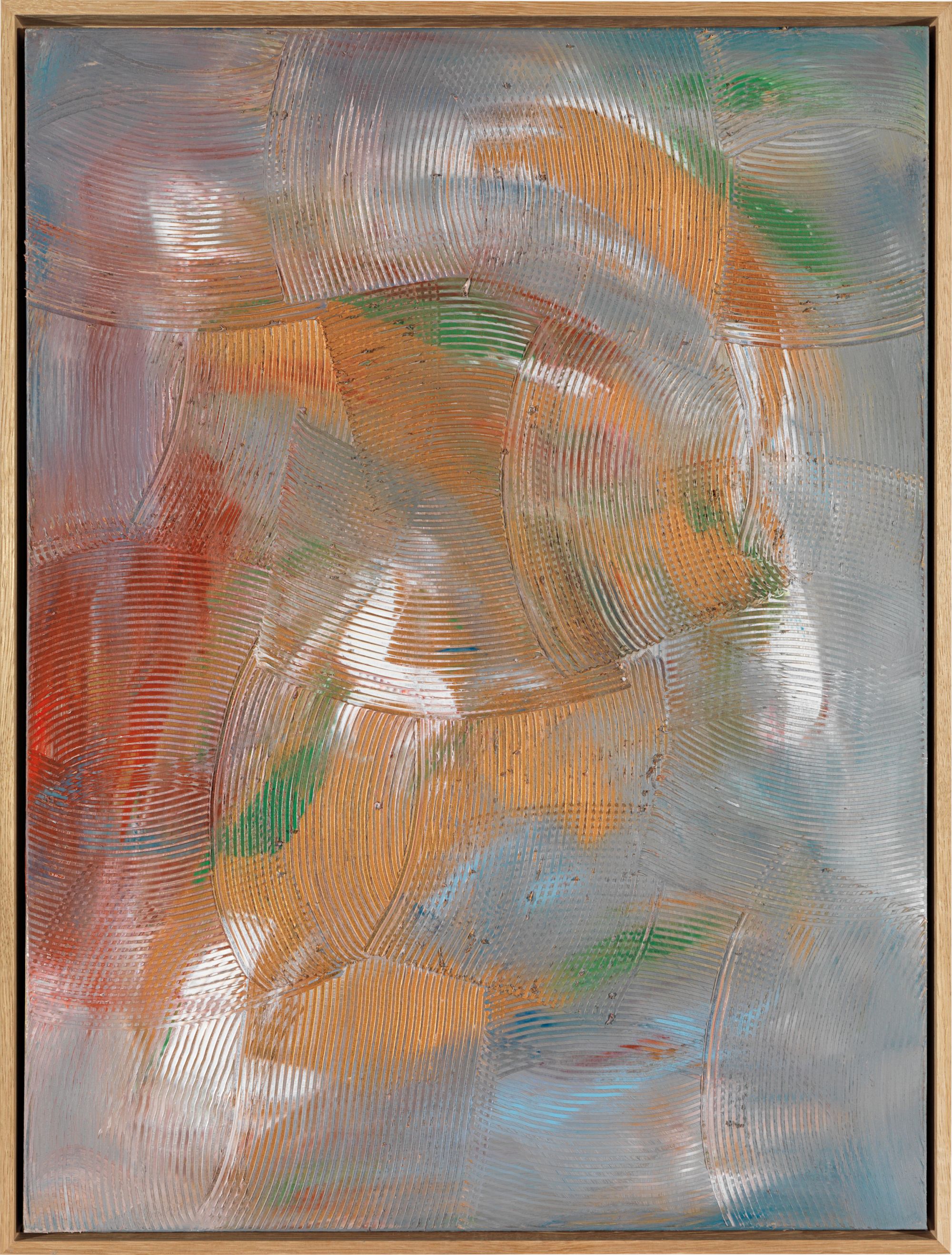
Artex Painting
Wales occupies a particular cultural position within Britain, peripheral to the dominant art market geography of London yet connected to a rich tradition of industrial vernacular, nonconformist sensibility, and a certain dry wit. These qualities are present throughout Rees' practice, which has never been interested in spectacle for its own sake. Instead, he has consistently pursued something more subtle and more durable: an investigation into how meaning attaches itself to objects, and how institutional and commercial systems determine what we call art. His formation as an artist took place against the backdrop of a generation deeply shaped by the legacy of conceptualism and the questions left open by artists like Michael Asher, Marcel Broodthaers, and the Pictures Generation.
Rees absorbed these influences while developing his own distinct sensibility, one that trades academic dryness for material warmth and a genuine curiosity about surfaces, textures, and the residue that objects carry. He studied and developed his practice during a period when institutional critique was being reexamined by younger artists who wanted to retain its intellectual seriousness while reintroducing craft, beauty, and a degree of humour. The evolution of Rees' practice across painting, sculpture, and installation reveals an artist consistently drawn to the boundary between the handmade and the industrial, between the intimate and the systemic. His Artex paintings are among the most immediately compelling works in this regard.
Dan Rees
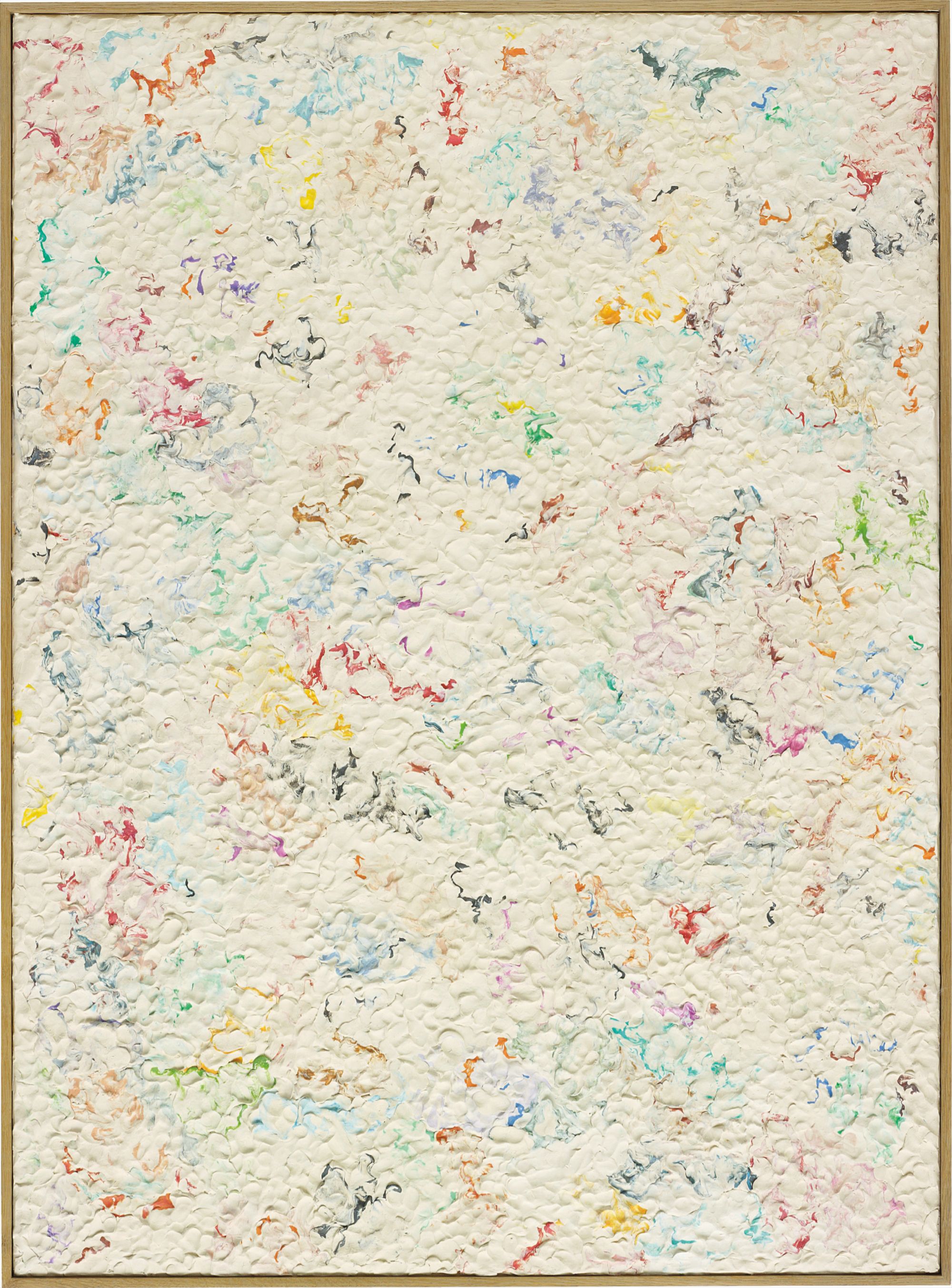
plasticine on ply, artist's frame
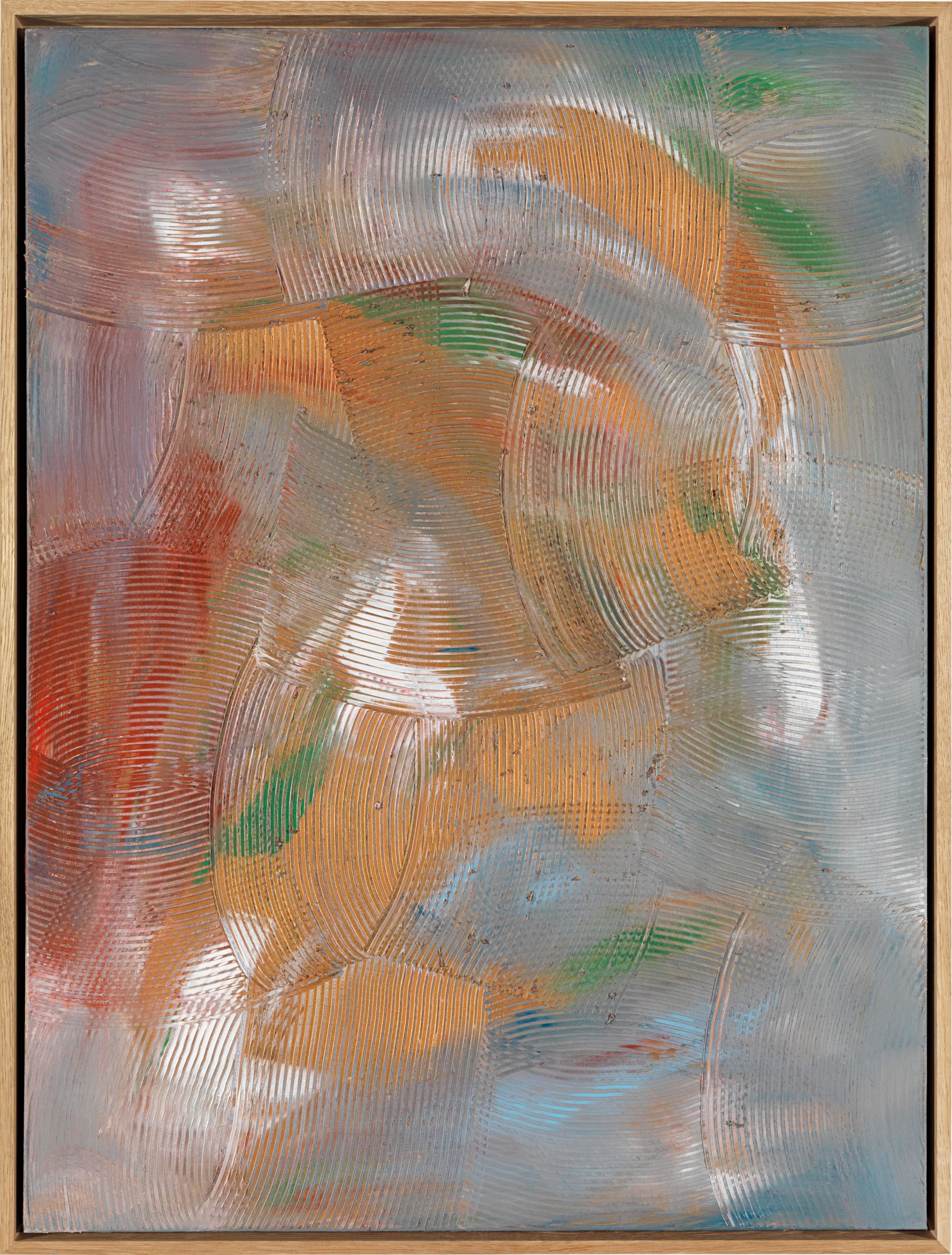
Artex is a textured coating material used widely in British domestic interiors, a substance so ordinary as to be almost invisible, so embedded in everyday life that it has ceased to register as a surface at all. By applying it to canvas and presenting it within the conventions of fine art painting, Rees performs a quiet but decisive act of recontextualisation. Works like Artex Painting and Artex 1 ask the viewer to look again, to reconsider what constitutes a painted surface and what authority the artist's frame confers upon it. The Gravel Master series, with works dating to 2013 and 2014, extends this logic into further material territory.
Oil and pebble dash on canvas, or mixed media approaches that bring the textures of driveways and garden paths into gallery space, these paintings carry an almost archaeological quality. They document the surfaces of everyday British life with the same attentiveness that a landscape painter might give to a mountain or a coast. The Vacuum Painting, rendered in oil on canvas with plastic and glass, introduces another layer of commercial and domestic reference, the vacuum cleaner as a readymade object of desire and obsolescence, its presence both absurd and strangely poignant. Perhaps the most beloved body of work in Rees' output is his series of plasticine paintings, and their appeal is worth examining carefully.
Dan Rees
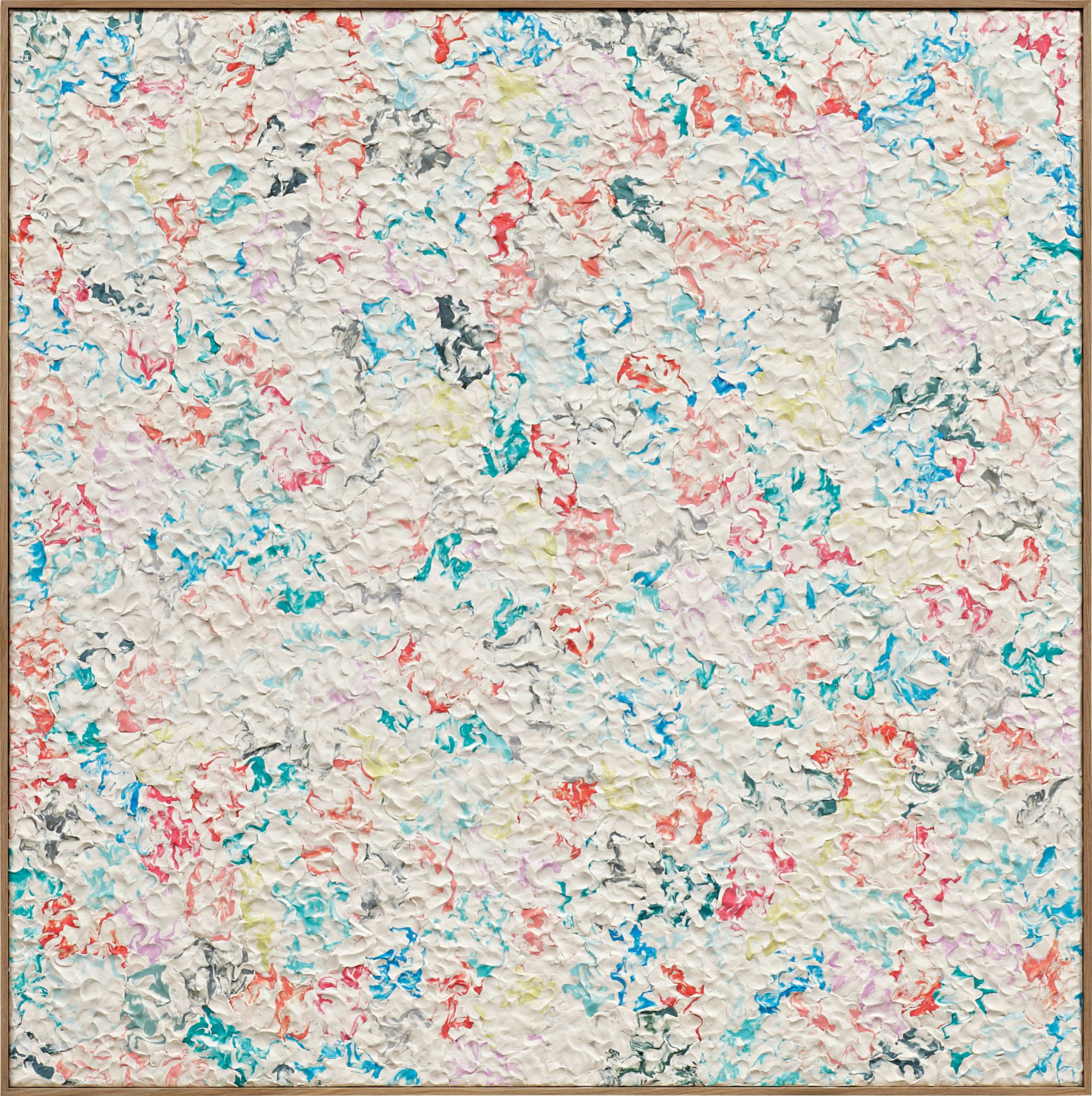
plasticine on wood, in artist’s frame
Plasticine is a children's material, associated with primary schools and Saturday mornings, and its appearance in serious gallery contexts carries an obvious critical charge. But what distinguishes Rees' use of it from mere provocation is the unexpected beauty he draws from the medium. Fields of thumbed material in cloudy pastel hues, these works reward close looking in a way that feels genuinely surprising. The gesture is present in every ridge and compression, the hand of the artist legible across the entire surface.
Works from 2011 including plasticine on wood, in artist's frame and plasticine on wood, in artist's frame in four parts demonstrate how Rees was already thinking carefully about seriality, repetition, and the way that a frame confers status and signals intention. For collectors, Rees' practice offers a rare combination of intellectual coherence and material pleasure. Each work is an entry point into a larger set of questions about value, authenticity, and the systems through which art is legitimised, but none of them require a theoretical primer to be enjoyed. The plasticine works in particular have attracted collectors who appreciate the paradox of an object that looks both handmade and somehow industrial, both humble in material and confident in gesture.
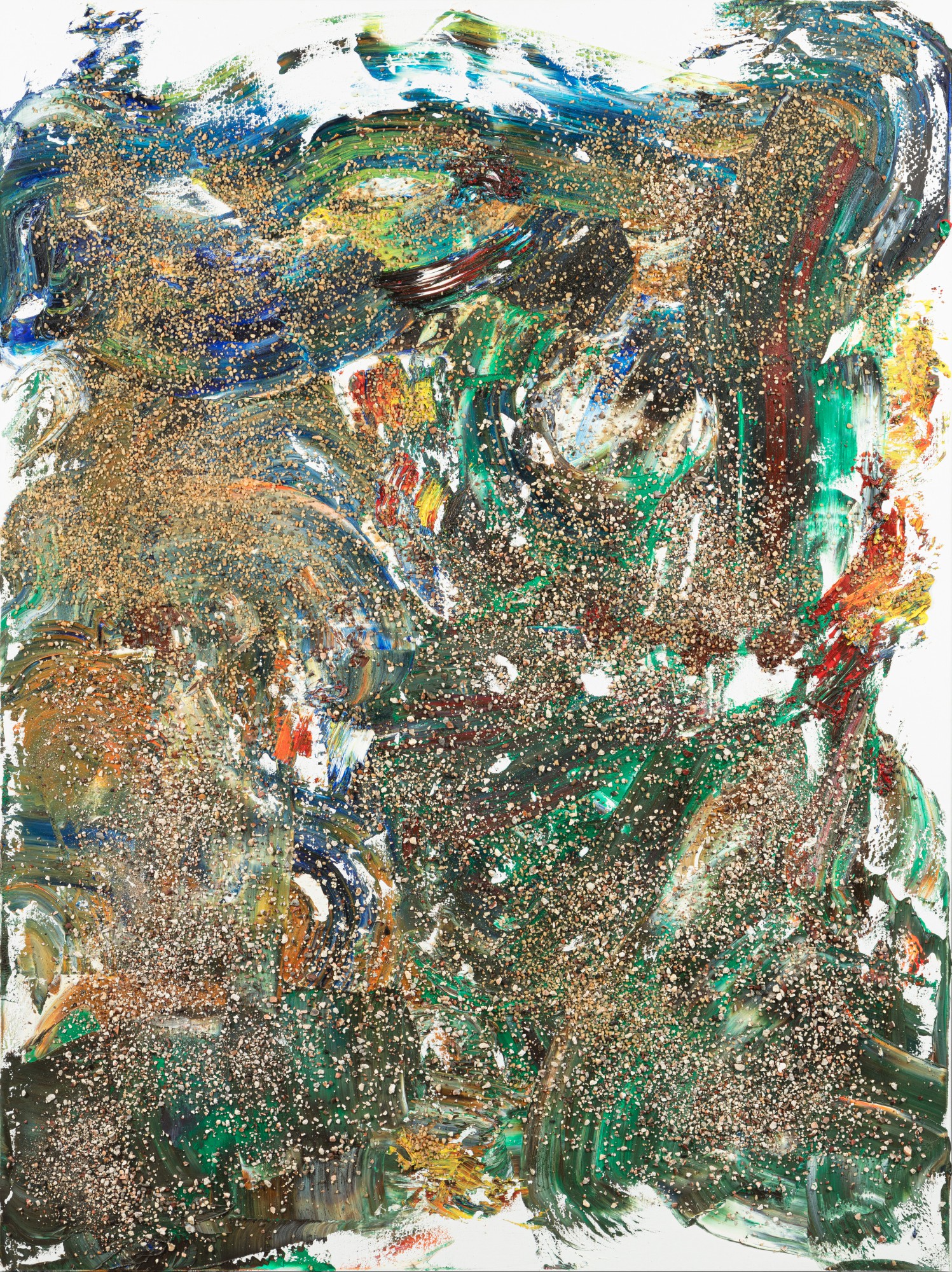
Dan Rees
Gravelmaster, 2014
Collectors drawn to artists like Michael Craig Martin, Ceal Floyer, or the cooler end of Arte Povera will find in Rees a kindred sensibility that is nonetheless entirely his own. His use of artist's frames, a detail worth noting throughout his practice, reinforces the self awareness at the heart of his work: the frame is not neutral, and Rees insists on reminding us of that. Within the broader context of contemporary British art, Rees occupies a position adjacent to but distinct from the generation of artists associated with the Young British Artists movement. His concerns are more procedural, his humour quieter, his relationship to institutional critique more sustained and less theatrical.
He shares something with artists like Simon Martin or Daria Martin in his willingness to treat culture as material, and his investigations into branding and commercial aesthetics place him in dialogue with international figures working at the intersection of art and systems thinking. Yet his Welshness, his attachment to specific domestic and vernacular surfaces, gives his work a particularity that resists easy categorisation. The reason Dan Rees matters today, and the reason his work rewards sustained attention from collectors and institutions alike, is that he has asked consistent and genuinely difficult questions without ever becoming didactic or cold. His paintings and objects feel like propositions rather than conclusions, invitations to reconsider the surfaces and systems we move through every day.
In a moment when the art world is grappling seriously with questions of value, authenticity, and the meaning of the handmade, Rees has been working through exactly these issues for years, with wit, with rigour, and with a material intelligence that is entirely his own.