Dan Flavin
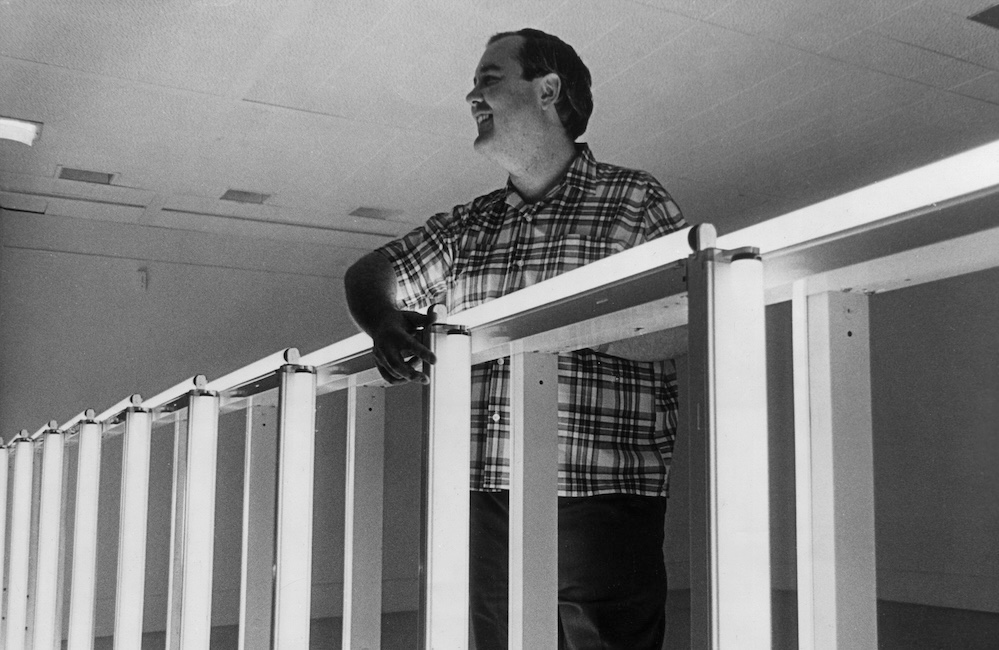
Dan Flavin: Light Itself Becomes the Art
Artist Spotlight · The Collection Editorial
“I know now that I can reiterate any part of my fluorescent light system as adequate. Elements of any system can be repeated.”
Dan Flavin, studio notes, 1965
There is a moment, familiar to anyone who has walked into a major Flavin installation, when the eyes adjust and the room dissolves. The walls blush pink or cool to a deep ultraviolet blue, the architecture seems to breathe, and the ordinary fluorescent tube, that most mundane of industrial objects, becomes something genuinely transcendent. That experience has lost none of its power. In 2023 and into 2024, the David Zwirner gallery continued to champion Flavin's legacy with sustained exhibition programming, while major institutional holdings at the Dia Art Foundation, the Museum of Modern Art in New York, and the National Gallery of Art in Washington kept his signature works before new generations of viewers.
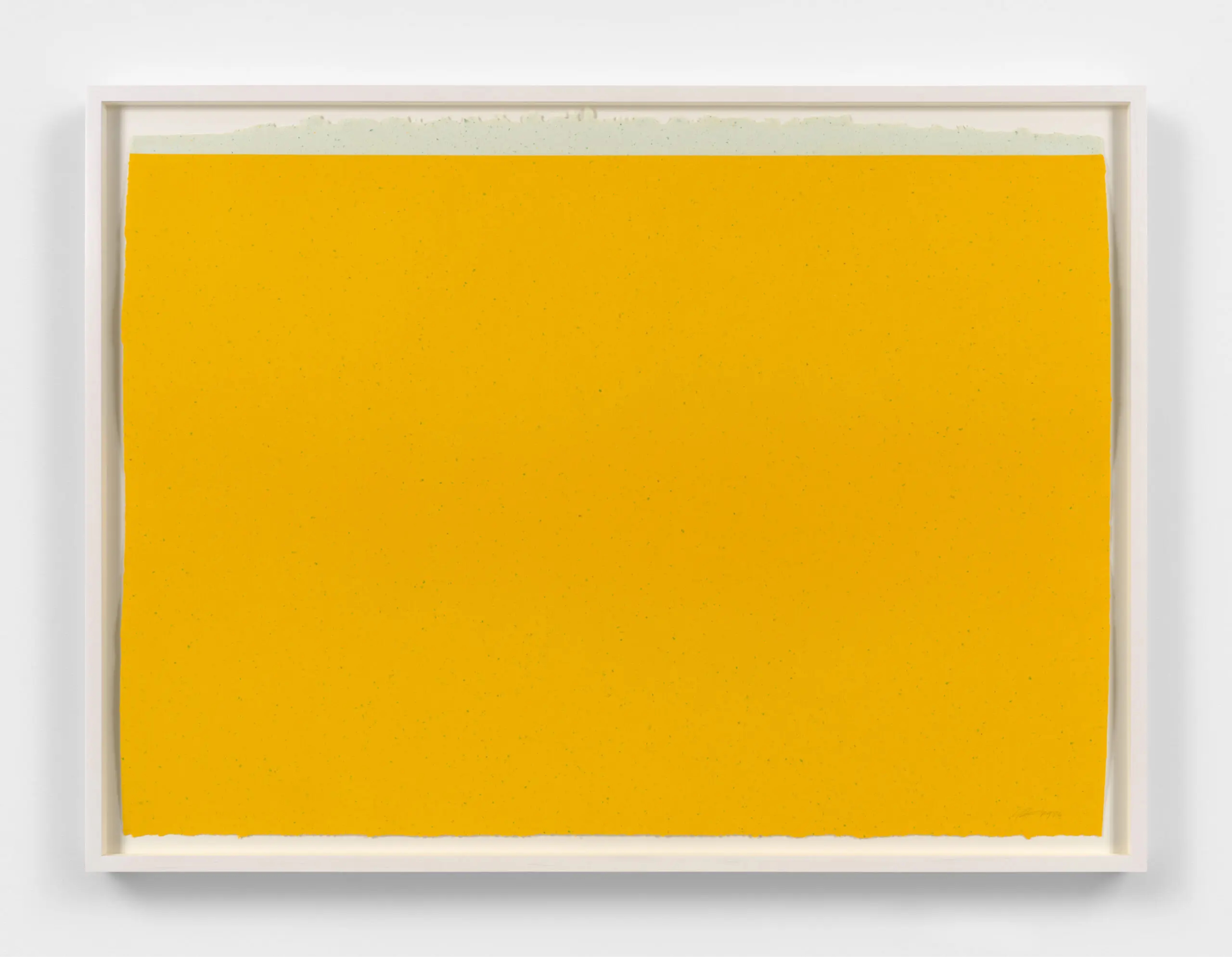
Dan Flavin
(to Don Judd, colorist) 3, 1987
For a man who worked almost exclusively with hardware store lighting components, Flavin's ability to command the most serious rooms in the art world remains one of the great stories of postwar American art. Dan Flavin was born in Jamaica, Queens, in 1933, the son of Irish Catholic parents whose household was shaped by religious devotion and a certain outer borough pragmatism. He spent time studying art history at the New School for Social Research and then at Columbia University in the mid to late 1950s, developing a deep relationship with art history and theory before he ever committed to making work. The young Flavin was a voracious reader and a correspondent, someone who thought carefully about what art could mean and what it owed to the traditions behind it.
That intellectual seriousness would never leave him, and it explains why even his most reductive gestures carry such conceptual weight. By the early 1960s, Flavin had begun making what he called icons, small box constructions mounted on the wall with electric lights attached to their edges or surfaces. These early works showed an artist working through Abstract Expressionism and finding it insufficient, looking for something more direct and more honest about the materials of contemporary life. The decisive breakthrough came on May 25, 1963, a date Flavin himself recorded with great significance.
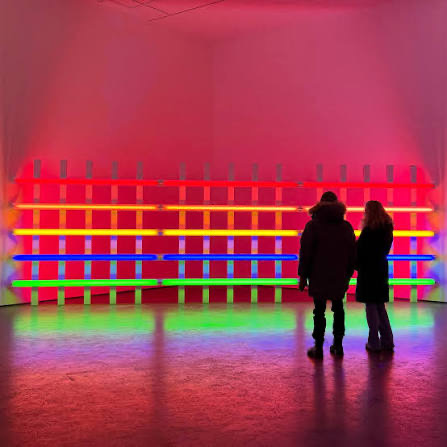
Dan Flavin
Grid, 2026
On that day he conceived of what he would call the diagonal of May 25, 1963, a single gold fluorescent tube mounted at a 45 degree angle on a wall. It was an act of radical simplicity and radical ambition at once. The diagonal announced that the light fixture itself, unchanged and unembellished, was the sculpture. From that moment forward, Flavin committed entirely to the fluorescent tube, working within the commercially available spectrum of colors and the standard lengths produced by industrial manufacturers.
“The diagonal of May 25, 1963 was my first acknowledged use of a complete fluorescent light tube.”
Dan Flavin, writings, 1965
What might sound like a severe constraint became an extraordinarily generative set of conditions. He composed installations using pink, green, blue, red, yellow, and ultraviolet lamps, discovering that the colored light mixed and bled across surfaces in ways that felt painterly and atmospheric, even emotional. His series of monuments dedicated to Vladimir Tatlin, begun in 1964 and continued over many years, honored the Russian Constructivist whose ambitions to fuse art and engineering Flavin clearly felt as a kindred spirit. These soaring vertical arrangements of cool white tubes carried a genuinely monumental feeling despite their industrial origins, which is exactly the point.
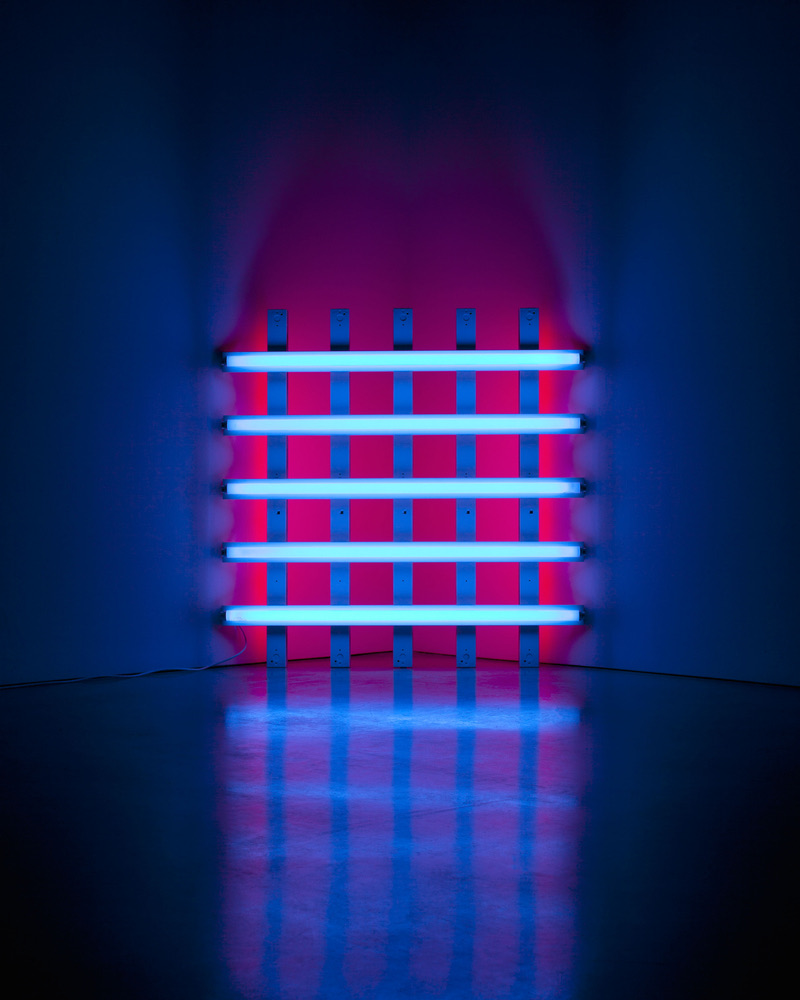
Dan Flavin
Untitled
Flavin stood at the center of the Minimalist generation, and his friendships and rivalries with Carl Andre and Donald Judd shaped the discourse of the movement. Judd in particular was a close friend and interlocutor, and the tenderness in works like the 1987 lithograph titled to Don Judd, colorist 3 speaks to the depth of that relationship and to Flavin's generous spirit toward those he admired. Yet Flavin's work was always slightly apart from strict Minimalist doctrine because of the irreducible sensory warmth his light produced. The light was not simply present as a formal element; it transformed the viewer's body, the room, and the perception of everything in it.
That environmental and experiential dimension pushed his practice toward what we might today call installation art, and his influence on that entire field is immeasurable. For collectors, Flavin's work presents a genuinely rare opportunity to engage with one of the defining practices of twentieth century art. His authorized works on paper and prints, including editions published through Gemini G.E.
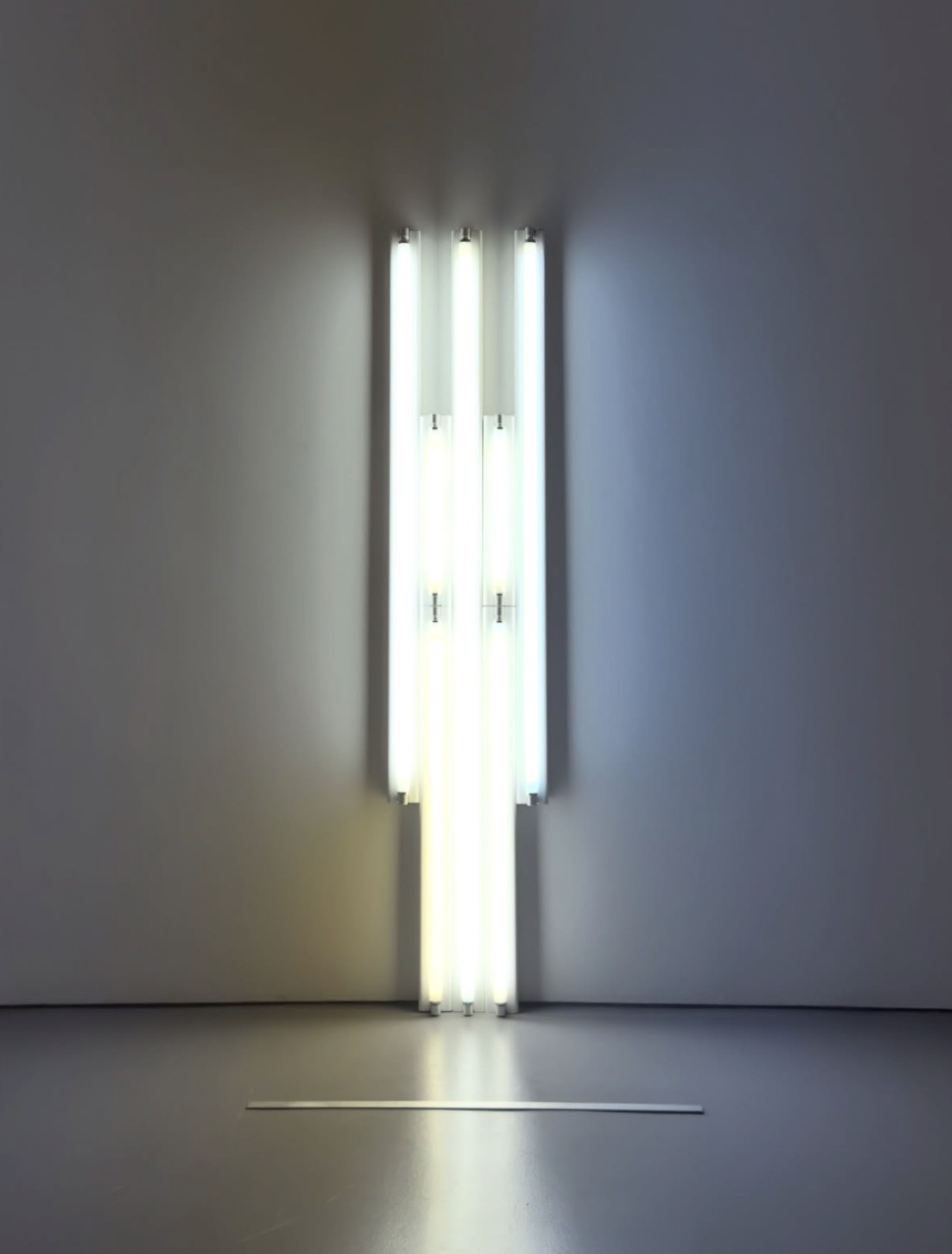
Dan Flavin
Monument for V. Tatlin
L. in Los Angeles and Castelli Graphics in New York, offer points of entry into his visual language and have long been prized by serious collections. The estate, overseen through the Dia Art Foundation, maintains rigorous standards for the presentation of his light works, which use standard replacement tubes available today, making the physical upkeep of these sculptures remarkably manageable relative to many other media. At auction, significant Flavin installations and rare works on paper have achieved results well into the seven figures, and the sustained institutional support for his work has kept the secondary market stable and serious.
Collectors drawn to Carl Andre's material precision, Robert Irwin's perceptual investigations, or James Turrell's immersive light environments will find in Flavin an essential and foundational voice. Flavin's legacy today is that of an artist who permanently expanded the definition of what sculpture could be and where it could live. He demonstrated that beauty was not the exclusive property of rare or precious materials, that a tube of fluorescent light costing a few dollars could hold as much meaning as bronze or marble, if the artist's thinking was rigorous and the intention was true. His dedications, those tender parenthetical inscriptions to friends, mentors, and fellow artists that accompanied so many works throughout his career, remind us that beneath the cool geometry was a deeply human and connected sensibility.
When the Dia Beacon complex opened in 2003, Flavin's corridors and room installations were among its most celebrated features, drawing visitors into a sustained experience of color and space that still stops people cold. He died in 1996, just days after attending the opening of his retrospective at the National Gallery of Art in Washington, a quietly perfect final chapter for an artist who had given his entire working life to making light matter.
Explore books about Dan Flavin