Dan Colen
Dan Colen Finds Beauty in Everything
Artist Spotlight · The Collection Editorial
There is a particular kind of attention that Dan Colen pays to the world, one that lingers on what others walk past. Crushed gum pressed into sidewalk cracks, flowers wilting at the edge of their own perfection, language half remembered from the back seats of cars and the walls of dive bars. It is an attention that has made him one of the most distinctive voices in American contemporary art, and one whose work continues to resonate deeply with collectors and institutions alike. In recent years, with renewed critical interest in post 2000s New York painting and a broader reassessment of artists who came of age in the orbit of the Lower East Side scene, Colen's practice feels not only vital but prescient.
Dan Colen
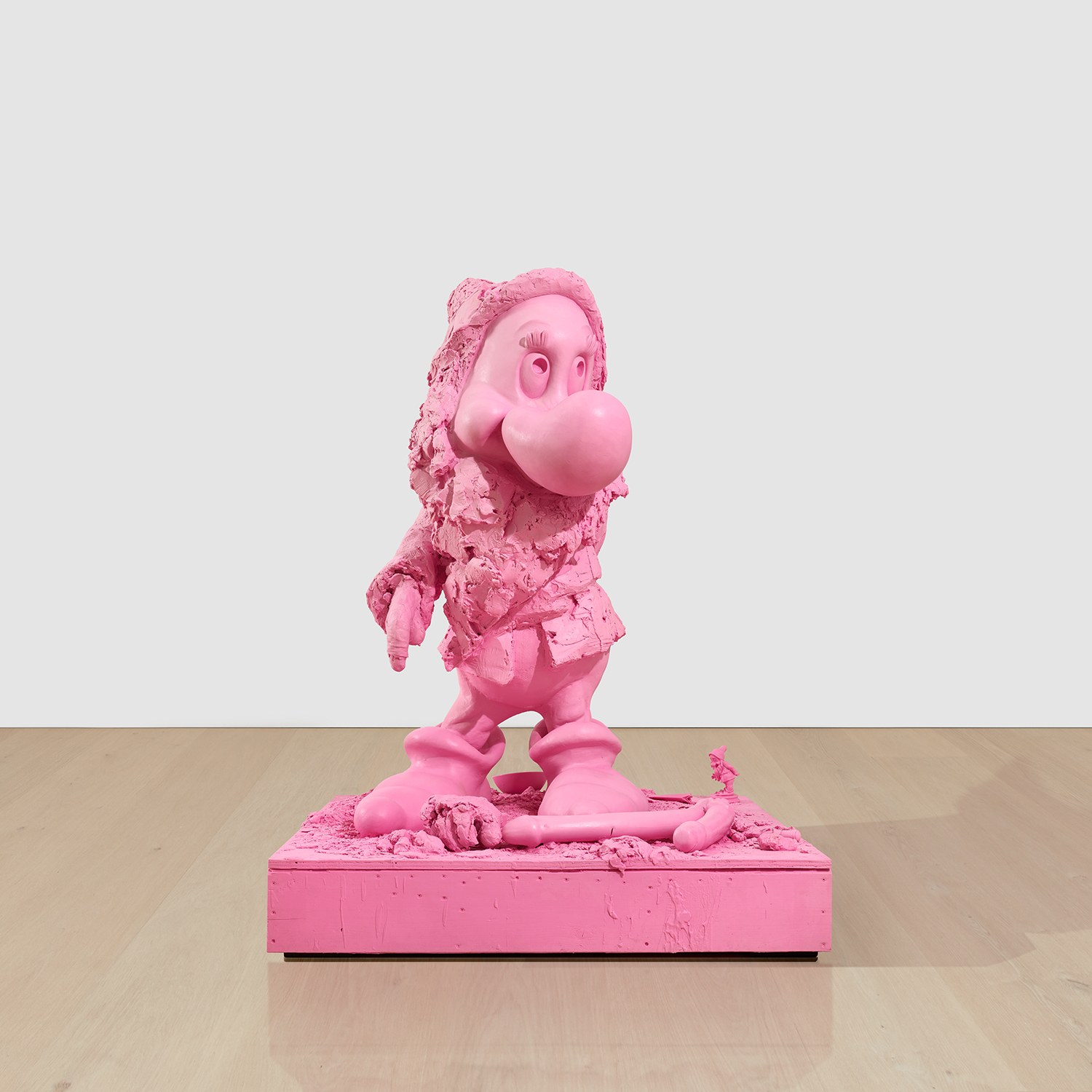
Mother (Well), 2018
Born in 1979, Dan Colen grew up in New Jersey before finding his way to New York, where the city's street level poetry became the primary language of his work. He studied at the Rhode Island School of Design, one of the most creatively rigorous art schools in the United States, graduating in 2001. Those formative years placed him in a rich conversation with peers who shared his fascination with American vernacular culture, suburban memory, and the textures of everyday life that fine art had long considered beneath its notice. The friendships and artistic dialogues he formed during this period would come to shape not only his aesthetic but the entire social fabric of a generation of New York artists.
Colen arrived in New York at a moment of tremendous creative ferment. He became closely associated with the artist Dash Snow and the broader downtown scene of the early 2000s, a loose and energetic community whose work drew on graffiti, punk, hip hop, and the raw materials of city life. This was not a group defined by a single manifesto but by a shared appetite for the authentic, the abject, and the beautiful all at once. Colen's work absorbed these influences and transformed them into something singular, moving between painting, sculpture, and installation with an ease that reflected genuine curiosity rather than strategic repositioning.
Dan Colen
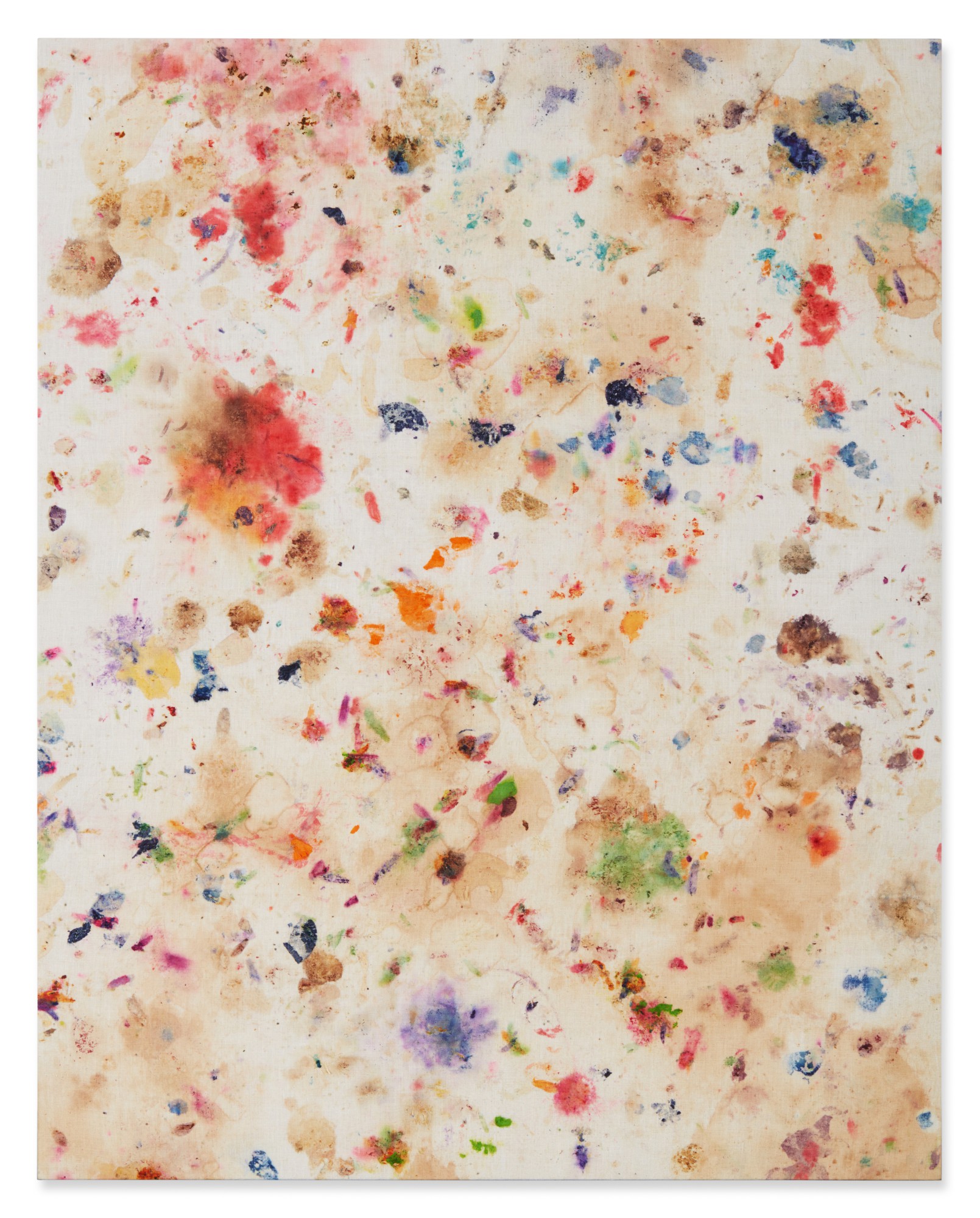
Everybody Gonna Die, 2014
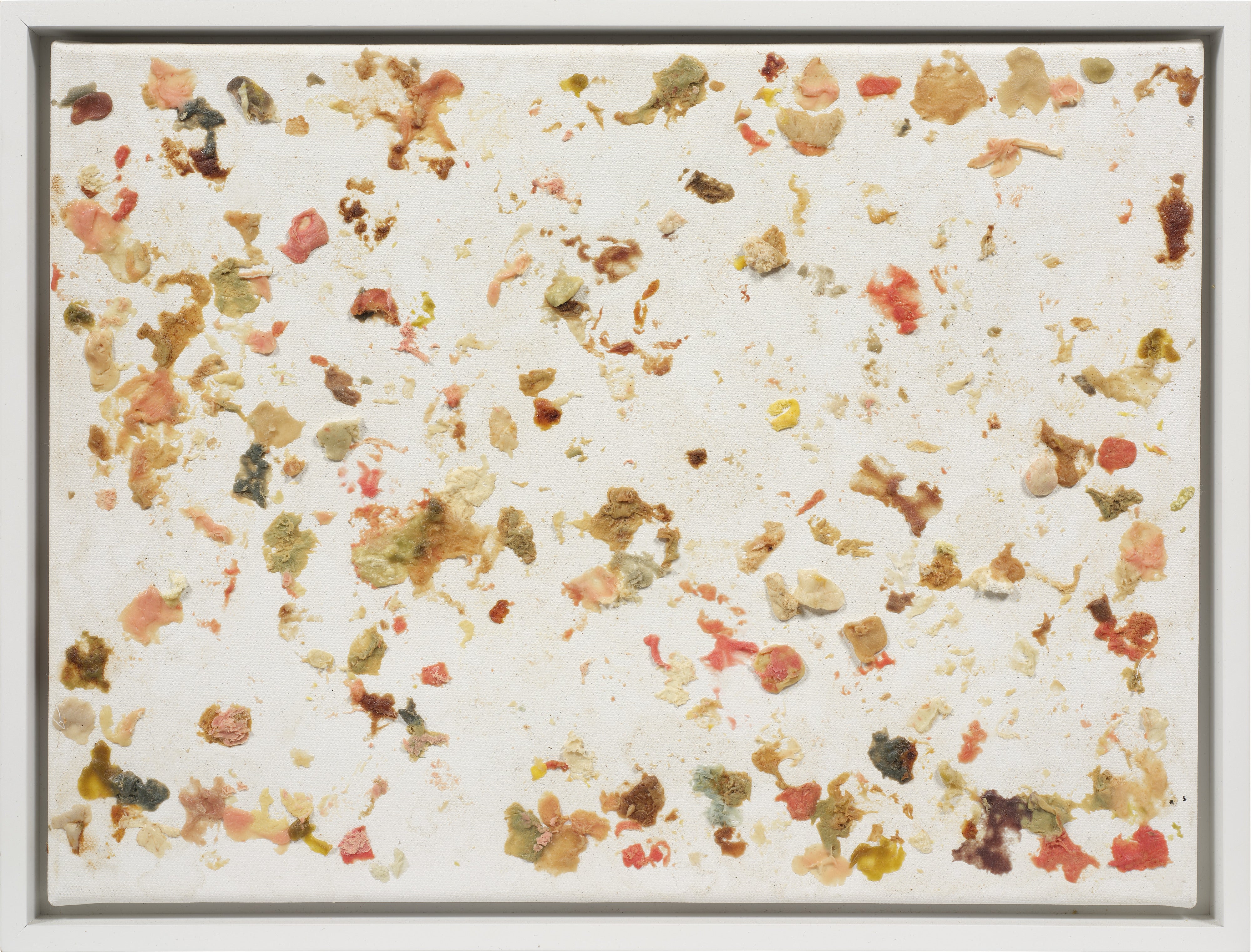
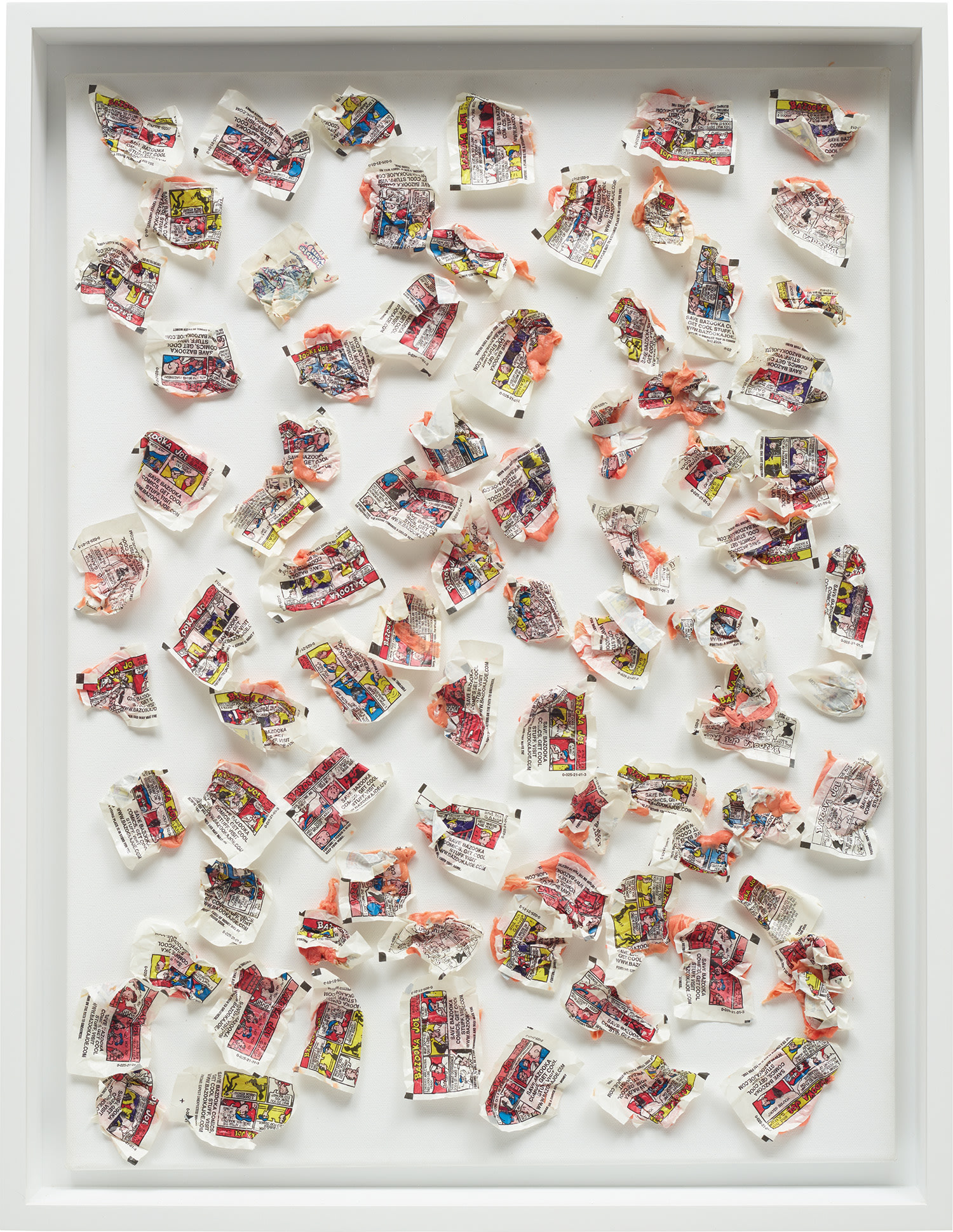
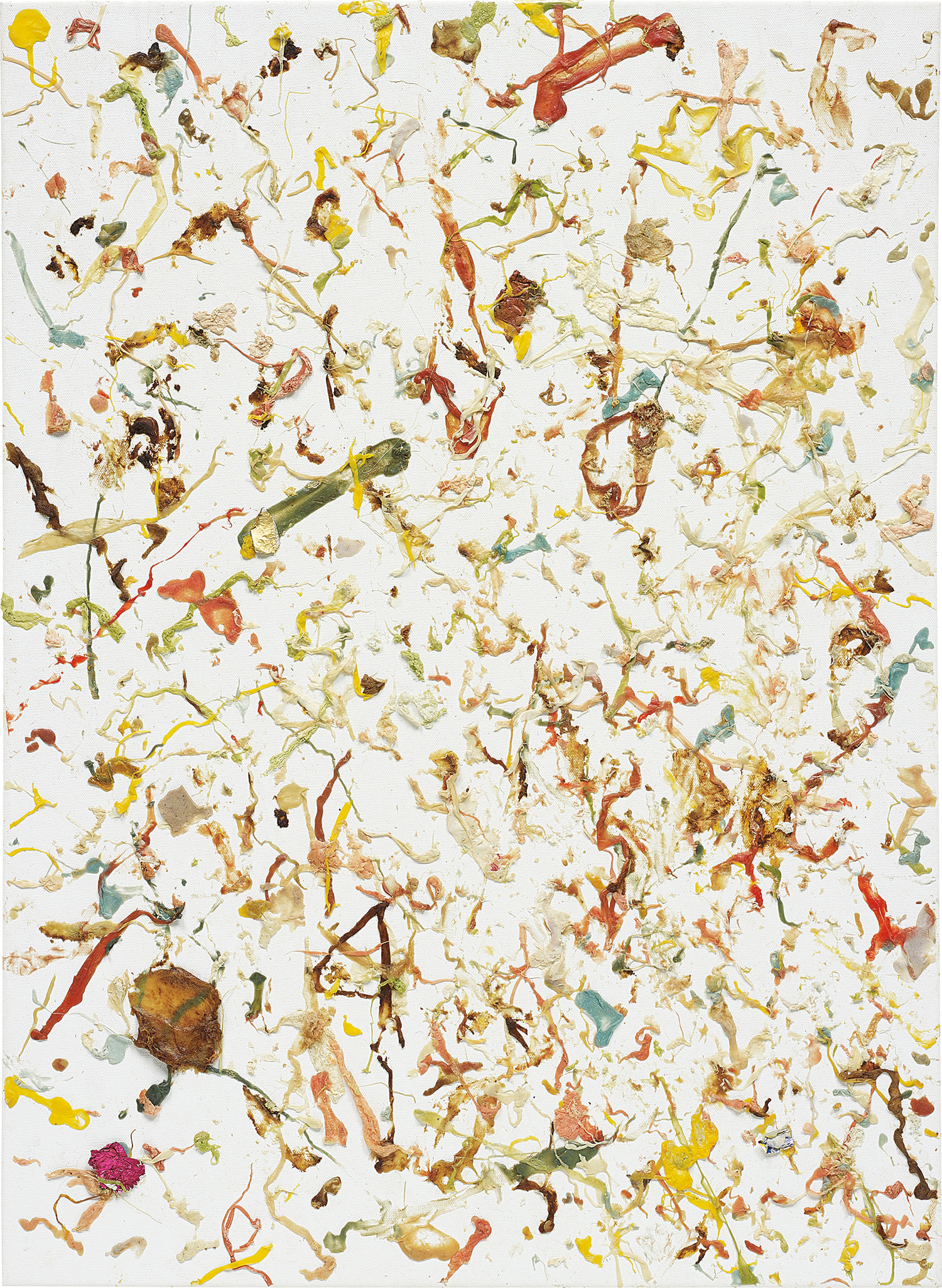
His early exhibitions in New York drew significant attention for their combination of craft and conceptual daring. The chewing gum paintings stand among the most immediately recognizable works in Colen's body of work, and they repay close attention. Works such as One Potato, Two Potato, Three Potato, 4 from 2009, made with chewing gum and colored foil on canvas, and Last in Line from 2010 transform an entirely humble and disposable material into something that shimmers with unexpected visual complexity. The surfaces of these paintings carry an almost geological quality, layer upon layer of a substance associated with adolescence and boredom given new dignity through the artist's patient accumulation.
They are funny and melancholy in equal measure, a combination that Colen navigates with rare assurance. These works ask what it means to make something lasting out of something designed to be thrown away, a question that sits at the heart of his entire practice. The flower works open a different emotional register. Everybody Gonna Die from 2014 uses actual flowers pressed or arranged on canvas, their organic beauty preserved and at the same time arrested in a moment just before decay.
Dan Colen
I can go steady with any girl I please, 2008
There is something almost devotional about these pieces, reminiscent of Dutch vanitas painting in their meditation on transience, yet thoroughly contemporary in their directness. Mother (Well) from 2018, rendered in oil on canvas, shows a more recent maturation of his painterly ambitions, a work that carries the weight of personal history alongside formal confidence. His language across media, whether in works like OH in enamel on canvas or the layered Netting in mixed media, consistently finds ways to locate the sacred in the discarded and the lyrical in the overlooked. Colen's exhibition history reflects the genuine esteem in which the art world holds his practice.
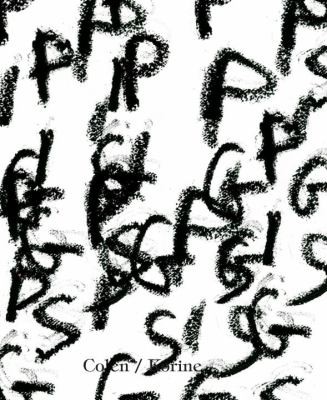
He has shown at the New Museum in New York and the Brant Foundation, institutions that have been instrumental in championing ambitious contemporary American art. The Brant Foundation in particular has long served as a gathering point for work that defined a certain strain of early 21st century American sensibility, and Colen's place within that context speaks to how seriously his work has been taken by collectors and curators of discernment. His titles alone, from I Can Go Steady with Any Girl I Please to Cocksuckers, Blews, Mews, Pews, and Stews, announce an artist equally at home with art history and with the vivid, unedited texture of American speech. For collectors, Colen's work offers something genuinely rare: it operates simultaneously as formal achievement and cultural document.
Dan Colen
One Potato, Two Potato, Three Potato, 4 ..., 2009
The chewing gum paintings and flower works are visually arresting objects that hold their own in any context, while carrying layers of meaning that deepen over time. His mixed media works in particular reward repeated looking, and their materiality ensures that no two encounters with them are quite the same. Collectors drawn to artists who sit at the intersection of conceptual rigor and sensory pleasure, artists such as Terence Koh, assume Rhoades, or Nate Lowman, artists who share Colen's downtown New York formation and his appetite for the vernacular, will find in his work a practice of comparable depth and staying power. The secondary market for his work has demonstrated consistent interest, and the range of his output means there are entry points for collectors at multiple levels of engagement.
What makes Dan Colen matter today, beyond the quality of individual works, is the particular kind of faith his practice embodies. It is a faith that beauty is not located only in sanctioned places, that the residue of daily American life carries meaning worth spending years extracting and honoring. In a cultural moment that continues to wrestle with questions of value, authenticity, and what gets preserved, his insistence on the overlooked and the ephemeral feels more relevant than ever. He is an artist whose work will continue to reward the collectors and institutions wise enough to live with it.
Explore books about Dan Colen