Damián Ortega
Damián Ortega Builds Worlds From Fragments
Artist Spotlight · The Collection Editorial
“The object is a pretext to talk about something else. It is a tool to think with.”
Damián Ortega
When the Tate Modern presented Damián Ortega's work to London audiences, the reception confirmed what Mexico City had long understood: here was an artist capable of making the familiar feel entirely new. Ortega's ability to take the objects of daily life, the tools, the vehicles, the raw materials that shape economies and neighborhoods, and suspend them in states of beautiful disintegration has earned him a place among the most compelling sculptors working anywhere in the world today. His installations do not simply occupy space; they reorganize the way a viewer thinks about the forces that organize society itself. Ortega was born in Mexico City in 1967, and the city's layered, contradictory energy shaped him profoundly.
Damián Ortega
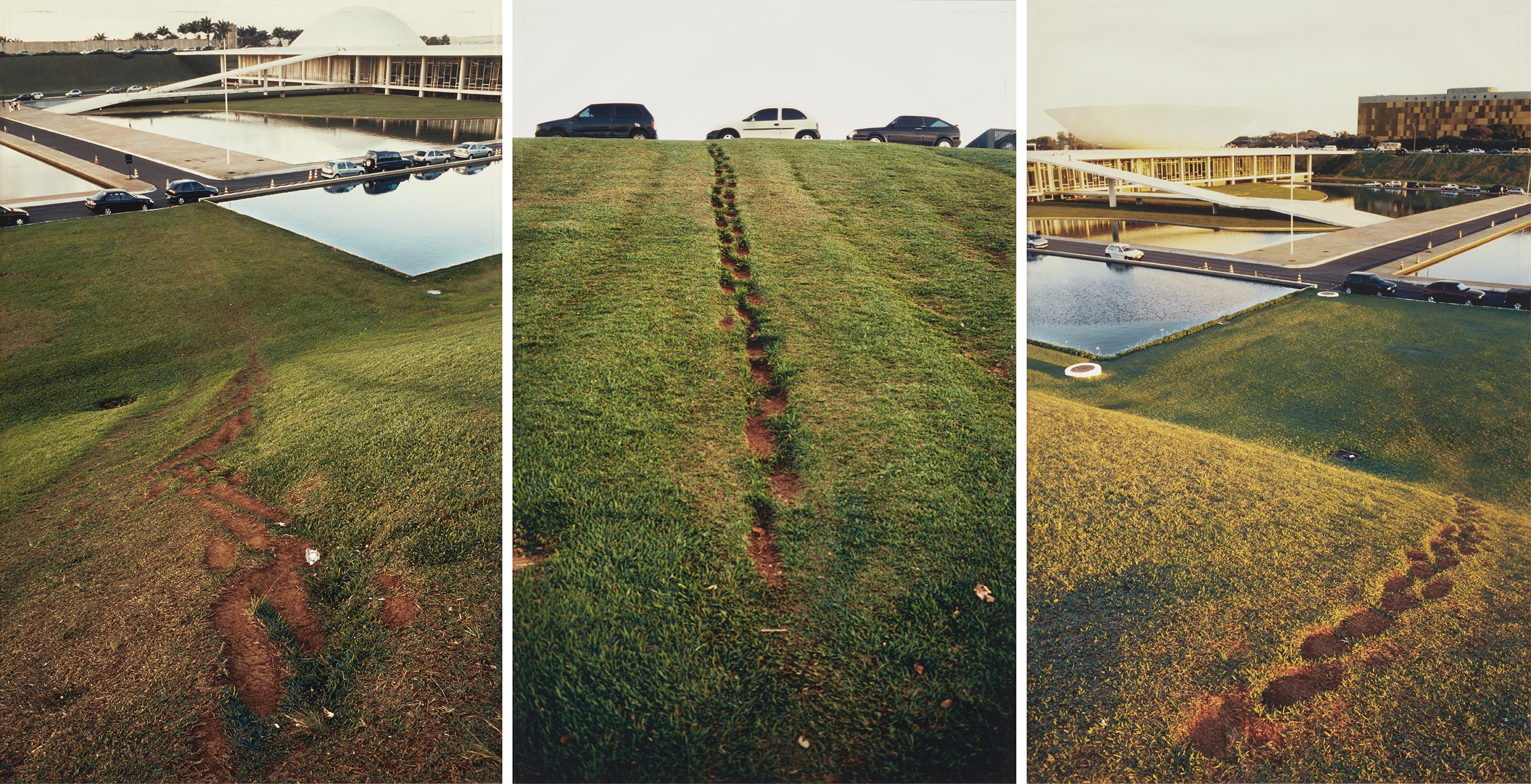
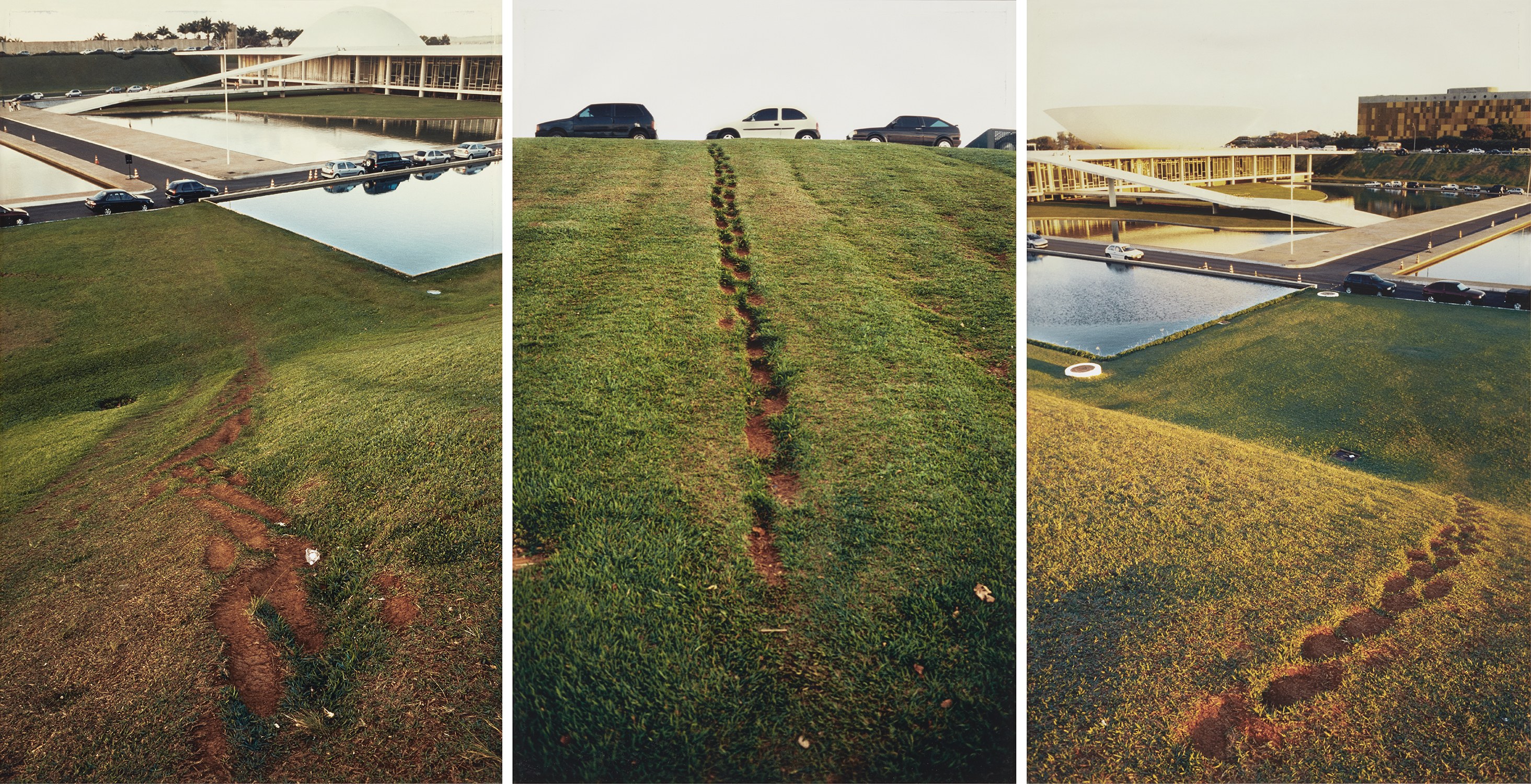
Brasilia
Before he was a celebrated artist, he was a political cartoonist, contributing to the influential Mexican newspaper La Jornada during a period of intense social and political ferment in the late 1980s and early 1990s. That background gave him a precision of thought and an instinct for economy, the understanding that a single image, arranged with intelligence, can carry the weight of an entire argument. When he transitioned fully into visual art, he brought that cartoonist's eye with him, a gift for distillation that sets his sculpture apart from artists who rely on scale or spectacle alone. His formation was also shaped by his connection to the artist Gabriel Orozco, a figure of enormous importance in Mexican contemporary art and a genuine international force.
Orozco's influence on a generation of Mexican artists in the 1990s cannot be overstated, and Ortega absorbed the lesson that conceptual rigor and sensory pleasure are not opposites. Through the 1990s and into the early 2000s, Ortega developed a practice rooted in what might be called productive destruction: taking apart systems, whether mechanical, economic, or architectural, to reveal the logic hidden inside them. The workshop, the factory floor, and the construction site became as important to his thinking as any museum or gallery. The work that announced Ortega to the world arrived in 2002, when he created Cosmic Thing for documenta 11 in Kassel, Germany.
Damián Ortega
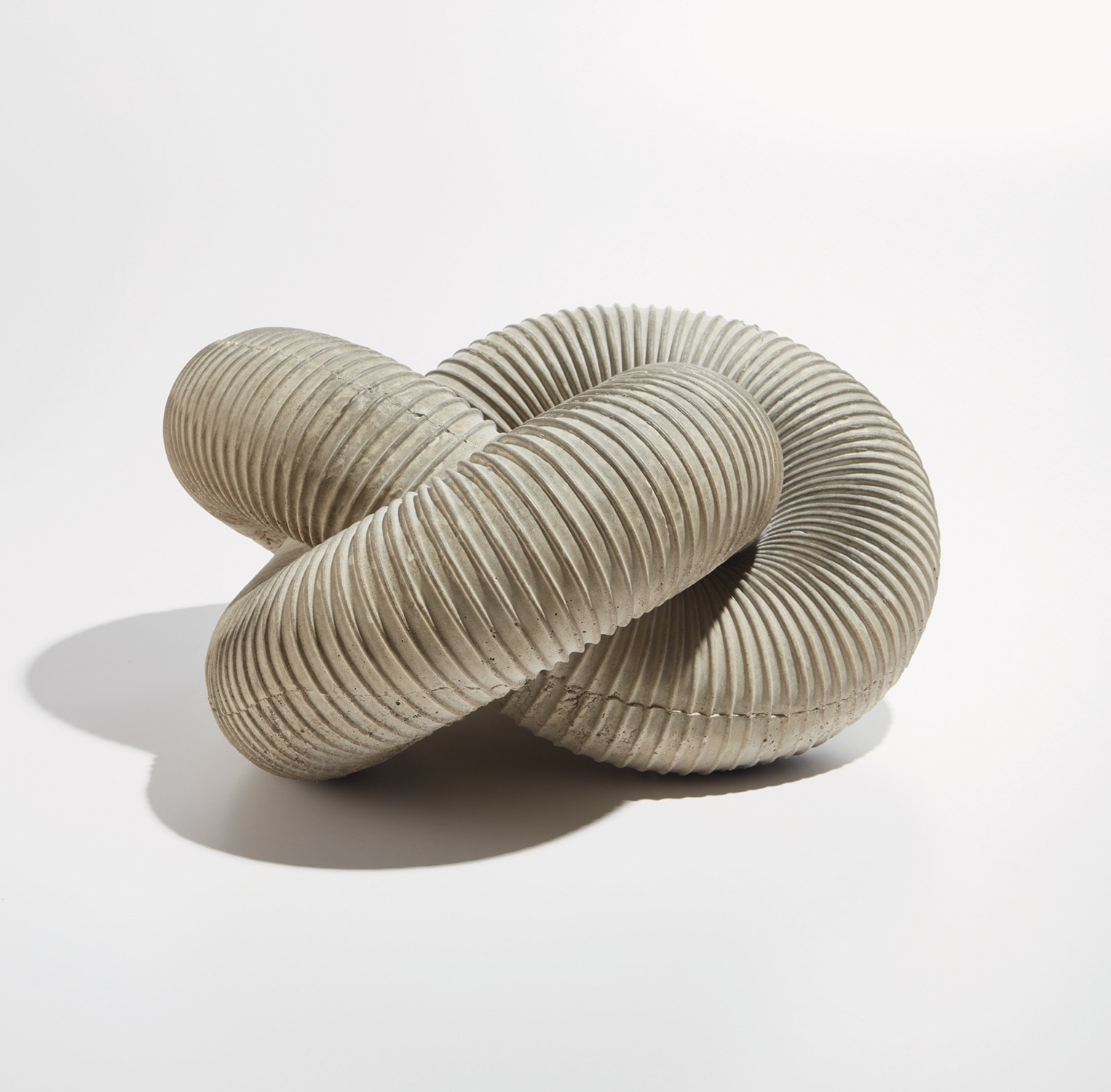
Highway, 2009
The piece is, at its simplest description, a disassembled Volkswagen Beetle, every component separated from every other and suspended from the ceiling of the exhibition space on fine wires, so that the entire car appears to hang in an exploded diagram, frozen mid disassembly. The choice of the Beetle was not incidental. The Volkswagen was manufactured in Mexico for decades, becoming a fixture of Mexican streets and taxi fleets, a vehicle that carried enormous cultural meaning as both a symbol of modest aspiration and of the global economic systems that shaped Mexican industrial life. By taking it apart and holding it in suspension, Ortega created something simultaneously mechanical and lyrical, a meditation on labor, on globalization, on the way objects carry histories inside them.
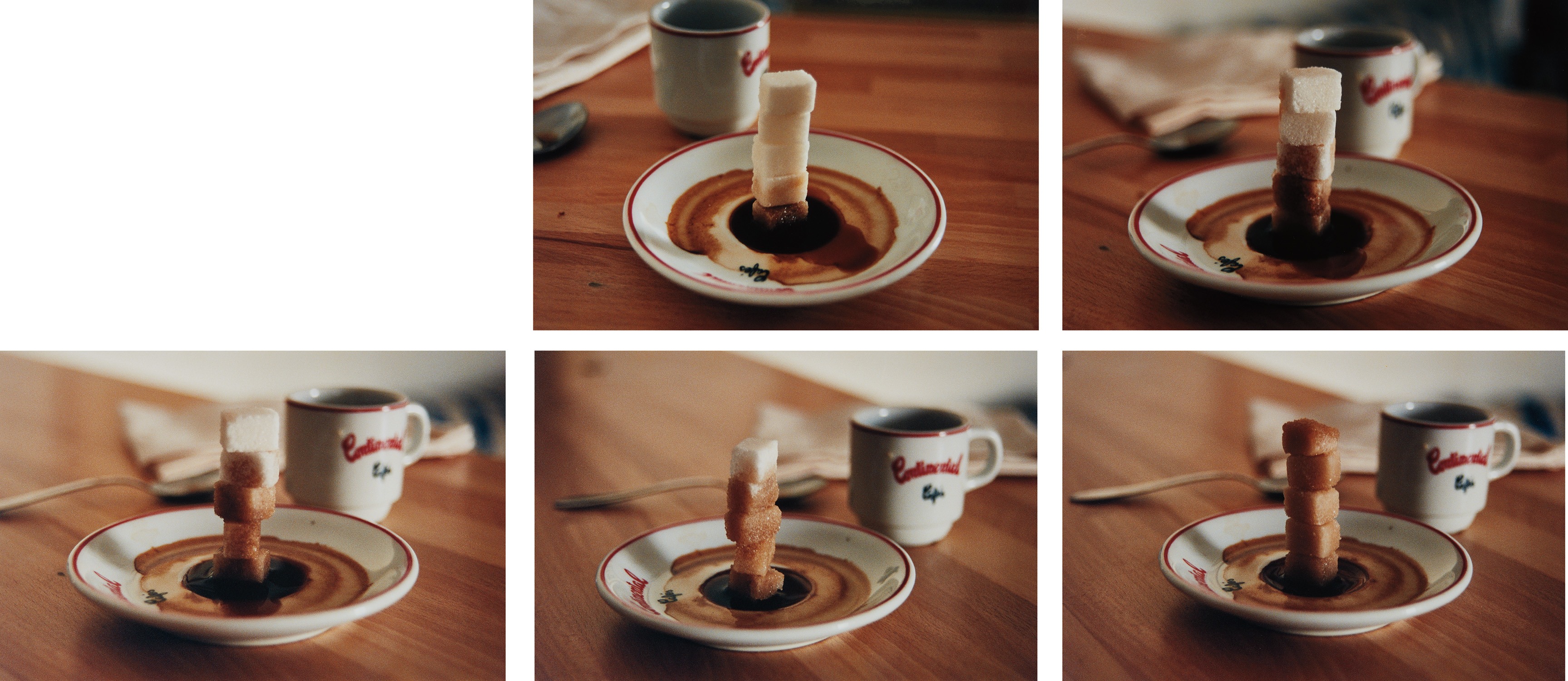
Cosmic Thing remains one of the defining sculptures of its era. The works available through The Collection reveal the full range of Ortega's intelligence. Conducción de energia (Azucar), a chromogenic print in five parts from 2005, demonstrates his interest in raw materials and the systems by which they move through economies and across borders. Sugar, like the Beetle, is never just itself in Ortega's hands; it is a carrier of colonial history, agricultural labor, and global trade.
Damián Ortega
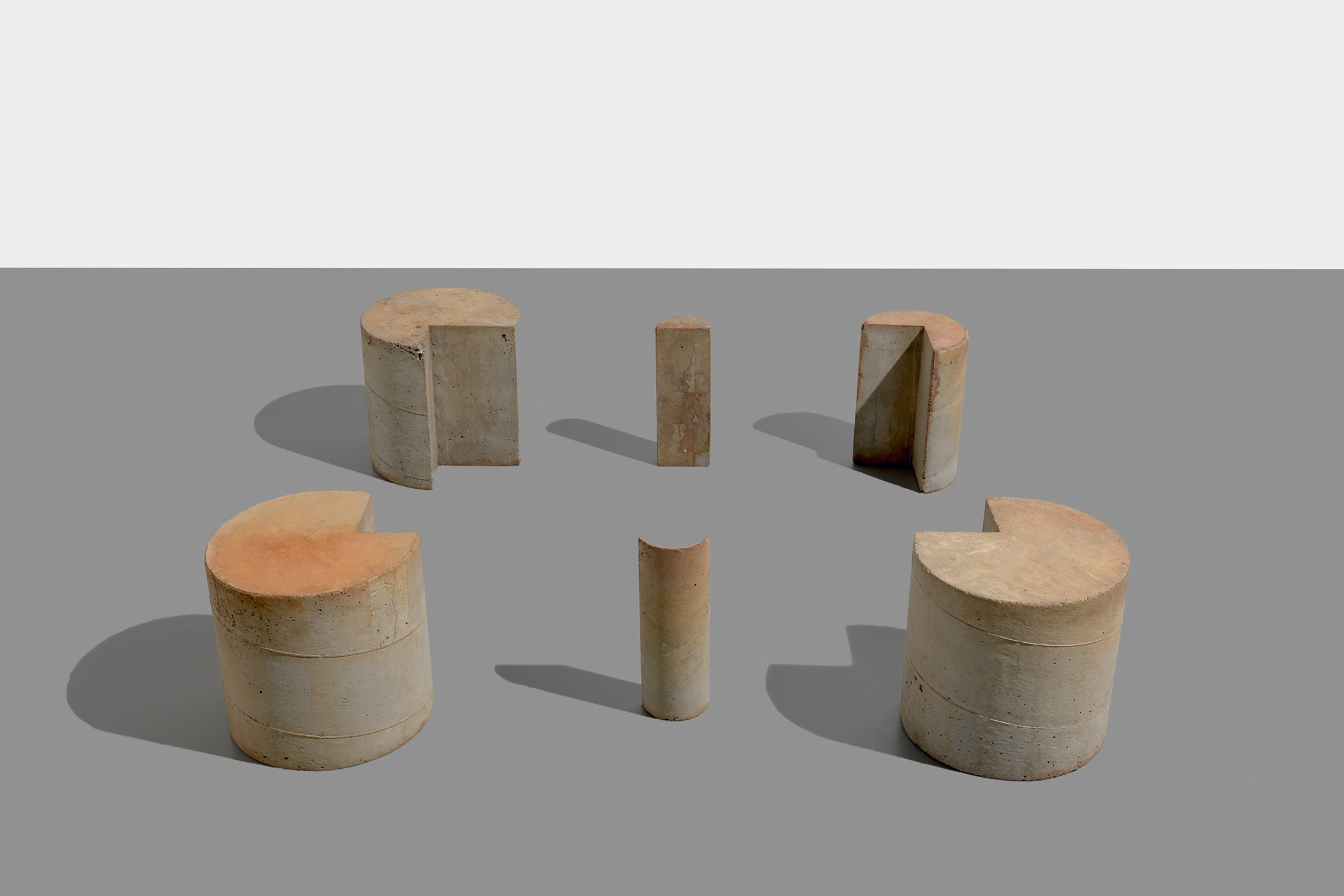
Figura 1/6, 2008
The monumental Material en reposo II (Brasil), presented as a sequence of twenty chromogenic prints, and the related work Brasilia, a chromogenic print triptych, extend this thinking toward architecture and urban planning, engaging with Brazil's modernist capital as a site where political ambition and material reality collide. Auto construcción, caja de velocidades, cast in concrete across 32 parts, takes the mechanical logic of an automotive gearbox and transforms it into something closer to archaeology, each component rendered in a material associated with permanence and infrastructure rather than the machine shop. Continuous Fragment from 2013, composed of 26 bronze bas reliefs, shows Ortega working with accumulation and seriality, the idea that meaning emerges from repetition and variation rather than from a single definitive statement. For collectors, Ortega represents a rare combination of critical prestige and genuine visual power.
His work has been exhibited not only at the Tate Modern and MoMA but also at the Institute of Contemporary Art in Boston, and his international presence is anchored by his relationship with Galerie Chantal Crousel in Paris and kurimanzutto in Mexico City, one of the most important galleries in Latin America. Collectors drawn to Arte Povera, to the work of artists like Mario Merz or Jannis Kounellis who also found poetry in industrial and everyday materials, will find Ortega's practice immediately legible and deeply rewarding. Similarly, those who admire the conceptual sculptors of the 1970s, figures like Richard Serra or the process oriented work of Barry Le Va, will recognize in Ortega a genuine heir to that tradition who has expanded it with a specifically Mexican and Latin American sensibility. What distinguishes Ortega within the broader landscape of contemporary sculpture is his refusal to let political content overwhelm aesthetic experience.
Damián Ortega
Conducción de energia (Azucar), 2005
The works operate on both levels simultaneously, and the pleasure they offer is real. Standing before an Ortega installation, a viewer is engaged intellectually, moved by the precision of the artist's thinking, and also simply arrested by beauty: the light passing through a suspended gearbox, the quiet authority of concrete forms laid out in sequence, the way a photographic series can make sugar or steel feel both monumental and intimate. This quality of double attention, critical and sensuous at once, is what serious collectors respond to, and what ensures that his work continues to grow in significance. Ortega's legacy is still being written, which is precisely why this moment is so interesting for those paying close attention.
He is an artist who emerged from one of the great crucibles of late twentieth century art, Mexico City in the years of NAFTA and political upheaval, and who has used that formation to speak to conditions that are universal. The objects he takes apart are local and specific, but the questions he asks through them, about labor, value, systems of power, and the lives of ordinary things, belong to everyone. His work in The Collection offers a genuine opportunity to engage with one of the most rigorous and rewarding practices in contemporary art today.
Explore books about Damián Ortega
Damián Ortega
Cuauhtémoc Medina
Damián Ortega: The Year of the Rabbit
Various contributors
Damián Ortega: Cosmic Thing
Museum of Modern Art
Damián Ortega: Biennale di Venezia
Mexican Pavilion
Damián Ortega: Works 1993-2010
Gabriel Orozco and others