Damian Loeb
Damian Loeb Paints the World Beautifully Unreal
Artist Spotlight · The Collection Editorial
There is a particular kind of looking that Damian Loeb demands of his viewers, a sustained, almost uncomfortable attention that begins with the certainty that you are seeing a photograph and ends with the slow, vertiginous realization that you are standing before a painting. That disorientation is not a trick. It is the entire argument. Loeb has spent more than three decades constructing one of the most technically rigorous and philosophically rich bodies of work in contemporary American painting, and the art world's appetite for his canvases shows no sign of diminishing.
Damian Loeb
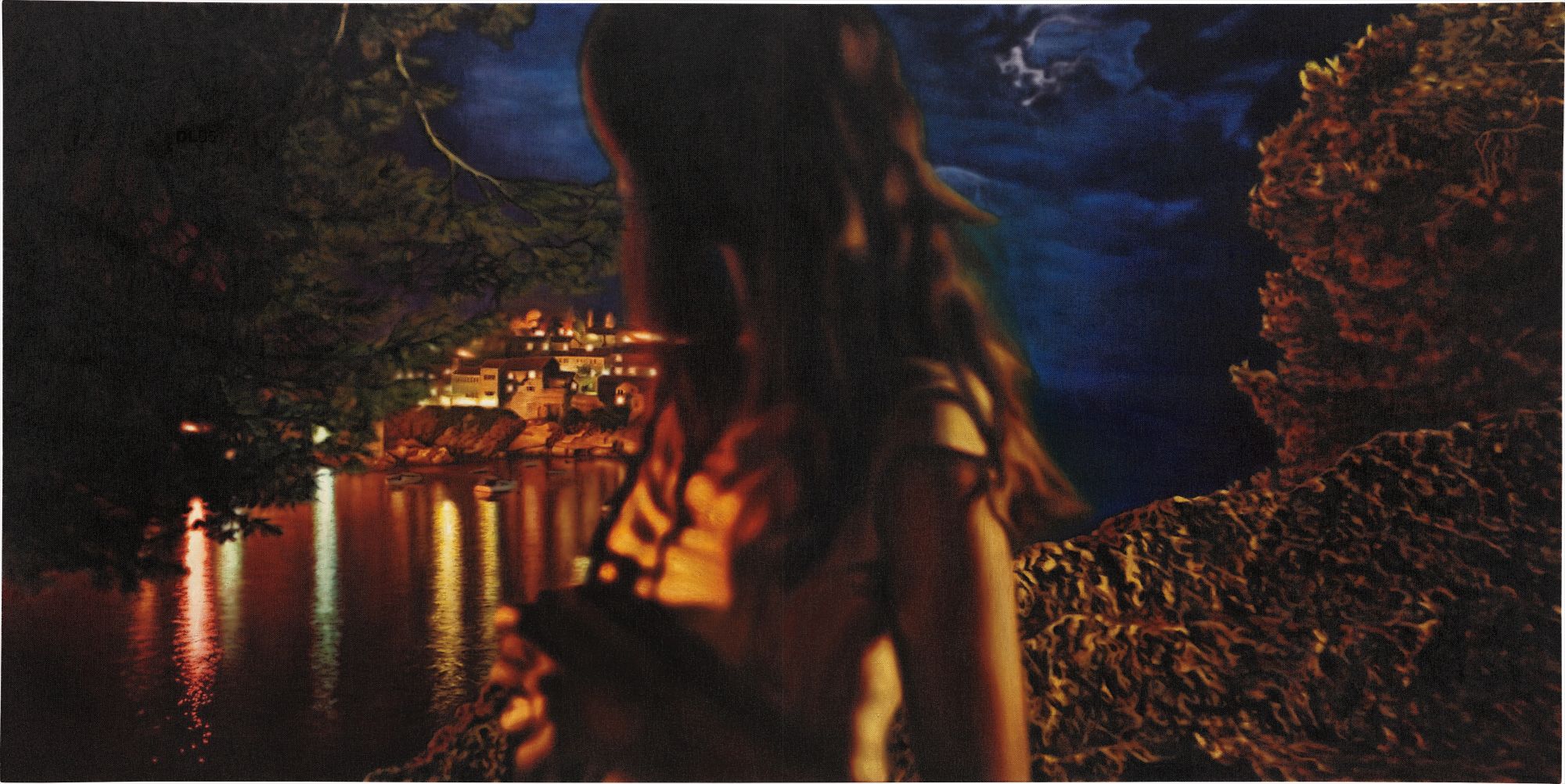
Being There
His work continues to appear in significant private collections across the United States, Europe, and Asia, and his presence on platforms dedicated to serious collecting reflects a sustained recognition that his paintings occupy a genuinely important position in the conversation about representation, mediation, and desire. Loeb was born in 1970, and came of age in a cultural moment saturated with images. Television, cinema, and the early vocabulary of advertising formed the visual landscape of his childhood, and unlike artists who would later critique that landscape from a studied distance, Loeb absorbed it with genuine fascination. That fascination became the engine of his practice.
He arrived in New York in the early 1990s, a period of extraordinary ferment in the city's art scene, when painters were wrestling seriously with what it meant to make images in a world already drowning in them. The dialogue between painting and photography was urgent, contested, and alive, and Loeb stepped directly into its center. His emergence in the New York scene of the mid to late 1990s coincided with a broader re examination of photorealism and its possibilities. Where earlier photorealists of the 1970s, artists like Chuck Close and Richard Estes, had used the camera as a kind of neutral mechanical intermediary, Loeb was interested in something more charged and more culturally specific: the cinematic image.
Damian Loeb
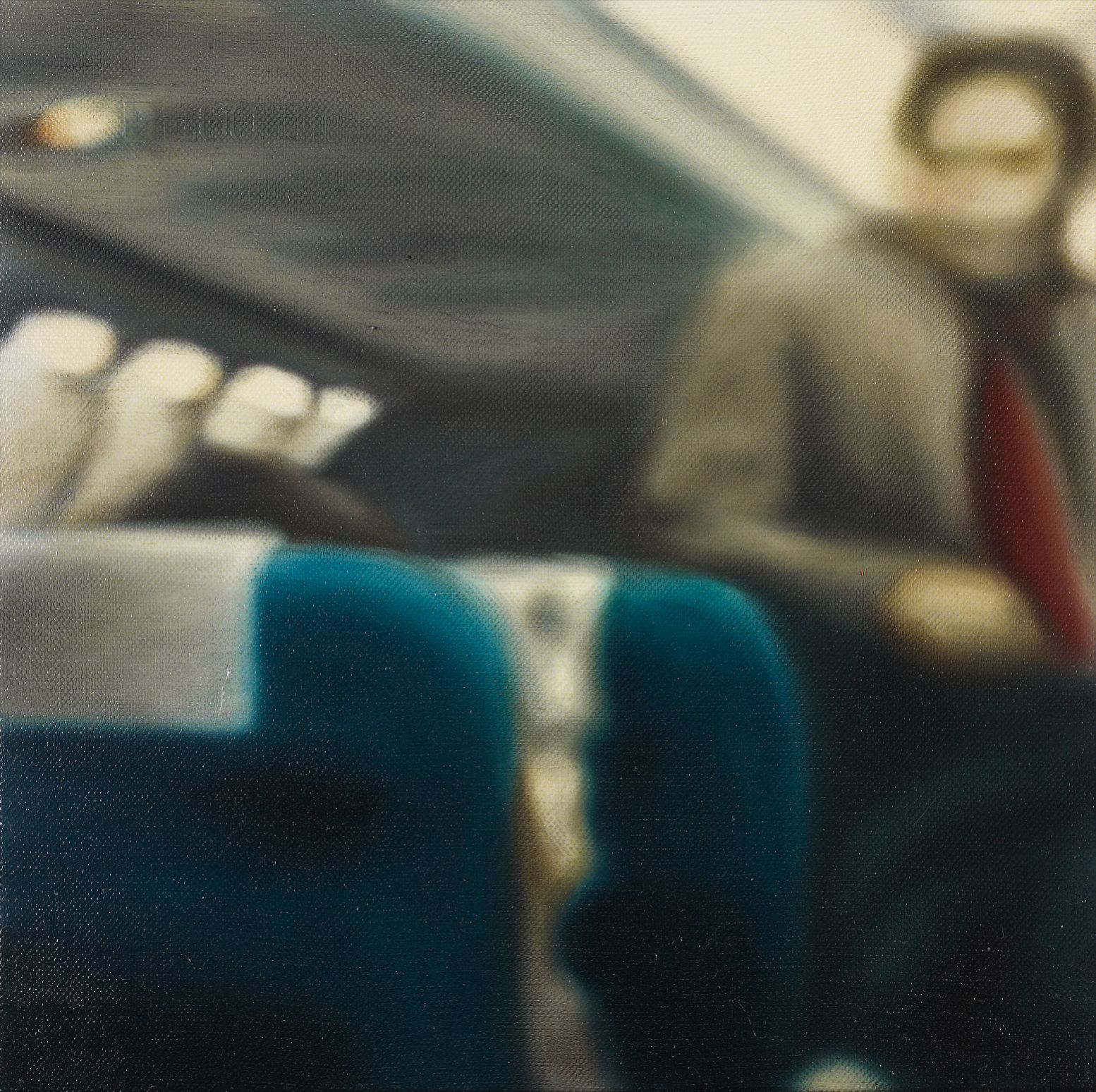
D-eyayf-no
He was drawn not simply to what photographs looked like but to what they felt like, the glamour, the tension, the particular emotional temperature of a film still or a carefully composed advertisement. His paintings do not merely replicate photographs. They replicate the experience of consuming images, the slight remove, the mediated glow. Technically, Loeb's achievement is staggering.
Working primarily in oil on linen, he builds surfaces of extraordinary luminosity, achieving depth and atmosphere that photography itself rarely manages. His scale is monumental. These are not intimate pictures. They are immersive environments that ask the body, not just the eye, to respond.
The large format is not vanity. It is precision. At the scale Loeb works, every decision about light, focus, and color temperature becomes a philosophical choice about what representation can do and what it cannot. His paintings are simultaneously celebrations of visual pleasure and quiet meditations on the constructed nature of every image we consume.
Among his most admired works are canvases like "Being There" and "D eyayf no," both executed in oil on linen, that exemplify his method at its most refined. "Being There," whose title evokes Jerzy Kosinski's novel and Hal Ashby's subsequent 1979 film, layers cultural memory directly into the act of looking. The work asks the viewer to consider not just what is depicted but what invisible archive of images and associations each viewer brings to the encounter. "D eyayf no" demonstrates his willingness to push into more abstract territory while maintaining the photographic surface that is his signature.
Together these works suggest an artist who is never content to repeat himself, who treats each canvas as an opportunity to test the limits of his own vocabulary. From a collecting perspective, Loeb represents a compelling proposition for anyone seriously engaged with the history of postwar and contemporary American painting. His work sits in a distinguished lineage that includes not only the photorealists but also painters like Eric Fischl and the Pictures Generation artists who came before him, figures such as Cindy Sherman and Richard Prince whose investigations of mediated imagery defined a critical moment in American culture. Loeb absorbs all of this context and synthesizes it into something entirely his own: painting that is genuinely beautiful without being naive, critical without being cold.
Collectors who have followed his career from its earliest New York appearances understand that his canvases reward long acquaintance. The more time you spend with a Loeb, the more you see. The market for Loeb's work reflects this depth of engagement. His paintings have been sought by collectors who also hold work by Neo Expressionist and photorealist masters, drawn by the recognition that Loeb's practice bridges those worlds with unusual intelligence.
His oils on linen, particularly works from the late 1990s and 2000s when his technique reached full maturity, are considered especially significant. Newer collectors entering the market for serious American painting would do well to study his trajectory carefully. The combination of technical mastery, conceptual seriousness, and genuine visual pleasure is rare, and the secondary market has consistently reflected the recognition that Loeb's work is not merely decorative but historically necessary. What ultimately makes Damian Loeb matter, now and for the long arc of art history, is his willingness to take beauty seriously as an intellectual position.
In an era when earnestness in painting was frequently treated with suspicion, he committed fully to the seductive surface, to the pleasure of looking, while never abandoning the underlying question of why we look and what looking does to us. His paintings are love letters to cinema and photography written with the full knowledge that those media shape us in ways we rarely examine. By slowing that experience down, by translating the flicker of the screen into the patient permanence of oil on linen, Loeb gives viewers something that neither film nor photography can provide: the time and the space to feel the full weight of the image. That is a gift, and it is one that collects beautifully.