Cyprien Gaillard
Cyprien Gaillard Finds Beauty in Beautiful Ruins
Artist Spotlight · The Collection Editorial
In the spring of 2023, visitors to the Palais de Tokyo in Paris encountered something that felt at once ancient and urgently contemporary: the work of Cyprien Gaillard, an artist who has spent more than two decades asking what it means for civilization to leave marks on the land, and what happens when those marks begin to fade. The occasion confirmed what collectors and curators have long sensed, that Gaillard occupies a singular position in the landscape of contemporary art, one that sits at the crossroads of archaeology, romanticism, and a deeply personal philosophy of time. His work does not merely document decay or transformation. It mourns, celebrates, and ultimately elevates these processes into something approaching the sublime.
Cyprien Gaillard
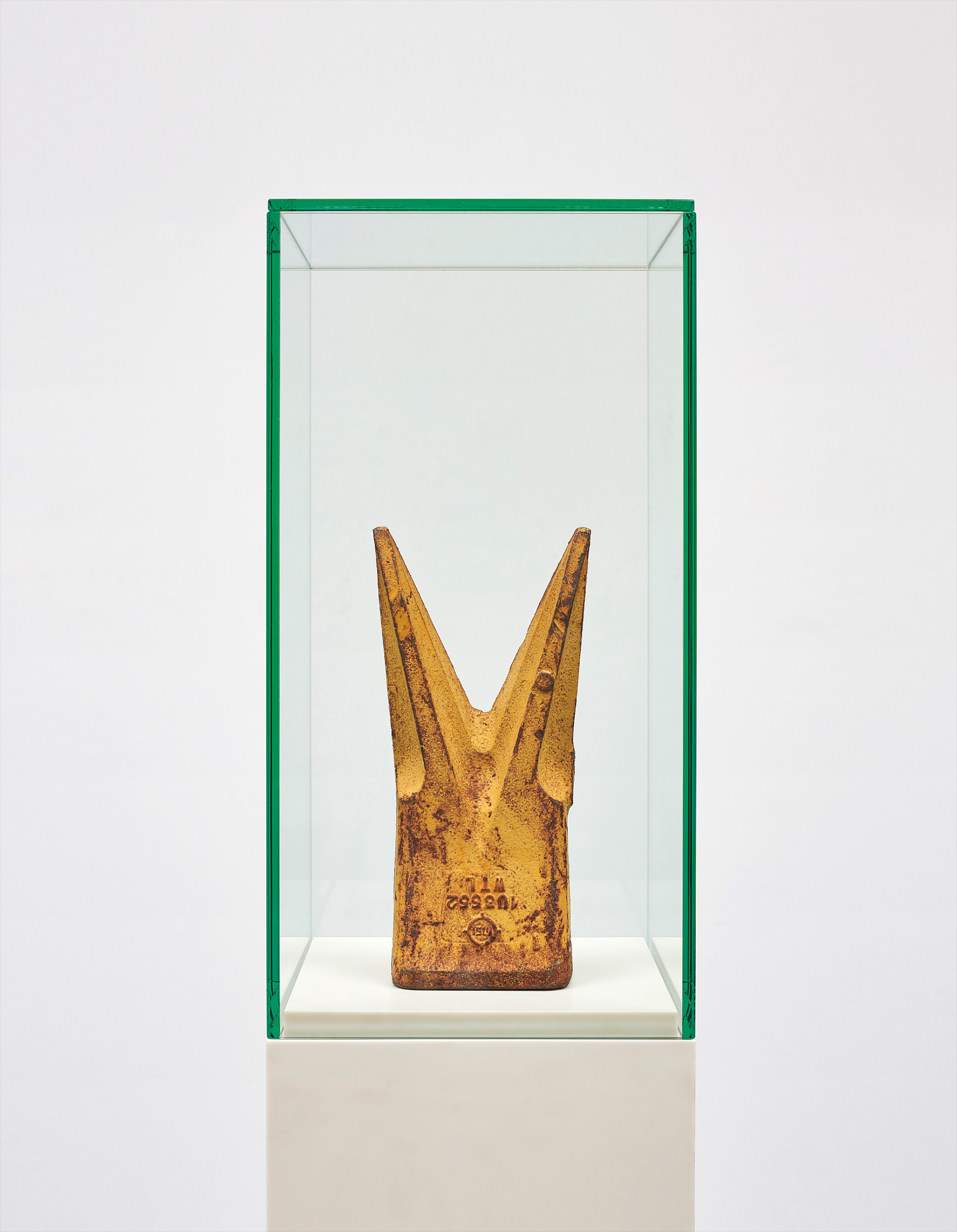
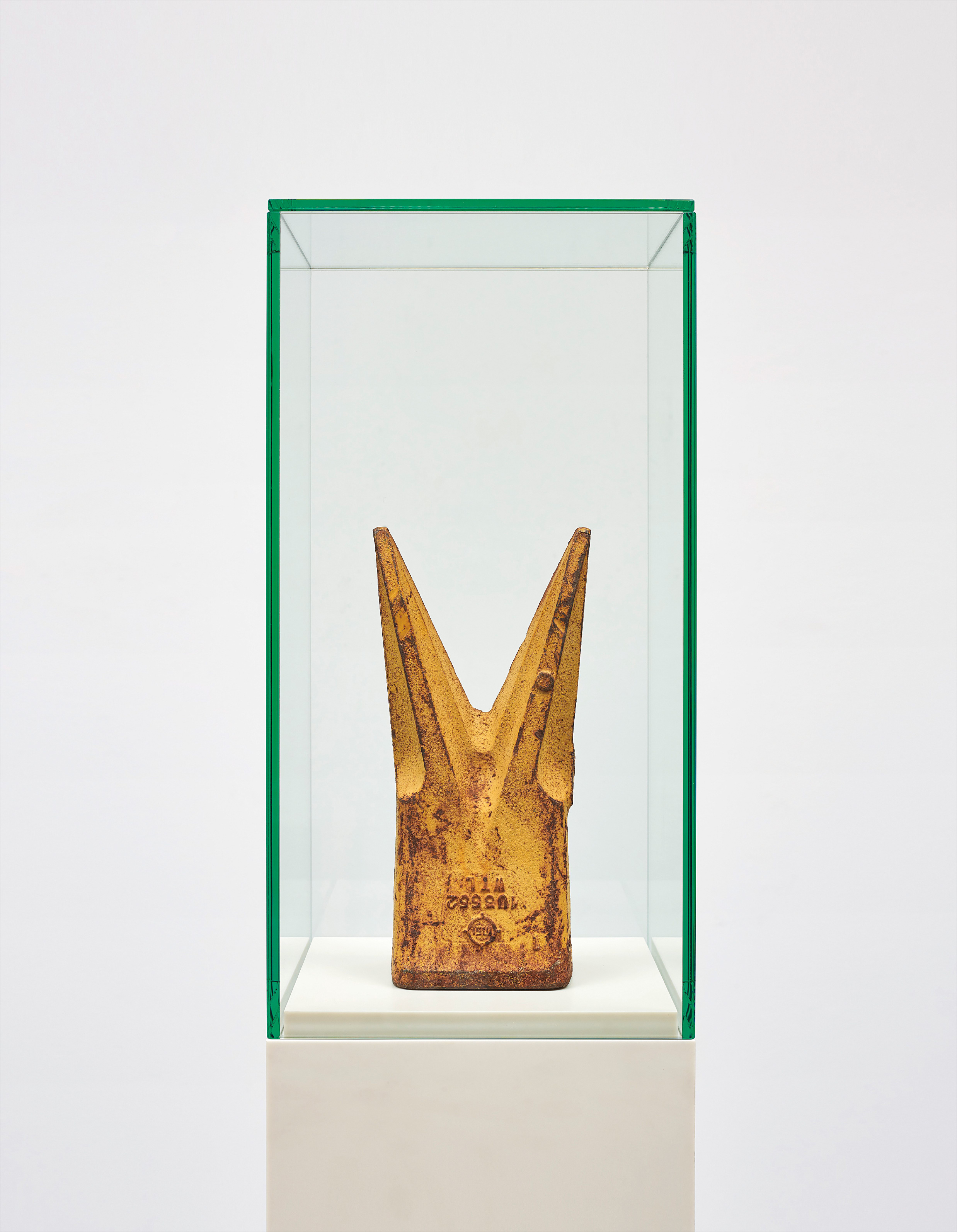
iron with glass vitrine and pedestal, 2012
Gaillard was born in Paris in 1980, and came of age during a period of intense cultural ferment in European contemporary art. He studied at the Schule für Gestaltung in Basel, Switzerland, an institution whose emphasis on conceptual rigor and material experimentation left a lasting imprint on his thinking. Basel itself, a city perched between French, German, and Swiss cultural identities, gave him an early fluency in the language of borders, both geographic and conceptual. From these formative years emerged an artist whose curiosity about place, history, and the built environment would define everything that came after.
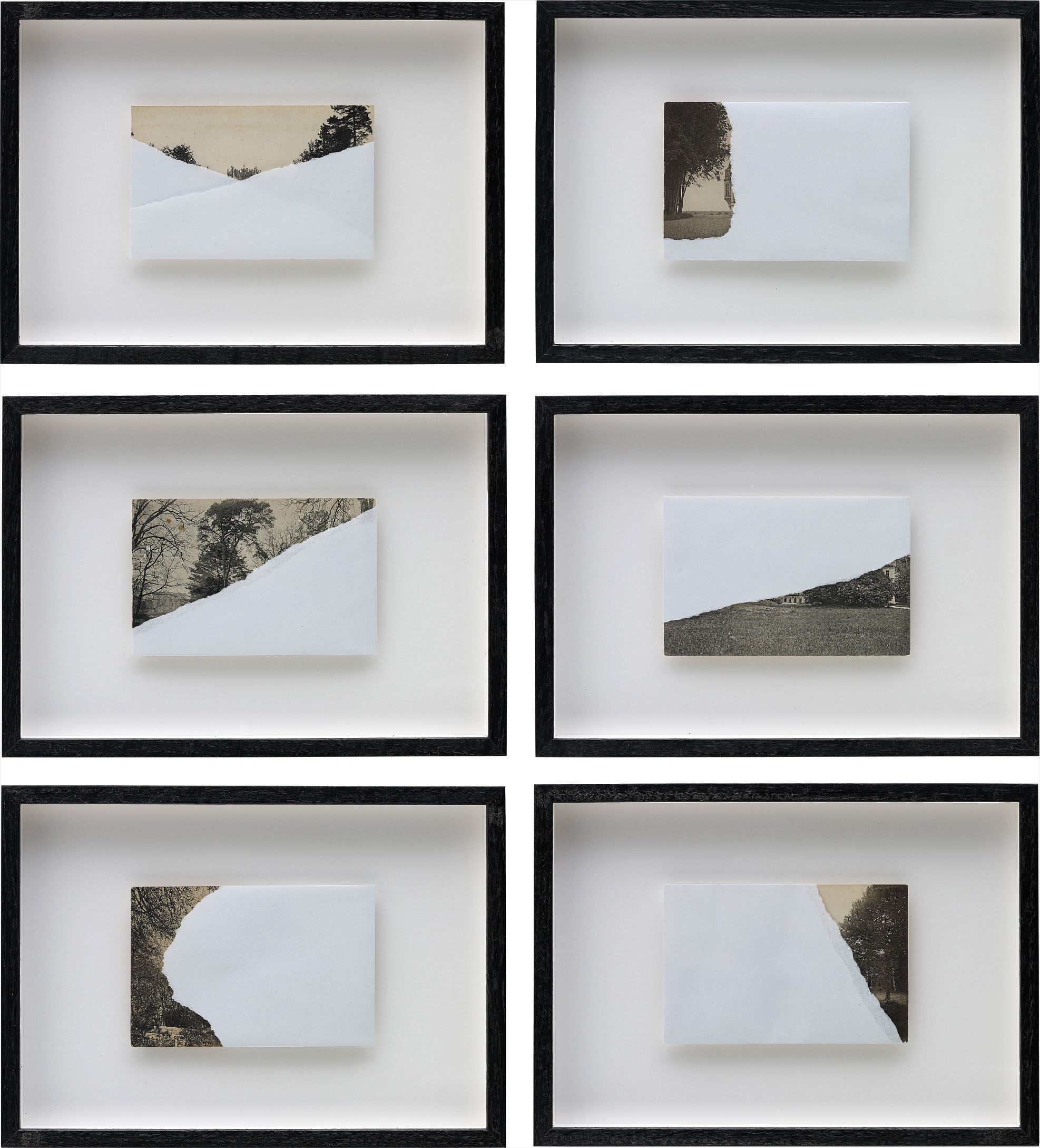
His artistic development accelerated rapidly in the mid 2000s, when he began producing work that drew on the aesthetics of the picturesque, a tradition rooted in eighteenth century European landscape painting and theory. The New Picturesque, first presented in 2007, announced a fully formed sensibility. In that work, Gaillard juxtaposed images of modernist housing estates with the romantic ruin landscapes beloved by painters like Claude Lorrain and Caspar David Friedrich. The move was audacious and genuinely poetic: by treating brutalist architecture as a kind of contemporary ruin, he invited viewers to recalibrate their sense of what is worth mourning, what is worth preserving, and what constitutes beauty in the first place.
Cyprien Gaillard
The New Picturesque, 2007
The critical response was immediate and enthusiastic, and the work brought him to the attention of institutions and collectors across Europe and the United States. Over the following years, Gaillard expanded his practice to encompass photography, painting, sculpture, video, and large scale installation. His Polaroid works, including pieces from the Fields of Rest series begun around 2010, demonstrate a particular tenderness. Shot on analogue film and presented in aluminum frames the artist designed himself, these images capture sites of layered human meaning: cemeteries, forgotten parks, the outskirts of cities where nature and infrastructure negotiate an uneasy coexistence.
The choice of Polaroid is not merely nostalgic. It insists on the singularity of each encounter, each frame a fixed moment that cannot be reproduced or duplicated, only experienced. Queen City, a 2012 work combining beer label imagery with acrylic paint and pastel on archival press photograph, shows a different register of the same sensibility, one attuned to vernacular culture and the strange dignity found in everyday American urban life. His sculptural works are equally compelling.
Cyprien Gaillard
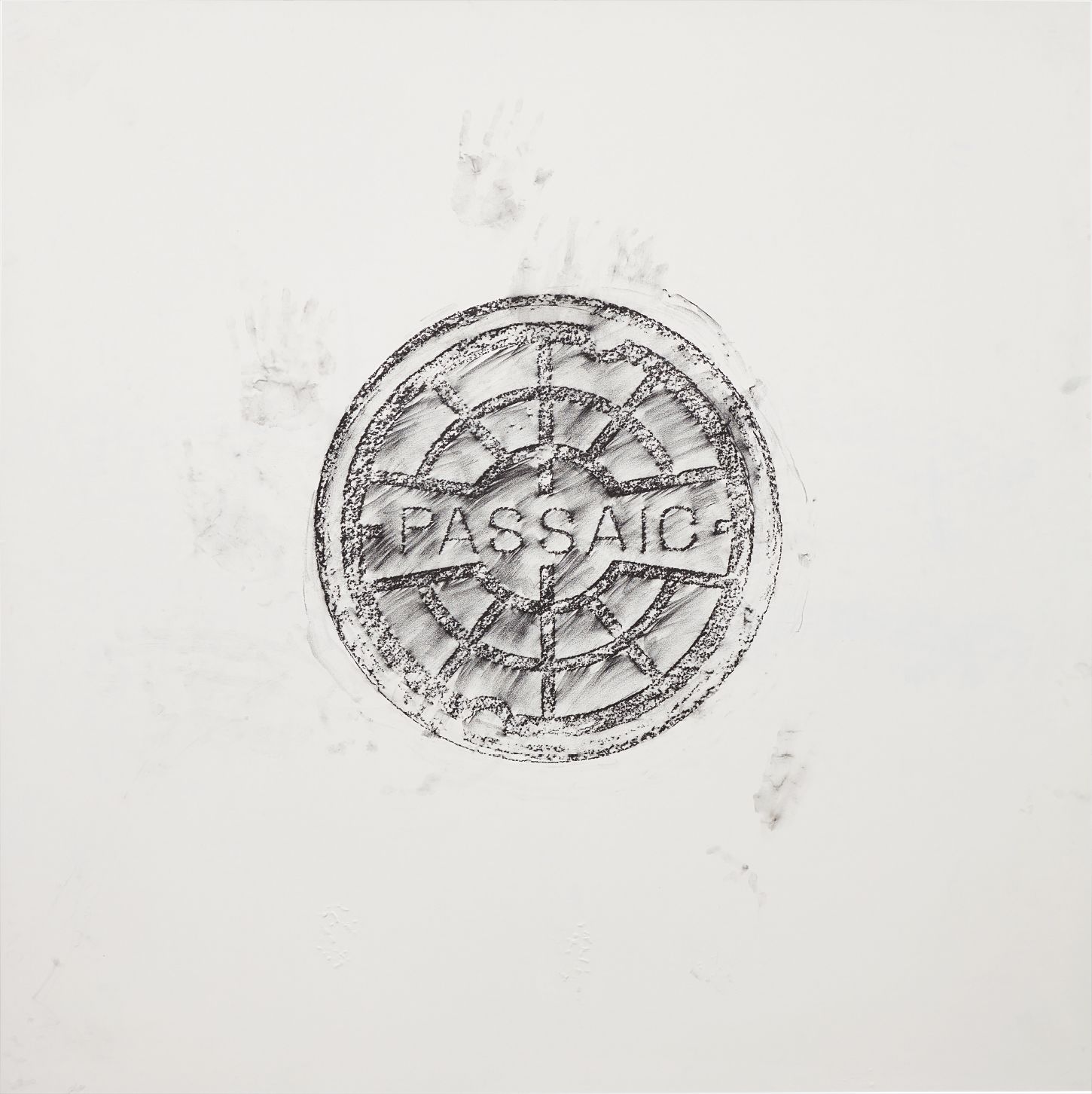
Gate PASSAIC, 2013
Untitled Rim Structure from 2011, a painted steel construction incorporating a synthetic tire rim, channels the energy of Arte Povera and the legacy of artists like Jannis Kounellis, while remaining entirely grounded in Gaillard's own preoccupations with industrial remnants and the poetry of discarded objects. Gate PASSAIC from 2013 takes its name in part from Robert Smithson's legendary 1967 essay A Tour of the Monuments of Passaic, New Jersey, a text that has clearly been a touchstone for Gaillard. Like Smithson, Gaillard finds monuments where others find only infrastructure, and excavates meaning from the overlooked and the utilitarian. The reference is worn lightly but unmistakably, positioning Gaillard within a lineage of artists who understand landscape as a form of cultural memory.
For collectors, Gaillard's work offers something rare: aesthetic pleasure and intellectual depth in equal measure, without one ever overwhelming the other. His paintings on canvas, including the Not yet Titled works from 2011 that combine oil with screenprint, demonstrate a deft handling of layered surfaces that rewards prolonged looking. Works on paper and collage, such as the New Picturesque Angkor Series pieces on vintage postcards, are among the most accessible entry points to his practice and have attracted considerable collector interest precisely because they distill his ideas into intimate, jewel like objects. At auction and in the primary market, Gaillard's works have maintained strong and consistent interest, particularly among collectors who are drawn to artists working at the intersection of conceptual rigour and sensory richness.
Cyprien Gaillard
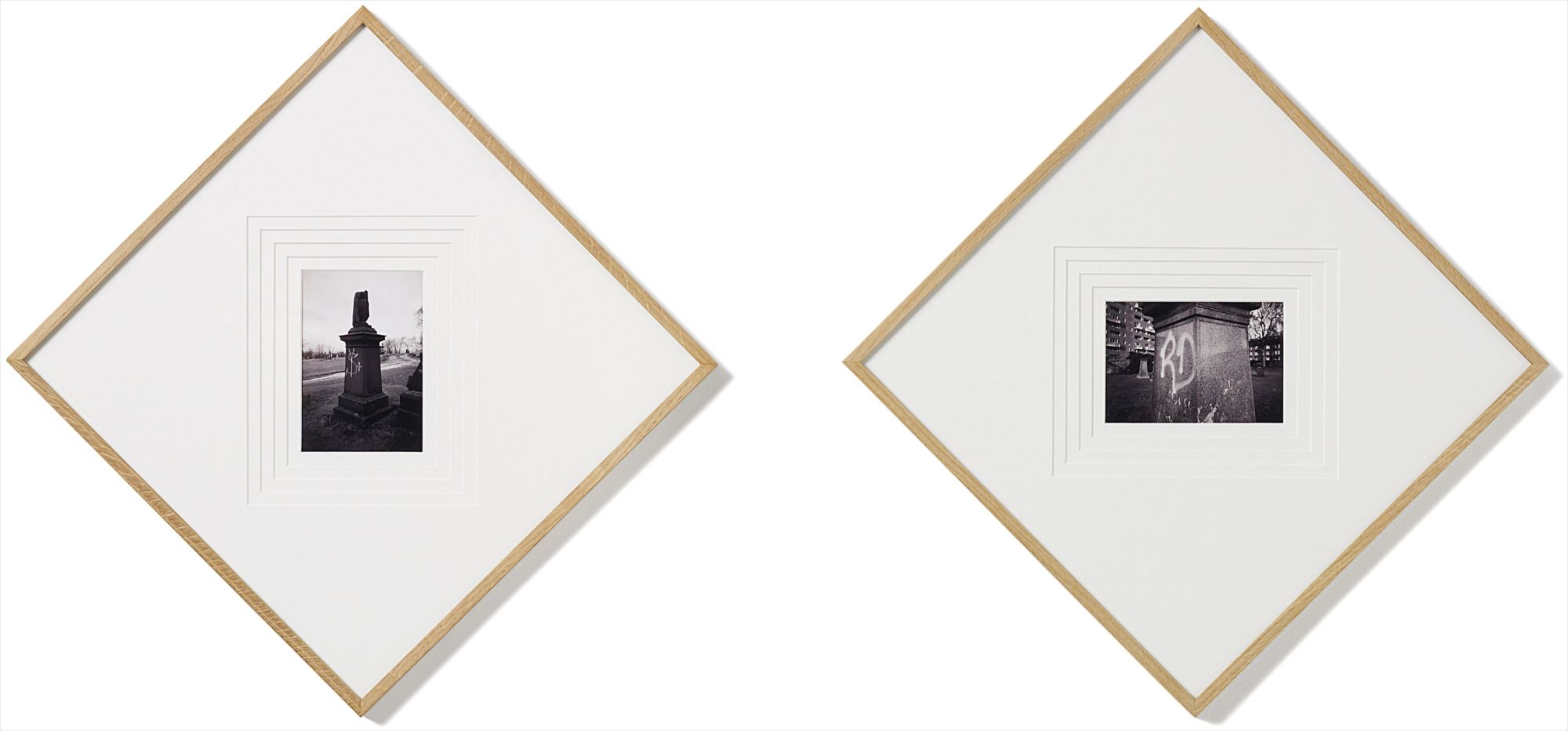
Two works: (i) Working in a State of Emergency (Hools); (ii) Working in a State of Emergency (Pollockshaw)
Galleries including Sprüth Magers in Berlin and London, as well as Bugada and Cargnel in Paris and Bureau in New York, have championed his work and helped place it in significant collections internationally. Within the broader context of art history, Gaillard belongs to a generation of artists including Darren Almond, Tacita Dean, and Rirkrit Tiravanija who are deeply invested in questions of duration, memory, and the passage of time. He shares with Dean a love of analogue processes and a suspicion of the frictionless efficiency of digital image making. He shares with Almond a fascination with remote places and the phenomenology of waiting.
But Gaillard's sensibility is distinctly his own, shaped by a commitment to the counter intuitive idea that destruction and construction are not opposites but collaborators in the ongoing project of making culture. His engagement with graffiti, with football fan culture, with beer branding and urban vernacular imagery, gives his practice a sociological breadth that distinguishes it from more hermetically aesthetic contemporaries. What makes Gaillard essential to any serious consideration of twenty first century art is his refusal to accept the conventional hierarchy that places the ancient above the contemporary, the pristine above the worn, or the monumental above the ordinary. He insists that a housing block in Lyon, a tire rim in a scrapyard, or a beer label in a Pittsburgh bar can carry as much historical weight as the temples of Angkor or the ruins of Rome, if only we are willing to look with sufficient patience and generosity.
That argument, made across two decades and a remarkable range of media, has lost none of its urgency or its beauty. For collectors, institutions, and anyone who cares about where contemporary art is headed, Cyprien Gaillard remains one of the most rewarding artists of his generation.
Explore books about Cyprien Gaillard
Cyprien Gaillard: Works
Cyprien Gaillard
Cyprien Gaillard
Hans Ulrich Obrist, Massimiliano Gioni
Cyprien Gaillard: Nightlife
Cyprien Gaillard
Cyprien Gaillard: Gesamtwerk
Various authors
Cyprien Gaillard: Recent Works
Serpentine Galleries