Cosima von Bonin
Cosima von Bonin Makes Soft Power Feel Radical
Artist Spotlight · The Collection Editorial
In the spring of 2023, visitors to the Kunsthalle Zürich encountered something that stopped them mid stride: a vast field of oversized fabric creatures, slumped and lolling, radiating an air of cheerful refusal. Cosima von Bonin had once again orchestrated a scene that felt simultaneously like a children's playroom and a philosophical treatise on labor, leisure, and the stubborn absurdity of contemporary life. That capacity to hold contradiction so lightly, to make a shark wearing a t shirt feel like the most natural and necessary thing in the world, is precisely what has made von Bonin one of the most distinctive and beloved voices in European conceptual art over the past three decades. Born in Mombasa, Kenya in 1962 to German parents, von Bonin grew up between cultures before settling into the vibrant intellectual and artistic life of Cologne, the city that would become the true crucible of her practice.
Cosima von Bonin
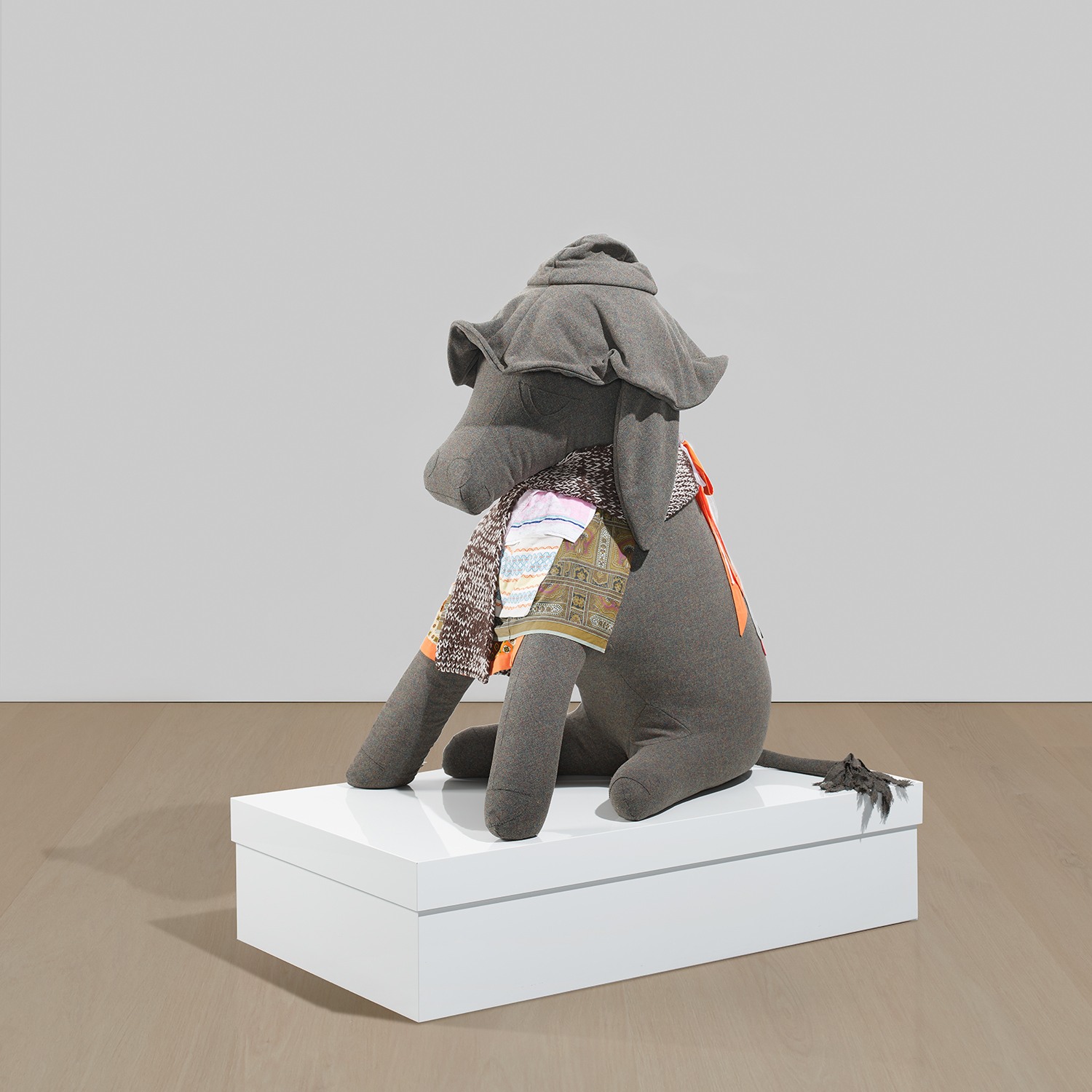
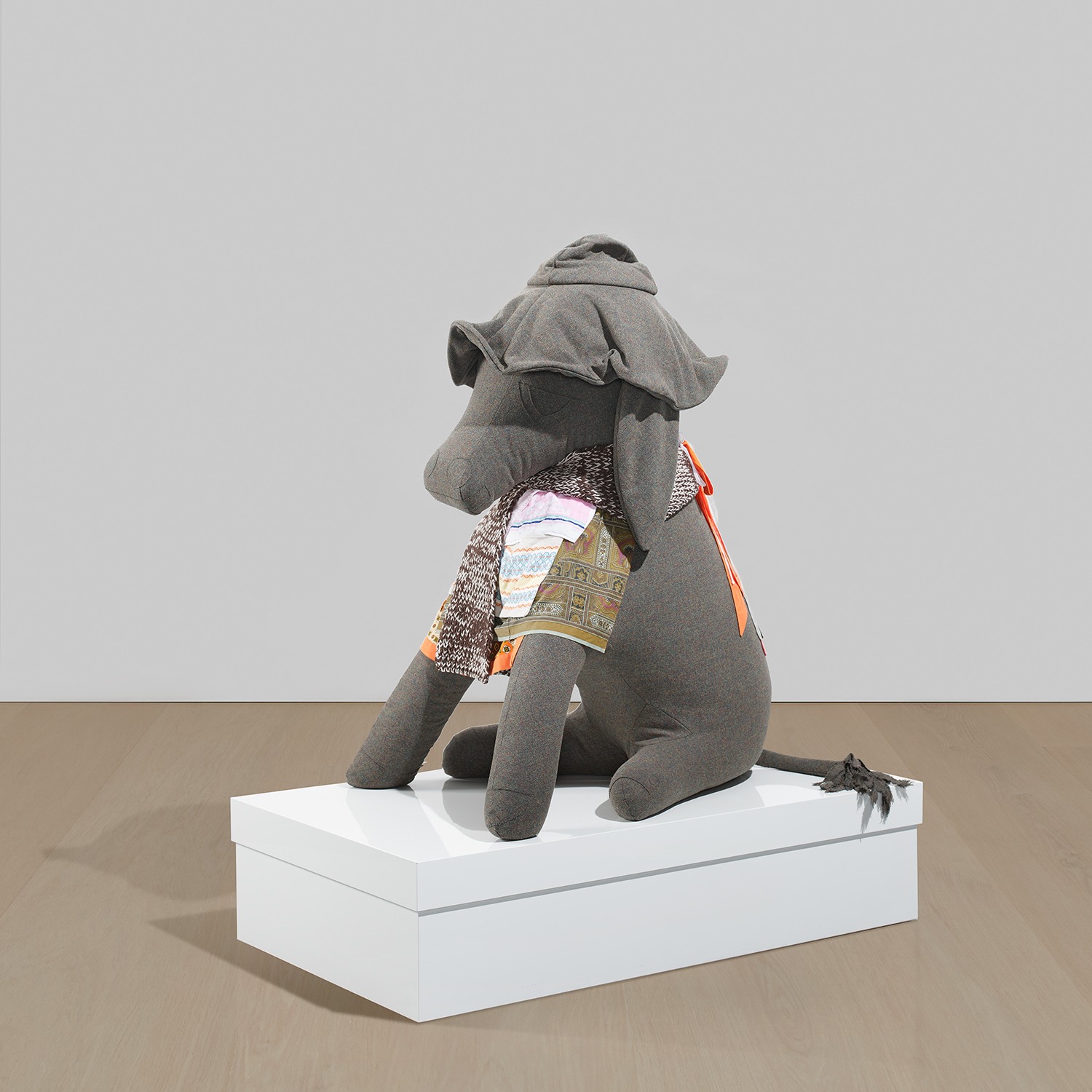
wool, cotton-fleece, cotton, silk, plastic, wood and lacquer, 2006
Cologne in the late 1980s and early 1990s was a remarkable place: a hub of the international art market, home to a dense network of artists, dealers, and thinkers whose conversations spilled from studios into bars and back again. Von Bonin absorbed this atmosphere with both seriousness and a certain irreverent skepticism, studying at the Hochschule für Bildende Künste Hamburg under the influence of a generation that took Conceptual Art's legacy seriously while refusing to treat it as sacred. Her early work announced a sensibility that would deepen and expand rather than shift direction. From the beginning, von Bonin was interested in the politics of making: who makes art, how it gets made, and what assumptions the art world carries about authorship, originality, and value.
She began incorporating textiles and soft materials at a moment when such choices still carried a pointed critical charge, invoking craft traditions historically associated with women and domestic labor and placing them squarely within the white cube. This was not a nostalgic move but a conceptual one, a way of asking the institution to account for what it had historically excluded or condescended to. Collaboration became a defining structural feature of her practice quite early. Von Bonin has worked consistently with other artists, musicians, and cultural figures, most notably the artist and musician Rebekah Ruoss, and her projects frequently resist the myth of the solitary genius.
Cosima von Bonin
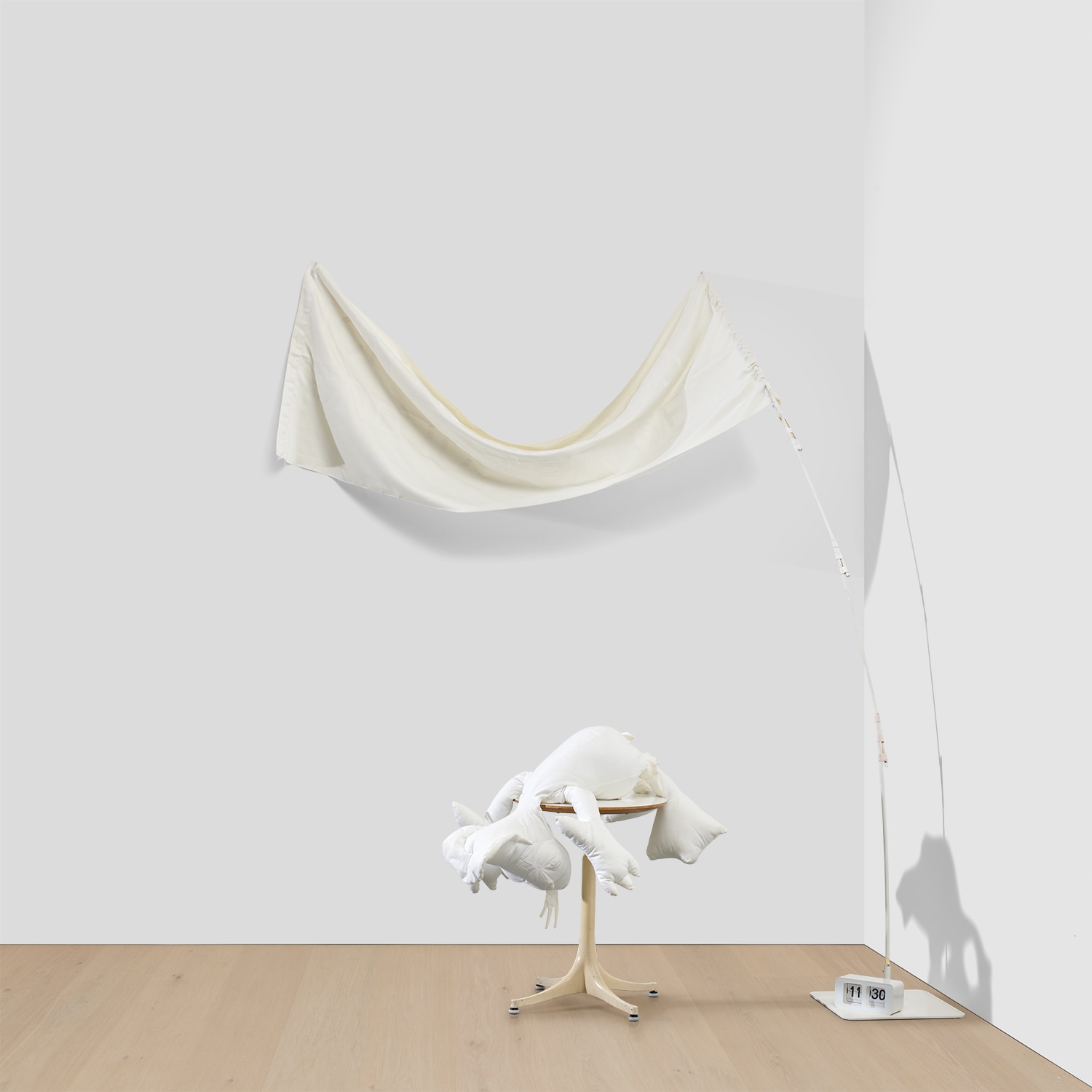
Ich lüge auch und ich bin dein, 2011
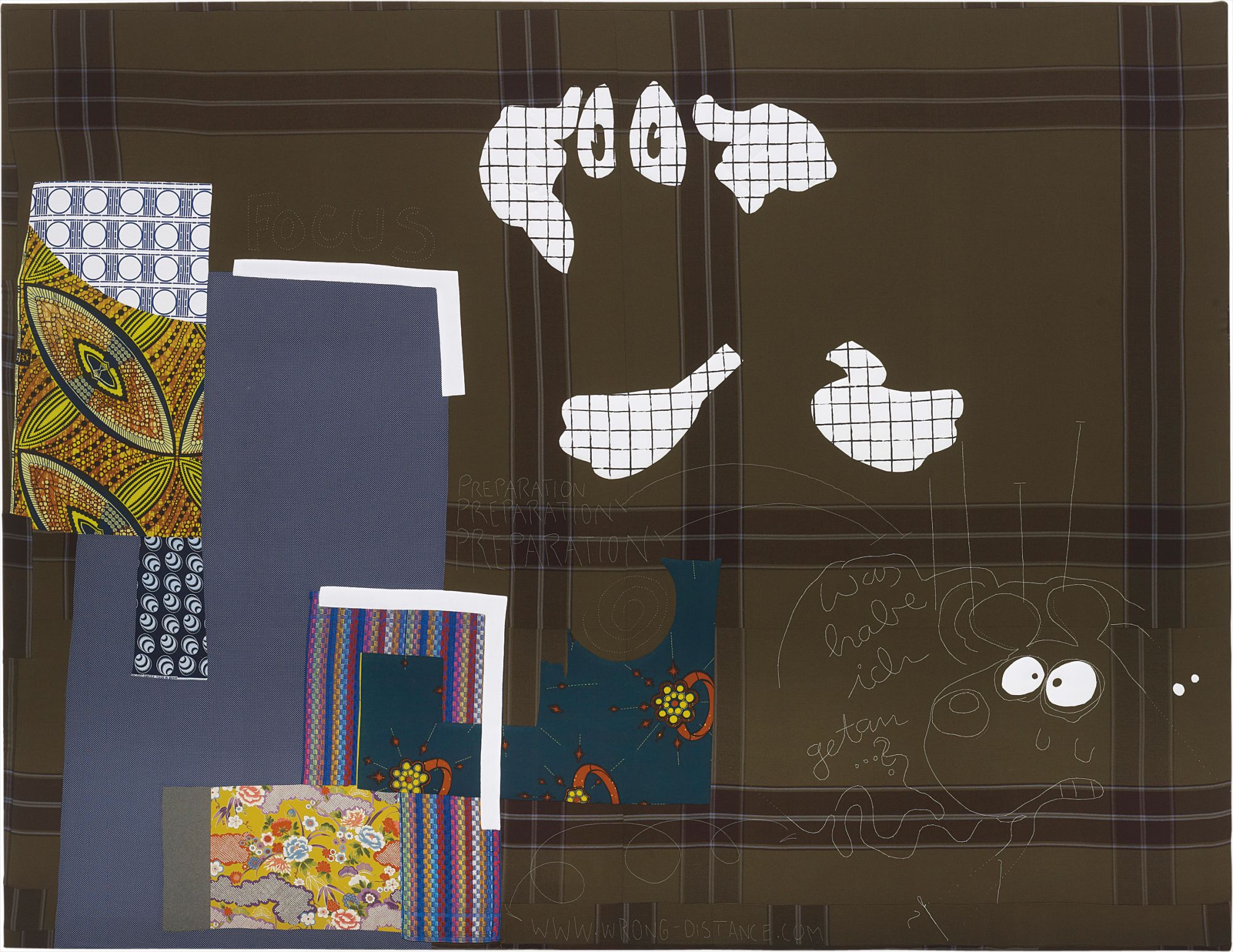
Her 2006 work titled simply by its materials, wool, cotton fleece, cotton, silk, plastic, wood and lacquer, exemplifies this approach: the title itself refuses to romanticize the object, directing attention instead to the physical facts of its making, a gentle provocation aimed at collectors and institutions alike. Around the same time, she developed ongoing collaborations that blurred the line between her studio and the broader cultural landscape she inhabited, producing works that felt communal in their spirit even when they were formally singular objects. The soft sculptures for which she is perhaps best known began to take their most iconic form in the 2000s, and works like the tapestry Toms, comprised of cotton, felt, thread, zippers and cowhide, and the installation Nothing 3 demonstrate the full range of her tonal register. Her recurring cast of characters, sharks, rabbits, lobsters, mushrooms, and various anthropomorphic creatures, populates her installations with the air of a quietly subversive cartoon universe.
These figures are never innocent: they loll, they slouch, they refuse to perform productivity or purpose. In an art world obsessed with ambition and forward motion, there is something genuinely radical about von Bonin's insistence on the value of doing very little, or at least appearing to. The work Ich lüge auch und ich bin dein, from 2011, whose title translates roughly as I lie too and I am yours, captures this tone perfectly: tender, ironic, and slightly unsettling all at once. For collectors, von Bonin's work presents a rare combination of intellectual rigour and physical pleasure.
Cosima von Bonin
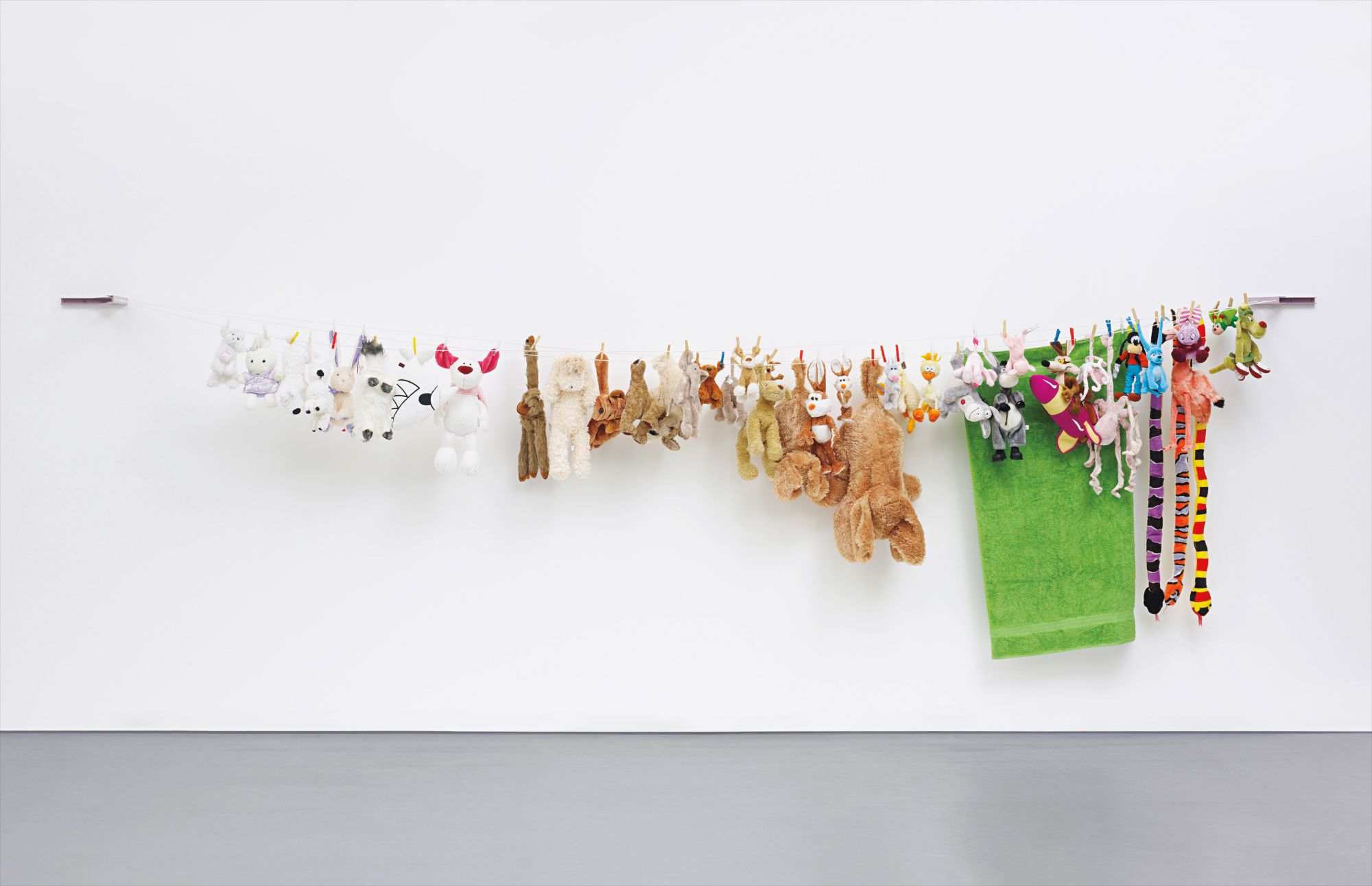
Marathon
Her pieces reward sustained looking and thinking, but they also simply delight the eye and the body in space. Works on the market range from large scale installations that anchor institutional collections to more intimate textile pieces and works on paper that translate beautifully into private settings. The blue chip status she now commands reflects a broad consensus among curators and collectors in Europe and North America that her contribution is lasting. Galerie Buchholz, which represents her in Cologne and New York, has been instrumental in placing her work with serious collectors, and her presence in major European biennials and museum collections from the Museum Ludwig in Cologne to the Museum of Modern Art in New York confirms the depth of institutional confidence in her practice.
When approaching her work on the secondary market, collectors should attend to the physical condition of the textiles, which are intrinsic to the meaning of the work, and to provenance that connects a piece to her major exhibition periods. To understand von Bonin fully it helps to consider her alongside contemporaries who share her preoccupation with the social life of objects and the politics of artistic labor. Franz West, with his insistence on participatory, anti monumental forms, offers one useful frame. So does Mike Kelley, whose reclamation of abject materials and popular culture as serious artistic territory resonates strongly with her project.
Cosima von Bonin
Nothing #3
Among her generation of German and European artists, she stands close in spirit to artists like Kai Althoff, with whom she has collaborated, and whose work similarly inhabits the space between sentiment and critique. Her debt to the Conceptualism of the 1960s and 1970s is real but worn lightly, filtered through a genuine affection for the materials and figures she deploys rather than through cool analytical distance. What von Bonin has achieved over four decades of practice is something genuinely difficult: she has built a body of work that is immediately recognizable in its visual language and yet consistently surprising in its implications. Her art makes the art world look at itself and laugh, not with the laughter of cynicism but with something closer to the laughter of recognition.
In a cultural moment that can feel exhaustingly earnest, her creatures in their slouched, indifferent splendor offer a different kind of wisdom, one that finds meaning not in striving but in the patient, pleasurable refusal to take everything quite so seriously. For collectors and institutions who want their holdings to carry genuine critical intelligence alongside genuine joy, there are few artists working today who deliver both as generously as Cosima von Bonin.