Collection Marcel Lehmann-Lefranc
Ancient Worlds, Gathered With Devoted Care
Artist Spotlight · The Collection Editorial
There is a particular kind of collector whose eye moves not along the axis of contemporary fashion but across something far older and more patient: the arc of human spiritual life. Collection Marcel Lehmann Lefranc belongs firmly in this tradition. The works gathered here speak across centuries and continents, from the high savannahs of Mali to the lush forests of Gabon, from the coastal communities of southern Africa to the sacred valleys of Nepal. To encounter this collection is to step into a sustained, quietly profound conversation about what it means to make an object that carries the weight of the sacred.
Collection Marcel Lehmann-Lefranc
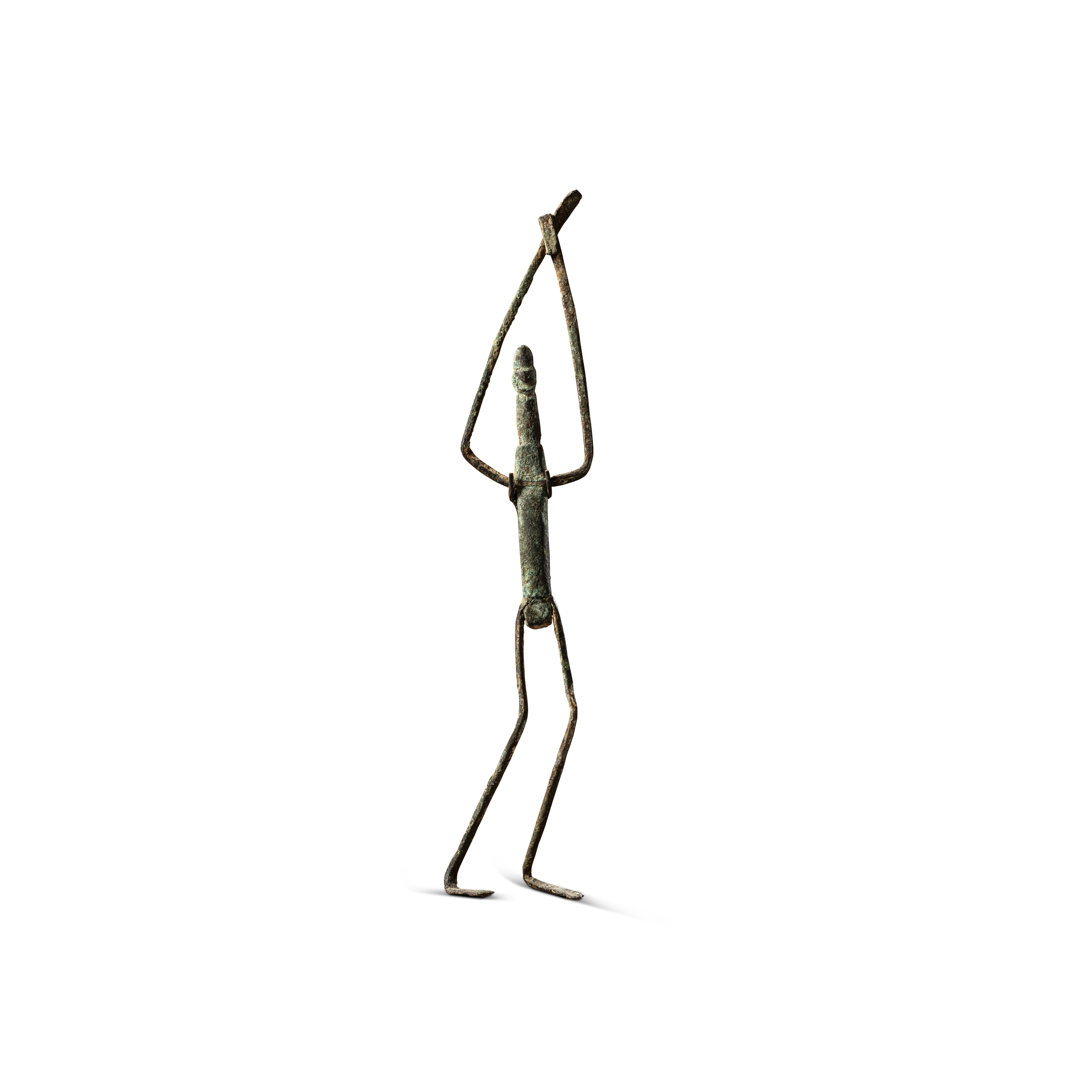
Statuette, Dogon, Mali
The collecting practice represented here draws on a deep engagement with the ethnographic and sculptural traditions of sub Saharan Africa and South Asia. These are not territories to be skimmed. Each region has produced visual and ceremonial languages of extraordinary sophistication, developed over generations of specialist carvers, ritual practitioners, and communities for whom the object was never merely decorative but always functional in the deepest sense: a vessel for spiritual force, a mediator between the living and the ancestral, a form that held power precisely because it was made with intention. Collection Marcel Lehmann Lefranc approaches these traditions with the seriousness they deserve.
The Dogon people of Mali have long occupied a central place in the history of African art collecting. Since the pioneering fieldwork of Marcel Griaule in the 1930s, and through the sustained scholarly attention of institutions including the Musée du quai Branly in Paris, Dogon sculpture has come to be understood as among the most conceptually rich and formally remarkable of any tradition on the continent. The statuette from Mali in this collection stands within that lineage. Dogon figures, with their elongated torsos, raised arms, and the quiet intensity of their carved faces, embody a cosmological system of remarkable complexity.
Collection Marcel Lehmann-Lefranc
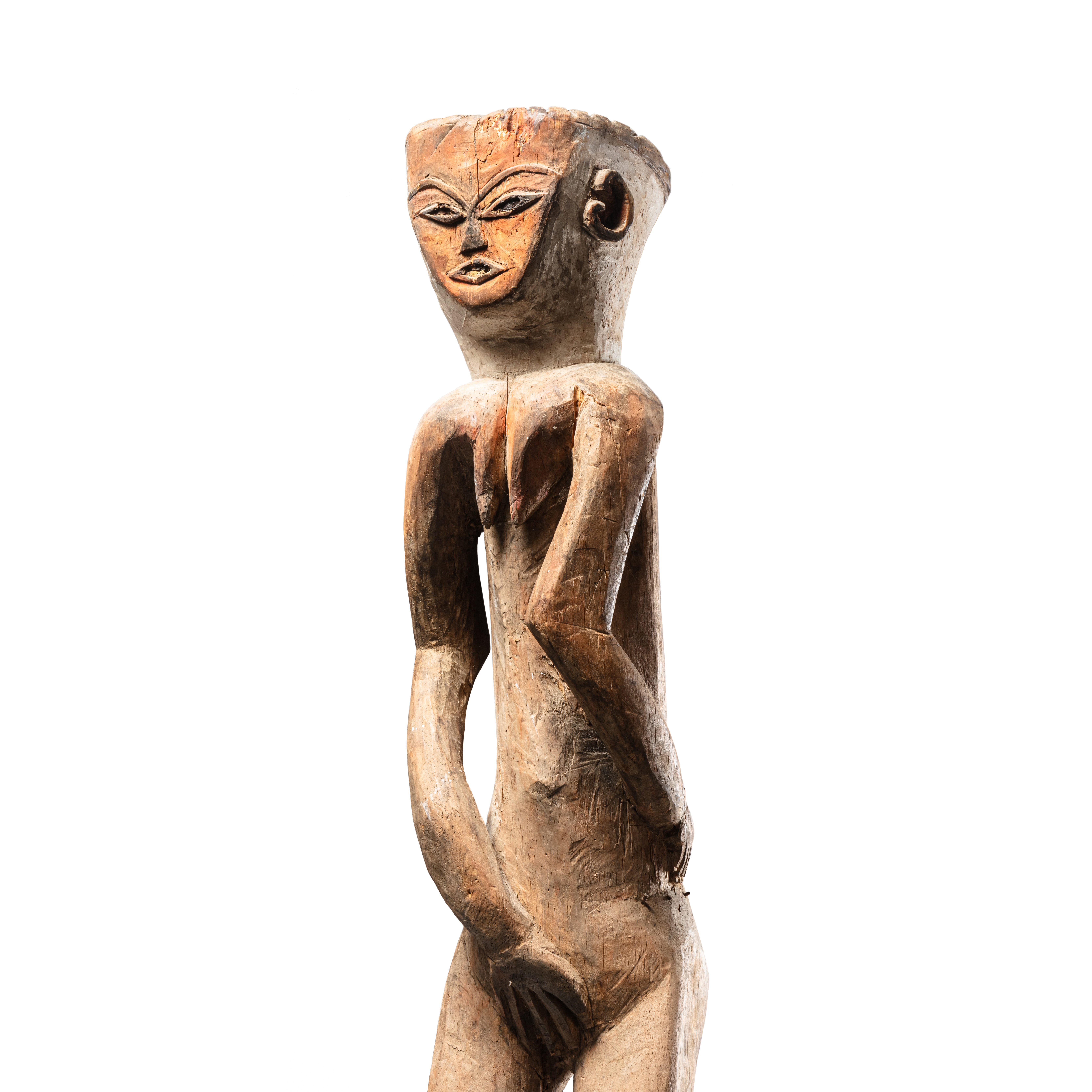
Statue, Vuvi, Gabon
A work of this kind does not simply represent the human form; it enacts a relationship between the human and the divine, between the ancestor and the living community that honors their memory. From central Africa, the Vuvi statue from Gabon introduces a different visual register, one marked by the extraordinary tradition of reliquary figures that flourished among the peoples of the Ogooué River basin. The Vuvi, neighbors to the better known Fang and Kota peoples, produced figures of striking formal economy. Their work shares with broader Gabonese sculptural practice an interest in the face as a site of concentrated spiritual presence, the features often abstracted into broad planes that catch light with an almost architectural clarity.
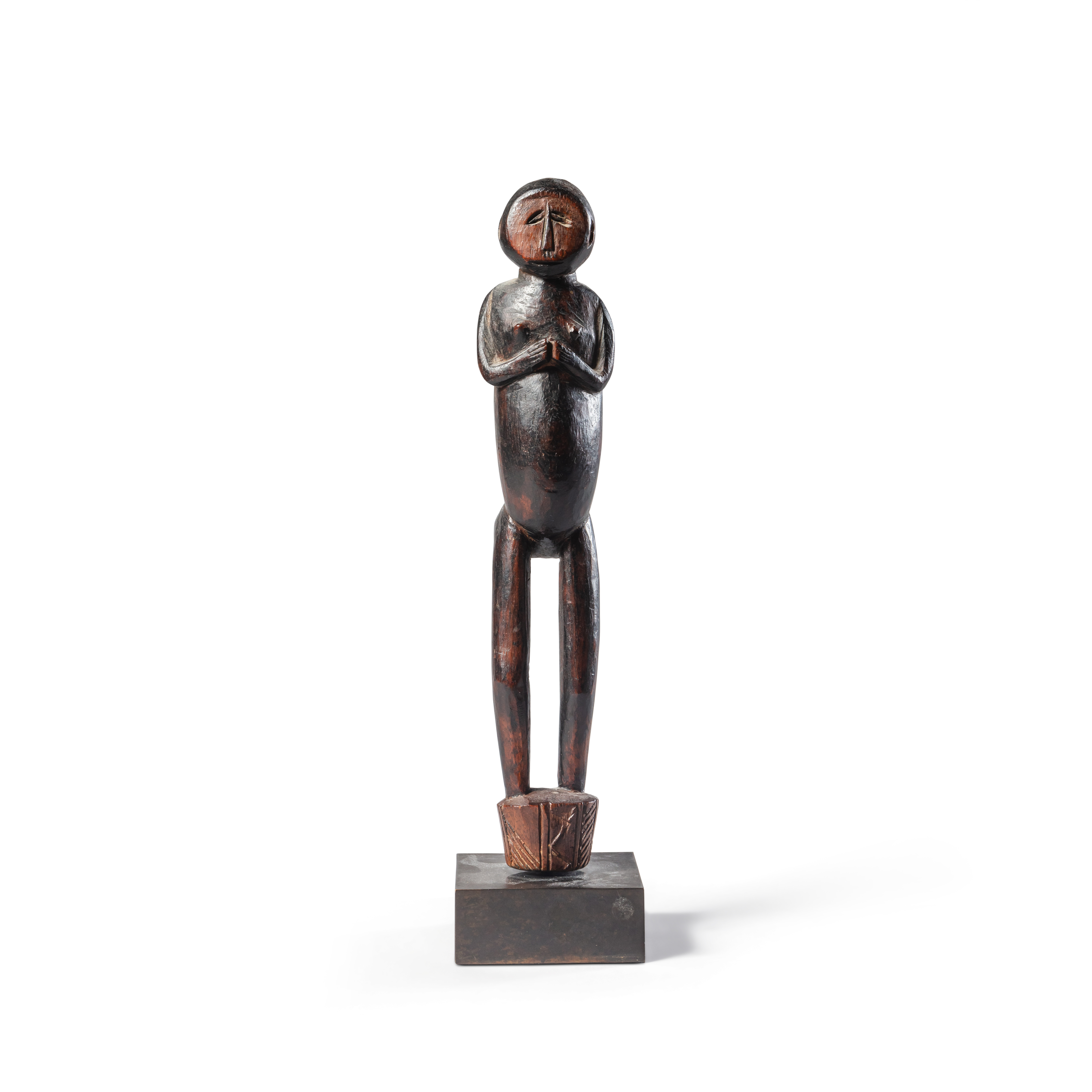
Works from this region entered European collections in significant numbers during the early twentieth century and had a documented influence on the development of Cubism and European modernism. To collect Vuvi sculpture today is to engage with a tradition whose reverberations extended far beyond its geographic origins. The Zulu statuette from South Africa brings the collection into the rich visual world of southeastern Africa, a region whose artistic traditions have sometimes been overshadowed in the Western market by the drama of central and west African masking traditions. Zulu sculptural and beadwork traditions are, however, remarkable in their own right, characterized by a formal rigor and a sensitivity to surface and material that rewards close attention.
Collection Marcel Lehmann-Lefranc
Statuette, Zulu, Afrique du Sud
Works from this region have been the subject of renewed scholarly and institutional interest in recent years, with major exhibitions at institutions including the British Museum drawing attention to the sophistication of southern African visual culture. This collection reflects that broadened perspective. Perhaps the most geographically unexpected presence in the collection is the Newar mask from the Kathmandu Valley in Nepal. The Newar people, the original inhabitants of the valley, have sustained one of the most remarkable artistic traditions in all of Asia.
Their metalwork, wood carving, and painted manuscripts were already famous across the Buddhist and Hindu worlds of South and Southeast Asia by the medieval period. Newar masks, used in the great festival cycles of the valley including the Indra Jatra and Kumari processions, are objects of living ritual significance. The craftsmanship involved is extraordinary: the lost wax casting techniques employed by Newar metalworkers were so refined that the tradition attracted commissions from Tibetan monasteries and Chinese imperial courts alike. The inclusion of a Newar mask in this collection signals a collecting intelligence willing to range widely and follow quality wherever it leads.
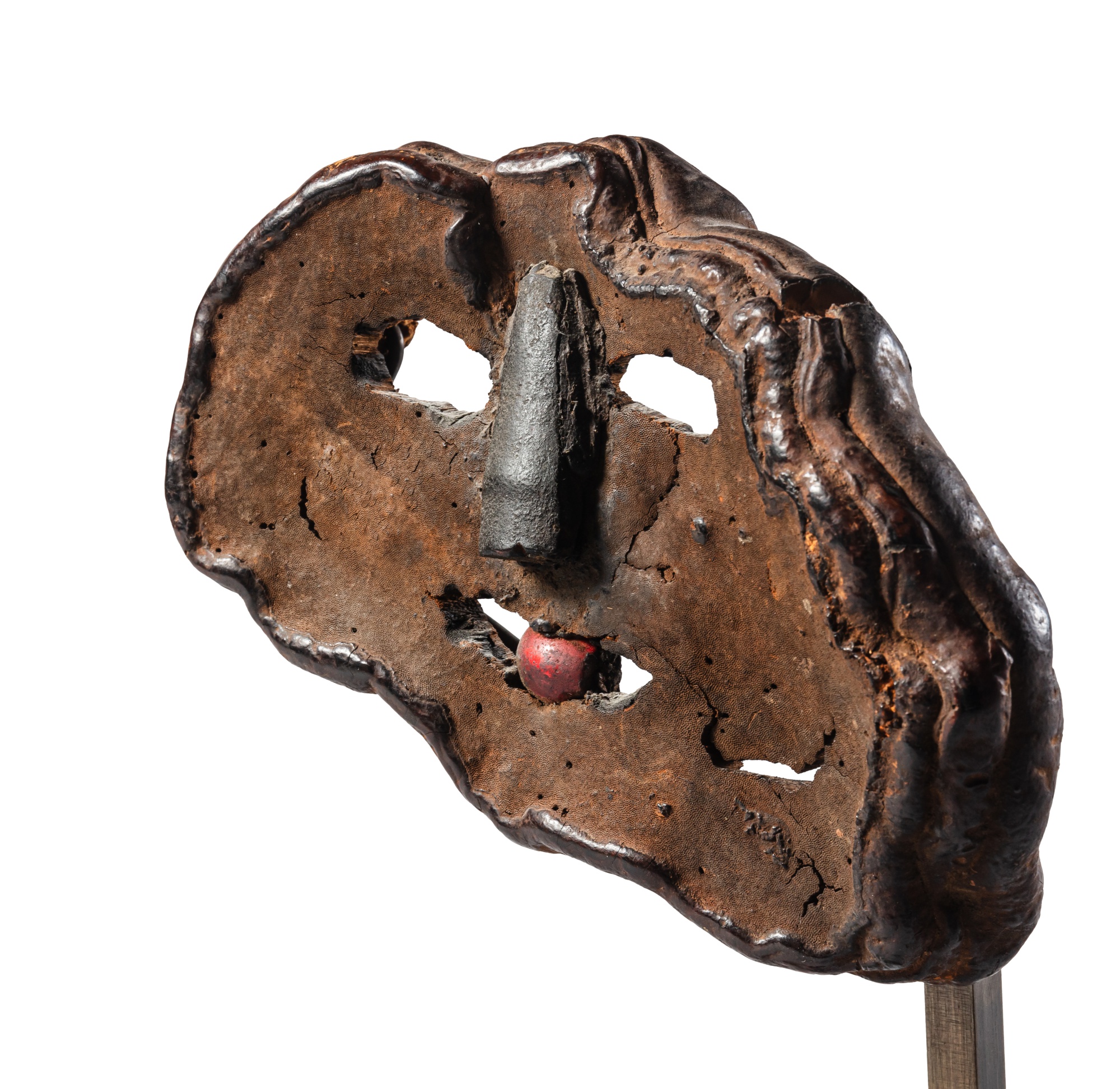
Collection Marcel Lehmann-Lefranc
Masque, Newar, Vallée de Kathmandou, Népal
From the perspective of the collector or advisor considering works of this kind, the current moment is one of particular opportunity and responsibility. The market for African and Oceanic art has matured considerably since the major sales of the Vérité collection at Sotheby's Paris in 2006 and the landmark dispersal of the Hubert Goldet collection in the same period, events that established new benchmarks for the category and demonstrated the depth of serious international demand. Ethnographic sculpture from sub Saharan Africa and the Himalayan world now occupies a secure position in the programs of the major auction houses and specialist galleries, with firms including Sotheby's, Christie's, and dedicated specialists such as Alain de Monbrison in Paris consistently presenting works of museum quality to a global audience. Collecting in this field today requires both connoisseurship and a genuine engagement with the cultural contexts from which these works emerge.
What distinguishes a collection like this one is precisely that quality of engagement. The works selected here are not interchangeable representatives of broad geographic categories but individual objects chosen for the clarity of their formal presence and the depth of their cultural resonance. The range is itself a kind of argument: that the impulse to make objects of spiritual power, to carve or cast or model forms that carry meaning beyond their material existence, is not the property of any single civilization but one of the great recurring facts of human experience. A Dogon ancestor figure, a Vuvi reliquary, a Zulu ceremonial object, and a Newar festival mask are separated by thousands of miles and entirely distinct cosmological systems, yet they share a commitment to the idea that the made object can do something that language alone cannot.
Collection Marcel Lehmann Lefranc invites us to sit with that idea. In a cultural moment when the provenance, context, and future of ethnographic collections are rightly the subject of serious public conversation, a private collection assembled with care and genuine curiosity represents something valuable: a commitment to looking, to learning, and to honoring the human intelligence that produced these extraordinary objects. The works gathered here are not relics of vanished worlds but evidence of living traditions whose significance continues to unfold.