Christoph Ruckhäberle
Ruckhäberle Brings Figure Painting Gloriously Alive
Artist Spotlight · The Collection Editorial
Something has been quietly gathering momentum in the conversation around contemporary German painting, and Christoph Ruckhäberle sits at the center of it. Over the past two decades, collectors and curators working across Leipzig, Berlin, New York, and beyond have increasingly turned their attention to this painter whose canvases carry an almost theatrical charge, dense with color, flattened form, and a peculiar psychological warmth that feels unlike anything else produced by his generation. His work has moved through institutional and private collections with the kind of sustained gravity that separates artists of genuine consequence from those of passing interest. The renewed appetite for figurative painting globally has brought fresh eyes to Ruckhäberle's output, and what those eyes find is a body of work that rewards sustained looking.
Christoph Ruckhäberle
Christoph Ruckhäberle
Christoph Ruckhäberle was born in Germany in 1972, coming of age during a period of profound cultural and political transformation in the country. He studied at the Hochschule für Grafik und Buchkunst in Leipzig, commonly known as the Leipzig Academy, an institution that would become synonymous with a major resurgence in European figurative painting during the late 1990s and early 2000s. Leipzig itself was undergoing its own remarkable metamorphosis in those years, its post reunification energy channeling into studios and galleries that would eventually capture the attention of the international art world. Ruckhäberle emerged from this environment shaped by the rigorous tradition of the academy while simultaneously drawn toward something more instinctive, more decorative, more rooted in the pleasure of paint itself.
The Leipzig School, as it came to be known, produced a constellation of painters who shared certain sensibilities while developing in distinctly personal directions. Neo Rauch, Matthias Weischer, and David Schnell were among those who drew major international attention to the city and its artistic community during this period. Ruckhäberle's work sits in productive dialogue with this broader movement while maintaining its own clear identity. Where some of his contemporaries leaned toward surrealist enigma or intricate architectural construction, Ruckhäberle pursued a kind of bold pictorial directness rooted in the figure, in groups of people gathered in ambiguous social arrangements, in color as emotional temperature rather than mere description.
Christoph Ruckhäberle
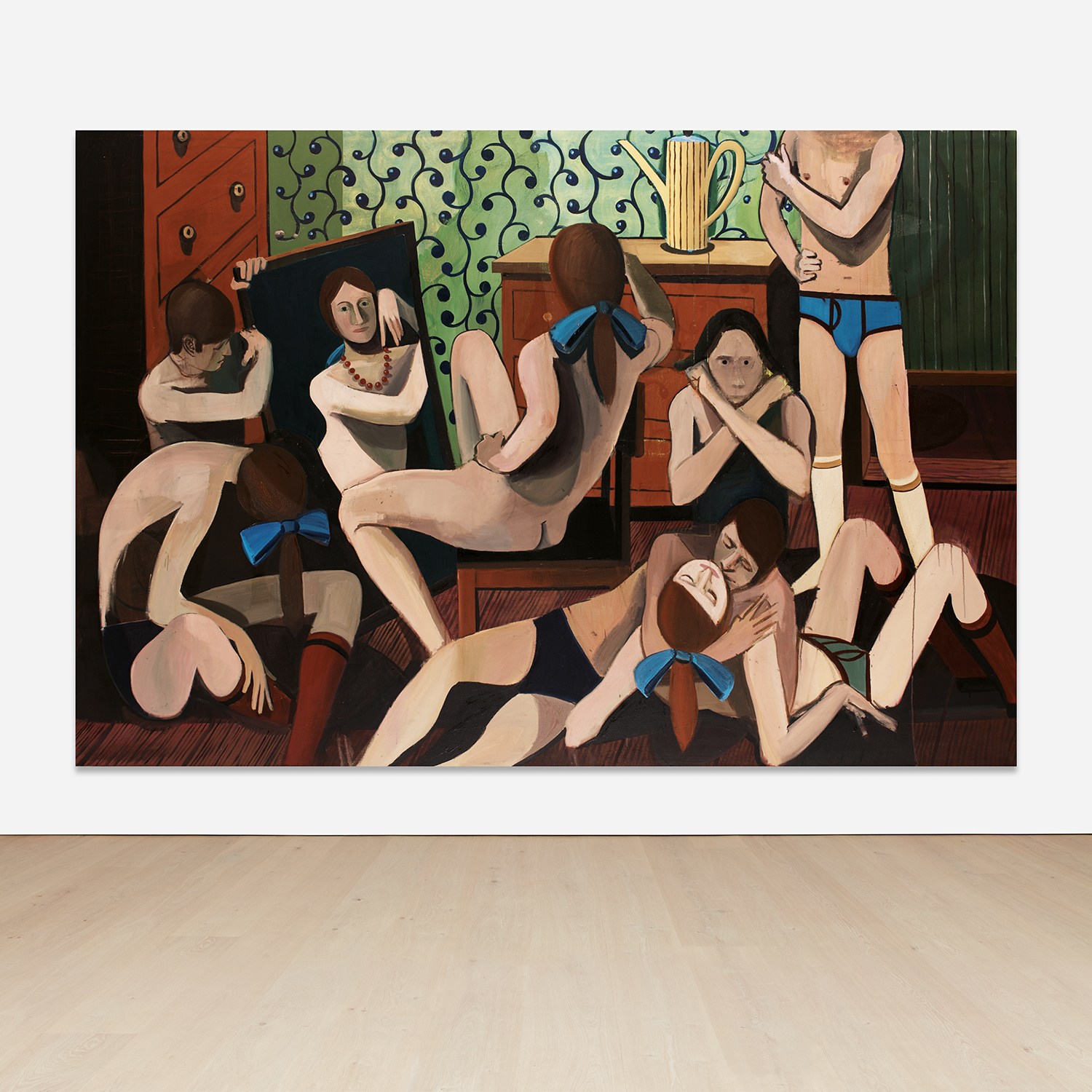
Die Zöpfe, 2005
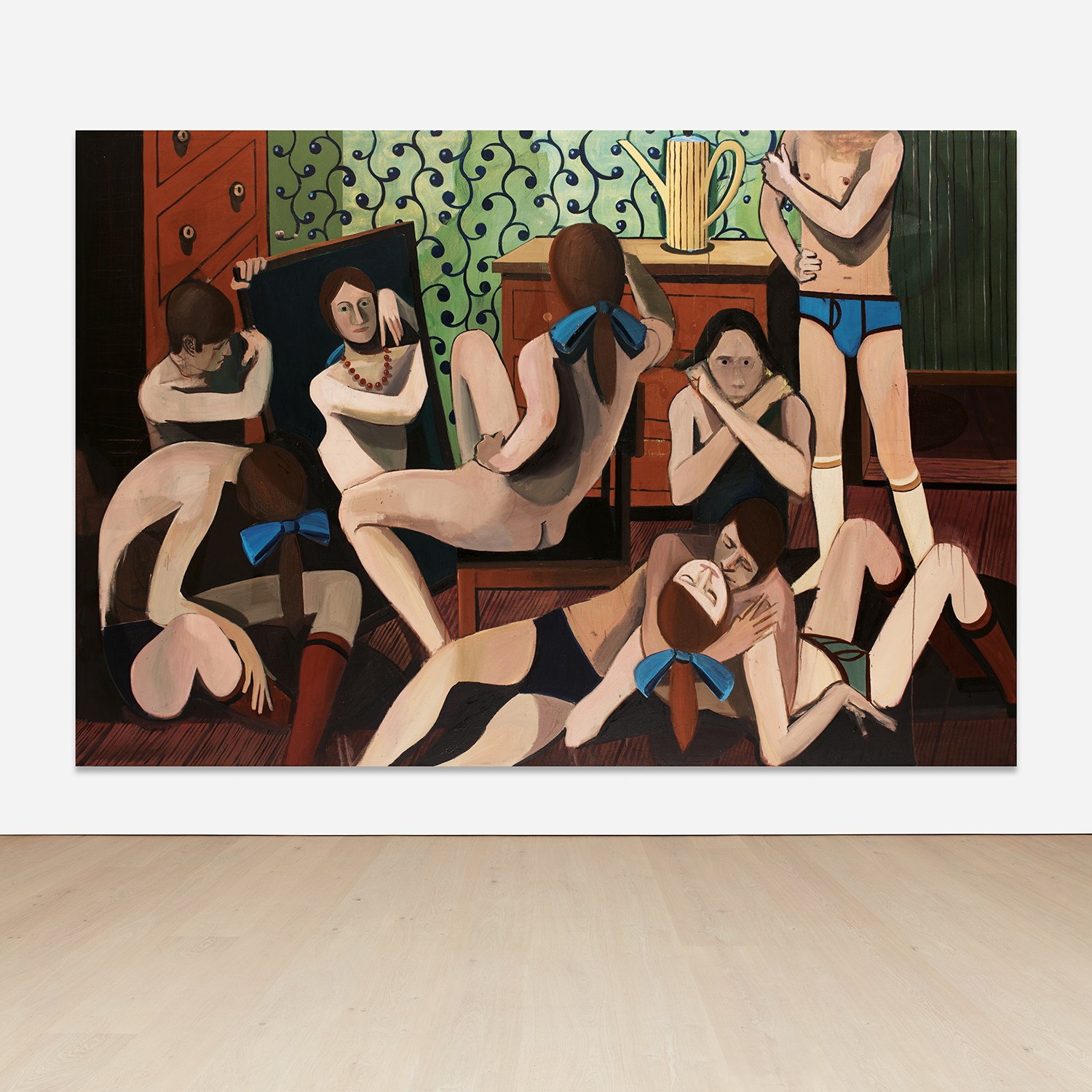
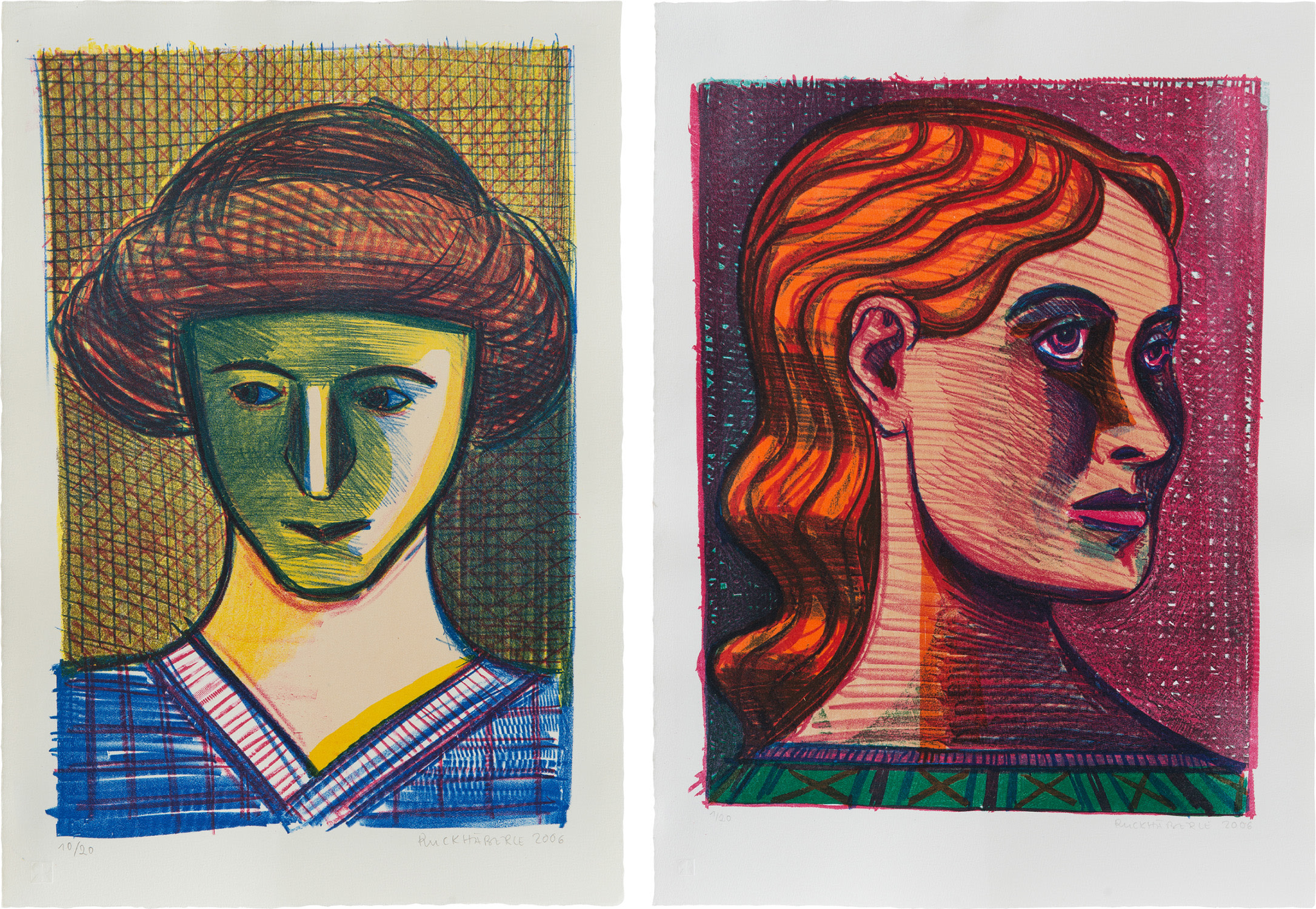
His paintings often recall the flattened, graphic quality of folk art and early modernist woodcut traditions, drawing on sources as varied as German Expressionism, Henri Matisse, and popular illustration. The paintings for which Ruckhäberle is best known tend to feature clusters of figures, often women, rendered with a confident economy of means that makes them immediately memorable. Works such as Die Zöpfe from 2005 and Freunde, also from that remarkably productive year, exemplify this approach. The figures in these paintings are defined by bold outlines and large planes of color rather than by conventional academic modeling, giving them a quality that hovers between the iconic and the intimate.
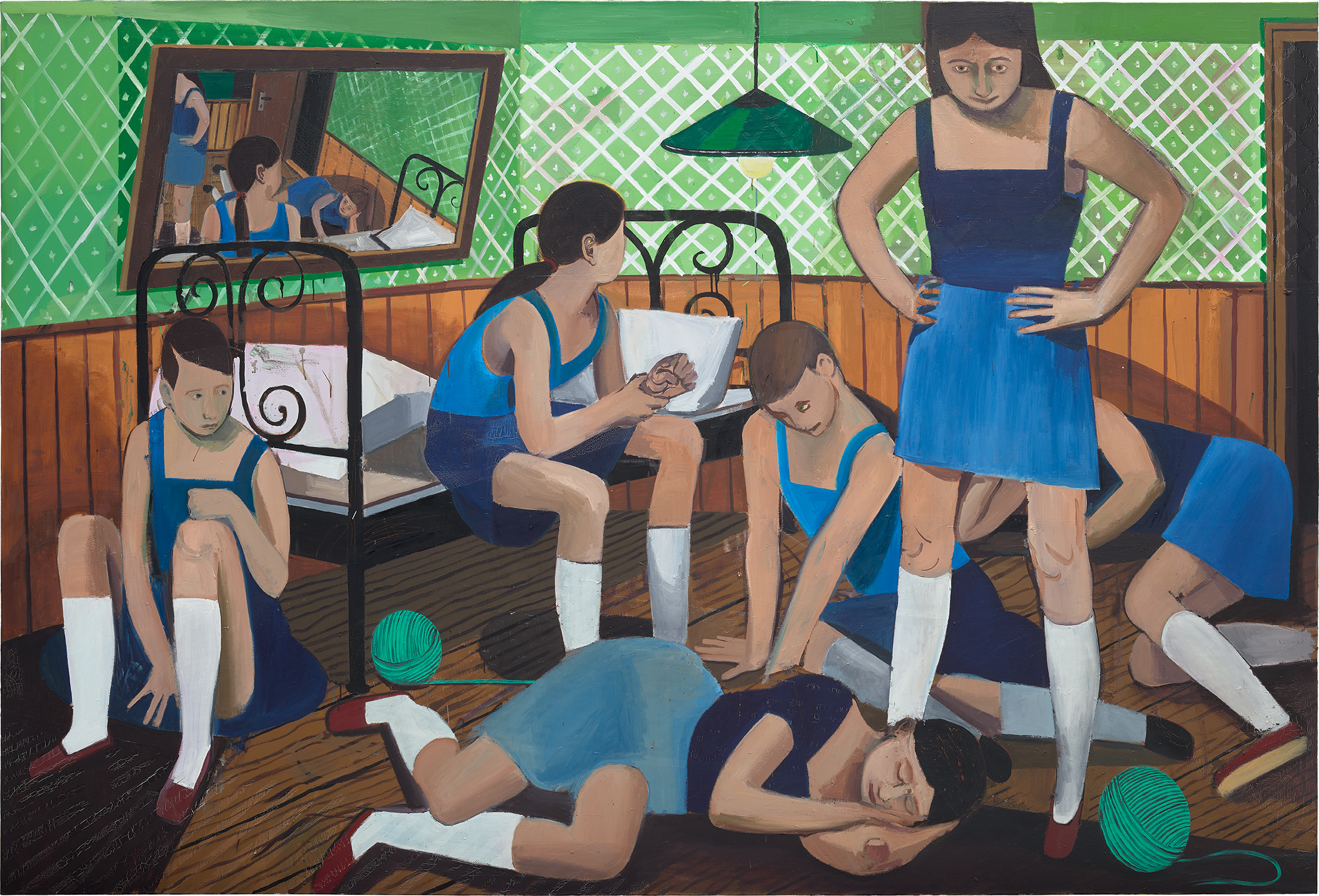
Schlaf, from 2004, carries a hushed, almost reverie like atmosphere in which the act of sleep becomes a kind of communal ritual, gentle and strange at once. In Vier Hüte from 2005, four hats become agents of personality and suggestion, the wearers simultaneously present and abstracted. These works demonstrate Ruckhäberle's ability to find the monumental within the everyday, to make a gathering of friends or a moment of rest feel weighted with significance without ever tipping into sentimentality. Later works expand this vocabulary into new territory.
Christoph Ruckhäberle
Schlaf, 2004
Giant Guitar Player from 2007 introduces music as subject matter with an exuberant scale and graphic force that feels almost like a poster made sublime. Tromler, also from 2007, carries a similar energy, the drummer rendered in acrylic with a rhythmic insistence that mirrors the subject itself. Liebig's Laboratorium oder Meine Fünf Lieblingskünstler from 2007 is among his most ambitious and conceptually layered paintings, folding art historical homage into the pictorial language he had by then made entirely his own. These works from the mid to late 2000s confirm an artist at full command of his practice, expanding rather than repeating, curious rather than comfortable.
From a collecting perspective, Ruckhäberle represents a compelling proposition for those drawn to the figurative painting renaissance that has defined so much of the serious collecting conversation over the past fifteen years. His works entered important private collections during the height of the Leipzig School's international moment, and they have held their place with integrity. The combination of strong formal qualities, a coherent and evolving body of work, and the historical context of the Leipzig Academy gives collectors multiple layers of meaning to hold alongside the immediate visual pleasure the paintings deliver. Works on paper and editions attributed to Ruckhäberle offer entry points for collectors building relationships with his practice, while the major oil paintings represent the full depth of his achievement.
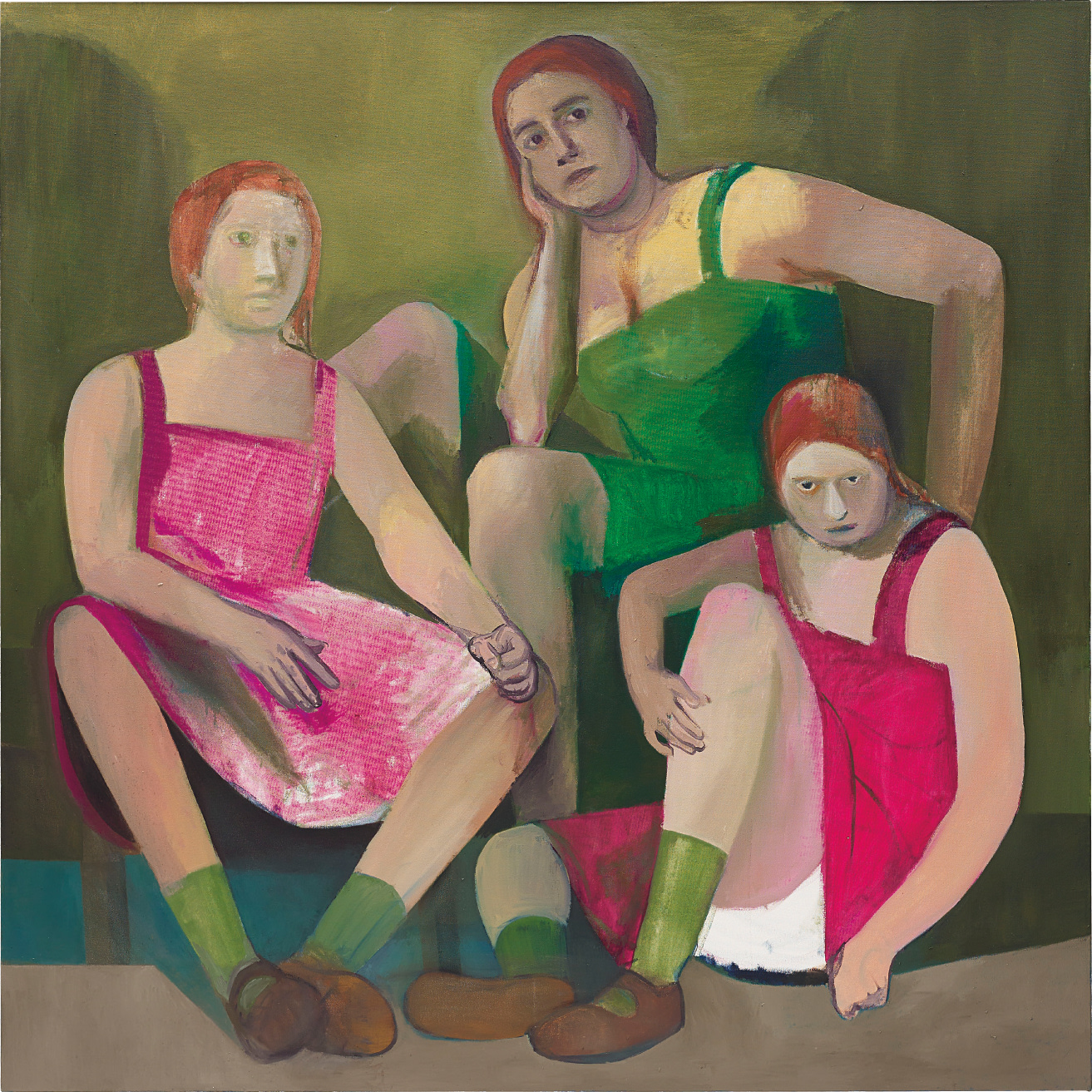
Christoph Ruckhäberle
3 Frauen
When works appear at auction or through gallery representation, they tend to attract serious attention from collectors who understand the significance of this particular chapter in European painting. Understanding Ruckhäberle within a broader art historical frame enriches the experience of his paintings enormously. His debt to the German Expressionist tradition, particularly the flattened space and bold color of Ernst Ludwig Kirchner and the Brücke group, is visible and acknowledged, but it is transformed through a sensibility that is thoroughly contemporary. The influence of Matisse is equally present, particularly in the way Ruckhäberle uses color not to describe light but to structure emotion.
Among his immediate peers, comparisons to Matthias Weischer and Martin Kippenberger illuminate different aspects of his work, the former sharing his interest in surface and atmosphere, the latter a certain irreverent intelligence in the selection and arrangement of imagery. Ruckhäberle occupies a space that is distinctly his own within this rich conversation. What makes Ruckhäberle matter today, in a moment when figurative painting has reclaimed enormous cultural prestige, is the consistency and integrity of his vision over time. He did not arrive at his approach through trend or calculation but through genuine artistic inquiry rooted in one of Europe's great painting academies at one of its most fertile moments.
His paintings ask to be lived with, returning something new on each encounter. For collectors, institutions, and audiences coming to his work now, there is the particular pleasure of discovering a painter who has been building something substantial and lasting, picture by picture, year by year, in the finest tradition of the craft.
Explore books about Christoph Ruckhäberle