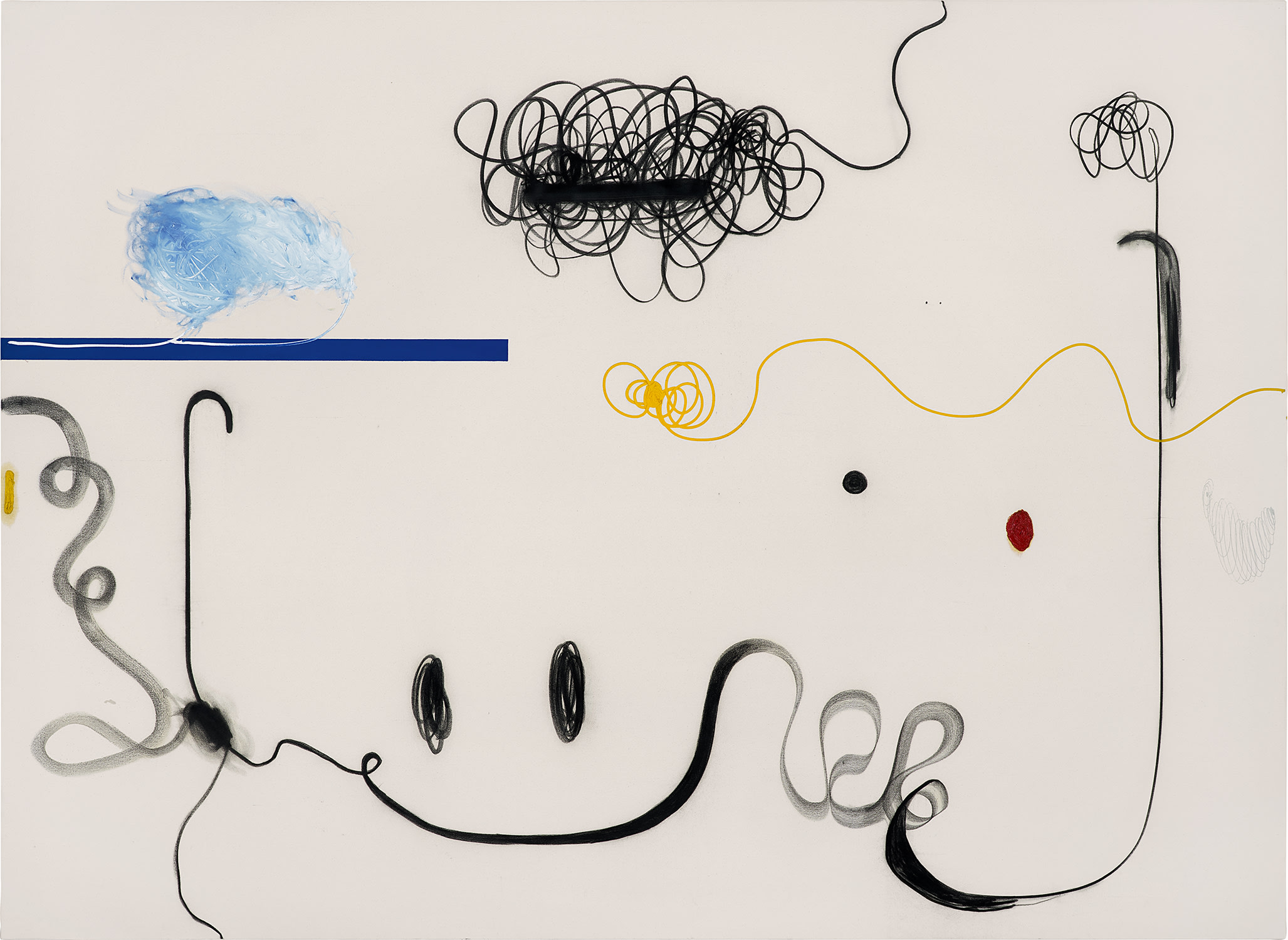
Christian Rosa
Christian Rosa Paints the World Alive
Artist Spotlight · The Collection Editorial
When Christian Rosa's paintings entered international gallery conversations in the early 2010s, they arrived with the force of something that had been building for a long time. His canvases, sprawling and restless, covered in gestural marks, drips, scrawled text, and layered surfaces that seemed to breathe, announced a painter who was not interested in refinement for its own sake. He was interested in truth, in the speed of thought, in the feeling of being alive inside a moment before language catches up. That urgency has never left his work, and it is precisely why collectors, curators, and fellow artists continue to orbit his practice with such sustained attention.
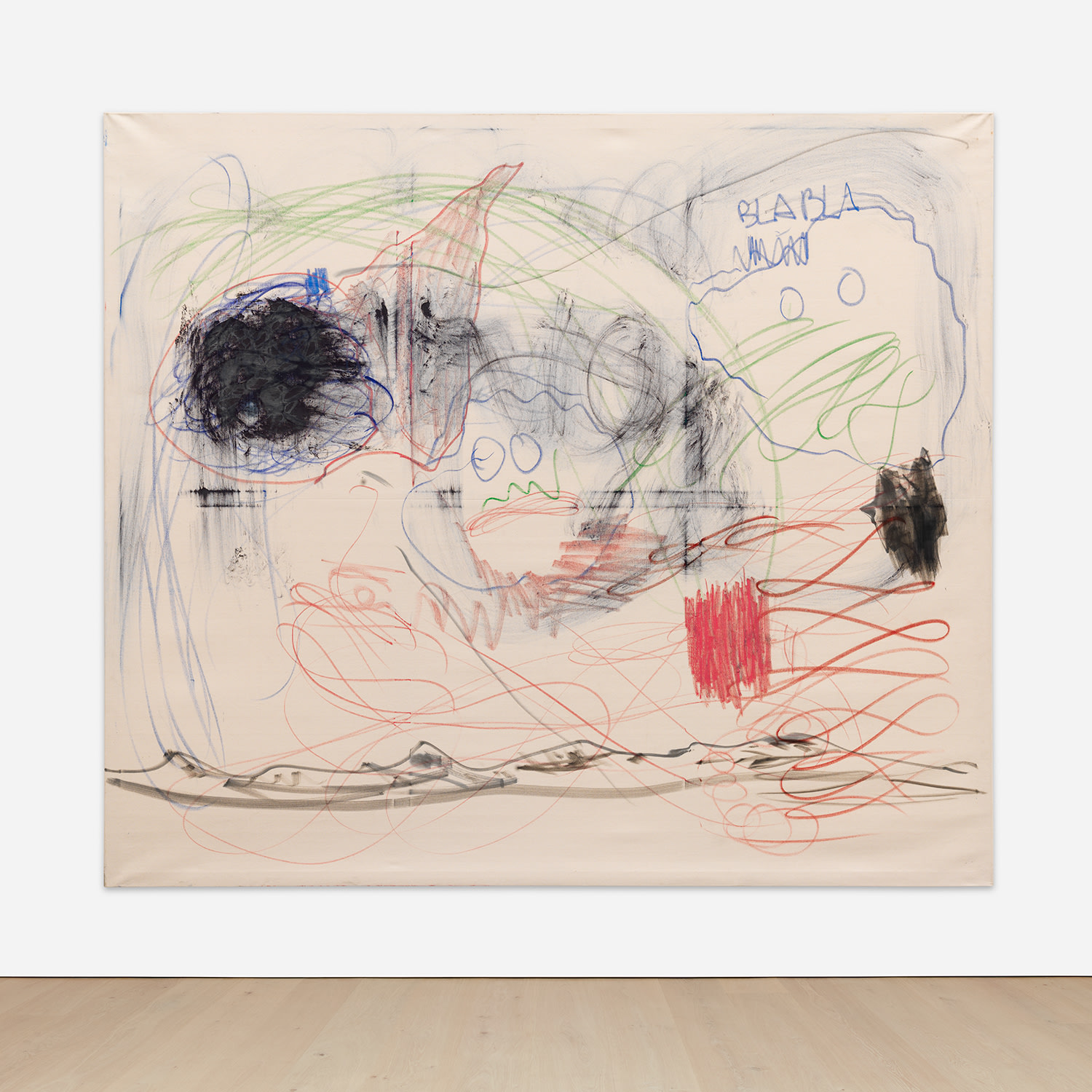
Christian Rosa
Bla, Bla, Bla, 2013
Rosa was born in Brazil in 1983, and his formation as a painter carries the layered complexity of someone who moved between worlds before settling in Los Angeles. Brazil shaped his instincts in ways that are difficult to fully quantify but easy to feel in front of his work. There is a physicality to his paintings, a willingness to let the body lead, that speaks to a visual culture rich in color, surface, and gesture. His relocation to Los Angeles brought him into contact with a city whose contradictions, its glamour and its grit, its sprawl and its solitude, would prove to be endlessly generative material.
Los Angeles gave Rosa a landscape both literal and psychological that he has been painting ever since. Rosa came to significant international attention during a period when painting itself was being reassessed with fresh seriousness. The early 2010s saw a renewed hunger among collectors and institutions for painters who could be both emotionally immediate and intellectually credible. Rosa fit that moment precisely, though he was never merely a product of it.
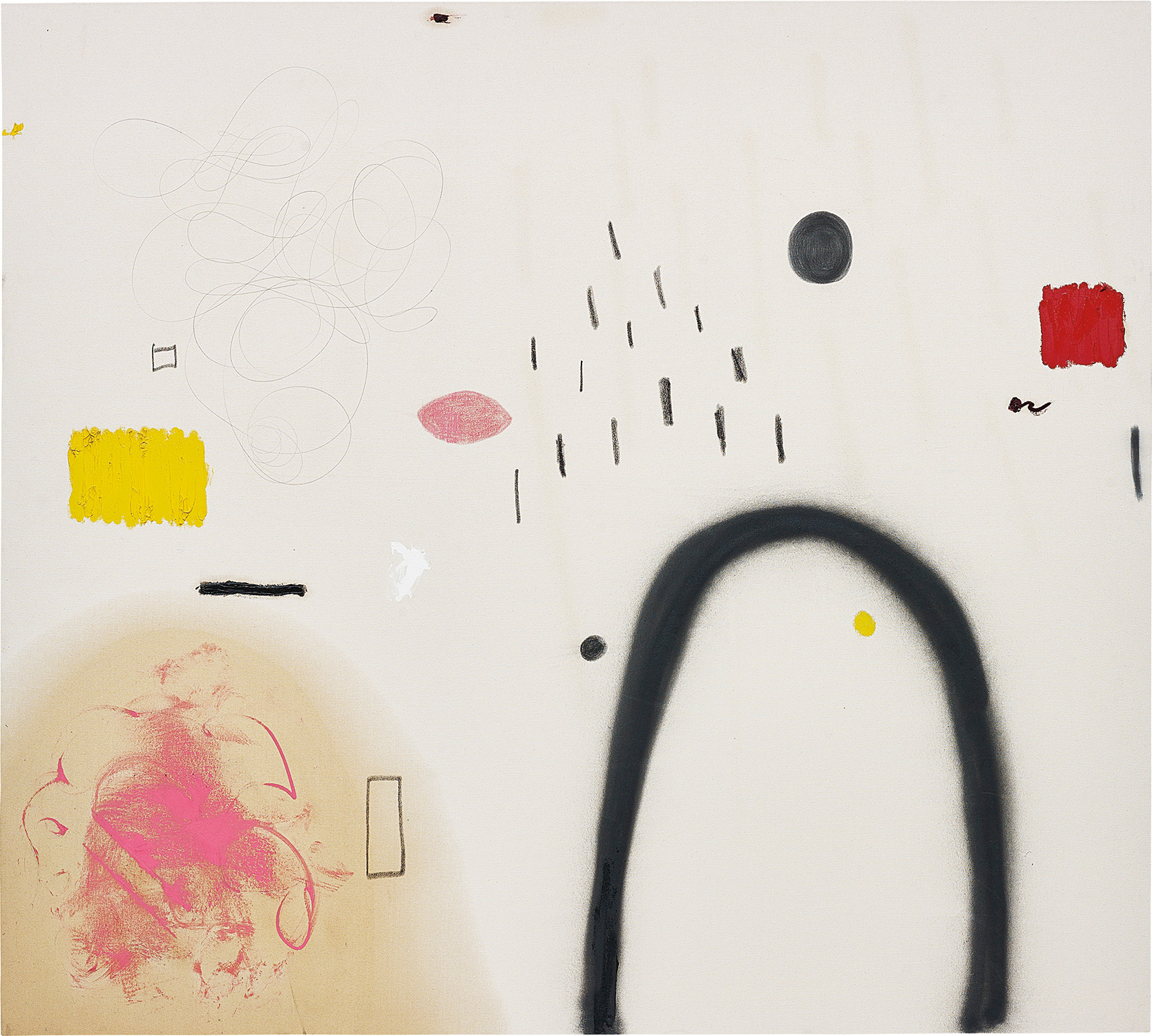
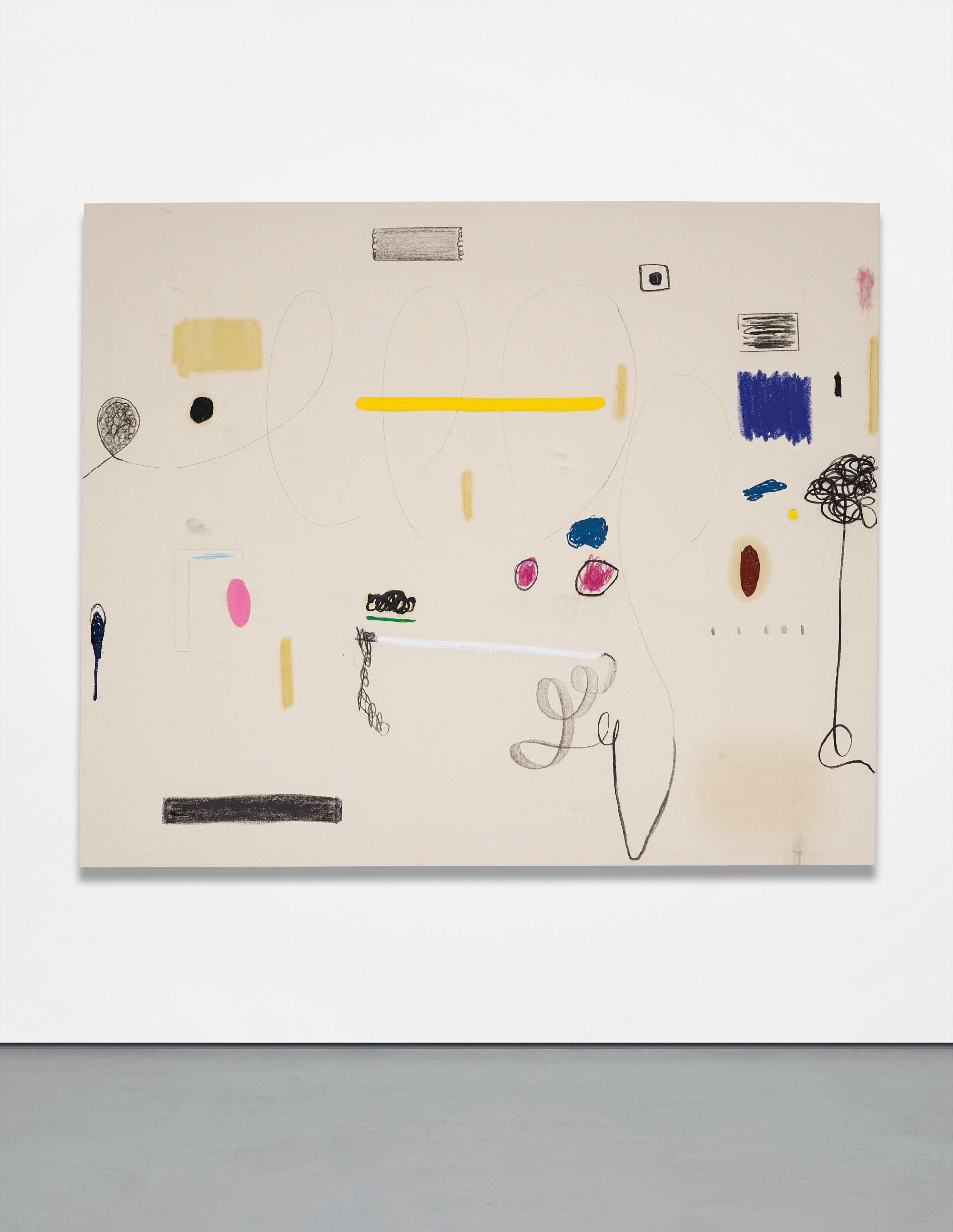
Christian Rosa
This could be it, 2013
His work drew comparisons to the Neo Expressionist painters of the 1980s, figures like Jean Michel Basquiat and Albert Oehlen, whose influence on gestural abstraction and the incorporation of text and raw mark making remain deeply felt. But Rosa's paintings carry a contemporary sensibility that distinguishes them clearly. They are not nostalgic documents of a past movement. They are urgent, present, and alive to the specific textures of life now.
The materials Rosa chooses are central to understanding what his paintings are doing. Works like "Walking is Working" from 2013 and "H>N>I>C head..." demonstrate his commitment to combining pencil, oil stick, charcoal, spray paint, graphite, gesso, and even tape on unprimed canvas, creating surfaces that record process as much as image. This is painting as archaeology of the self, where each layer holds a decision, a hesitation, a revision.
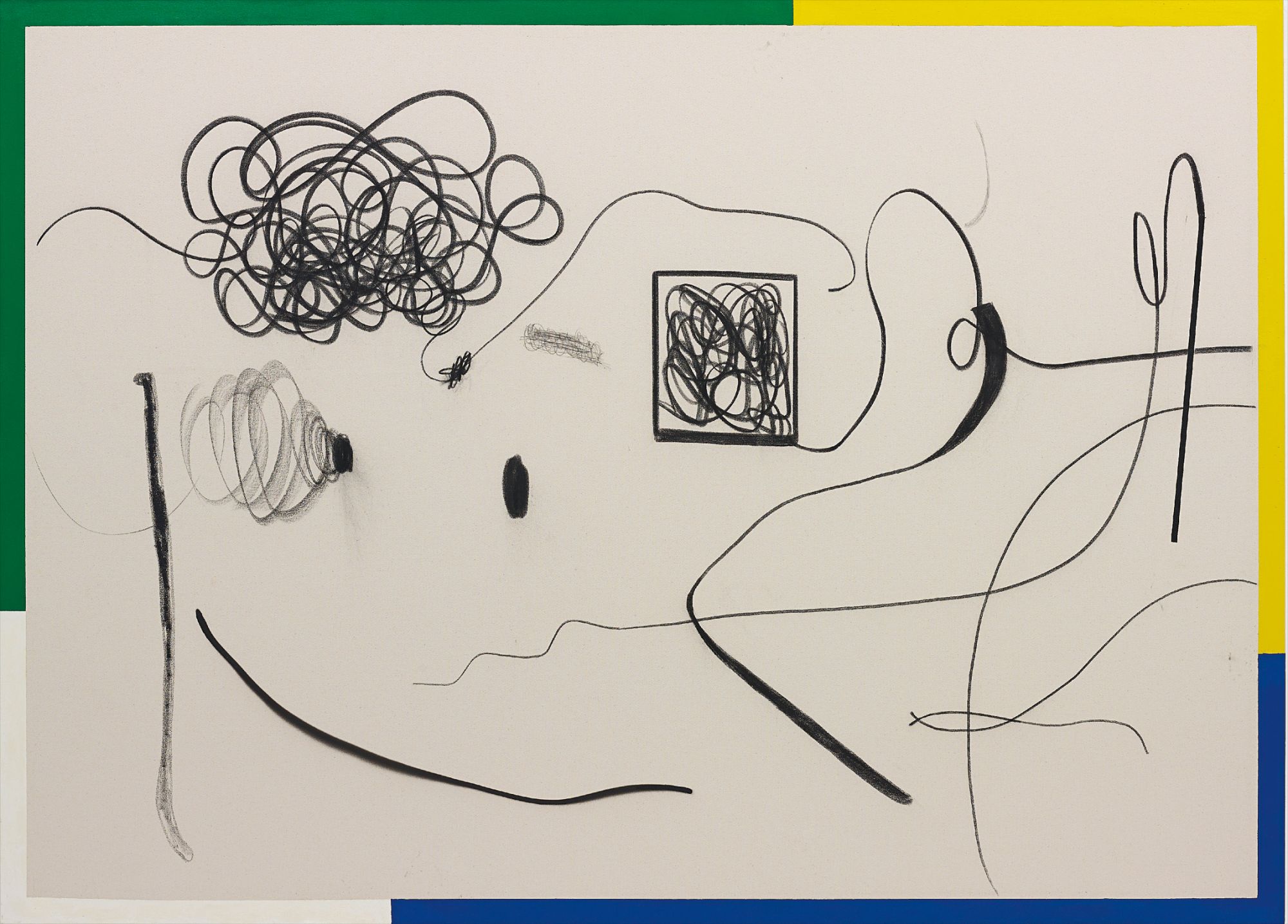
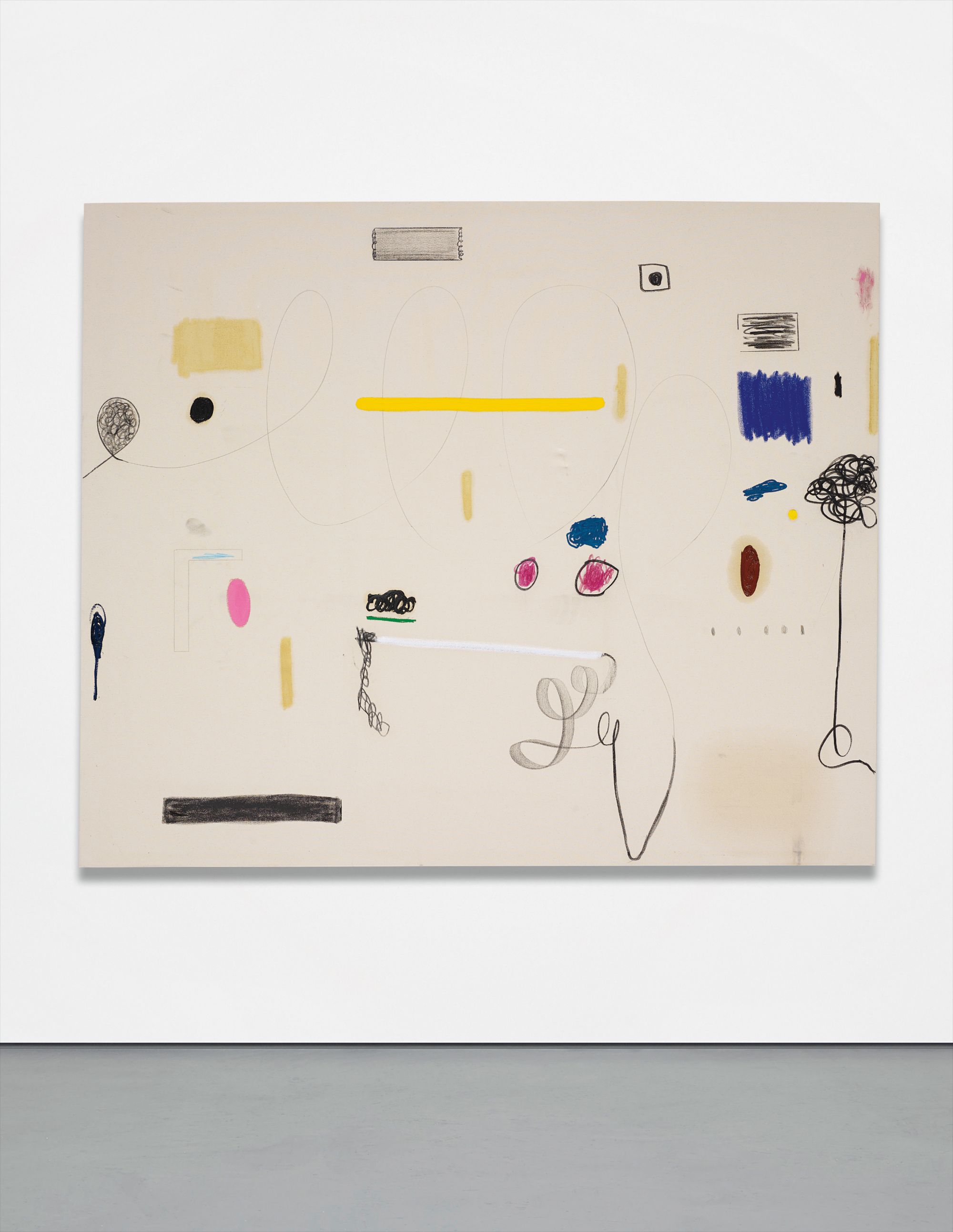
Christian Rosa
Alptraum nr1
"Flora or Floral," built from oil stick, oil paint, pencil, and charcoal, shows his ability to hold delicacy and aggression in the same visual field without either quality cancelling the other out. "Dead on Arrival" and "From Bitchy to Black Eye" carry similarly loaded titles that function as emotional anchors, titles that ask the viewer to bring their own experience into the room before they have even looked at the surface. Rosa's titles deserve their own consideration. They are not descriptive in any conventional sense.
They are more like mood boards or personal dispatches, fragments of inner monologue that orbit the painted surface without fully explaining it. "God Hopes" from 2015 and "Last Call" from the same year suggest a painter deeply engaged with questions of meaning, time, and what it feels like to be searching. "Alptraum nr1," a title that translates from German as nightmare, introduces a European literary consciousness into a practice otherwise firmly rooted in American West Coast energy and Brazilian bodily intuition. This range is not affectation.
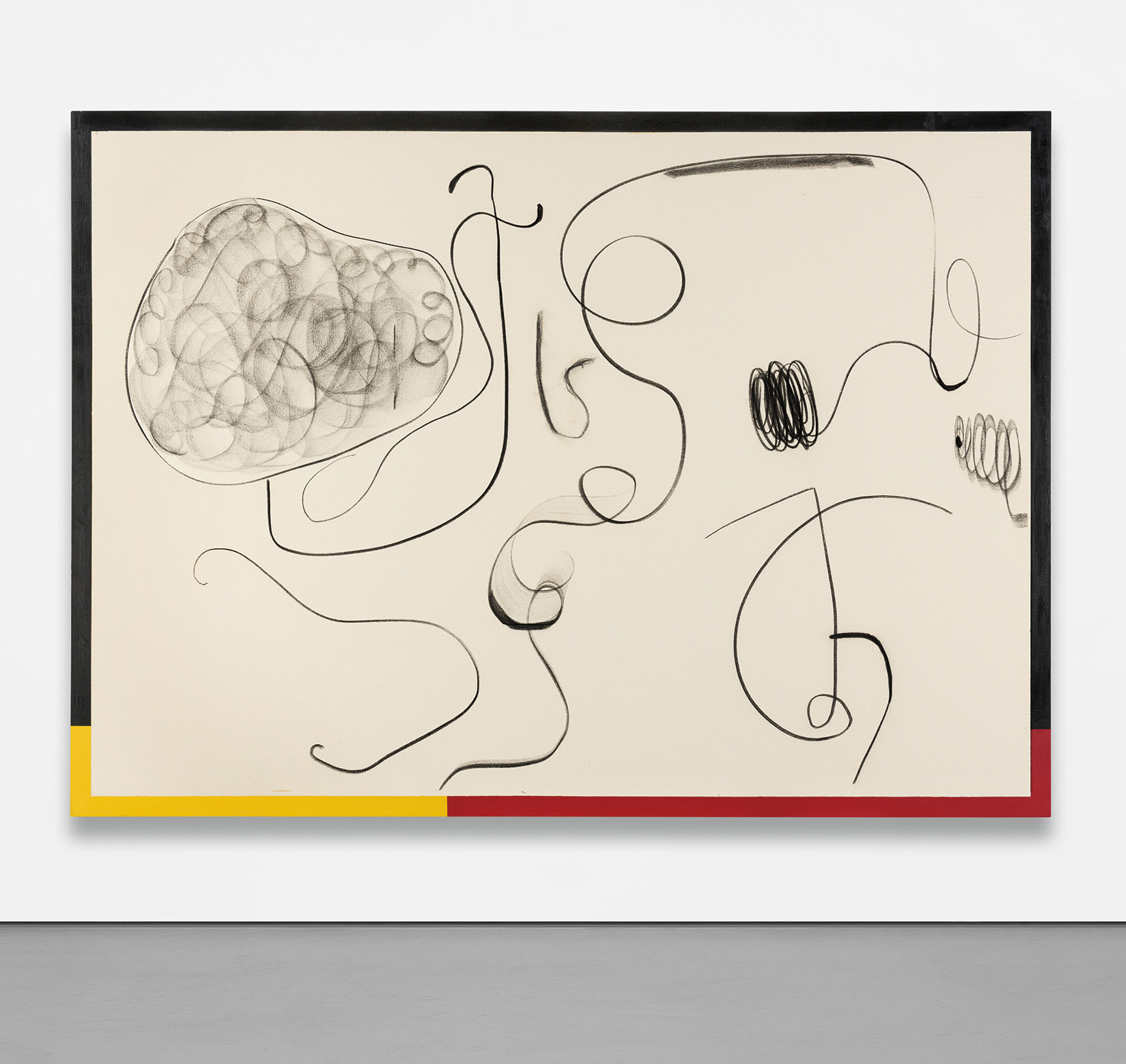
Christian Rosa
seasalt in heaven, 2014
It is evidence of a genuinely wide interior life that Rosa has committed to exploring through paint. From a collecting perspective, Rosa represents one of the more compelling positions in contemporary painting for several reasons. His works are materially complex and visually rewarding on multiple viewings, a quality that distinguishes lasting collecting relationships from purely speculative ones. The layered surfaces reward close looking and continue to reveal themselves over time.
Collectors who acquired his work in the early 2010s, when he was showing with galleries including Various Small Fires in Los Angeles and exhibited at institutions beginning to take serious notice of his practice, have watched those acquisitions become genuinely significant holdings. For collectors approaching his work now, the question is not whether he matters but how deeply they wish to engage with a practice that has proven both consistent and expansive. In the broader context of contemporary painting, Rosa belongs to a generation that includes painters navigating the inheritance of abstraction, figuration, and conceptual art simultaneously. Artists like Oscar Murillo and Kour Pour share with Rosa an investment in materiality, gesture, and the politics of mark making, though each arrives at their practice from deeply distinct personal and cultural positions.
What unites them is a refusal to treat painting as a solved problem. Rosa's relationship to the Neo Expressionist tradition is one of genuine dialogue rather than quotation. He takes the emotional directness of that lineage and runs it through a contemporary filter that is aware of irony, digital culture, and the particular exhaustion and exhilaration of living and making art in Los Angeles in the twenty first century. Rosa's legacy, still very much in the process of being written, already rests on a body of work that has demonstrated unusual staying power in a period when the art world has moved with particular speed.
His paintings do not age into irrelevance because they were never merely fashionable. They were always personal, which is the quality that keeps work alive across decades. To stand in front of a Christian Rosa canvas is to feel that another consciousness has been fully present in the room, has left something of itself behind in the paint, and is asking you to be equally present in return. That is not a small thing to ask, and it is not a small thing to offer.
It is, in the truest sense, what painting is for.
Featured Works