Christian Holstad
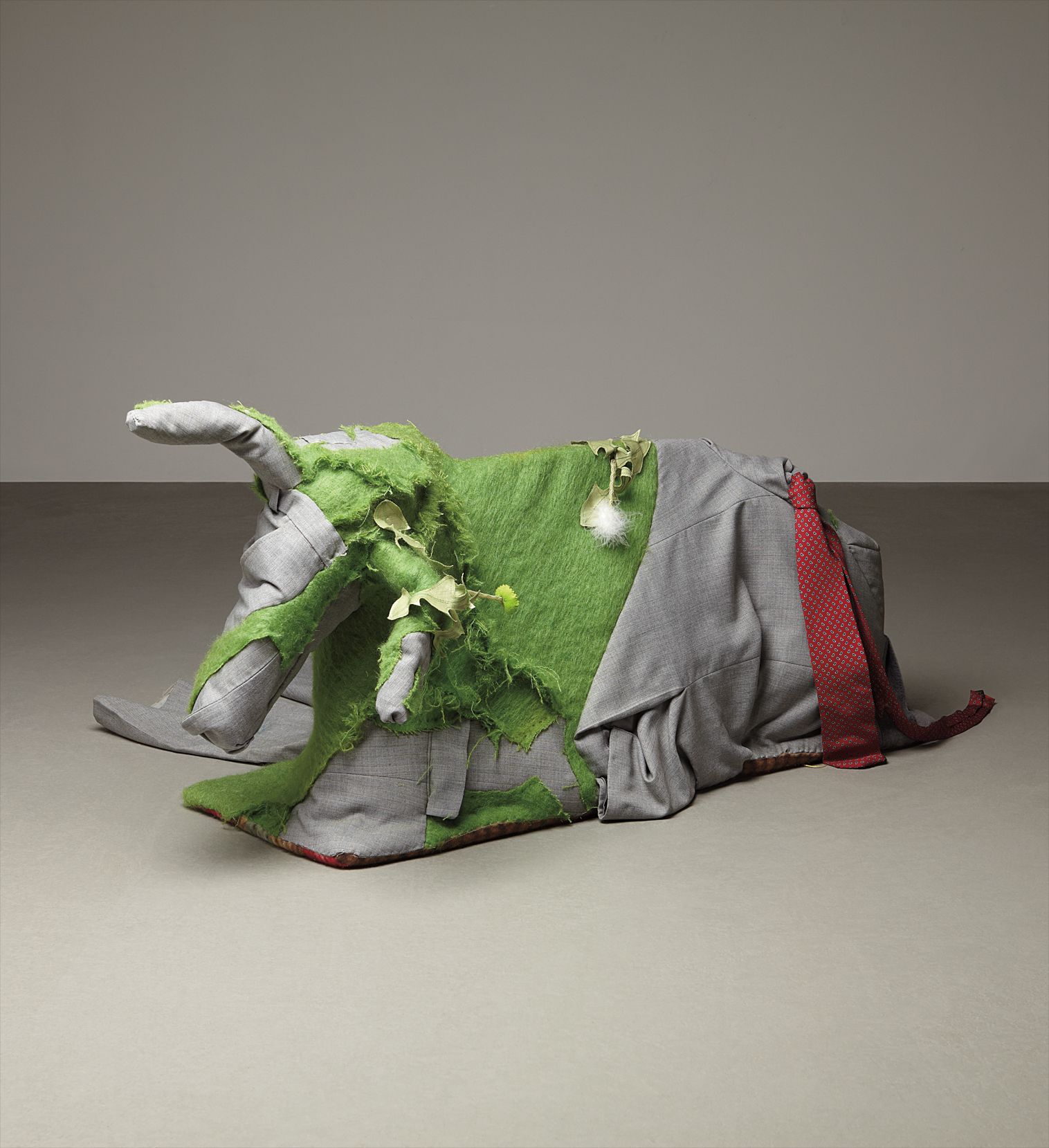
Christian Holstad, Tenderness Remade From Fragments
Artist Spotlight · The Collection Editorial
There is a particular kind of attention that runs through Christian Holstad's work, one that feels at once forensic and deeply compassionate. In recent years, that attention has drawn a growing audience of discerning collectors and curators to his practice, cementing his reputation as one of the most quietly essential voices to have emerged from New York's downtown art world in the early 2000s. His work sits comfortably in prestigious private collections across the United States and Europe, and his pieces appear with increasing frequency at major auction houses and in gallery presentations that reflect a sustained and serious market interest. To encounter a Holstad for the first time is often to feel that something private has been made newly visible, that the tender and the fractured have been reassembled into something whole.
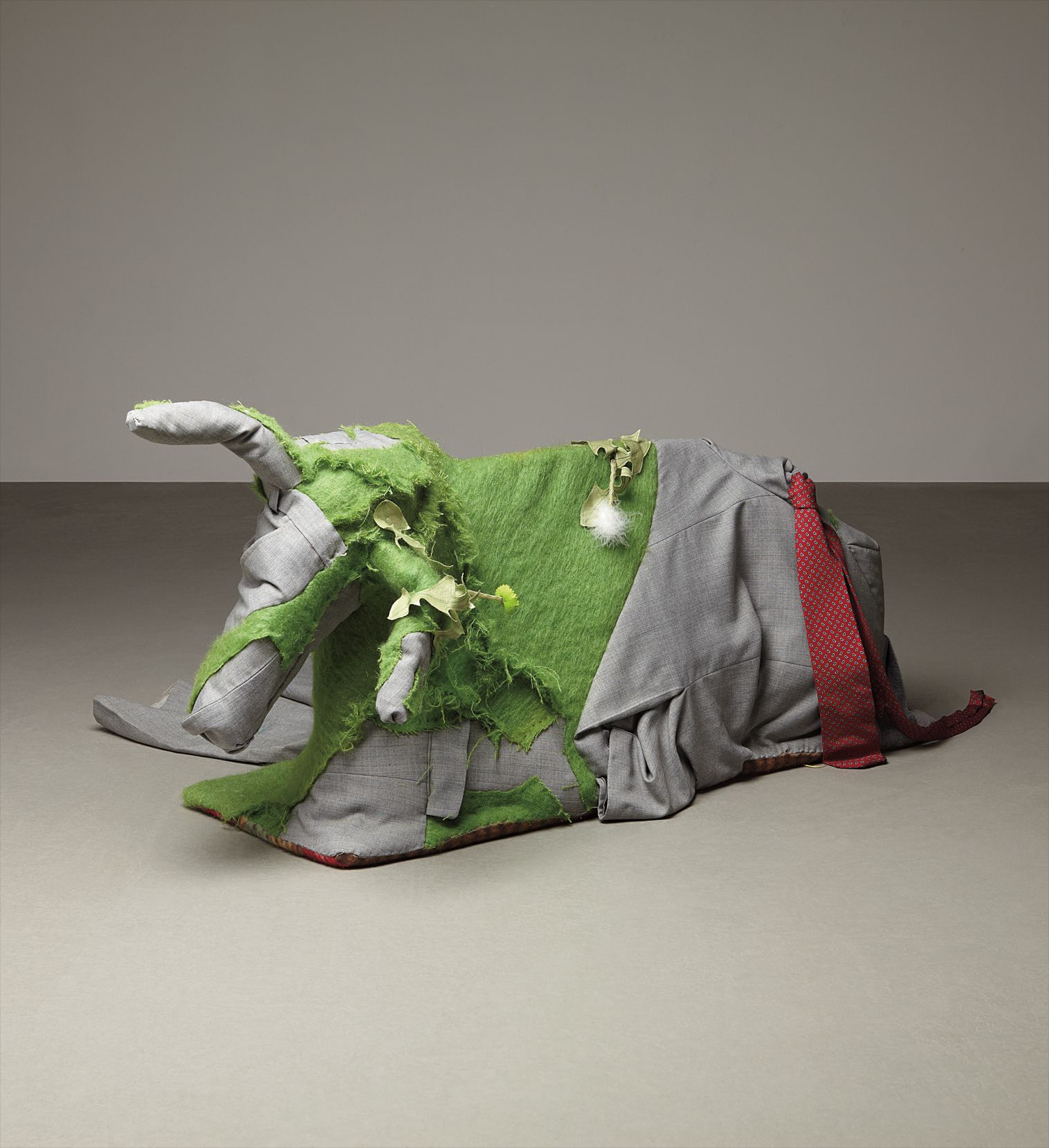
Christian Holstad
House Training #22
Born in 1972, Holstad came of age in an America saturated with consumer imagery, advertising language, and the particular emotional textures of mass media. These early encounters with the visual noise of contemporary life would prove foundational to his artistic sensibility. Like many artists of his generation, he arrived in New York at a moment when the city was still processing enormous social upheaval, and the downtown scene offered both community and creative permission. The influence of that environment, its wit, its grief, its irreverence, runs through everything he has made since.
Holstad's practice is genuinely multidisciplinary in a way that resists easy categorization. He works across drawing, collage, sculpture, installation, and performance, moving between these modes not out of restlessness but out of a conviction that different materials carry different emotional temperatures. His use of found materials and printed ephemera connects him to a long tradition of assemblage artists, but the sensibility he brings to that tradition is entirely his own. There is a handmade quality to even his most conceptually ambitious works, a sense that human hands have been at work in every decision, that nothing has been left to abstraction alone.
Christian Holstad
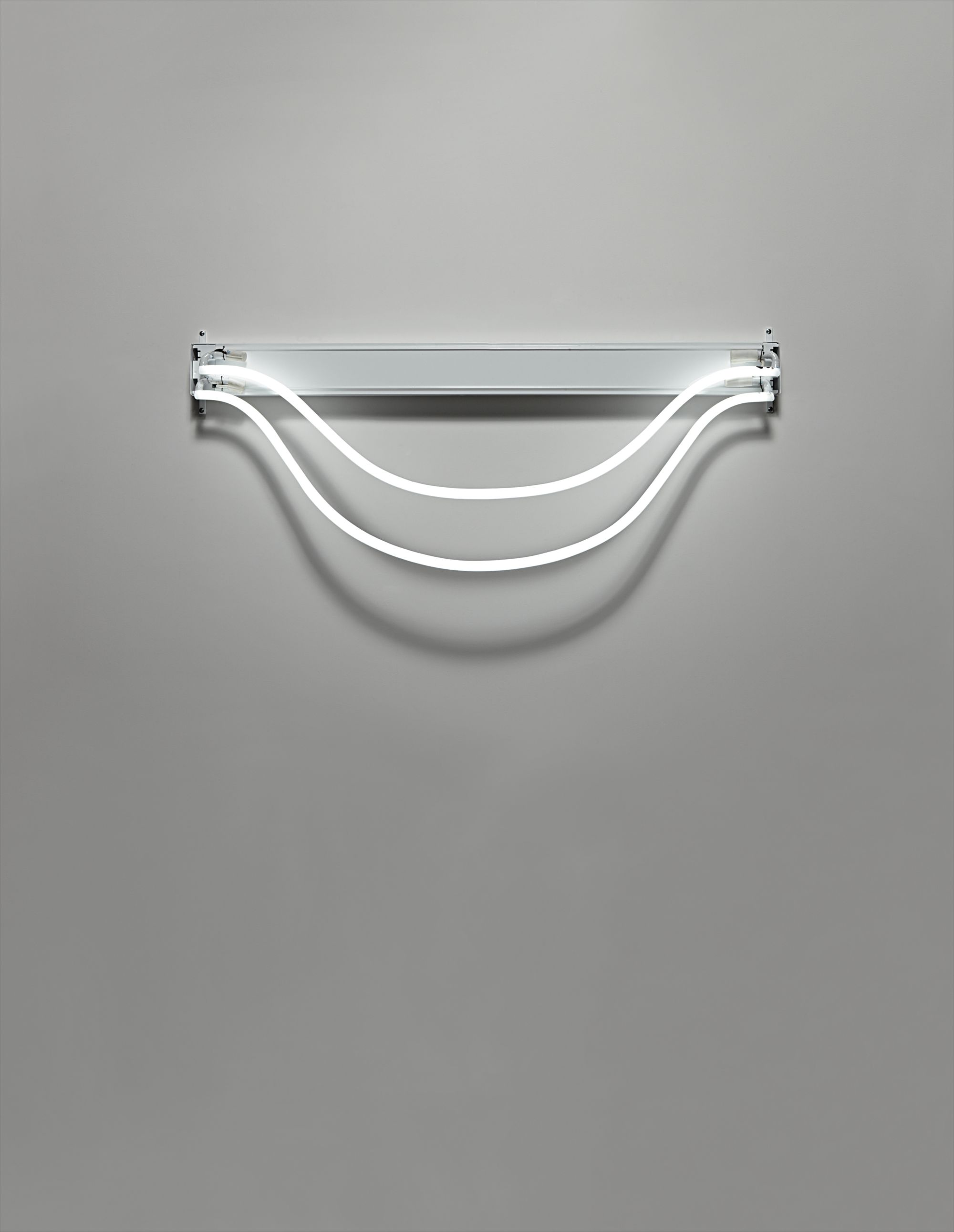
Light Fixtures #2
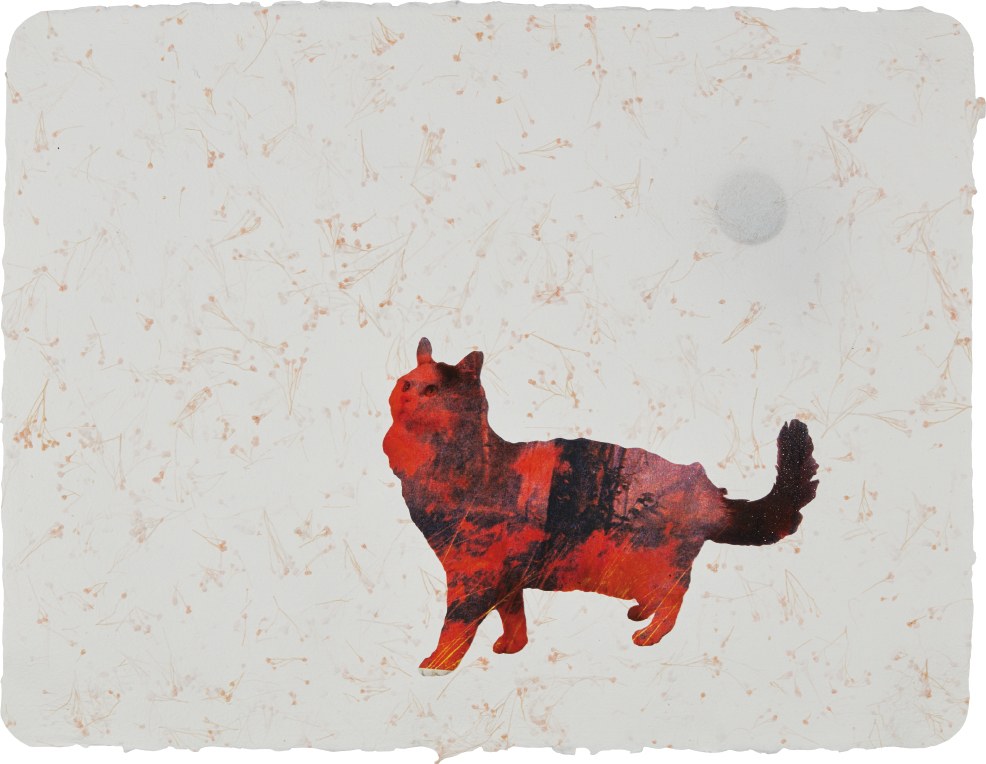
Among the works that collectors and curators return to most consistently are his collages on handmade paper, a body of work that includes pieces from the "Here Kitty Kitty" series, with examples from 2004 and 2005 among the most sought after. These works achieve something remarkable: they are simultaneously playful and unsettling, their layered surfaces accumulating meaning the way memory accumulates feeling. The series "Scaredy Cats" operates in a related register, using animal imagery and domestic reference points to open up questions about vulnerability, desire, and the strange theater of everyday life. His pencil works on erased newsprint, including pieces such as "Evils," "One Very Long Tone," "Oracle Leaper," and "Poof," all from 2004 and 2005, demonstrate his ability to find poetry in erasure itself, working with what remains after language and image have been partially removed.
Holstad's sculptural work reveals yet another dimension of his practice. "Allow the Sun to Shine Through," a painted ceramic urinal from 2007, places him in direct dialogue with the Duchampian readymade while insisting on a warmth and decorative sensibility that transforms the conceptual gesture into something more personal and emotionally resonant. His neon and light works, including "Light Fixtures," which incorporates fluorescent light casing, copper wire, plastic tubing, spray paint, and electrical cord, demonstrate a sophisticated engagement with the aesthetics of signage and commercial display. These works borrow the language of desire from advertising and retail environments and redirect it toward more intimate and searching ends.
Christian Holstad
Here Kitty Kitty #3, 2004
The result is art that knows exactly what it is quoting and chooses to mean something different by it. From a collecting perspective, Holstad represents an opportunity that serious collectors recognize as increasingly rare: a significant body of work that rewards close looking, that holds its value both aesthetically and in market terms, and that carries genuine art historical weight. His works on paper in particular have attracted strong collector interest, and the handmade paper collages from the early 2000s represent some of the most compelling acquisitions available to collectors seeking work from that pivotal period in New York art. The specificity of his materials, the fact that many works incorporate found and ephemeral elements, means that each piece carries a documentary charge as well as an aesthetic one.
Collectors who have lived with his work often speak of discovering new details over time, of the way a Holstad seems to give back more than it initially reveals. In situating Holstad within a broader art historical context, it is useful to think about the constellation of artists who emerged in and around New York in the late 1990s and early 2000s and who shared an interest in the politics of desire, the poetics of the everyday, and the possibilities of collage and assemblage as critical tools. His sensibility has points of contact with artists such as Jack Pierson, whose work similarly navigates vulnerability and found language, and with the broader legacy of artists like Mike Kelley and Ray Johnson, who demonstrated how humor and pathos could coexist without either undermining the other. Holstad occupies a distinct position within this lineage, one shaped by his particular attentiveness to queer experience, consumer culture, and the emotional residue of mass media.
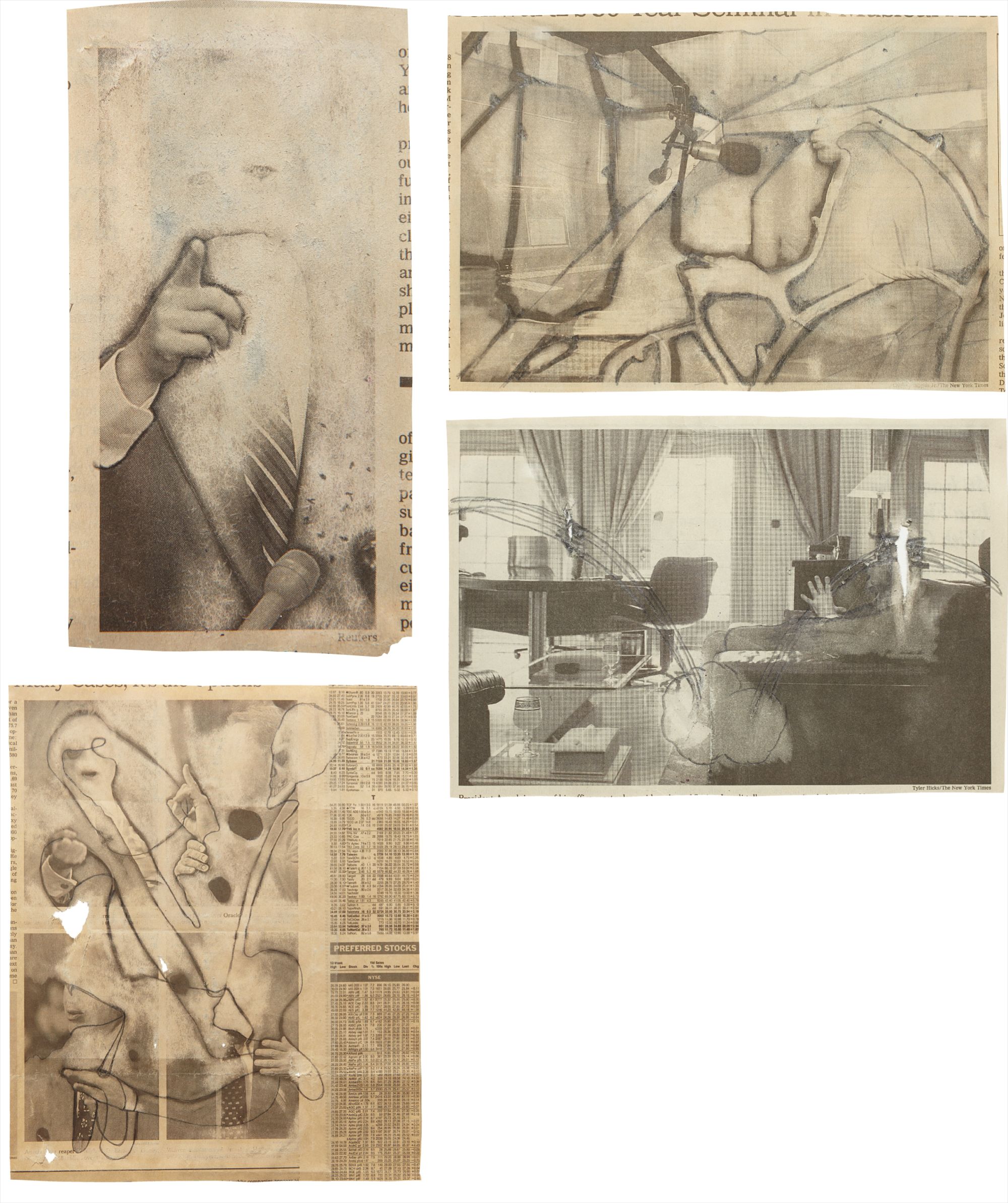
Christian Holstad
Four works: (i) Evils, 2004; (ii) One Very Long Tone, 2004; (iii) Oracle Leaper, 2005; (iv) Poof, 2004
What makes Holstad's work matter today is precisely what has always made it matter: its refusal to separate the political from the personal, its insistence that desire and grief and irony can all live in the same work without canceling one another out. In a cultural moment when so much art feels either earnestly didactic or deliberately opaque, his practice offers something genuinely rare, which is intelligence worn lightly, depth that arrives without announcing itself. His work rewards the collector who is willing to sit with it, to follow its associations, to allow its layers to accumulate over time. That is the kind of work that endures, and Holstad has been making it with remarkable consistency for more than two decades.