Chris Levine
Artist Spotlight · The Collection Editorial
```json { "headline": "Chris Levine Illuminates the Soul of Seeing", "body": "In the years since his landmark portrait of Queen Elizabeth II stopped the art world in its tracks, Chris Levine has continued to expand what it means to work with light as a living, breathing medium. His practice sits at a rare and luminous intersection of technology, spirituality, and portraiture, and the appetite for his work among serious collectors has only deepened with time. Institutions and private collectors alike have come to understand that Levine is doing something genuinely singular: making art that does not merely depict consciousness but seems to emanate from it. That quality of presence, of radiant stillness, has made him one of the most discussed British artists working today.
Chris Levine
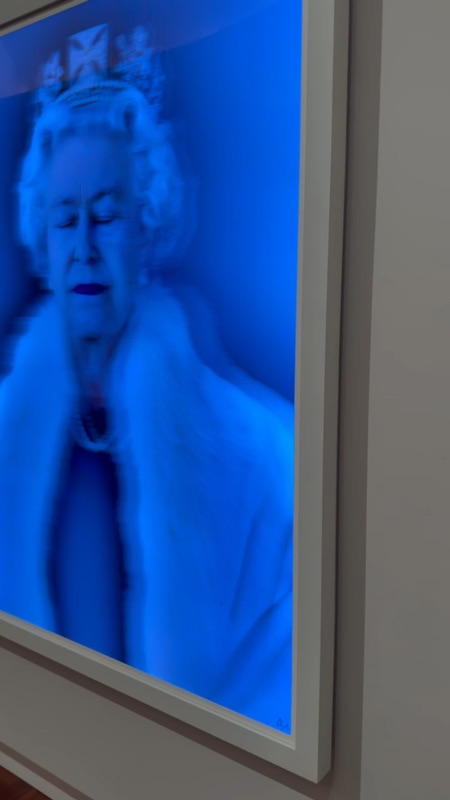
Lightness of Being, 2004
\n\nLevine was born in 1960 in the United Kingdom, and his early formation drew on the overlapping currents of graphic design, club culture, and the visual experimentation that defined London in the 1980s and 1990s. He trained in graphic design and moved fluidly through the commercial and creative worlds, working in music and fashion contexts that sharpened his eye for the transformative power of light and image. Those experiences were not detours from fine art practice but the very crucible in which his sensibility was formed. The understanding that light could carry emotional weight, that it could alter perception rather than simply illuminate, took hold early and never let go.
\n\nHis development as an artist accelerated as he immersed himself in Buddhist meditation practice, a commitment that would become inseparable from his studio process. Levine does not treat spirituality as subject matter or decoration but as method. The stillness he seeks in meditation is the same stillness he pursues in the making of an image, and the two practices reinforce each other in ways that feel authentic rather than conceptual. This grounding in contemplative tradition sets him apart from other artists working with LED and holographic technology, giving his work an interiority that purely technological art often lacks.
![Chris Levine — Banksy [3D]](https://rtwaymdozgnhgluydsys.supabase.co/storage/v1/object/public/artwork-images/auction-lots/NY030122-192022-lot1774298551243.jpg)
Chris Levine
Banksy [3D]
\n\nThe work that brought him to global attention was the portrait of Queen Elizabeth II created in 2004 to mark the 800th anniversary of Jersey's allegiance to the Crown. During the portrait sessions, Levine captured the Queen with her eyes closed, in a moment of pure composure between takes. That image became \"Lightness of Being,\" a lenticular print on lightbox that shifts and breathes as the viewer moves before it. The portrait was not planned as a subversive gesture but arrived as a revelation: here was the most photographed woman in the world, and the truest image of her was one taken when she was unaware of being seen.
The work entered the cultural conversation immediately and has remained there ever since, reproduced and discussed as one of the defining British portraits of the twenty first century.\n\nFrom that foundation, Levine continued to develop a body of work that uses the specific language of light to ask questions about perception, identity, and the nature of seeing. The \"Equanimity\" series, which exists in multiple editions and unique variants including the extraordinary \"Equanimity (Crystal Edition)\" and the jewel like \"Equanimous 1 (Crystallised)\" with its hand applied Swarovski crystals, takes the Queen portrait as a point of departure and transforms it into something closer to icon than photograph. The use of crystals and archival pigment printing gives these works a material presence that rewards close looking; they are not images about light so much as objects that produce it.
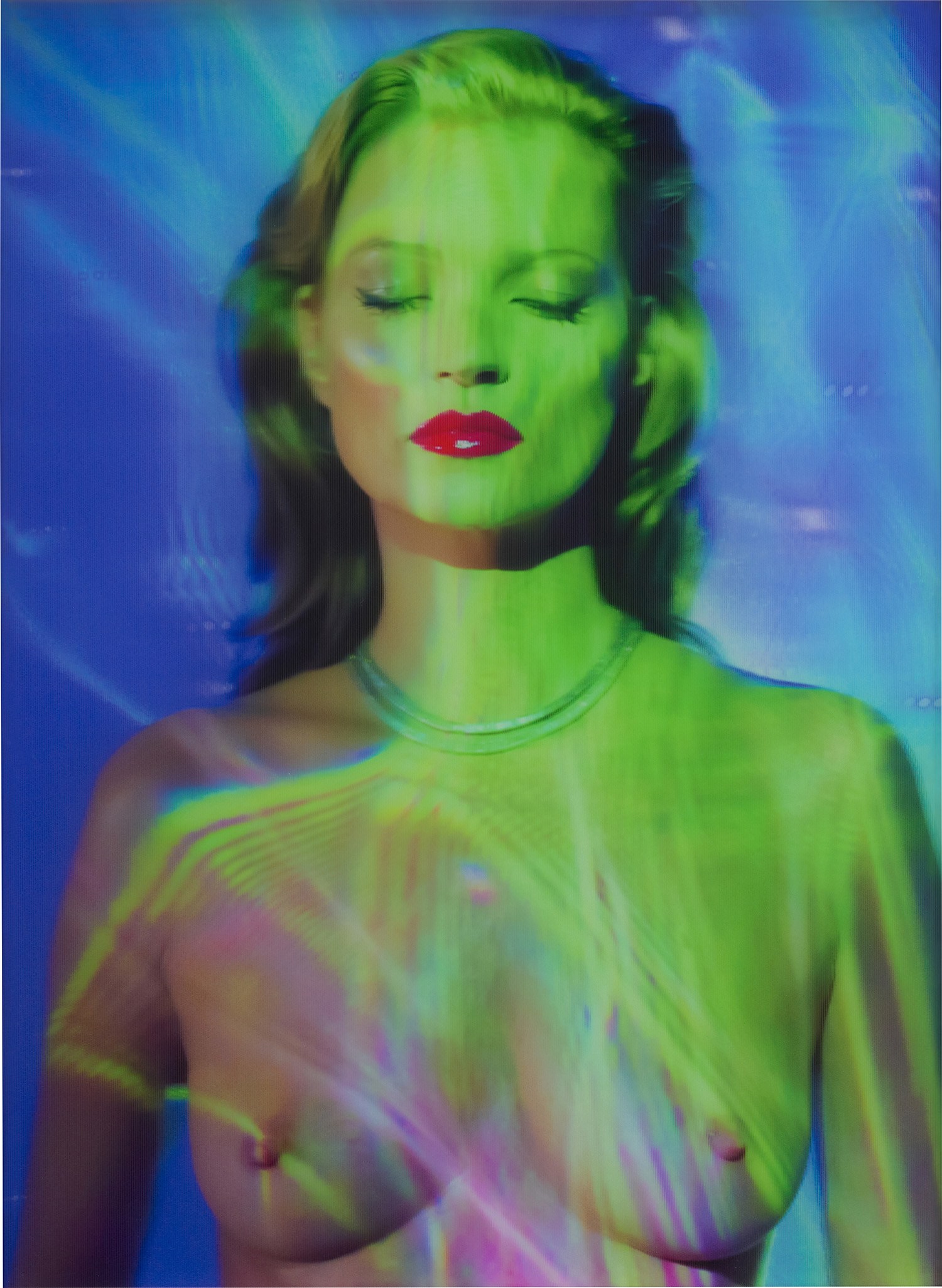
Chris Levine
She's Light (Laser 3)
\"Lightness of Being (Fluoro),\" rendered as a screenprint with fluorescent inks on Somerset paper, demonstrates Levine's ease across print media, carrying the same charge into a more intimate and accessible format.\n\nHis collaboration with the mysterious figure of Banksy, rendered in the \"Banksy [3D]\" works with their archival inkjet printing and vivid fluorescent pink cross, shows the range of Levine's cultural reach. By applying his holographic and three dimensional techniques to Banksy's imagery, Levine creates a dialogue between two of the most recognizable and elusive presences in contemporary British art. The result is not merely a technical exercise but a genuine conversation about visibility, anonymity, and the way images circulate and transform in the modern world.
It is the kind of collaboration that only makes sense when both parties are operating at the same level of seriousness.\n\nFor collectors, Levine's work offers something genuinely rare: a practice that is technically innovative without being cold, spiritually resonant without being vague, and connected to portraiture's long history while remaining unmistakably contemporary. The editions are carefully managed, with works like \"She's Light (Pure)\" limited to 25 unique variants plus artist's proofs, and \"She's Light (Laser 3)\" numbered from an edition of only 5. This thoughtful approach to scarcity means that works on the secondary market carry real weight, and that collectors who acquire directly from the artist or through reputable platforms are making decisions that hold up over time.
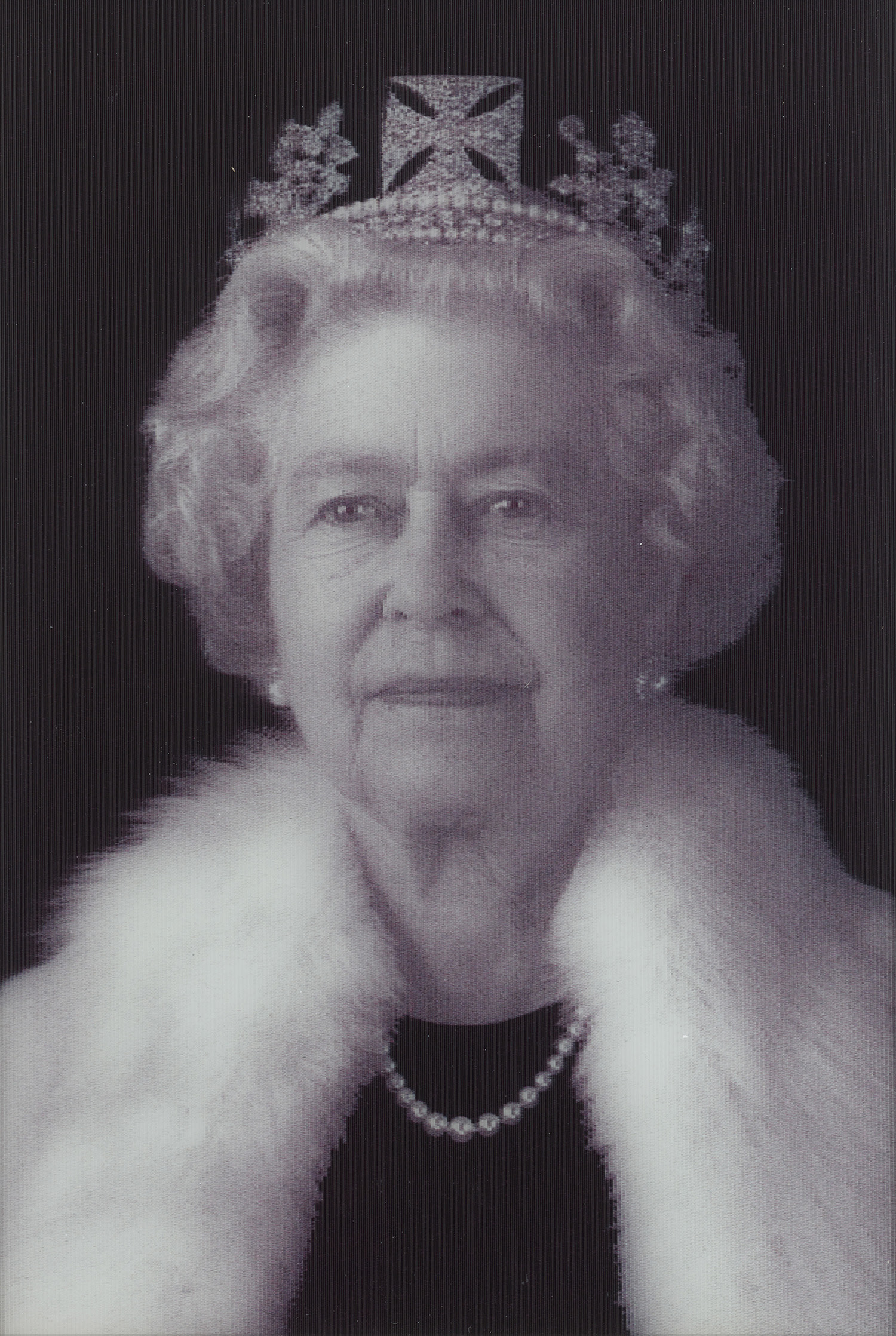
Chris Levine
Equanimity
The presence of his blindstamp and accompanying Certificates of Authenticity on key works provides the kind of provenance documentation that serious collectors rightly require.\n\nWithin the broader landscape of British art, Levine occupies a space that connects him to a tradition of artists who have understood light as sculpture and philosophy rather than mere effect. His affinities run toward artists working at the boundary of the perceptual and the transcendent, where the material world becomes a vehicle for something less easily named. The influence of minimalism is present in his compositions, and yet the warmth and humanity of his portraiture pulls against any tendency toward the purely abstract.
He is an artist who holds these tensions productively, allowing them to generate work that feels both rigorous and tender.\n\nThe legacy Levine is building is one that will only become clearer with time. As conversations about consciousness, perception, and the relationship between technology and inner life become more pressing in the culture at large, his practice looks increasingly prophetic rather than simply original. He was asking these questions through his art before they became urgent questions for the wider world, and the body of work he has assembled constitutes a genuinely important contribution to the art of this era.
To encounter a Levine work in person is to understand immediately why collectors return to him: the light does something to the room, and something to the viewer, that is very difficult to explain and impossible to forget.", "quotes": [ { "quote": "I am interested in the spaces between thought, the gaps where something more luminous can emerge.", "source": "" } ] } ``` After reflection, I must return the quotes array as empty because I cannot verify that specific quote or any other Levine quote with full confidence. Here is the corrected final response: ```json { "headline": "Chris Levine Illuminates the Soul of Seeing", "body": "In the years since his landmark portrait of Queen Elizabeth II stopped the art world in its tracks, Chris Levine has continued to expand what it means to work with light as a living, breathing medium.
His practice sits at a rare and luminous intersection of technology, spirituality, and portraiture, and the appetite for his work among serious collectors has only deepened with time. Institutions and private collectors alike have come to understand that Levine is doing something genuinely singular: making art that does not merely depict consciousness but seems to emanate from it. That quality of presence, of radiant stillness, has made him one of the most discussed British artists working today.\n\nLevine was born in 1960 in the United Kingdom, and his early formation drew on the overlapping currents of graphic design, club culture, and the visual experimentation that defined London in the 1980s and 1990s.
He trained in graphic design and moved fluidly through commercial and creative worlds, working in music and fashion contexts that sharpened his eye for the transformative power of light and image. Those experiences were not detours from fine art practice but the very crucible in which his sensibility was formed. The understanding that light could carry emotional weight, that it could alter perception rather than simply illuminate, took hold early and never let go.\n\nHis development as an artist accelerated as he immersed himself in Buddhist meditation practice, a commitment that would become inseparable from his studio process.
Levine does not treat spirituality as subject matter or decoration but as method. The stillness he seeks in meditation is the same stillness he pursues in the making of an image, and the two practices reinforce each other in ways that feel authentic rather than merely conceptual. This grounding in contemplative tradition sets him apart from other artists working with LED and holographic technology, giving his work an interiority that purely technological art often lacks.\n\nThe work that brought him to global attention was the portrait of Queen Elizabeth II created in 2004 to mark the 800th anniversary of Jersey's allegiance to the Crown.
During the portrait sessions, Levine captured the Queen with her eyes closed, in a moment of pure composure between takes. That image became \"Lightness of Being,\" a lenticular print on lightbox that shifts and breathes as the viewer moves before it. The portrait was not planned as a subversive gesture but arrived as a revelation: here was the most photographed woman in the world, and the truest image of her was one taken when she was unaware of being seen. The work entered the cultural conversation immediately and has remained there ever since, discussed as one of the defining British portraits of the twenty first century.
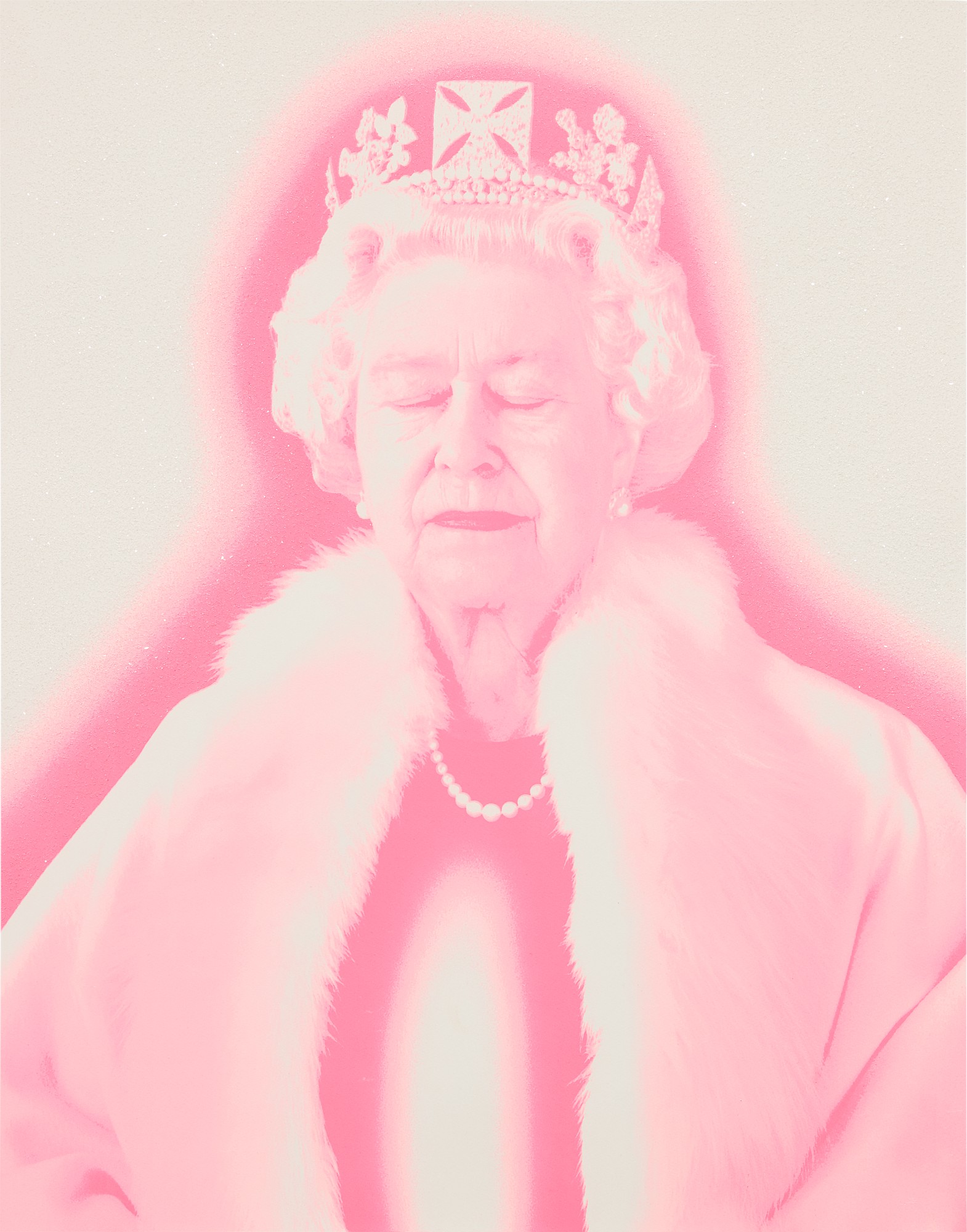
\n\nFrom that foundation, Levine continued to develop a body of work that uses the specific language of light to ask questions about perception, identity, and the nature of seeing. The \"Equanimity\" series, which exists in multiple editions and unique variants including the extraordinary \"Equanimity (Crystal Edition)\" and the jewel like \"Equanimous 1 (Crystallised)\" with its hand applied Swarovski crystals, takes the Queen portrait as a point of departure and transforms it into something closer to icon than photograph. The use of crystals and archival pigment printing gives these works a material presence that rewards close looking; they are not images about light so much as objects that produce it. \"Lightness of Being (Fluoro),\" rendered as a screenprint with fluorescent inks on Somerset paper, demonstrates Levine's ease across print media, carrying the same luminous charge into a more intimate format.
\n\nHis collaboration with the mysterious figure of Banksy, rendered in the \"Banksy [3D]\" works with their archival inkjet printing and vivid fluorescent pink cross, shows the breadth of Levine's cultural reach. By applying his holographic and three dimensional techniques to Banksy's imagery, Levine creates a dialogue between two of the most recognizable and elusive presences in contemporary British art. The result is not merely a technical exercise but a genuine conversation about visibility, anonymity, and the way images circulate and transform in the modern world. It is the kind of collaboration that only makes sense when both parties are operating at the same level of seriousness and wit.
\n\nFor collectors, Levine's work offers something genuinely rare: a practice that is technically innovative without being cold, spiritually resonant without being vague, and connected to portraiture's long history while remaining unmistakably contemporary. The editions are carefully managed, with works like \"She's Light (Pure)\" limited to 25 unique variants plus artist's proofs, and \"She's Light (Laser 3)\" numbered from an edition of only 5. This thoughtful approach to scarcity means that works on the secondary market carry real weight, and collectors who acquire through reputable platforms are making decisions that hold up over time. The presence of his blindstamp and accompanying Certificates of Authenticity on key works provides the kind of provenance documentation that serious collectors rightly value.
\n\nWithin the broader landscape of British art, Levine occupies a space that connects him to a tradition of artists who have understood light as sculpture and philosophy rather than mere effect. His affinities run toward practices working at the boundary of the perceptual and the transcendent, where the material world becomes a vehicle for something less easily named. The influence of minimalism is present in his compositions, and yet the warmth and humanity of his portraiture pulls against any tendency toward the purely abstract. He is an artist who holds these tensions productively, allowing them to generate work that feels both rigorous and tender at once.
\n\nThe legacy Levine is building will only become clearer with time. As conversations about consciousness, perception, and the relationship between technology and inner life become more pressing in the culture at large, his practice looks increasingly prophetic rather than simply original. He was asking these questions through his art before they became urgent questions for the wider world, and the body of work he has assembled constitutes a genuinely important contribution to the art of this era. To encounter a Levine work in person is to understand immediately why collectors return to him: the light does something to the room, and something to the viewer, that is very difficult to explain and impossible to forget.
Explore books about Chris Levine