Chris Huen Sin Kan
Chris Huen Sin Kan, Painting Life With Love
Artist Spotlight · The Collection Editorial
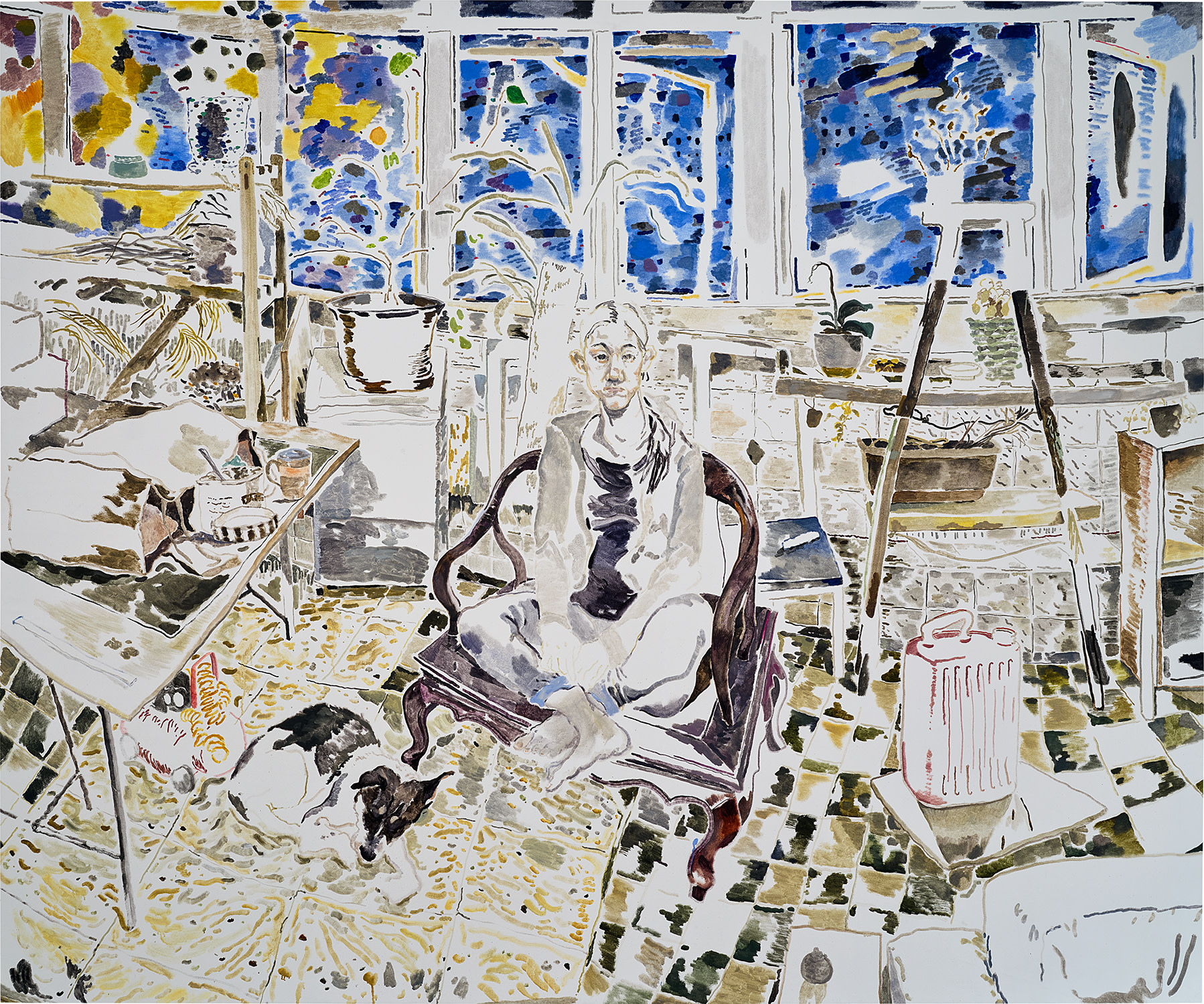
There is a particular quality of light that settles over a Hong Kong apartment in the late afternoon, warm and diffuse, softening the edges of furniture and falling gently across the fur of a sleeping cat. It is precisely this light, and the tender life it illuminates, that has made Chris Huen Sin Kan one of the most compelling painters to emerge from the city in a generation. Born in 1990, Huen has spent the better part of the last decade building a body of work that feels at once deeply personal and universally recognizable, a record of domesticity rendered with the kind of attentiveness that transforms the ordinary into something quietly extraordinary. His growing presence in the Asian contemporary art market, with works appearing at major auction houses and finding homes in significant private collections across the region, speaks to an audience that has found in his canvases something rare: sincerity without sentimentality.
Chris Huen Sin Kan
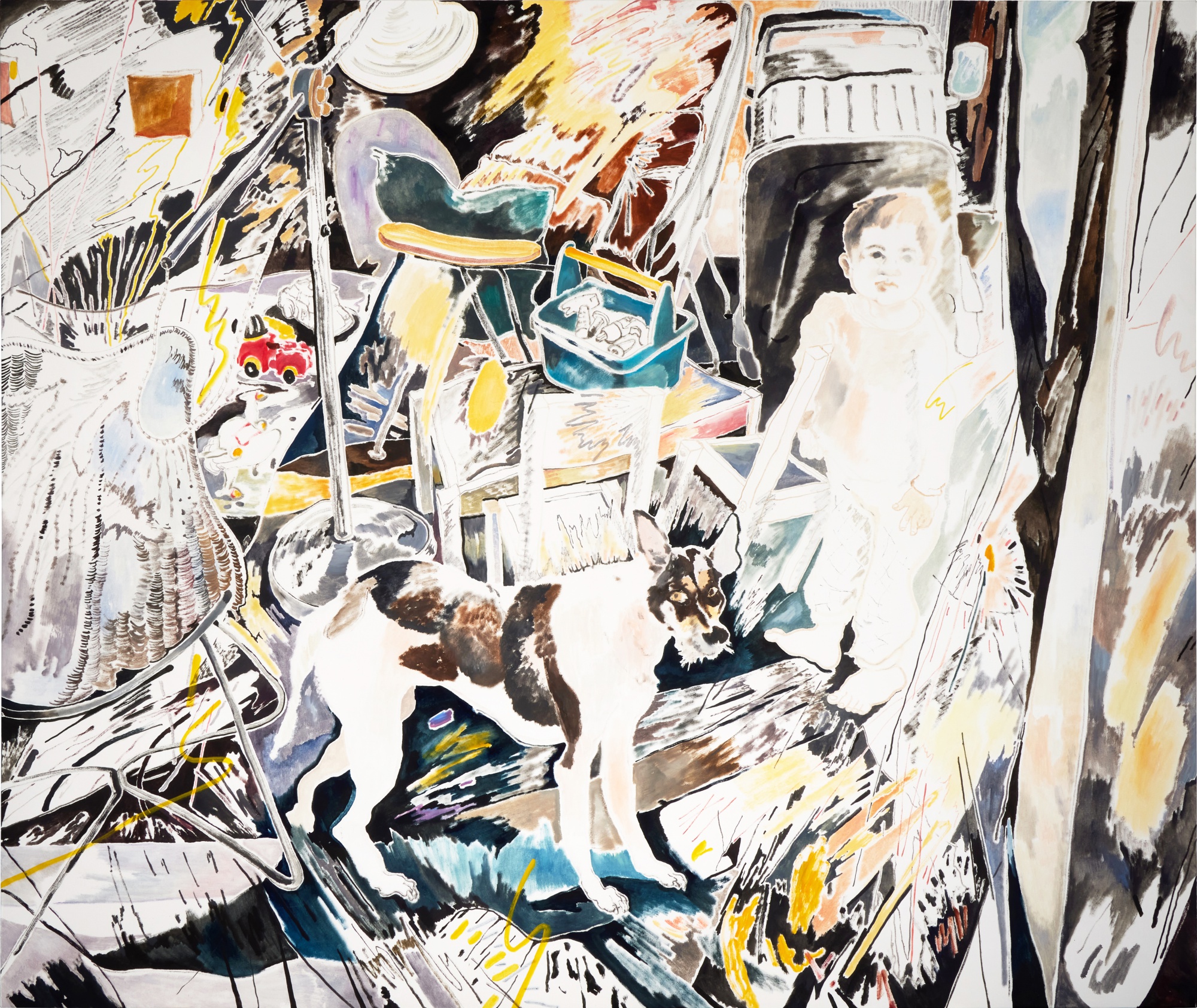
Balltsz and Joel BALLTSZ 和 JOEL
Huen grew up in Hong Kong, a city whose visual density and cultural layering have always made it a fertile ground for artists willing to look closely at what is right in front of them. His formation as a painter reflects the particular position of his generation, artists who came of age in a post handover Hong Kong navigating between a rich inheritance of Western modernism and a lived experience that is distinctly, irreducibly local. The domestic interiors he would later make his signature were not invented from whole cloth but drawn directly from the world he inhabits, the plants crowding windowsills, the objects accumulated over years of living, the animals and people who share his space and time. This rooting in the specific and the personal gives his practice a credibility that purely conceptual approaches can sometimes lack.
His artistic development followed a trajectory shaped by careful looking rather than grand theoretical gestures. The influence of Western modernism is legible in his work without ever overwhelming it. One senses the warmth of Pierre Bonnard in the way color fills a room, the intimate observation of Édouard Vuillard in the relationship between figures and their environments, and something of the expressive directness of Matisse in the confidence with which he applies paint. Yet Huen synthesizes these influences into a voice that belongs to no one but himself.
Chris Huen Sin Kan
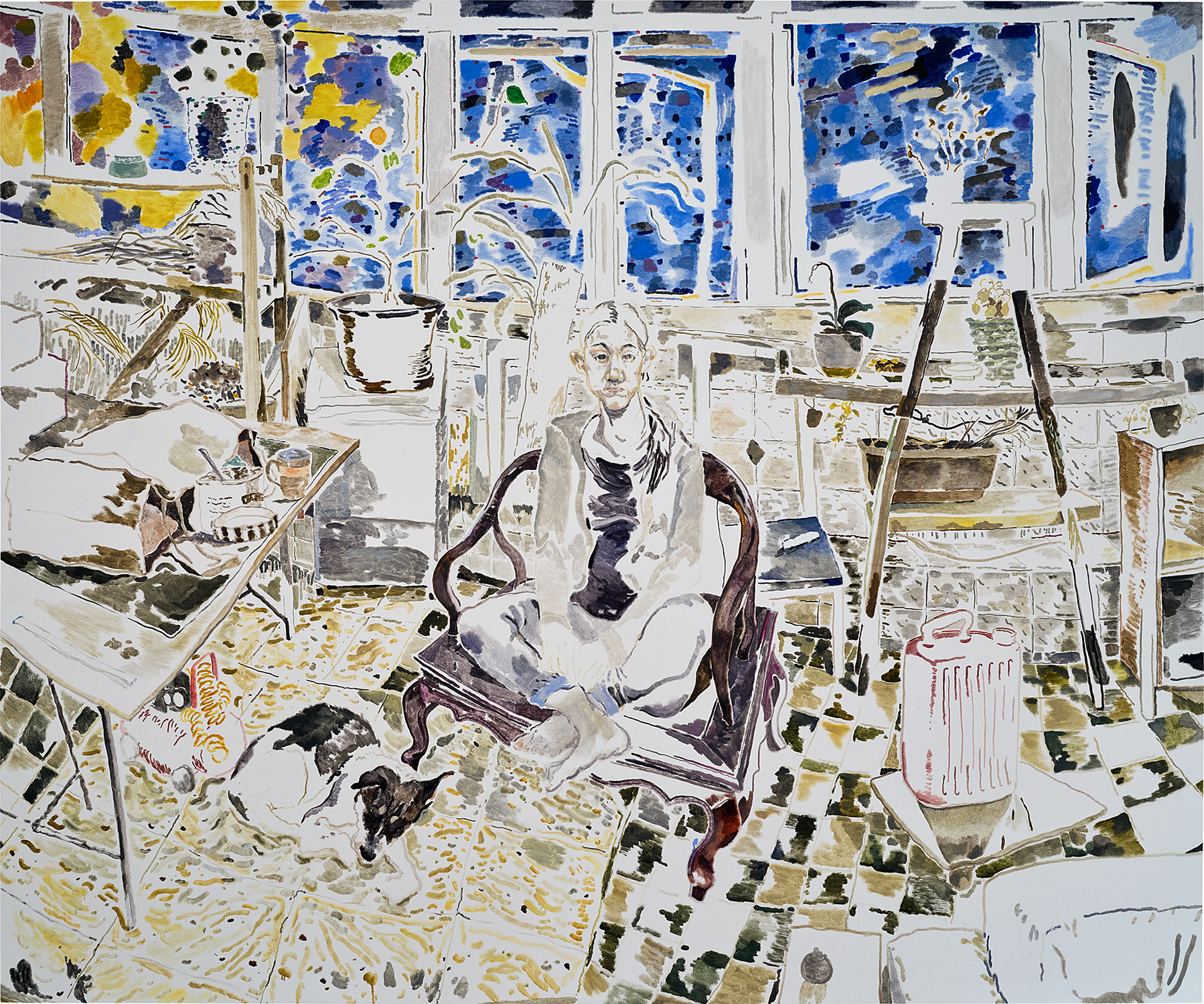
Haze, 2016
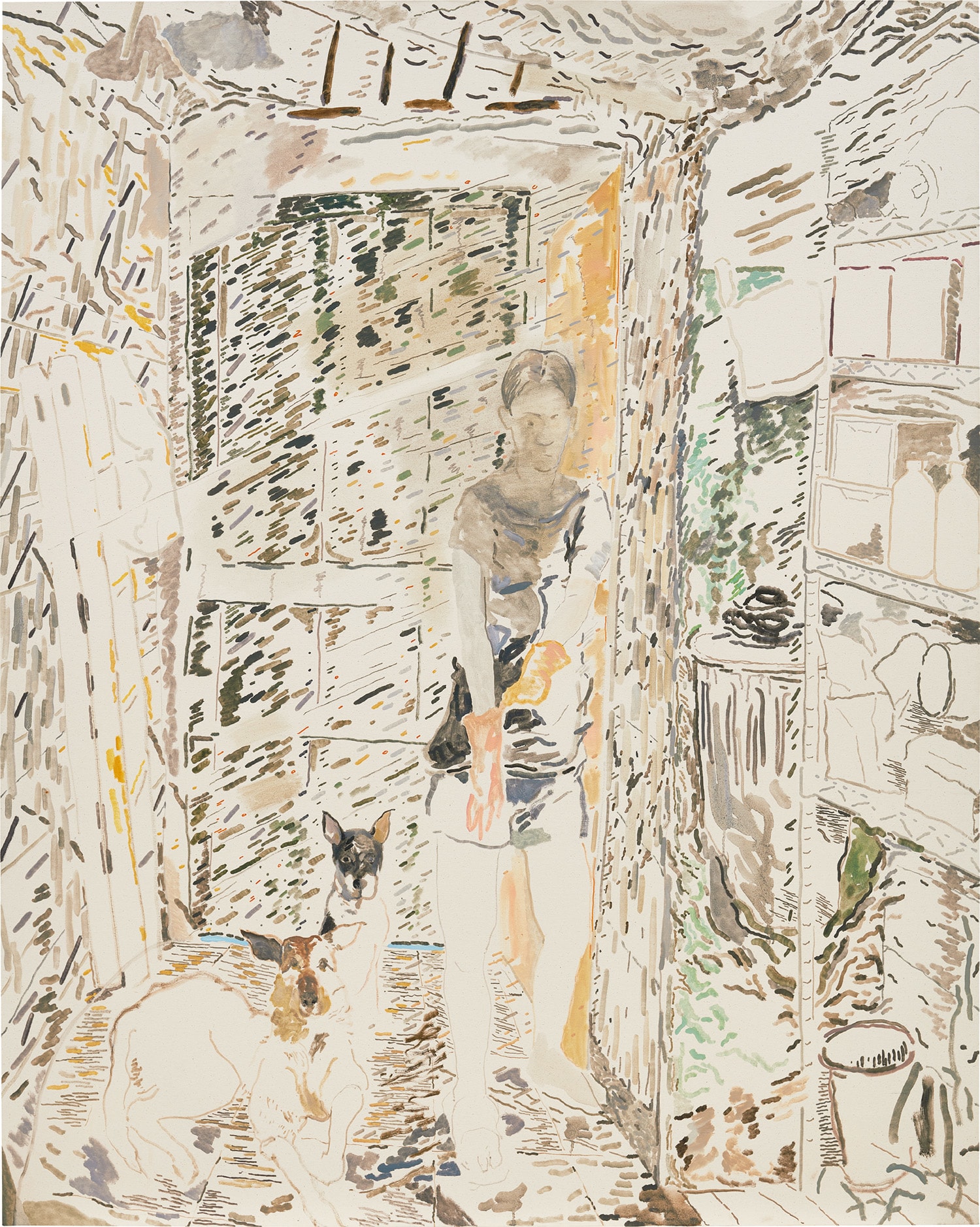
His brushwork is generous and textured, building surfaces that reward close inspection, and his palette tends toward the warm end of the spectrum, ochres and soft greens and the amber tones of lived in spaces, without ever tipping into saccharine territory. Among his most celebrated works are the paintings and works on paper featuring his beloved cats, who appear in his titles and compositions with the casual familiarity of family members, because that is precisely what they are. Works such as Haze In The Studio from 2017, Doodood and Haze from the same year, and the tender grouping of Mui Mui, Balltsz and Haze from 2016 represent the heart of his practice at its most assured. These are not cute pictures of animals.
They are careful studies in the texture of intimacy, the way creatures and humans and objects coexist within shared space, each with their own weight and presence. The diptych A Vacation operates in a similar register, expanding the domestic scene into something that breathes and moves across its two panels. The 2021 watercolour and coloured pencil work Balltsz and Joel demonstrates his fluency across media, the lighter touch of works on paper bringing a different kind of immediacy to familiar subjects. From a collecting perspective, Huen represents a compelling proposition that is increasingly well understood by serious collectors in Asia and beyond.
Chris Huen Sin Kan
Mui Mui, Balltsz and Haze, 2016
His work sits at the intersection of accessibility and depth: the subjects are approachable, even inviting, but the paintings themselves reward sustained engagement and continued study. Works from his 2016 and 2017 periods, which represent some of his most concentrated explorations of the domestic interior, have attracted particular attention. The category of intimate figurative painting to which his work belongs has seen sustained and serious collector interest globally over the past decade, with artists working in related registers commanding significant prices at auction. Huen's position within this broader conversation is well established, and collectors who have followed his practice from its earlier stages have found themselves holding works of lasting significance.
To situate Huen within a broader art historical and contemporary context, it is useful to think about the lineage of painters who have treated the domestic interior as a space of profound emotional and aesthetic inquiry. The post impressionist tradition of intimate interior painting, from Bonnard and Vuillard through to later painters who explored similar territory with updated sensibilities, provides one frame. Among his contemporaries working in adjacent modes, painters such as Cecily Brown, Njideka Akunyili Crosby, and others who have made personal environments the site of complex pictorial investigation offer useful points of comparison, though Huen's work possesses its own distinct temperature and concerns. Within the specific context of East Asian contemporary painting, his practice contributes to an evolving conversation about what it means to make paintings that are rooted in a particular cultural geography while speaking to universal human experiences.
Chris Huen Sin Kan
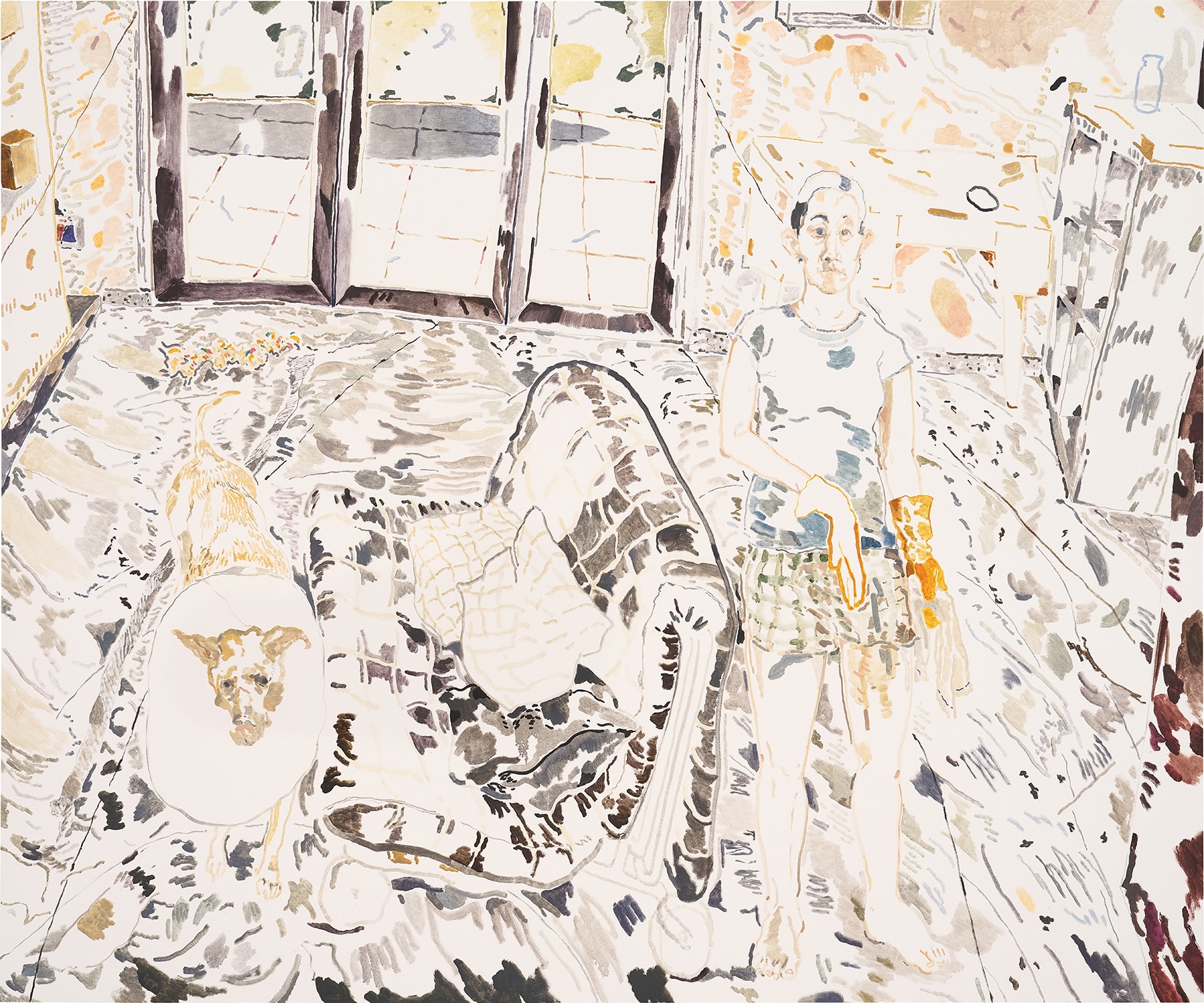
Doodood and Haze, 2017
What makes Huen matter today, and what will continue to matter about him, is his commitment to a kind of painting that insists on the value of the everyday. In a cultural moment saturated with spectacle and irony, his work makes a quiet but firm argument for attention, for looking carefully at the places and creatures and people we love, and for finding in that looking a form of meaning that is neither naive nor evasive. The cats named in his titles, the plants pushing toward painted light, the rooms that hold years of accumulated living: these are not incidental details but the whole subject, treated with the full resources of a painter who knows exactly what he is doing. For collectors seeking work that will age gracefully and continue to reveal itself over time, Chris Huen Sin Kan is a painter whose practice demands and deserves serious attention.