Chen Wen Hsi
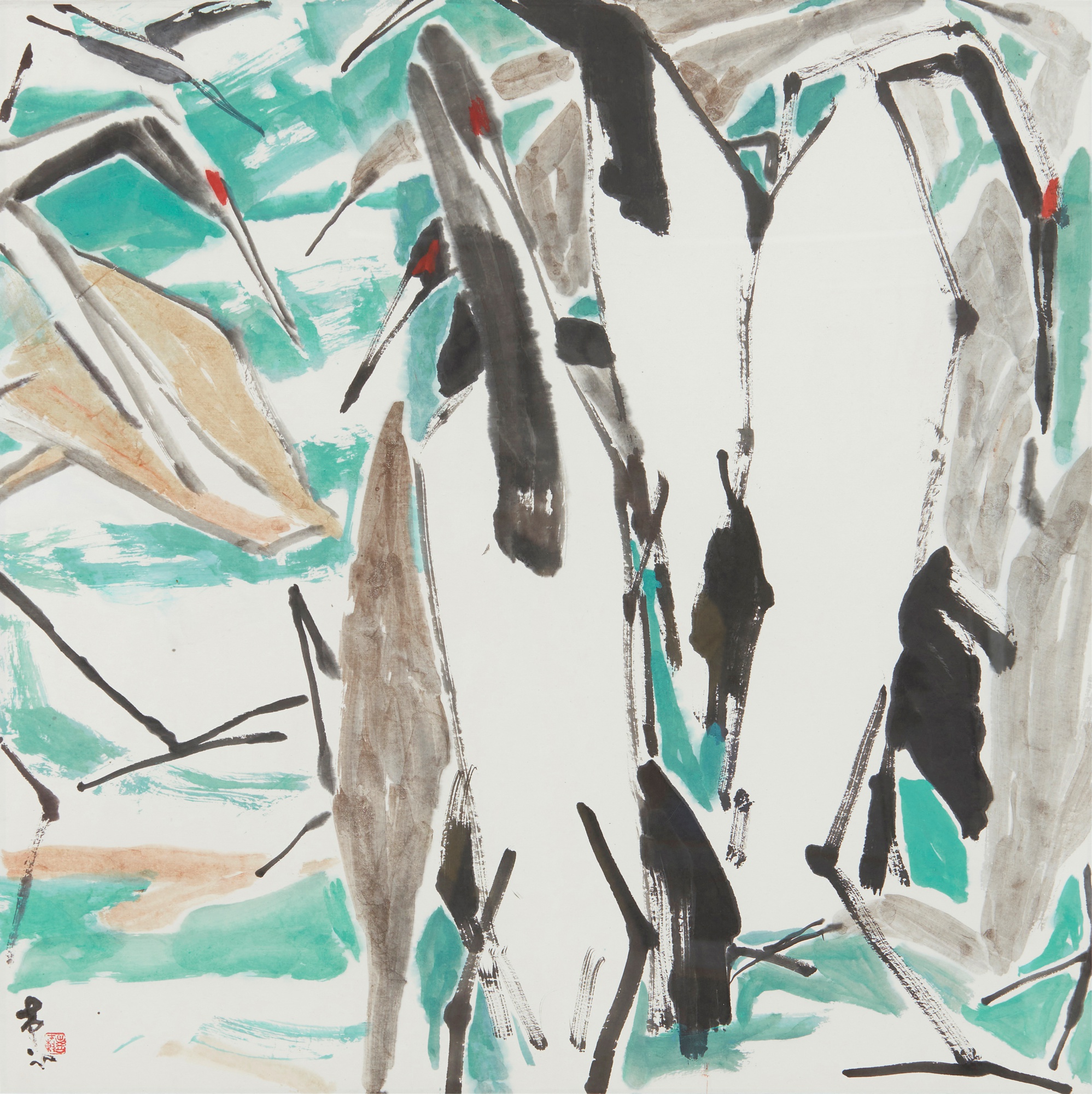
Chen Wen Hsi, Where East Meets West
Artist Spotlight · The Collection Editorial
There is a moment, standing before a Chen Wen Hsi gibbon rendered in Chinese ink on rice paper, when the animal seems to breathe. The brushwork is swift and confident, the creature suspended mid swing between branches that exist only as suggestion, and yet the whole composition feels more alive than photographs ever could. This quality, at once spontaneous and deeply considered, has drawn renewed attention to Chen's work in recent years, as museums and private collectors across Southeast Asia and beyond have begun to fully reckon with his singular place in modern art history. His paintings bridge centuries and continents, and the art world is only deepening its understanding of what that bridge truly means.
Chen Wen Hsi
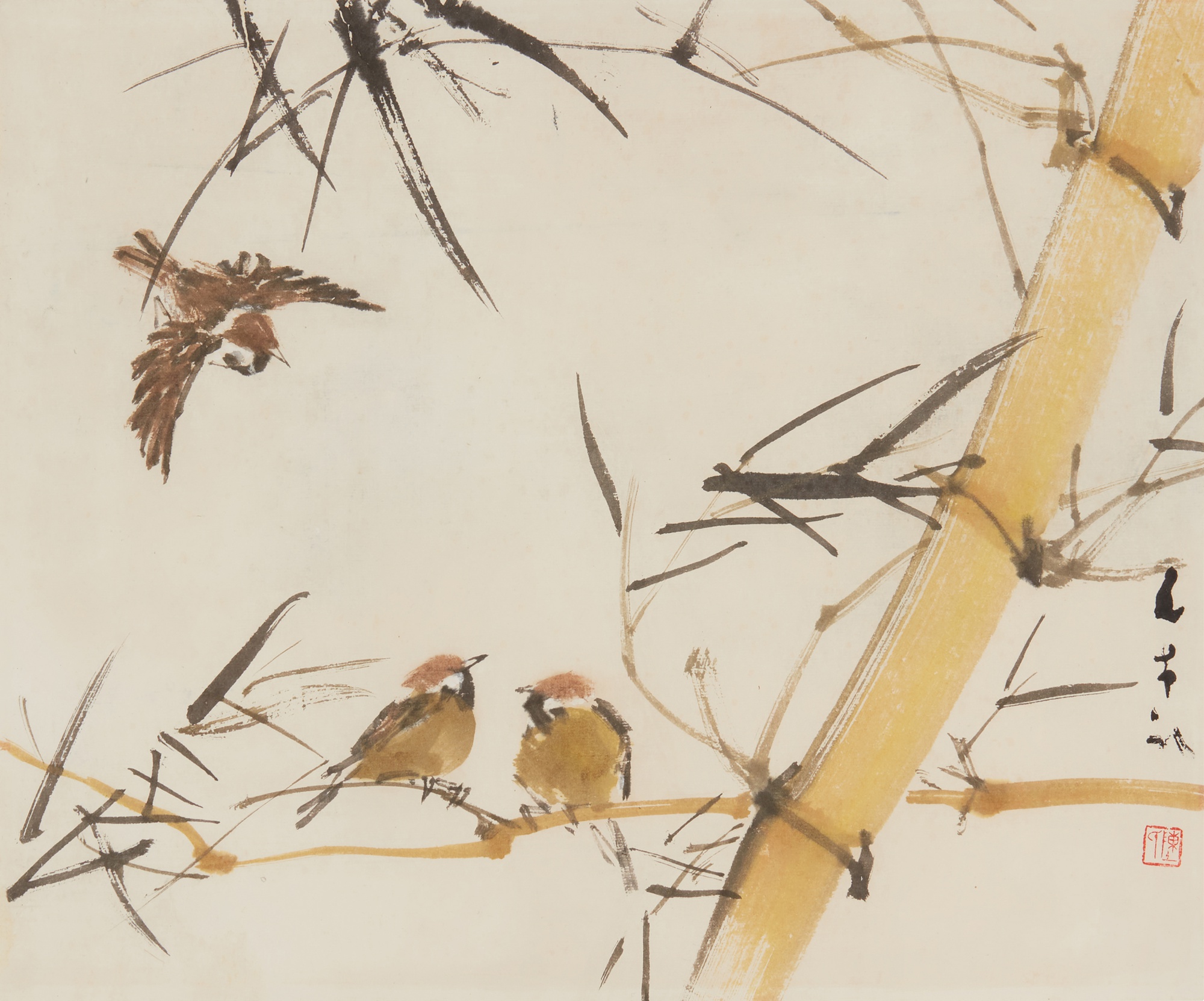
Three sparrows with bamboo 竹上三麻雀
Chen Wen Hsi was born in 1906 in Guangdong province, China, at a moment when the old world was straining under the weight of change. He received a rigorous classical education in Chinese ink painting, absorbing the traditions of the literati painters who valued the expressive potential of brush and ink above all else. He later studied at the Shanghai Academy of Fine Arts, where he encountered the provocations of Western modernism for the first time, including Cubism and its bold restructuring of form and space. These two foundations, one ancient and meditative, the other radical and analytical, would define the creative tension that animated his entire career.
Chen settled in Singapore in 1948, arriving at a moment of immense cultural ferment on the island. He joined the faculty at Nanyang University, where he would spend decades shaping the next generation of Singaporean artists, and he became a central figure in what would come to be known as the Nanyang Style. This movement, associated with a group of artists who had emigrated from China and immersed themselves in the landscapes, light, and life of Southeast Asia, sought a new visual language that honoured Chinese artistic traditions while embracing the vivid particularities of their adopted home. Chen's contribution to this project was both foundational and irreplaceable.
Chen Wen Hsi
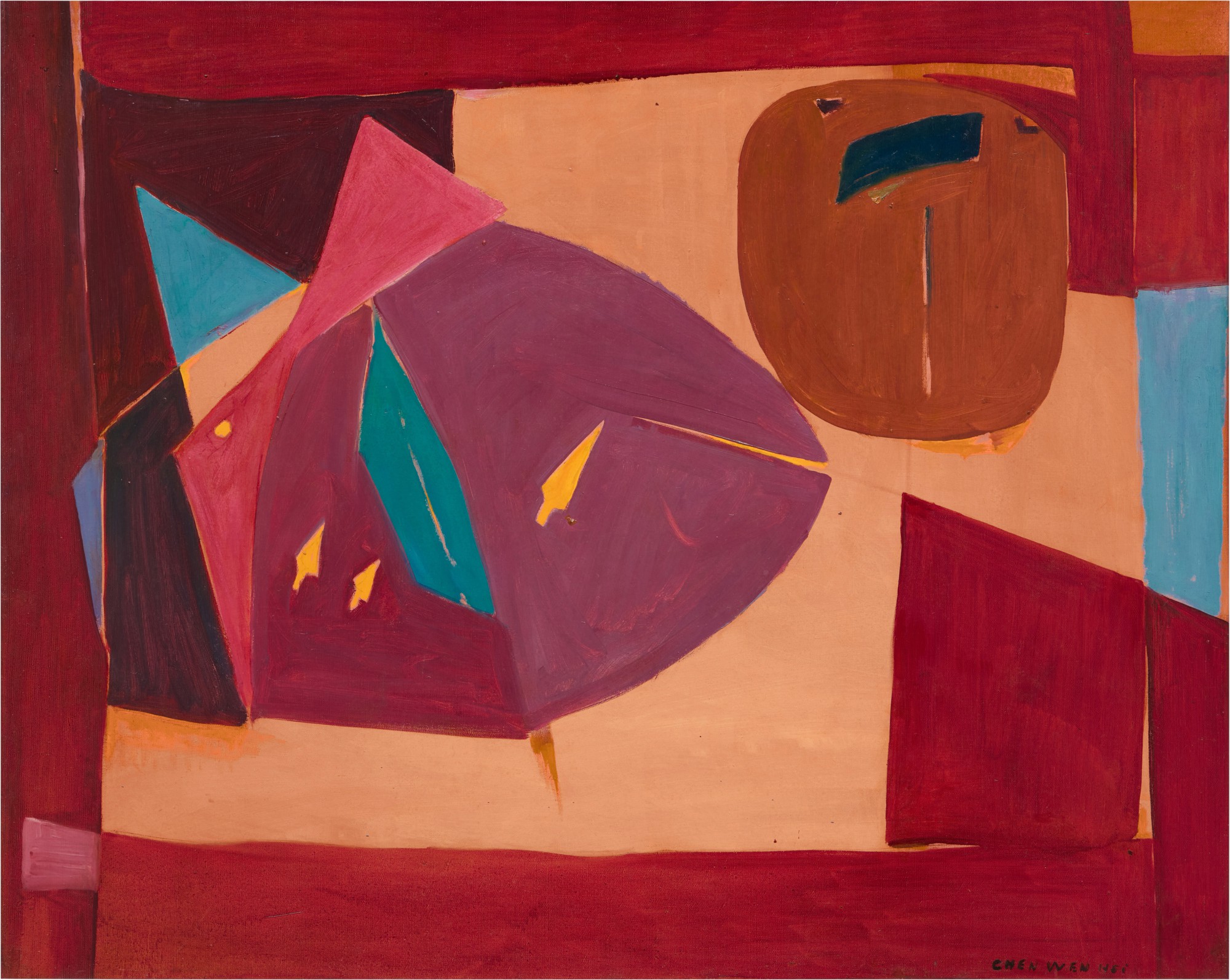
Shapes 形狀, 1950
He brought intellectual rigour and painterly daring in equal measure. His artistic development can be understood in two great, overlapping streams. The first is his engagement with Western modernism, most visible in oils such as the 1950 canvas titled Shapes, where geometric abstraction and chromatic boldness reveal his deep absorption of Cubist principles. These works situate him comfortably alongside artists working in Paris and New York during the same period, and they demonstrate that the Nanyang artists were not peripheral observers of global modernism but active participants in its conversations.
The second stream is his return, increasingly immersive, to the classical Chinese ink tradition, where he found the freedom that formal Western composition sometimes constrained. It is in this mode that his most beloved works were made. The gibbons are perhaps the most iconic subject in his entire body of work, and they reward sustained looking. In paintings such as Two Gibbons and A Pair of Gibbons, rendered on rice paper in Chinese ink, Chen employs a brushwork vocabulary descended from centuries of Chinese animal painting but inflected with a gestural urgency that feels distinctly modern.
Chen Wen Hsi
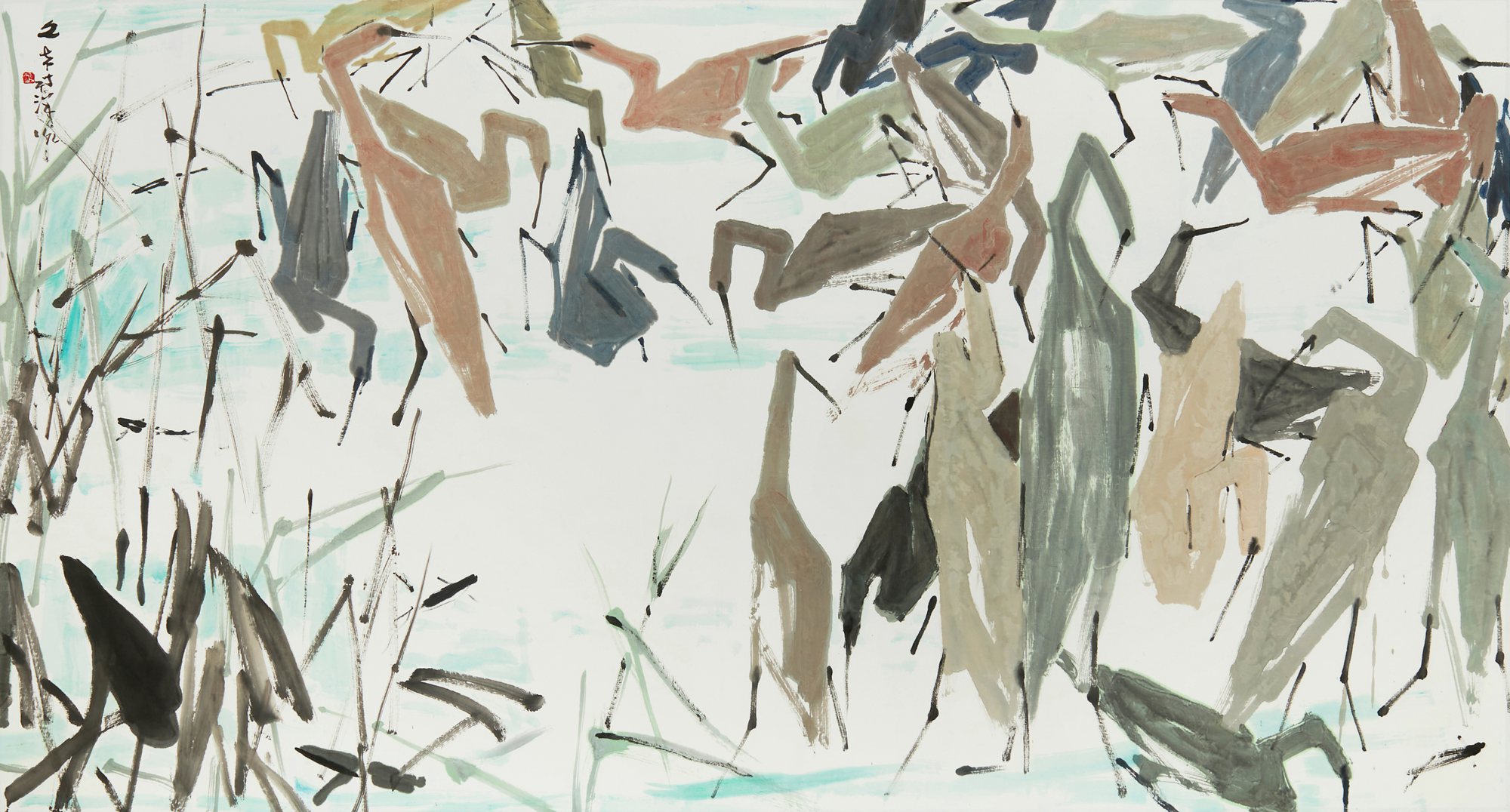
Egrets 鷺鷥
The animals are not merely observed but channelled, as though the artist's hand and the creature's movement share the same nervous energy. His herons, egrets, sparrows, and fish carry similar qualities. Works such as Herons, Egrets, Three Sparrows with Bamboo, and the luminous Fish in Lotus Pond from 1980 demonstrate his ability to conjure entire ecosystems from the most economical means. The late hanging scroll Chickens and Sparrows Amongst Flowers, completed in 1987, shows no diminishment of his powers even in his ninth decade.
For collectors, Chen Wen Hsi represents one of the most compelling opportunities in Southeast Asian modern art. His works span a wide range of formats, from intimate hanging scrolls and ink studies to substantial oil paintings, and they occupy a price range that reflects both his historical importance and the growing international recognition of the Nanyang school. Auction results in Singapore and Hong Kong have shown consistent appreciation for his ink works in particular, with gibbons and bird compositions drawing serious competition among collectors who understand their rarity and quality. The works available on The Collection offer a rare chance to engage with multiple facets of his practice, from the meditative ink works to the boldly chromatic oils, and to build a collecting relationship with an artist whose reputation can only continue to grow.
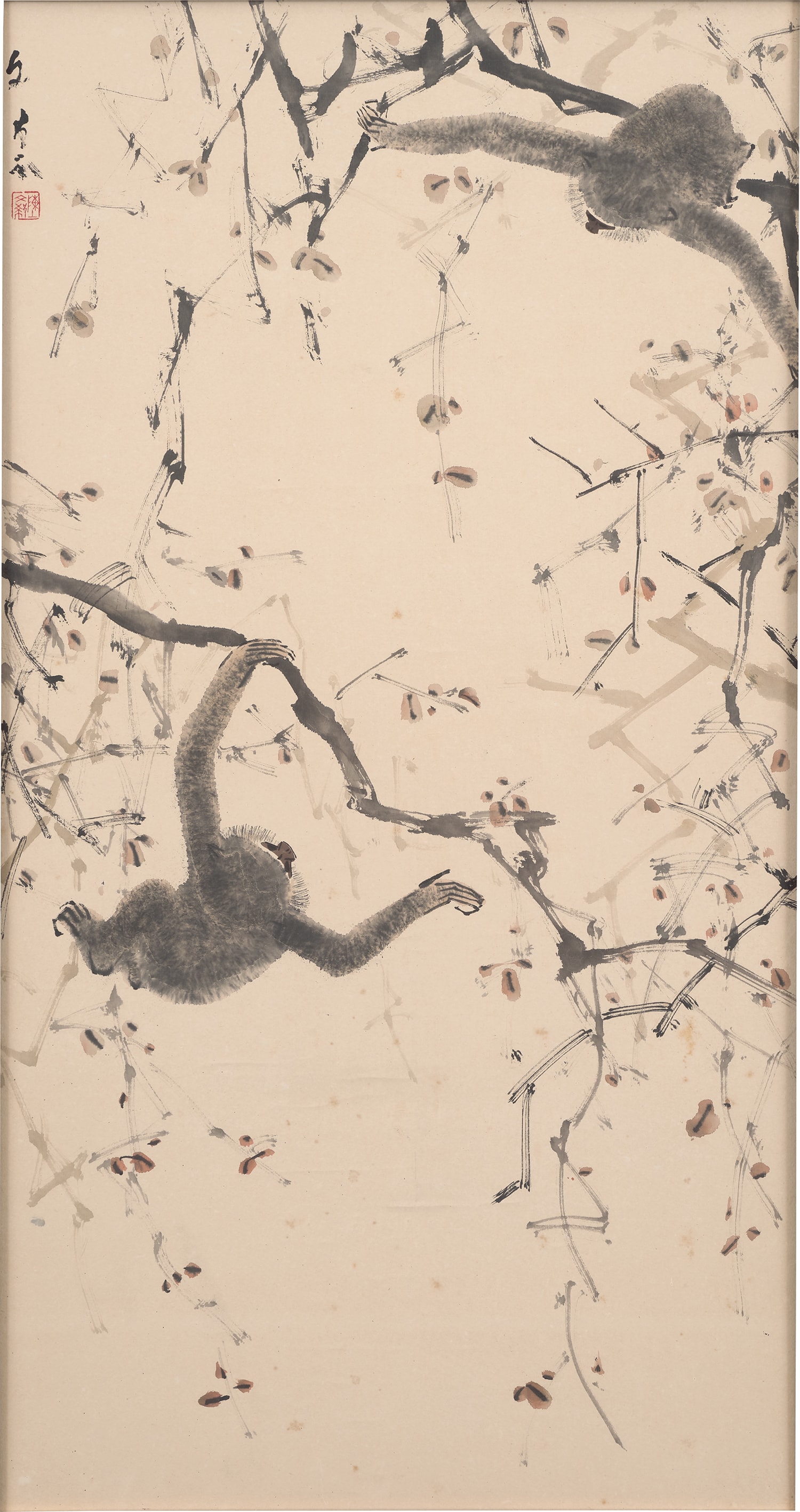
Chen Wen Hsi
Two Gibbons
To understand Chen's place in art history, it is useful to consider him alongside the other Nanyang pioneers: Liu Kang, Cheong Soo Pieng, and Georgette Chen each navigated their own synthesis of Chinese heritage and Western influence, and together they gave Singapore's modern art scene its distinctive character. Beyond Singapore, his work finds resonance with artists such as Qi Baishi, whose economy of brushwork and feeling for the natural world Chen deeply admired, and with the broader tradition of Chinese ink painters who found ways to remain vital in the twentieth century. He also invites comparison with certain School of Paris artists who drew on non Western traditions to renew European painting, though Chen's project was ultimately more profound because it was not appropriation but inheritance, lived and transformed from within. Chen Wen Hsi passed away in 1991, leaving behind a legacy that encompasses his paintings, his students, and the very idea of a Southeast Asian modernism that is neither derivative nor provincial but genuinely world class.
The Singapore Art Museum holds significant works by Chen, and his influence can be felt in the generations of artists he taught and inspired at Nanyang University. As the global art market continues to recognise the richness of Southeast Asian modern art, Chen's position at its centre becomes more apparent and more valuable. He was an artist who lived and worked at one of history's great crossroads, and he made something beautiful and enduring of that extraordinary position.