Chen Ke
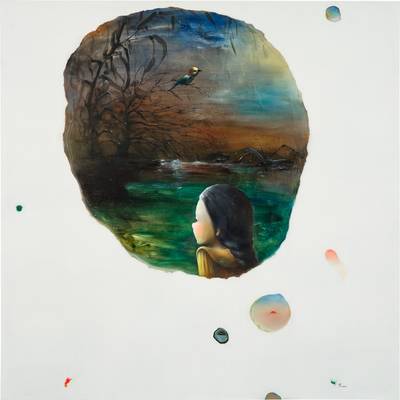
Chen Ke's Dreaming Women Captivate the World
Artist Spotlight · The Collection Editorial
In recent years, the international art world has turned its attention with growing enthusiasm toward a generation of Chinese painters who came of age in the post reform era, artists whose work carries both the intimacy of personal history and the weight of cultural transformation. Among them, Chen Ke has emerged as one of the most quietly compelling voices, her canvases accumulating critical admiration across Asia, Europe, and North America. Her presence in major institutional surveys of contemporary Chinese painting, alongside sustained interest from serious private collectors, confirms what those who have followed her work for two decades have long suspected: she is an artist of lasting significance. Chen Ke was born in 1978 in Chongqing, the vast, fog wrapped megalopolis in southwestern China whose dramatic topography and layered urban history have a way of seeping into the imagination.
Chen Ke
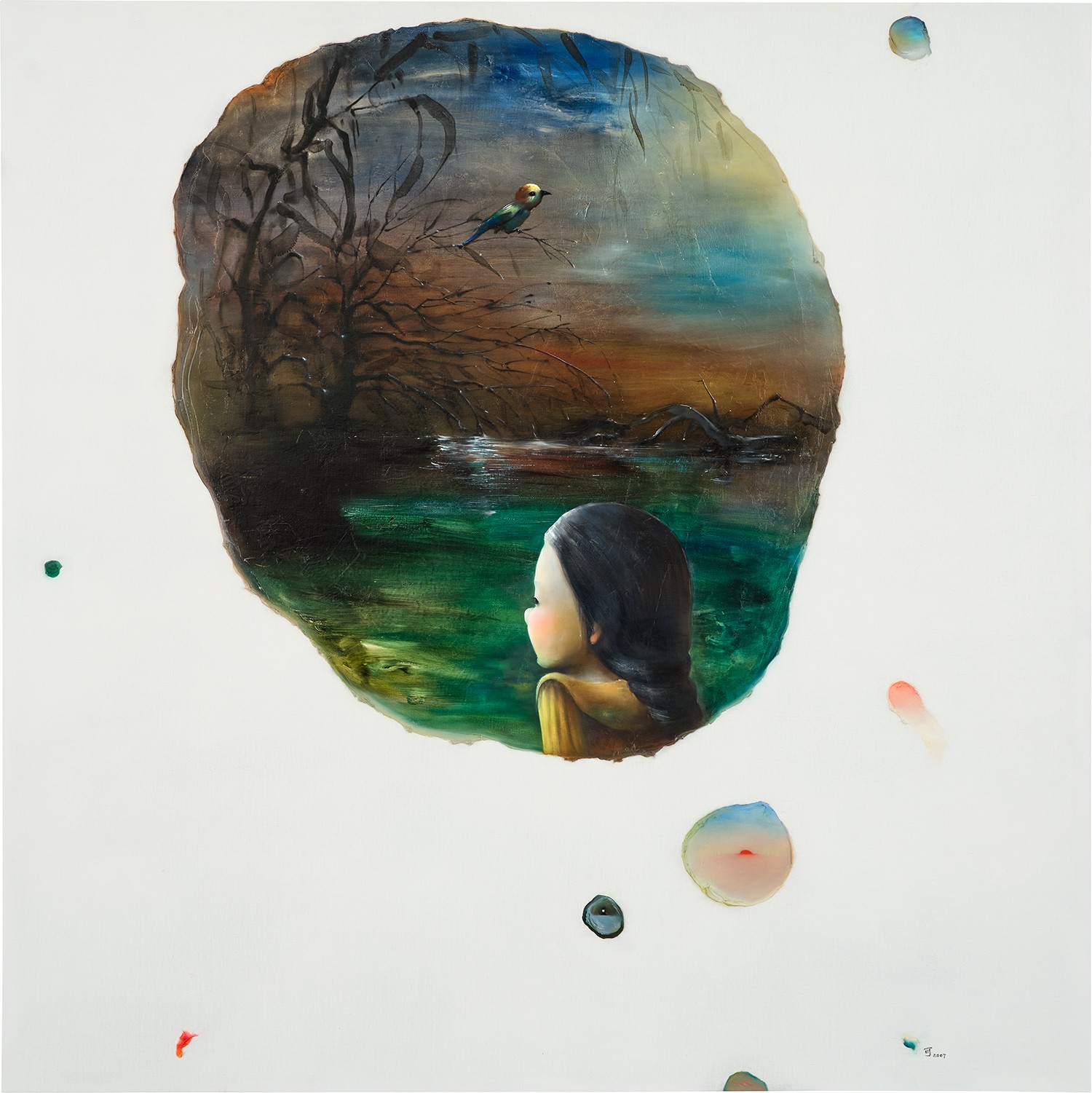
Day Break, 2007
Growing up during a period of extraordinary social and economic change in China, she came of age in a country that was simultaneously reaching outward toward global modernity and negotiating a profound reckoning with its own traditions. She studied painting formally, training within an art education system that prized technical discipline, but she was also absorbing the visual languages of Western art history with the same appetite she brought to classical Chinese aesthetics. This double inheritance is not a contradiction in her work; it is the very engine of it. Her artistic development through the early 2000s shows a painter finding her footing with remarkable sureness.
The works from this period are already recognizable as hers: solitary female figures suspended in atmospheric, indeterminate spaces, rendered in a palette that seems to have been steeped in mist. The textures she favors, often achieved through the layering of oil paint with modelling paste or acrylic gesso, give her surfaces a tactile, almost geological quality that draws the eye into slow, careful looking. By the mid 2000s, when she was showing with Star Gallery in Beijing, a relationship that would prove formative, it was clear that her sensibility was fully formed and genuinely singular. The works that first brought her widespread attention date to the middle of the decade.
Chen Ke
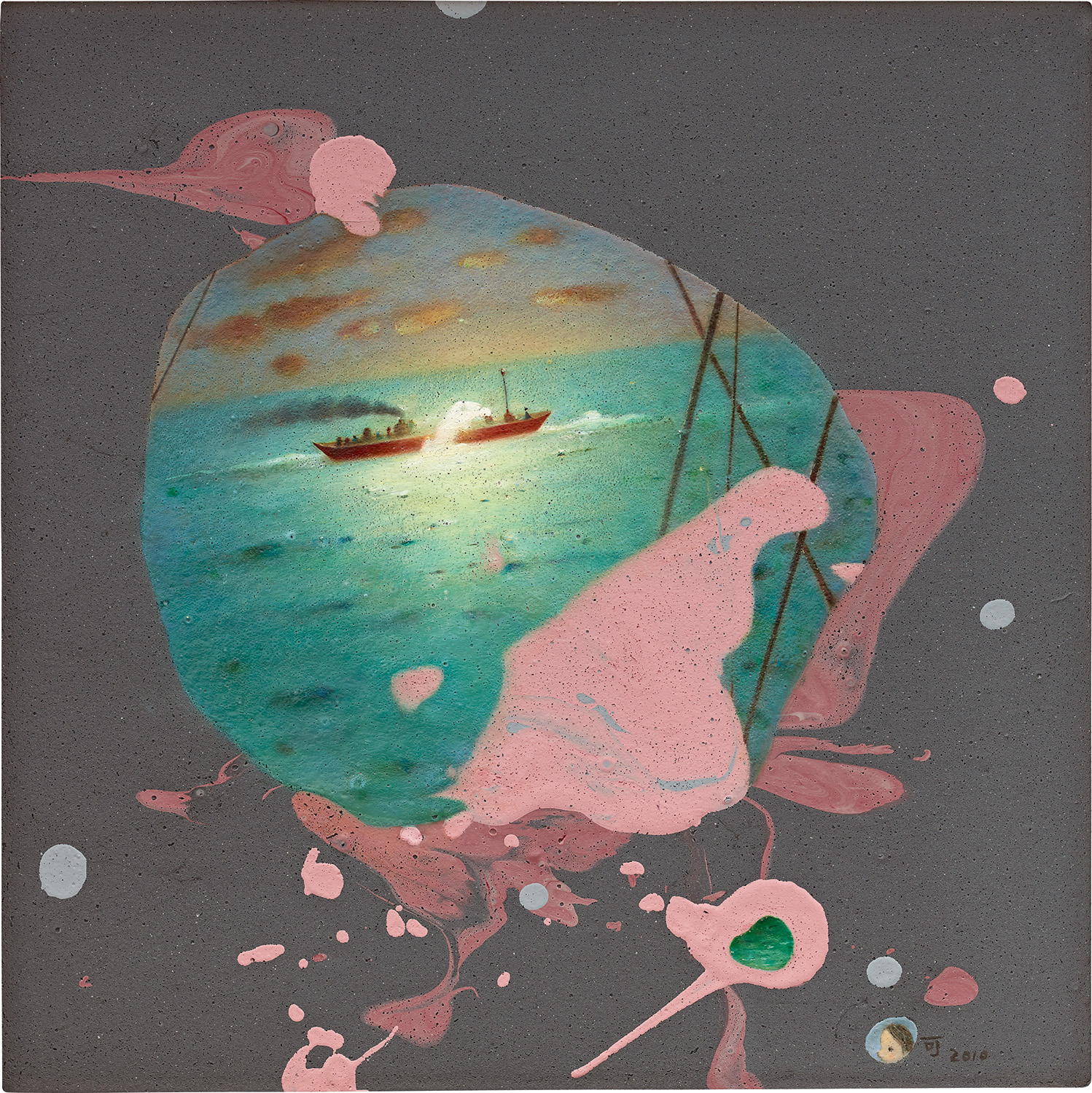
Breaker, 2010
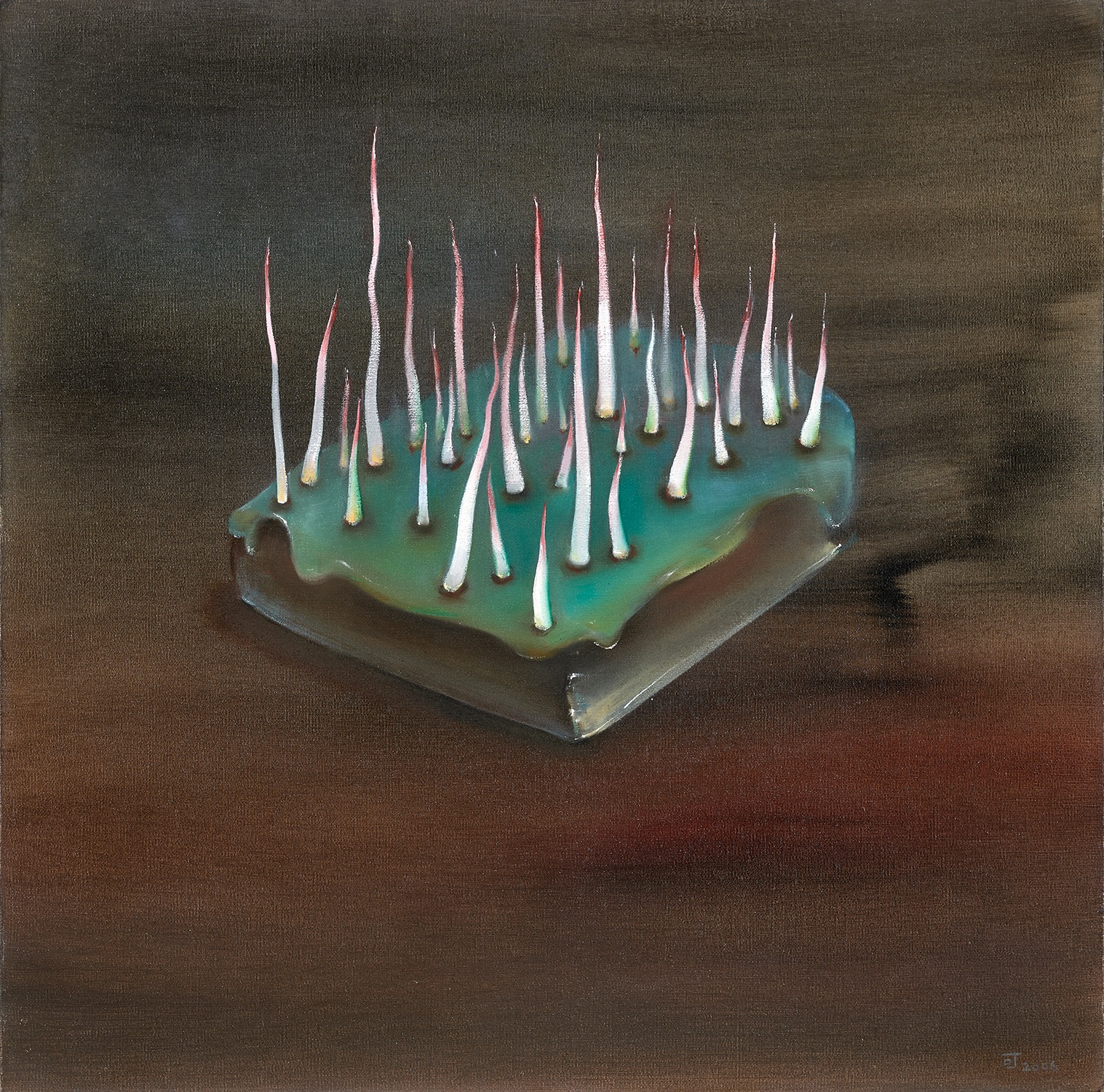
"Ophelia" from 2006, rendered in molding paste and oil on canvas, is a work of extraordinary psychological density, invoking the canonical Western image of the drowned woman while transporting it into a register that is neither illustration nor parody but something more searching and more strange. That same year she painted "Forests of Words," another oil on canvas that suggests an interior world where language and landscape have become entangled. Then in 2007 came "Day Break," executed in oil and modelling paste on canvas, a work whose title gestures toward illumination even as the painting itself dwells in the tender ambiguity of a moment between sleep and waking. These three works alone would establish her as an artist worth sustained attention.
The following years brought further refinement and a deepening emotional range. "Breaker" from 2010, oil on canvas, marks a moment of expanded confidence, the figures and spaces in her work taking on a new kind of charged stillness. By 2016, with "I see you and I see myself," an oil on wood box with mirror, she was extending her practice into object making in ways that feel entirely consistent with her painterly concerns rather than a departure from them. The mirrored surface implicates the viewer directly, collapsing the distance between the solitary figure she depicts and the person standing before the work.
Chen Ke
Forests of Words, 2006
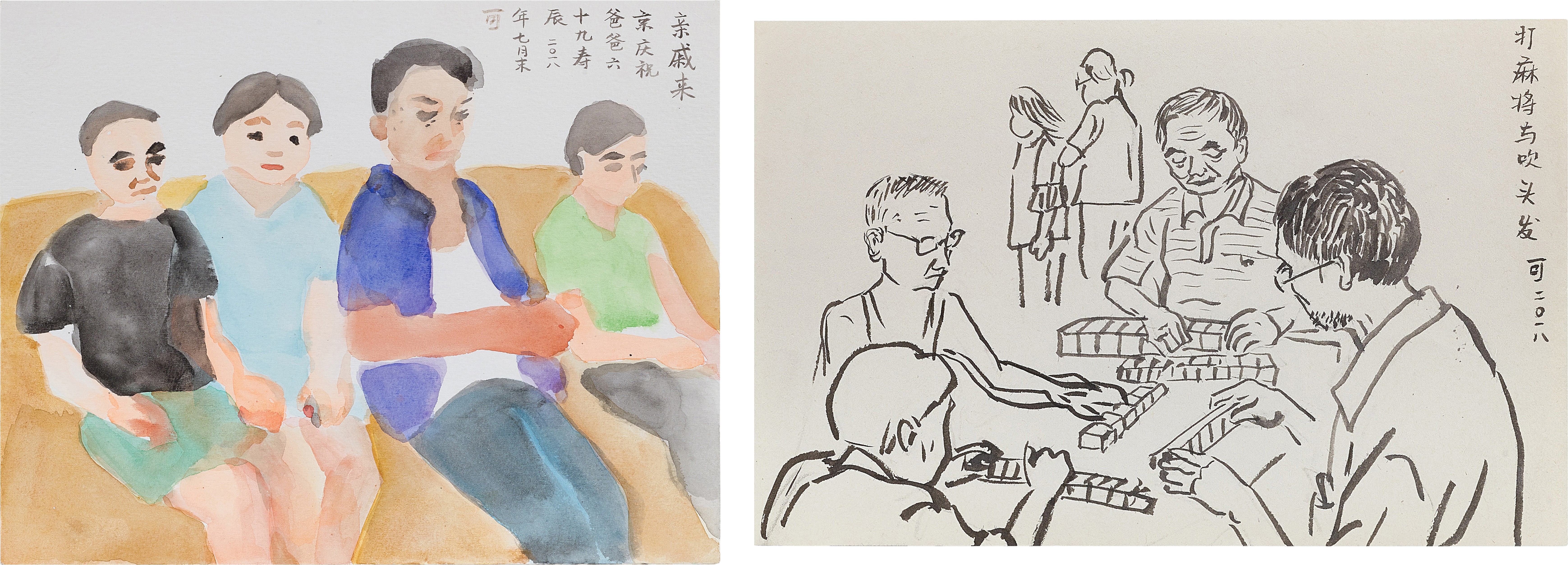
It is a gesture of rare intimacy. Her more recent canvas "Outside the Window" from 2020, oil and acrylic gesso, demonstrates that her practice continues to evolve with each passing year, the quality of attention she brings to surface and figure undiminished. Her works on paper deserve equal consideration alongside the canvases. The watercolour and ink works, including the two part piece comprising "I.
Qinqi" and "II. Playing Mahjong" as well as the work titled "Shizhen," reveal a looser, more immediate hand, the liquid medium allowing her characteristic haziness to become something almost atmospheric. These pieces, several of which carry certificates of authenticity issued by Star Gallery in Beijing, offer collectors a different but equally rewarding point of entry into her world. The intimacy of works on paper suits her subject matter particularly well, the domestic and the psychological rendered at a scale that feels like a confidence shared.
Chen Ke
I. 親戚/ Ii. 打麻將(兩幅作品)
For collectors, Chen Ke represents a compelling proposition on several grounds. Her work sits at an intersection that the art market has come to value highly: she is technically accomplished in ways that reward connoisseurship, conceptually engaged in ways that sustain critical interest, and emotionally accessible in ways that make living with her work genuinely pleasurable. Her career has unfolded with the kind of steady institutional endorsement, through gallery relationships, international exhibitions, and inclusion in serious collections, that distinguishes artists of long term consequence from those of passing fashion. Collectors who have acquired her work over the past decade have found themselves holding pieces that appreciate not only in monetary terms but in personal meaning over time.
In the broader context of contemporary painting, Chen Ke occupies a position that invites comparisons with other figurative painters who explore feminine interiority and psychological ambiguity. Her work resonates with the tradition of painters like Marlene Dumas and Cecily Brown, artists for whom the body is never simply a body but always a site of emotional and historical inscription. Within the context of Chinese contemporary art, she stands alongside painters such as Liu Ye and Huang Ying as part of a generation that has found ways to speak with both global fluency and local specificity, neither deferring to Western art world expectations nor retreating into a narrowly nationalist aesthetic. What Chen Ke has built over two and a half decades of sustained practice is something that resists easy summary but repays careful looking.
Her paintings ask the viewer to slow down, to sit with uncertainty, to find meaning in the space between clarity and dissolution. In an art world that frequently rewards the loud and the legible, her commitment to the quiet and the complex is itself a kind of statement. She remains an artist whose best work may still be ahead of her, and that is perhaps the finest thing that can be said of anyone.