Charles Nègre
Charles Nègre, Where Painting Meets Light
Artist Spotlight · The Collection Editorial
Stand before a Charles Nègre photogravure and something remarkable happens. The image does not announce itself as a photograph in the way we have come to expect. It breathes. It carries weight and shadow in the manner of an etching, the tonal range of a painted study, the documentary truth of a lens pointed at the living world.
Charles Nègre
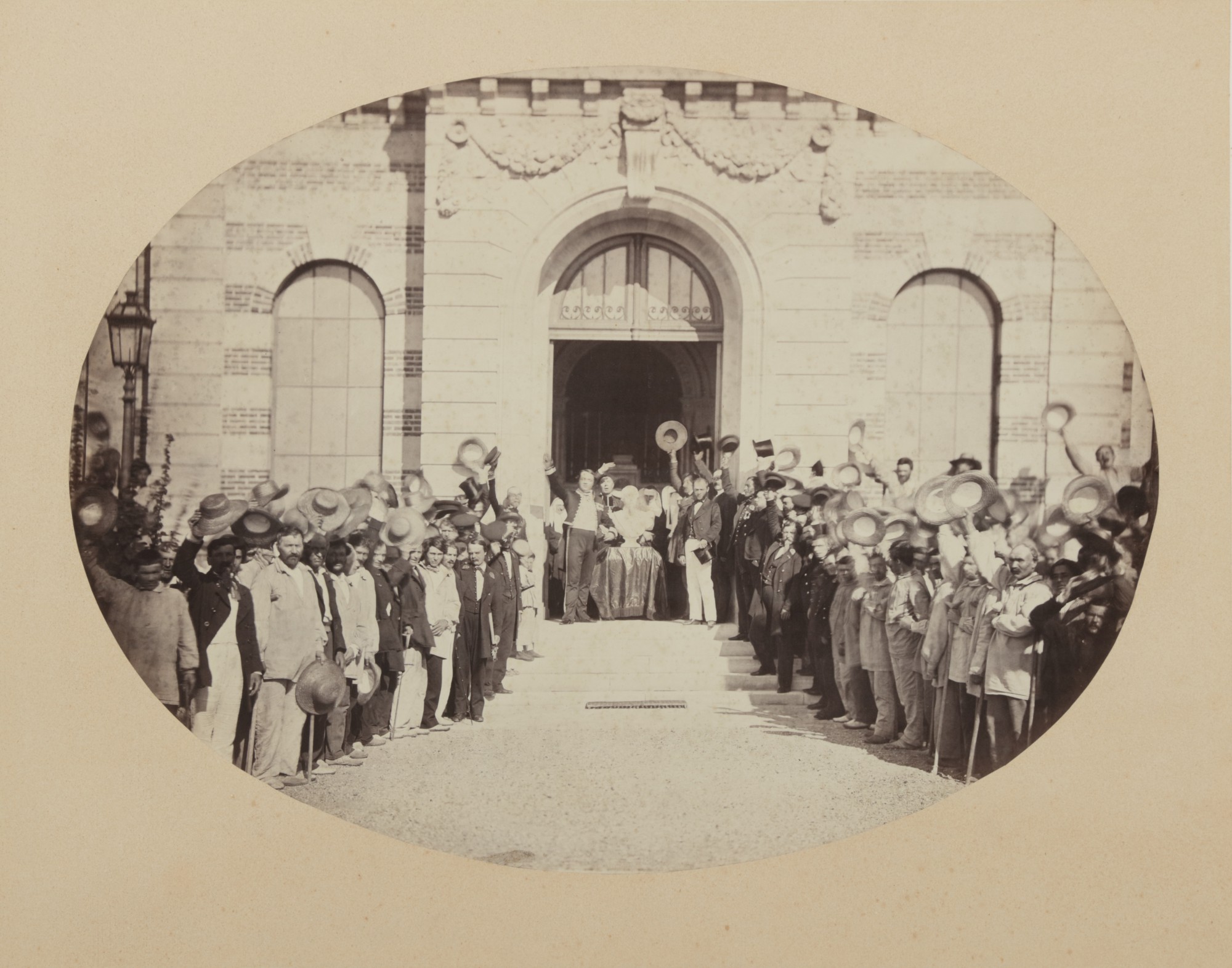
The Salute to the Emperor (Imperial Asylum at Vincennes, 15 August)
Nègre arrived at this achievement through decades of disciplined inquiry, and in an era when photography was still fighting for its place alongside the established arts, his work made the argument more persuasively than almost anyone else of his generation. Born in Grasse, in the south of France, in 1820, Charles Nègre came of age in a country intoxicated by artistic ambition. He moved to Paris as a young man to pursue painting, and his formation was extraordinary by any measure. He studied under Paul Delaroche, one of the most celebrated history painters of the era, and later under Jean Auguste Dominique Ingres, whose exacting draughtsmanship and devotion to classical form left a permanent impression on every student fortunate enough to enter his atelier.
These were not merely prestigious names to collect on a résumé. They represented two distinct currents in French art, the theatrical emotionalism of the Romantic tradition and the cool, architectural precision of neoclassicism, and Nègre absorbed both with uncommon intelligence. His turn toward photography came in the late 1840s, at a moment when the daguerreotype had already electrified Paris and the calotype process opened new possibilities for paper prints. Rather than abandoning painting, Nègre understood photography as a continuation of his visual education by other means.
Charles Nègre
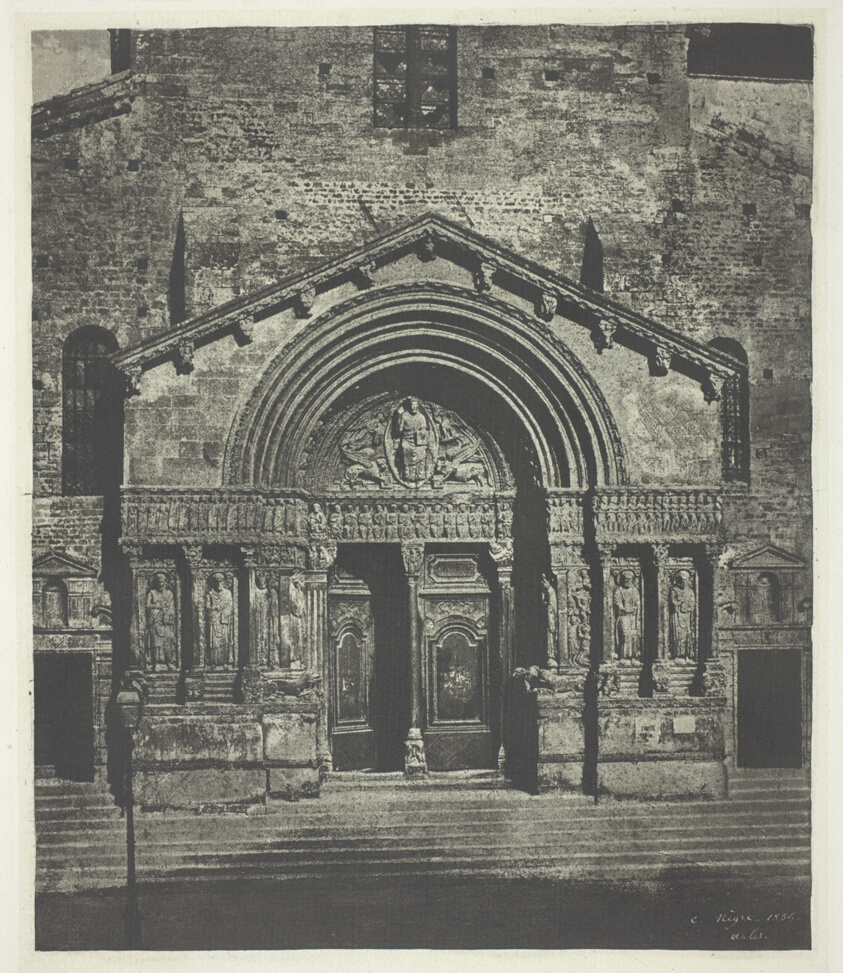
Arles: The West Porch of Saint-Trophime, 1854
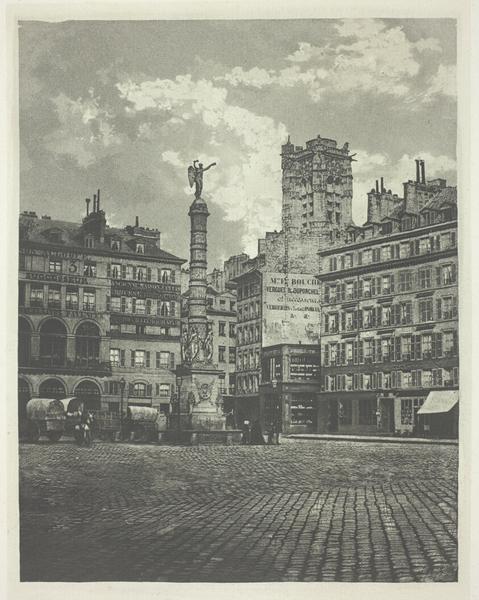
He brought his painter's eye to the streets of the city, and his early street photographs of Parisian workers, chimney sweeps, organ grinders, and artisans going about their daily routines were unlike anything the medium had produced before. Where other photographers treated the camera as a recording device, Nègre treated it as a compositional instrument, carefully staging and framing his subjects with the same attention he would bring to a painted canvas. The portfolio now known as Charles Negre: Treize Heliogravures, created between 1854 and 1857, represents one of the singular achievements in the history of the photographic print. Works such as "Paris, Place de Châtelet" from 1854 and "Arles: The West Porch of Saint Trophime" from the same year demonstrate how fully Nègre had mastered the photogravure process he was simultaneously developing and refining.
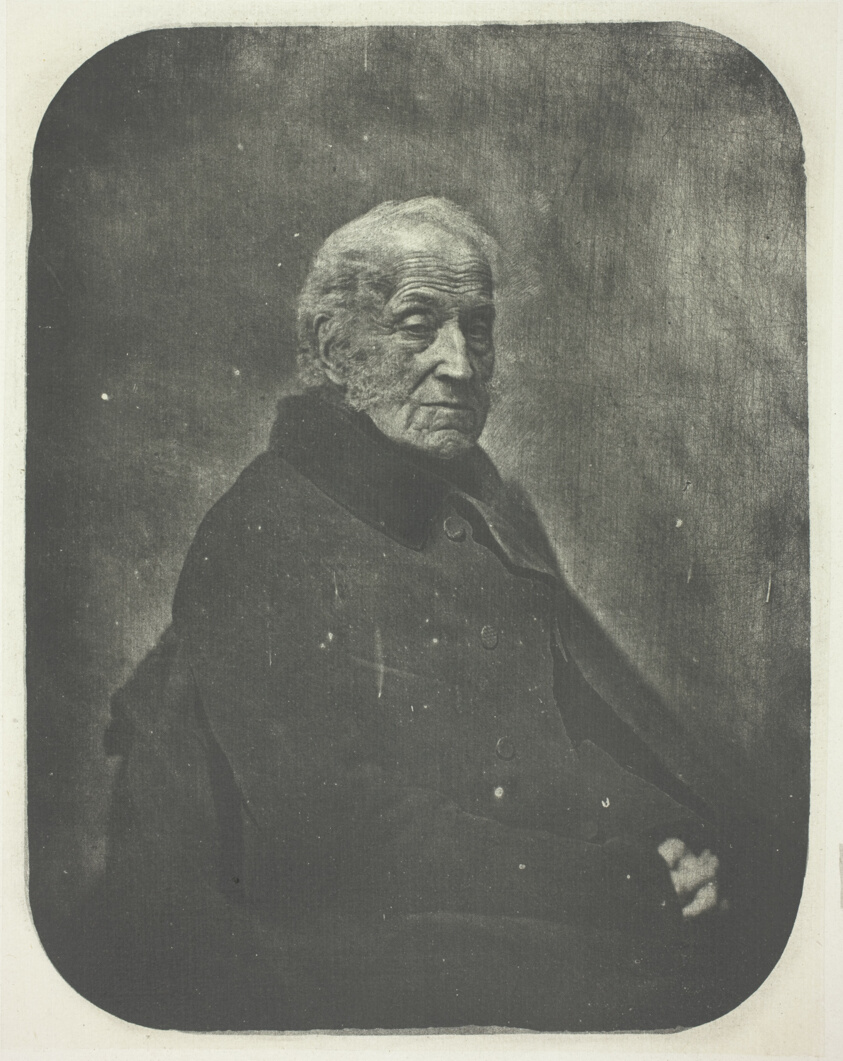
The architectural studies in particular reveal a mind alert to the grammar of stone and light, the way a Romanesque portal organizes shadow into meaning, the way a public square in Paris holds its breath at a particular hour of the afternoon. These are not documents. They are meditations. His portrait photogravures from the same portfolio, including his rendering of Jules Janin and the portrait of Prince Adam Georges Czartoryski after Nadar, carry a comparable psychological density, each face held in a quality of attention that feels genuinely painterly in its sympathy.
Charles Nègre
Portrait du Prince Adam Georges Czartorisky, d'apres Nadar, 1857
The Vincennes commissions of 1859 occupy a different register entirely. The large format oval albumen prints documenting the Imperial Asylum at Vincennes, including the celebrated "Salute to the Emperor" made on 15 August 1859, show Nègre working at monumental scale for an official context. These images are among the most technically ambitious photographs of their decade, combining the formal demands of institutional documentary work with Nègre's unfailing instinct for human presence within architectural space. The "Asylum at Vincennes" albumen prints and the related "Tiber, Tuileries Garden, Paris" from the same year round out a period in which Nègre was operating at the very heights of his technical and artistic powers.
"Cathedrale de Chartres" from 1856, rendered in photogravure, belongs to this same extraordinary stretch of productivity, demonstrating his ability to translate the vertiginous scale of Gothic architecture into an image that feels intimate without sacrificing grandeur. For collectors, the appeal of Nègre rests on several convergent qualities that make his work genuinely rare in the current market. His output was never vast, and works of confirmed provenance in fine condition represent a meaningful concentration of 19th century photographic history within a single frame. The photogravures from the Treize Heliogravures portfolio are particularly sought after because they document Nègre's technical innovations as much as his aesthetic sensibility.
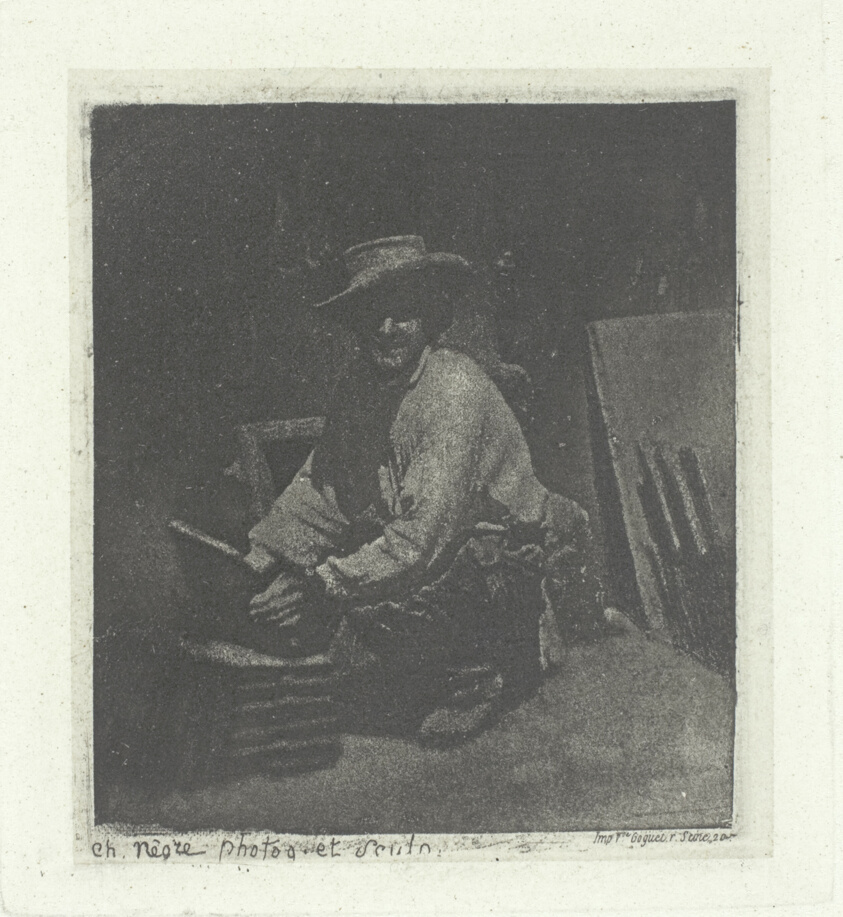
Charles Nègre
Kneeling Mason, 1854
He was among the first photographers anywhere to develop reliable intaglio processes for photographic reproduction, work that anticipated the later commercial revolution in printed images by several decades. Collectors who hold these works are not simply holding beautiful objects. They are holding artifacts of one of the great intellectual experiments of the 19th century. Auction appearances of confirmed Nègre prints at major houses including Christie's and Sotheby's have consistently attracted serious attention from both institutional and private buyers, reflecting a market that understands the artist's foundational importance.
To understand Nègre fully it helps to place him within the constellation of his contemporaries. He was personally acquainted with Nadar, the great portraitist whose studio became a salon for the Parisian avant garde, and the photogravure portraits he made after Nadar's originals create a fascinating dialogue between two artistic sensibilities. His architectural work sits naturally alongside that of Édouard Baldus, whose photographs of French monuments share Nègre's combination of documentary precision and formal beauty. Henri Le Secq, another alumnus of the Delaroche atelier who turned to photography, provides another point of comparison, though Nègre's range across portraiture, street photography, architecture, and printmaking remains unmatched among his peers.
The Mission Héliographique of 1851, the French government's effort to document the nation's historic monuments photographically, was the cultural climate in which several of these figures worked, and Nègre's architectural studies belong to this broader program of visual preservation even when they exceed its bureaucratic intentions. The legacy of Charles Nègre is finally receiving the sustained scholarly and institutional attention it deserves. Major collections including the Musée d'Orsay in Paris and the Getty Museum in Los Angeles hold significant groups of his work, and exhibitions in recent decades have worked to restore his reputation to its proper place at the very founding of photographic art. He matters not simply as a historical figure but as a model for what the camera can accomplish when handled by someone who understands that seeing is itself a form of thinking.
His photographs ask us to slow down, to attend, to recognize the dignity of a kneeling mason or the patience embedded in the stones of a medieval cathedral. In that invitation, across more than 170 years, nothing has been lost.
Explore books about Charles Nègre
Charles Nègre, 1820-1880
James Borcoman
Charles Nègre and the Heliographic Art
André Jammes
Charles Nègre: Photographer of Paris
James Borcoman and André Jammes
Charles Nègre: Calotypes and Early Photography
Paul Négre
The Photographs of Charles Nègre
Janet E. Buerger