Chantal Joffe
Chantal Joffe Paints the Truth of Being
Artist Spotlight · The Collection Editorial
“I want to paint what it feels like to be in a body, to be a woman, to be alive.”
Chantal Joffe
In the winter of 2023, Chantal Joffe presented new work at Victoria Miro Gallery in London, her long standing gallery home, to the kind of quiet but insistent acclaim that has come to define her career. There were no conceptual detours, no grand theoretical gestures, only paintings of women and children and her own face rendered with that unmistakable combination of raw candor and formal sophistication. For those who have followed her work across three decades, the show felt like both a culmination and a renewal. Joffe remains one of the most important figurative painters working in Britain today, and the art world is paying close attention.
Chantal Joffe
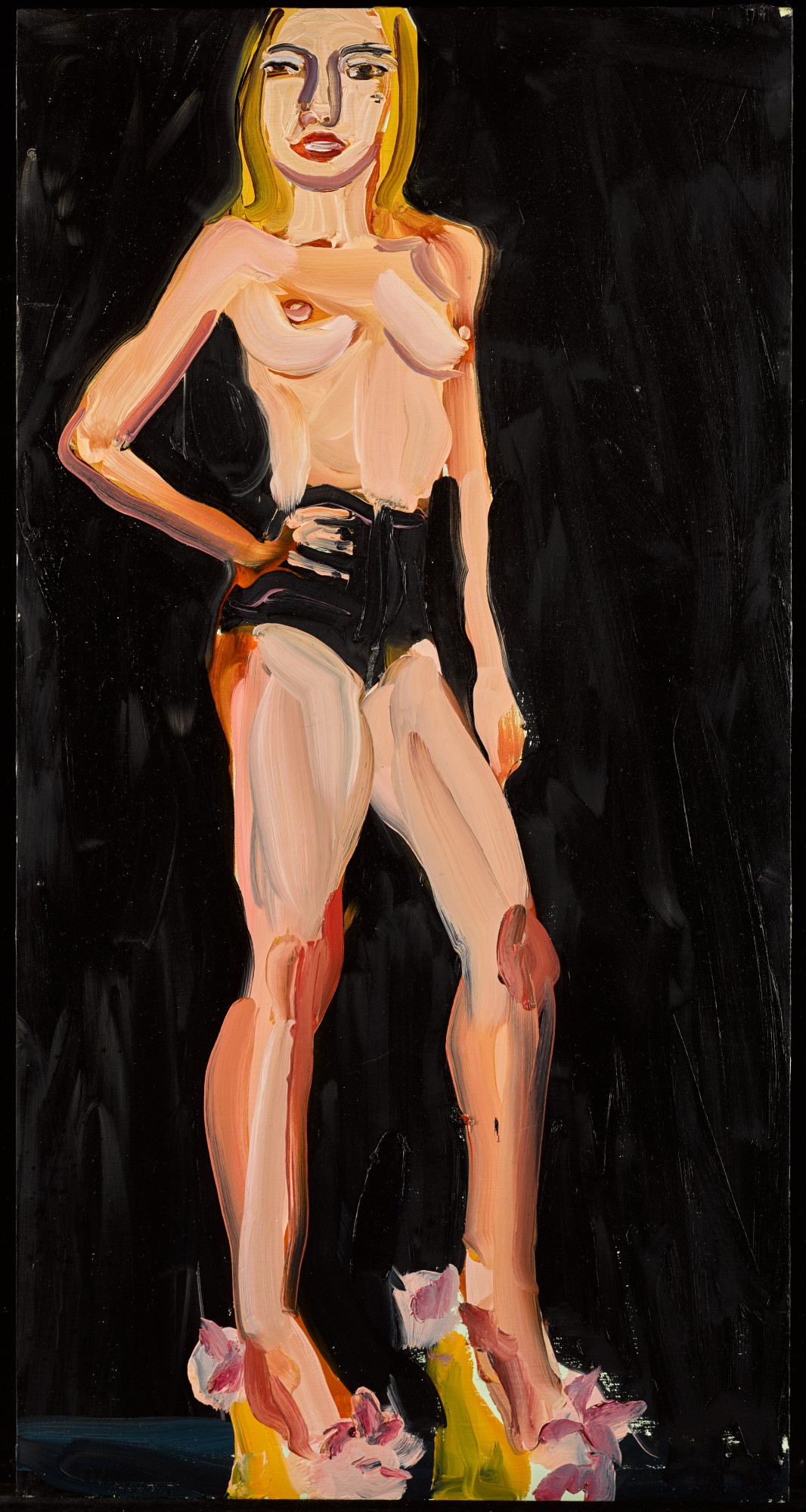
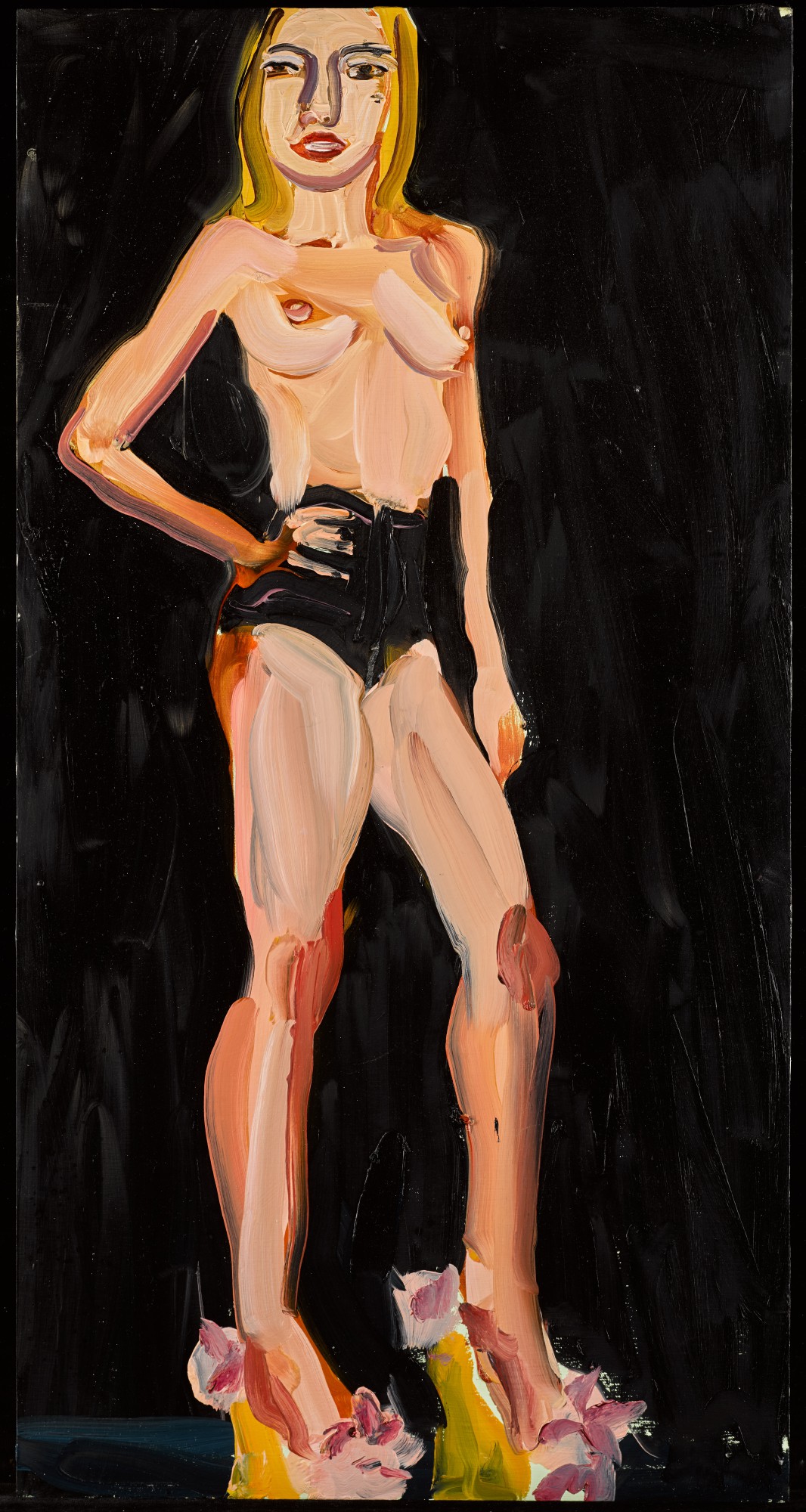
Topless in Wedge Heels, 2008
Joffe was born in 1969 and grew up with a sensibility attuned to the interior lives of people, particularly women. She studied at Glasgow School of Art before completing her postgraduate training at the Royal College of Art in London, two institutions that shaped generations of British painters and gave her both technical rigour and the freedom to find her own voice. The cultural atmosphere of the late 1980s and early 1990s in Britain was charged with debates about identity, feminism, and what it meant to paint the human figure at a moment when conceptual and installation art dominated the conversation. Joffe absorbed all of this and then, quietly and with great conviction, chose to paint.
Her early development was marked by a commitment to figuration at a time when it required a certain stubbornness to pursue it seriously. Working in oil, watercolour, and mixed media on board and plywood, she developed a gestural language that owed something to the German Expressionists and to painters like Paula Modersohn Becker, yet was entirely her own. Where some painters flatten psychology into style, Joffe does the opposite: she uses paint as a vehicle for emotional truth, letting brushwork remain loose and urgent so that the viewer feels the act of looking and the act of making happening simultaneously. Her figures are never idealised.
Chantal Joffe
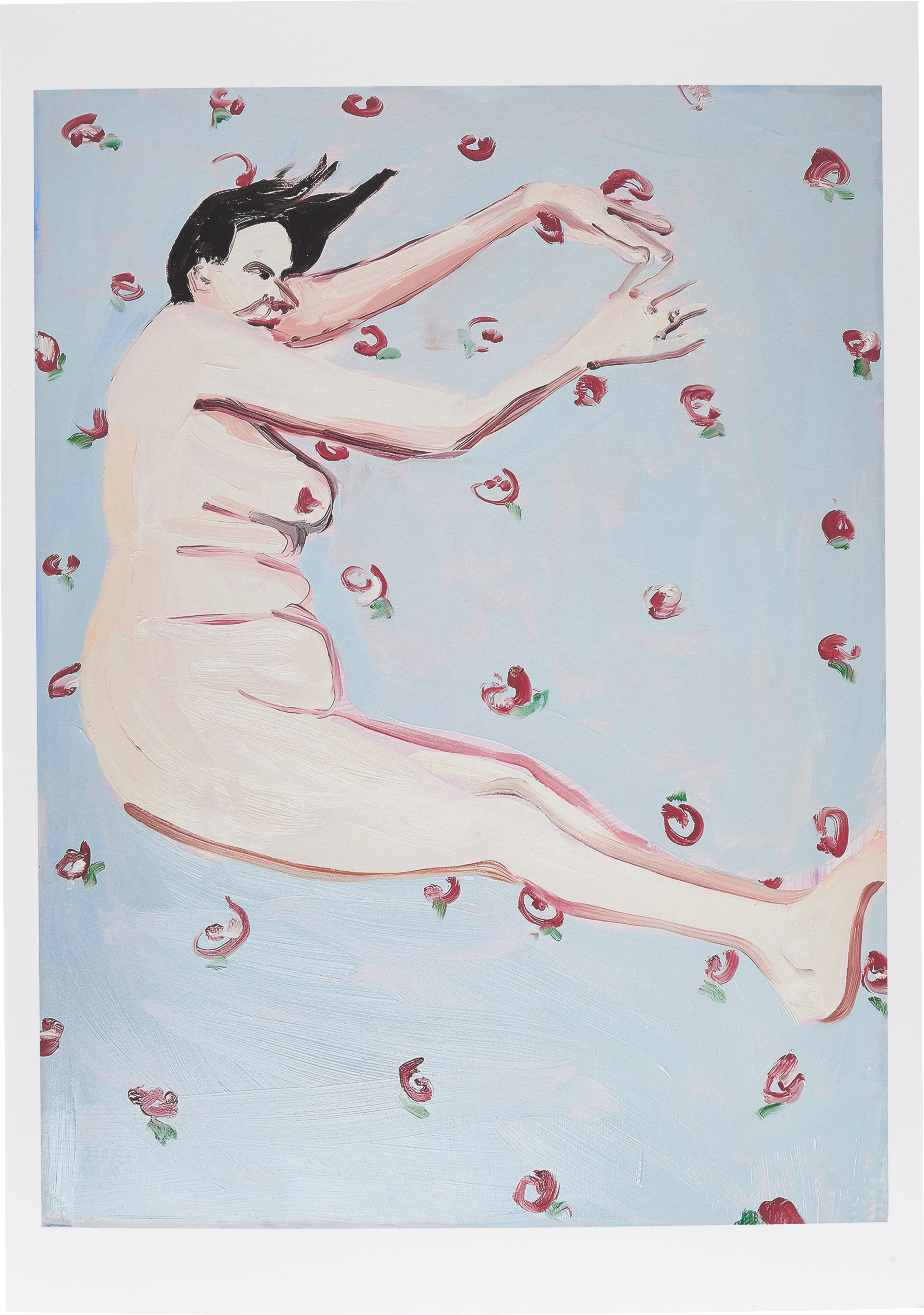
Self Portrait Naked as the Letter C, 2020
They are present, complicated, and alive. The works that established her reputation are striking in their intimacy and their scale. "Topless in Wedge Heels" from 2008 is a perfect example of her method: a woman rendered with frank attention, neither objectified nor sentimentalised, standing before the viewer as a full subject in her own right. "Check Jacket and Baby" from 2004, oil on plywood, belongs to a body of work exploring motherhood with a psychological honesty that very few painters have achieved.
"Don't Let Go" from 2001, made with oil, watercolour, paper, and photograph on board, shows her willingness to complicate the painted surface with layered materials, creating works that feel like acts of memory as much as acts of observation. These paintings matter because they insist that the lives of women and children, domestic and intimate as they may be, are worthy of the grandest pictorial ambitions. Her self portraits deserve particular consideration, both as a body of work and as individual objects. "Self Portrait Naked as the Letter C" from 2020 carries in its very title a kind of wry, unflinching bravery.
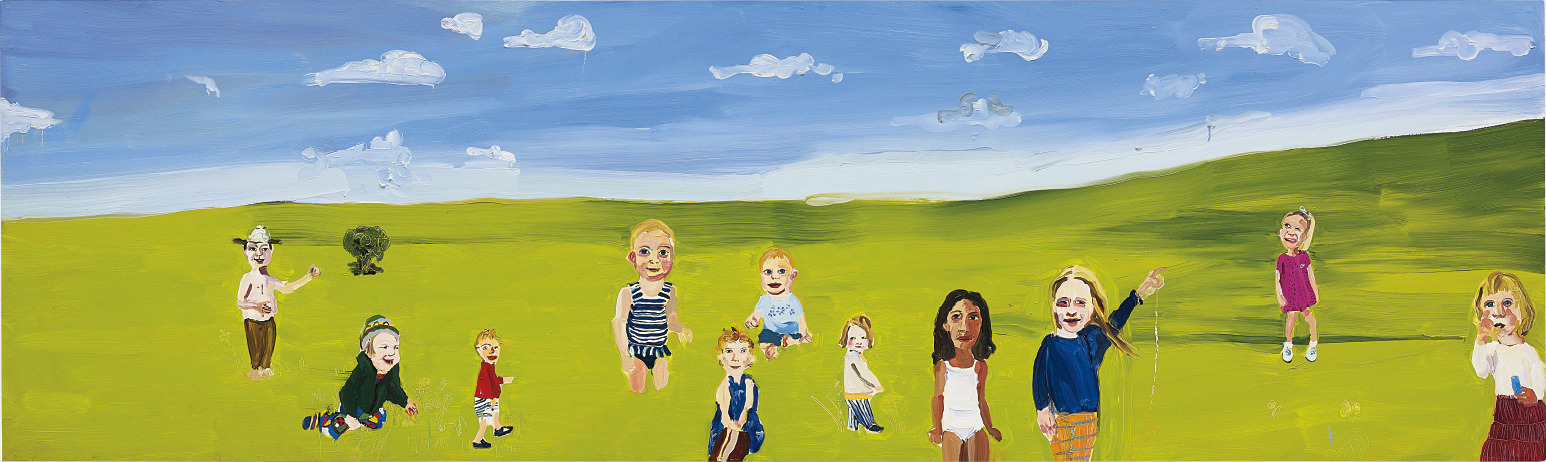
Chantal Joffe
Statues, 2000
The body is described with a gesture that is simultaneously vulnerable and assured, and the work sits comfortably alongside the great traditions of self portraiture while remaining resolutely of its own moment. The ongoing series of self portraits, including works such as "Self Portrait I, March" which bridges languages in its bilingual title, shows an artist in sustained and searching dialogue with her own image across time. In this sense Joffe works in a lineage that includes Lucian Freud and Paula Rego, painters for whom the self portrait is not vanity but investigation. From a collecting perspective, Joffe represents something genuinely compelling: a mid career artist with a substantial institutional track record and a deepening critical reputation whose market has grown steadily without the volatile speculation that plagues some of her contemporaries.
Her work has been shown at the Museum of Fine Arts in Boston and the National Portrait Gallery in London, giving it institutional validation that resonates with serious collectors. Works on board and plywood, her preferred supports, have a material honesty that collectors consistently respond to. When considering her output, it is worth noting that smaller works on paper, such as "Katherine" from 2006, a watercolour of quiet formal elegance, often offer an accessible entry point while representing the full intelligence of her practice. Joffe belongs to a generation of British painters who reasserted the primacy of the figure at a pivotal cultural moment.
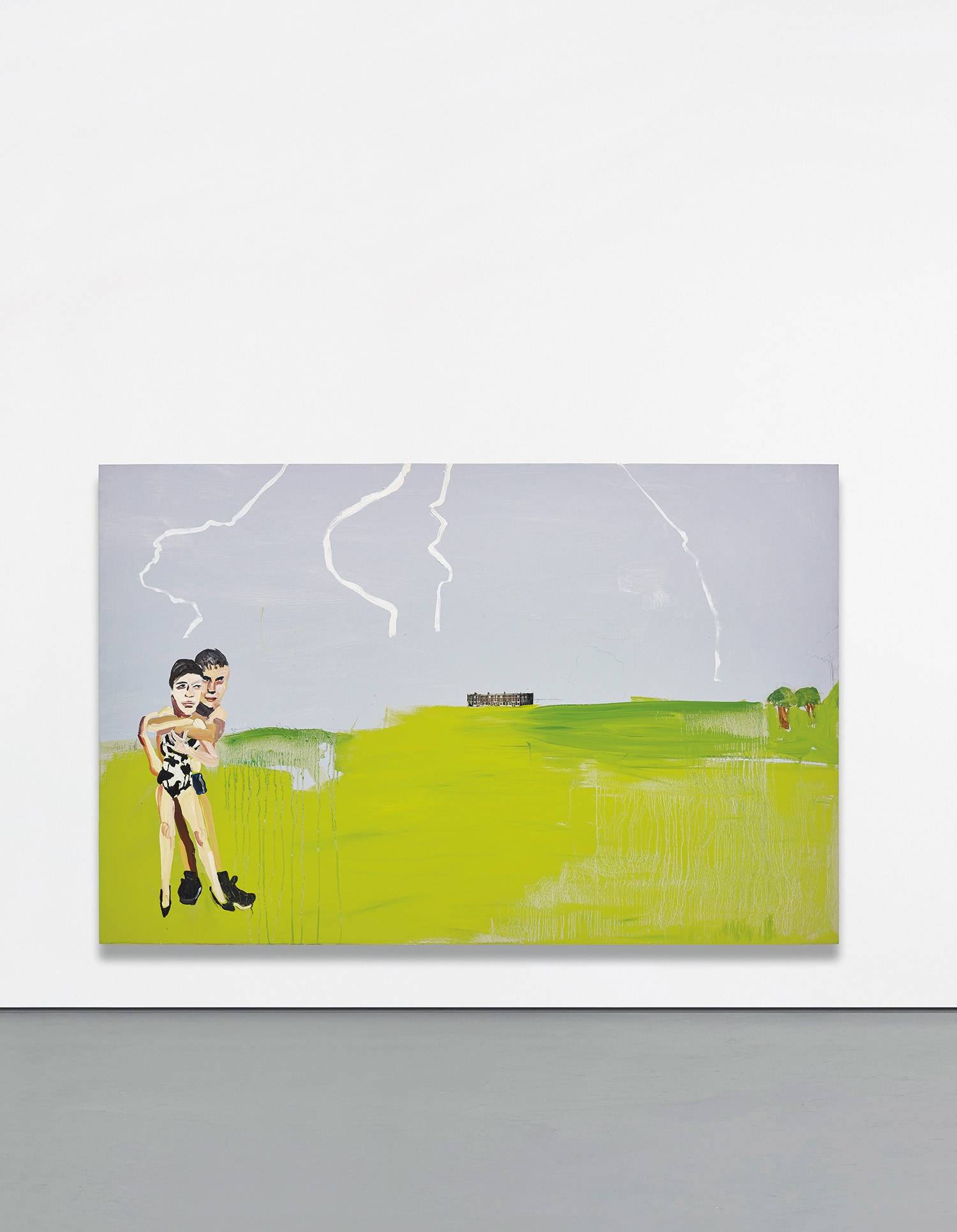
Chantal Joffe
Don't Let Go, 2001
Her work invites comparison with artists like Jenny Saville, whose monumental approach to the female body shares a certain fearlessness, and with Cecily Brown, who also trained at the Slade and brought a gestural energy to figurative painting. In an international context she connects with the lineage of Alice Neel, the great American portraitist whose commitment to psychological truth in paint Joffe clearly shares. Like Neel, she understands that to paint someone is to take their interiority seriously, and that this seriousness is itself a political act. What makes Chantal Joffe matter today, and what will secure her place in the longer history of painting, is the consistency and depth of her commitment to a single question: what does it feel like to be a woman moving through time, through a body, through relationships, through the accumulation of days.
She has pursued this question through self portraits and portraits of friends, through depictions of children in their particular gravity and strangeness, through images of women standing, sitting, turning away. Works like "Woman in Front of a Fire" from 2003 and "Brunette in a Gold Bikini" demonstrate the range of emotional register she commands, from meditative stillness to something approaching elegy. In every case the paint itself is the argument, and it is an argument made with intelligence, feeling, and a painter's complete devotion to the task at hand.
Explore books about Chantal Joffe