Artist Spotlight · The Collection Editorial
```json { "headline": "César: The Sculptor Who Reimagined Everything", "body": "In the spring of 1997, the Centre Georges Pompidou in Paris mounted a sweeping retrospective of César Baldaccini's work, drawing crowds who came to stand before crushed automobiles, billowing polyurethane foam, and delicate bronze insects with equal wonder. It was a fitting tribute to an artist who had spent five decades insisting that beauty was hiding inside the industrial age, waiting for someone bold enough to release it. The show reminded a new generation that César was not merely a provocateur but a poet of materials, one of the most genuinely inventive sculptors the twentieth century produced. For collectors who encountered his work that season, many for the first time, the experience was transformative.
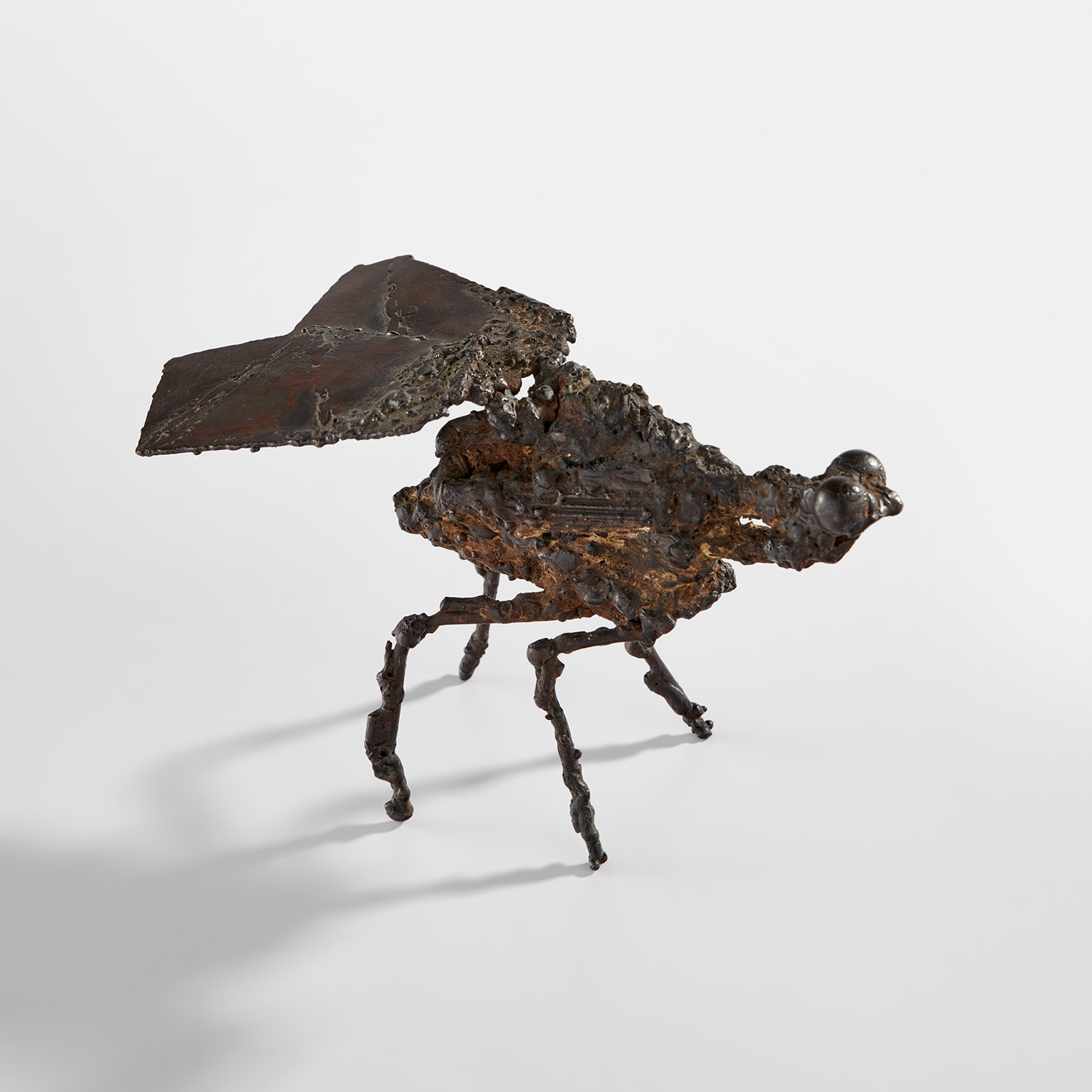
César
La Mouche, 1955
", "César Baldaccini was born in 1921 in Marseille, the son of Italian immigrants who ran a modest bar in the working class neighbourhood of Belle de Mai. Growing up in a port city defined by commerce, labour, and the constant movement of goods, he developed an early and instinctive fascination with materials and making. He earned a scholarship to the École des Beaux Arts in Marseille before moving to Paris in 1943 to study at the prestigious École Nationale Supérieure des Beaux Arts. His formation was classical in the strictest sense, grounded in drawing and modelling, but Paris in the postwar years was a city restless with new ideas, and César would not remain inside any academic tradition for long.
", "Through the late 1940s and into the 1950s, César worked with welded iron and scrap metal, building figurative sculptures of animals and figures from found industrial fragments. The series of insects and creatures from this period, including his celebrated La Mouche and several Insecte works in bronze from 1955, show an artist already operating at the highest level of technical invention. These early bronzes are remarkable objects: simultaneously primitive and refined, they suggest ancient totems forged from the wreckage of the modern world. They established César as a sculptor of genuine seriousness long before his more famous provocations arrived, and they remain among the most sought after works in his catalogue.
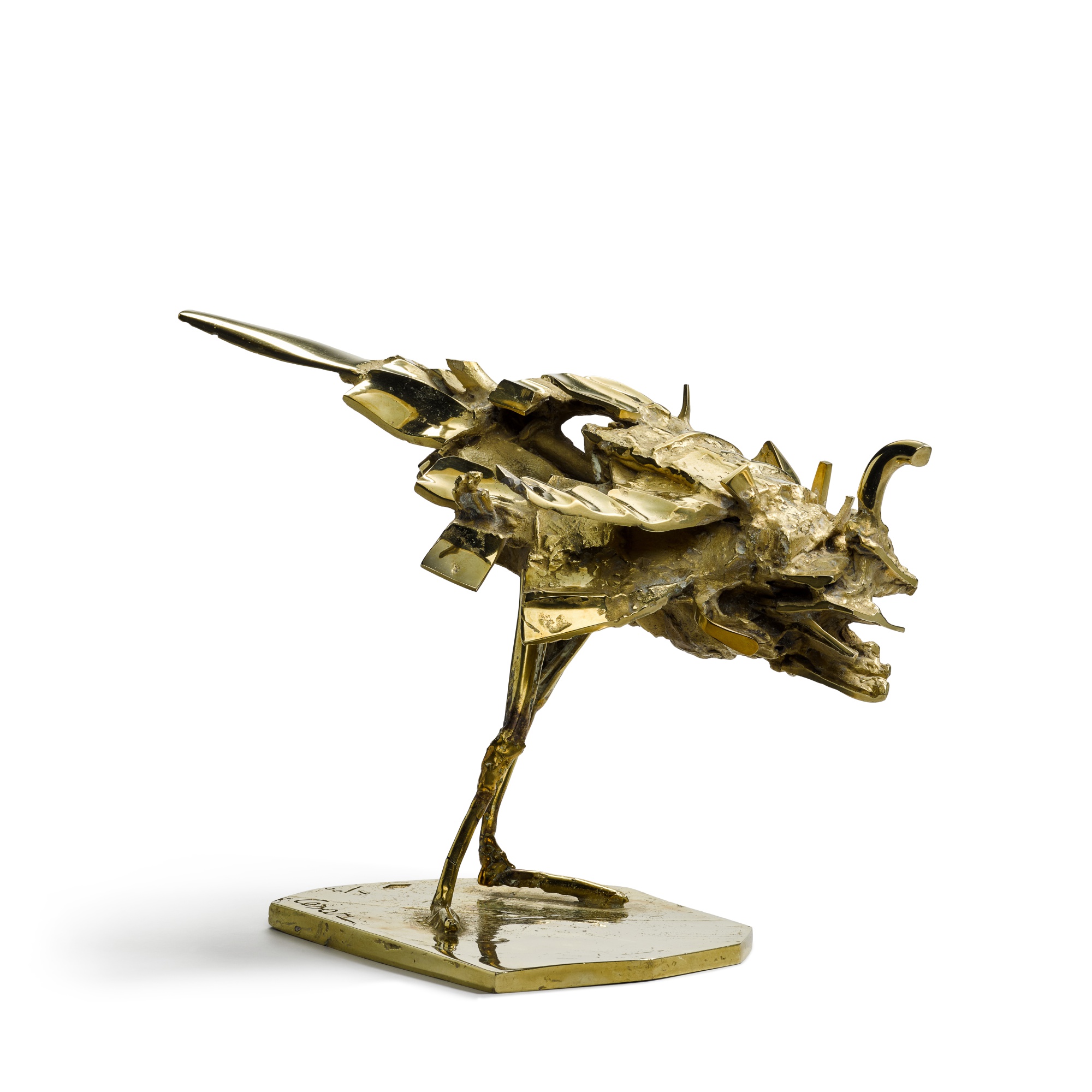
César
Insecte, 1955
", "The defining breakthrough came in 1960, when César presented his first Compressions at the Salon de Mai in Paris. He had gained access to an automobile junkyard press and used it to compact entire cars into dense, roughly rectangular blocks of crushed metal. The gesture was radical and deliberately irreverent, pointing at the absurdity of consumer culture while simultaneously creating objects of undeniable sculptural presence. That same year, he became a founding member of Nouveau Réalisme alongside Yves Klein, Jean Tinguely, Niki de Saint Phalle, and the movement's theorist Pierre Restany.
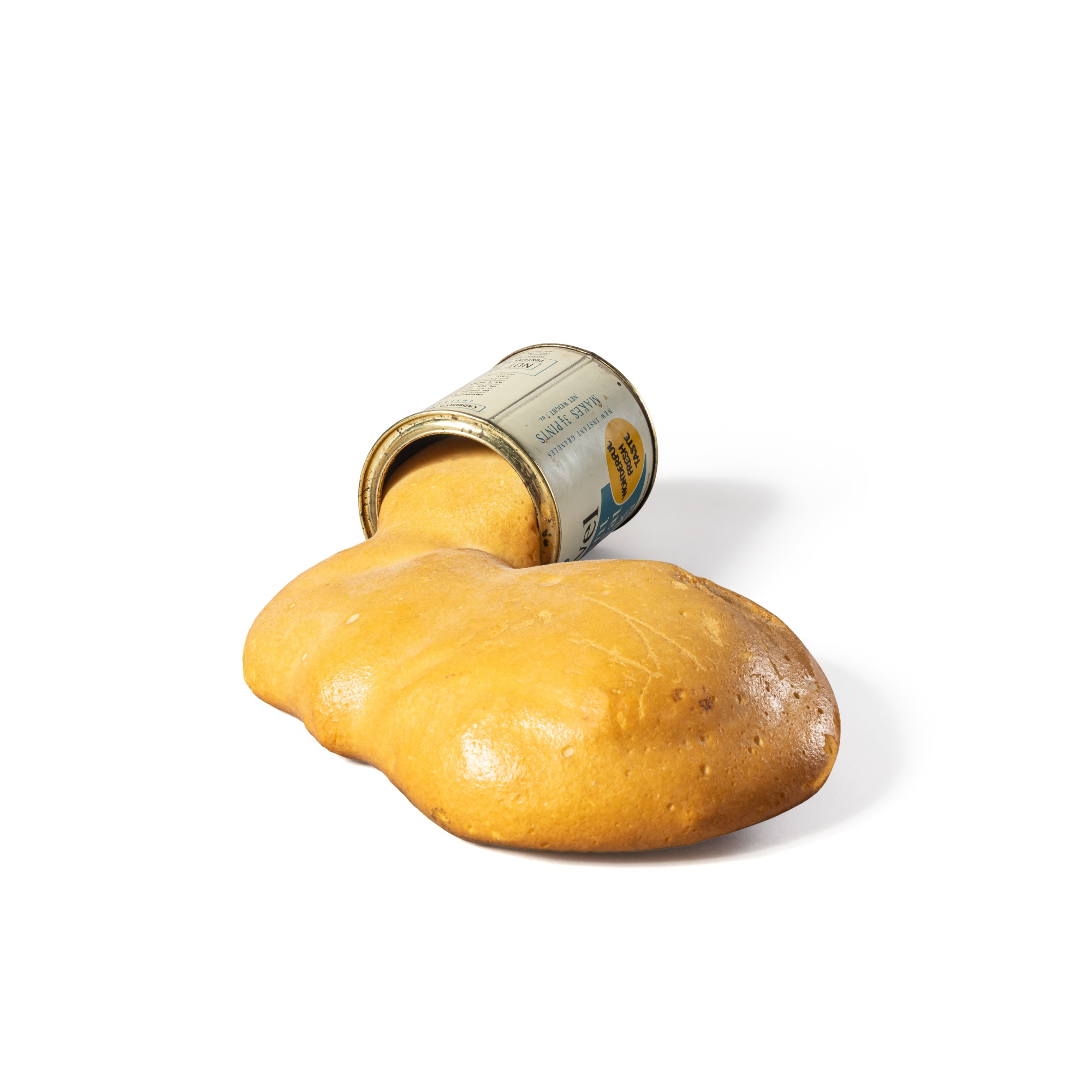
The group shared a conviction that the raw material of contemporary life, its packaging, its refuse, its industrial output, was legitimate artistic territory. César's Compressions were perhaps the most visceral expression of that belief.", "If the Compressions made him famous, the Expansions revealed a different César entirely. Beginning in the late 1960s, he began working with polyurethane foam, pouring and directing the material as it expanded, hardened, and froze into unpredictable organic forms.
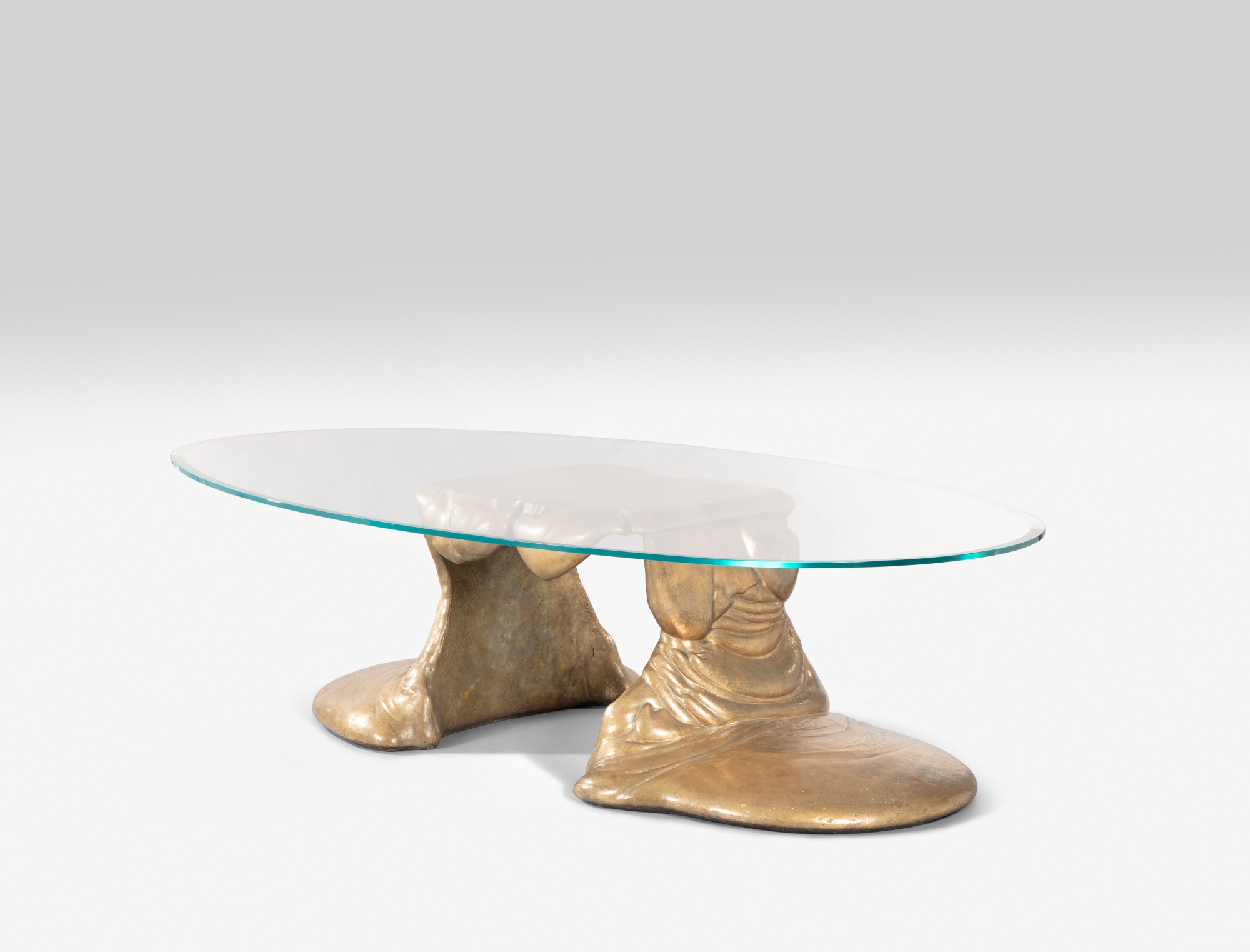
César
Table Expansion
Works like Expansion no. 25 from 1970, with its resin form mounted dramatically against found objects, demonstrate how completely César surrendered to material chance while still shaping the outcome with a sculptor's intelligence. Later Expansions cast in polished bronze, including his Console expansion and Table Expansion pieces, translated these volcanic, spontaneous forms into permanent, luxurious objects. The Table Expansion in polished bronze with a glass top became one of the most coveted functional sculptures of the late twentieth century, a work that lives equally in the art museum and the grand private interior.
", "The breadth of César's practice is sometimes underappreciated. His Hommage à Morandi from 1977, in metal and enamel on panel, reveals a meditative, intimate side that sits quietly alongside his more theatrical industrial works. His bronze figurative pieces from the early 1990s, including Les Roberts d'Evelyne from 1991 and the exuberant Poule Poing from 1992, show an artist in the last decade of his life still experimenting with form, humour, and the boundary between the representational and the abstract. César was never an artist who settled into a signature style and repeated it.
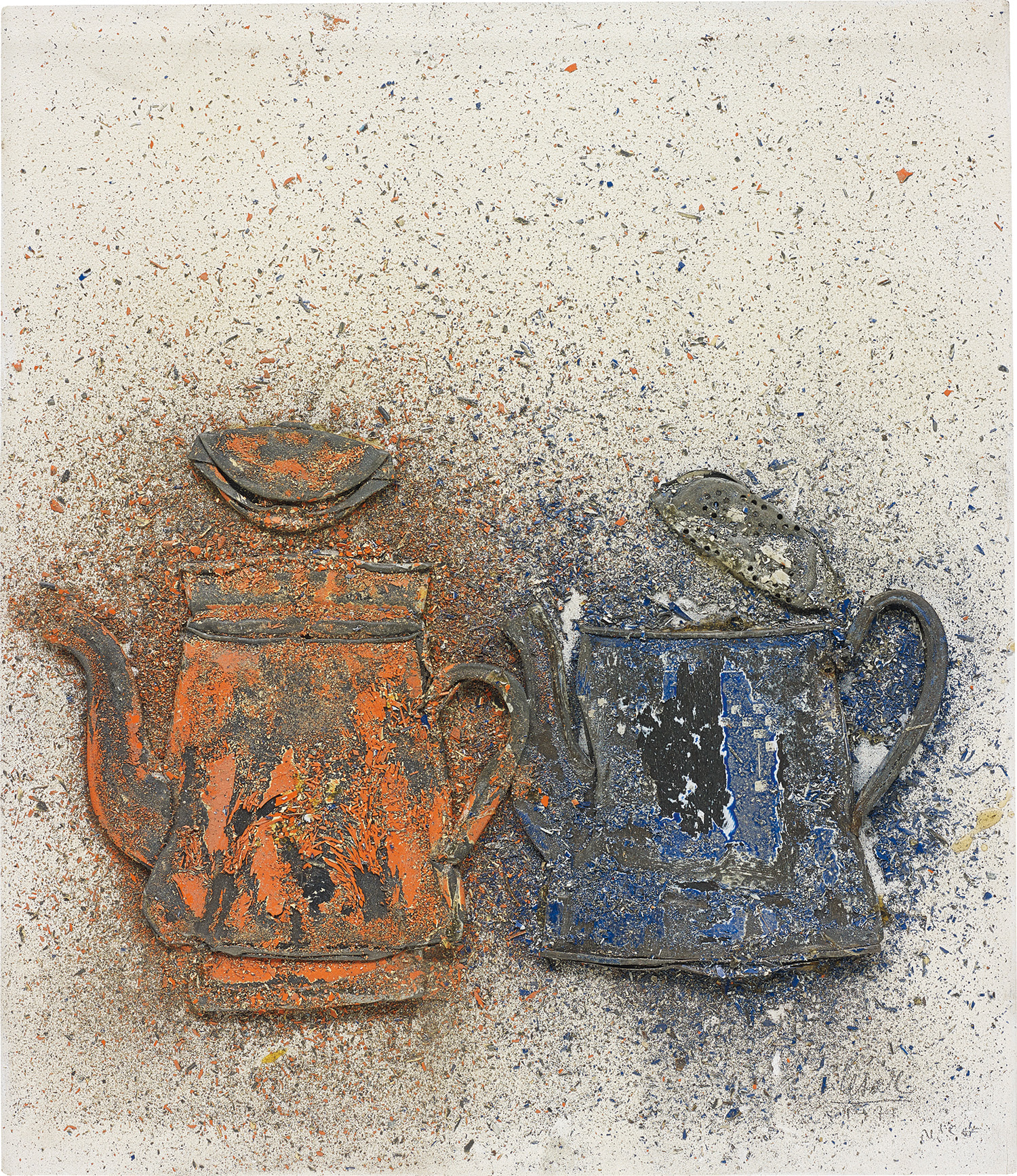
César
Hommage à Morandi, 1977
He remained genuinely curious across sixty years of working.", "From a collecting perspective, César presents one of the most compelling opportunities in the postwar French market. His work spans an extraordinary range of scale, medium, and price point, from small early bronzes that offer an intimate entry into his practice to major Compressions and Expansions that anchor significant collections. The early insect and animal bronzes from the 1950s have attracted sustained institutional and private demand, valued for their rarity and their demonstration of César's formal intelligence before his more conceptual work overshadowed them.
The Expansion works in polished bronze occupy a particular sweet spot: they are immediately legible as César's, they are extraordinarily beautiful as objects, and they hold their presence in both domestic and institutional settings. Auction results at Christie's and Sotheby's over the past two decades have confirmed consistent collector appetite, particularly for works from the 1960s through the 1980s.", "César belongs to a constellation of artists who transformed postwar European sculpture by insisting on the primacy of the found, the industrial, and the everyday. His kinship with Jean Tinguely, whose kinetic machines drew on similar junkyard vocabularies, is direct and biographical.
The Italian Arte Povera movement, which emerged slightly later with figures like Jannis Kounellis and Mario Merz, shared his conviction that humble and industrial materials deserved the same attention as marble or bronze. In the American context, John Chamberlain was working with crushed automobile metal at almost exactly the same moment as César's Compressions, a coincidence that speaks to a broader postwar cultural urgency around industrial detritus as aesthetic material. César's place among these peers is secure, and his contributions to the discourse remain foundational.", "What César ultimately gave us is a way of seeing the industrial landscape not as an assault on beauty but as beauty's newest address.
He found grace in compression and exuberance in foam, ancient life in welded iron and meditative quietude in enamel on panel. He died in Paris in 1998, leaving behind a body of work that continues to grow in critical and commercial stature. For collectors drawn to the most intellectually vital period of European postwar art, his work offers not just an investment in quality but an invitation to share in a genuinely transformative vision of what sculpture could be and do." , "quotes": [ { "quote": "I do not choose iron.
Iron chooses me.
Explore books about César