Cauleen Smith
Cauleen Smith's Radiant Vision of Black Futures
Artist Spotlight · The Collection Editorial
“I am interested in the idea that utopia is always a practice, never a destination.”
Cauleen Smith, interview with the Walker Art Center
When Cauleen Smith's sprawling installation 'Human_3.0 Reading List' drew sustained attention from curators and collectors across North America and Europe, it confirmed what a dedicated community of artists and scholars had long understood: Smith is among the most intellectually alive and visually generous artists working today. Her work has been celebrated at the Museum of Contemporary Art Chicago, the Whitney Museum of American Art, and the Institute of Contemporary Art Los Angeles, and her presence in major group exhibitions devoted to Afrofuturism, feminist practice, and experimental cinema has only deepened over the past decade. She occupies a rare position as both a rigorous filmmaker and a compelling maker of objects on paper, and the full range of her practice rewards close attention from anyone serious about contemporary American art.
Cauleen Smith
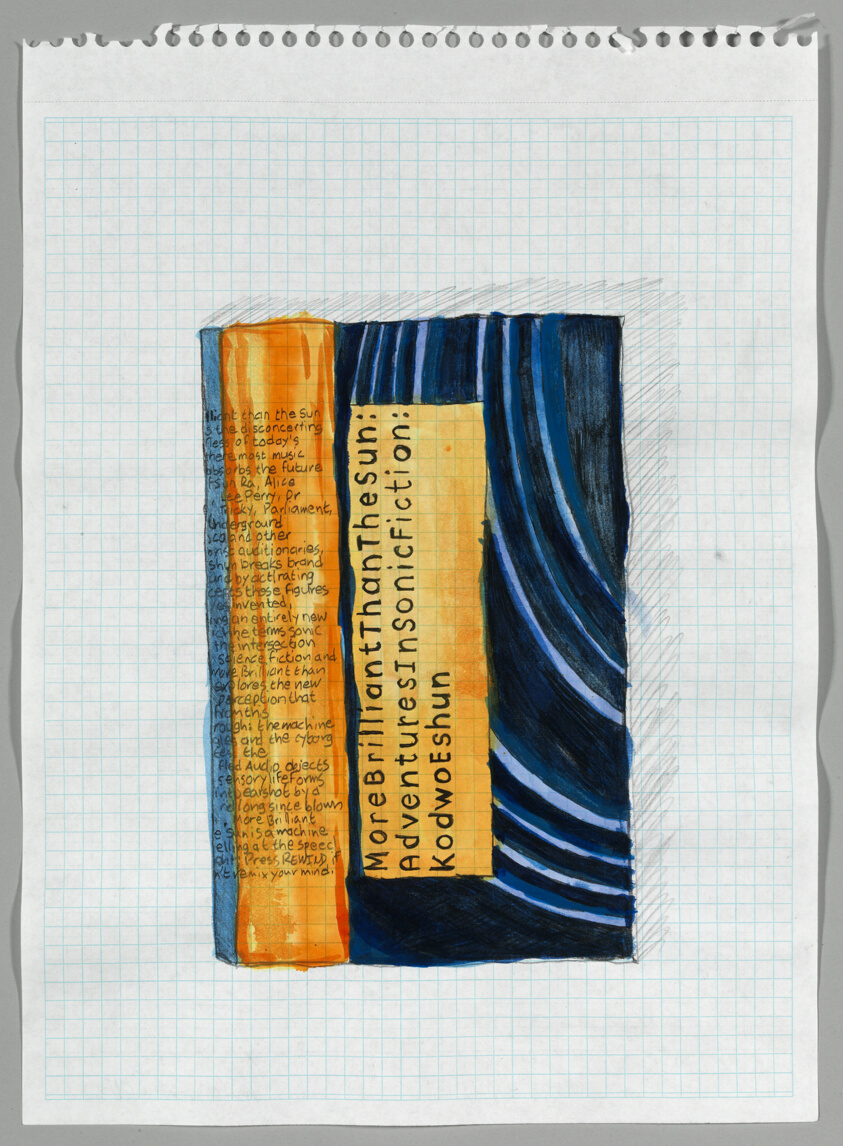
More Brilliant than the Sun, from Human_3.0 Reading List, 2016
Smith was born in Riverside, California, and came of age in the American West at a moment when Black cultural production was undergoing a period of profound self examination and renewal. She pursued her undergraduate studies at San Francisco State University before earning her MFA from the University of California, San Diego, an institution that shaped a remarkable number of important American artists through its commitment to conceptual rigor and interdisciplinary experimentation. The intellectual culture of Southern California, with its layered histories of migration, resistance, and utopian longing, left a permanent mark on her sensibility. She absorbed influences ranging from science fiction literature to the feminist theory then reshaping academic discourse, building a foundation that would sustain decades of adventurous work.
Smith first gained significant recognition as a filmmaker. Her debut feature Drylongso, released in 1998, announced a bold and fully formed artistic intelligence. Shot on 16mm film with a documentary attentiveness to the textures of everyday Black life in Oakland, the film followed a young Black woman who photographs young Black men as an act of preservation and witness, fearing they will not survive the violence surrounding them. The title is drawn from a Gullah term meaning ordinary or commonplace, a word that Smith reframed as a kind of dignity.
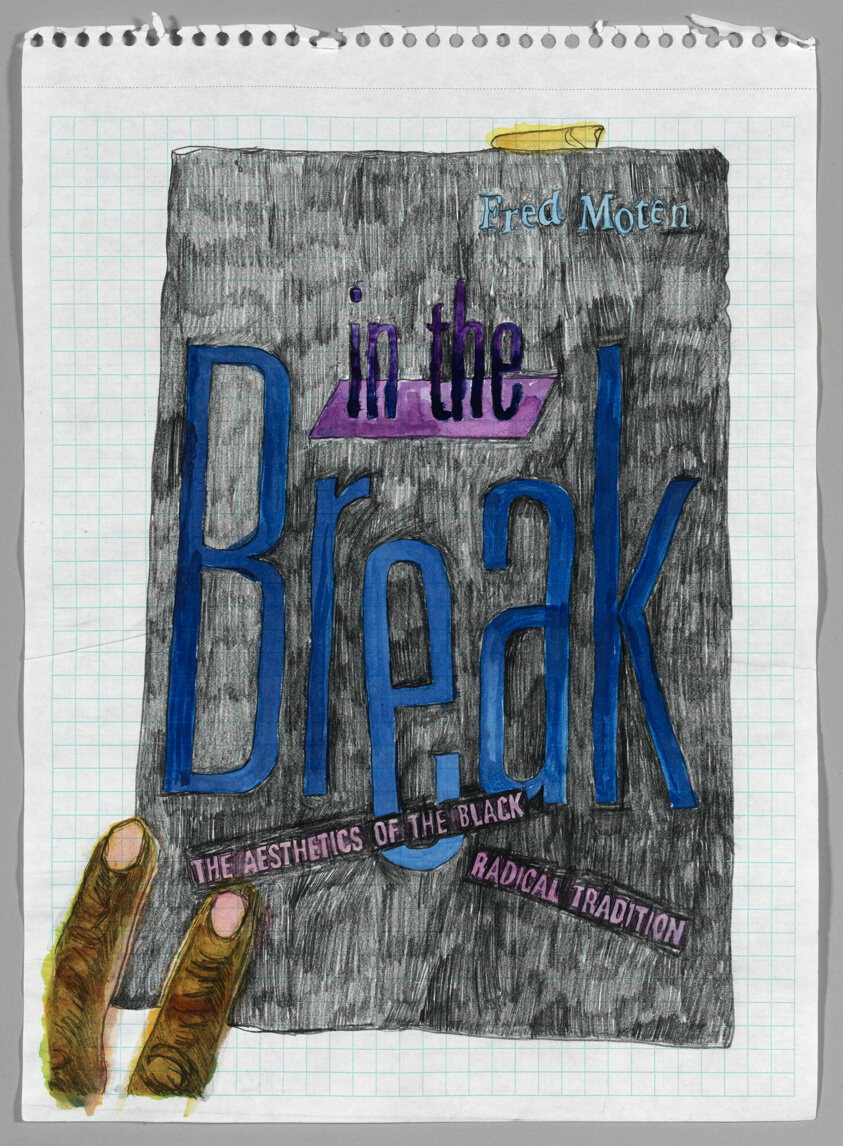
Cauleen Smith
In the Break, from Human_3.0 Reading List, 2015
The film screened at the Sundance Film Festival and established her as a filmmaker willing to engage the most urgent social questions of her time through the language of personal, poetic cinema rather than conventional narrative. Over the years that followed, Smith expanded her practice in ways that reflected both her restless curiosity and her commitment to Black feminist thought as a living intellectual tradition. She made short films, video installations, and performance works that drew on figures from Sun Ra to the Black Arts Movement to Donna Haraway. Her approach to installation often involved transforming gallery spaces into environments saturated with color, music, and layered meaning, inviting viewers into immersive experiences that felt simultaneously celebratory and searching.
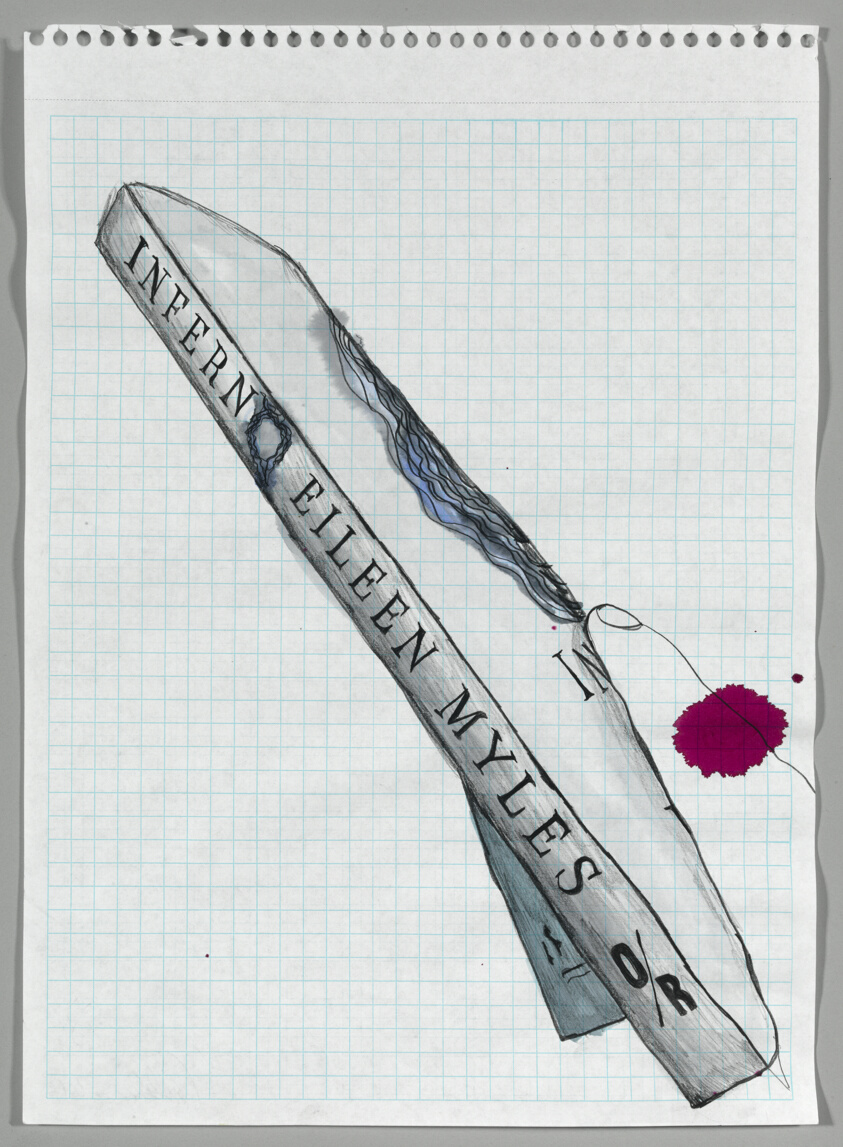
She became known for work that holds joy and critical inquiry in careful balance, refusing the assumption that art addressing racism and exclusion must traffic only in grief or anger. The works from the 'Human_3.0 Reading List' series represent a particularly beloved and collectible dimension of her practice. Created between 2015 and 2016, these intimate drawings on wove graph paper render the covers and titles of texts that have been foundational to Black feminist, postcolonial, and speculative thought.
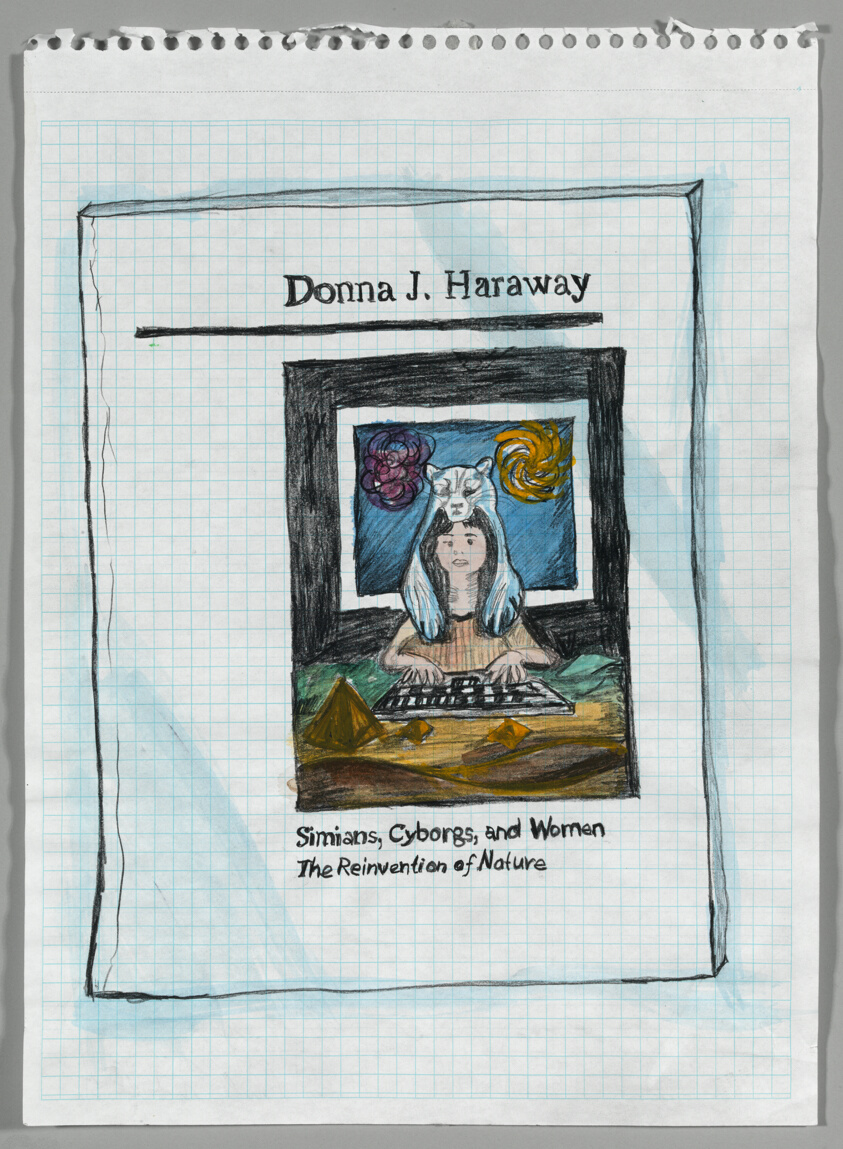
Cauleen Smith
Simians, Cyborgs, and Women, from Human_3.0 Reading List, 2015
Titles include Angela Davis's 'Blues Legacies and Black Feminism,' Donna Haraway's 'Simians, Cyborgs, and Women,' bell hooks's 'Yearning,' C.L.R. James's 'The Black Jacobins,' Fredric Jameson's 'Archaeologies of the Future,' and Yoko Ono's 'Grapefruit,' among many others.
Each sheet is worked in graphite, watercolor, colored inks, and occasionally touches of opaque watercolor, acrylic paint, or even glitter glue, producing surfaces that are modest in scale yet surprisingly rich in feeling. The graph paper ground gives the works a quality of careful notation, as though Smith is charting coordinates in an intellectual universe she is both mapping and inhabiting. Taken together, the series functions as a portrait of a reading life and a canon of liberation, a bibliography transformed into a work of visual art. For collectors, the 'Human_3.
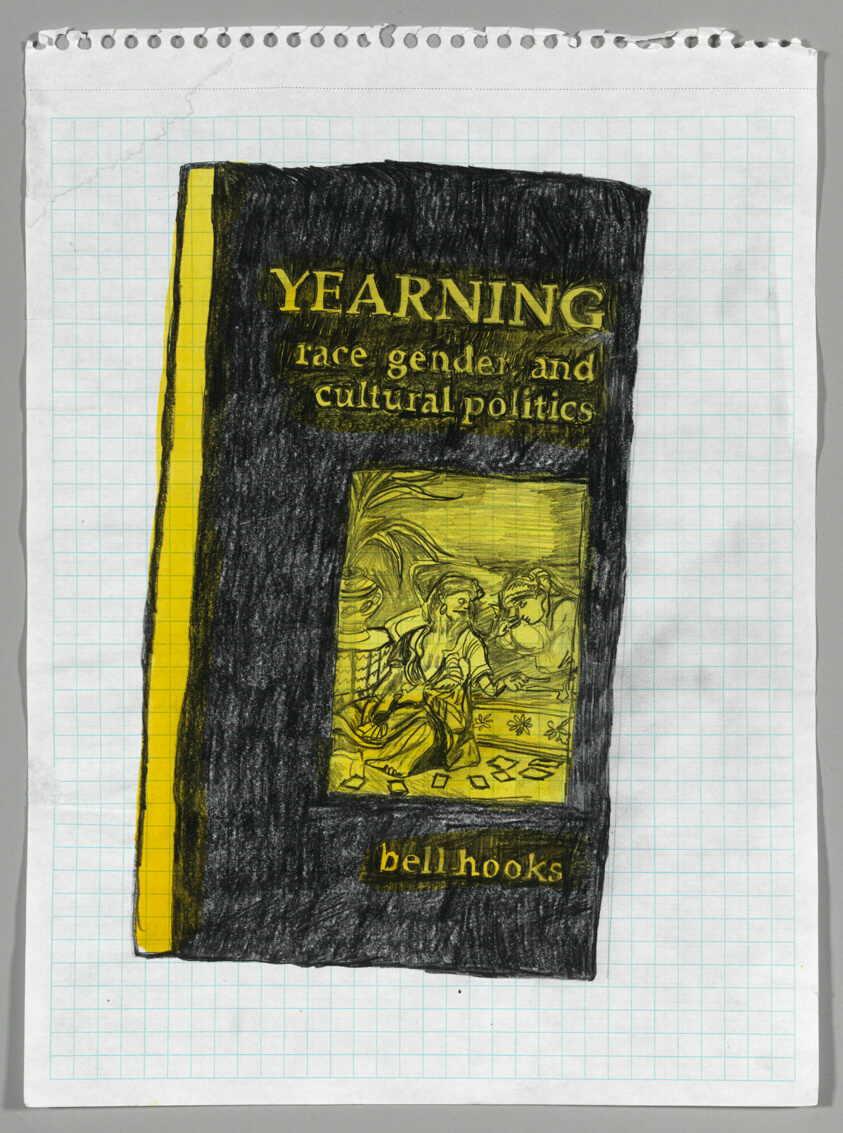
Cauleen Smith
Yearning, from Human_3.0 Reading List, 2015
0 Reading List' drawings offer an exceptional point of entry into Smith's world. Works on paper have a particular intimacy that her large scale video installations, however spectacular, cannot replicate in a private context, and these pieces carry the full weight of her thinking in a format that lives beautifully in domestic and institutional settings alike. The series resonates with growing collector interest in artists who bridge the conceptual and the handmade, and it connects naturally to collections that include work by Kara Walker, Lorna Simpson, Arthur Jafa, Pope.L, and other artists who have redefined the terms of Black cultural representation in contemporary art.
Smith's position as a practicing professor at the University of California, Los Angeles, also places her at the center of a vital educational community, ensuring that her influence continues to radiate through successive generations of artists. Smith belongs to a broader artistic genealogy that includes the experimental filmmakers of the LA Rebellion, a movement centered at UCLA in the 1970s that sought to create a Black cinema rooted in the aesthetics and concerns of African and African American communities. She also stands in clear relation to a generation of women artists, including Trinh T. Minh ha and Julie Dash, who reimagined documentary and narrative film from feminist and postcolonial perspectives.
In her drawing and installation practice, her affinities extend to artists like Cameron Rowland and Theaster Gates, who treat archives, objects, and texts as bearers of historical and political meaning. She is someone whose work becomes more significant the more widely it is understood, and whose place in art history is still being written with each new body of work. What makes Cauleen Smith so genuinely important right now is the way her practice insists on the inseparability of beauty, knowledge, and social responsibility. At a time when the art world continues to grapple seriously with questions of whose histories are preserved and whose futures are imagined, her work provides not only critique but also vision, not only documentation but also invitation.
To collect her work is to align oneself with an artist who has spent decades making the case that Black life, Black thought, and Black creativity are not subjects to be explained but luminous realities to be encountered, celebrated, and carried forward.
Explore books about Cauleen Smith