Catherine Yass
Catherine Yass Illuminates the World Beautifully
Artist Spotlight · The Collection Editorial
There are artists who document the world, and then there are artists who transfigure it. Catherine Yass belongs decisively to the second category. Her luminous lightbox photographs and quietly hypnotic films have, over more than three decades, established her as one of the most distinctive voices in British contemporary art, a maker of images that feel simultaneously forensic and otherworldly. With works held in major institutional collections across the United Kingdom and beyond, and a practice that continues to evolve with restless intelligence, Yass remains a compelling figure for collectors who prize both formal rigour and genuine emotional resonance.
Catherine Yass
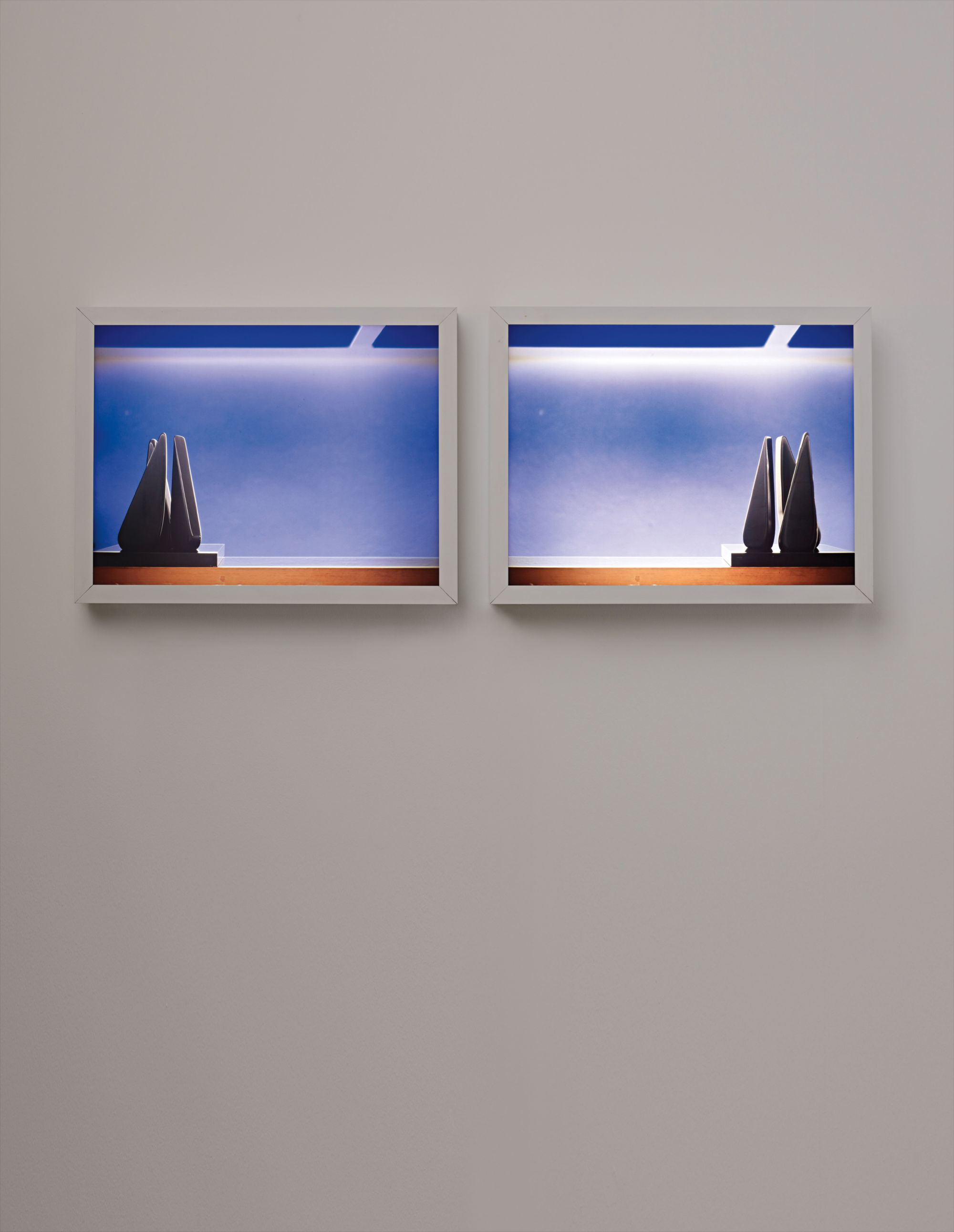
Portrait Sculpture
Yass was born in London in 1963 and trained at the Slade School of Fine Art, one of the great crucibles of British artistic ambition, before completing postgraduate work at Goldsmiths College and the Hochschule der Künste in Berlin. That transatlantic formation, moving between the conceptual seriousness of Goldsmiths and the broader European tradition, proved formative. She came of age artistically during a period of tremendous ferment in British art, alongside a generation that was rethinking what photography and film could mean within a gallery context. Yet from early in her career, Yass carved out a space that was entirely her own, defined by a technical process as distinctive as any painter's signature brushstroke.
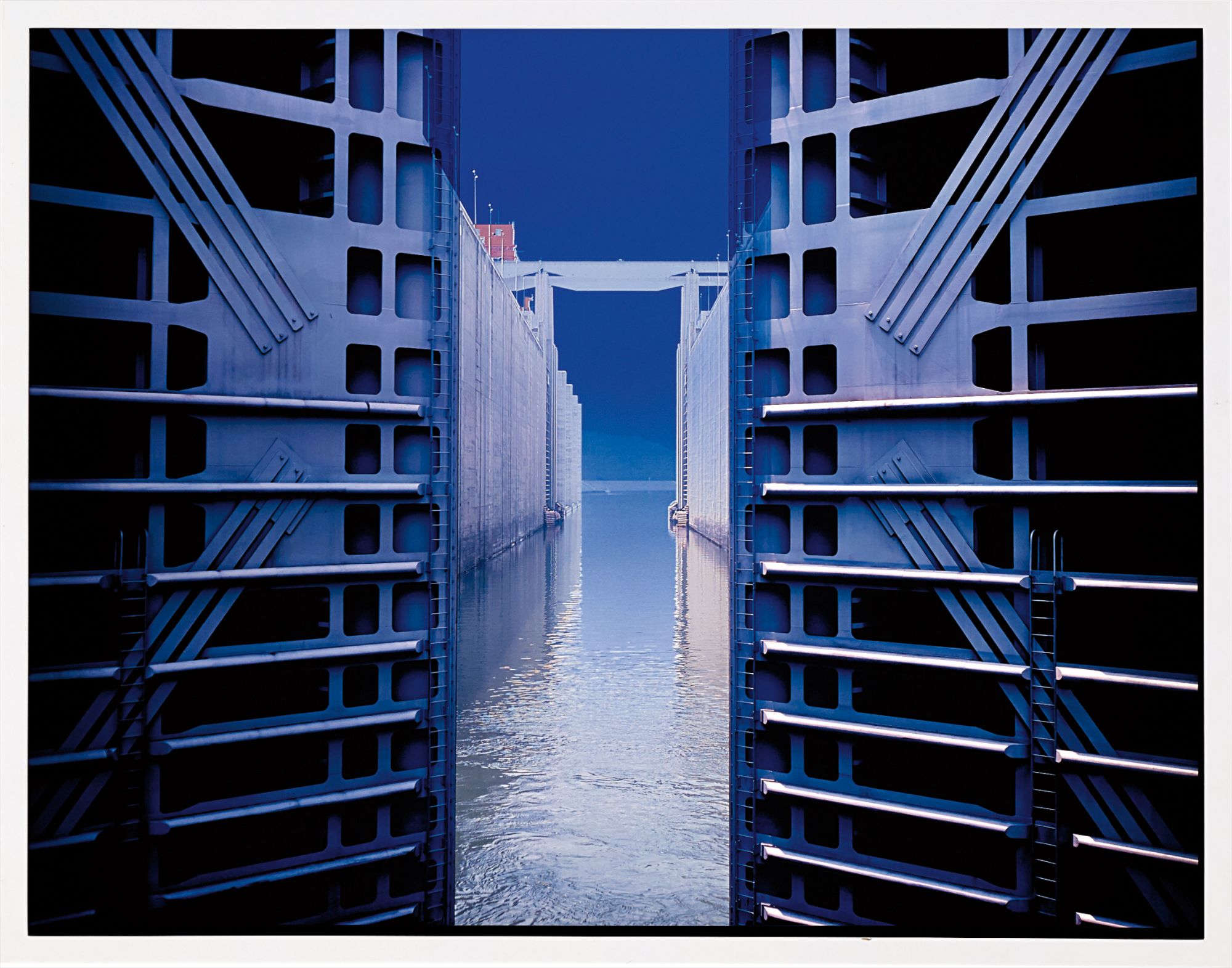
The technique that defines her practice is deceptively simple to describe and astonishing to encounter in person. Yass combines positive and negative film transparencies, overlaying them to produce images of extraordinary chromatic intensity. The result is something no digital filter can convincingly replicate: colour that seems to emanate from within the image rather than sitting on its surface, flesh tones that drift toward violet and gold, architectural spaces that glow as though lit from behind by some interior source. Mounted in lightboxes and displayed in darkened rooms, her photographs do not merely hang on a wall.
Catherine Yass
Lock (opening) 1
They radiate. Collectors who have lived with them describe the experience of waking to them in low morning light as quietly transformative. Her subject matter has ranged widely while maintaining a consistent set of preoccupations. Architecture, particularly the kind of institutional and transitional space that shapes human experience without ever quite being seen, has been a recurring focus.
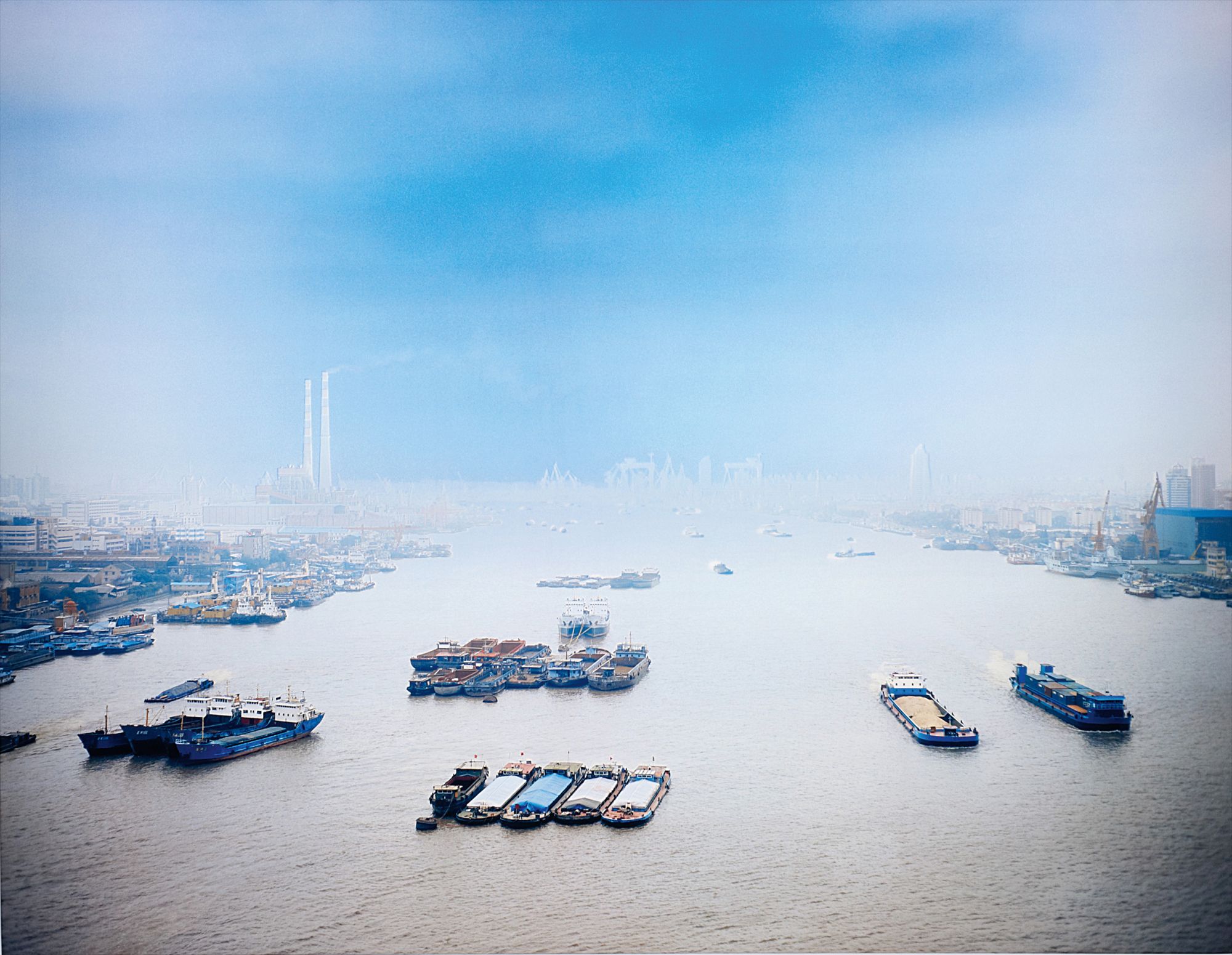
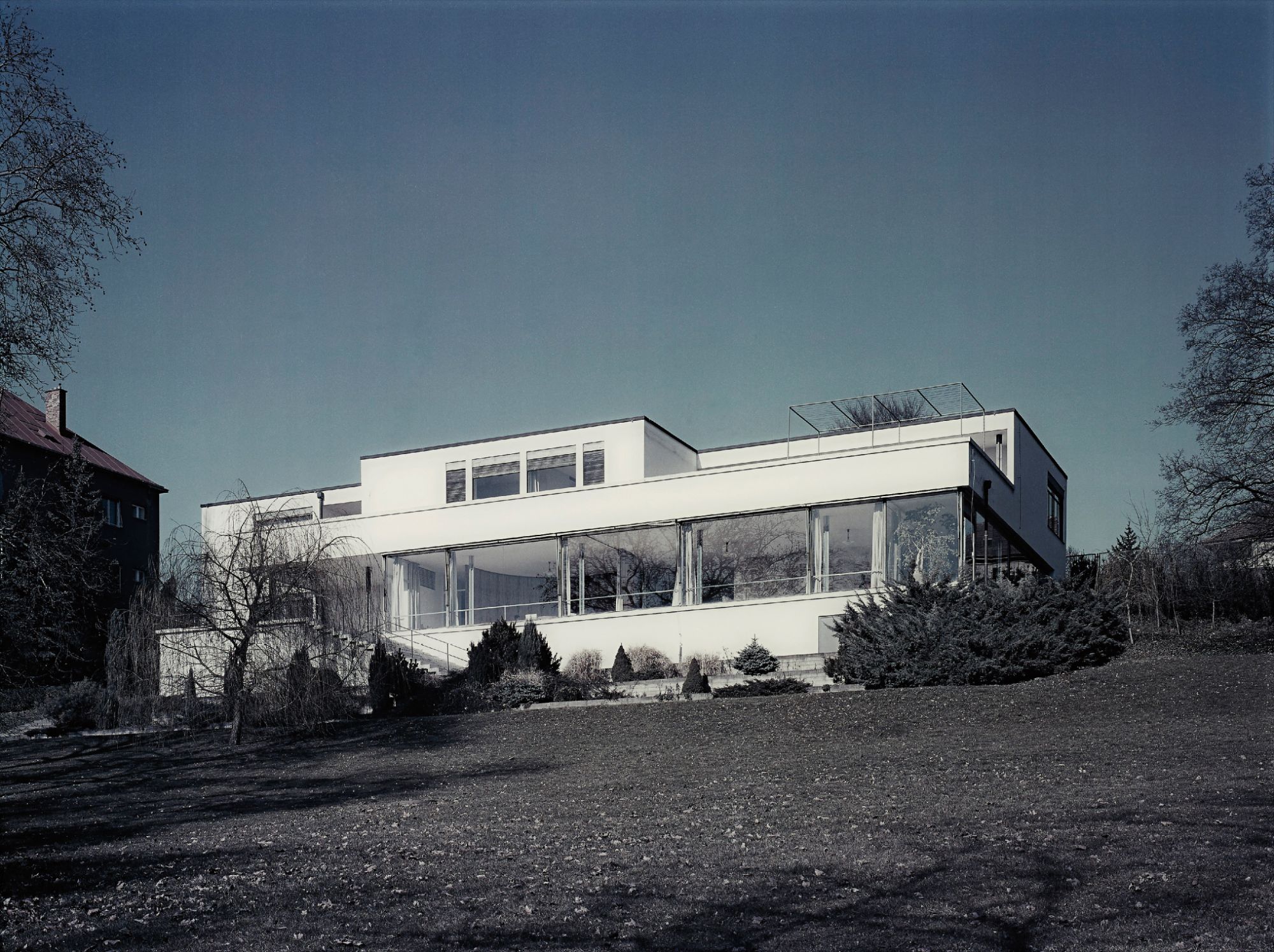
Her series engaging with urban environments, including works made in Shanghai such as "Yang Pu East", demonstrate her ability to find the uncanny within the mundane. A city block, a waterway, a construction site: in Yass's hands these become meditations on time, displacement, and the way built environments carry the weight of human aspiration and neglect in equal measure. "Cinema: New Empire" similarly transforms a specific site into something mythic, finding in the architecture of collective experience a rich visual language. Her portraits occupy an equally significant place within her body of work.
Catherine Yass
Yang Pu East
Rather than the confrontational directness of much photographic portraiture, Yass's approach produces images of startling tenderness. The technical process softens and intensifies simultaneously, so that her subjects seem both more present and more elusive than in conventional photography. "Portrait Sculpture" is among the works on the platform that speaks most directly to this quality, treating the human face with the kind of sustained, serious attention more typically associated with the sculptural tradition its title invokes. These are images that ask the viewer to slow down, to look again, and to sit with the uncertainty of what is actually being shown.
Yass was nominated for the Turner Prize in 2002, a moment that brought her work to a wider public and confirmed her standing within the landscape of contemporary British art. The Turner nomination placed her alongside artists grappling with some of the most pressing questions in the medium, and while the prize went elsewhere that year, the recognition served as a crystallising moment for her reputation. Her work had already been shown in significant institutional contexts, and the nomination accelerated interest from collectors who understood that they were looking at a practice of genuine longevity and depth rather than a flash of contemporary novelty. For collectors considering her work, several qualities reward attention.
Catherine Yass
Cinema: New Empire
The lightbox works are among the most distinctive objects in her output, and their physical presence in a room is difficult to convey through reproduction. The interplay of light and colour shifts with the time of day and the surrounding environment, meaning that living with a Yass is a genuinely dynamic experience. Her photographs made in urban environments speak to broader conversations in contemporary art about globalisation, architecture, and the poetics of place, situating her work within dialogues that include artists such as Andreas Gursky, Hiroshi Sugimoto, and Wolfgang Tillmans, though her process and emotional register remain distinctly her own. British contemporaries such as Tacita Dean and Isaac Julien share something of her investment in the moving and still image as a vehicle for sustained contemplation, and collectors drawn to those practices would find Yass a deeply sympathetic addition to their holdings.
What endures in the work of Catherine Yass is a quality that is increasingly rare: genuine wonder. Her images do not explain the world or argue with it. They hold it up to the light, quite literally, and invite the viewer to see familiar things as though for the first time. Architecture becomes atmosphere.
The human face becomes landscape. The city becomes dream. In an era when images proliferate beyond all comprehension, the deliberate, handmade luminosity of a Yass lightbox feels not like nostalgia but like a principled act of attention. For collectors building collections with real depth and ambition, her work represents exactly the kind of sustained, serious practice that rewards long acquaintance and only grows more resonant with time.