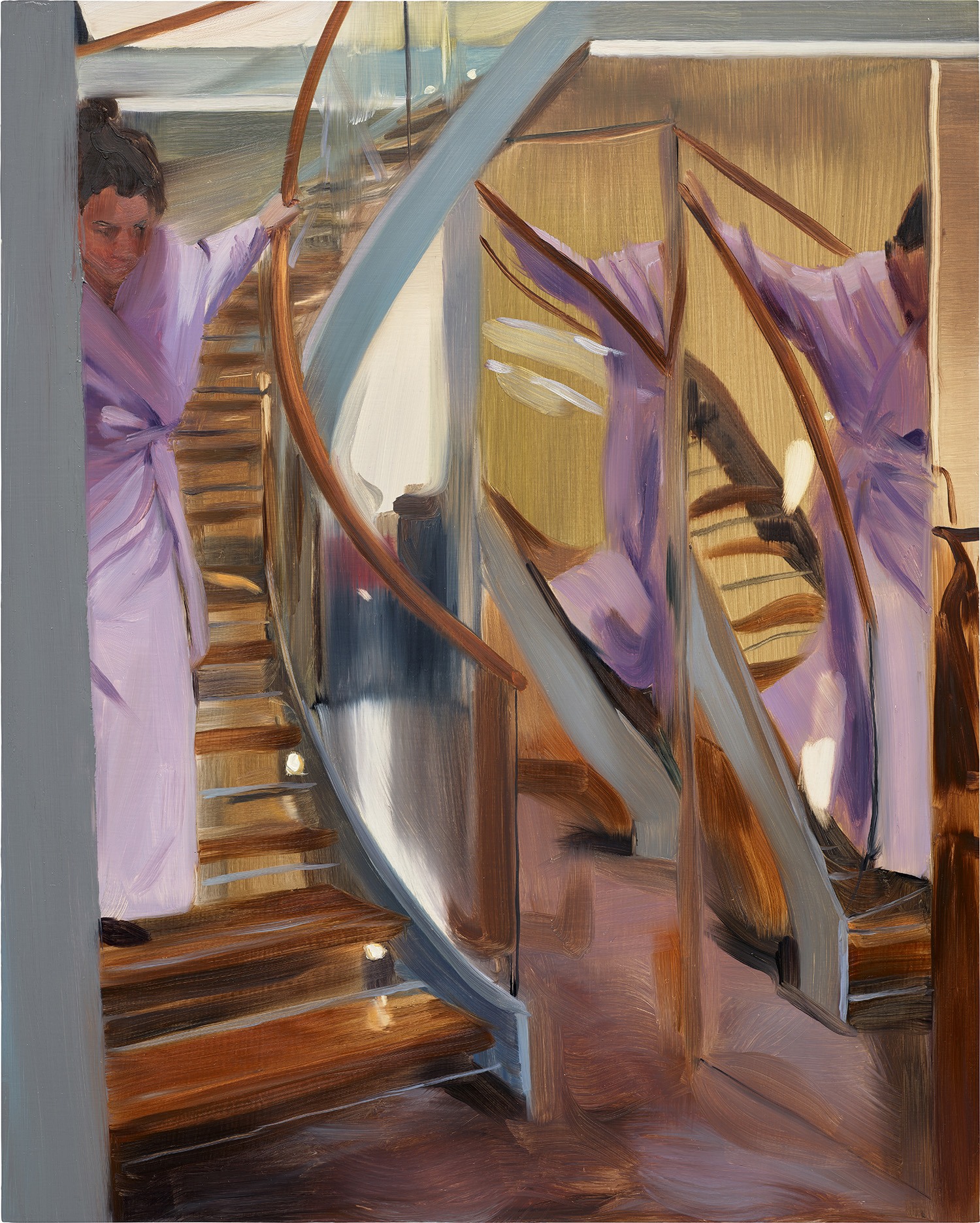
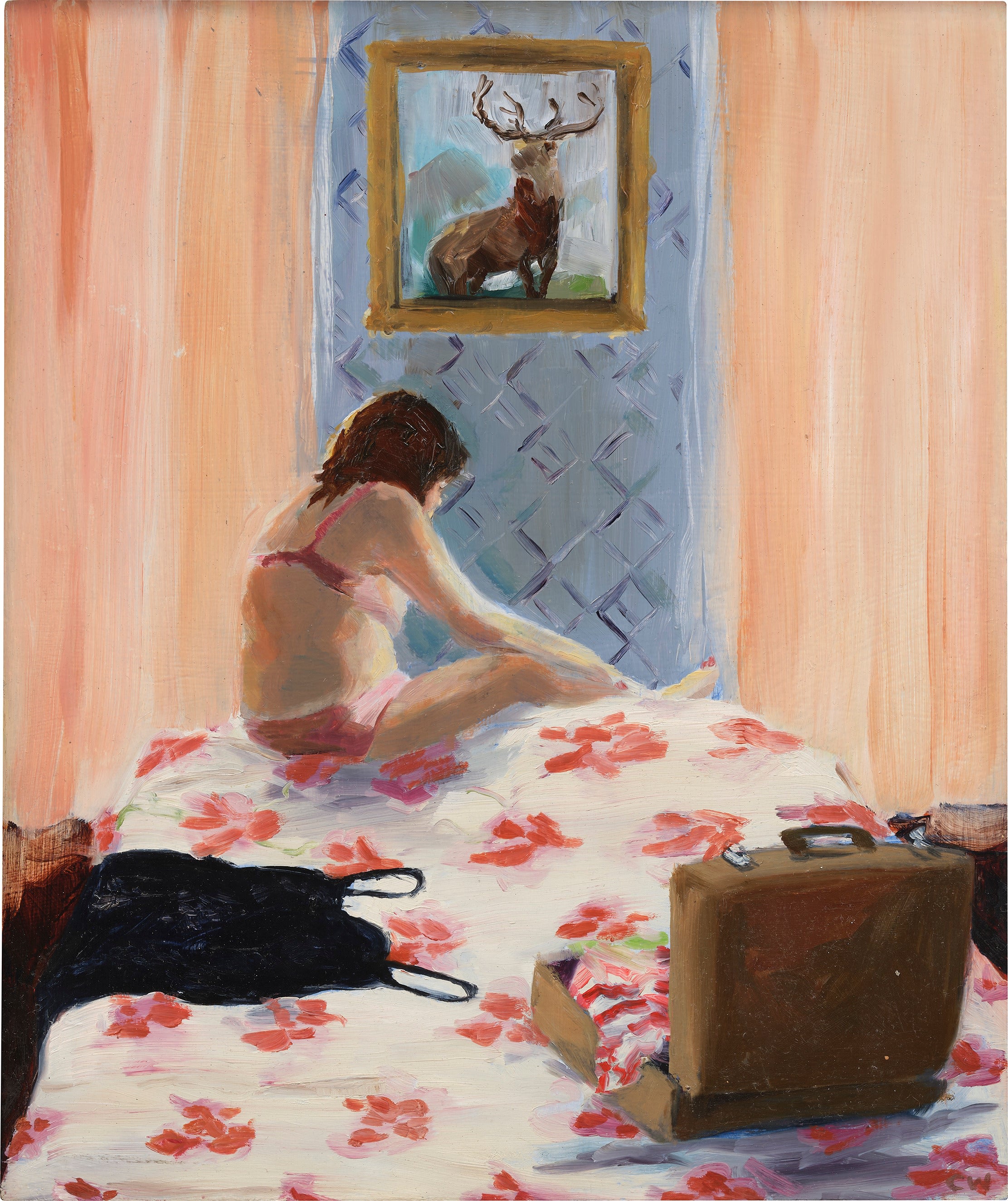
Caroline Walker
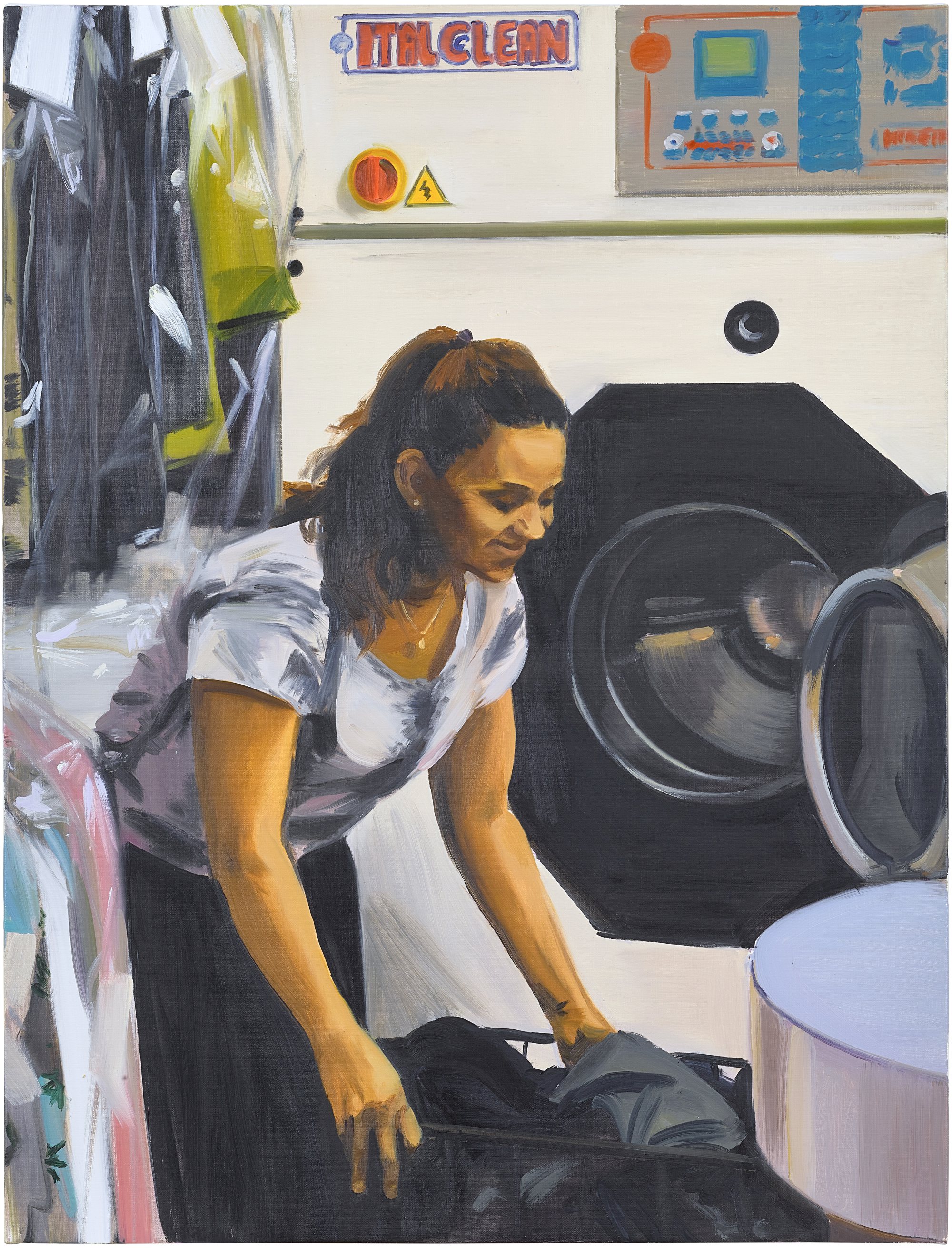
Caroline Walker Illuminates the Everyday Sublime
Artist Spotlight · The Collection Editorial
Something quietly momentous has been happening in contemporary figurative painting, and Caroline Walker sits at its radiant center. Over the past several years, Walker has moved from being a celebrated name within British painting circles to achieving genuine international recognition, with her work entering major institutional collections and commanding serious attention at auction. Her solo exhibition at Stephen Friedman Gallery in London, along with presentations at various international art fairs, has confirmed what many collectors and curators have known for some time: Walker is producing some of the most emotionally intelligent and visually arresting figurative painting being made anywhere in the world today. Born in Scotland in 1982, Walker grew up with a sensibility attuned to light and interior space that would later become the defining quality of her practice.
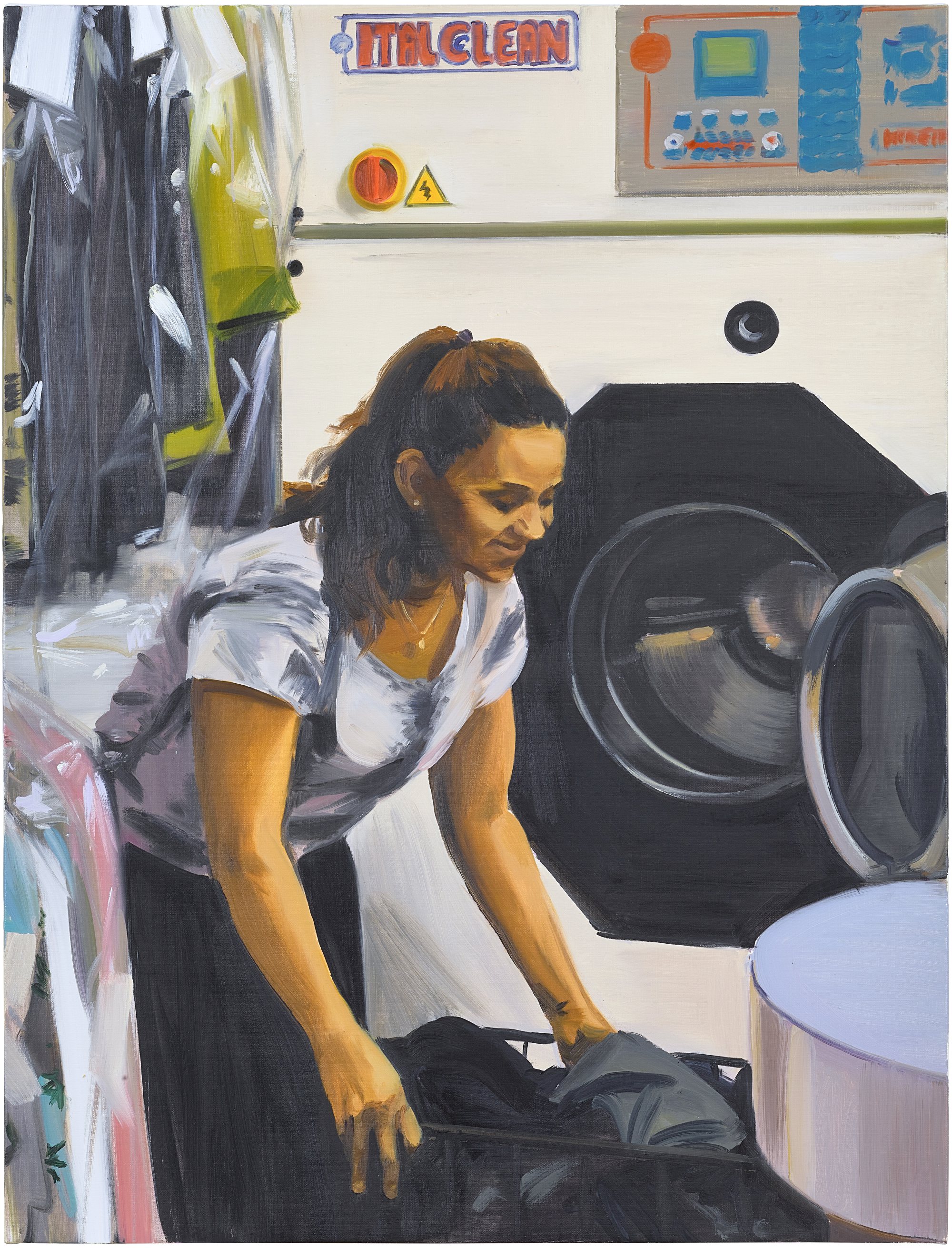
Caroline Walker
Alem III
She studied at Glasgow School of Art before completing her postgraduate studies at the Royal College of Art in London, an institution that has shaped a remarkable number of significant British painters. That dual formation, grounded in the rigorous Scottish tradition of close observation and then expanded by the cosmopolitan energy of London, gave Walker a painterly intelligence that is both disciplined and deeply feeling. She absorbed the lessons of her training without becoming confined by them, which is perhaps the most important thing a young painter can do. Walker's early paintings, including works such as "7:30PM Stoke Newington" from 2008, already showed the essential grammar of her practice taking shape.
She was drawn from the beginning to the specific poetry of interior light, particularly the warm, slightly unreal glow of artificial illumination after dark, the way a lamp or an overhead light transforms an ordinary room into something closer to a stage set. These early works announced an artist who was thinking seriously about the relationship between painting and photography, between observation and construction, between the depiction of women and the politics of looking. That last concern would deepen considerably as her career developed. The period from roughly 2013 to 2019 represents the full flowering of Walker's mature practice, producing a sequence of paintings that feel essential to any account of contemporary figurative art.
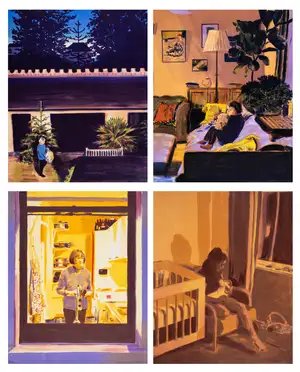
Caroline Walker
Nocturnes (Early Evening, Late Evening, Twilight, Midnight)
"In Every Dream Home" from 2013 is a quietly devastating work, its title borrowed from a Bryan Ferry song and its mood hovering somewhere between domestic contentment and something more unsettled. "Threshold" from 2014 continues this investigation of the liminal spaces women occupy within private life, while "Indoor Outdoor" from 2015 extends her fascination with the boundary between interior and exterior space, between shelter and exposure. These are paintings that reward sustained looking: the longer you spend with them, the more they give back. By 2019, works such as "Fragranced" and "Study for Coat Makers" showed Walker expanding her formal vocabulary while remaining entirely faithful to her central concerns.
The coat makers series in particular demonstrated her interest in women's labor, both paid and unpaid, and the dignity and complexity that labor deserves. What distinguishes Walker's paintings technically is her extraordinary command of light. She works primarily in oil, a medium she uses with both confidence and subtlety, building surfaces that feel luminous rather than labored. Her compositions are frequently cinematic in their framing, borrowing from the cropped, considered language of film and photography while remaining unmistakably painterly in their execution.
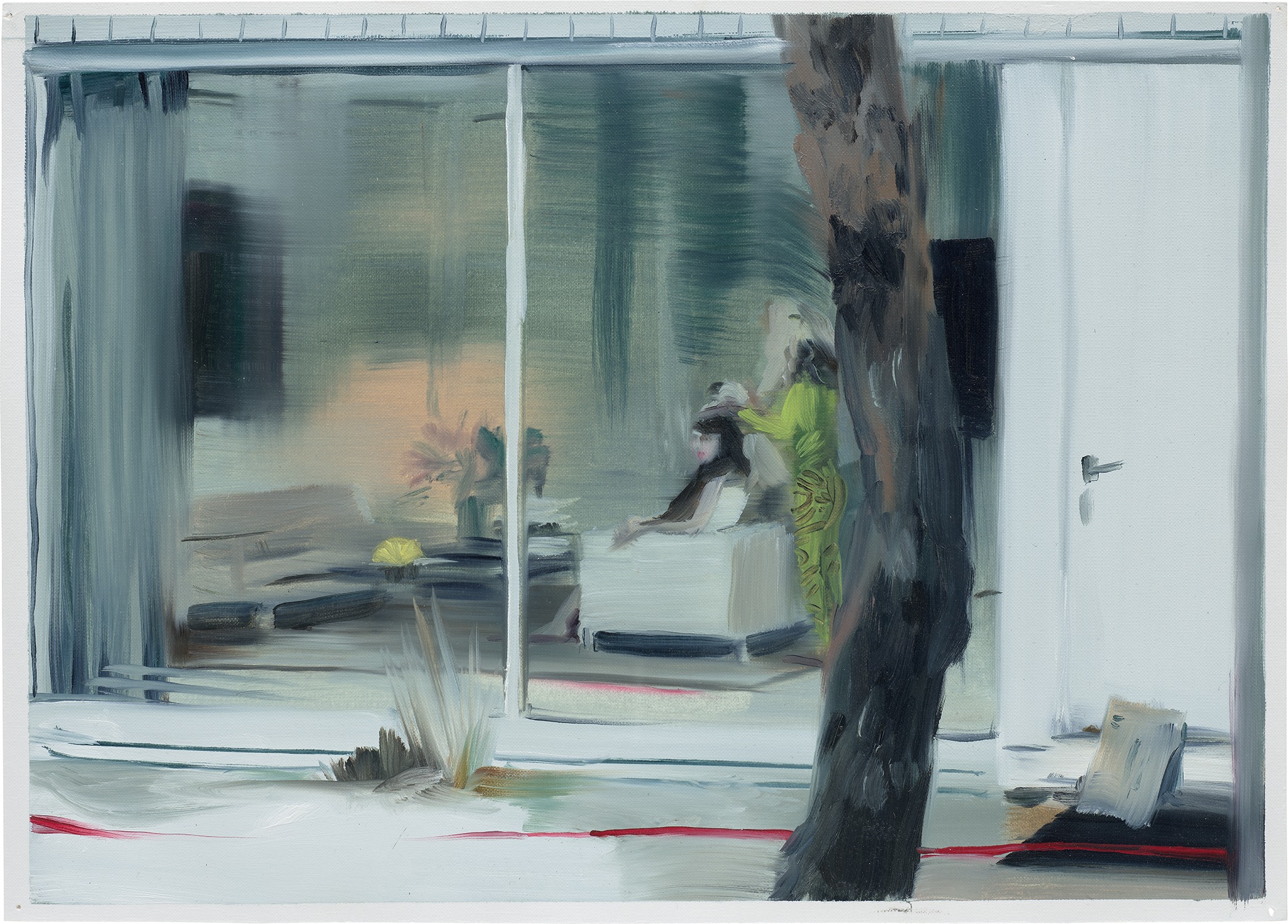
Caroline Walker
Delivery, 2012
The figures in her work are almost always women, depicted in moments of private activity: bathing, dressing, working, resting. These are not passive images. Walker brings to her subjects a quality of attention that is respectful, curious, and genuinely interested in the inner life that a painted surface can suggest. Works like "Doggy Paddle" from 2018, rendered in oil on paper with remarkable freshness, and "Bathed" from her Sunset portfolio, demonstrate the range of her technique across different supports and printing methods.
For collectors, Walker's work represents an increasingly compelling proposition. Her paintings appear across a range of formats and supports, from larger oil on linen canvases to smaller works on paper and board, which means there are meaningful points of entry at different collecting levels. Works on paper such as "Doggy Paddle" and "Study for Coat Makers" offer access to her practice in a more intimate scale, while the larger linen canvases carry the full weight of her ambition. Collectors drawn to Walker often find themselves in distinguished company: her work sits comfortably alongside that of painters such as Lynette Yiadom Boakye, whose invented figures share something of Walker's interest in the inner life of painted subjects, and Cecily Brown, whose engagement with art historical precedent and contemporary experience parallels Walker's own.
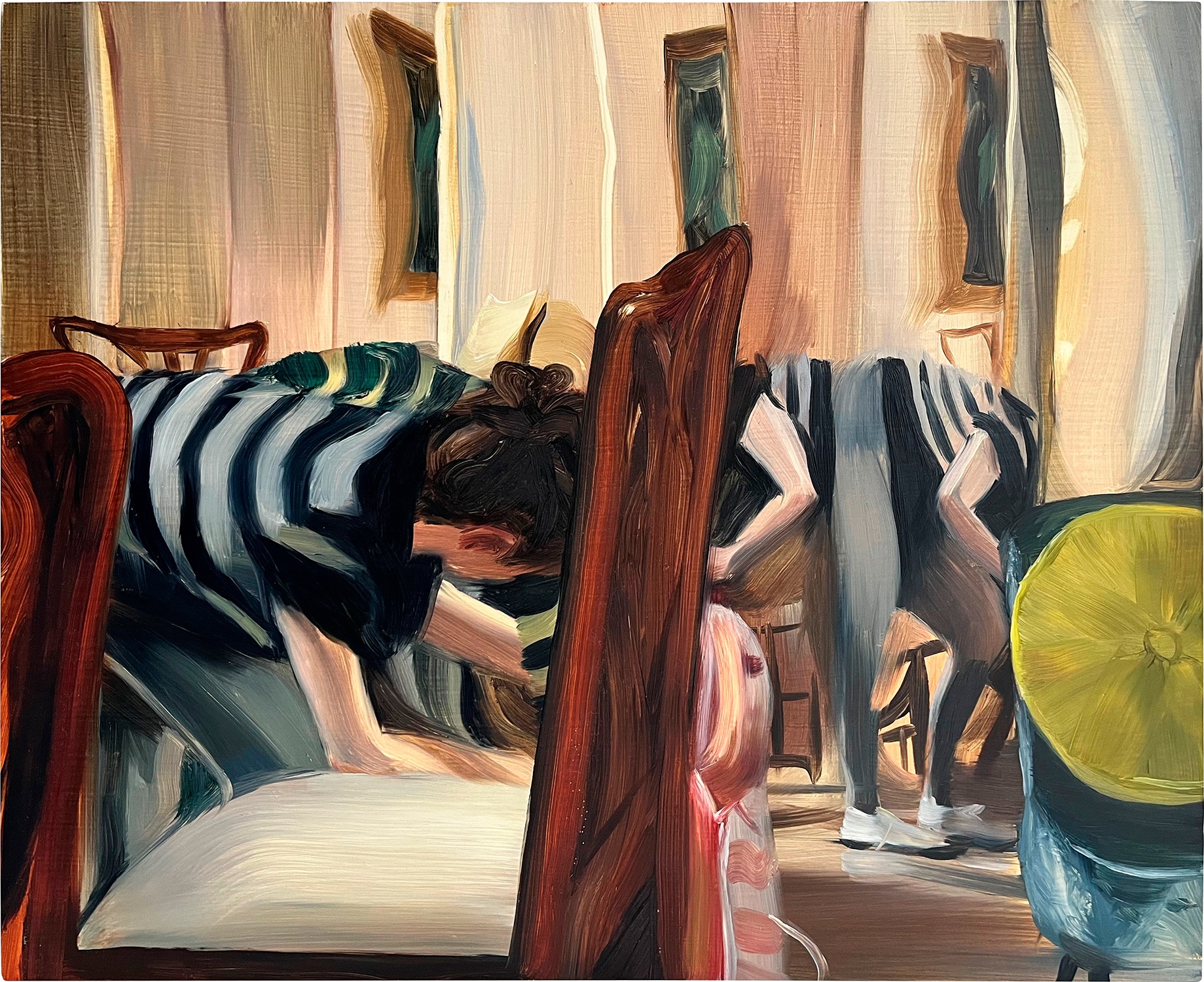
Caroline Walker
Hybrid, 2011
One might also think of the American painter Chantal Joffe, another significant voice in contemporary figurative painting focused on the female experience, as a meaningful point of comparison. Within the broader sweep of art history, Walker belongs to a tradition that stretches from Vermeer's luminous domestic interiors through the intimate paintings of Edouard Vuillard and the charged domestic scenes of Walter Sickert, while drawing equally on the work of mid century American painters who understood the psychological weight of ordinary spaces. She has absorbed and transformed these influences into something entirely her own. Her practice also participates in a vital contemporary conversation about the female gaze, about who gets to look and how looking itself is a political act.
In this sense, she is a painter for this precise cultural moment, one in which questions of representation, agency, and visibility feel more urgent than ever. Caroline Walker matters because she has found a way to make painting that is simultaneously beautiful and rigorous, formally accomplished and emotionally open. Her work does not condescend to its subjects or to its viewers. It asks you to slow down, to attend, to recognize the significance of the moments and spaces that daily life is actually made of.
That is a rare achievement in any medium, and in painting it is rarer still. For collectors who believe that art should enlarge one's sense of what it means to be alive, her work represents exactly the kind of investment, in every sense of that word, that endures.
Featured Works