Carol Bove
Carol Bove: Sculptor of Beautiful Charged Worlds
Artist Spotlight · The Collection Editorial
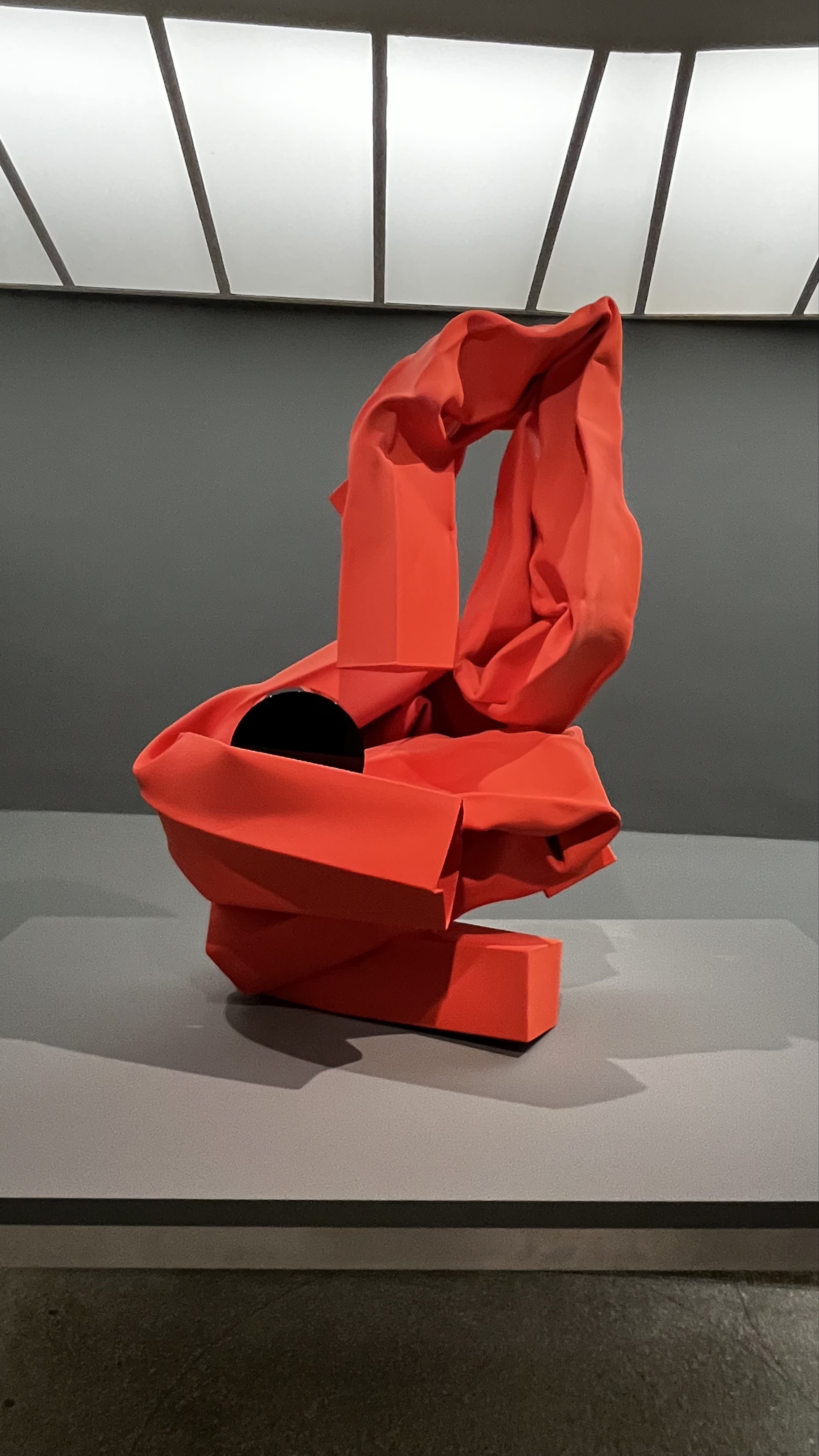
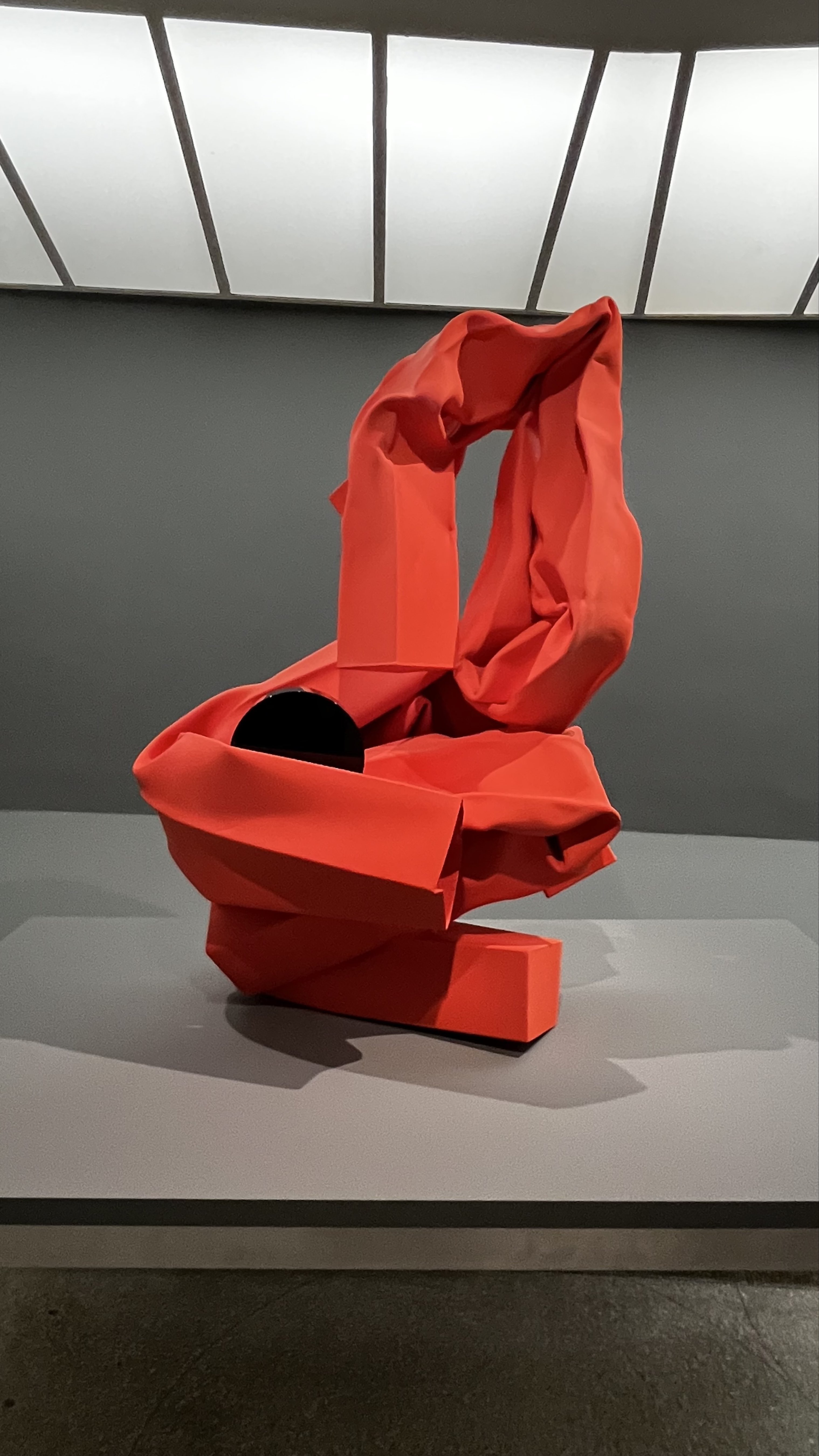
When the David Zwirner gallery presented Carol Bove's welded steel sculptures in recent years, something shifted in how the art world understood her ambitions. The works arrived with a physical authority that surprised even longtime admirers, massive and sinuous forms in painted steel that seemed to hold their breath, as though modernism itself had been coaxed back into conversation with the present moment. Bove had long been celebrated as a sculptor of exquisite sensitivity, but these latest works announced something grander: a fully realized artistic vision that spans five decades of influence and refuses to sit still. Bove was born in Geneva in 1971 and raised in Berkeley, California, a biographical detail that matters enormously to understanding her work.
Carol Bove
Untitled
Berkeley in the 1970s and 1980s was a place where counterculture lingered like incense in the walls, where idealism and intellectual rigor were not considered opposites. That atmosphere, saturated with the residue of utopian thinking and communal living, would become one of the great subjects of her art. She studied at New York University and went on to develop her practice in New York, where she has remained a central figure in contemporary sculpture for well over two decades. Her early work announced a sensibility that was at once archaeological and elegiac.
Bove assembled groupings of found objects, driftwood, books, feathers, and printed matter from the late 1960s and early 1970s, arranging them with a precision that felt more like poetry than taxonomy. These installations were not nostalgic in any simple sense. They were investigations into the emotional residue of ideas, the way a Playboy magazine from July 1972 or a Richard Avedon photograph can carry within it an entire collapsed cosmology. The Nureyev Mandala, a collage incorporating a reproduction of Avedon's famous portrait and feathers set within a Plexiglas frame, exemplifies this approach: glamour and spirituality in close proximity, asking the viewer to consider what kinds of transcendence the twentieth century actually believed in.
Carol Bove
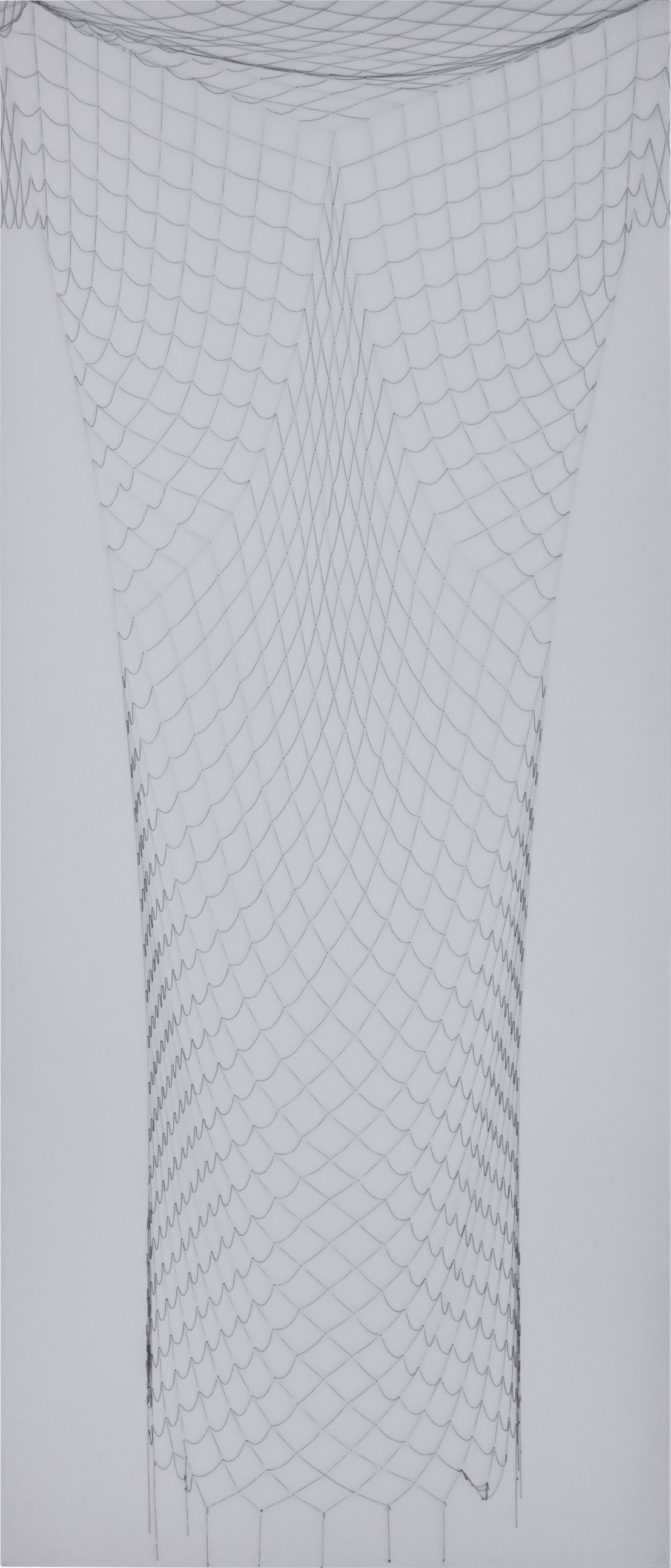
Yes! This Damn Universe!, 2011
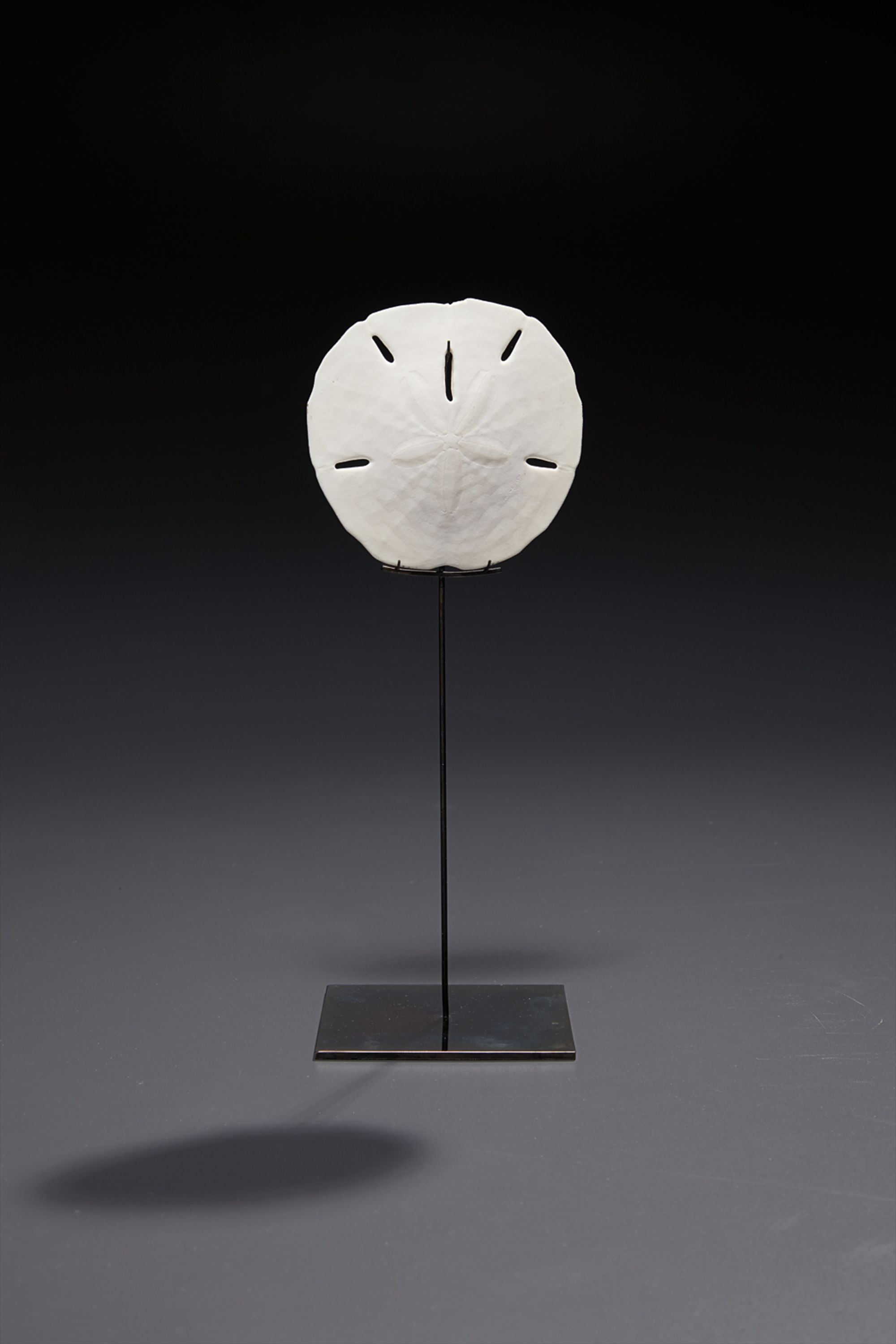
The evolution of Bove's practice across the 2000s and 2010s represents one of the more compelling transformations in contemporary art. She began incorporating fabricated elements alongside her found materials, welded brass and steel entering the vocabulary alongside peacock feathers on linen and sand dollars set carefully on pedestals. The Sand Dollar Sculpture of 2008 is a particularly beloved work among collectors, distilling her practice to something almost meditative: a natural object encountered with such attentiveness that it becomes a philosophical proposition. Her painted steel works, which arrived with full force in the 2010s, did not abandon the concerns of her earlier career so much as translate them into a new material language.
The industrial becomes lyrical in her hands, and abstract form carries the same freight of cultural memory that her found object arrangements always did. Several works in circulation among serious collectors illuminate the full range of her achievement. The screenprint Fazzm, produced on Coventry Rag paper, demonstrates her engagement with the graphic traditions of the twentieth century avant garde, while Anamnesis in acrylic on linen and Yes! This Damn Universe!
Carol Bove
Carol Bove
from 2011 reveal a painter's instinct underlying the sculptural practice that defines her public reputation. The title Yes! This Damn Universe! captures something essential about Bove's temperament: an embrace of vastness, a willingness to hold awe and irreverence simultaneously.
These are not minor works in her career but genuine windows into the philosophical underpinning of everything she makes. From a collecting perspective, Bove represents exactly the kind of artist whose market has deepened steadily rather than spiked and retreated. Her work is held by the Museum of Modern Art in New York and the Whitney Museum of American Art, institutional endorsements that reflect the seriousness with which the field regards her practice. Collectors who have followed her since her early exhibitions in the late 1990s and 2000s have watched the value of their holdings grow organically, supported by sustained critical attention and consistent gallery representation.
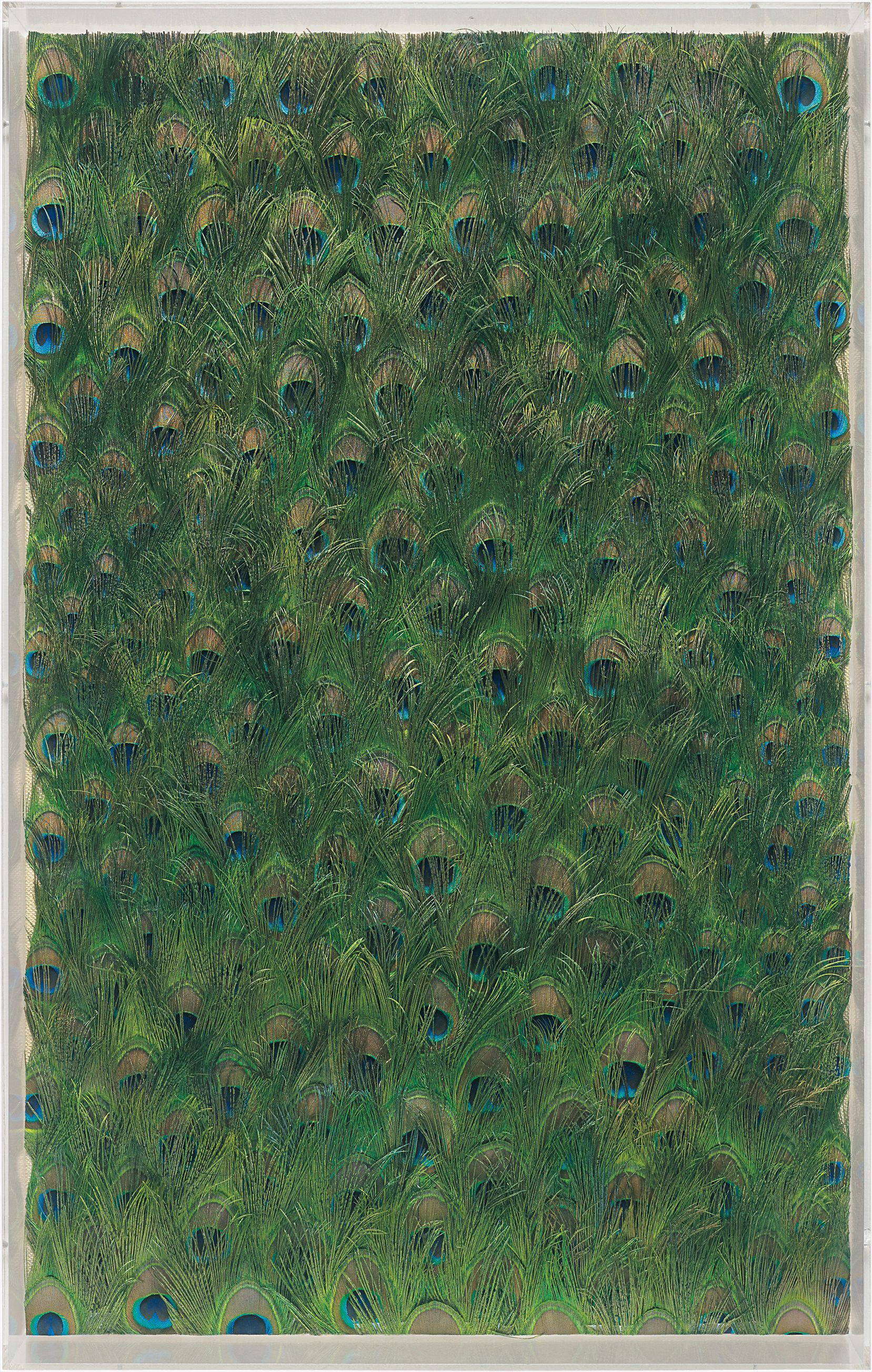
Carol Bove
peacock feathers on linen, laid on board in Plexiglas frame
Works on paper and photographic collages offer points of entry for collectors building toward larger sculptural acquisitions, and the range of her output means there is genuinely something for collections at various scales. Bove is best understood in conversation with a lineage of artists who have used assemblage and fabrication to interrogate the legacy of modernism. She shares a commitment to material intelligence with artists like Isa Genzken and a feeling for cultural archaeology reminiscent of Joseph Cornell, though her voice is distinctly her own. The influence of Arte Povera is legible in her sensitivity to humble and found materials, yet her sustained engagement with the specific textures of American counterculture gives her practice a geographic and historical specificity that sets it apart.
She belongs to a generation of sculptors who inherited postminimalism and decided to push it somewhere warmer, more personal, and more willing to carry emotional meaning. What endures about Carol Bove is the quality of attention she brings to the world. Her art is built on the conviction that objects carry histories worth honoring, that a feather or a magazine or a length of driftwood is not raw material but a kind of testimony. In an art world that can sometimes mistake spectacle for significance, her work insists on a slower, more considered relationship with time and meaning.
Collectors who live with her pieces consistently report that the works deepen with prolonged acquaintance, revealing new dimensions as the viewer's own relationship to memory and material culture evolves. That is the mark of an artist whose relevance will only grow.