Carlos Rojas
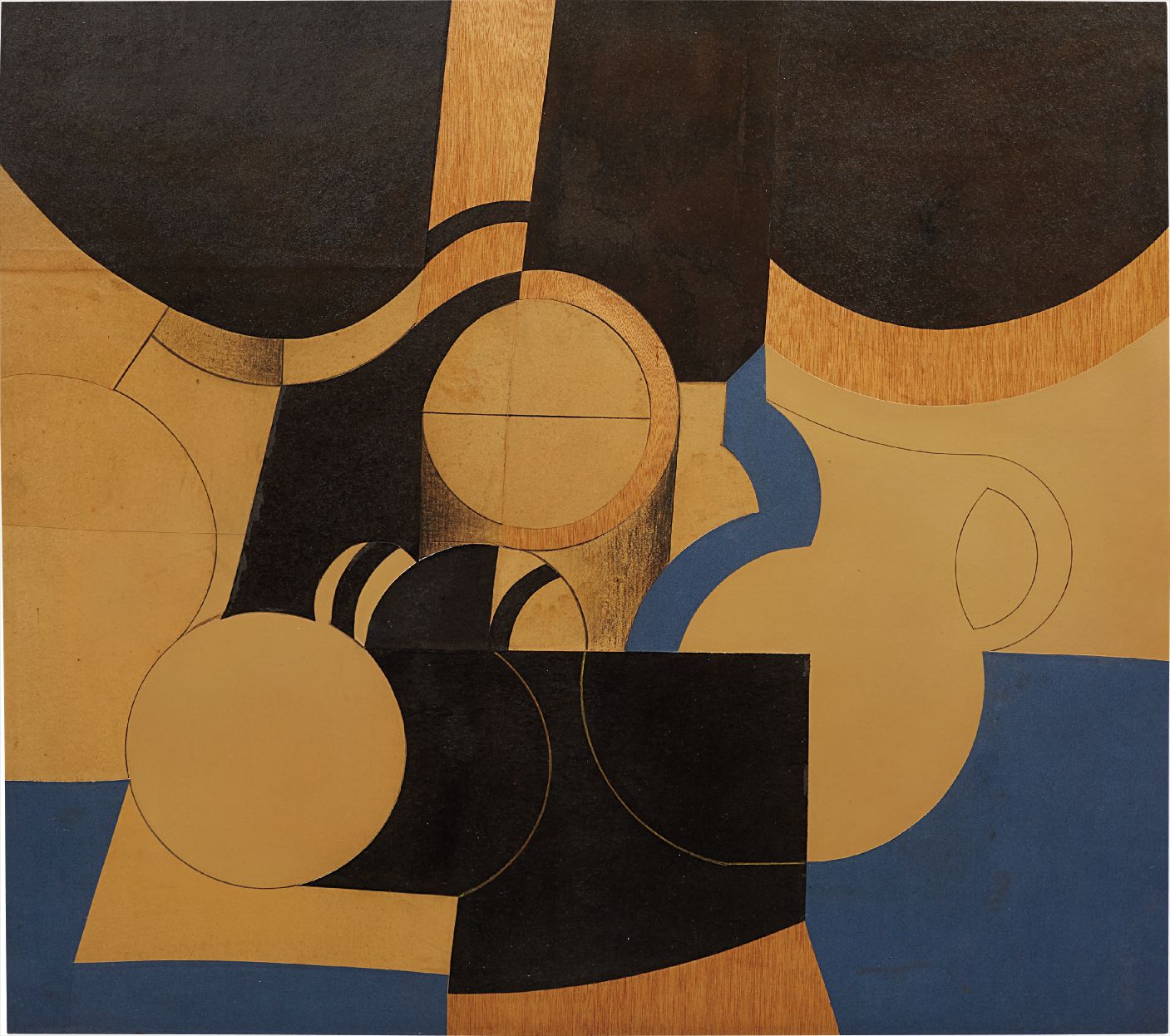
Carlos Rojas, Where Color Becomes Pure Sensation
Artist Spotlight · The Collection Editorial
In the grand survey halls of major Latin American museums, certain paintings stop you before you have decided to stop. The works of Carlos Rojas do exactly that. His canvases pulse with chromatic intensity, their geometric architectures built not merely to be seen but to be felt along the optic nerve, somewhere between thought and instinct. For collectors and curators who have long championed the richness of Colombian modernism, Rojas occupies a singular position: rigorous enough for the theorists, sensuous enough for anyone who has ever been moved by color alone.
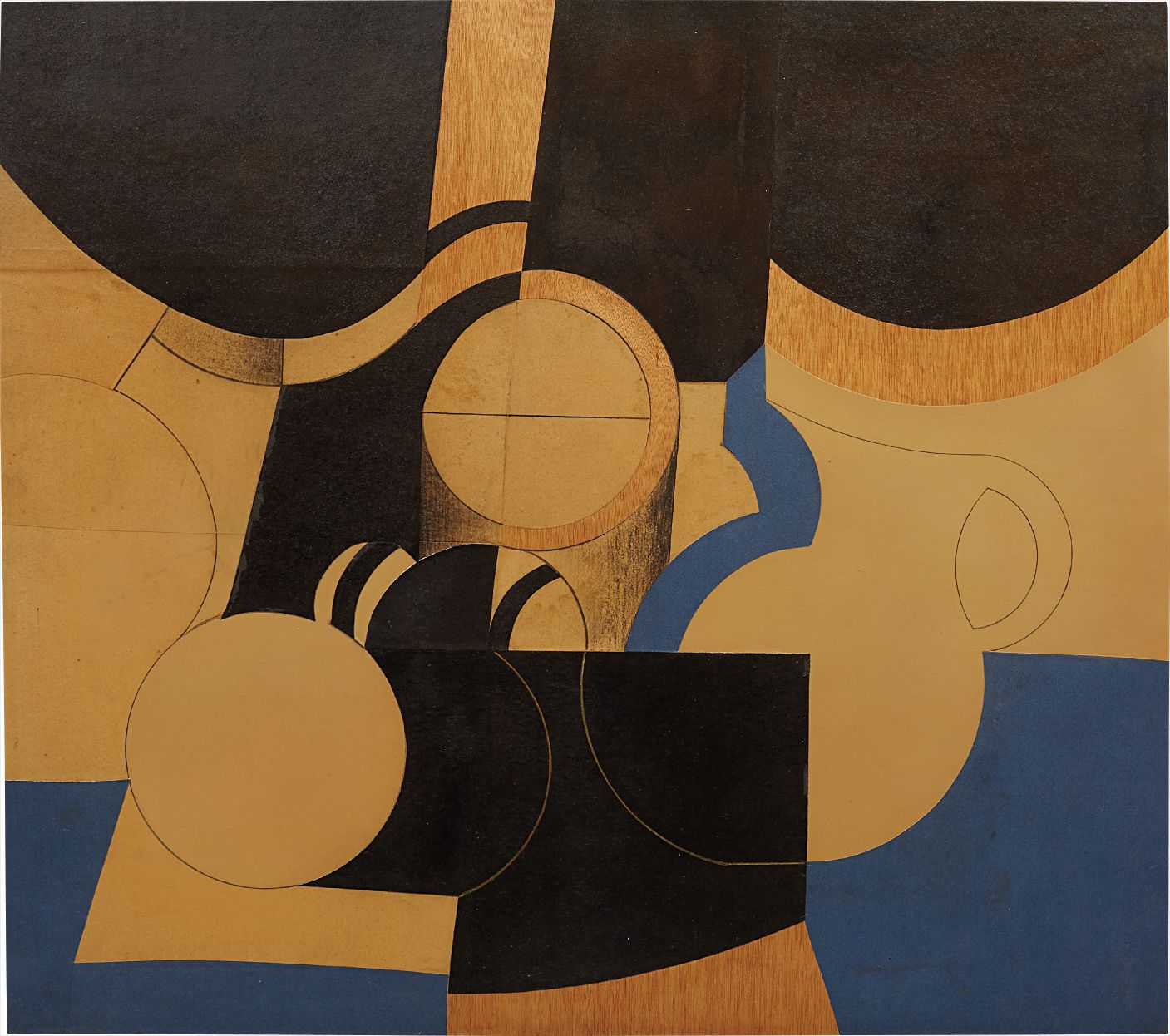
Carlos Rojas
Jarras de agua
Rojas was born in Apulo, Colombia, in 1933, a small town in the Cundinamarca department not far from Bogotá. The landscape of the Colombian highlands, its shifting light and layered terrain, would eventually find its way into the structural logic of his paintings, though the journey from that terrain to the refined geometric abstractions of his mature practice was neither swift nor simple. He pursued his formal training in Bogotá before traveling to Europe, where he encountered the full force of postwar abstraction and the theoretical rigor that had reshaped painting on both sides of the Atlantic. He studied at the École des Beaux Arts in Paris and absorbed the lessons of concrete art, optical research, and the phenomenological thinking that was transforming how artists understood the relationship between color, space, and the perceiving mind.
What distinguished Rojas upon his return to Colombia was his refusal to simply transplant European abstraction into a Latin American context. He was deeply committed to excavating something rooted in the visual cultures of his own hemisphere. He turned with genuine scholarly curiosity to the formal vocabularies of pre Columbian art, to the geometric patterning of indigenous textiles and ceramics, to the spatial logics embedded in ancient Andean and Mesoamerican visual traditions. This was not a decorative borrowing but a structural inquiry, and it gave his abstraction a density and a cultural specificity that set it apart from contemporaries working in similar formal registers elsewhere in the world.

Carlos Rojas
Sin título (de la serie Horizontes)
The result was a practice that felt simultaneously universal in its engagement with perceptual science and deeply particular in its roots. The series that brought Rojas to wide international attention were his investigations into color induction, most notably the sustained bodies of work he titled Inducción al amarillo and Inducción al rojo, pursued through much of the 1970s and into the 1980s. These were not merely aesthetic exercises. Rojas was working in dialogue with color theory, testing how one hue could be made to radiate, to vibrate, to transform in perception through its relationship with neighboring tones and geometric structures.
The phenomenology of Josef Albers was a presence in this thinking, as was the optical research that had energized artists associated with kinetic and concrete movements across Latin America, from Venezuela to Argentina. Yet Rojas brought to this conversation a warmth and a cultural layering that was distinctly his own. His yellows were not clinical; they were luminous in a way that evoked both scientific precision and something almost spiritual. Among the works that allow collectors today to understand the full range of his intelligence are the pieces held on The Collection.
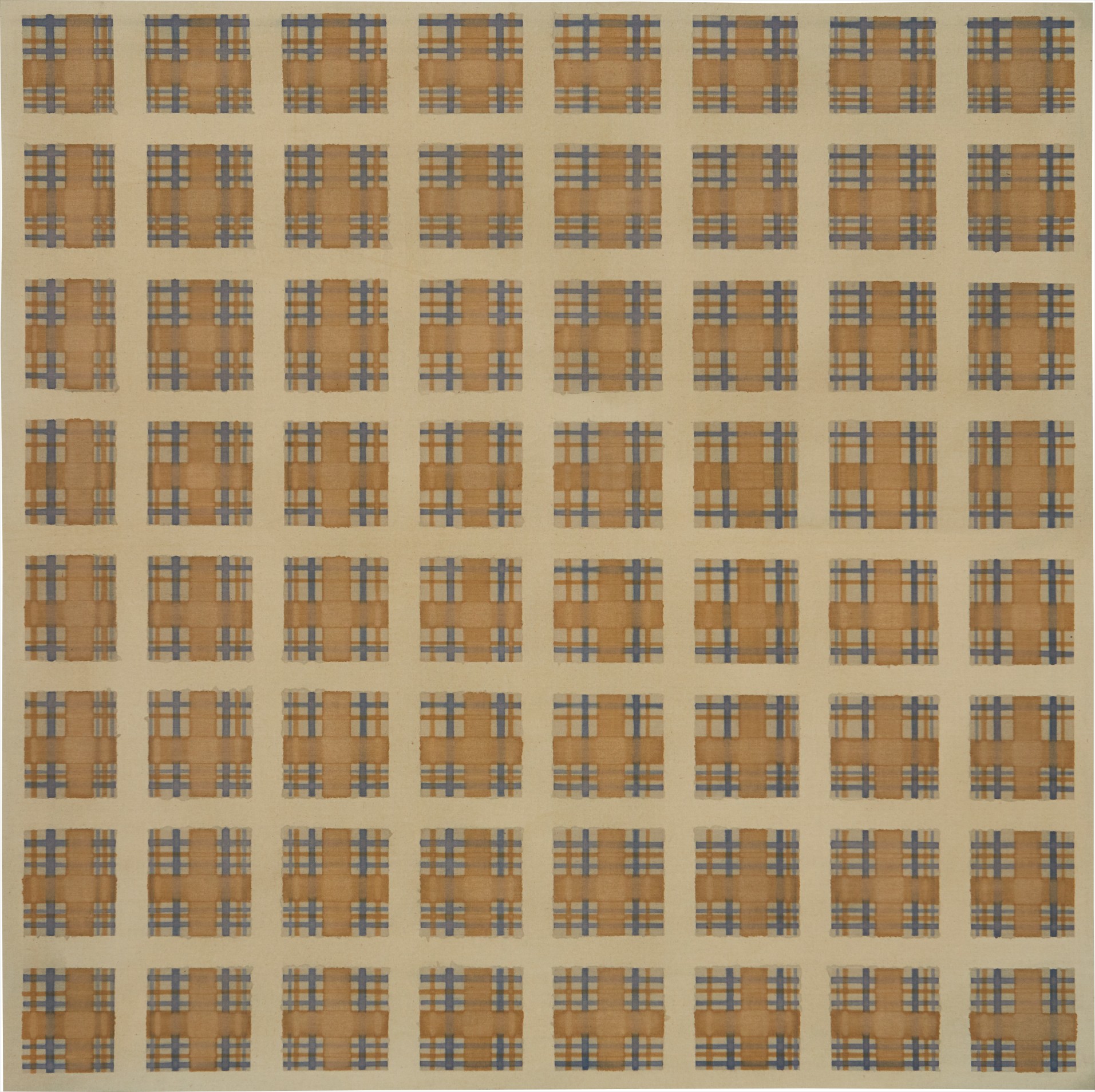
Carlos Rojas
De San Felipe, 1984
Jarras de agua, executed in collaged paper and pencil on board, reveals the intimacy of his working process, his willingness to think through materiality as well as optics, layering humble materials into compositions of surprising formal authority. Sin título, from his Horizontes series, painted in oil and mixed media on linen, demonstrates his sustained engagement with the horizon as both landscape reference and abstract structural device, the line where earth and sky meet becoming a generator of chromatic tension and spatial depth. De San Felipe, from 1984, executed in acrylic on linen, shows his command of the harder edged geometric vocabulary in its fullest maturity, the acrylic medium allowing him to push color saturation to its outer limits while maintaining compositional clarity. On the international stage, Rojas earned recognition that placed him among the leading Colombian artists of the twentieth century.
He represented Colombia at the Venice Biennale, a distinction that speaks to the esteem in which his work was held by the institutions of his home country and to the readiness of international audiences to receive his investigations on the world stage. His work entered major Latin American collections, both public and private, and he was recognized through numerous awards and residencies that affirmed the seriousness of his contribution. The Biblioteca Luis Ángel Arango in Bogotá, one of the most important cultural institutions in Colombia, held and supported significant engagement with his practice during his lifetime. For collectors approaching his work today, several things are worth holding in mind.
Rojas worked across painting, works on paper, and three dimensional constructions, and each of these formats offers a different register of his thinking. The works on paper, like Jarras de agua, are often more gestural and exploratory, windows into the laboratory of his mind. The paintings on linen, especially those from the 1980s, represent his practice at its most fully realized and tend to command the strongest collector attention. His work occupies a meaningful place in the broader conversation about Latin American geometric abstraction, sitting comfortably alongside contemporaries such as the Venezuelan kinetic artists Carlos Cruz Diez and Jesús Rafael Soto, or the Argentine concrete painters associated with the Madí movement.
Collectors who have built positions in any of those areas will find in Rojas both a natural companion and a distinctive voice. Carlos Rojas died in Bogotá in 1997, leaving behind a body of work that has continued to grow in critical and market significance as institutions and collectors have deepened their engagement with the full breadth of twentieth century Latin American modernism. His legacy is one of intellectual courage and sensory generosity in equal measure. He asked painting to do something genuinely difficult: to carry the weight of cultural memory, the rigor of perceptual science, and the sheer pleasure of color all at once.
That he succeeded as fully as he did is a reminder of what the best abstract painting has always been capable of. To live with a work by Carlos Rojas is to live with something that keeps changing, that keeps asking something of your eyes and your attention, and that keeps rewarding both.